Complete Guide to Mosiriya Chashi | A Thorough Explanation of the National Historic Site in Kushiro City, Hokkaido
Located on Shiroyama in Kushiro City, Hokkaido, Moshiriya Chashi is a nationally designated historic site of high historical value, particularly well-preserved among the fortresses (chashi) built by the Ainu people. This site, affectionately known as “Otoeyama” (Offering Mountain) by locals, is an essential cultural asset for understanding Ainu culture.
This article comprehensively explains everything you need to know before visiting Mosiriya Chashi, from its history and structure to how to visit and access information.
What is Mosiriya Chashi? Basic Information and Historical Background
The Meaning of Chashi and its Role in Ainu Culture
Chashi is an Ainu word meaning “fortress” or “fence.” Over 500 chashi sites have been confirmed throughout Hokkaido, and they are believed to have been used for a variety of purposes, including defensive structures, ritual sites, and watchtowers.
The name “Moshiriya Chashi” means “river with an island” in the Ainu language. It describes the topographical features of the Kushiro River basin and is valuable evidence of how the Ainu people perceived this land.
Builder Tomikara Ayano and Construction Date
Moshiriya Chashi is said to have been built in 1751 (Kanei 4) by the Ainu chief Tomikara Ayano. It is extremely rare for the builder’s name to be clearly recorded for an Ainu chashi (fortified site), and this alone makes Mosiriya Chashi extremely historically valuable.
The mid-18th century was a period of increased trade between the Wajin (Japanese) and the Ainu people, as well as heightened tensions. It is believed that these historical circumstances deeply influenced Tomikara Ayano’s construction of this fort.
Origin of the Local Name “Offering Mountain”
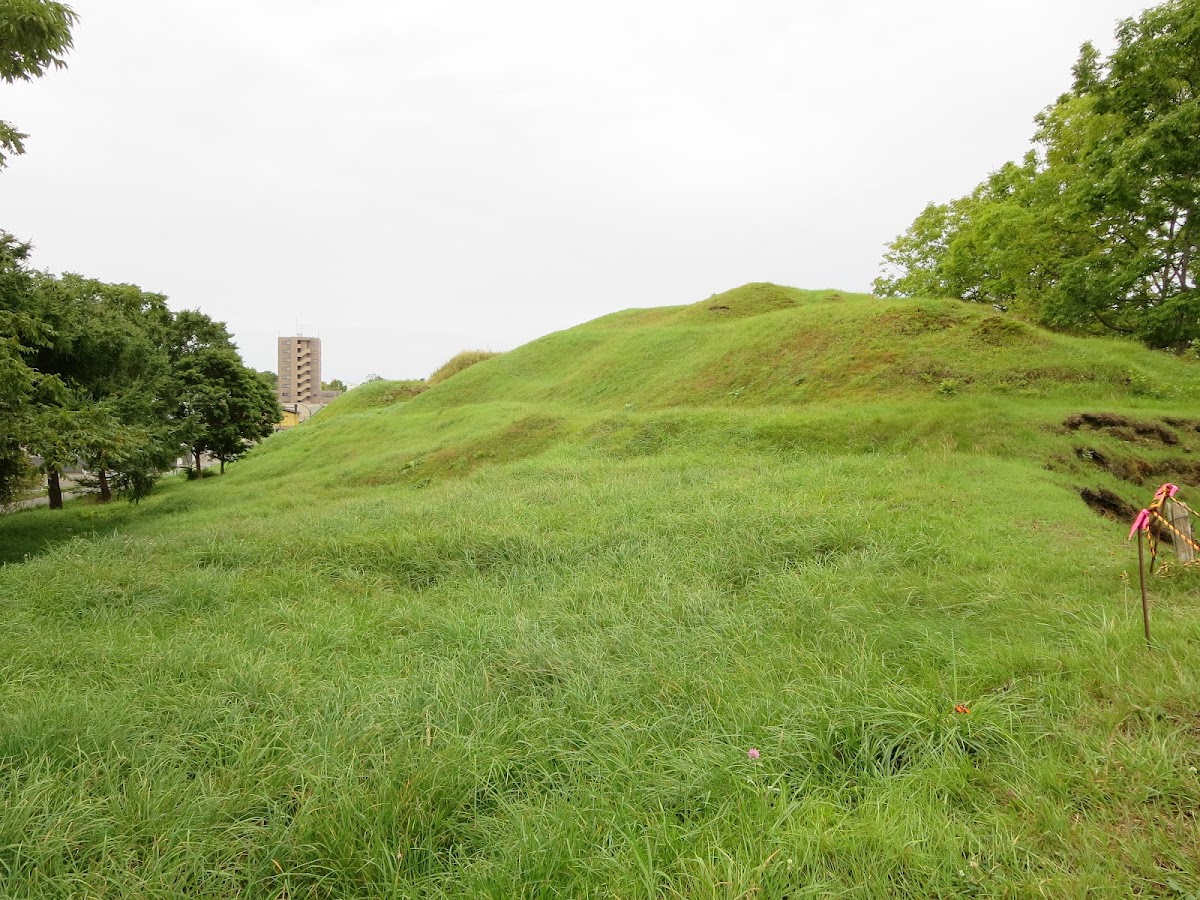
Among the citizens of Kushiro, Moshiriya Chashi has long been affectionately known as “Offering Mountain.” This name originates from the unique shape of the chashi, which resembles a kagami mochi (rice cake offering) in two or three tiers.
Local records also indicate that it was called other names such as Sarushinai Chashikotsu (fort ruins in a stream where reeds grow) and Poro Chashikotsu (large fort ruins). These names all describe topographical features or scale in the Ainu language.
As part of the National Historic Site “Kushiro River Basin Chashi Ruins”
History and Importance of the Historic Site Designation
Moshiriya Chashi was designated as a national historic site in 1935 (Showa 10) under the name “Moshiriya Fort Ruins.” At that time, it was designated along with Harutoru Charanke Chashi (Tsurugadai Charanke Fort Ruins) and the Harutori Plateau Pit Dwelling Group, both located within the city.
Subsequently, in 2008, a system was established to protect a wider range of ruins as a unified group under the name “Kushiro River Basin Chashi Ruins.” This has led to a re-evaluation of its academic and cultural value as an important historical site for understanding the overall picture of Ainu culture in the Kushiro River basin.
Characteristics of the Chashi Ruins in the Kushiro River Basin
Multiple chashi (fortified settlements) are scattered throughout the Kushiro River basin, each possessing distinct characteristics. Mosiriya Chashi is particularly notable for its large scale and complex structure.
Built in a location overlooking the Kushiro River, an important waterway, these chashi are believed to have functioned as trading posts and defensive facilities. The role of Mosiriya Chashi within the overall regional network remains an ongoing research topic.
Detailed Explanation of the Structure and Characteristics of Mosiriya Chashi
Overall Scale and Shape
Moshiriya Chashi is located on a terrace on the left bank of the Kushiro River, built on a hill with an elevation of approximately 18 meters. The overall size is an oval shape, approximately 170 meters in length and 70 meters in width.
The ruins have a unique, irregularly shaped structure, appearing as three tiers on the northeast side and two tiers on the southwest side, displaying different appearances depending on the viewing angle. This distinctive appearance is the origin of its nickname, “Offering Mountain.”
Structure of the Inner and Outer Enclosures
Moshiriya Chashi has a double structure clearly divided into an inner and outer enclosure. This structure is thought to have enhanced defensive capabilities and allowed for the separate use of space.
The inner enclosure is the main part, demarcated by a single moat (dry ditch). This inner enclosure corresponds to the main fort and may have been used for important rituals and as living space.
The outer enclosure is positioned to surround the inner enclosure, and the northern section, known as the secondary fort, is particularly surrounded by a more complex network of moats. The structure, resembling two connected small hills like a keyhole-shaped burial mound, is a rare form among Chashi (fortified settlements).
Defensive System of Dry Moats and Earthen Embankments
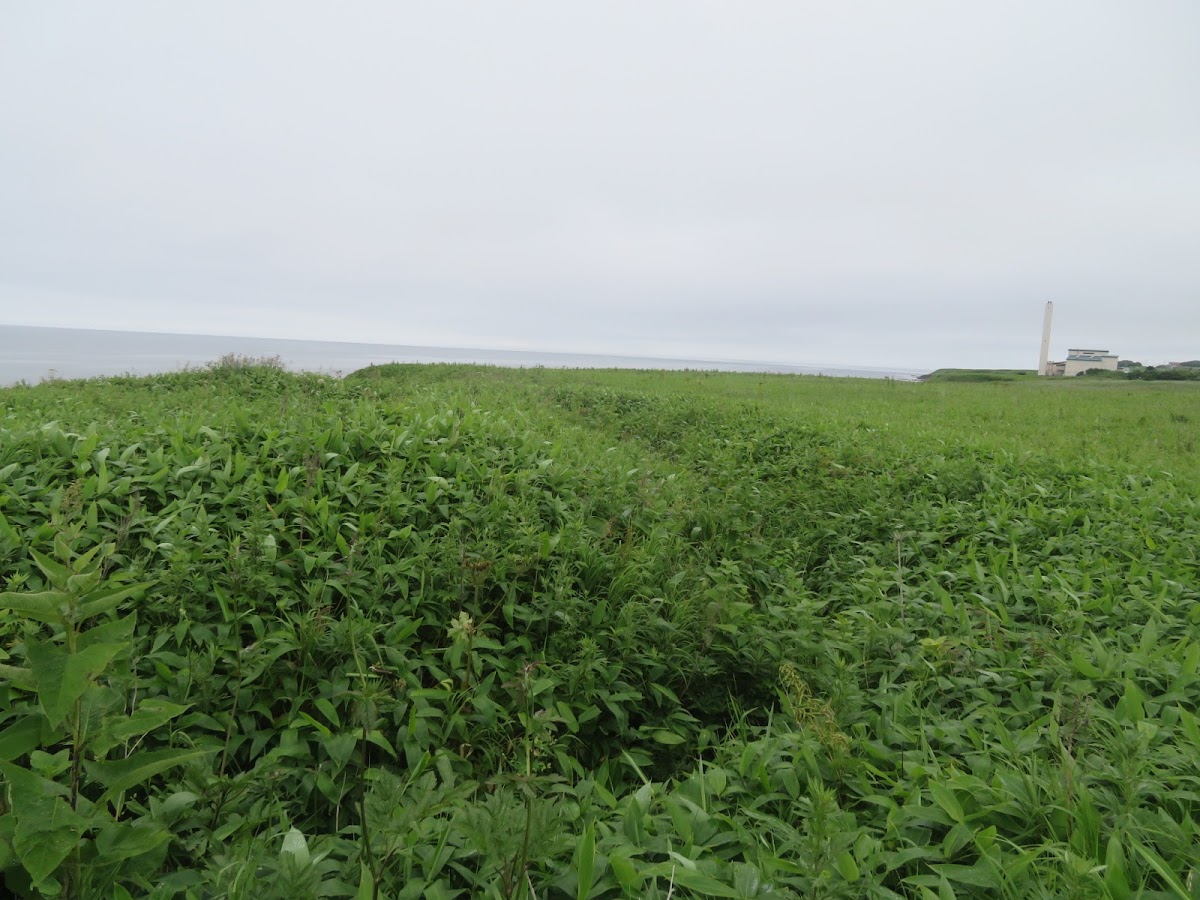
The core of the Mosiriya Chashi’s defensive system is the dry moat and earthen embankment. A single dry moat surrounds the inner enclosure, and the soil excavated during the moat’s construction was piled up to form an earthen embankment.
This embankment is thought to have prevented enemy intrusion and also obscured the view of the interior from the outside. While the depth of the dry moat and the height of the embankment have decreased due to weathering, they are still clearly visible as changes in the topography.
A flat area was constructed on the hillside, which may have been used as living space or workspace.
Relationship between the Main and Secondary Forts
A distinctive feature of the Mosiriya Chashi site is the connection between its two main sections: the main fort on the south side and the secondary fort on the north side.
The main fort is slightly higher in elevation and is thought to have played a primary role. The secondary fort, on the other hand, has a more complex network of moats surrounding it, suggesting it may have been specialized for defensive purposes.
This double structure is believed to have formed a tiered defensive line and also served to separate spaces with different uses.
How to Visit Mosiriya Chashi and Important Notes
Why Advance Reservations are Required
Moshiriya Chashi is a nationally designated historical site, and for the protection of the ruins, it is usually locked and entry is not permitted. If you wish to visit, advance reservations are required by contacting the Kushiro City Board of Education or the Kushiro City Museum.
The steep slopes and the risk of falling are also reasons for the site being locked. Visiting under the supervision of a staff member ensures safety and allows you to receive expert explanations. ### Procedure for Booking a Visit
The procedure for booking a visit is as follows:
- Contact the Kushiro City Museum or the Board of Education by phone.
- State your desired date and time and confirm your reservation.
- Meet the staff member at the designated location (usually the entrance to Mosiriya Chashi) on the day of your visit.
- The staff member will unlock the gates and guide you through the visit.
According to visitor reports, some cases have been handled within about an hour of calling, but it is recommended to book well in advance.
Clothing and Items to Bring for Your Visit
The following preparations are recommended for visiting Mosiriya Chashi:
- Comfortable walking shoes (Trekking shoes or athletic shoes are ideal as you will be climbing slopes)
- Long-sleeved shirt and long pants (To protect yourself from vegetation and insects)
- Hat and sunscreen (There is little shade)
- Drinks (Especially in summer, heatstroke prevention is necessary)
- Camera (To record the unique scenery)
Visiting in winter may be difficult due to snow. The best time to visit is May to October.
Important Notes for Visitors
When visiting Mosiriya Chashi, please note the following:
- Do not damage the historical site (Do not trample on the earthworks or dry moats)
- Take all your trash with you
- Collecting plants or capturing animals is strictly prohibited
- Follow the instructions of the staff
- Refrain from visiting in bad weather (The slopes become slippery)
Access Information and Surrounding Facilities
How to Get to Mosiriya Chashi
Location: 2-chome, Shiroyama, Kushiro City, Hokkaido
Access by Car:
- Approximately 10 minutes from Kushiro Station
- Approximately 40 minutes from Kushiro Airport
- Parking space is limited, so please check in advance
Public Transportation:
- Accessible on foot from the nearest bus stop, but buses are infrequent, so visiting by car is more convenient
Related Historical Sites in the Surrounding Area
When visiting Mosiriya Chashi, we recommend also visiting Harutoru Charanke Chashi (Tsurugadai Charanke Fort Ruins), which is also part of the Kushiro River Basin Chashi Site Group.
Harutoru Charanke Chashi has a different structure from Mosiriya Chashi, and comparing the two will help you understand the diversity of Ainu chashi.
Deepen Your Learning at the Kushiro City Museum
We strongly recommend visiting the Kushiro City Museum before or after your visit. The museum has exhibits on Ainu culture in the Kushiro region, including Mosiriya Chashi, and you can gain a deeper understanding through excavated artifacts and detailed explanations.
Kushiro City Museum
- Address: 1-7 Harukodai, Kushiro City
- Opening Hours: 9:30 AM – 5:00 PM
- Closed: Mondays (or the following day if Monday is a public holiday), New Year holidays
- Admission Fee: 480 yen (general admission)
Learning about Ainu Culture from Mosiriya Chashi
The History of the Relationship Between the Japanese and the Ainu as Told by Chashi
The mid-18th century, when Mosiriya Chashi was built, was a time when the Japanese expansion into Hokkaido was intensifying, and relations with the Ainu people were becoming more complex. The construction of the Chashi is thought to be closely related to this historical context.
While the expansion of trade brought economic benefits, it also created cultural friction and tensions over territorial disputes. The existence of large-scale forts like Mosiriya Chashi tells the story of the challenges faced by Ainu society and the countermeasures taken to address them.
Ainu Land Use and View of Nature
The site selection for Mosiriya Chashi reflects the Ainu people’s excellent understanding of topography and their view of nature. Located on a terrace overlooking the Kushiro River, its location fulfills multiple functions: monitoring water transport, serving as a base for fishing activities, and a strategically important defensive point.
The name itself, “River with an Island,” reflects the Ainu language and culture’s careful observation of topography and its precise expression of its characteristics.
Value as a Cultural Heritage Site in the Modern Age
Moshiriya Chashi is a valuable cultural heritage site that conveys the history and culture of the Ainu people to the present day. In recent years, with the growing interest in Ainu culture, the importance of preserving and utilizing such historical sites has been re-recognized.
In 2020, “Upopoy (National Ainu Museum and Park)” opened in Shiraoi Town, Hokkaido, positioning the promotion of understanding of Ainu culture as a national priority. Visiting actual historical sites like Moshiriya Chashi complements learning at exhibition facilities and enables a more comprehensive understanding.
Comparison with Other Chashi in Hokkaido
Chashi Groups in the Nemuro Region
Numerous chashi are distributed throughout eastern Hokkaido, with a particularly high concentration of important chashi in the Nemuro region, including Notsukamafu Chashi, Ponmoi Chashi, and Charukorofina Chashi.
Compared to Moshiriya Chashi, these chashi are located closer to the sea and are characterized by their strong connection to the use of marine resources and maritime trade.
Chashi Groups in the Hidaka Region
The Hidaka region includes Shibechari Chashi, Ochirishi Chashi, and Ruiopirachashi, which are built on hills and plateaus along rivers.
Some share similar locational conditions with Moshiriya Chashi, demonstrating a common strategy of controlling key points for river transportation.
Diversity of Chashi in Various Regions
Chashi exhibit diverse forms depending on the region, era, and purpose. Broadly classified:
- Hilltop type: A fortified site where the tip of a cape-like terrain is demarcated by a moat.
- Climbtop type: Utilizing the top of a hill.
- Plain type: A fortified site on a plain surrounded by moats or earthworks.
- Cliff edge type: Utilizing the edge of a cliff.
Moshiriya Chashi is classified as a Climbtop type and is characterized by its complex structure with an inner and outer enclosure.
Current Status of Research and Preservation
Results of Archaeological Surveys
Multiple archaeological surveys have been conducted at Moshiriya Chashi. These surveys have yielded much knowledge about the structure of the fortified site, its construction date, and its period of use.
Although the number of excavated artifacts is limited, pottery fragments and stone tools have been discovered, providing clues to understanding aspects of life at that time.
Challenges in Preservation and Management
Moshiriya Chashi, protected as a nationally designated historical site, faces several challenges in preservation and management:
- Weathering due to the natural environment (collapse of earthworks due to rainfall and freeze-thaw cycles)
- Vegetation management (prevention of destruction of remains by tree roots)
- Ensuring visitor safety (prevention of accidents on steep slopes)
- Budget and personnel constraints (securing resources for continuous maintenance and management)
The Kushiro City Board of Education is striving to preserve the historical site through regular inspections and necessary repairs.
Future Use and Prospects
How to preserve and utilize cultural heritage sites like Moshiriya Chashi is a crucial challenge. Future directions may include:
- Utilization of digital technology (recording and publishing using 3D scanning and virtual reality)
- Enhancement of educational programs (utilization in school education and lifelong learning)
- Development as a tourist resource (creating an environment that is more accessible to more people while ensuring safety)
- Collaboration with local communities (participation of local residents in preservation activities)
These are some possibilities.
Visitor Voices and Experiences
Impressions from Actual Visitors
The following are some comments from people who have actually visited Mosiriya Chashi:
- “As its nickname, ‘Offering Mountain,’ suggests, its unique shape was impressive.”
- “The detailed explanation from the staff deepened my understanding of Ainu culture.”
- “The view overlooking the Kushiro River was magnificent, and I truly understood why this location was chosen.”
- “Reservations are required in advance, but thanks to that, I received a thorough guided tour.”
Best Season for Visiting
Based on visitor experiences, the best time to visit is as follows:
- Early Summer (June): Beautiful fresh greenery and mild weather
- Autumn (September-October): Enjoy the autumn foliage, and there are fewer insects
- Time to Avoid: Winter (snowy), extremely hot summer days
Summary: The Charm and Significance of Visiting Mosiriya Chashi
Moshiriya Chashi is a valuable cultural heritage site of the Ainu people remaining in Kushiro City, Hokkaido. Built in 1751 by Tomikara Ayano, this fort, affectionately known as “Otoeyama” (Offering Mountain), boasts a unique double-layered structure and a defensive system of dry moats and earthen ramparts.
Visiting Mosiriya Chashi, a nationally designated historical site, offers more than just sightseeing. It provides a valuable opportunity to directly experience the history and culture of the Ainu people, learn about their relationship with the Japanese, and understand their land-use wisdom.
While advance reservations are required for visits, this offers the advantage of receiving expert explanations from staff. When visiting Kushiro, be sure to visit Mosiriya Chashi and experience the rich history and culture of Hokkaido.
Visiting it in conjunction with the Kushiro City Museum will provide a more comprehensive understanding. Mosiriya Chashi is an irreplaceable cultural heritage that gives us, living in the modern age, a chance to reflect on the history and future of multicultural coexistence.