Harutoru Charanke Chashi (Kushiro City, Hokkaido) Complete Guide | Thorough Explanation of Ainu History and Highlights
What is Harutoru Charanke Chashi?
Harutoru Charanke Chashi is an important Ainu archaeological site located on the northern shore of Lake Harutori in Kushiro City, Hokkaido. It was designated a national historic site in 2006 as one of the five chashi (fortified sites) that make up the “Kushiro River Basin Chashi Sites.” Built skillfully on a peninsula-shaped plateau jutting out into Lake Harutori, this chashi is believed to have functioned as a political and social center in Ainu culture.
Meaning of the Chashi Name
The name “Harutoru Charanke Chashi” originates from the Ainu language. “Harutoru” is thought to be a variation of “Arutoru,” meaning “land beyond the mountains,” and is believed to have referred to the area on the other side of Lake Harutori. “Charanke” is an Ainu word meaning “argument, negotiation, or trial,” suggesting that this chashi (fortified site) was used as a place for important meetings and discussions.
Previously, it was also called “Tsurugadai Charanke Chashi” or “Tsurugadai Charanke Fort Ruins,” but currently, the official name used is “Harutoru Charanke Chashi,” respecting the Ainu place name.
History of Discovery
Harutoru Charanke Chashi was discovered in 1916 (Taisho 5) by Mr. Yosaku Abe, the principal of the former Kushiro Middle School. Mr. Abe was a dedicated researcher of local history in the Kushiro region, and this discovery marked an important step in the study of Ainu culture in eastern Hokkaido. Since its discovery, multiple investigations have been conducted, revealing the structure and historical value of the chashi.
What is a Chashi? | Its Role in Ainu Culture
Definition and Types of Chashi
A chashi is a term referring to a fort or sacred site built by the Ainu people. Over 500 Chashi sites have been identified throughout Hokkaido, and their uses were diverse. They served various functions depending on the region and era, including defensive fortifications, sacred sites for rituals, watchtowers, and meeting places.
Chashi are broadly classified as follows:
- Cliff-faced Chashi: Utilizing cliffs or steep slopes, with trenches or earthworks built on only one side.
- Isolated Hill Chashi: Utilizing an entire independent hill.
- Peninsula Chashi: Utilizing a peninsula-shaped terrain, with trenches built at the base.
Harutoru Charanke Chashi is classified as a typical peninsula-type Chashi, utilizing a peninsula-shaped terrain jutting out into Lake Harutori.
The Meaning of Chashi in Ainu Society
Chashi were not merely military facilities; they played a role as political and social centers in Ainu society. In particular, this Chashi, named “Charanke,” is highly likely to have been used as a place for important discussions and negotiations, and is thought to have been a place for resolving conflicts between local kotan (settlements) and making important decisions.
Structure and Characteristics of Harutoru Charanke Chashi
Topography and Location
Harutoru Charanke Chashi is located on a peninsula-shaped plateau approximately 12 meters above sea level on the northern shore of Lake Harutori. This topographical feature provided extremely advantageous conditions for defense. Three sides, excluding the north, are steep slopes facing Lake Harutori, giving it the function of a natural fortress. The location of this chashi can be seen from most points along the road that circles Lake Harutori.
This area is also known in the Ainu language as “Tomoshiri” (an island in the lake) and “Ikitaraushi” (a place where many bamboo grasses grow), indicating a rich natural environment.
Structure of the Moat
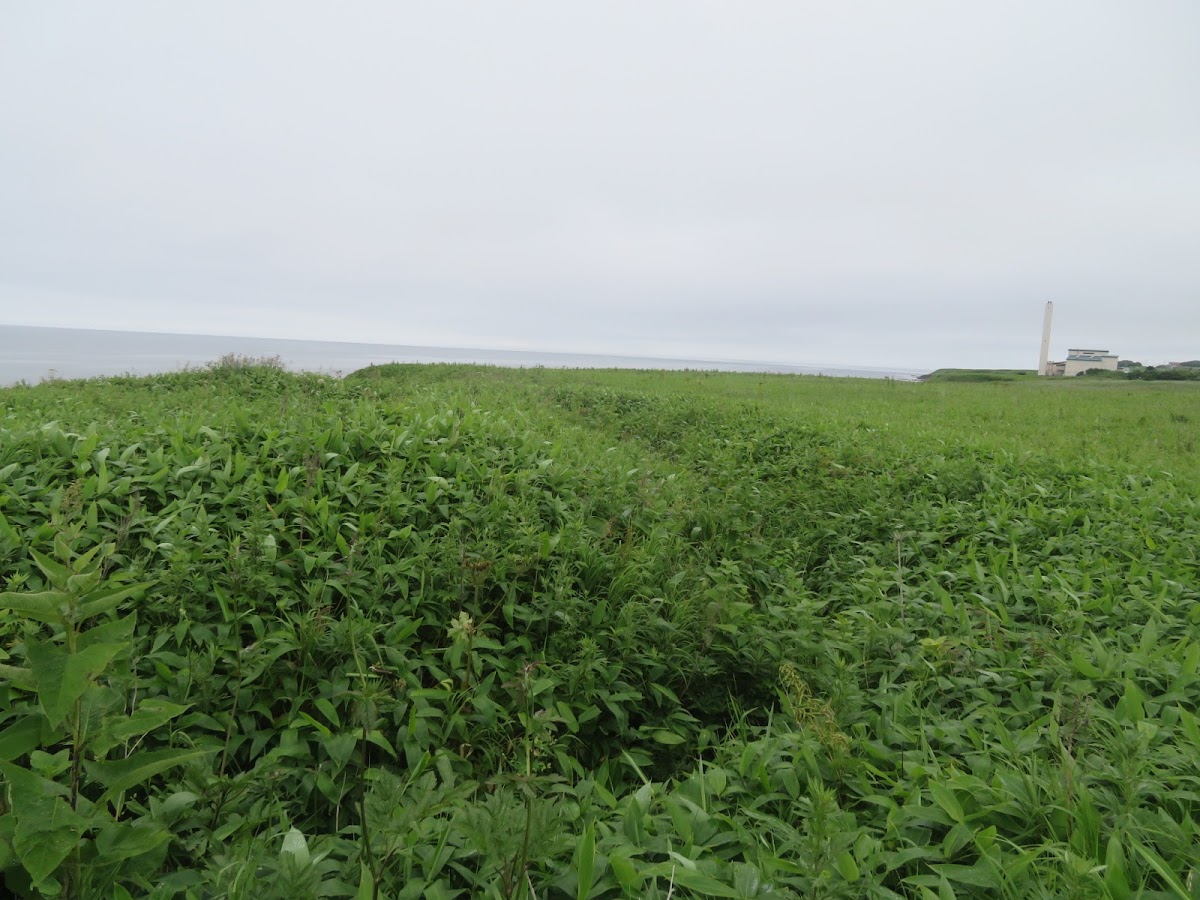
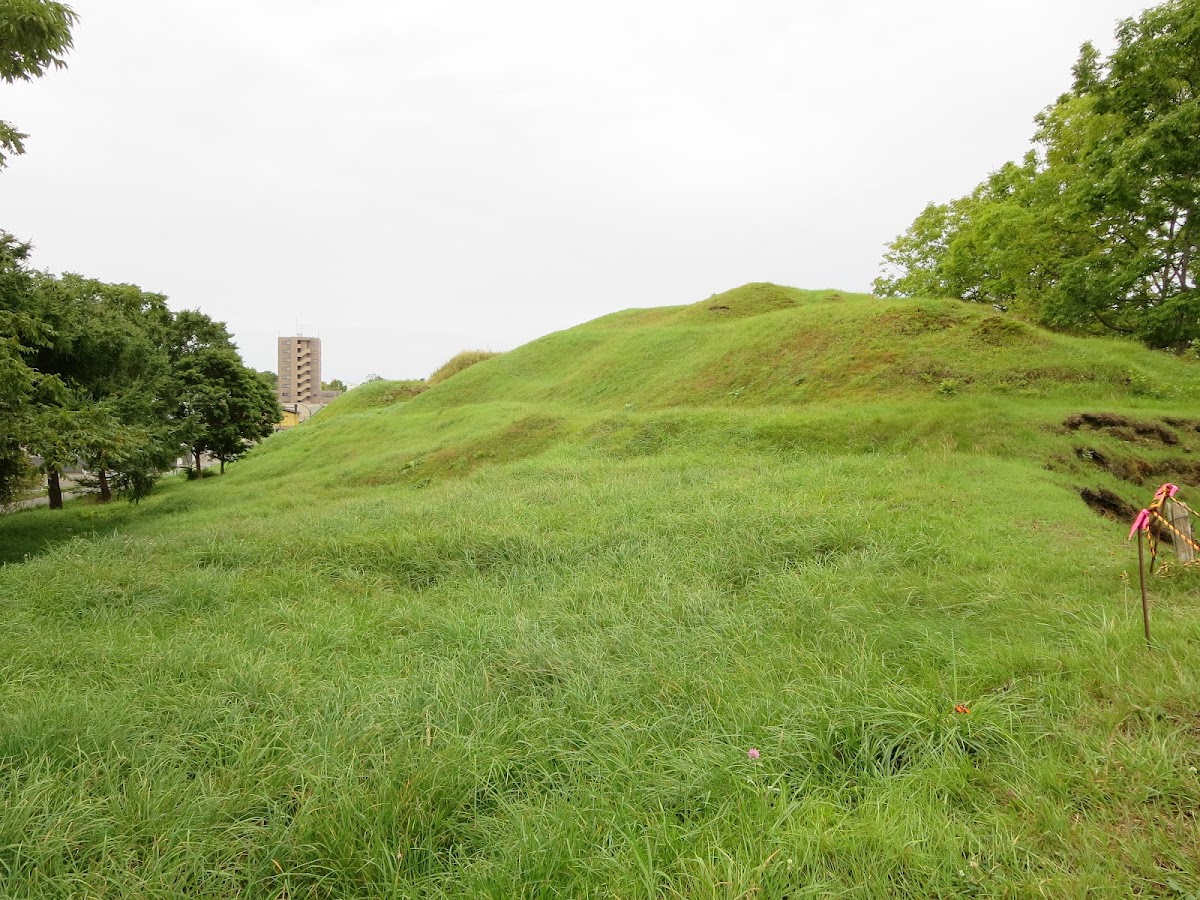
The most distinctive feature of Harutoru Charanke Chashi is that it is divided by a double moat. These moats are arranged in an arc opening towards Lake Harutori and functioned as an important defensive structure protecting the main enclosure.
The area surrounding the moat was piled with excavated earth, suggesting it also functioned as an earthen embankment. The main section, partitioned by the inner moat, measured approximately 15 meters north-south and 30 meters east-west. This double-moat structure is distinctive among the Chashi sites in the Kushiro River basin, indicating the importance of this particular Chashi.
Pit Dwelling Sites
Seven pit dwelling sites from the Satsumon period have been identified on the east side of the Chashi. The Satsumon period refers to a cultural period in Hokkaido from the 7th to the 13th centuries, preceding the Ainu culture. The existence of these pit dwelling sites indicates that people inhabited this area before the construction of this Chashi.
The presence of these pit dwelling sites is important evidence proving that Harutoru Charanke Chashi was not merely a temporary defensive structure, but a place where people lived for a long period.
Traces of a Landing
It is said that a landing stage existed on the south side facing Lake Harutori. Lake Harutori is connected to the Kushiro River and played an important role as a key point for water transportation. The existence of a landing stage suggests that this chashi may have also functioned as a center for trade and transportation.
The Ainu people possessed excellent boating techniques and developed a transportation network utilizing rivers and lakes. Harutoru Charanke Chashi may have been an important hub in this water transportation network.
Relationship with the Kushiro River Basin Chashi Sites
Value as a National Historic Site
Harutoru Charanke Chashi was designated a National Historic Site in 2006 (Heisei 18) as a component of the “Kushiro River Basin Chashi Sites.” The Kushiro River Basin Chashi Sites consist of the following five chashi:
- Moshiriya Chashi Site: Located on a plateau overlooking the Kushiro River
- Harutoru Charanke Chashi Site: On a peninsula-shaped plateau on the northern shore of Lake Harutori
- Onnemoto Chashi Site: In the middle reaches of the Kushiro River
- Charanke Chashi Site (Ponmoshiri): Along the Kushiro River
- Shunkushitakara Chashi Site: In the Kushiro River basin
These chashi sites, geographically confined to the Kushiro River basin, are valued as an important group of archaeological sites that demonstrate the political and social network of the Ainu people.
Positional Relationship with Moshiriya Chashi
Moshiriya Chashi, also a component of the Kushiro River Basin Chashi Sites, is located approximately 2 kilometers northeast of Harutoru Charanke Chashi. Mosiriya Chashi was built on a plateau overlooking the Kushiro River and is believed to have played a role in monitoring and managing river traffic.
You can reach Mosiriya Chashi by passing through the residential area of Tsurugadai and descending a gentle slope towards the Kushiro River. Visiting both Chashi will provide a deeper understanding of the Ainu people’s settlement patterns and defense systems in the Kushiro River basin.
Highlights and Tourist Points
Integrated Use with Harutori Park
Harutoru Charanke Chashi is currently maintained as part of “Harutori Park” and can be freely visited 24 hours a day. Harutori Park has been selected as one of “Japan’s 100 Best Historical Parks” and is a popular place of relaxation for Kushiro citizens.
Harutori Park is a vast natural park centered around Lake Harutori, where you can enjoy beautiful scenery throughout the seasons. It is especially crowded with tourists during the cherry blossom season in spring, the fresh greenery in summer, and the autumn foliage season. A major attraction is the opportunity to enjoy a nature walk in conjunction with visiting the Chashi (fortified settlement).
Observing the Moat Remains
The biggest highlight of a visit to Harutoru Charanke Chashi is the double moat remains. At the site, you can clearly see the traces of the moats and experience the defensive system of the time. By walking and comparing the inside and outside of the moats, you can experience the differences in elevation and defensive ingenuity.
You can also observe the traces of earthworks built around the moats, demonstrating the high level of civil engineering skills of the Ainu people. Information boards are also installed, making it easy for first-time visitors to understand.
View of Lake Harutori
From the main enclosure of the Chashi, you can enjoy a panoramic view of the beautiful Lake Harutori. You can imagine the Ainu people looking out over the lake from this spot and monitoring boat traffic. Especially on sunny days, the contrast between the blue sky reflected on the lake’s surface and the surrounding greenery is beautiful, making it a popular spot for photography.
View of Lake Harutori
From the main enclosure of the Chashi, you can enjoy a beautiful panoramic view of Lake Harutori. Lake Harutori is a brackish lake with a circumference of approximately 5 kilometers, home to diverse flora and fauna. It’s also known as a birdwatching spot, and various wild birds can be observed depending on the season.
Visiting Pit Dwelling Sites
The pit dwelling sites remaining on the east side of the Chashi are another must-see. These dwelling sites, visible as depressions in the ground, are valuable evidence that people lived in this area from the Satsumon period onward. Seven dwelling sites have been identified, allowing us to estimate the size of the settlement at that time.
Access and Visiting Information
Access by Car
The most convenient way to access Harutoru Charanke Chashi is by car. It’s approximately 5 kilometers from the center of Kushiro City, about a 15-minute drive.
Route from Kushiro Station:
- Head east on National Route 38 from Kushiro Station.
- Turn right at the Harutori intersection towards Lake Harutori.
- Use the Harutori Park parking lot (free).
- The Chashi is approximately a 5-minute walk from the parking lot.
Harutori Park has multiple free parking lots, accommodating over 100 cars in total.
Access by Public Transportation
If using public transportation, the local bus is convenient.
Kushiro Bus:
- Take the “Harutori Line” or “Tsurugadai Line” from in front of Kushiro Station.
- Get off at the “Harutori Park Entrance” or “Tsurugadai” bus stop.
- Approximately a 10-minute walk from the bus stop.
Since buses run only 1-2 times per hour, it is recommended to check the timetable in advance.
Access by Foot or Bicycle
Walking from the center of Kushiro City takes approximately 1 hour. The area around Lake Harutori has well-maintained walking paths and is suitable for cycling. Using a rental bicycle, it’s accessible in about 20 minutes from Kushiro Station.
Visiting Hours and Fees
- Visiting Hours: Open 24 hours
- Admission Fee: Free
- Estimated Time Required: Approximately 30 minutes for visiting only the Chashi, 1-2 hours including the entire Harutori Park
During winter, be careful of snow underfoot. In summer, it’s recommended to bring insect repellent.
Nearby Tourist Attractions
Kushiro City Museum
Located about 10 minutes by car from Harutoru Charanke Chashi, the Kushiro City Museum features exhibits on the history, nature, and Ainu culture of the Kushiro region. Detailed explanations of the Chashi and excavated artifacts are also on display, allowing for a deeper understanding when visited before or after the site visit.
The museum regularly holds special exhibitions on the Kushiro River Basin Chashi Sites, allowing visitors to learn about the latest research findings.
Mosiriya Chashi Site
Mosiriya Chashi, also part of the Kushiro River Basin Chashi Sites, is located approximately 2 kilometers from Harutoru Charanke Chashi. Visiting both Chashi sites provides a deeper understanding of the Chashi network in the Kushiro River Basin.
Mosiriya Chashi is situated on a plateau overlooking the Kushiro River and is thought to have served as a monitoring base for river traffic. Comparing its different location to that of Harutoru Charanke Chashi allows for a better understanding of the diversity of Chashi sites.
Walking Trail around Lake Harutori
A walking trail of approximately 5 kilometers surrounds Lake Harutori. While walking around the lake, you can view Harutoru Charanke Chashi from various angles. Information boards explaining the nature and history of Lake Harutori are also installed along the trail.
Historical Significance of Harutoru Charanke Chashi
Importance in Ainu Cultural Studies
Harutoru Charanke Chashi is an important resource for Ainu cultural studies in Hokkaido. The structure, location, and relationship with surrounding archaeological sites of the chashi allow for research into the political system, defense strategies, and residential patterns of Ainu society.
In particular, the possibility that this chashi was used as a meeting or negotiation site, as indicated by the name “Charanke,” provides an important clue to understanding the democratic decision-making process in Ainu society.
Transition from Satsumon Culture to Ainu Culture
The pit dwelling remains from the Satsumon period remaining on the east side are valuable resources for studying the transition process from Satsumon culture to Ainu culture. The overlapping existence of remains from different periods in the same location indicates that this area was a place of human habitation for a long period.
Position in Regional History
The Kushiro River basin has long been an important living area for the Ainu people. This region, blessed with abundant marine and forest resources, was home to many kotan (settlements). Harutoru Charanke Chashi is believed to have functioned as one of the central facilities within these communities.
Preservation and Utilization Efforts
Protection as a National Historic Site
Since its designation as a national historic site in 2006, Kushiro City has been working on the preservation and management of Harutoru Charanke Chashi under the guidance of the Agency for Cultural Affairs. Appropriate maintenance is carried out, including regular mowing, tree management, and protection of the remains.
Educational Utilization
The Kushiro City Board of Education and the Kushiro City Museum utilize Harutoru Charanke Chashi as an educational resource. Regular field study sessions for elementary and junior high school students, as well as history lectures for the general public, are held, providing opportunities to deepen understanding of local history and culture.
Development as a Tourism Resource
Through integrated development with Harutori Park, Harutoru Charanke Chashi has become an important tourism resource for Kushiro City. Efforts are being made to create a comfortable environment for visitors, including the installation of explanatory signs, the improvement of walking paths, and the enhancement of guide signs.
Points to Note and Etiquette When Visiting
For the Protection of the Ruins
Harutol Charanke Chasi is a nationally designated historical site and a valuable cultural asset. Please note the following points when visiting:
- Use the designated walking paths to avoid trampling on the trenches and earthworks.
- Collecting plants or stones is strictly prohibited.
- Take all your trash with you.
- Use of fire is prohibited.
- Pets are allowed, but please keep them on a leash and be sure to take all their waste with you.
For a Safe Visit
- The south side facing Lake Harutori is a steep slope; be careful not to fall.
- Wear appropriate footwear as the ground can be slippery during and after rain.
- Insect repellent is recommended during the summer months due to the abundance of insects.
- Be aware of snow and ice during the winter months.
- Follow city instructions if bear sightings are reported.
Summary
Harutoru Charanke Chashi is an important cultural heritage site of the Ainu people, located on the shores of Lake Harutori in Kushiro City, Hokkaido. The structure, cleverly utilizing the peninsula-like terrain jutting into Lake Harutori and defended by a double trench, demonstrates the advanced civil engineering skills and strategic thinking of the Ainu people.
As the name “Charanke” suggests, this chashi (fortified site) may have functioned not merely as a defensive structure but also as a venue for important meetings and negotiations, playing a role as a political and social center in Ainu society.
Protected as one of the nationally designated historical sites “Kushiro River Basin Chashi Sites,” this site is open 24 hours a day free of charge, allowing visitors to reflect on history at their leisure amidst the beautiful natural environment of Harutori Park. When visiting Kushiro, be sure to visit this valuable cultural heritage site and experience the history and culture of the Ainu people.
Combining this with prior learning at the Kushiro City Museum and comparative visits to other chashi sites such as Mosiriya Chashi will lead to a deeper understanding and a more fulfilling experience.