
Moroto Castle (Inzai City, Chiba Prefecture) Complete Guide | A Flourishing Sub-Castle of Usui Castle, a Key Point for Water Transportation
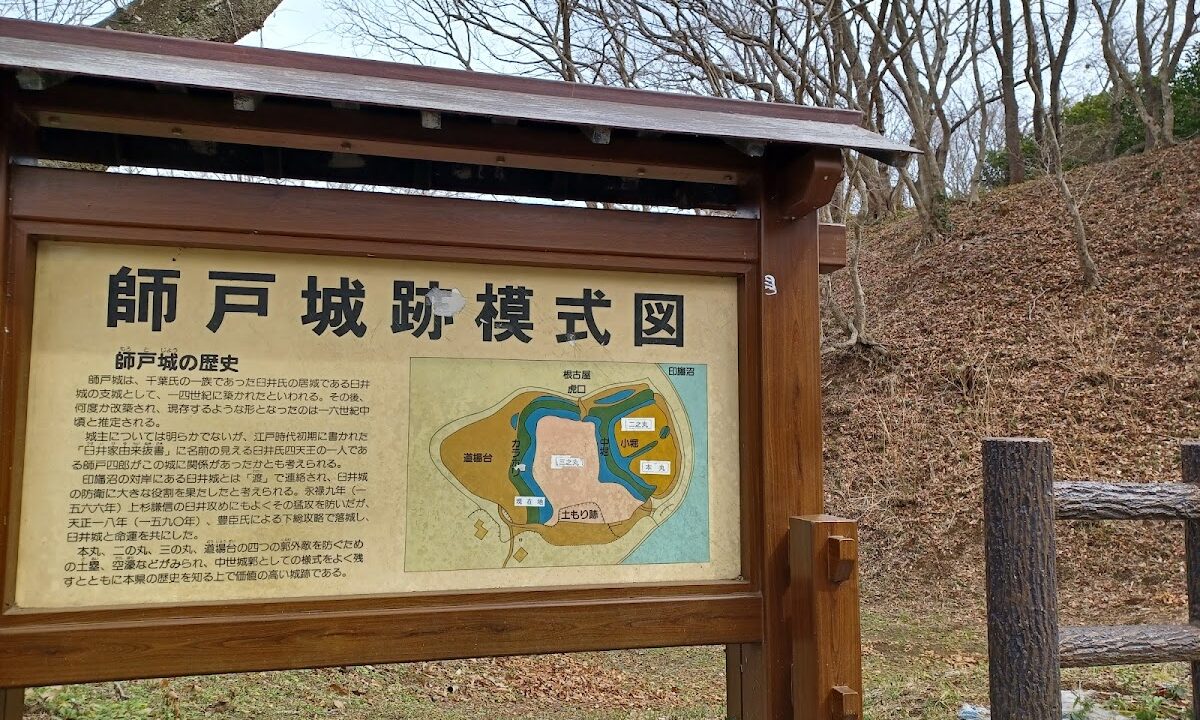
Moroto Castle, located in Moroto, Inzai City, Chiba Prefecture, is a medieval castle built on a plateau overlooking Lake Inba. Currently, it is maintained as Chiba Prefectural Inbanuma Park, and the remains such as earthworks and dry moats are well-preserved. This castle, which played an important role as a sub-castle of Usui Castle, was a strategic base controlling a key point for water transportation.
Basic Information on Moroto Castle
Moroto Castle is a flatland castle built on a plateau jutting out into Lake Inba. Located at an elevation of 28m and a relative height of 23m, it is situated approximately 1.5km south across Lake Inba from Usui Castle. It is believed that the two castles functioned in conjunction, playing a role in protecting a key point in Shimosa Province from both water and land transportation perspectives.
Location and Former Province
- Location: Morito Ryunotani, Inzai City, Chiba Prefecture
- Former Province: Shimosa Province
- Current Status: Developed as Chiba Prefectural Inbanuma Park
- Alternate Name: Ryugaya Castle (local name)
Classification and Structure
- Classification: Hilltop Castle
- Construction Period: 14th Century (possibly late Kamakura period)
- Builder: Unknown (estimated to be related to the Usui clan)
- Main Lords: Morito Shiro, Hara clan
- Keep Structure: None (medieval castle)
- Main Remains: Earthworks, dry moats, gate, earthen bridge, baileys
History of Morito Castle
Late Kamakura Period to Muromachi Period
While there are few clear records regarding the construction date of Moroto Castle, according to the “Usui Family History Excerpts,” it is believed to have already functioned as a subsidiary castle of Usui Castle by the late Kamakura period. It is said to have been the residence of Moroto Shiro, known as one of the Four Heavenly Kings of Usui, and played a part in the ruling system of the Usui clan, a branch of the Chiba clan.
In the 14th century, it was formally built as a subsidiary castle of Usui Castle and became an important base for monitoring and controlling water traffic on Lake Inba. It is located opposite Usui Castle across Lake Inba and is thought to have been connected by a “watari” (waterway). This geographical location played a significant role in the defense of Usui Castle.
Moroto Castle in the Sengoku Period
During the Sengoku period, Moroto Castle is believed to have been under the rule of the Hara clan. As a member of the Chiba clan’s vassal group, the Hara clan continued to play a part in the defense network centered around Usui Castle. During this period, the Chiba, Hojo, and Uesugi clans were among the various powers in Shimosa Province, making the area around Lake Inba a crucial strategic region.
Morito Castle, in conjunction with Usui Castle, controlled water transport on Lake Inba, playing a vital role in managing the transportation of goods and military movements. Lake Inba, in particular, was a vital waterway connecting to the Tone River system, and controlling this region was directly linked to the control of Shimosa Province as a whole.
Fall and Abandonment of the Castle in 1590
In 1590, when Toyotomi Hideyoshi launched the Odawara Campaign (the Siege of Odawara), the Chiba clan, who were allied with the Hojo clan, were drawn into the fighting. It is believed that when Usui Castle fell in this battle, Morito Castle, a subsidiary castle, also fell at the same time.
After the Siege of Odawara, with the downfall of the Hojo clan, the Chiba clan also lost their territory, and Morito Castle ceased to serve its purpose and was abandoned. From then on, this area lost its function as a castle and, over many years, became farmland and forest.
Structure and Remains of Moroto Castle
Layout and Enclosure Arrangement
Moroto Castle’s layout skillfully utilizes the topography of a plateau jutting out into Lake Inba. It was a large-scale castle for a medieval period, with multiple enclosures arranged in stages. Currently, the third enclosure is used as a baseball field, allowing visitors to experience the vast enclosure space of the past.
The castle’s structure was designed with defenses in mind, anticipating attacks from the Lake Inba side, with the main enclosures positioned to easily monitor water traffic. By utilizing the plateau’s topography, the design allowed for effective defense even with a small number of personnel.
Earthworks and Dry Moats
The greatest highlight of Moroto Castle is its well-preserved earthworks and dry moats. Partial excavation was conducted in 1972, and the site was subsequently developed into Chiba Prefectural Inbanuma Park, resulting in the preservation of these remains in excellent condition.
The earthen ramparts surround the baileys, and their height and width reveal the high level of defense at the time. The dry moats, dug to prevent enemy intrusion, remain intact, with their depth and width clearly visible. These remains are typical defensive structures of medieval castles, illustrating the military importance of Moroto Castle.
Gate and Earthen Bridge
The gate, the entrance to the castle, is also in good condition. The gate was an important structure for controlling enemy intrusion, designed to give the defenders an advantage. Moroto Castle’s gate is a narrow passage surrounded by earthen ramparts, designed to allow attacks on invading enemies from the flanks.
An earthen bridge crossing the dry moat also remains, allowing visitors to experience the castle’s access route at the time. The earthen bridge was designed to be destroyed during wartime to prevent enemy intrusion, demonstrating the high level of defensive technology used in medieval castles.
Current State of Preservation
The remains are well-preserved thanks to the development of Chiba Prefectural Inbanuma Park. The roads and walking paths within the park are laid out to avoid damaging the castle’s structure, and are well-maintained to allow visitors to easily observe the remains. In spring, the cherry blossom trees create a beautiful scene, making it a popular spot where visitors can enjoy both a stroll through the castle ruins and cherry blossom viewing.
The slope from the park entrance to the parking lot gives the feeling of climbing alongside an earthen embankment, allowing visitors to experience a simulated ascent to the castle. Because the area is well-maintained, even those unfamiliar with castles can safely enjoy the visit.
Relationship between Moroto Castle and Usui Castle
Role as a Subsidiary Castle
Moroto Castle was built as a subsidiary castle of Usui Castle and formed an important part of Usui Castle’s defense system. Usui Castle was a major castle in Shimosa Province, the residence of the Usui clan, a branch of the Chiba clan, while Moroto Castle served as its outer defensive line.
The distance of approximately 1.5 km across Lake Inba allowed for visual communication and information transmission via beacon fires, suggesting that the two castles always functioned in coordination. A mutual support system was established where reinforcements could be sent from Moroto Castle when Usui Castle was under attack, and conversely, support could be received from Usui Castle when Moroto Castle was under attack.
Control of Water Transportation
The most important role of both castles was to control water transportation on Lake Inba. Lake Inba is a vital waterway connecting to the Tone River system, and was an essential route for the transport of goods and military movements. The placement of Usui Castle and Moroto Castle across Lake Inba allowed for complete monitoring and control of this waterway.
The two castles were connected by a waterway called “Watari,” allowing for the rapid movement of troops and supplies as needed. This water network was an extremely important strategic asset in the Middle Ages, when land transportation was not well-developed.
The Four Heavenly Kings of Usui and Shido Shiro
Shido Shiro was a warrior known as one of the Four Heavenly Kings of Usui, serving the Usui clan as the lord of Shido Castle. The Four Heavenly Kings of Usui refers to four particularly outstanding warriors among the Usui clan’s retainers, and Shido Shiro played a crucial role as one of them.
While historical records regarding Shido Shiro’s specific achievements are limited, it is certain that he managed water transportation on Lake Inba as the lord of Shido Castle and contributed to the defense of Usui Castle. It has also been suggested that the place name Shido may originate from his name, indicating the extent of his influence in the region.
Access Information
Access by Public Transportation
You can visit Moroto Castle Ruins (Chiba Prefectural Inbanuma Park) using public transportation.
Via Keisei Electric Railway Main Line:
- Take the Taisei Kotsu Munakata Line (Blue Route) from Keisei Usui Station
- Get off at the “Inbanuma Park Entrance” bus stop and walk for about 5 minutes.
Via Hokuso Line:
- Take a bus from Inba Nihon Iryo Daigaku Station
- Get off at the “Moroto” bus stop and walk for about 5-6 minutes.
Since the number of buses is limited, it is recommended to check the timetable in advance. Especially on holidays, there may be fewer buses running, so please be careful.
Access by Car
Access by car is also convenient. Chiba Prefectural Inbanuma Park has a parking lot that is free to use.
Access from Major Roads:
- Approximately 20 minutes from the Higashi-Kanto Expressway “Sakura IC”
- Accessible via National Route 464
- Search for “Chiba Prefectural Inbanuma Park” or “Inzai City, Moroto” on your car navigation system.
The castle ruins are a short walk from the parking lot, and you can feel the atmosphere of the earthworks as you climb the slope to the parking lot. The parking lot is spacious and usually has ample room even during busy times.
Points to Note When Visiting
- Visiting Hours: The park is open year-round, but it gets dark after sunset, so daytime visits are recommended.
- Estimated Time Required: 1-2 hours for a thorough visit.
- Attire: While the walking paths are well-maintained, comfortable shoes are recommended.
- Season: Spring is especially recommended for its beautiful cherry blossoms, and autumn for its stunning autumn foliage.
- Facilities: Toilets are available within the park.
Highlights and How to Enjoy Moroto Castle
Observation Points for the Ruins
When visiting Moroto Castle, pay attention to the following points when observing the ruins.
Height and Structure of the Earthworks: The earthworks surrounding the baileys are tall and wide, giving a real sense of their defensive capabilities at the time. There are places where you can walk on top of the earthworks, allowing you to experience a panoramic view of the castle grounds.
Depth of the Dry Moats: The well-preserved dry moats have ample depth and width. Looking up at the earthen ramparts from the bottom of the dry moat, you can truly appreciate the difficulty faced by the attackers.
Structure of the Castle Entrance: The castle entrance, or “koguchi,” is designed to give the defenders an advantage. Imagine being attacked from both sides of the ramparts while passing through the narrow, passage-like entrance.
View of Lake Inba: Lake Inba can be seen from the castle ruins. It’s a spectacular viewpoint that truly showcases the castle’s strategic location as a key point for water transportation.
Enjoying the Castle Through the Seasons
The Moroto Castle Ruins, now part of Chiba Prefectural Inbanuma Park, offer different charms throughout the four seasons.
Spring (Late March to Early April): The cherry trees in the park are in full bloom, making it a popular spot for cherry blossom viewing. You can enjoy both a stroll through the castle ruins and cherry blossom viewing at the same time.
Summer (June to August): Enjoy the lush green scenery. The cool breeze from Lake Inbanuma is pleasant, making it ideal for a stroll.
Autumn (October-November): The autumn foliage is beautiful, and the historical atmosphere harmonizes with the natural beauty.
Winter (December-February): The fallen leaves allow for a clearer observation of the ruins’ structure. The air is clear, and the view of Lake Inbanuma is excellent.
Nearby Historical Spots
If you visit Moroto Castle, we recommend also visiting the nearby historical spots.
Usui Castle Ruins: The ruins of Usui Castle, the main castle of Moroto Castle, are also worth visiting. Located about 1.5 km across Lake Inbanuma, you can see firsthand the relationship between the two castles.
Around Lake Inbanuma: Lake Inbanuma played a historically important role as a key point for water transportation. While strolling along the lakeshore, you can reflect on medieval water transport.
Historical Value and Modern Significance of Moroto Castle
Value in Medieval Castle Research
Moroto Castle preserves a typical medieval castle structure in excellent condition, making it of significant value in castle research. It possesses all the basic defensive features of medieval castles, such as earthworks, dry moats, gates, and earthen bridges, making it a valuable resource for learning about the castle-building techniques of the time.
In particular, its role as a subsidiary castle and its relationship with water transportation make it an important site for understanding the regional control system of the Sengoku period. Its cooperative system with Usui Castle is highly valued as an example of a medieval castle network.
Preservation as a Regional Historical Heritage Site
Thanks to the excavation survey in 1972 and the development of Chiba Prefectural Inbanuma Park, the Moroto Castle site is well-preserved. It is an ideal example of preservation and utilization, maintaining its value as a historical heritage site while being enjoyed by citizens as a park.
Locally, it is affectionately known as Ryugaya Castle and is part of the region’s historical identity. During the spring cherry blossom season, many citizens visit, and it functions as a place of relaxation where history and nature are in harmony.
Use as a Tourism Resource
The Shido Castle Ruins are positioned as an important tourist resource in Inzai City. It has been developed to be enjoyable not only for castle enthusiasts but also for general tourists, and is also used as a place for historical education.
With ample parking and well-maintained walking paths, it is an easily accessible castle ruin and a recommended spot for beginners to castle tours. It is also attractive as part of a sightseeing route combined with the scenery of Lake Inba.
Summary
Shido Castle is a medieval flatland castle located in Inzai City, Chiba Prefecture, built in the 14th century as a branch castle of Usui Castle. It played an important role as a strategic point controlling water transportation on Lake Inba, and it is said to have been the residence of Shido Shiro, one of the Four Heavenly Kings of Usui. Although it fell during the Siege of Odawara in 1590 and was abandoned, the site is now maintained as Chiba Prefectural Inbanuma Park, and its remains, such as earthworks and dry moats, are well-preserved.
It’s easily accessible by public transport and car, and has ample parking, making it a convenient place to visit. It’s a valuable historical site where you can learn about the structure of medieval castles, and also an attractive spot where you can enjoy the beauty of nature throughout the seasons. Understanding its relationship with Usui Castle and its historical background as a waterway on Lake Inbanuma will allow you to appreciate the value of Moroto Castle even more deeply.
It’s a recommended place not only for castle enthusiasts, but also for those interested in history and those who enjoy nature walks. When you visit Inzai City, be sure to stop by Moroto Castle Ruins.


