Mochizuki Castle: A complete guide to history and light points | Detailed explanation of famous castle forts in Saku City, Nagano
Memories
- Overview of Mochizuki Castle
- Mochizuki Castle Historical Museum Exhibition
- Mochizuki clan Yoshino family family history
- Fortification Bureau
- Major points
- Takeda Shingen enters Saku and Mochizuki Castle
- Yukitaka Sanada’s surrender and surrender
- Protection of Mochizukiyama Castle and Fortress Site
- Transportation guide
- Travel information
Mochizuki Castle Overview
Mochizuki Castle is located in Nippon Yamashiro, a troupe in Mochizuki-cho, Saku City. This is the residence of the Mochizuki clan, and the Mochizuki clan is a large and powerful family in the Mochizuki district of Saku District, Saku District.
The main city has a distance of approximately 780 meters, the inner city has a distance of approximately 670 meters, and the altitude of the surrounding area is approximately 110 meters. This is a large mountain castle with a length of 1,500 meters. The main castle tower has a clear structure in the third layer of the castle, and the annexed castle in the south has a fifth layer of the castle.
The construction of a magnificent mountain castle, a castle tower, a castle tower, and a river city built during the dry period was well-organized, well-preserved and well-maintained. This is a typical medieval Xishan castle.
Historical background of Mochizuki Castle
Construction history
However, it is universally acknowledged that the Mochizuki Castle was built by the Mochizuki clan, a branch of the Shigeno clan. The most likely explanation is that in 1335, after Tenjin Castle was attacked by Tsuneoji Ogasawara, Mochizuki Castle was built and built as a new site.
During the Mochizuki clan’s reign in 1156, he played an important role during the Hogen War, and held an important position in the Shogunate’s Chuya period. One of Shigeno’s three most famous gates, the Mochizuki clan built the Saku area and achieved great regional power.
Animation from the era of war
During the war period, Mochizuki Castle was established, and the Takeda clan of Kai Province served as a military base for military exchanges in the provinces. In 1543, Takeda Harunobu (returning Takeda Shingen) made a full-scale invasion of Saku, and Mochizuki Joya established the plan for the attack.
Mochizuki Castle finally fell under the fierce attack of the Takeda army, and the Mochizuki clan continued to resist. However, under the mediation of Yukitaka Sanada (Yukimori), a member of the same Shigeno clan, the castle lord at the time, Mori Mochizuki, finally surrendered.
Takeda clan period
After surrendering, the Mochizuki clan entered Mochizuki Castle, and became the local owner under the Takeda clan. Nobuo, and other members of the Takeda family under the control of the Takeda clan, participated in the Saku district of the province, which was an important administrative function.
From the time of the Takeda clan’s restoration to the present, it is confirmed that Mochizuki Castle was built and repaired. Currently in use during the Tensho era (1573-1592).
Castle Fortress’s End
After the death of the Takeda clan in 1582, the fate of Mochizuki Castle is very small, and there are very few details about it. The universal recognition of mankind, the conclusion of the country and time, and the end of the production and the ability of mountain castle.
Mochizuki clan and Shigeno clan family name
Shigeno Sanke
The Shigeno family was a strong family in the country, and its strength extended to a long period of time during the Heian period. The three Shigeno families are the Mochizuki clan, the Umino clan, the Wanezu clan, and the Shigeno clan, which is from Tokyo.
These three families came to Saku County in a large area in Saku County, which was an important area in medieval times. The Mochizuki family was originally located in the Mochizuki district of Saku District, and henceforth managed the Mochizuki Ranch (Imperial Family Ranch).
Mochizuki’s historical status
Since the establishment of the independent Shogunate, the Mochizuki clan’s servants have served as servants to the shogun’s affairs. In addition, during the Genno War, the Peace War, and the War of Peace and Restoration, it was revealed that it was established and held a direct position within the shogunate for a long time.
During the Muromachi period, the power of the local feudal lords (provincial daimyos) was extended to the local masters of the Mochizuki area, which was established during the Muromachi period.
Yosanada clan’s series
Installation: Yukitaka Sanada (Yukisei) also descended from the Shigeno clan and the Yomochizuki clan. This is the background of Yukitaka Sanada’s homeroom teacher when he joined Takeda Shingen in Sakuma.
Mochizuki Moritoki’s decision to surrender to the Takeda clan, and the internal collaboration of the Shigeno clan, was one of the most important survival strategies of the time.
City Fortress Department
Chiropractic Bureau
Mochizuki Castle is a large mountain castle, measuring 1500 meters from north to south. The main burial mounds to the north of the main castle are centered, and the second and third burial mounds are located in different locations.
The southern branch castle area is comprehensive, the 4th and the 5th mound, the formation is completed, the first distribution station is added, and the multi-mall mound is organized in a connected manner. The fort was constructed with a 110-meter high sea level, which was designed and convenient for defense and residence.
Main compartment
The highest point on the main wall is the highest point in the Ucheng fortress. The four-circumference wall of the castle is a soil-grade castle wall, and the entrance (small end) is also reinforced with heavy weights.
The master can see the panoramic view of the Saku plains from above, and the equipment has the function of observation and patrolling. The shape of the cave is close to the square, and the details of its construction are detailed.
Next 围墙和连续围墙
The second important part of the next main burial mound is the south side of the second main burial mound. One article, the castle river commander, and the owner’s castle were separated, and the formation was completed in a certain way, and the independence and convenience of the organization were combined.
The second and third tiers are arranged in a ladder-like arrangement, and the tiers of each tier are solidified. A multi-tiered defense system has been formed in this way, blocking enemy infiltration at different levels.
Defense construction
Mochizuki Castle has been reserved for many medieval mountainous castle forts with typical defensive construction, comprehensively drying up the Pengcheng River, moat, Hijikata construction and vertical Pengcheng River. Specially, it is dry and dry.
The lower tier of the turret was constructed as a main turret, and the thickness of the defensive construction was increased, which also served as a candidate area for soldiers to build at the same time. The walls of the castle are narrow, the walls are built along the walls, and the construction is a road that moves horizontally.
Main points
A perfectly preserved legacy
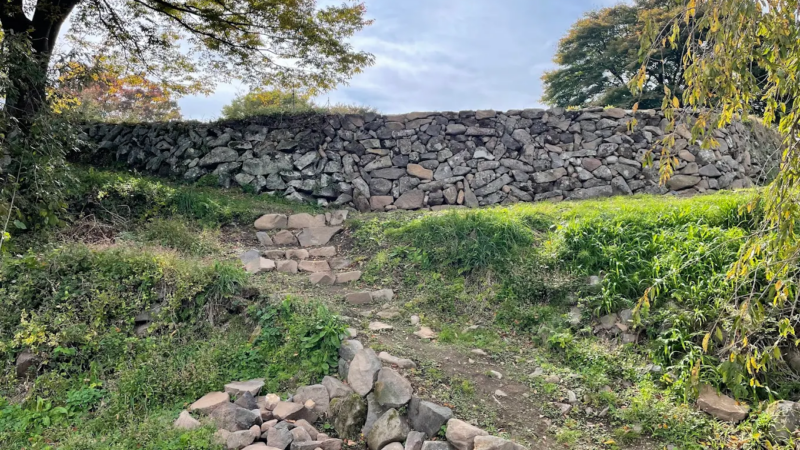
Mochizuki Castle’s monuments are perfectly preserved, and the outer fortress and dry water are clearly visible. During the post-Yuyu period, the construction of the fort was not so successful, but it was a rare sight to see, and I can imagine the appearance of the fort at the time of its construction.
As a result, the construction of the main castle and its surroundings can be clearly seen, and the summary of the mountain castle in the country and time has been provided as an important reference material.
Castle group
The owner’s castle is the fifth castle, and there are multiple castles. Each citadel’s large and small sum shapes are inhomogeneous, and the citadel’s function is distributed.
The flat area of the castle is large, and there are many possibilities for construction. Detailed information on the use of the archaeological excavation guide and the use of the castle fort.
Dry river
After the construction of the fort, the fortress river was dry, and the fort river was clearly visible. In this case, the construction of the castle river was completed with important defensive works, and the invasion of the enemy was effectively prevented.
The bottom of the river is still very deep, so I understand that it is an ancient Japanese analogy. Part of the castle was built by the river, Zeng, and the bridge was used as a road.
Hijikata construction
Earthquake construction work completed around the main castle, Waji Castle. Suddenly the altitude was uneven, but there were a lot of people 1-2 meters left and right. In addition to this, the construction work on the earth’s surface is very similar to the construction of the trestle.
The construction of the earthworks was inspected, the detailed construction of the earthworks was completed, and the construction technology of the fortifications was very high and level.
Castle gate (small entrance)
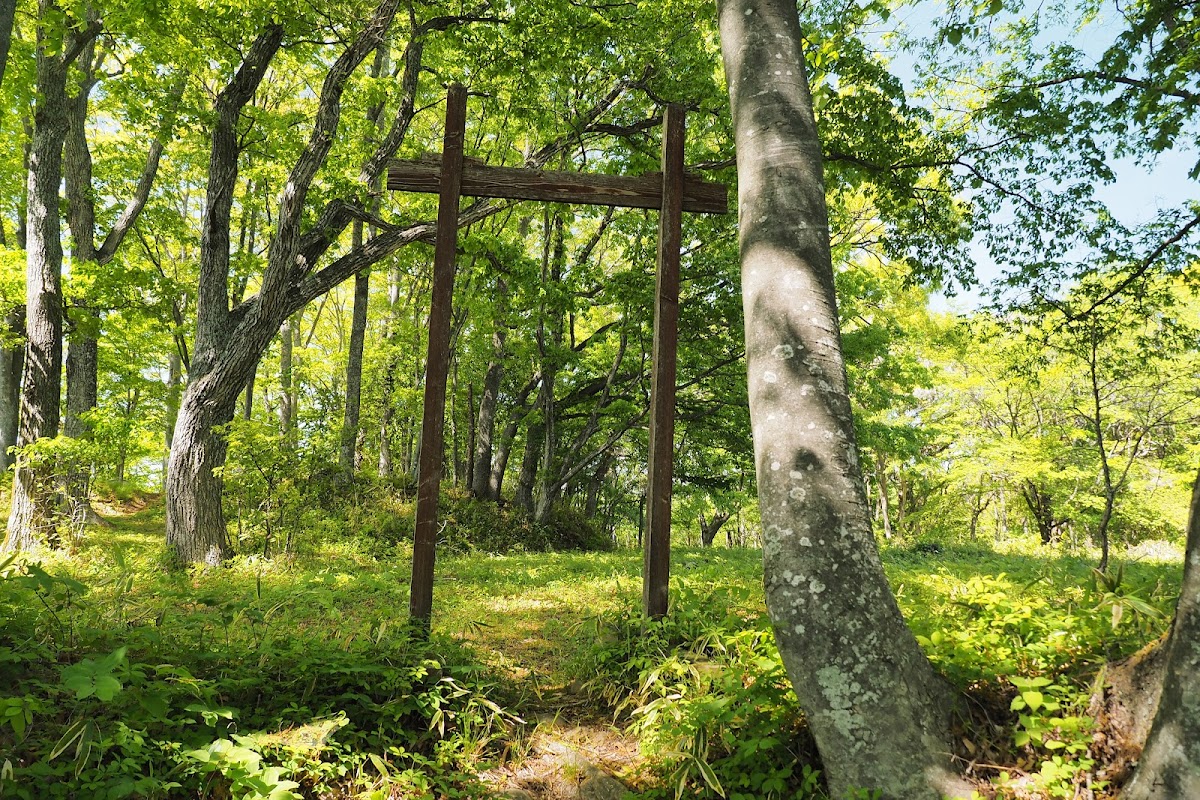
Each castle has its own entrance, immediate entrance, and additional defensive structures. There was no direct line between the two sides, so the envoys were invading.
There is a small hole in the stone that shows the traces of the stone, which is an important entrance that covers a special area fortification.
Takeda Shingen enters Saku Castle and Mochizuki Castle
Background of the invasion of Saku Castle
Empress of Kai, Takeda Harunobu (Shingen) started full-scale efforts, and the military was established. Saku County, a neighboring country of Yokai, has a strong point of control over production, and has important strategic intentions.
Saku County was completely invaded in 1542, and the following year, in 1543, Mochizuki Joya’s attack was planned.
Mochizuki Castle
The Takeda army’s invasion of Saku District was fierce enough, and the Shinta region resisted with great force. At Mochizuki Castle, the Takeda army resisted for the first time, but in the end, it was defeated by the invincible troops, and they were attacked and fought in a difficult battle.
After a long period of attack, Mochizuki Castle was isolated after a long period of military surrender and the isolation of Mochizuki Castle.
Castle Pond Fall
In 1543 (Tenbun 12), the Takeda army at Mochizuki Castle fell under attack. However, the Mochizuki clan did not completely surrender, but they resisted completely.
Detailed historical records of military roles during this period are rare, and many details of military roles are extremely unclear. However, it is possible to affirm that it is important to establish the Takeda clan in this area.
Yukitaka Sanada’s surrender and surrender
Effect of Yukitaka Sanada
Worked by Yukitaka Sanada (Snow), a high-ranking vassal of Takeda Shingen, and a key figure in the process of Shingen’s conquest. Other than that, he has a self-made background as a member of the Shigeno family, and has developed an outstanding ability to negotiate and negotiate.
During the trial of the Mochizuki clan, the Shigeno family’s formal office was an important influence. Nobuo, Yukitaka was successfully accepted and the Mochizuki clan served the Takeda clan.
Mochizuki’s decision
The castle lord at the time, Mochizuki Mori, received an offer from Yukitaka Sanada, and it was decided that the Takeda clan would surrender. The decision was made to preserve the famous name of the Mochizuki family, which belonged to Akechi.
After the immediate surrender, the Mochizuki castle staff were given permission to complete the work and other residences, and the Takeda clan was given sufficient consideration to the Mochizuki clan’s ability to rule the country.
Mochizuki under the Takeda clan
After being a vassal of the Takeda clan, he was the owner of the Saku area since the beginning of the Mochizuki clan. During the country’s governance system, the Takeda clan’s beliefs were very important, and the Mochizuki clan’s performance was very important.
Mochizuki Castle is a part of the Takeda clan’s castle pond, which can be constructed in many different ways. The current part of the past can be traced back to a certain period of time.
Protection of Mt. Mochizuki Kokoin and Castle Pond site
History of Mt. Mochizuki Kokoin
At the base of Zaibozuki Castle, is the temple of the famous Mochizukizan Kokoin temple. The location of the temple is a profound source of the Mochizuki clan, which is an important historical site of Mochizuki Castle.
Kokoin Temple still exists today, and is the first entrance to the Obozuki Castle Pond site. Inside the temple, there is a path that leads to the castle pond, which is convenient for visitors.
Culture world
Mochizuki Castle Pond Site is one of the most perfectly preserved medieval Keiyama Castles. You can see the history of the castle, and it is an important resource for studying Japanese history and teaching.
At present, a part of the information board has been changed, the main gate has been changed, and the structure of the castle fortress has been changed.
Protection and utilization work
Protection and use of the Mochizuki Castle site by the alliance in the Wasaku district of Saku City. Others should consider the current location of their travels, as well as the development of their travel resources.
If the construction is changed, the viewing environment will be changed, the main gate will be changed, and the road will be improved as well. The perfect face of a futuristic archeology excavation Japanese academic research leader.
Transportation and Tour Guide
Location
Land site: Mochizuki Castle, Saku City, Nagano
Nori: Approximately 780 meters (main castle)
Elevation level: Approximately 110 meters (Kankoin)
Self-drive route
Arrival along Shinetsu Expressway:
- Usaku IC departure time approximately 15 km, car journey approximately 25 minutes
- Departure time from Usakuminami IC is approximately 12 km, and driving time is approximately 20 minutes.
Central expressway service:
- Exit from Usakuminami IC, take National Route 142, approximately 20 minutes by car
Travel stop: Kokoin Shuen Yuichi’s short stop. The car position is limited, and the high peak time train is safe.
Public transportation
Sit JR Takaumi Line:
- Take the JR High Sea Line to the north central station, and then take the shuttle bus to the north central station, and it will take about 15 minutes to arrive.
- Take the JR High Sea Line to the intermediate station and get there in about 20 minutes.
Local Hashi: Hashi Banji Limited in the former Obozuki district, timetable before construction.
Precautions for visiting Mochizuki Castle
Wearing and equipping:
-Yu Mochizuki Castle is located on the top of the mountain, and Japanese mountain climbing clothing and Japanese sandals fit the demand.
- Built-in anti-slip mountaineering shoes.
- Summer clothes for mosquito protection, winter clothes for keeping warm clothes.
Counter demand time:
- It takes about 30-40 minutes to walk from Kyokoin to Mochizuki Castle Lord’s Castle.
- Round trip schedule: 2-3 minutes, comprehensive tour of the fort.
Safety knowledge:
- Please pay attention to the reason, the reason is that the area is safe, and it is easy to move the mountain.
- Evacuation from Germany; construction is possible.
- It’s hard to find the weather in the winter when it’s snowing.
Best time to visit:
- Spring to autumn (April to November) is the best time to visit.
- In the winter season (December to March), there may be snow or ice, which may be suitable for mountain climbers.
Preparation for the tour
Pre-departure notes:
- 查view天气预报,选择空天.
- Get the latest information from the local travel information center.
- The hand signal is possible depending on the location, but it is not fixed.
Construction materials:
- Drinking water (self-driving equipment located around the castle fort)
- Zero food or capacity replenishment
- Companion site
- Landscape or travel guide
- Emergency relief package
Nearby travel information
Saku City Kushi Scenic Spot
Ryuji Castle Go Station: The distance from Mochizuki Castle is approximately 30 minutes by car. This is a Western-style fort built in the late Jiangzhou period, designated as a national historical monument.
Haranakagome School: Founded in 1875 (Meiji 8), it is one of the oldest Western-style schools in existence, and has been designated as a nationally important cultural property. The distance from Mochizuki Castle is approximately 20 minutes by car.
Saku City Mochizuki Historical and Folklore Museum: Introduction to the Mochizuki area historical and cultural museum, exhibits include Yomochizuki Castle Sokan items. Visit this place before and after Mochizuki Castle, and explore the history and culture of the area.
Nearby Castle Fort Site
Tenjin Castle Ruins: The residence of the Mochizuki clan before Mochizuki Castle was built. The castle fort fell in 1335, and is now a historical site.
Uchiyama Castle ruins: A medieval castle in the Saku area, Yomochizuki Castle, occupied by the Takeda clan. Go to Yomochizuki Castle and visit the comparison.
Kasuga Castle Ruins: Medieval Seiyama Castle in Saku City, the source of the historical records of the Yotake clan. We all visited Yomozuki Castle and learned about the history of the castle fort in the Saku area.
Hot spring Yoju-juku
Mochizuki Onsen: The Mochizuki area has a perfect hot spring facility, which is the ideal choice for the mind, body, and spirit. Also a day trip to Kaanbai.
Saku City Liquor Store Japanese-style Inn: A Japanese-style inn located in the center of Saku City, this is the ideal place for sightseeing. A comprehensive tour of Mochizuki Castle.
Gourmet Food Specialty
Saku Sushi Cuisine:
Name of Sakui’s fish dish. Local delicacies such as 鲤鱼炖, 甜炖鲤鱼, etc. are available for purchase.
Wonmu-myeon: The source of Wonmu-myeon, Shinshu, and a delicious Wonmu-myeon restaurant in the Mangzuki area.
Takahara Yosai:
Saku is the highland vegetable category, and you can buy the new plateau vegetable directly from the store.
Activity information
Mochizuki Station Festival:
The Mochizuki Station Festival is a history of Nakasendo Station’s Mochizuki City trip, which is a rich history of the local experience.
Saku City History Activities:
Various historical activities in Saku City throughout the year. Local travel information from the previous visit.
Summary
Mochizuki Castle is Koyayama Castle built by the Mochizuki clan, one of the three Shigeno families. It is an important medieval Qishan castle ruins, a large area with a land area of approximately 1,500 meters. During the war, Takeda Shingen invaded Saku, and Mochizuki Castle was closed and suffered serious troubles. Under the mediation of Yukitaka Sanada, Mochizuki Castle was built and owned by the Takeda clan, and is still in existence, a classic strategy for local survival during the time of the Chengdu Empire.
Comprehensive main castle to the 5th outer fort internal possession history, since the dry castle was completely preserved, Kawa Hijikata process, the capital is a rare history, the first appearance of the construction of the castle fort. The construction of the castle fort, 110 meters of sea level, the defense construction bureau, Jingren Yuju, and the study of the construction of the envoy, an important source of typical medieval mountain forts.
As soon as you arrive in Saku City, you must visit the Mochizuki Castle Ruins, which is a historical monument of the country. During the journey, the story was perfectly preserved, and the generals were able to experience the realism of history without having to write a textbook.
When you visit, please be sure to wear appropriate clothing, pay attention to safety, and take special precautions to protect the history of our country. Mochizuki Castle is one of the most famous Japanese castles in history.