Matsushiro Castle (Nagano Prefecture, Nagano City) Complete Guide | History, Highlights, and Access Explained in Detail
Located in Matsushiro-cho, Nagano City, Nagano Prefecture, the Matsushiro Castle ruins are a historically significant castle that functioned as an important base in northern Shinano from the Sengoku period to the Edo period. It played a central role in history for over 300 years, serving as the site of the Battle of Kawanakajima, where Takeda Shingen and Uesugi Kenshin vied for supremacy, and as the residence of the Sanada family, who held a 100,000 koku domain.
Currently designated a national historic site, the Matsushiro Castle ruins, restored to their former glory through large-scale restoration work in the Heisei era, are a popular spot for history buffs and tourists. This article provides a thorough explanation of Matsushiro Castle’s detailed history, highlights, and access information.
Overview and Characteristics of Matsushiro Castle Ruins
Matsushiro Castle is a concentric-style flatland castle built in Kaizu, Hanishina District, Shinano Province (present-day Matsushiro-cho, Nagano City, Nagano Prefecture). Originally called “Kaizu Castle,” it was also known as “Kaizu Castle” and “Kayatsu Castle.” Designed as a natural fortress utilizing the natural flow of the Chikuma River as an outer moat, it is a castle that embodies the pinnacle of Sengoku period castle construction technology.
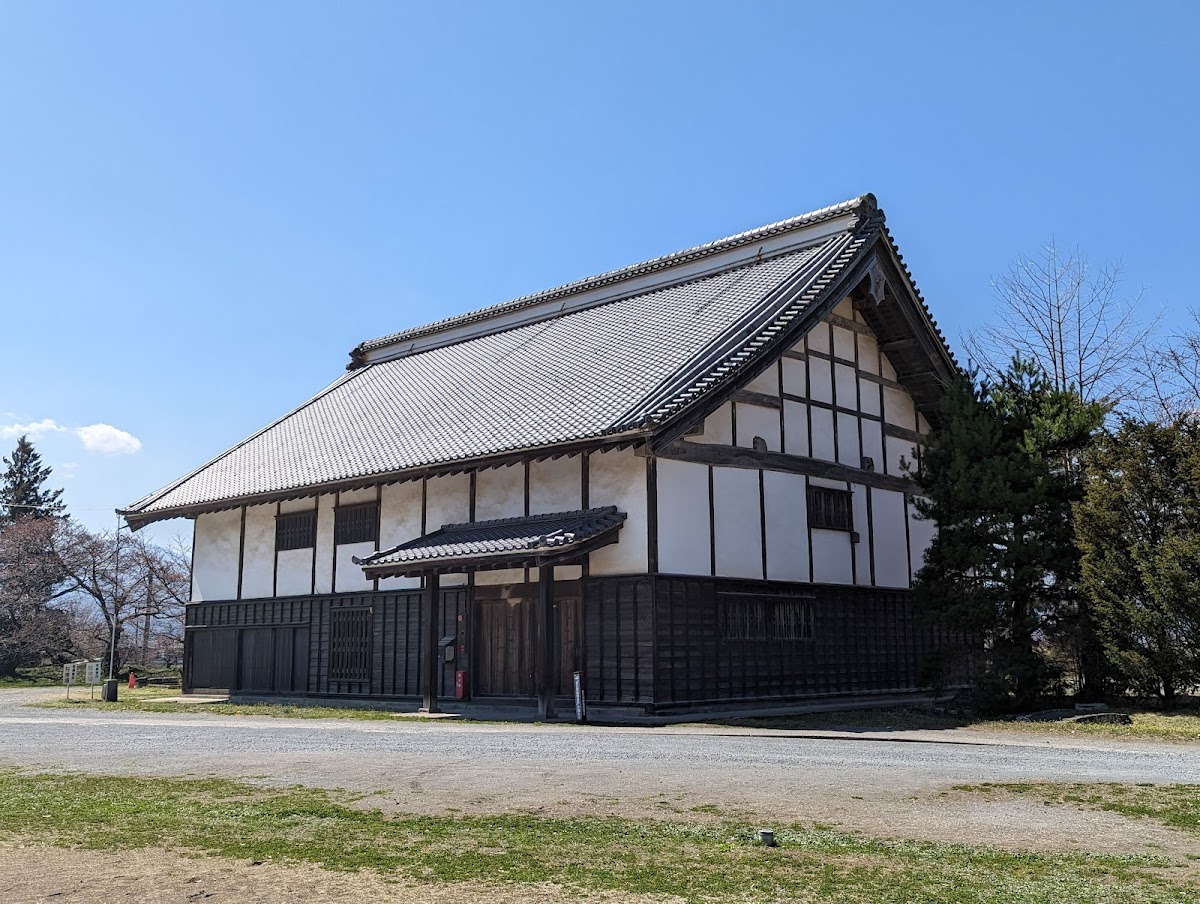
After its abandonment, the buildings were lost, with only a few stone walls remaining. However, in 1981 (Showa 56), it was designated a national historic site along with the Sanada Residence (Shin-Goten), and in 2004 (Heisei 16), large-scale restoration and reconstruction work was completed. Currently, the Taiko Gate, Hashizume Gate, and Kita-Fumei Gate have been restored, and the inner moat and stone walls have also been renovated.
History and Background of Matsushiro Castle
Sengoku Period: Construction of Kaizu Castle and the Battle of Kawanakajima
The exact date of construction of Matsushiro Castle is unknown, but it can be confirmed in historical documents as being in Eiroku 3 (1560). It is said that Takeda Shingen ordered his military strategist, Yamamoto Kansuke, to construct Kaizu Castle in preparation for the Battle of Kawanakajima against Uesugi Kenshin. Taking advantage of its strategic location on the banks of the Chikuma River, it functioned as a key stronghold to prevent the Uesugi army from advancing south.
The Battle of Kawanakajima was most fierce in the fourth battle in 1561, with the Takeda army using Kaizu Castle as a base to confront the Uesugi forces. The castle’s location provided an excellent defensive position, with the Chikuma River serving as a natural moat and mountains behind it. It is said that Takeda Shingen surveyed the plains of Kawanakajima from this castle and devised his strategies.
Edo Period: As the Residence of the Sanada Clan
In the Edo period, in 1622, Sanada Nobuyuki was transferred from Ueda Castle to become the lord of the Matsushiro Domain, with a stipend of 130,000 koku (later reduced to 100,000 koku). Sanada Nobuyuki is known as the older brother of Sanada Yukimura (Nobushige). He sided with the Tokugawa during the Battle of Sekigahara, ensuring the survival of the Sanada family.
The Sanada clan ruled as lords of the Matsushiro Domain for approximately 250 years, from the first lord Nobuyuki to the tenth lord Yukitami. During this time, Kaizu Castle was renamed “Matsushiro Castle,” and the castle town flourished. The Sanada family valued both literary and martial arts, and invested heavily in education, establishing the domain school, “Bunbu Gakko” (Literary and Martial Arts School).
During the reign of the ninth lord, Sanada Yukinori, progressive domain administration was implemented, including the appointment of Sakuma Shozan and the active adoption of Western science and technology. Shozan later became a prominent advocate of opening Japan to the world during the late Edo period, and Matsushiro became one of the intellectual centers of that era.
After the Meiji Era: Abolition of the Castle and Designation as a Historic Site
With the abolition of the feudal domains in 1871 (Meiji 4), the Matsushiro Domain was abolished, and Matsushiro Castle was also abandoned. Subsequently, buildings were demolished one after another, and the castle’s landscape was largely lost. The main keep of the castle was already gone by the time of its abandonment, and other structures such as turrets and gates were also lost.
In 1981 (Showa 56), the Matsushiro Castle site, along with the Sanada Residence, was designated a national historic site. Taking this as an opportunity, Nagano City carried out a large-scale environmental improvement project known as the “Great Heisei Reconstruction,” which was completed in 2004 (Heisei 16). This project restored the Taiko Gate, Hashizume Gate, and Kita Fumeimon Gate, and also improved the inner moat, reviving the castle’s appearance from its heyday.
Castle Structure and Layout
Matsushiro Castle was designed as a concentric flatland castle, with the second and third baileys arranged concentrically around the main bailey. The castle’s layout is characterized by its skillful use of the Chikuma River’s flow and its maximization of the natural terrain.
Honmaru (Main Enclosure)
The Honmaru is the central part of the castle, where the lord’s residence and administrative buildings were located. Currently, it is a plaza, with the surrounding stone walls remaining. Turret platforms are located at the four corners of the Honmaru, and the Inui-sumi Yaguradai (northwest corner turret platform) has been developed as an observation deck, offering panoramic views of Matsushiro town and the surrounding mountains.
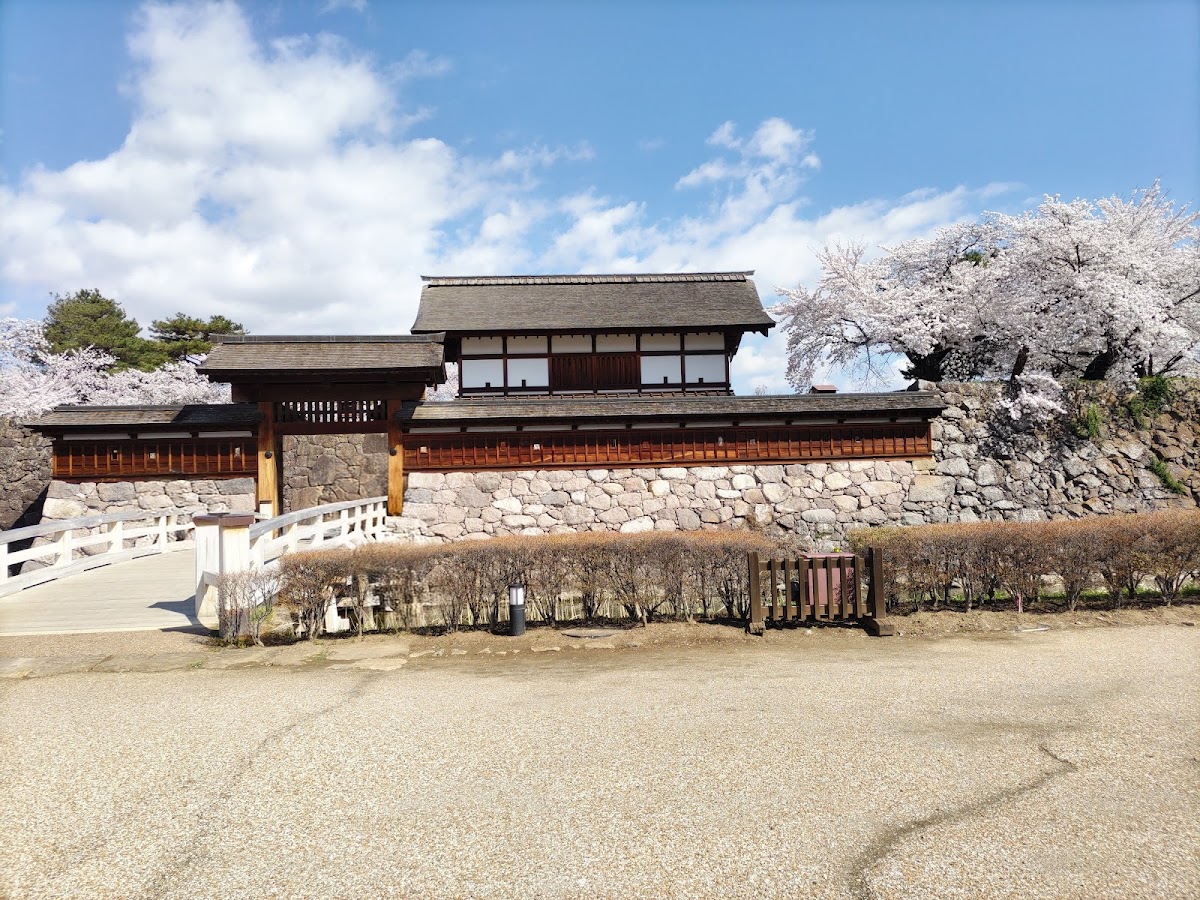
You can enter the Honmaru through the Taiko-mon (Drum Gate). The Taiko-mon is a reconstructed turret gate, named after the drum that was once placed there to announce the time. Upon passing through the gate, visitors are captivated by the beautiful cherry blossoms in spring.
Ninomaru and Sannomaru (Second and Third Enclosures)
The Ninomaru (Second Enclosures) surround the Honmaru and housed the residences of senior retainers and barracks. The third bailey extended further outwards, with samurai residences lining the border with the castle town. While much of the second and third baileys are now urban areas, some of the original layout and roads remain.
Moats and Stone Walls
The key to Matsushiro Castle’s defense lies in its use of the Chikuma River as an outer moat. The inner moat was also deeply dug and functioned as a water moat. During the Heisei-era restoration, this inner moat was restored based on archaeological excavations, and today it can be seen in its beautiful form, filled with water.
The stone walls utilize techniques such as rough-hewn stonework and fitted stonework, showcasing the evolution of castle construction techniques from the Sengoku period to the Edo period. The stone walls around the main bailey are particularly well-preserved, demonstrating the high level of skill of the stonemasons of the time.
Highlights of Matsushiro Castle
Taiko Gate and Hashizume Gate
The Taiko Gate was the main entrance to the main bailey, and its original appearance was restored during the 2004 restoration. This two-story turret gate stands out for the beauty of its imposing wooden architecture. A drum bridge spans the inner moat in front of the Taiko Gate, leading to the main keep.
The Hashizume Gate is another entrance from the second bailey to the main keep, and it has also been restored. These gates have been faithfully reproduced based on historical drawings and archaeological findings, allowing visitors to learn about the architectural style of Edo period castles.
Kita Akazu-no-mon (North Unknown Gate)
The Kita Akazu-no-mon is located on the north side of the main keep. It was not normally used as a gate that was kept closed, and was only opened in emergencies. This gate has also been restored and is an important historical site that reveals the ingenuity of the castle’s defenses.
Inui-no-sumi Yagura-dai (Inui Corner Turret Platform)
Located in the northwest corner of the main keep, the Inui-no-sumi Yagura-dai is now a viewing platform. From here, you can see the townscape of Matsushiro, the Chikuma River, and in the distance, the mountains of the Five Peaks of Northern Shinano. This is a place where you can reflect on the view that Sanada Nobuyuki gazed upon when he was transferred from Ueda Castle.
Cherry Blossom Spot
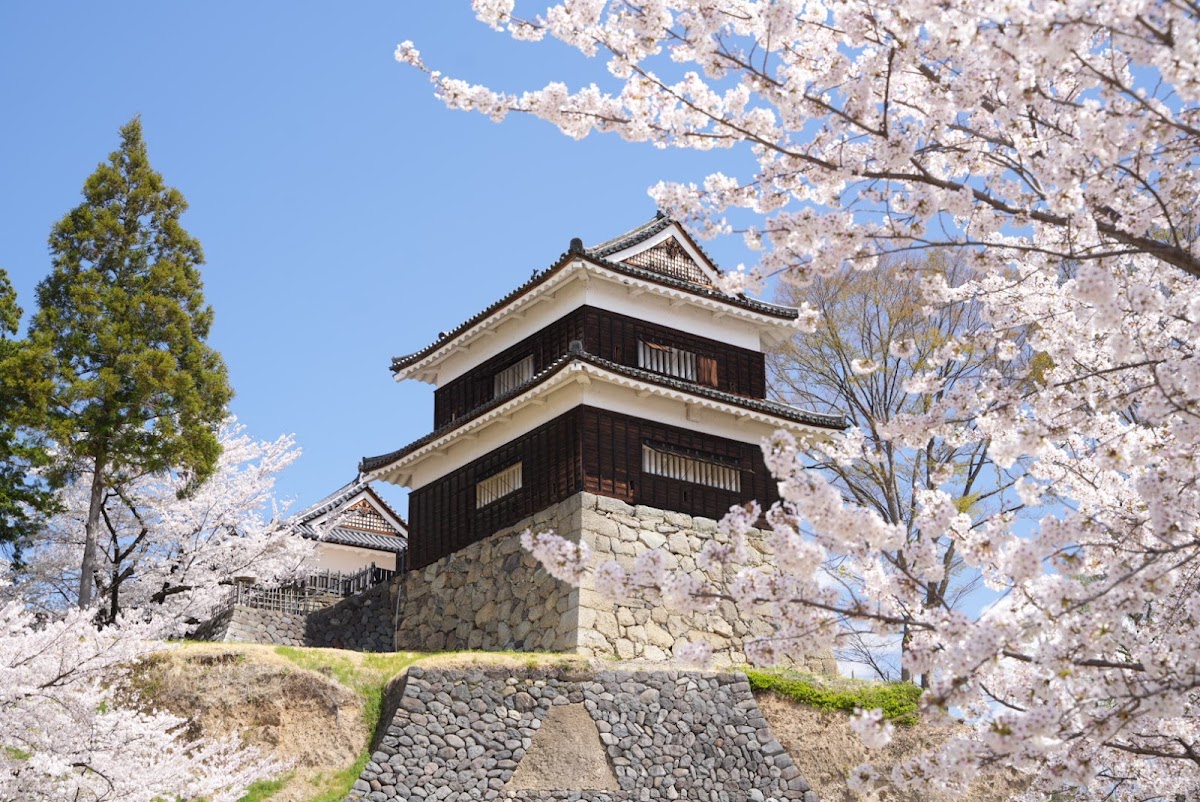
Matsushiro Castle Ruins are also known as a cherry blossom spot. Every year in mid-April, the cherry trees planted around the main keep and along the inner moat bloom all at once, enveloping the entire castle ruins in a pale pink hue. The contrast between the stone walls and the cherry blossoms is magnificent, and it is bustling with many cherry blossom viewers.
Stone Monuments and Information Boards
Within the castle ruins, there are information boards and stone monuments explaining the history of Matsushiro Castle. There are monuments designated as national historical sites and explanatory boards about the Battle of Kawanakajima, making it possible to learn about history while strolling around.
Related Historical Sites in the Surrounding Area
Sanada Residence (Shin-Goten)
Located about a 5-minute walk from Matsushiro Castle Ruins, the Sanada Residence is a palace built by the 9th lord, Sanada Yukinori, as a retirement residence for his stepmother. This is a valuable example of a samurai residence from the late Edo period and, along with the Matsushiro Castle ruins, is designated as a national historic site. The beautiful Shoin-style building and garden are a must-see.
Sanada Treasure Museum
This museum houses approximately 50,000 items, including weapons, letters, and furnishings passed down through the Sanada family. It displays valuable historical materials, such as items related to the Sanada brothers, Nobuyuki and Yukimura (Nobushige), and materials related to the Battle of Kawanakajima. It’s a facility worth visiting to gain a deeper understanding of the history of Matsushiro Castle.
Bunbu School
This was a domain school established by the Sanada family, teaching martial arts such as swordsmanship and spearmanship, as well as academic subjects such as Confucianism. The existing building was constructed in 1853 (Kaei 6) and is a valuable example of a domain school building from the late Edo period.
Zozan Shrine and Sakuma Zozan Memorial Museum
This shrine and memorial museum are dedicated to Sakuma Zozan, a thinker of the late Edo period. Shozan, as a samurai of the Matsushiro Domain, dedicated himself to introducing Western science and technology, influencing many patriots such as Yoshida Shoin and Katsu Kaishu. This site is an important historical landmark demonstrating Matsushiro’s intellectual center during the late Edo period.
Matsushiro Imperial Headquarters Site
This underground bunker was constructed during the final stages of World War II in preparation for a decisive battle on the Japanese mainland. The plan was to relocate the Emperor and central government functions, but it remained unfinished due to the end of the war. It is open to the public as an important historical site that conveys the history of the war.
The Charm of Matsushiro Castle Town
Matsushiro developed as a castle town of the Sanada clan, who held a 100,000 koku domain. Even today, the town layout, samurai residences, and merchant houses from the Edo period remain. The entire castle town maintains a historical atmosphere, and simply strolling through it gives you the feeling of stepping back in time to the Edo period.
Samurai Residences
Matsushiro preserves Edo-period samurai residences, such as the former Yokota Residence and the former Higuchi Residence. These residences are open to the public, allowing visitors to learn about the lifestyle of samurai.
Merchant Houses and Townscape
Traditional townhouses remain in the merchant district of this castle town. You can see features characteristic of Edo-period merchant architecture, such as lattice doors, projecting windows, and decorative gable ends. Many long-established shops, cafes, and souvenir shops still operate today line the streets.
Access Information
Access by Train
- Take the Kawanakajima Bus bound for Matsushiro from JR Nagano Station (approximately 30 minutes)
- Get off at the Matsushiro Station bus stop and walk for approximately 5 minutes
- Alternatively, you can also use the Nagano Electric Railway Bus bound for Matsushiro.
Access by Car
- Approximately 5km (10 minutes) from the Joshinetsu Expressway Nagano IC
- Approximately 8km (15 minutes) from the Joshinetsu Expressway Suzaka-Nagano East IC
- Parking: Free parking is available north of the Matsushiro Castle ruins (approximately 50 cars)
Sightseeing Loop Bus
A sightseeing loop bus also operates, allowing you to efficiently tour the Matsushiro area.
Visitor Information
Basic Information
- Location: 44 Matsushiro, Matsushiro-machi, Nagano City, Nagano Prefecture
- Opening Hours: Always open (within the castle ruins grounds)
- Closed Days: None (Open even during the New Year holidays)
- Admission Fee: Free
- Estimated Time Required: 30 minutes to 1 hour for the castle ruins only; half a day to a full day including surrounding historical sites
Visitor Tips
Matsushiro Castle Ruins is an outdoor facility, so visits are subject to weather conditions. While visits are possible even in rainy weather, the beauty of the stone walls and moats can be best appreciated on a sunny day. The spring cherry blossom season (mid-April) is particularly crowded, but it is the most beautiful time to visit.
If you plan to visit surrounding facilities such as the Sanada Residence and the Sanada Treasure Museum, it is recommended to allocate half a day to a full day. Obtaining a walking map issued by the Matsushiro Tourism Association will allow you to visit efficiently.
Guided Tours
The Matsushiro Tourism Association offers guided tours by volunteer guides (advance reservations required). With explanations from knowledgeable guides, you can gain a deeper understanding of the history and highlights of Matsushiro Castle.
Seasons of Matsushiro Castle
Spring (March-May)
The cherry blossoms in mid-April are the main attraction. Approximately 100 cherry trees, mainly Somei Yoshino varieties, bloom, creating a beautiful landscape in harmony with the stone walls and inner moat. A cherry blossom festival is also held, and the trees are illuminated at night.
Summer (June-August)
This is a beautiful season of fresh greenery. The trees within the castle grounds are lush and green, creating a cool and refreshing atmosphere. However, the summer sun is strong, so sun protection such as hats and parasols is necessary.
Autumn (September-November)
During the autumn foliage season, the trees around the main keep turn red and yellow. On a clear autumn day, the view of the five peaks of Northern Shinshu from the Inui corner turret is exceptional.
Winter (December-February)
The Matsushiro Castle ruins, covered in snow, possess a serene and tranquil atmosphere. The snow piled on the stone walls and the crisp air evoke the harshness of the Sengoku period. However, caution is needed when walking in heavy snow.
Events and Festivals
Matsushiro Sanada 100,000-Koku Festival
This is Matsushiro’s largest event, held every October. It features events recreating the Sengoku and Edo periods, including a procession of the Sanada army, martial arts demonstrations at Matsushiro Castle, and historical processions.
Sanada Ten Braves Garden Place
This summer event features events themed around the Sanada Ten Braves and illuminations of the castle town.
Photo Spots
Taiko Bridge and Taiko Gate
The Taiko Bridge spanning the inner moat, and the Taiko Gate towering beyond it, are representative photo spots of Matsushiro Castle. Especially during cherry blossom season, it’s a perfect angle to capture the bridge, gate, and cherry blossoms in a single photograph.
View from Inui Corner Turret Platform
This observation spot offers a panoramic view of Matsushiro town and the surrounding mountains. Beautiful photos can be taken especially during sunrise and sunset.
Stone Walls and Inner Moat
The reflection of the stone walls in the restored inner moat creates a beautiful mirror-like effect, making for stunning photographs. Early mornings on windless days are recommended.
Points to Note When Visiting Matsushiro Castle
Clothing and Items to Bring
Since some parts of the castle grounds are unpaved, comfortable walking shoes are essential. In summer, the sun is strong, so bring a hat, sunscreen, and drinking water. In winter, be sure to dress warmly.
Estimated Time Required
- Matsushiro Castle Ruins Only: 30 minutes to 1 hour
- Including Sanada Residence: 1 hour 30 minutes to 2 hours
- Including Sanada Treasure Museum and surrounding facilities: 3 hours to half a day
- Entire Matsushiro Castle Town: Half a day to 1 day
Dining and Rest Facilities
There are no dining facilities or rest areas within the castle ruins, but there are restaurants and cafes within walking distance. You can enjoy Matsushiro’s local specialties, Shinshu soba noodles, and oyaki (stuffed dumplings).
Summary
Matsushiro Castle Ruins is a historically valuable castle that has appeared in important scenes of Japanese history, such as the Battle of Kawanakajima between Takeda Shingen and Uesugi Kenshin during the Sengoku period, the residence of the Sanada clan with a 100,000 koku domain during the Edo period, and its role as an intellectual center during the late Edo period.
Thanks to large-scale restoration work in the Heisei era, the Taiko Gate and inner moat have been restored to their original appearance, and it is now one of Nagano Prefecture’s leading historical tourist spots. By visiting Matsushiro Castle Ruins along with other nearby historical sites such as the Sanada Residence, the Sanada Treasure Museum, and the Bunbu School, you can experience the rich history and culture of Matsushiro.
Matsushiro Castle Ruins displays different expressions throughout the seasons: cherry blossoms in spring, lush greenery in summer, vibrant autumn leaves, and snowscapes in winter. It’s a beautiful historical site where history and nature harmonize, and a must-visit when you’re in Nagano City.