Matsuida Castle (Gunma Prefecture) Complete Guide: A Thorough Explanation of History, Highlights, and Access Information
Matsuida Castle, located in Matsuida-cho, Annaka City, Gunma Prefecture, is a mountain castle that played an important role as a strategic point in western Kozuke Province during the Sengoku period. Situated east of Usui Pass, it was a strategic base controlling a key transportation hub connecting the Nakasendo Road and Shinano Province. This article provides a detailed explanation of Matsuida Castle’s history, construction process, changes in its lords, existing remains, highlights, and access methods.
Overview and Location of Matsuida Castle
Matsuida Castle is a medieval mountain castle located in Matsuida-cho, Annaka City, Gunma Prefecture, built on an isolated hill approximately 340 meters above sea level. The Usui River flows at the foot of the castle, serving as a natural moat.
The castle measures approximately 400 meters east-west and 200 meters north-south, and features a linear layout with multiple baileys (kuruwa) arranged around the main keep. Currently designated as a historical site by Annaka City, “Matsuida Castle Ruins” has some well-preserved remains.
Geographical Importance
The most distinctive feature of Matsuida Castle lies in its location. Overlooking the road leading from Usui Pass to Shinano Province (present-day Nagano Prefecture), it was an extremely important base for monitoring and controlling the transportation route connecting eastern Japan and Shinano.
During the Sengoku period, it was located on the front lines of the power struggle between the Hojo clan of Kanto and the Takeda clan of Shinano and Kai, making the securing of Matsuida Castle a strategic necessity for both sides.
History of Matsuida Castle
Origin of Construction
While there are various theories regarding the construction period of Matsuida Castle, it is generally believed to have been built in the mid-15th century by the Annaka clan. The Annaka clan were local lords who ruled the western part of Kōzuke Province, and they built a mountain castle to govern the Matsuida area.
It is believed that the original Matsuida Castle was smaller than the remains that exist today, and that it was gradually expanded and strengthened during the fierce battles of the Sengoku period.
Battles during the Sengoku Period
Invasion by the Takeda Clan
In the mid-16th century, Takeda Shingen of Kai Province attempted to expand into the Kanto region and began his invasion of western Kōzuke Province. During the Eiroku era (1558-1570), the Takeda clan’s influence extended to the area around Matsuida, and Matsuida Castle is believed to have come under Takeda influence.
The Takeda clan considered Matsuida Castle an important base for their expansion from Shinano Province into the Kanto region and strengthened its defenses. It is believed that some of the stone walls and baileys visible today were constructed during this period.
Conflict with the Hojo Clan
For the Later Hojo clan, who controlled the Kanto region, the extension of the Takeda clan’s influence to Matsuida was a major threat. The two clans repeatedly fought over Matsuida Castle, and the castle’s lord changed hands several times.
When the Takeda clan was destroyed in 1582, Matsuida Castle came under the control of the Hojo clan. The Hojo clan further strengthened Matsuida Castle in preparation for potential enemy invasions across the Usui Pass.
Toyotomi Hideyoshi’s Siege of Odawara and the Fall of Matsuida Castle
The most important event in the history of Matsuida Castle was Toyotomi Hideyoshi’s siege of Odawara in 1590.
Hideyoshi, determined to complete his unification of Japan, decided to subjugate the Hojo clan and led a large army into the Kanto region. During this time, the northern army, led by Maeda Toshiie and Uesugi Kagekatsu, advanced from the Shinano region and attacked Matsuida Castle. Matsuida Castle was defended by Daidoji Masashige, a senior retainer of the Hojo clan, but after a siege lasting about a month, it surrendered due to the overwhelming difference in military strength. This fall meant the collapse of the Hojo clan’s western defense line, decisively isolating Odawara Castle.
After the Edo Period
After the Siege of Odawara, Matsuida Castle temporarily came under the control of Tokugawa Ieyasu, but in the early Edo period, it lost its function as a castle and was abandoned.
During the Edo period, Matsuida-juku was developed at the foot of the mountain and flourished as a post town on the Nakasendo road. The castle ruins were neglected, but this resulted in the relatively good preservation of the remains.
Structure and Remains of Matsuida Castle
Characteristics of the Castle Layout
Matsuida Castle is a typical medieval mountain castle, with the main keep located at the mountaintop and a series of interconnected enclosures along the ridge.
The main enclosures are as follows:
- Honmaru: Located in the center of the castle, at the highest point. Currently a flat area, it is believed that major buildings once stood here.
- Ninokuruwa: Located east of the Honmaru, it served to defend the Honmaru.
- Sannomaru: Further east, it formed a defensive line to prevent incursions from the east of the castle.
- Nishi-kuruma: A group of enclosures located west of the Honmaru, prepared for enemies approaching from the Usui Pass.
Moats and Vertical Moats
Notable defensive features of Matsuida Castle include multiple moats (horikiri) and vertical moats (tatebori).
Moats are dry moats dug to cut across ridges, preventing enemy incursions and separating enclosures. At least five moats have been identified at Matsuida Castle, and their depth and scale can still be appreciated today.
Vertical moats are moats dug vertically along slopes, effectively preventing enemies from climbing the incline. The vertical moats at Matsuida Castle are particularly large in scale, some reaching depths of over 5 meters.
Remains of Stone Walls
Partial remains of stone walls remain at Matsuida Castle. These were constructed using a technique called “nozurazumi,” which involves stacking natural stones, and are valuable remains demonstrating the castle-building techniques of the late Sengoku period.
Traces of stone walls are particularly visible around the main keep and near the main gate, giving a glimpse into the castle’s imposing presence at the time.
Earthworks and Castle Gates
Earthworks were built around each enclosure, enhancing its defensive capabilities. Even today, some earthworks, 2-3 meters high, remain in good condition.
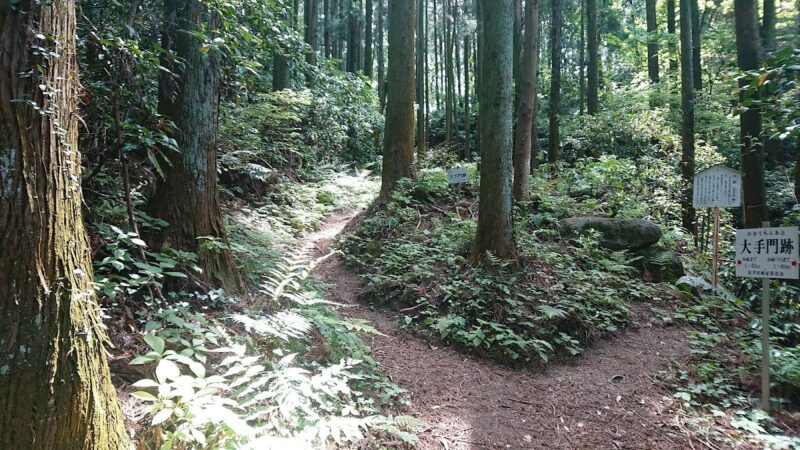
The castle gates (koguchi) had complex structures to prevent enemy intrusion, and traces of staggered gates and square-shaped gates can be seen.
Highlights of Matsuida Castle
View from the Main Enclosure
Standing on the site of the main enclosure, you can enjoy a panoramic view of the town of Matsuida and the Usui River below, and the mountains of the Joshin’etsu region in the distance. On a clear day, you can even see Mount Myogi and Mount Asama, a view that speaks to the strategic value of Matsuida Castle.
The castle lords monitored the movements of enemies crossing the Usui Pass from this elevated position and controlled traffic on the road.
Large-Scale Moats
The greatest highlight of Matsuida Castle is its well-preserved group of moats. The moat between the main enclosure and the second enclosure, in particular, reaches a depth of approximately 7 meters and a width of approximately 10 meters, demonstrating the high level of defensive technology of this medieval mountain castle.
Looking up from the bottom of the moat, you will be overwhelmed by the height of the cliffs on both sides.
The Impressive Vertical Moat
The vertical moat, which descends the slope in a straight line, is a must-see. Extending for over 50 meters, this moat served to guide enemy soldiers’ flank attacks and also functioned as a rainwater drainage channel.
The scale and technical ingenuity of the vertical moat represent the pinnacle of castle construction technology during the Sengoku period.
Traces of Stone Walls
The partially remaining stone walls are valuable for understanding the level of technology at the time. The stone walls, skillfully constructed using natural stones in a rough-hewn style, possess a simple beauty distinct from modern stone walls.
Castle Site Monument and Information Board
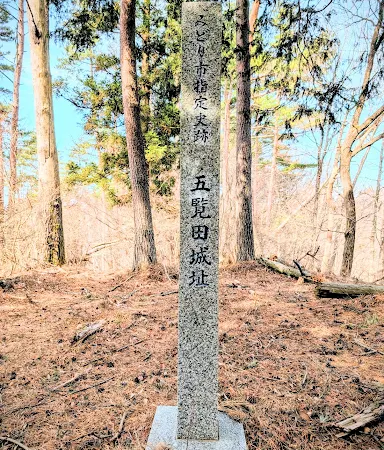
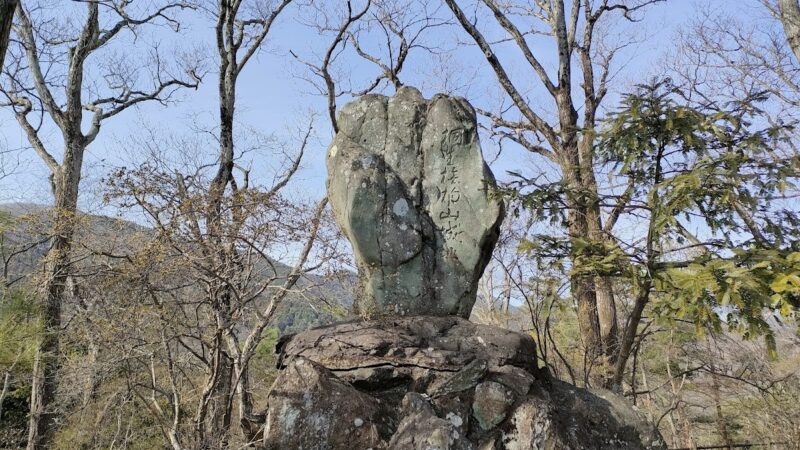
Within the castle grounds, there is a stone monument marking the “Matsuida Castle Site” and information boards explaining the castle’s history, allowing for a deeper understanding of the castle.
Matsuida Castle and Surrounding Historical Spots
Usui Pass and Usui Checkpoint Ruins
Heading west from Matsuida Castle, you will find the famous Usui Pass. During the Edo period, Usui was known as a difficult section of the Nakasendo road, and the Usui Barrier Station was located there.
The Usui Barrier Station ruins are still preserved today, allowing visitors to learn about the appearance of the barrier station during the Edo period. Visiting it in conjunction with Matsuida Castle provides a comprehensive understanding of the region’s transportation and military history.
Matsuida-juku
At the foot of the castle was Matsuida-juku, a post town on the Nakasendo road. Parts of the old townscape remain today, with historical sites such as the remains of the main inn and the wholesale market scattered throughout.
Myogi Shrine
Near Matsuida is Mount Myogi, one of Japan’s three most scenic spots, and Myogi Shrine, situated at its foot. The landscape, a blend of historical shrine architecture and the unique rock formations of Mount Myogi, is breathtaking.
Annaka Castle Ruins
Within the same city of Annaka, there are also the ruins of Annaka Castle. This castle was the residence of the Annaka Domain during the Edo period. While it dates from a different era than Matsuida Castle, it’s an important site for understanding the castle history of this region.
How to Access Matsuida Castle
Access by Train
From JR Shin’etsu Main Line, Matsuida Station
- Approximately 30-40 minutes on foot from Matsuida Station
- Approximately 5 minutes by taxi
From JR Hokuriku Shinkansen, Annaka-Haruna Station
- Approximately 15 minutes by taxi
- Public transportation is limited, so using a car is recommended.
Access by Car
From Joshin’etsu Expressway, Matsuida-Myogi IC
- Approximately 10 minutes
- Proceed along National Route 18 towards Usui Pass and follow the signs.
Parking
- Several parking spaces are available near the castle ruins (free).
- Parking is also available near the castle entrance.
Castle Ascent Route
It takes approximately 15-20 minutes on foot from the castle entrance to the main keep. To climb the mountain trail, we recommend the following equipment and preparations:
- Comfortable walking shoes (trekking shoes recommended)
- Drinking water
- Insect repellent spray (spring to autumn)
- Rain gear (for unstable weather)
The trail is well-maintained, but there are some steep sections, so please watch your step.
Notes and Manners for Visitors
Visiting Hours
Matsuida Castle Ruins does not have specific opening or closing times, but we recommend visiting during daylight hours (sunrise to sunset). Visiting at night is dangerous due to poor visibility.
Admission Fee
Admission is free.
Visitor Etiquette
- Do not climb on stone walls or earthworks to protect the ruins.
- Always take your trash with you.
- No open flames.
- Do not harm plants or animals.
- Avoid trespassing on private property.
Safety Precautions
- Be careful as the ground can be slippery during and after rain.
- Be careful of falls on steep slopes, such as the bottom of moats.
- Visiting in groups is safer than visiting alone.
- Beware of venomous snakes such as pit vipers in summer.
- Snow and ice may be present in winter.
Cultural Value of Matsuida Castle
Historical Value
Matsuida Castle is an important historical site that tells the story of the conflict between the Takeda and Hojo clans in the Kanto region during the Sengoku period. In particular, the battles during Toyotomi Hideyoshi’s Odawara campaign in 1590 were a crucial turning point in Japanese history, and Matsuida Castle, the stage for these battles, is historically extremely important.
Archaeological Value
The layout and defensive structures of this medieval mountain castle are well-preserved, making it a valuable resource for studying castle construction techniques of the Sengoku period. In particular, the large-scale moats and vertical trenches are excellent examples of the civil engineering technology of the time.
Preservation and Utilization
Currently, the Annaka City Board of Education is leading efforts to preserve and utilize the Matsuida Castle ruins. Regular mowing and maintenance of information boards are carried out to maintain a safe environment for visitors.
Local history enthusiast groups occasionally hold guided tours and tours, allowing visitors to explore the castle ruins while listening to expert explanations.
Best Time to Visit Matsuida Castle
Spring (March-May)
The season of fresh greenery and mild weather makes it ideal for visiting the castle. You can also enjoy the cherry blossoms in the surrounding area during cherry blossom season.
Summer (June-August)
The greenery is lush, and the ruins are covered by trees. While heat and insect repellent are necessary, the shade of the trees provides a cool respite. ### Autumn (September – November)
This is one of the most beautiful times of year, with the leaves changing color. The autumn foliage is especially at its peak from late October to early November, offering a stunning contrast between the castle ruins and the vibrant colors. The weather is stable, making it ideal for visiting the castle.
Winter (December – February)
There is a possibility of snow, which can make walking difficult. However, the air is clear, making the view from the main keep the best. With proper cold-weather gear, you can enjoy the tranquil atmosphere of the castle ruins all to yourself.
Research and Recent Discoveries on Matsuida Castle
Recent archaeological excavations and research have yielded new insights into Matsuida Castle.
Results of Archaeological Excavations
Excavations conducted by the Annaka City Board of Education have unearthed fragments of pottery and iron artifacts from the Sengoku period within the castle grounds, gradually revealing aspects of life within the castle at that time.
Advances in Castle Layout Research
Detailed topographic surveys using laser surveying technology (LiDAR) have confirmed the existence of previously unknown small baileys and earthworks. This is leading to a more accurate understanding of the overall layout of Matsuida Castle.
Summary: The Charm of Matsuida Castle
Matsuida Castle is a historical fortress that served as an important military base in the Kanto region during the Sengoku period, witnessing the conflicts between the Takeda and Hojo clans and the turning point in Japanese history: Toyotomi Hideyoshi’s unification of Japan.
The well-preserved remains, such as moats, vertical trenches, and stone walls, demonstrate the high level of castle-building technology of the Sengoku period. The view from the main keep allows you to truly appreciate the strategic importance of this castle.
When visiting Gunma Prefecture, be sure to visit the Matsuida Castle ruins. Walking through this mountain castle, the stage of history, will give you a sense of realism that you can’t experience from textbooks, and you’ll feel the spirit of the Sengoku warlords.
Visiting this site along with other historical sites in the area, such as Usui Pass and Matsuida-juku, will allow you to gain a deeper understanding of the rich history and culture of this region. It is a recommended historical site not only for history buffs but also for those who enjoy hiking and nature walks.