Gokan Castle (Gunma Prefecture) Complete Guide: From a Sengoku Period Strategic Castle to a Park – History and Highlights
Located in Annaka City, Gunma Prefecture, Gokan Castle is a mountain castle that played an important role as a strategic point in western Joshu during the Sengoku period. Currently, it is maintained as Gokan Castle Ruins Park and is popular not only with history enthusiasts and castle fans, but also as a place of relaxation for local residents. This article thoroughly explains the charm of this castle, from its history and highlights of the remains to access information and surrounding tourist attractions.
History of Gokan Castle: From the Yoda Clan to the Gokan Clan
Construction and Early History
Gokan Castle is said to have been built in 1441 (Kakitsu 1), and the builder is believed to be Yoda Tadamasa. The Yoda clan was a prominent family in Shinano Province and a family that expanded its influence throughout western Joshu. Gokan Castle was built on a hilly area in Nakagokan, Annaka City, Gunma Prefecture, and was strategically located overlooking the Usui River basin.
The Yoda clan ruled this area for many years, using Gokan Castle as their base to solidify their power base in western Joshu. The castle’s structure emphasized defensive capabilities as a mountain castle, and its layout is characterized by its skillful use of the natural terrain.
Takeda Shingen’s Invasion of Western Joshu and Change of Castle Lords
The most significant turning point in the history of Gokan Castle was Takeda Shingen’s invasion of western Joshu during the Eiroku era. In 1566, Takeda Shingen captured Minowa Castle, an important stronghold in Kozuke Province, drastically altering the power dynamics of the local lords of western Joshu, including the Yoda clan.
Following the fall of Minowa Castle, the Yoda clan declined, and in 1567, Nitta Nobuzumi was granted a territory worth 1,000 kan by Takeda Shingen and became the lord of Gokan Castle. Nitta Nobuzumi adopted the name “Gokan” in this area, and the Gokan clan subsequently ruled as the castle’s lords.
This figure, known as Gokan Nobuzumi, served as a vassal of the Takeda clan, overseeing the control of western Joshu Province and governing the region from Gokan Castle. Gokan Castle, along with Matsuida Castle and others, functioned as an important base in the Takeda clan’s control of western Joshu.
Developments after the fall of the Takeda clan
In 1582, when the Takeda clan was destroyed by the Oda-Tokugawa allied forces, the situation in western Joshu became fluid once again. The Gokan clan chose to pledge allegiance to the Hojo clan in order to survive. During this period, the Gokan clan temporarily adopted the name “Kamijo,” but later reverted to the “Gokan” surname, becoming known as the “Two Gokans.”
As vassals of the Hojo clan, the Gokan clan maintained ties with Matsuida Castle and Maebashi Castle (formerly Umayabashi Castle), contributing to the Hojo clan’s continued influence in western Joshu.
The Siege of Odawara and the Abandonment of the Castle
In 1590, when Toyotomi Hideyoshi’s Siege of Odawara began, Gokan Castle was also caught in the fighting. At this time, the Gokan clan fought under the command of Daidoji Masashige, the lord of Matsuida Castle, but the Hojo clan’s defeat forced Gokan Castle to surrender.
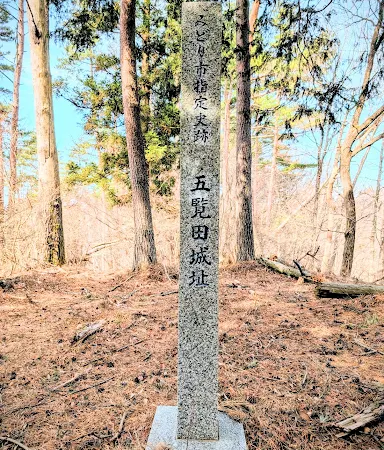
With the fall of the Hojo clan, Gokan Castle was abandoned, bringing to an end its approximately 150-year history as a castle. Afterward, the castle ruins returned to nature over many years, and in the latter half of the 20th century, they were developed into a historical park.
Structure and Layout of Gokan Castle
Characteristics as a Mountain Castle
Gokan Castle is a typical Sengoku period mountain castle, built on a hill approximately 300 meters above sea level. The castle’s location offered an excellent vantage point overlooking the Usui River basin and providing a panoramic view of the Myogi Mountains, giving it a significant geographical advantage.
The castle’s layout made maximum use of the natural terrain, with multiple baileys (enclosures) arranged in a stepped pattern, each separated by a moat. This structure enhanced defensive capabilities and effectively utilized the limited flat land.
Major Remains
The following remains can be observed at the current Gokan Castle Ruins Park:
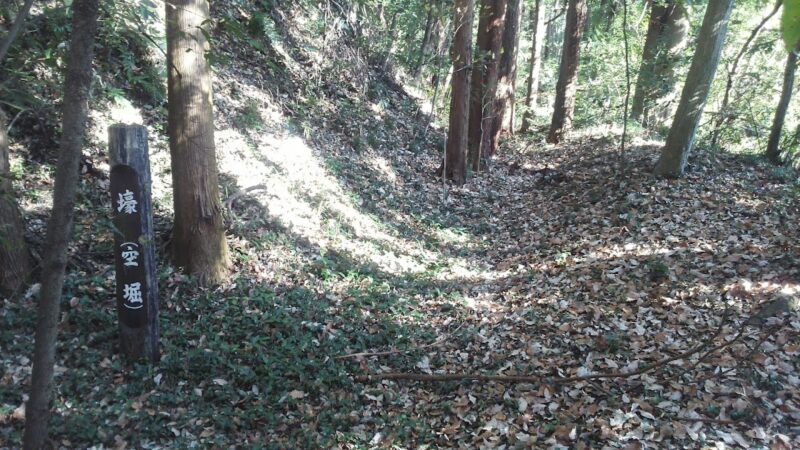
Moats
One of the most important defensive structures of the castle. These deep trenches, dug to cut across the ridge, served to prevent enemy incursions. Gokan Castle retains several moats, which are valuable historical remains for understanding the defensive structure of the time.
Kuruwa (Enclosure)
A flat, leveled area used for buildings and soldier encampments. Gokan Castle has several enclosures, including the main enclosure, arranged in a stepped pattern. During the park’s development, these enclosures were repurposed as open spaces, maintaining their original layout.
Koguchi-mon (Tiger’s Mouth Gate)
The entrance to the castle, a strategically important defensive point. The reconstructed Koguchi-mon, installed during the park’s development, evokes the atmosphere of the castle in its heyday.
Yagura-dai (Watchtower Base)
The base of a watchtower or turret built for lookout or defense. The location of the yagura-dai can be seen in Gokan Castle Ruins Park, and looking out from here gives a real sense of why the castle was built in this location.
Results of the Archaeological Excavation
In conjunction with the development project of Gokan Castle Ruins Park, the Annaka City Board of Education conducted an archaeological excavation of buried cultural properties. This excavation yielded valuable information regarding the castle’s structure and the period of its use. The excavated artifacts have provided concrete insights into the lifestyle and functions of the castle during the Sengoku period (Warring States period).
Highlights of Gokan Castle Ruins Park
Park Development
Gokan Castle is now developed as “Gokan Castle Ruins Park,” a space where historical remains and the natural environment are harmoniously integrated. Flowers and trees are planted throughout the park, allowing visitors to enjoy the changing seasons.
In spring, it is known as a famous cherry blossom viewing spot, attracting many visitors. It is a popular cherry blossom spot in Annaka City, beloved by local residents, and the combination of the castle ruins and cherry blossoms creates a landscape that evokes a sense of historical romance.
Walking Paths and Stroll Courses
Each bailey (plaza) is connected by walking paths, allowing visitors to explore the entire castle ruins. The walking trails are well-maintained and easy to walk on. The stroll takes approximately 45 minutes, allowing you to leisurely trace the traces of history.
Trees and flowers are planted along the trails, allowing you to enjoy both the pleasant feeling of walking in nature and the pleasure of exploring history. The beauty of nature is particularly striking during the seasons of fresh greenery and autumn foliage.
Stunning Views
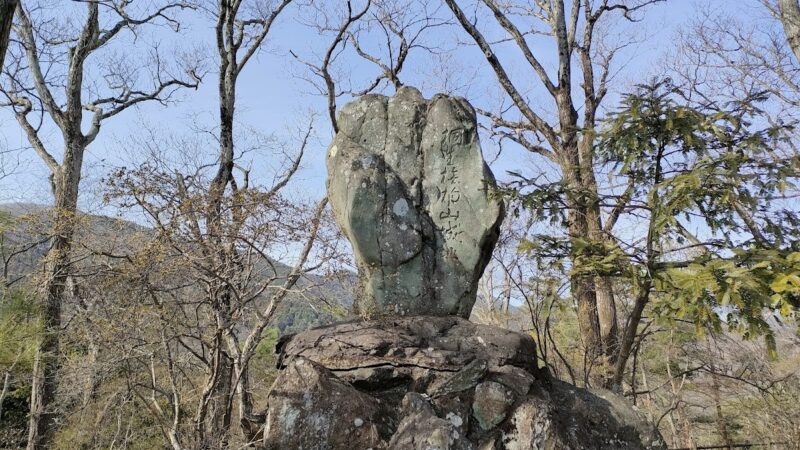
The views from Gokan Castle Ruins Park are one of the castle’s greatest attractions. From the hillside where the castle was built, you can see the plains of the Usui River basin, and on a clear day, you can even see the majestic Mount Myogi.
This view is not only beautiful, but also important for understanding why the castle was built in this location and what its strategic value was. By actually standing on the castle ruins and looking around, you can relive the perspective of the castle lords of the Sengoku period.
Castle Notes: Visitor Ratings
On castle information websites such as Kojodan, numerous ratings and impressions from castle enthusiasts who have visited Gokan Castle have been posted. The average rating is around ★★★☆☆ 3.40, with many positive comments such as “It’s well-maintained as a park and easy to visit,” “The remains are well-preserved,” and “The view is wonderful.”
On the other hand, there are also requests for improvements such as “More signage would be good” and “It’s a bit of a walk from the parking lot,” and there are hopes for future improvements. While the number of visitors is not very high (168 as of 2024), visitors tend to be highly satisfied.
Access Information and Visitor Guide
Location
Address: Nakagokan, Annaka City, Gunma Prefecture
Gokan Castle Ruins Park is located northwest of the city center of Annaka City, on the hilly area north of the Usui River.
Access by Public Transportation
Nearest Station: JR Shin’etsu Main Line “Isobe Station”
It takes approximately 20-30 minutes to walk from Isobe Station to Gokanjo Castle Ruins Park. The route heads north from the station, crossing the Usui River and continuing towards the hilly area. The walk offers pleasant scenery of residential areas and rural landscapes.
While public transportation access is somewhat inconvenient, walking from Isobe Station is a viable option for those who don’t mind walking. Isobe Onsen (hot spring) is also located near Isobe Station, making it possible to combine a castle ruin visit with a hot spring bath.
Access by Car
Access by car is the most convenient. It takes approximately 15 minutes from the Joshin’etsu Expressway “Matsuida Myogi IC”. It’s also about a 10-minute drive from Annaka city center.
Parking: There is parking space near the park entrance. While the number of spaces is limited, parking is usually not a problem. However, caution is advised during peak seasons such as cherry blossom season.
Visitor Information
- Visiting Hours: The park is always open, but we recommend visiting during daylight hours.
- Estimated Time Required: Allow approximately 45 minutes to 1 hour.
- Attire: The walking paths are well-maintained, but we recommend wearing comfortable shoes.
- Season: Spring (cherry blossom season), the season of fresh greenery, and the autumn foliage season are recommended.
- Facilities: Basic facilities such as restrooms are available.
- Admission Fee: Free
Map and Location Information
When visiting Gokan Castle Ruins Park, we recommend checking the location on a map beforehand. Searching for “Gokan Castle Ruins Park” or “Nakagokan, Annaka City, Gunma Prefecture” in your smartphone’s map app will provide accurate location information.
Nearby Tourist Attractions
Isobe Onsen
Isobe Onsen is the closest hot spring resort to Gokan Castle. Hot spring inns are scattered around JR Isobe Station, and some facilities offer day-use bathing. After exploring the castle ruins, it’s a good idea to relax in a hot spring.
Accommodations such as Isobe Onsen Shita-kiri Suzume no Oyado Hotel Isobe Garden offer day-trip bathing plans, making it possible to combine a visit to Gokan Castle with a soak in the hot springs. Isobe Onsen is also known as the site of the “Tongue-Cut Sparrow Legend,” and the hot spring town is dotted with spots related to the legend.
Matsuida Castle
Matsuida Castle, which has close historical ties to Gokan Castle, is also about a 15-minute drive away. Matsuida Castle played an important role as a base for the Hojo clan’s control of western Kozuke Province, and visiting it along with Gokan Castle will give you a deeper understanding of the Sengoku period history of this region.
Usui Barrier Site
The Usui Barrier Site, an important barrier on the Nakasendo road, is also one of the sights to see in Annaka City. It’s a facility where you can learn about the transportation history of the Edo period, and although it’s from a different era than Gokan Castle, it’s useful for understanding the historical importance of this region.
Mount Myogi
Mount Myogi, which can be viewed from Gokan Castle Ruins Park, is a scenic spot counted as one of Japan’s three most spectacular landscapes. The breathtaking scenery created by its unique rock formations is awe-inspiring, and visitors can enjoy mountain climbing and hiking. Myogi Shrine is also a historical shrine, offering opportunities for worship and nature walks.
Historical Sites in Annaka City
Annaka City has many other historical sites. Facilities such as the Annaka Castle Ruins, the former residence of Jo Niijima, and the former Usui County Office offer a glimpse into the history from the late Edo period to the Meiji era.
Recommended Itinerary for Visiting Gokan Castle
Half-Day Sightseeing Plan
Morning:
- Arrive at JR Isobe Station
- Walk to Gokan Castle Ruins Park (approx. 30 minutes)
- Stroll and explore Gokan Castle Ruins Park (approx. 1 hour)
- Return towards Isobe Station
Afternoon:
- Lunch and day-trip bathing at Isobe Onsen
- Stroll around the area
- Return home
Full-Day Sightseeing Plan (by car)
Morning:
- Visit Gokan Castle Ruins Park (approx. 1 hour)
- Visit Matsuida Castle (approx. 1 hour)
Afternoon:
- Visit Usui Barrier Station Ruins
- Drive towards Mt. Myogi
- Visit Myogi Shrine
- Bathing at Isobe Onsen
- Return home
Photo Opportunities
Gokan Castle Ruins Park is also an attractive photo spot:
- Cherry blossoms and castle ruins: During the spring cherry blossom season, the combination of cherry blossoms and the moats and baileys creates a picturesque scene.
- View Photography: The view from the watchtower platform captures a vast landscape with Mount Myogi in the background.
- Details of the Remains: The details of the remains, such as the depth of the moats and the elevation differences of the baileys, are also interesting subjects for photography.
- Seasonal Changes: The castle ruins show different expressions with each season, from fresh greenery to autumn leaves and snowscapes, allowing for fresh photographs no matter how many times you visit.
The Position of Gokan Castle in the Kanto Region
While many castle ruins remain in the Kanto region, Gokan Castle is valued as a precious historical site that well preserves the characteristics of a mountain castle from the Sengoku period. Although it is a medium-sized mountain castle, its features include the good state of preservation of the remains and the ease of visiting due to park development.
Gunma Prefecture boasts several famous castle ruins, including Minowa Castle (one of Japan’s Top 100 Castles), Kanayama Castle (one of Japan’s Top 100 Castles), and Nagurumi Castle (one of Japan’s Continued Top 100 Castles). While Gokan Castle is less well-known compared to these, it is considered an important castle site for understanding local history.
The Aftermath of the Gokan Clan
Detailed records regarding the fate of the Gokan clan after the abandonment of Gokan Castle are limited. Following the fall of the Hojo clan, many Hojo retainers were dispossessed of their lands or returned to farming, and it is presumed that the Gokan clan suffered a similar fate.
Some studies suggest that descendants of the Gokan clan remained in the region, returning to farming and becoming influential farmers such as village headmen, but this is not sufficiently supported by reliable historical sources.
Summary: The Charm and Value of Gokan Castle
Gokan Castle (Annaka City, Gunma Prefecture) is a mountain castle that served as an important base in western Joshu during the Sengoku period, with a history spanning approximately 150 years. The castle changed hands from the Yoda clan to the Gokan clan, and then to the Takeda and Hojo clans, serving as a witness to the history of this region.
Currently, it is maintained as Gokan Castle Ruins Park, with well-preserved remains such as moats, baileys, gatehouses, and watchtower bases. The flowers and trees throughout the park display beauty in every season, especially during the cherry blossom season in spring, attracting many visitors.
With its magnificent views of Mount Myogi, remnants of Sengoku period defensive structures, and a park environment harmoniously integrated with nature, Gokan Castle Ruins Park is an attractive spot not only for history buffs but also for those who enjoy nature walks.
While access is most convenient by car, a walking route from Isobe Station is also an option, and combining it with sightseeing in the surrounding area, such as Isobe Onsen, will provide a more fulfilling experience. When visiting Gunma Prefecture, be sure to visit Gokan Castle Ruins Park and experience the spirit of the Sengoku period and the beauty of nature simultaneously.
Gokan Castle may not be a major landmark in the history of Japanese castles, but as a valuable legacy that tells the story of the region’s history, it will continue to be carefully preserved and cherished by many people.