Complete Guide to Kushikino Castle (Kagoshima Prefecture): History, Highlights, and Access Information for Kamegajo Castle
Kushikino Castle, located in Ichikikushikino City, Kagoshima Prefecture, is a mountain castle that played an important role from the medieval period to the Sengoku period. Also known as “Kamegajo Castle,” it is known as a castle unique to the Satsuma region, skillfully utilizing the hills of the Shirasu plateau. This article provides a detailed explanation of Kushikino Castle’s history, structure, highlights, and visiting information.
Overview and Basic Information of Kushikino Castle
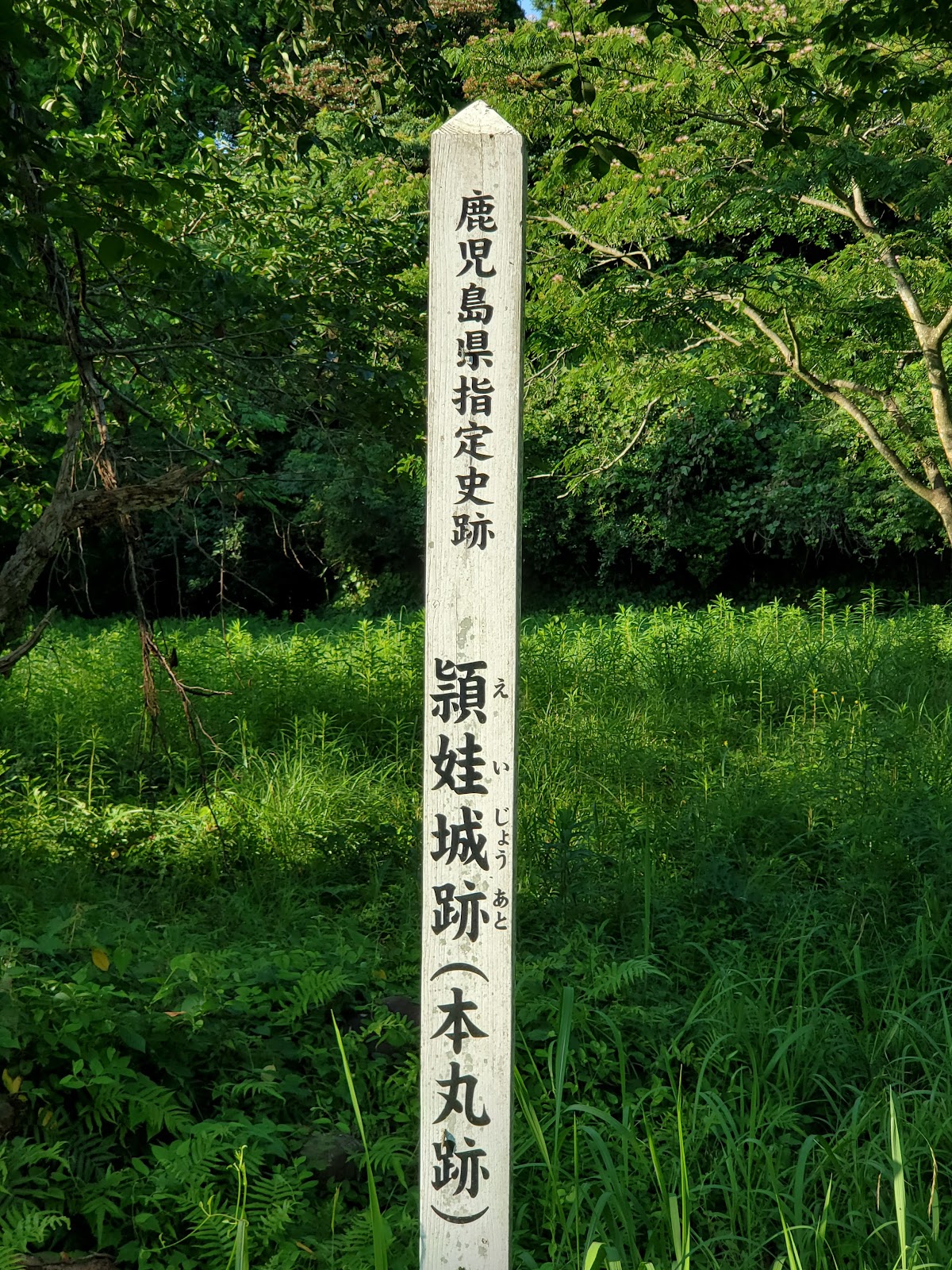
Kushikino Castle is a flatland castle built on a hill approximately 20 meters high, located between the Kushikino Interchange and Kushikino Station. The castle grounds extend to the area around Jōnomoto, Kaminami, Ichikikushikino City, Kagoshima Prefecture, and the place name “Jōnomoto” still remains today.
Basic Data
- Location: Shiromoto, Kaminami, Ichikikushikino City, Kagoshima Prefecture
- Alternate Name: Kamegajo Castle
- Castle Structure: Group-enclosure flatland castle
- Construction Period: Kamakura period (Kenkyu era, around 1190-1198)
- Builder: Kushikino Saburo Tadamichi
- Main Lords: Kushikino clan, Kawakami clan, Yamada clan, Shimazu Iehisa
- Remains: Enclosures, dry moats, earthworks, trenches, stone walls
Kushikino Castle utilizes the natural fortifications of the Gotanda River to the north, and retains strong characteristics of typical Shirasu plateau castles in the Satsuma region.
History of Kushikino Castle
Kamakura Period: Construction and Governance by the Kushikino Clan
The history of Kushikino Castle dates back to the Kamakura period. It is believed that Kushikino Castle was built during the Kenkyu era (1190-1198) by Kushikino Saburo Tadamichi. The Kushikino clan, as local lords of Satsuma Province, developed Kushikino Castle as their base of operations.
With Kushikino Tadamichi as the first lord, the Kushikino clan resided in this castle for generations. The second lord, Tadatoshi, the third, Tadakiyo, and the fourth, Tadaaki, continued to rule, and the Kushikino clan maintained their power as a powerful local family.
Nanboku-cho Period: Conflicts with the Shimazu Clan and Changes in Rule
The fate of the Kushikino clan changed dramatically during the Nanboku-cho period. During the time of the fifth lord, Kushikino Tadaaki, in 1342 (Kōkoku 3), the Kushikino clan was defeated in battle against Shimazu Sadahisa, and came under the control of the Shimazu clan. As a result of this battle, Kushikino Castle became a fortress under the control of the Shimazu clan, and thereafter, Shimazu vassals governed the area as jitō (land stewards).
From this period onward, Kushikino Castle began to function as one of the Shimazu clan’s important bases in Satsuma Province. After coming under Shimazu control, Shimazu vassals such as the Kawakami and Yamada clans served as jitō (land stewards).
Sengoku Period: Shimazu Iehisa and the Formation of Kushikino Foothills
In the late Sengoku period, Kushikino Castle became deeply connected to Shimazu Iehisa, the youngest of the four Shimazu brothers. In 1570, Shimazu Iehisa was granted the position of jitō of Kushikino by his father, Shimazu Takahisa, and at the age of 23, he moved to the area and made Kushikino Castle his residence.
Shimazu Iehisa was born at Isaku Castle and was a skilled warrior who received instruction from his grandfather, Shimazu Tadayoshi (Nisshin-kō). Using Kushikino Castle as his base, Iehisa contributed to the expansion of the Shimazu clan’s power. In the same year, Iehisa’s eldest son, Shimazu Toyohisa, was born at Kushikino Castle.
Shimazu Toyohisa is known as a renowned general who later met a heroic end protecting Shimazu Yoshihiro at the Battle of Sekigahara, and Kushikino Castle is valuable as a castle associated with an important warlord in the history of the Sengoku period.
During this period, a samurai settlement called “Kushikino Fumoto” was formed around Kushikino Castle. Due to the Satsuma Domain’s unique system of outer castles, samurai resided around Kushikino Castle, establishing a system to defend and govern the region.
Development as a Town at the Foot of the Mountain (Edo Period and Beyond)
In the Edo period, Kushikino Castle’s role as a military base diminished, but Kushikino Fumoto continued to occupy an important position as one of the Satsuma Domain’s outer castles. Parts of the castle grounds were used as shrines and temples, and the landscape of samurai residences lined the foot of the mountain.
After the Meiji Restoration, the remains of Kushikino Castle were gradually lost, but important structures such as deep dry moats, earthworks, and baileys still remain, conveying the appearance of a castle from the medieval to Sengoku period.
Structure and Layout of Kushikino Castle
Characteristics of a Group-Bailey Mountain Castle
Kushikino Castle is a group-bailey mountain castle divided by deep dry moats. It was constructed on a hill of Shirasu plateau through civil engineering, with multiple baileys (flat areas) arranged within. Six large baileys were built in the center of the castle, each separated by a deep dry moat, effectively preventing enemy intrusion.
The Shirasu plateau, unique to the Satsuma region, is relatively easy to excavate and allows for the formation of nearly vertical cliffs, making it possible to construct a castle suitable for defense. Kushikino Castle’s structure makes the most of this characteristic.
Main Enclosures and Layout
The castle grounds of Kushikino Castle stretched long from north to south. While the southern end has been partially lost due to modern housing development, the central remains are well-preserved.
The castle’s center is the area where the current Minamikata Shrine is located and the area to its west. Minamikata Shrine itself was built using one of the castle’s enclosures, occupying an important position as part of the castle’s remains. Multiple enclosures were arranged around this main enclosure.
On the east side, the remains of a moat are clearly visible, indicating its function as a defensive line demarcating the castle grounds. Furthermore, earthen ramparts surrounded each enclosure, demonstrating a strategy to further enhance defensive capabilities.
Remains of Dry Moats and Earthen Rampantworks
One of the greatest highlights of Kushikino Castle is its deeply excavated dry moats. Taking advantage of the characteristics of the Shirasu plateau, the dry moats, with their nearly vertical cliffs, were powerful defensive structures that physically prevented enemy intrusion.
Even today, remnants of dry moats can be seen in various locations within the castle grounds. The horizontal moats separating the baileys, in particular, are large in scale, demonstrating the advanced civil engineering techniques of the time. The depth of the dry moats varies depending on the location, but in some places they reach several meters, illustrating the high level of defense in its heyday.
Earthworks also remain in various parts of the castle. The earthworks built along the edges of the baileys were important structures for protecting against enemy arrows and firearms. Some stone walls have also been identified, showing traces of later modifications.
Moats and Defensive Lines
The moats remaining on the east side of the castle were structures designed to cut off the ridge and prevent enemy incursions. The moats at Kushikino Castle are relatively well-preserved, making them important remains for understanding the castle’s defensive structure.
Moats not only simply cut through the terrain, but also formed multiple defensive lines by placing earthworks and baileys before and after them. This complex defensive structure is a valuable example of the development of castle construction technology during the Sengoku period.
Highlights of Kushikino Castle
Minamikata Shrine and Castle Remains
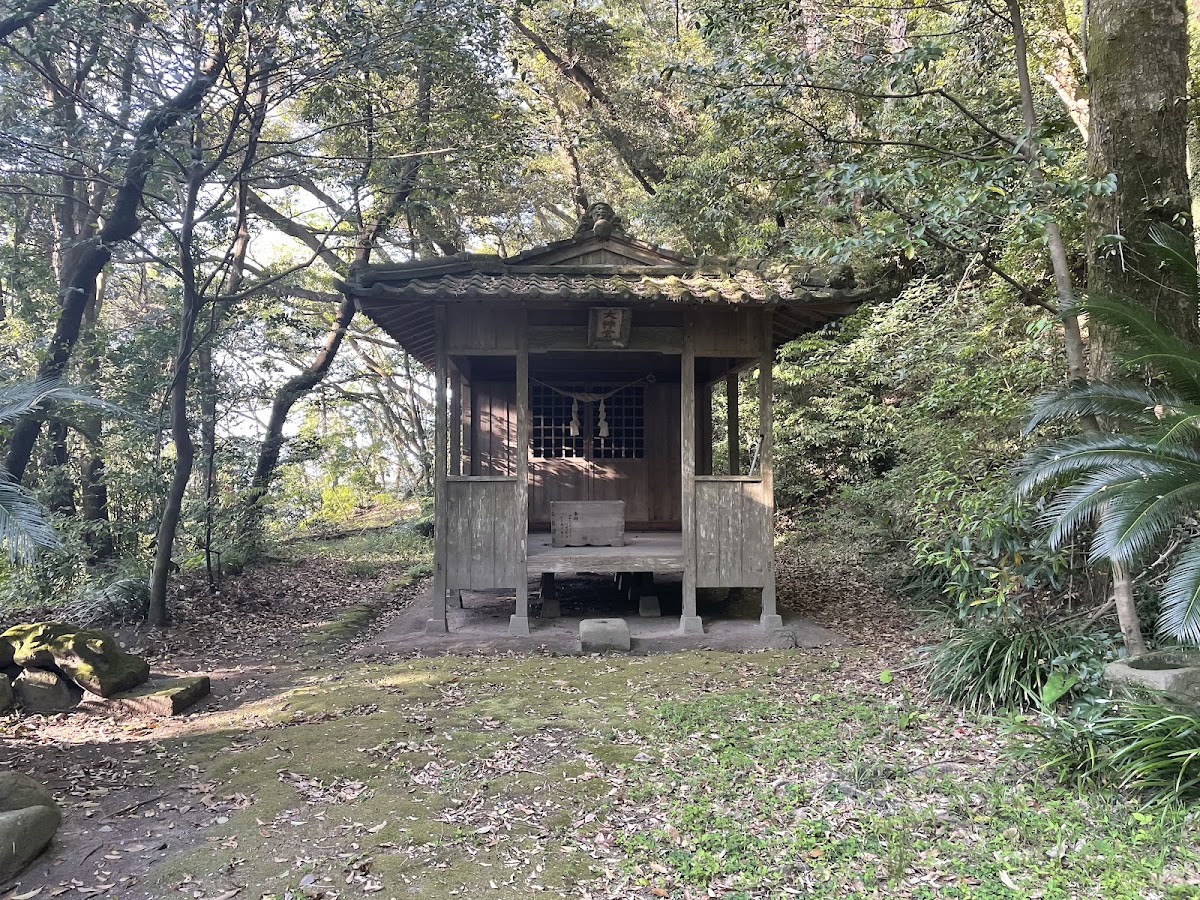
Minamikata Shrine is the central point of interest when visiting Kushikino Castle. This shrine was built using one of the castle’s baileys, and the shrine grounds themselves are part of the castle’s remains.
Remnants of earthworks and dry moats remain around Minamikata Shrine, indicating that the area west of the shrine was the castle’s central area. Walking along the approach to the shrine and observing the layout of the baileys and the topography allows you to experience the structure of a medieval mountain castle.
From the area around the shrine, you can overlook the town of Kushikino, giving you a real sense of the castle’s strategic importance in monitoring and controlling the surrounding area.
Deep Dry Moats
The greatest attraction of Kushikino Castle is the deep dry moats that still remain today. The dry moats separating the baileys are particularly large in scale, and the nearly vertical cliffs characteristic of the Shirasu plateau are impressive.
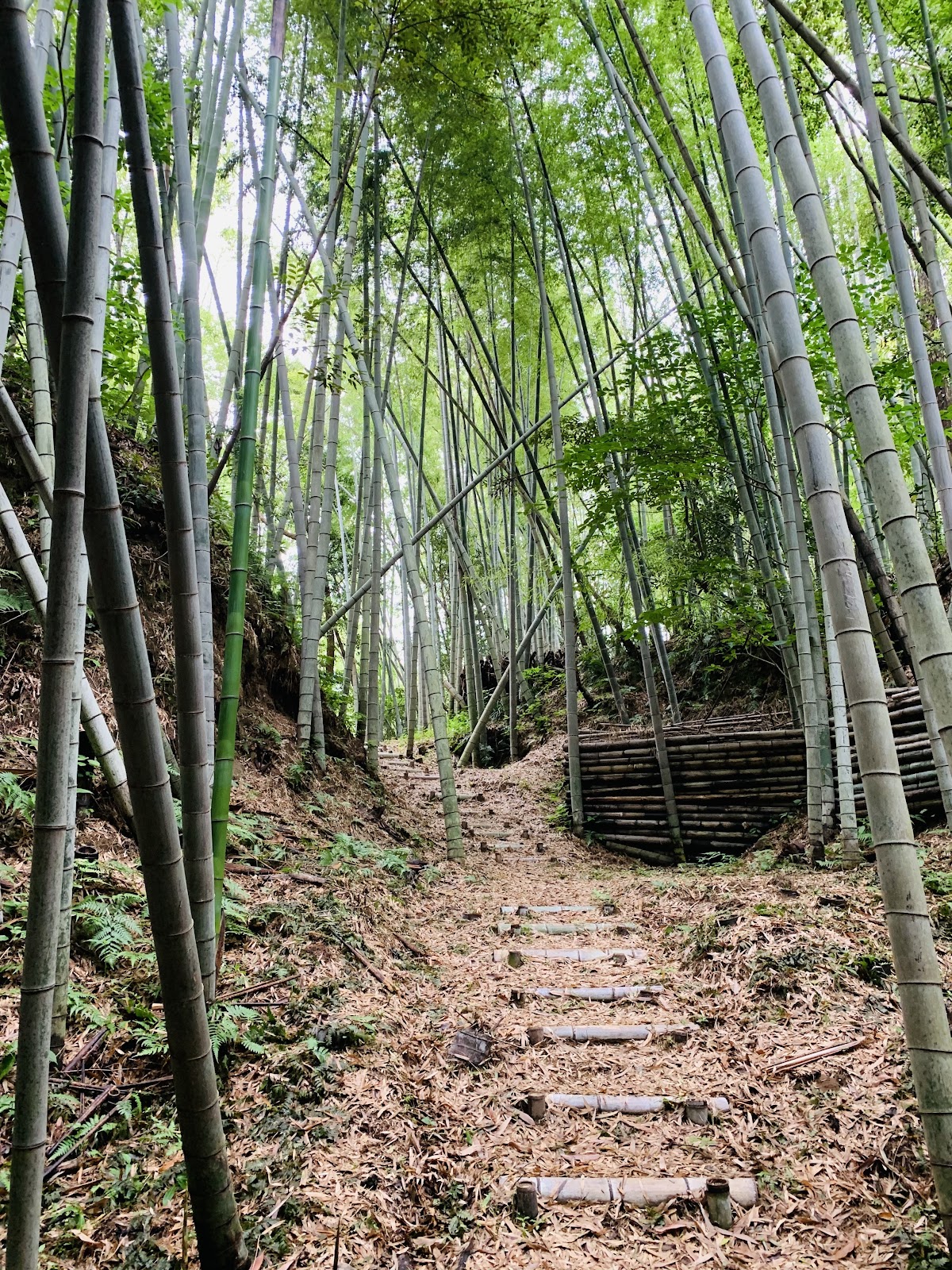
Walking along the bottom of the dry moat, one is overwhelmed by its depth and width. Imagining the sieges of the time, one can understand how difficult it must have been to cross this moat and enter the castle. Observing the shape and arrangement of the dry moat allows one to learn about the ingenuity of medieval castle construction techniques.
Traces of Earthworks and Stone Walls
Earthworks remaining throughout the castle grounds were built around the edges of the baileys. Their height varies depending on the location, but in well-preserved areas, a height of 1-2 meters can be observed.
In some areas, traces of stone walls can also be seen, which are thought to be the result of renovations from the Sengoku period to the early Edo period. While castles in the Satsuma region were primarily constructed of earth, stone was sometimes used in important areas, and Kushikino Castle is one such example.
Place Name “Shironomoto” and Historical Landscape
The place name “Shironomoto” still remains in the central part of Kushikino Castle, indicating that this area was near the castle’s main keep. Place names are important clues that convey the memory of history, and in the case of Kushikino Castle, they are a valuable source of information for understanding the location of the castle’s center.
Walking around the area, you can find fragments of the Edo period appearance of Kushikino Fumoto, such as old stone walls, well remains, and remnants of samurai residences.
Observation Points of the Moat Remains
The moat remaining on the east side of the castle is an important remains for understanding the defensive structure of Kushikino Castle. The moat, deeply excavated into the ridge, maintains a clear shape, allowing observation of a typical defensive structure of a medieval mountain castle.
Earthworks and small enclosures are positioned before and after the moat, indicating the formation of a complex defensive line. Walking around this moat allows you to understand the overall structure of the castle’s layout.
Kushikino Fumoto and Samurai Residences
Formation and Characteristics of Kushikino Fumoto
Kushikino Fumoto, formed around Kushikino Castle, is a samurai settlement under the Satsuma Domain’s unique outer castle system. The Outer Castle System was a system in which local stewards were appointed to various parts of the domain, and samurai were gathered around them to handle defense and administration. It formed the foundation of the Satsuma Domain’s military and administrative system.
Kushikino Fumoto developed around the medieval Kushikino Castle and was further developed from the Sengoku period to the Edo period. Samurai residences lined the area around the castle, forming a town layout unique to Fumoto.
Existing Landscape of Fumoto
Currently, the landscape of Kushikino Fumoto is fragmented due to surrounding development, but its former appearance can be deciphered from old maps and remaining place names. Shrines utilizing the castle’s baileys and parts of magnificent samurai residences remain around the castle, preserving a condensed version of the Edo period landscape.
In particular, around Minamikata Shrine, stone walls, stone steps, and old roads remain, allowing visitors to feel the historical atmosphere of Fumoto. Furthermore, gates and stone walls of samurai residences are preserved in some areas, conveying the image of the town where Satsuma samurai lived.
Cultural Value of Kushikino Fumoto
Kushikino Fumoto is positioned as one of the cultural heritage sites in the “Town Where Satsuma Samurai Lived – Walking Through the Samurai Residences of ‘Fumoto'” cultural heritage area. While many Fumoto towns remain in Kagoshima Prefecture, Kushikino Fumoto holds special value as a place associated with historically famous warlords such as Shimazu Iehisa and Shimazu Toyohisa.
The town layout and the arrangement of samurai residences in Fumoto are valuable resources for understanding the social structure of the Satsuma Domain and the lives of samurai, and together with the castle ruins, they form a historical landscape.
Access and Visiting Information for Kushikino Castle
Access by Public Transportation
Using the JR Kagoshima Main Line
- Approximately 15-20 minutes on foot from JR Kushikino Station
- Head towards Minamikata Shrine from the station and follow the signs.
Using the Bus
- The Ichiki-Kushikino City Community Bus is available (please check routes and schedules).
Access by Car
Using the Expressway
- Approximately 5 minutes from the Minami-Kyushu West Bypass Expressway “Kushikino IC”
- After exiting the IC, head towards the city center and follow the signs.
Parking
- There are some parking spaces around Minamikata Shrine.
- Avoid street parking; it is recommended to use nearby public parking lots.
Points to Note During Your Visit
Visiting Time
- Average visiting time: Approximately 30-60 minutes
- If you want to carefully observe the remains: 1-2 hours
Clothing and Equipment
- Comfortable walking shoes (sneakers or hiking boots) are recommended.
- Observing the dry moats and earthworks involves some undulation, so comfortable clothing is recommended.
- Bring insect repellent, a hat, and drinking water during the summer.
- Be careful during rainy weather as the ground can be slippery.
Regarding Photography
- Photography of the ruins is generally permitted, but consideration is needed on private property and within shrine grounds.
- Please observe proper etiquette when visiting Minamikata Shrine.
Nearby Tourist Attractions
When visiting Kushikino Castle, we recommend also visiting the nearby tourist attractions.
Ichiki-Kushikino City Area
- Kushikino Port: Enjoy fresh seafood and the atmosphere of the market.
- Kushikino Tuna Ramen: A popular local delicacy.
Historical Sites Related to the Satsuma Domain
- Chiran Samurai Residences: A historical site representing the foothills culture of Satsuma (approximately 1 hour by car).
- Shimazu Clan-related historical sites in Kagoshima City (approximately 40 minutes by car).
Nearby Castles
- Isaku Castle: The castle where Shimazu Iehisa was born (approximately 30 minutes by car).
- Kagoshima Castle (Tsurumaru Castle): The headquarters of the Satsuma Domain (approximately 40 minutes by car).
Historical Significance and Value of Kushikino Castle
Position in the History of Castles in the Satsuma Region
Kushikino Castle occupies an important position in the history of castles in the Satsuma region. From the Kamakura period to the Sengoku period, as rulers changed from local lords to vassals of the Shimazu clan, it consistently functioned as a regional base.
The structure of this multi-bailey mountain castle, utilizing the Shirasu plateau, is a typical example of castles in the Satsuma region and a valuable case study demonstrating the relationship between the region’s geological characteristics and castle-building techniques. The remains, such as deep dry moats and earthworks, are important resources for understanding the development of castle-building techniques from the medieval to the Sengoku period.
The Shimazu Clan and Kushikino Castle
Kushikino Castle is deeply intertwined with the history of the Shimazu clan. After coming under Shimazu control during the Nanboku-cho period, it functioned as one of the Shimazu clan’s important strongholds.
Especially during the Sengoku period, Kushikino Castle holds special significance in the history of the Shimazu clan, as it was the residence of Shimazu Iehisa and the birthplace of his son, Shimazu Toyohisa. Shimazu Toyohisa is known as a renowned general who protected Shimazu Yoshihiro during the “Shimazu retreat” at the Battle of Sekigahara, meeting a heroic death in battle. Kushikino Castle, his birthplace, is an important pilgrimage site for history enthusiasts.
Heritage of the Outer Castle System and Foothill Culture
Kushikino Castle and the surrounding Kushikino foothills are a valuable heritage site that conveys the unique outer castle system and foothill culture of the Satsuma Domain. The outer castle system was the foundation of the Satsuma Domain’s military power and governing structure, and one of the sources of its strength during the late Edo period.
Kushikino foothills retain a historical landscape where castle remains, samurai residences, shrines, and temples are integrated, allowing us to understand how Satsuma samurai lived and protected the region. This cultural heritage holds significant value in the study of Japanese castle history and samurai society.
Current Status of Preservation and Development of Kushikino Castle
Preservation Status of the Remains
Although the southern end of the Kushikino Castle remains has been partially lost due to modern development, the central dry moats, earthworks, and baileys are preserved in relatively good condition. In particular, the deep dry moats retain their clear shape, making them valuable remains that convey the defensive structure of a medieval mountain castle to the present day.
The baileys surrounding Minamikata Shrine have been preserved as a result of being used as shrine grounds, and the original topography is well-preserved. The remains of the eastern moat are also clearly visible, providing important information for understanding the castle’s layout.
Efforts for Preservation and Utilization
Ichikikushikino City has designated the Kushikino Castle ruins as a valuable cultural asset and is working on its preservation and utilization. Improvements are underway to enable visitors to understand the castle’s history and structure, including the installation of information boards and explanations of the remains.
Furthermore, the entire foot of Kushikino has been designated as a cultural heritage site, “The Town Where Satsuma Samurai Lived,” and efforts are being made to preserve and utilize the castle remains and the surrounding landscape as a whole. Utilization for local history education and as a tourist resource is also progressing, making it a place visited by local history enthusiasts and tourists alike.
Future Challenges and Prospects
Future challenges for Kushikino Castle include further investigation and preservation of the remains, and improving the provision of information to visitors. Excavations are expected to reveal the detailed layout of the castle, preserve and maintain the remains, and improve informational facilities.
Furthermore, preserving the historical landscape of the entire Kushikino foothills is a crucial issue. Amidst development pressures, the question is how to preserve the remaining samurai residences and historical town layout and pass them on to future generations.
It is important to widely disseminate the value of Kushikino Castle and gain understanding and cooperation for its preservation by utilizing it as a historical site that is accessible not only to castle enthusiasts and history buffs, but also to local residents and tourists.
Summary
Kushikino Castle is a valuable castle ruin from the medieval to Sengoku period remaining in Ichikikushikino City, Kagoshima Prefecture. From its construction by the Kushikino clan during the Kamakura period, to its transition under the rule of the Shimazu clan during the Nanboku-cho period, and its history as the residence of Shimazu Iehisa during the Sengoku period, it is an important historical site that embodies the history of the Satsuma region.
The remains of Kushikino Castle, with its deep dry moats and earthworks utilizing the Shirasu plateau, and its clearly defined layout of baileys, are a fascinating sight for castle enthusiasts, showcasing the unique castle structure of the Satsuma region. Furthermore, the Kushikino foothills, centered around Kushikino Castle, are a valuable cultural heritage site for understanding the Satsuma domain’s outer castle system and foothill culture.
The castle grounds, centered around Minamikata Shrine, are an easily accessible historical site where you can fully experience the charm of a medieval mountain castle. As part of a tour of castles in Kagoshima Prefecture or a trip to places associated with the Shimazu clan, be sure to visit Kushikino Castle. Walking along the deep dry moats, climbing the earthworks, and surveying the surrounding area from the baileys, you can relive the views seen by the warlords of the Sengoku period.