Kurobane Castle (Tochigi Prefecture) Complete Guide: History and Highlights of the Largest Mountain Castle in Northern Nasu
What is Kurobane Castle?
Kurobane Castle is a Japanese castle located in Otawara City (formerly Kurobane Town), Tochigi Prefecture. Also known as Kyukaku Castle, it is a flatland castle built on a hilly area between the Naka River and its tributaries, and boasts the largest castle remains in the northern Tochigi region.
Since its construction in 1576 (Tensho 4) when Ozeki Takamasu moved his base from Shirahata Castle, it functioned as the residence of the Ozeki clan for approximately 300 years until the Meiji Restoration. Currently, it is maintained as Kurobane Castle Ruins Park, and the remains such as earthworks, dry moats, and water moats are well preserved, making it a valuable historical site where visitors can experience the changes in castle architecture from the Sengoku period to the Edo period.
History and Background of Kurobane Castle
Before Construction: The Rise of the Ozeki Clan
Indispensable to understanding the history of Kurobane Castle is the existence of its builder, Ozeki Takamasu. The Ozeki clan were originally powerful samurai, serving as senior retainers of the Nasu clan and ranking among the “Seven Knights of Nasu.” The Nasu clan was a powerful daimyo family that controlled northern Shimotsuke Province, but power struggles were constant within the family. Ozeki Takamasu supported his lord, Nasu Sukehara, while building his own independent power base.
1576: Construction of Kurobane Castle
In 1576, Ozeki Takamasu decided to move his base from his previous residence, Shirahata Castle, to its current location, which held greater strategic value. The terrain, sandwiched between the Naka River and its tributaries, provided a natural stronghold, and utilizing the long, narrow hilly terrain allowed for the construction of a large-scale castle.
During this period, the Hojo clan was expanding its power in the Kanto region, and the Nasu region was under tense circumstances. By constructing a new castle, Ozeki Takamasu protected the sphere of influence of his lord, the Nasu clan, while simultaneously establishing a base for managing his own territory.
The Siege of Odawara and the Survival of the Ozeki Clan
In 1590, when Toyotomi Hideyoshi launched the Siege of Odawara, the various daimyo of the Kanto region were forced to choose their allegiance. While the Nasu clan, his lord, suffered the misfortune of confiscation of their domain, Ozeki Takamasu quickly pledged allegiance to the Toyotomi side, securing his territory and being recognized as an independent daimyo. This elevated the Ozeki clan to a position superior to that of their lord, the Nasu clan.
The Edo Period: As an Tozama Daimyo
In the Edo period, the Ozeki clan established the Kurobane Domain as a Tozama Daimyo with a stipend of 18,000 koku. The survival of a Tozama Daimyo in the Kanto region until the end of the Edo period is extremely rare, making the Kurobane Domain a valuable example. Under the Tokugawa shogunate, the Ozeki clan ruled the Kurobane region for 18 generations.
Throughout the Edo period, Kurobane Castle functioned as an administrative and military center, and the castle town also flourished. In particular, in 1689, Matsuo Basho visited Kurobane during his journey on “The Narrow Road to the Deep North,” recording his longest stay of the trip at 14 days. This indicates that Kurobane was a culturally rich area at that time.
Meiji Restoration and Abolition of the Castle
With the Meiji Restoration, the Kurobane Domain ceased to exist due to the return of feudal domains to the Emperor and the abolition of the feudal system, and the castle lost its function as a fortress. In the early Meiji period, many of the castle’s buildings were demolished, and the castle site was temporarily in danger of falling into ruin.
However, thanks to the preservation efforts of local residents, major remains such as earthworks and moats were spared, and since the Showa period, the site has been developed into a castle park. On June 21, 2001, it was designated a historical site of Otawara City, and is currently used as a place of relaxation for citizens and a place for historical learning.
Structure of Kurobane Castle
Scale and Layout of the Castle
The most distinctive feature of Kurobane Castle is its magnificent scale. With a vast area of approximately 37.5 hectares, measuring approximately 1,500 meters north-south and 250 meters east-west, it is known as the largest mountain castle in northern Tochigi Prefecture.
The castle was built on a hill between the Naka River and its tributary, the Jabio River, and its layout skillfully utilizes the natural terrain. Taking advantage of the long, narrow north-south orientation, it adopted a linear structure with multiple baileys arranged in a series.
Structure of the Main Bailey
The area around the main bailey, currently developed as a castle ruins park, is the core of Kurobane Castle. The main enclosure (Honmaru) is surrounded on all four sides by high earthen ramparts, and particularly impressive remains remain at the eastern gate (koguchi).
The eastern gate of the main enclosure has a unique structure called a double masugata koguchi. A masugata koguchi is a defensive structure where the passageway is bent into a square to prevent enemy intrusion, but at Kurobane Castle, this was arranged in a double configuration to create a stronger defensive system. A horizontal moat was provided between the masugata koguchi, and this complex defensive structure is highly regarded by castle researchers as a pinnacle of castle construction technology from the Sengoku period to the early modern period.
Arrangement of Earthen Ramp and Moat
The defensive system of Kurobane Castle is a traditional structure combining earthen ramparts and moats. The earthen ramparts surrounding the main enclosure reach a height of several meters and still maintain their imposing presence today. The top of the ramparts is leveled, and it is believed that walls or turrets were once built there.
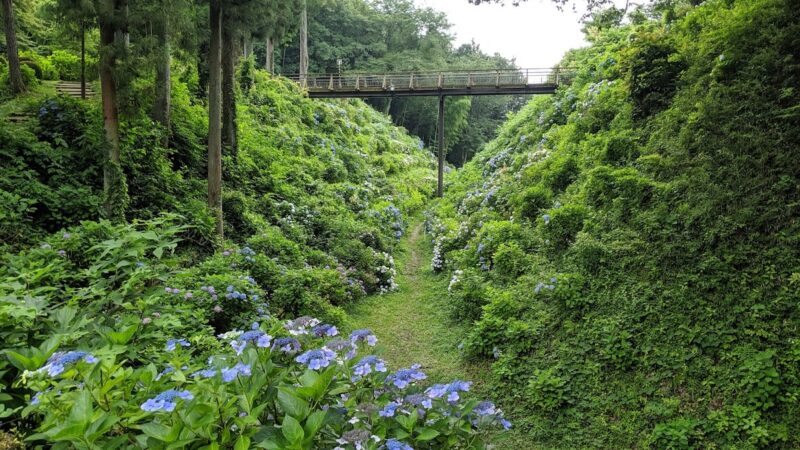
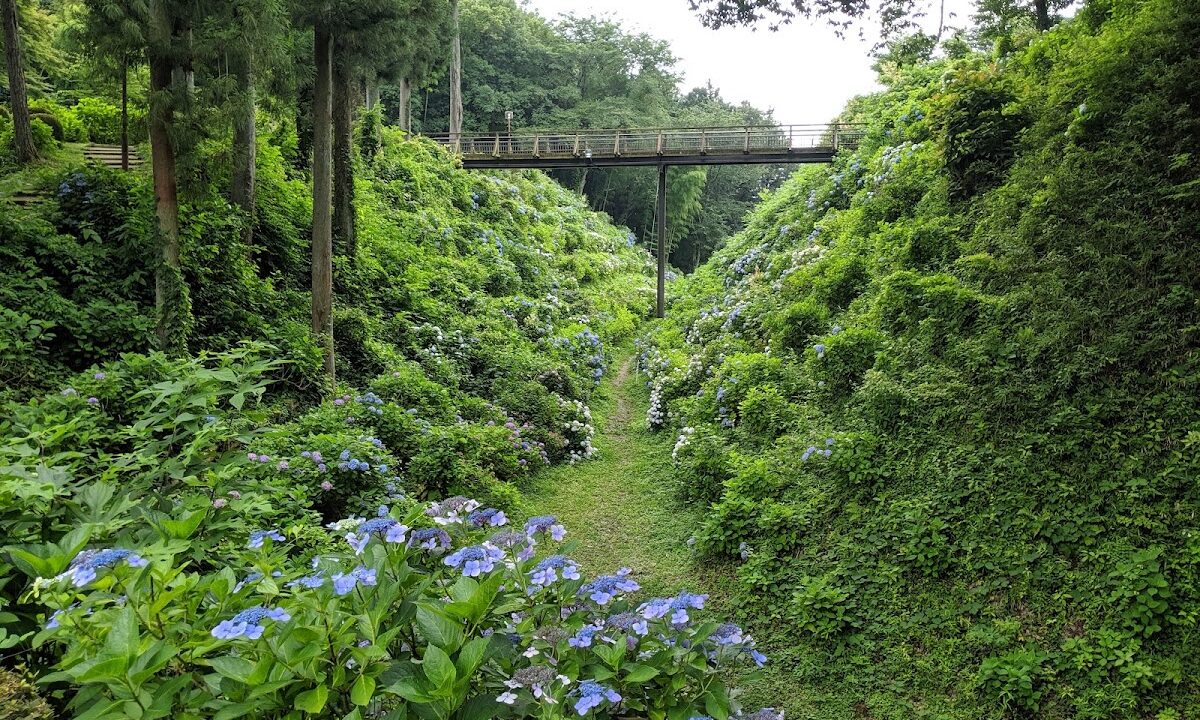
Both dry moats and water moats were used. Dry moats primarily functioned as demarcations between baileys and defensive lines, while water moats drew water from the Naka River to strengthen the outer defenses. Even today, deep dry moats remain around the main bailey, demonstrating the high level of defense at the time.
Bailey Arrangement
The baileys, including the second and third baileys, were arranged around the main bailey. Taking advantage of the long, narrow north-south terrain, each bailey was arranged in stages, designed to function as an independent defensive stronghold.
Unfortunately, many baileys outside the main bailey area were lost due to later development, but old maps and archaeological excavations have revealed that there were once more than 10 baileys.
Castle Town Structure
The castle town of Kurobane Castle was located north of the castle grounds. Samurai residences, merchant districts, temples, and shrines were systematically arranged, and it flourished as the political, economic, and cultural center of the northern Nasu region throughout the Edo period. The basic structure of the castle town is still preserved in the current town layout of the Kurobane district of Otawara City, allowing visitors to trace the historical streetscape.
Highlights of Kurobane Castle
Double Masugata Gate
A must-see when visiting Kurobane Castle is the double masugata gate on the east side of the main keep. This structure is rare among Japanese castles and is a valuable historical site demonstrating advanced defensive techniques.
After passing through the first masugata, a moat awaits, and one must pass through the second masugata to reach the main keep. For attackers, multiple obstacles had to be overcome, while for defenders, it was an ideal structure for efficient defense. Visitors can actually walk around and confirm the layout of the earthworks and moats, experiencing the castle-building techniques of the Sengoku period.
Earthworks of the Main Keep
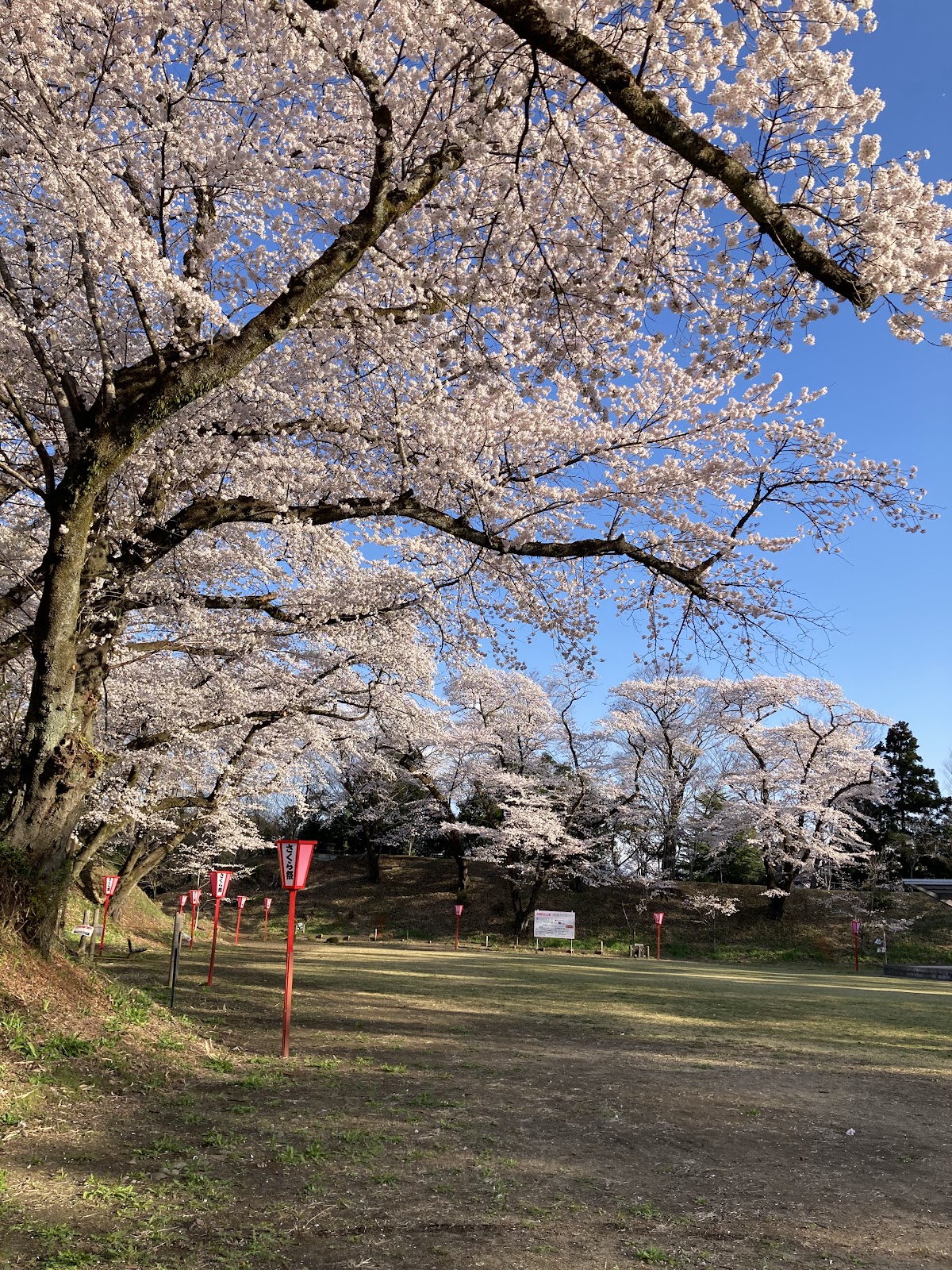
The earthworks surrounding the main keep are impressive in both height and width, and are well-preserved. There are places where you can walk on top of the earthworks, offering panoramic views of the castle. Especially in spring, the cherry blossoms are in full bloom, allowing visitors to enjoy a beautiful landscape where history and nature harmonize.
Dry and Water Moats
The dry moats remaining around the main keep are deep and wide, testifying to the high level of defense at the time. There are places where you can descend to the bottom of the moat, allowing you to truly appreciate its scale. Furthermore, traces of water moats remain in the outer enclosure, confirming the existence of a water moat system utilizing the Naka River.
Stone Monuments and Information Boards
Several information boards explaining the history of Kurobane Castle are installed within the castle park. They provide multifaceted information, including the castle’s structure, the history of the Ozeki clan, and Matsuo Basho’s stay, making it easy for first-time visitors to understand the castle’s history.
Views
From the main keep, you can see the flow of the Naka River and the surrounding mountains. During the Sengoku period, the castle lords likely contemplated their territorial management while gazing at this view. Especially during the autumn foliage season, the surrounding mountains change color, offering a spectacular view.
Matsuo Basho and Kurobane Castle
In 1689 (Genroku 2), Matsuo Basho visited Kurobane during his journey along the “Narrow Road to the Deep North.” He was invited by Jōhōji Takakatsu, a retainer of Ōzeki Masutsugu, the then lord of the Kurobane domain, and stayed in Kurobane for 14 days. This was the longest stay during his entire “Narrow Road to the Deep North” journey.
During his stay in Kurobane, Basho interacted with cultural figures in the castle town and composed many haiku. It is said that Basho deeply loved this place, touched by its nature and the warmth of its people. Currently, several historical sites associated with Basho remain in the Kurobane area, and visiting them along with the castle ruins park allows visitors to experience the cultural atmosphere of the Edo period.
Current Status of Kurobane Castle Ruins Park
Park Development
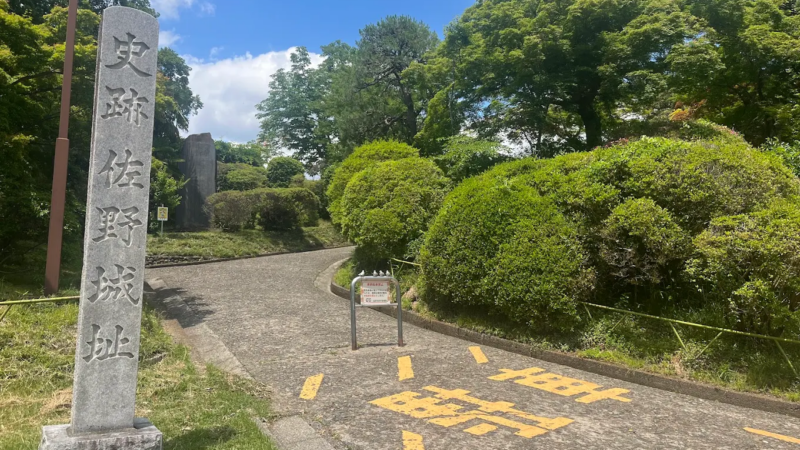
The Kurobane Castle ruins are now developed as Kurobane Castle Ruins Park, a place of relaxation for citizens. Approximately 2 hectares, centered around the main keep, have been transformed into a park with well-maintained walking paths, allowing visitors to enjoy historical walks.
The park is also popular for its seasonal beauty, with cherry blossoms in spring, azaleas in early summer, and autumn leaves in fall. Especially during cherry blossom season, many visitors come to enjoy the beautiful scenery where history and nature harmonize.
Cultural Value
On June 21, 2001, the Kurobane Castle ruins were designated a historical site of Otawara City. It is recognized for its historical and academic value as one of the largest castle remains in northern Tochigi Prefecture, and as a valuable example of a daimyo (feudal lord) who survived throughout the Edo period.
Excavation surveys and research are still ongoing, and new discoveries are expected. In collaboration with local historical research groups and educational institutions, efforts are underway to preserve and utilize the castle.
Access and Tourist Information
Location
Maeda, Otawara City, Tochigi Prefecture (formerly Kurobane Town)
Access Methods
Access by Car
- Approximately 30 minutes from the Tohoku Expressway “Nishinasuno-Shiobara IC”
- Approximately 40 minutes from the Tohoku Expressway “Yaita IC”
- Parking: Kurobane Castle Ruins Park Parking (Free)
Access by Public Transportation
- Approximately 25 minutes by car from the JR Tohoku Main Line “Nishinasuno Station”
- Approximately 30 minutes by car from the JR Tohoku Main Line “Nasu-Shiobara Station”
- Due to limited bus service, using a taxi or rental car is recommended.
Visiting Information
- Opening Hours: Always open (park area)
- Admission Fee: Free
- Estimated Time Required: Approximately 1-2 hours for a thorough visit
- Notes for Visitors: Some areas outside the walking paths have uneven footing, so comfortable shoes are recommended.
Nearby Tourist Attractions
- Basho’s House: A museum commemorating Matsuo Basho’s stay in Kurobane
- Kurobane-san Daioji Temple: The family temple of the Ozeki clan
- Nakagawa Riverbank: A nature-rich riverside walking path
- Otawara City Historical and Folk Museum: A facility where you can learn about the local history
The Charm of Kurobane Castle and its Future Preservation
Kurobane Castle is a valuable historical site that conveys the changes in castle architecture from the Sengoku period to the Edo period. In particular, defensive facilities such as the double-layered masugata koguchi (gate) demonstrate the high level of castle construction technology at the time, and it holds an important position in castle research.
Furthermore, as a rare example of an outside daimyo (feudal lord) surviving throughout the Edo period in the Kanto region, the history of the Ozeki clan and Kurobane Castle is important for understanding early modern Japanese history. It is also known as the place where Matsuo Basho spent the longest period of his life, making it a historical site of high cultural and historical value.
Currently, local efforts are underway to preserve and utilize the Kurobane Castle ruins. Challenges include research into the lost areas outside the main keep, proper preservation and management of the remains, and passing on history to future generations.
When visiting Tochigi Prefecture, be sure to visit Kurobane Castle Ruins Park. The clear waters of the Naka River, the surrounding mountains, and the remains of the castle dating back to the Sengoku period will evoke a sense of historical romance and natural beauty in visitors.
Summary
Kurobane Castle, built in 1576 by Ozeki Takamasu, is the largest mountain castle in northern Tochigi Prefecture. The vast castle grounds, measuring 1,500 meters north-south, 250 meters east-west, and covering an area of 37.5 hectares, represent the pinnacle of castle construction technology from the Sengoku period to the Edo period.
Notably, it boasts a rare history of being ruled by the Ozeki clan, a powerful daimyo family, for 18 generations throughout the Edo period. In the Kanto region, there are very few examples of tozama daimyo (outside lords) surviving until the end of the Edo period, making the Kurobane Domain and its castle, Kurobane Castle, a valuable example in early modern Japanese history.
Currently, the area around the main keep has been developed as Kurobane Castle Ruins Park, and the remains such as the double-layered masugata gate, earthworks, and dry moats are well preserved. These remains are valuable historical relics that convey the high level of defensive technology of the time.
It is also known as the place where Matsuo Basho stayed for the longest period of his journey on “Oku no Hosomichi” (The Narrow Road to the Deep North), a total of 14 days, making it a fascinating spot where history and culture intersect. It is a historical site that those interested in the history of Tochigi Prefecture and castle enthusiasts should definitely visit.
--765x450.png)