Complete Guide to Kokokuji Castle Ruins: History, Highlights, and Access Information of the Castle Where Hojo Soun Raised His Army
What is Kokokuji Castle?
Kokokuji Castle is a Sengoku period mountain castle ruin located in Negoya, Numazu City, Shizuoka Prefecture. It holds an extremely important position in Japanese Sengoku history as the first castle established by Hojo Soun (Ise Shinkuro Moritoki), the ancestor of the Later Hojo clan, who ruled the entire Kanto region as a Sengoku daimyo.
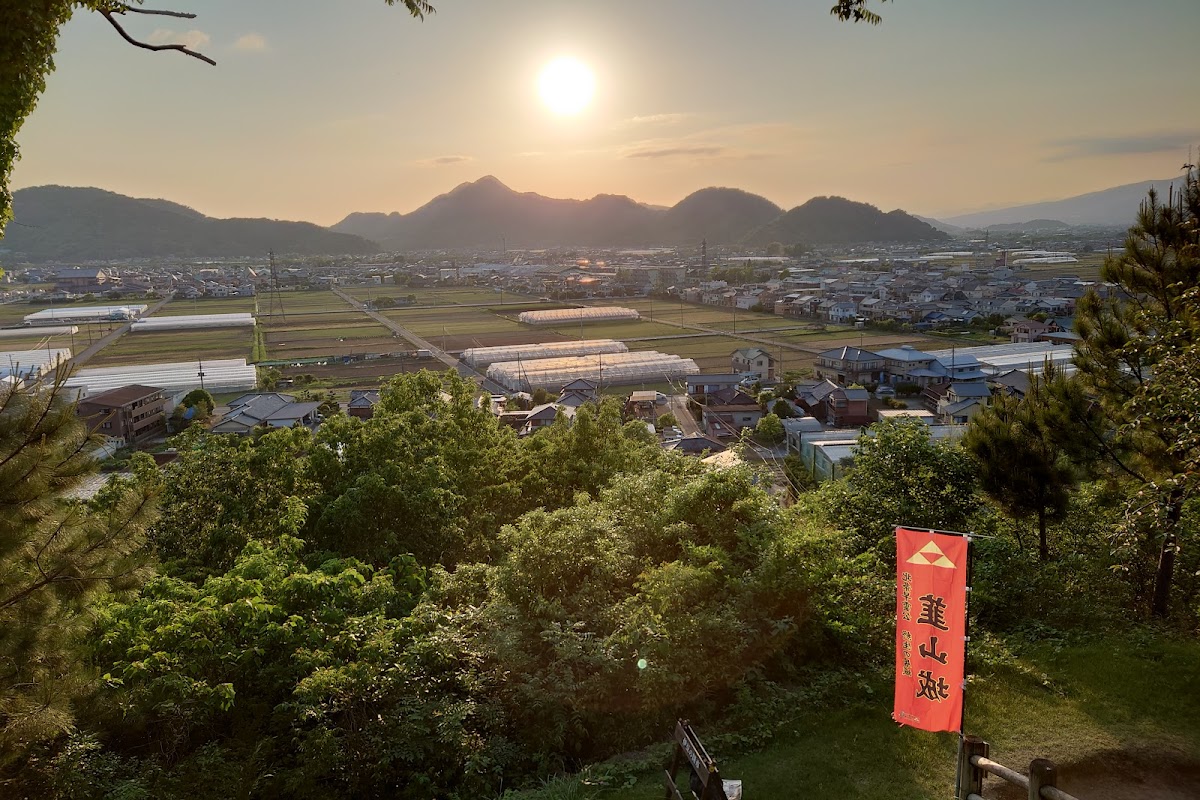
Built on a hill approximately 50 meters above sea level at the southern foot of Mt. Ashitaka, this castle was strategically located at the border of Suruga, Kai, and Izu provinces, and was the stage for fierce battles between the Imagawa, Takeda, and Hojo clans. It is currently designated as a national historic site and is also selected as one of the Continued Top 100 Japanese Castles (No. 145).
Location and Topography of Kokokuji Castle
The Kokokuji Castle ruins are located at the southern foot of Mt. Ashitaka in eastern Shizuoka Prefecture. The terrain on the southern slopes of Mount Ashitaka is a continuous sloping surface, but near Kōkokuji Castle, the gentle slopes are divided into blocks by erosional valleys, some of which are accompanied by valley bottom plains. The castle was built by skillfully utilizing this natural terrain.
The castle was built on the ridge of Mount Ashitaka called Shinoyama, located on the border between Negoya and Aono, and has a long, narrow layout running east to west. This topographical feature allowed for an effective defensive structure against attackers.
History of Kōkokuji Castle
From Construction to the Entry of Hōjō Sōun
The exact construction date of Kōkokuji Castle is unknown, but it is believed to have been functioning as a castle by the late 15th century. Initially, it is thought to have been a branch castle of the Imagawa clan, serving as a defensive base in eastern Suruga Province.
Kōkokuji Castle first appears on the historical stage in 1488 (Chōkyō 2). In this year, Ise Shinkuro Moritoki (later Hojo Soun) was granted 12 villages in Shimogata-sho, Fuji District, Suruga Province, for his service in assisting Imagawa Ujichika in his succession dispute, and became the lord of Kokokuji Castle.
Hojo Soun and Kokokuji Castle
Hojo Soun, initially known as Ise Shinkuro Nagauji (Moritoki), sought refuge with the Imagawa clan, relying on his sister, who was a concubine of Imagawa Yoshitada, the governor of Suruga Province. After Yoshitada’s sudden death, a succession dispute erupted within the Imagawa family, and Soun supported Imagawa Ujichika, leading him to victory.
As a result of this service, Soun became the lord of Kokokuji Castle and used it as a base to expand his power. In 1491, Soun marched out from Kokokuji Castle and captured Horikoshi Gosho in Izu Province. He defeated Ashikaga Chachamaru and brought Izu Province under his control. This marked the de facto beginning of the Hojo clan as a Sengoku daimyo.
Around 1495, Soun moved his base to Nirayama Castle in Izu, but Kokokuji Castle continued to function as an important base for the Hojo clan.
Struggle for Control by the Imagawa, Takeda, and Hojo Clans
Due to its geographical location at the border of Suruga, Kai, and Izu provinces, Kokokuji Castle was the subject of fierce battles throughout the Sengoku period.
In 1568, when Takeda Shingen began his invasion of Suruga, Kokokuji Castle was also caught up in the fighting. In 1569, it became a branch castle of the Odawara Hojo clan, but from 1571 to 1582, it was under the control of the Takeda clan.
During this period, the Takeda clan considered Kokokuji Castle an important base for controlling eastern Suruga, and it is believed that they also carried out renovations to the castle. After the fall of the Takeda clan in 1582, the castle came under the control of Tokugawa Ieyasu.
From the Tokugawa Era to Abandonment
In 1590, following Toyotomi Hideyoshi’s siege of Odawara and the subsequent downfall of the Hojo clan, Tokugawa Ieyasu was transferred to the Kanto region. Consequently, Toyotomi-affiliated daimyo were placed in Suruga Province.
Nakamura Kazushi, a retainer of Toyotomi Hideyoshi, entered Kokokuji Castle and ruled over 145,000 koku in Suruga Province. However, after the Battle of Sekigahara in 1600, Nakamura Kazushi was transferred to Yonago in Hoki Province.
Later, Amano Yasumasa, a retainer of Tokugawa Ieyasu, became the lord of Kokokuji Castle. However, upon Yasumasa’s death in 1607, Kokokuji Castle was abandoned. Subsequently, while the castle site was used as farmland, the main remains were preserved in relatively good condition.
Highlights of Kokokuji Castle Ruins
Main Enclosure and Earthworks
The most impressive remains at Kokokuji Castle Ruins are the massive earthworks surrounding the main enclosure. The main enclosure measures approximately 80 meters east-west and 40 meters north-south, and is surrounded by earthworks reaching 5 to 8 meters in height.
The northern earthworks, in particular, are well-preserved, making them a valuable relic that allows visitors to experience the castle structure of the Sengoku period. Visitors can climb onto the earthworks and enjoy a panoramic view of the main enclosure and the surrounding terrain. The scale of these earthworks indicates that Kokokuji Castle was an important military base.
Castle Tower Base
At the northwest corner of the main enclosure is a raised area called the castle tower base. This base is thought to be a later modification, and it is unclear whether a castle tower actually stood here. However, this location offers a wide view of the surrounding area, suggesting it may have functioned as a lookout or command post. From the castle tower base, you can see Mount Fuji and Suruga Bay, truly appreciating the excellent location of Kokokuji Castle. On a clear day, you can even see the Izu Peninsula, the destination of Hojo Soun, in the distance.
Large Dry Moat
To the east of the main enclosure remains a massive dry moat (the large dry moat), approximately 20 meters wide and 10 meters deep. This moat was a crucial part of Kokokuji Castle’s defenses, functioning as a strong barrier against enemy intrusion.
Even today, you can descend to the bottom of the dry moat and experience its immense scale firsthand. The walls of the dry moat are steep, illustrating how difficult it must have been for attackers to cross.
Second and Third Enclosures
To the west of the main enclosure was the second enclosure, and further west was the third enclosure. While much of the area is now farmland, the layout of the enclosures can still be discerned from the topography.
A dry moat was also constructed between the second and third baileys, creating a multi-layered defensive structure. These bailey arrangements are valuable resources for studying the structure of castles during the Sengoku period.
North Bailey and Shimizu Bailey
To the north of the main bailey was the North Bailey, and to the east was the Shimizu Bailey. It is believed that there was a spring in the Shimizu Bailey, playing an important role as the castle’s water source.
Securing a water source was a matter of life and death for castles designed for sieges. The existence of the Shimizu Bailey indicates that Kōkokuji Castle was designed to withstand prolonged sieges.
Homi Shrine
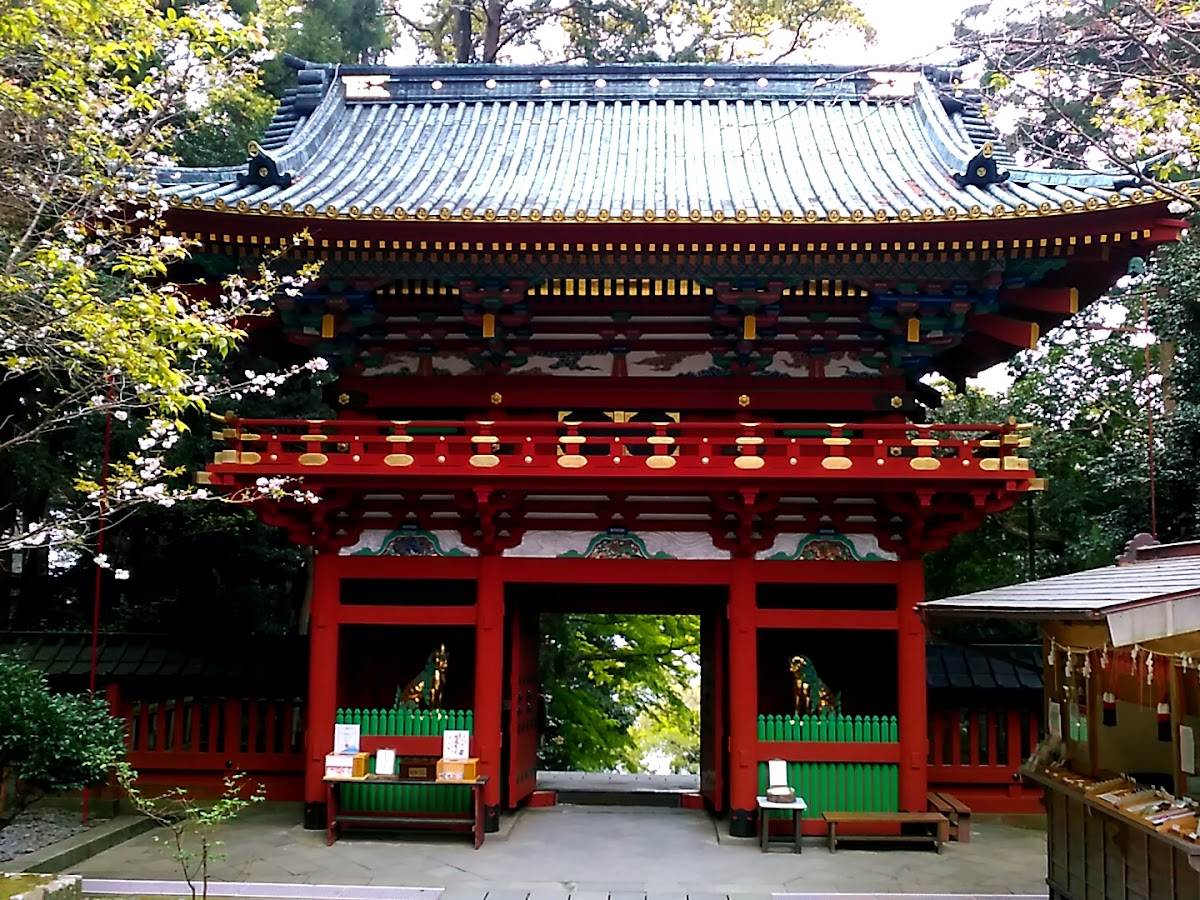
Homi Shrine is located in a corner of the castle ruins. This shrine is thought to have been dedicated to the castle’s guardian deity, and is noteworthy as a relic demonstrating a medieval form of worship where the castle and shrine were integrated.
Part of the castle ruins can be viewed from the shrine grounds, allowing visitors to combine worship with a tour of the castle ruins.
Excavation and Development of the Kokokuji Castle Ruins
Results of the Excavation
The Kokokuji Castle Ruins have been excavated multiple times by the Numazu City Board of Education. These investigations have revealed the remains of buildings, wells, the structure of earthworks, and the shape of moats.
The unearthed artifacts include ceramics, roof tiles, and iron products dating from the 16th to the early 17th centuries, providing clues to the period of the castle’s use and the lifestyle of its inhabitants. In particular, high-quality ceramics such as celadon and white porcelain from China have been unearthed, providing valuable information about the castle lord’s economic power and trade relations.
Preservation and Utilization Plan for the Kokokuji Castle Ruins
Numazu City has formulated the “Preservation and Utilization Plan for the Kokokuji Castle Ruins” to ensure the appropriate preservation and utilization of the Kokokuji Castle Ruins. This plan outlines policies for the preservation of remains, environmental improvement, public access, and research.
Based on the plan, improvements to the viewing paths, installation of information boards, and vegetation management are underway, creating an environment where visitors can explore the castle ruins more safely and gain a deeper understanding.
Basic Plan for the Development of the Kokokuji Castle Ruins
Furthermore, the “Basic Plan for the Development of the Kokokuji Castle Ruins” outlines a long-term development policy. While prioritizing the preservation of the remains, the plan also aims to utilize the site as an educational and tourism resource.
In the future, development of the area around the main keep, installation of guidance facilities, and reconstruction exhibits of the castle in its heyday using VR/AR are being considered, and the development of a more attractive historical park is expected.
Continued Top 100 Japanese Castles Stamp Rally
The Kokokuji Castle Ruins were selected as one of the “Continued Top 100 Japanese Castles” (No. 145) in 2017. This has made it a popular destination for castle enthusiasts nationwide.
Stamp Location
The stamp for the Continued Top 100 Japanese Castles is located in the main enclosure of Kokokuji Castle. The stamp is available 24 hours a day, but nighttime visits are not recommended for safety reasons. Please be careful to keep your stamp book dry during rainy weather.
The stamp station is located near the entrance to the main enclosure, and a map of the castle ruins is also provided. Before stamping, it is recommended to first familiarize yourself with the overall layout of the castle ruins using the map.
How to Enjoy the Stamp Rally
When visiting Kokokuji Castle ruins, please take the time to explore the entire site, not just collect the stamp. It takes approximately 30 minutes to an hour to visit the main points of interest, such as the main enclosure’s earthworks, the large dry moat, and the castle tower base.
Recommended photo spots include the view from the top of the main enclosure’s earthworks, the view of the large dry moat from below, and the view of Mt. Fuji from the castle tower base. Especially on clear days, you can take photos with Mt. Fuji in the background.
Access to Kokokuji Castle Ruins
Using Public Transportation
Using the JR Tokaido Main Line
- From JR Hara Station:
- Approximately 30 minutes on foot (approx. 2.5 km)
- Approximately 5 minutes by taxi
- Get off at the “Higashinegoya” bus stop on the Fujikyu City Bus, then approximately 5 minutes on foot
- From JR Numazu Station:
- Get off at the “Higashinegoya” bus stop on the Fujikyu City Bus, then approximately 5 minutes on foot
- Approximately 20 minutes by taxi
Using the Gakunan Railway
- Approximately 25 minutes on foot from Gakunan Railway “Gakunan Harada Station”
When using public transportation, it is recommended to check the timetable in advance as the number of buses is limited. While it is possible to access the site on foot from JR Hara Station, it is a bit of a distance, so please allow ample time for your visit.
By Car
From the Tomei Expressway
- Approximately 15 minutes (approx. 8km) from Numazu IC
- Approximately 20 minutes (approx. 10km) from Fuji IC
From the Shin-Tomei Expressway
- Approximately 20 minutes (approx. 12km) from Nagaizumi-Numazu IC
When using a car navigation system, it is convenient to search for “Kokokuji Castle Ruins” or “Homi Shrine”. The address is “Negoya, Numazu City, Shizuoka Prefecture”.
Parking Information
There is a free parking lot at the Kokokuji Castle Ruins. It can accommodate approximately 10 cars, and is suitable for regular passenger vehicles. For large vehicles such as tour buses, it is recommended to consult with the Numazu City Board of Education Cultural Properties Division in advance.
The parking lot may be full on holidays or due to the popularity of the Continued 100 Famous Castles of Japan Stamp Rally. In that case, please consider adjusting your timing or using public transportation.
Kokokuji Castle Ruins Map
A detailed map is installed at the site, showing the locations of major remains and the sightseeing route. Maps are available near the parking lot and at the main castle entrance; we recommend checking them before your visit.
The castle ruins are relatively compact, but due to the uneven terrain, we recommend wearing comfortable shoes. Also, don’t forget insect repellent in the summer and warm clothing in the winter.
Nearby Tourist Attractions
Historical Sites in Numazu City
When visiting the Kokokuji Castle Ruins, you can also visit other historical sites in Numazu City.
- Nagahama Castle Ruins: A castle that served as a base for the Takeda navy, the remains of a coastal castle facing Suruga Bay still remain.
- Sanmaibashi Castle Ruins: A castle from the medieval to early modern period; although now part of the city, some remains still exist.
Mount Fuji Viewing Spots
The area around the Kokokuji Castle Ruins offers excellent views of Mount Fuji. Especially on clear winter days, you can enjoy a magnificent view of Mount Fuji.
- Ashitaka Mountain: A hiking trail is well-maintained, offering stunning views of Mt. Fuji and Suruga Bay from the summit.
- Senbonhama Beach: A scenic spot on the Numazu coast offering panoramic views of Mt. Fuji and Suruga Bay.
Gourmet Information
Numazu City is a region where you can enjoy fresh seafood from Suruga Bay. We recommend enjoying local cuisine before or after visiting the Kokokuji Castle Ruins.
- Numazu Port: Seafood bowls and sushi made with fresh seafood are popular.
- Deep-Sea Fish Cuisine: Numazu is also known for its deep-sea fish landings, and there are restaurants offering rare deep-sea fish dishes.
Manners and Precautions for Visiting Kokokuji Castle Ruins
Points to Note During Your Visit
- Historical Site Protection: Kokokuji Castle Ruins are designated as a national historic site. Please be careful not to damage the remains such as earthworks and moats.
- Take your trash with you: There are no trash cans, so please be sure to take your trash with you.
- No trespassing on private property: There is private property around the castle ruins. Please do not enter restricted areas.
- Safety precautions: There are areas with uneven footing, such as on top of the earthworks and at the bottom of the dry moats. Please be careful not to fall or slip, and be especially careful when it rains or after it rains, as these areas are slippery.
Appropriate attire for visiting
- Shoes: Comfortable, non-slip shoes such as athletic shoes or trekking shoes are recommended.
- Clothing: Comfortable clothing that allows for easy movement is essential. In summer, don’t forget sun protection and insect repellent.
- Items to bring: Drinks, towel, hat, camera, etc. In summer, heatstroke prevention is also important.
Photography
Photography is permitted within the castle ruins, but please be considerate of other visitors. If you plan to conduct aerial photography using a drone, you must obtain permission from the Numazu City Board of Education in advance.
The Charm of Kokokuji Castle Ruins
Historical Value
The greatest charm of Kokokuji Castle Ruins lies in its historical value as the castle where Hojo Soun, a representative warlord of the Sengoku period, raised his banner. Thinking about the history of Soun’s expansion of power from this castle to Izu and then to Sagami, one feels a deep sense of awe simply standing at the castle ruins.
The story of Soun, who rose from a mere ronin to a Sengoku daimyo, symbolizes the rise of the underdog during the Sengoku period, and his first step began at Kokokuji Castle.
Preservation of the Remains
Despite more than 400 years having passed since the castle’s abandonment, the main remains of Kokokuji Castle are remarkably well-preserved. In particular, the earthworks surrounding the main keep and the large dry moat are valuable remains that convey the original structure of a Sengoku period castle.
Recent improvements have resulted in the development of viewing paths, allowing for safe observation of the remains. Explanatory panels incorporating the results of archaeological excavations have been installed, allowing visitors to deepen their understanding of the castle’s history and structure.
Excellent Views
From the Kokokuji Castle ruins, you can enjoy a panoramic view of the beautiful scenery of eastern Shizuoka Prefecture, including Mount Fuji, Suruga Bay, and Mount Ashitaka. The view is especially magnificent on clear days, and it’s easy to imagine Hojo Soun dreaming of conquering Japan while gazing at this scenery.
You can also enjoy the changing seasons, such as Mount Fuji, which displays different expressions depending on the time of year, cherry blossoms in spring, and autumn leaves.
Easy Access
The Kokokuji Castle ruins are easily accessible from the Tomei Expressway and Shin-Tomei Expressway, making day trips from Tokyo and Nagoya possible. It’s also relatively close to Hara Station on the JR Tokaido Main Line, making it accessible by public transportation.
Its selection as one of the Continued Top 100 Japanese Castles has increased its recognition among castle enthusiasts, attracting many visitors from all over Japan.
Summary
Kokokuji Castle Ruins are an important historical site symbolizing the beginning of the Sengoku period (Warring States period). As the place where Hojo Soun took his first step towards unifying Japan, this castle site holds special significance in Japanese history and is a place that anyone, not just history buffs, should visit at least once.
The well-preserved remains, such as earthworks and dry moats, serve as valuable teaching materials for learning about the castle structure of the Sengoku period. Combined with its excellent views of Mount Fuji and convenient access, it is sure to attract even more attention as a representative historical site of Shizuoka Prefecture.
Enjoying the Continued 100 Famous Castles of Japan stamp rally while reflecting on the history of the Sengoku period—that’s the charm of Kokokuji Castle Ruins. Be sure to stand where Hojo Soun once stood and feel the atmosphere of the Sengoku period.
Numazu City plans to continue its efforts in the preservation and utilization of Kokokuji Castle Ruins, and further development and information dissemination are expected. Regular visits will allow you to enjoy new discoveries and the progress of development. The ruins of Kokokuji Castle, as a historical heritage site connecting the past, present, and future, will undoubtedly continue to inspire many people for years to come.