
Complete Guide to Kishiwada Castle (Kishiwada City, Osaka) | History, Highlights, and Access Information
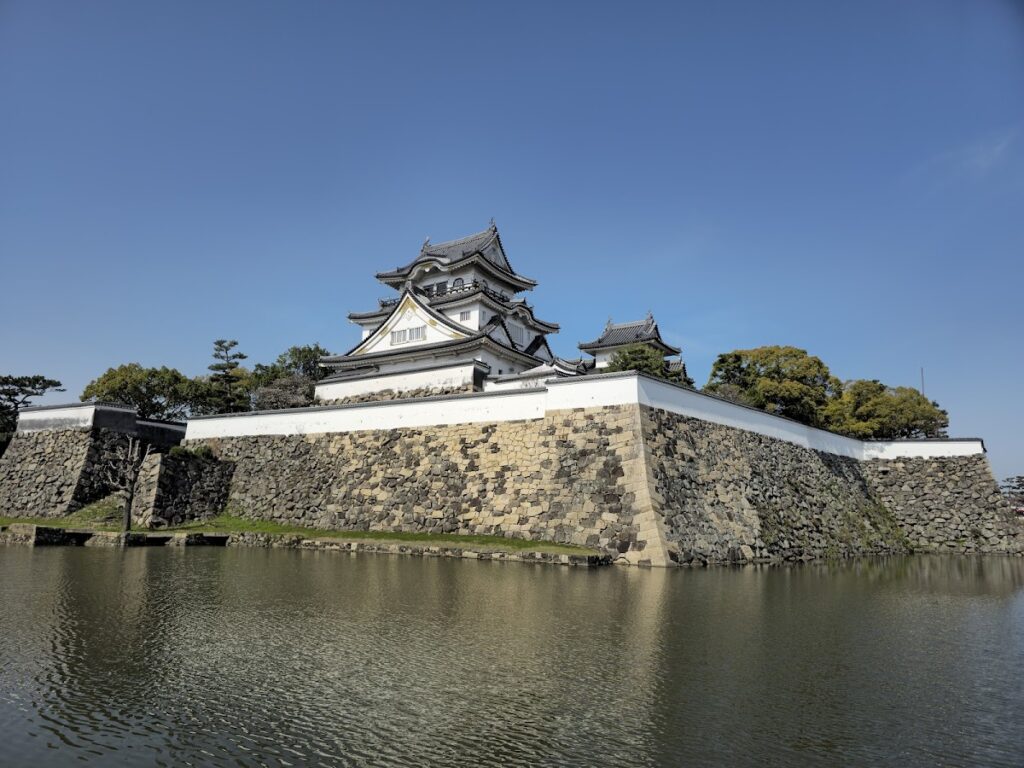
Kishiwada Castle, a beloved symbol of Kishiwada City, Osaka Prefecture, is a famous castle that has witnessed history from the Sengoku period to the Edo period. Also known as “Chikiri Castle,” it is selected as one of the Continued Top 100 Japanese Castles. With many attractions, including the nationally designated scenic spot “Hachijin Garden” and the reconstructed castle tower, it is a popular tourist spot deeply connected to the history of the Kishiwada Danjiri Festival, attracting many visitors throughout the year.
History of Kishiwada Castle
Origin of Construction and Early History
There are various theories regarding the founding of Kishiwada Castle, but the most plausible tradition states that it was built during the Kenmu Restoration period (around 1334) by Wada Takaie, a member of the Kusunoki Masashige family. Initially called “Kishiwada Old Castle,” it is believed to have been located in a slightly different place than the current castle.
In the mid-16th century, at the end of the Sengoku period, Kishiwada Castle became the residence of the Matsuura clan, who ruled the Senshu region. At this time, Kishiwada Castle was not yet fully developed as a castle, but it was an important strategic point connecting Kishu and the Kinai region.
Castle Development by Hashiba Hideyoshi and Koide Hidemasa
Kishiwada Castle was reborn as a full-fledged modern castle in 1585 (Tensho 13). When Hashiba Hideyoshi (later Toyotomi Hideyoshi) destroyed Negoro-ji Temple in Kishu, he designated this area as an important base and appointed his uncle, Koide Hidemasa, as the castle lord.
Koide Hidemasa carried out extensive renovations to the castle, and it was at this time that the five-story keep was built. Hidemasa was a warrior from Omi Province, enjoyed Hideyoshi’s deep trust, and was chosen as a suitable person to rule Kishiwada. Subsequently, the Koide clan served as castle lords for three generations: Koide Yoshimasa, Koide Yoshihide, and Koide Yoshihide.
After the Koide clan, Matsudaira (Matsui) Yasushige and his son Yasuaki became lords of the castle, and the development of the castle town progressed.
The 13-Generation Rule of the Okabe Clan
In 1640 (Kanei 17), Okabe Nobukatsu entered the castle with a 60,000 koku (later reduced to 53,000 koku) domain. Okabe Nobukatsu was the son of Tokugawa Ieyasu’s sister, Takōhime, and was a daimyo with deep ties to the Tokugawa family. From then until the Meiji Restoration, the Okabe clan ruled the Kishiwada Domain for over 230 years, spanning 13 generations.
The Okabe clan’s rule was relatively stable, and they focused on the development of the castle town and the promotion of industry. In particular, during the time of Okabe Nagayasu, the third lord of the domain, a festival praying for a bountiful harvest began, which is considered the origin of the current “Kishiwada Danjiri Festival.”
The Destruction and Reconstruction of the Castle Tower
In 1827 (Bunsei 10), Kishiwada Castle suffered a major disaster. The five-story castle tower was destroyed by lightning. During this late Edo period, due to the shogunate’s financial difficulties, permission for the reconstruction of the castle tower was not granted, and the castle remained without a tower until the Meiji Restoration.
After the Meiji Restoration, Kishiwada Castle was abandoned, and many of its structures were demolished. However, remnants such as the stone walls and moats remained, and in 1943 (Showa 18), the castle grounds were designated a historical site by Osaka Prefecture.
Modern Kishiwada Castle
In 1954 (Showa 29), as a symbol of post-war reconstruction and a long-cherished wish of the citizens of Kishiwada, a three-story, three-tiered castle tower was reconstructed. This was a pioneering structure among post-war reconstructed castle towers. While the original castle tower had five stories, the reconstruction was limited to three stories due to constraints on available materials and budget. Nevertheless, it remains a beloved symbol of Kishiwada.
The current castle tower is made of reinforced concrete, and its interior houses an exhibition room where visitors can view materials related to the history of Kishiwada Castle and the Kishiwada Domain.
Highlights of Kishiwada Castle
Castle Tower and Observation Deck
Kishiwada Castle’s castle tower is a three-story, three-tiered reconstruction, boasting a beautiful exterior with a striking contrast between white walls and black tiles. Each floor of the tower houses an exhibition room displaying materials related to the history of Kishiwada Castle, the Kishiwada Domain, and the Okabe clan, who were the castle’s lords.
From the observation tower on the top floor, you can enjoy a panoramic view of Kishiwada city. On clear days, you can see Osaka Bay, Kansai International Airport, and even Awaji Island in the distance. The view at sunset is particularly spectacular, making it an excellent spot to watch the sun sinking into Osaka Bay.
The view from the castle tower evokes the same scenery that the castle’s former lords must have seen, evoking a sense of historical romance.
National Scenic Spot: Kishiwada Castle Garden (Hachijin Garden)
One of the greatest highlights of Kishiwada Castle is the “Hachijin Garden,” which spreads out in front of the castle tower. This garden was created in 1953 by Shigemori Mirei, one of Japan’s leading landscape architects.
The name “Hachijin Garden” (Eight Formations Garden) originates from its design based on the eight formations described in Sun Tzu’s “The Art of War.” The garden represents eight formations: heaven, earth, wind, clouds, dragon, tiger, bird, and snake. Its stonework and plantings abstractly depict the battles of the Sengoku period, resulting in an extremely original design.
Mirei Shigemori was a leading landscape architect of the Showa era, known for designing numerous famous gardens, including the Hojo Garden at Tofuku-ji Temple in Kyoto. He is known for his style that incorporates modern sensibilities into traditional Japanese garden techniques. The Hachijin Garden is highly regarded as one of Shigemori’s masterpieces and was designated a National Place of Scenic Beauty in 2014.
The most distinctive feature of this garden is that it is designed not only for viewing from the ground, but also for panoramic viewing from the castle tower. By looking down from each floor of the tower, the eight-formation layout can be more clearly understood, allowing one to appreciate the overall compositional beauty of the garden.
Stone Walls and Moats
The stone walls of Kishiwada Castle were built from the Tensho period to the Edo period, and it is possible to observe the differences in construction methods depending on the era. The stone walls around the main keep are particularly magnificent, employing various techniques such as rough-hewn stonework, fitted stonework, and cut stonework.
For stone wall enthusiasts, this is a valuable spot to compare and observe stone walls from different construction periods. You can appreciate the beauty and skill of the stone walls, such as the corner stonework and the effective placement of large stones.
The moat surrounding the castle is said to have once been a “water castle” that drew in seawater. Although it is now a freshwater moat, cherry blossoms bloom profusely in spring, and the walking path along the moat is a place of relaxation for citizens.
Ninomaru Plaza and Surrounding Facilities
The site of the Ninomaru (second bailey) of Kishiwada Castle is now a spacious park, serving as a place of relaxation for citizens. It is also known as a famous cherry blossom viewing spot, and in spring it is bustling with many visitors.
Cultural facilities such as the Kishiwada City Natural History Museum and the Danjiri Museum are scattered around the castle, allowing visitors to comprehensively learn about the history and culture of Kishiwada.
Relationship with the Kishiwada Danjiri Festival
Inseparable from Kishiwada Castle is the nationally famous “Kishiwada Danjiri Festival.” This festival is said to have originated in 1703 (Genroku 16), when Okabe Nagayasu, the third lord of the Okabe clan, held an Inari festival to pray for a bountiful harvest.
With a history of over 300 years, this festival is held every September and features the spectacular “yarimawashi,” a dramatic turn of the floats at corners. The sight of the magnificent floats, called “danjiri,” speeding through the narrow streets of the castle town is breathtaking, attracting many tourists from both Japan and abroad.
Kishiwada Castle is an important spot for understanding the historical background of this Danjiri Festival, and the area around the castle becomes very lively during the festival. The castle’s exhibition room displays materials related to the Danjiri Festival, allowing visitors to learn about the festival’s history and culture.
Kishiwada Castle Facility Information
Opening Hours and Closing Days
Opening Hours: 10:00 AM – 5:00 PM (Last entry at 4:00 PM)
Closing Days:
- Every Monday (Open on public holidays, closed the following day)
- Year-end and New Year holidays (December 29th – January 3rd)
*Information on temporary closures and special openings will be updated regularly on the Kishiwada City official website, so we recommend checking before your visit.
Admission Fees
Castle Tower Admission Fee:
- Adults: 300 yen
- Junior high school students and younger: Free
Garden (Hachijin Garden): Free admission
*For group discounts and other discount programs, please contact the Kishiwada City Tourism Division.
Kishiwada Castle Renewal Project
Kishiwada City is continuing a renewal project to make Kishiwada Castle an even more attractive tourist destination. The museum has been improved to provide a more comfortable and enjoyable experience for visitors, with enhanced exhibits, barrier-free access, and multilingual support.
In particular, in recent years, regular illumination events have been held, allowing visitors to enjoy the magical atmosphere of Kishiwada Castle at night. Seasonal event information can be found on the official website.
Access Information
Address
9-1 Kishijo-cho, Kishiwada City, Osaka Prefecture 596-0073
Access by Train
Using the Nankai Main Line:
- Get off at Takojizo Station on the Nankai Main Line, approximately 7 minutes on foot
- Get off at Kishiwada Station on the Nankai Main Line, approximately 15 minutes on foot
From Kishiwada Station, it’s recommended to take a walk while enjoying the atmosphere of the castle town. The path from the station to the castle is lined with old townhouses and shops, allowing you to experience the atmosphere of a castle town.
By JR Train:
- Get off at Higashi-Kishiwada Station on the JR Hanwa Line, take a Nankai Bus to Kishiwada Station, and walk for approximately 15 minutes.
Access by Car
By Hanshin Expressway:
- Approximately 10 minutes from Kishiwada-Minami Interchange on the Hanshin Expressway Wangan Line
- Approximately 15 minutes from Kishiwada-Kita Interchange on the Hanshin Expressway Wangan Line
Parking:
There is no dedicated parking lot for Kishiwada Castle, but there are several paid parking lots in the surrounding area. During major events such as the Danjiri Festival, congestion is expected, so using public transportation is recommended.
Nearby Tourist Attractions
Kishiwada Danjiri Museum
Located approximately 5 minutes’ walk from Kishiwada Castle, the Kishiwada Danjiri Museum allows visitors to see actual danjiri floats up close and learn about the history and culture of the festival. The facility also offers a chance to experience the intricate carvings of the danjiri floats and the excitement of the festival through video.
Kishiwada City Natural History Museum
Located next to Kishiwada Castle, the Natural History Museum offers opportunities to learn about the natural environment and wildlife of the Kishiwada area. The “Kishiwada Nature Friends Association” regularly holds nature observation events.
Honmachi and Kishu Kaido Streetscape
The Honmachi area, which flourished as a castle town of Kishiwada Castle, retains old townhouses and merchant buildings dating back to the Edo period. Historical buildings are scattered along the Kishu Kaido street, making it ideal for a stroll.
Kishiwada Kankan Bayside Mall
This shopping mall facing Kishiwada Port offers shopping and dining options. It’s also a convenient rest stop during sightseeing.
How to Enjoy Kishiwada Castle
For History Enthusiasts
Kishiwada Castle has been the stage for diverse historical events, from the legend of its construction by the Kusunoki Masashige family to Hashiba Hideyoshi’s conquest of Kishu and the long-term rule of the Okabe clan. By carefully examining the exhibits inside the castle tower and observing the differences in the construction of the stone walls, you can understand the castle’s evolution over time.
A stamp for the Continued Top 100 Japanese Castles is also located here, making it an important spot for those touring castles.
For Garden Enthusiasts
Shigemori Mirei’s “Hachijin Garden” occupies a unique position in the history of Japanese gardens. Its geometric and powerful stonework, different from traditional Japanese gardens, can be considered one of the pinnacles of Showa-era garden art.
Enjoying the garden from both ground level and from the castle tower offers a deeper understanding of the designer’s intentions. The plantings change with the seasons, so there are new discoveries with every visit.
For Photography Enthusiasts
Kishiwada Castle is a spot where you can take captivating photos from various angles. From the castle tower viewed across the moat, to the combination of the stone walls and the castle tower, and the geometric stonework of the Hachijin Garden, there is no shortage of subjects to photograph.
Enjoy the changing seasons: cherry blossoms in spring, lush greenery in summer, vibrant autumn leaves, and snowy winter landscapes. Nighttime photography during the illumination period is especially recommended.
Family-Friendly
The spacious Ninomaru Park offers plenty of room for children to run around and is perfect for picnics. The exhibits in the castle tower include content that is easy for children to understand, making it a great place for historical learning.
Visiting during the Danjiri Festival allows you to experience the excitement of the festival and traditional culture firsthand, making it ideal for creating lasting family memories.
Notes and Manners for Visitors
Notes for Visiting the Castle Tower
- The stairs inside the castle tower are steep, so comfortable shoes are recommended.
- Please follow the rules if there are signs prohibiting touching or photography of exhibits.
- Please be considerate of others during crowded times.
Manners for Visiting the Garden
- The Hachijin Garden is a nationally designated scenic spot. Please be careful not to climb on the stone structures or damage the plants.
- Please take all your trash with you.
- Please maintain the tranquility of the garden and be considerate of other visitors.
Photography
- Personal commemorative photos are generally permitted, but permission is required in advance for commercial use.
- Please be considerate of other visitors in your photos.
- Please check with the administrator in advance regarding the use of tripods and drones.
Seasonal Highlights
Spring (March-May)
During cherry blossom season, the area around the castle is adorned with cherry blossoms, and the rows of cherry trees along the moat are particularly magnificent. It becomes bustling with cherry blossom viewers, and sometimes the cherry blossoms are illuminated at night. The fresh greenery of the Hachijin Garden is also beautiful, creating a striking contrast with the stone structures.
Summer (June-August)
Kishiwada Castle, enveloped in lush greenery, gives a powerful impression. From the castle tower, you can see the beautiful blue sea of Osaka Bay. Although it is a hot time of year, the inside of the castle tower is relatively cool, making it a good spot to escape the heat.
Autumn (September-November)
In September, the Kishiwada Danjiri Festival is held, and the entire castle town is immersed in the festive atmosphere. Visiting during this time is an excellent opportunity to enjoy both the castle and the festival. In November, the autumn leaves are beautiful, and the Hachijin Garden takes on its autumnal appearance.
Winter (December-February)
Winter at Kishiwada Castle is quiet, with fewer visitors, making it a season to quietly appreciate its history. The clear air makes the view from the castle tower particularly beautiful, allowing you to see far into the distance. Kishiwada Castle on a snowy day is breathtakingly beautiful, like a sumi-e (ink painting).
Future Prospects for Kishiwada Castle
Kishiwada City is focusing on promoting tourism centered around Kishiwada Castle, striving to balance the preservation and utilization of the castle. Continuous improvements are being made to protect its value as a cultural asset while making it a facility that is enjoyed by more people.
To accommodate inbound tourism, plans are underway to enhance multilingual signage and offer guided tours for foreign visitors. Furthermore, exhibits incorporating cutting-edge technology, such as a VR recreation of the castle in its heyday, are also being planned.
Kishiwada Castle, possessing both historical value and modern tourist appeal, is a representative castle of Osaka and is expected to continue to grow in prominence.
Summary
Kishiwada Castle is a renowned castle with a history spanning approximately 700 years, from the Kenmu Restoration to the present day. As a base for Hashiba Hideyoshi’s conquest of Kishu and the center of the Okabe clan’s rule for over 230 years across 13 generations, it symbolizes the history and culture of Kishiwada.
The nationally designated scenic spot, “Hachijin Garden,” is a masterpiece of Showa-era garden art by Shigemori Mirei, offering a unique perspective of panoramic viewing from the castle tower. The reconstructed castle tower is beloved by citizens as a symbol of post-war reconstruction, and its observation deck offers spectacular views of Osaka Bay.
The castle’s deep connection to the Kishiwada Danjiri Festival further enhances its appeal. Knowing that the festival, which has continued for over 300 years, originated during the reign of the Okabe clan, allows you to understand the profound depth of Kishiwada’s culture, where the castle, festival, and castle town are intertwined.
When visiting Kishiwada City, Osaka Prefecture, be sure to visit Kishiwada Castle and experience its history, beauty, and the pride of its people. You’ll be able to fully enjoy the charm of Kishiwada through exploring the castle tower, the Hachijin Garden, the stone walls, the moat, and the surrounding castle town.
Contact Information
Inquiries regarding Kishiwada Castle:
Kishiwada City Board of Education, Lifelong Learning Department, Tourism Division
Phone: 072-423-9486 (Main)
Kishiwada City Official Website:
https://www.city.kishiwada.lg.jp/
Please check the official website for the latest opening hours and event information before your visit. Information on temporary closures and special events such as illuminations is updated regularly.

