Keirozan Castle (Hyogo Prefecture) Complete Guide | History, Highlights, and Access Explained in Detail
What is Keirozan Castle?
Keirozan Castle (Keirozan-jo) is a representative medieval mountain castle of Harima, located in Kamikasumi-jo, Tatsuno-cho, Tatsuno City, Hyogo Prefecture. Built on the summit of Mt. Keirozan at an altitude of 218 meters, it is known as a strong fortress that takes advantage of the steep terrain with a relative height of approximately 170 meters.
It has several other names, including “Tatsuno Old Castle,” “Asagiri Castle,” “Kasumi Castle,” and “Daiyama Castle,” which originate from the castle’s location and historical background. In particular, the names “Asagiri Castle” and “Kasumi Castle” are said to have been derived from the fantastical appearance of the castle floating in the morning mist that hangs over the Tatsuno Basin.
Although it is not currently a nationally designated historical site, it is highly regarded by castle enthusiasts and history lovers as an important medieval castle in Hyogo Prefecture, and has received an average rating of ★★★☆☆ (3.48) from Kojodan (a castle-building website).
History of Keirozan Castle
Construction and the Akamatsu Clan Era
Keirozan Castle is believed to have been built around 1499 (Meio 8), by Akamatsu Masahide. Akamatsu Masahide adopted Murahide, the son of Akamatsu Norimura (Enshin), and moved from his previous residence, Hirai Castle, to Keirozan Castle.
The Akamatsu clan was a powerful local family in Harima Province, a prestigious family that ruled Harima from the Muromachi period to the Sengoku period. Keirozan Castle served as the Akamatsu clan’s base and became the political and military center of western Harima.
After Masahide, Akamatsu Murahide became the castle lord, and thereafter, the Akamatsu clan continued to rule under Hirotada and Hirohide. Akamatsu Hirohide is also known as the lord of Shioya Castle and was a powerful daimyo with several branch castles within Harima Province.
Turmoil of the Sengoku Period
During the Sengoku period, Harima Province became the front line of the power struggle between the Mori clan in the west and the Oda clan in the east. Keirozan Castle was also caught up in this turmoil, and its lord changed hands frequently.
In 1577 (Tensho 5), when Hashiba Hideyoshi (later Toyotomi Hideyoshi) began his conquest of Harima, Keirozan Castle became the residence of Hachisuka Masakatsu (Hachisuka Koroku), a senior retainer of Hideyoshi. Hachisuka Masakatsu was a warrior who served as a close confidant of Hideyoshi and later became the founder of the Awa Tokushima Domain.
Changes under the Toyotomi Regime
After Hachisuka Masakatsu, Fukushima Masanori entered Keirozan Castle. Fukushima Masanori was a fierce warrior known as one of the Seven Spears of Shizugatake and later became the lord of the Hiroshima Domain. However, Masanori’s tenure was short, and the castle lord soon changed to the Kinoshita clan.
The Kinoshita clan was related to Toyotomi Hideyoshi’s principal wife, Kita-no-Mandokoro (Nene), and enjoyed Hideyoshi’s deep trust. During this period, Keirozan Castle functioned as an important base for the Toyotomi regime’s control of Harima Province.
Edo Period and Castle Abandonment
After the Battle of Sekigahara, under the Tokugawa regime, the Tatsuno Domain was ruled by the Ikeda and Kyogoku clans, and finally by the Wakisaka clan. However, in 1617, Wakisaka Yasumasa built a new Tatsuno Castle (a flatland castle) at the foot of the mountain, leading to the abandonment of Keirozan Castle.
The shift from a mountain castle to a flatland castle indicates that during the peaceful Edo period, flatland castles, which prioritized administrative functions over practical mountain castles, were preferred. From then on, Keirozan Castle remained in history as “Tatsuno Old Castle.”
Castle Structure and Layout
Overall Structure
Keirozan Castle is a mountain castle with a main enclosure located on the mountaintop at an elevation of 218 meters, and multiple enclosures arranged in a stepped pattern along the ridge. It makes maximum use of the steep terrain with a relative height of approximately 170 meters, resulting in a structure that is extremely easy to defend against attackers.
The castle area extends approximately 300 meters east-west and 200 meters north-south, making it a relatively large-scale medieval mountain castle. The main remains are concentrated on the mountaintop, the northern ridge, and the eastern ridge, with each enclosure demarcated by earthworks and stone walls.
Main Enclosure (Honmaru)
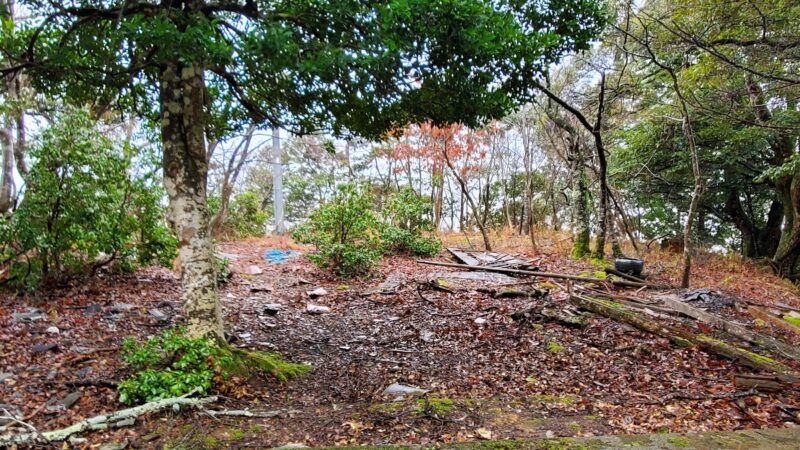
The main enclosure, located on the mountaintop, measures approximately 40 meters east-west and 30 meters north-south, and forms the core of Keirozan Castle. Earthworks surround the main enclosure, and traces of stone walls can also be seen in some areas.
From the main enclosure, you can enjoy a panoramic view of the Tatsuno Basin and monitor the flow of the Ibo River and the surrounding roads. On a clear day, you can even see the Harima Sea, a view that the former lords of the castle must have enjoyed.
Stone Wall Remains
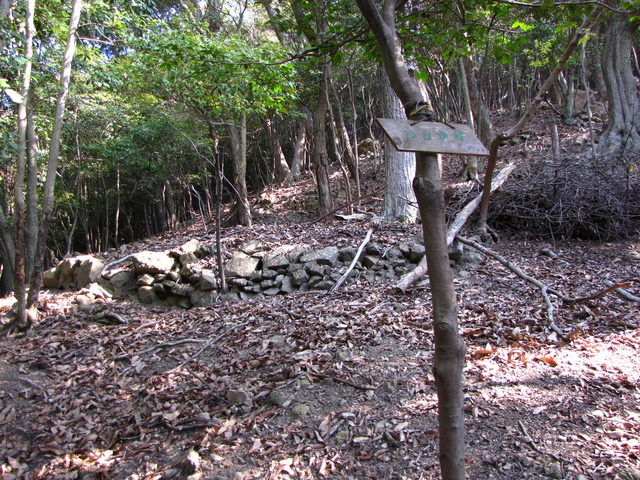
One of the greatest highlights of Keirozan Castle is the stone wall remaining below the main enclosure. This stone wall was built using the Nozura-zumi technique, characterized by its simple construction using natural stones stacked with minimal processing.
The stone wall reaches a maximum height of approximately 3 meters and extends for about 15 meters. The fact that it remains intact after more than 400 years speaks to the high level of stonemasonry skills of the time. The moss-covered stone wall evokes a sense of history and captivates visitors.
Enclosures
Several enclosures are arranged around the main enclosure. On the northern ridge, the second and third baileys are arranged in a stepped fashion, and several baileys can also be seen on the eastern ridge. These baileys functioned as a defensive line protecting the main citadel.
Moats (horikiri) are provided between each bailey, demonstrating various measures to prevent enemy intrusion. The moat on the northern ridge, in particular, is approximately 5 meters deep and 10 meters wide, clearly dividing the ridge.
Earthworks and Entrance
Earthworks surround the baileys, some exceeding 2 meters in height. These earthworks served to protect against enemy arrows and firearms, as well as clearly defining the boundaries of the baileys.
The entrance (koguchi) is a highly defensive type called a staggered entrance. This structure, with its curved passage, prevented the enemy from advancing directly, effectively reducing the attacker’s momentum.
Highlights of Keirozan Castle
Stone Walls Below the Main Enclosure
As mentioned above, the stone walls remaining below the main enclosure are the greatest highlight of Keirozan Castle. These rough-hewn stone walls are valuable historical remains for understanding the evolution of stonework techniques from the Sengoku period to the early Edo period.
Standing before the walls, you feel as if you can hear the breath of the stonemasons from 400 years ago. The arrangement of each stone possesses a calculated beauty, allowing you to feel the essence of medieval castle architecture, where functional beauty and artistry are fused.
View from the Main Enclosure
The 360-degree panoramic view from the main enclosure is breathtaking. Below, the townscape of Tatsuno spreads out, and the Ibo River flows like a silver ribbon. On a clear day, you can even see the islands of the Seto Inland Sea and Awaji Island.
The scenery is especially spectacular in the early morning when morning mist hangs in the air, and at dusk when the sun sets. We highly recommend experiencing the fantastical scenery that gave rise to the castle’s alternative name, “Asagiri Castle” (Morning Mist Castle).
Moats and Vertical Moats
The large moats remaining on the northern ridge are important remains for understanding the defensive system of this medieval mountain castle. The deeply and sharply dug moats functioned as a strong barrier, completely blocking enemy advances.
Several vertical moats dug vertically into the slope can also be seen. These vertical moats were designed to restrict lateral movement of enemies climbing the slope, creating a situation advantageous to the defenders.
Arrangement of Enclosures
Imagining the strategies of the Sengoku period warlords as you tour each enclosure is one of the pleasures of visiting this castle. The group of enclosures, arranged radially from the main enclosure, is designed to respond to attacks from multiple directions.
It is believed that buildings such as watchtowers, barracks, and warehouses once stood on the flat surfaces of the enclosures. Although now covered in trees, walking along the path evokes a sense of history and romance, imagining the bustling activity of yesteryear.
Natural Environment
Mt. Keiro is designated as a health conservation forest, a nature observation and education forest, and a wildlife sanctuary, preserving a rich natural environment. You can enjoy beautiful scenery throughout the seasons: cherry blossoms in spring, fresh greenery in early summer, and vibrant autumn leaves.
Along the path leading to the castle, you can observe various wild birds, insects, and plants, making it a luxurious spot where you can enjoy both castle exploration and nature observation simultaneously.
Access and Climbing Route
Location
Address: Kamikasumi-jo, Tatsuno-cho, Tatsuno City, Hyogo Prefecture
Map: Search for “Keirozan Castle” or “Tatsuno Old Castle” on major map apps.
Access by Public Transportation
- By JR: Get off at JR Kishin Line “Hon-Tatsuno Station,” then walk approximately 25 minutes to the trailhead.
- By Bus: Get off at Shinki Bus “Tatsuno” bus stop, then walk approximately 15 minutes to the trailhead.
From Hon-Tatsuno Station, the most common route is via Tatsuno Castle (a hilltop castle) to the trailhead. It’s approximately a 15-minute walk from the station to Tatsuno Castle, and approximately a 10-minute walk from Tatsuno Castle to the Keirozan trailhead.
Access by Car
- Sanyo Expressway: Approximately 10 minutes from Tatsuno-Nishi IC
- Chugoku Expressway: Approximately 25 minutes from Yamazaki IC
Parking: Free parking available around Tatsuno Castle (approximately 30 spaces). It’s about a 5-minute walk from there to the trailhead.
Ascent Routes
There are mainly three routes to Keirozan Castle.
① North Route (Main Route)
This route uses the trailhead on the north side of Tatsuno Castle and is the most well-maintained, making it recommended for beginners. The journey from the trailhead to the main enclosure takes approximately 40 minutes, with signposts along the way.
② East Route
This route starts from the residential area on the east side. While somewhat steep, the distance is short, and you can reach the main enclosure in about 30 minutes. This route is suitable for those with strong legs.
③ South Route
This is the steepest route and is for advanced climbers. It takes about 35 minutes to reach the main keep, but be careful as there are slippery areas.
Notes on climbing the castle
- Estimated time: Allow approximately 1 hour 30 minutes to 2 hours round trip
- Attire: Comfortable clothing, non-slip shoes (trekking shoes recommended)
- Items to bring: Drinking water, towel, insect repellent (summer)
- Season: Spring and autumn are best. Be careful of the heat and insects in summer. Snow and ice are possible in winter.
- Time of day: It is recommended to start climbing the castle by 3 PM at the latest so that you can descend before sunset.
Nearby tourist spots
Tatsuno Castle (Hilltop Castle)
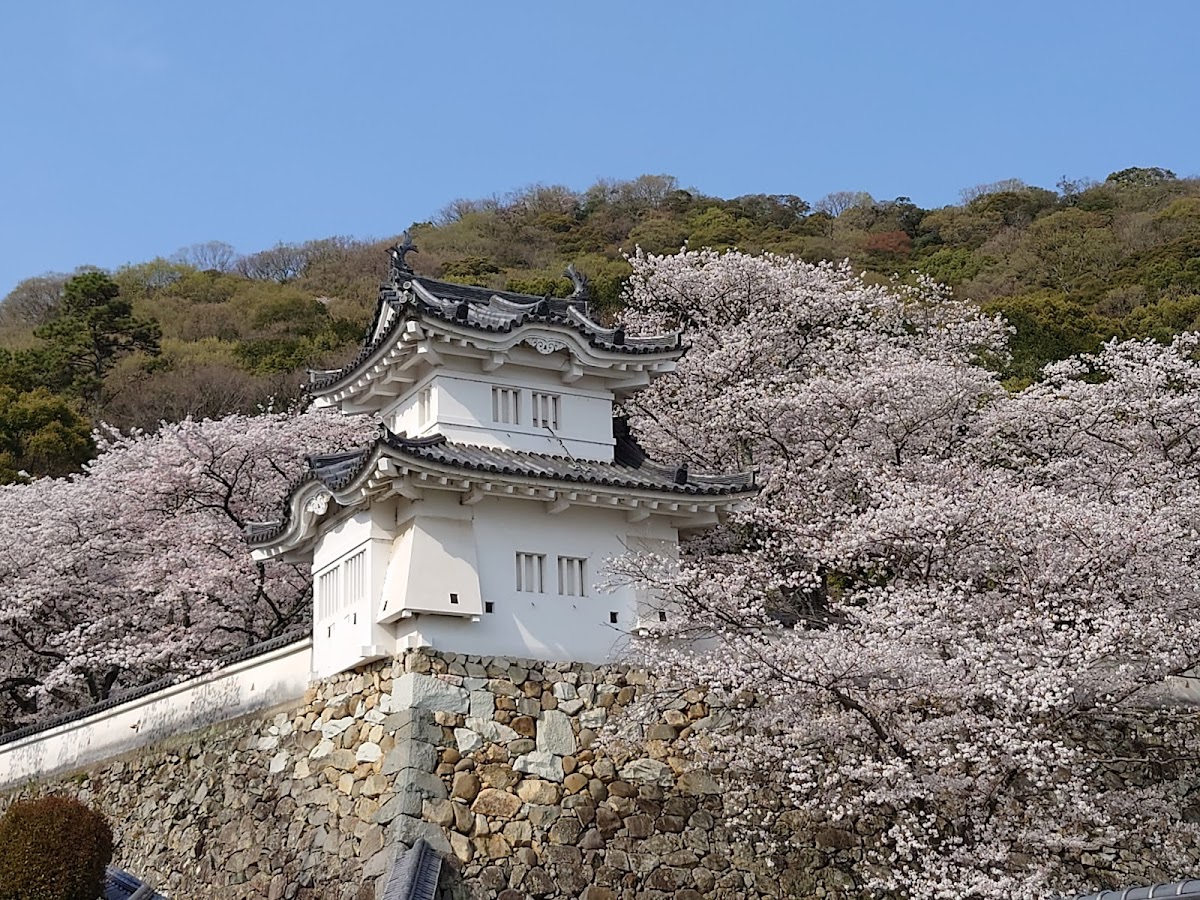
Located at the foot of Keirozan Castle, Tatsuno Castle is a hilltop castle built in 1617 by Wakisaka Yasumasa. Currently, the main keep and the beautiful white walls have been restored, making it a symbol of Tatsuno, known as “Harima’s Little Kyoto.” Visiting both Keirozan Castle and Tatsuno Castle allows you to experience the transition from a mountain castle to a flatland castle.
Tatsuno Historical and Cultural Museum
This museum displays materials related to the history of Tatsuno Castle and Keirozan Castle, deepening your understanding of the castle. It also has a wealth of historical materials related to the Akamatsu and Wakisaka clans.
Kajokan (Former Tatsuno Domain Palace)
This building retains the atmosphere of an Edo-period samurai residence, allowing you to learn about the history of the Tatsuno Domain. The garden is also beautiful, offering views of the changing seasons.
Townscape along the Ibo River
The Tatsuno district of Tatsuno City is known as “Harima’s Little Kyoto,” a charming town with white-walled streets and remaining soy sauce breweries. A stroll along the river before or after visiting Keirozan Castle is highly recommended.
Akatonbo-so (Red Dragonfly Museum)
Tatsuno, the birthplace of Miki Rofu, the lyricist of the children’s song “Akatonbo” (Red Dragonfly), has a memorial museum. It’s a spot where you can experience Tatsuno’s culture. ## Reviews and Ratings of Keirozan Castle
According to data from Kojodan (Castle Enthusiast Group), Keirozan Castle has received the following ratings:
- Average Rating: ★★★☆☆ 3.48
- Visiting Time: Average 1 hour 12 minutes to 1 hour 23 minutes
- Number of Visitors: 233 to 100 people (varies depending on data source)
Visitors have left comments such as:
- “The stone walls are magnificent and well-preserved.”
- “The view from the main enclosure is spectacular.”
- “The hiking trail is well-maintained and easy to walk.”
- “You can fully experience the atmosphere of a medieval mountain castle.”
- “Visiting it together with Tatsuno Castle helps you understand the flow of history.”
On the other hand, some comments include: “There are many insects in the summer,” and “It would be good to have more signposts.”
Tips for Enjoying Keirozan Castle
Pre-visit Study
Learning about the history of the Akamatsu clan and the Sengoku period history of Harima before your visit will allow you to understand the castle’s remains more deeply. It’s also recommended to study at the Tatsuno Historical and Cultural Museum before climbing the castle.
Photography
The remains, such as the stone walls, baileys, and moats, look beautiful when photographed in the soft morning light. Don’t forget to take panoramic photos from the main enclosure.
Using Multiple Routes
If you have enough time, using different routes for ascending and descending will give you a more three-dimensional understanding of the castle’s overall structure.
Choosing the Season
The cherry blossoms in spring and the autumn leaves are particularly beautiful, doubling the enjoyment of your visit. However, it can get crowded during popular seasons.
Local Cuisine
Tatsuno City is famous for its somen noodles and soy sauce. Enjoying local specialty dishes after your visit is a highlight of your trip.
Keirozan Castle and the Harima Castle Network
Keirozan Castle occupied an important part of the castle network in Harima Province. The following related castles are located in the surrounding area:
Himeji Castle
A representative castle of Harima, and a World Heritage Site. It also functioned as one of Keirozan Castle’s subsidiary castles and was a central hub of Harima Province.
Akō Castle
An important stronghold in western Harima, famous for the Akō Forty-Seven Ronin. Like Keirozan Castle, it formed part of Harima’s defensive line.
Miki Castle
A castle known for Hashiba Hideyoshi’s “Siege of Miki.” It played a crucial role in the conquest of Harima, working in conjunction with Keirozan Castle.
Rikami Castle
A mountain castle that has recently attracted attention as the “Castle in the Sky.” Like Keirozan Castle, it was a strategic point protecting the mountainous region of northern Harima.
Visiting these castles will allow for a deeper understanding of Harima’s Sengoku period history.
Preservation Status and Future Challenges
Despite being abandoned more than 400 years ago, Keirozan Castle remains in relatively good condition. This is due to local preservation efforts and its location in a favorable natural environment.
Currently, Keirozan Mountain is protected as a health conservation forest, safeguarding it from uncontrolled development. Regular maintenance activities are also carried out by local history enthusiasts and castle preservation groups.
Future challenges include the following:
- Improvement of Information Boards: Enhancing explanatory boards for the ruins to deepen visitors’ understanding
- Maintenance of Hiking Trails: Maintaining safe routes to the castle
- Preservation of Stone Walls: Implementing preservation measures for stone walls that deteriorate over time
- Promotion of Research: Gaining new knowledge through archaeological excavations
- PR Activities: Activities to raise awareness of the value of Keirozan Castle among more people
Through the continuous preservation efforts of Tatsuno City and local organizations, Keirozan Castle will surely be passed on to future generations. ## Summary
Keirozan Castle, located in Tatsuno City, Hyogo Prefecture, is a representative medieval mountain castle of Harima. Built in 1499 by Akamatsu Masahide, it subsequently served as the castle lord for many powerful warlords, including the Akamatsu, Hachisuka, Fukushima, Kinoshita, Ikeda, Kyogoku, and Wakisaka clans.
Utilizing the steep terrain at an altitude of 218 meters and a relative height of 170 meters, it is a robust castle with well-preserved remains such as stone walls, earthworks, and moats below the main enclosure. The rough-hewn stone walls, in particular, are magnificent, showcasing the essence of medieval castle architecture.
The view from the main enclosure is superb, offering a panoramic view from the Tatsuno Basin to the Harima Sea. The fantastical scenery, which gave rise to its alternative names “Morning Mist Castle” and “Mist Castle,” continues to captivate visitors.
Access is relatively good, within walking distance of JR Hon-Tatsuno Station, and about 10 minutes by car from Tatsuno-Nishi Interchange. The round trip to the castle takes about 1 hour 30 minutes to 2 hours, making it an enjoyable mountain castle even for beginners.
The surrounding area boasts numerous related facilities, including Tatsuno Castle (a hilltop castle) and the Tatsuno Historical and Cultural Museum, allowing visitors to comprehensively learn about the history of Harima. The beautiful townscape, often called “Harima’s Little Kyoto,” is also a major draw, making it an ideal spot to enjoy both castle touring and sightseeing.
Keirozan Castle is a valuable cultural heritage site that tells the history of Harima, a living textbook that conveys the spirit of the Sengoku period. We highly recommend visiting and experiencing its charm firsthand.