Complete Guide to Kashihara Castle (Gifu Prefecture): A Late Sengoku Period Mountain Castle and the Mystery of the Legend of Akechi Mitsuhide’s Birthplace
What is Kashihara Castle?: A Late Sengoku Period Mountain Castle Confirmed in 2020
Kashihara Castle is a late Sengoku period mountain castle site located in Kamitara, Kamiishizu-cho, Ogaki City, Gifu Prefecture. In January 2020, a survey conducted by Gifu Prefecture officially confirmed it as a “late Sengoku period mountain castle,” and in July of the same year, it was registered as a castle site by Gifu Prefecture.
Built on the hillside behind Tsushima Shrine, the details of this castle remained unknown for a long time. However, recent surveys have confirmed clear remains such as earthworks, gates, and steep slopes, revealing its appearance as a Sengoku period castle. Furthermore, it is considered one of the candidate sites for “Tara Castle,” which is mentioned in historical records but whose location was never identified, attracting attention from a historical research perspective.
History of Kashihara Castle: Records from the Eiroku Era and Toyotomi Hideyoshi’s Siege of Nagashima
Descriptions in Local Historical Records
While historical records concerning Kashihara Castle are limited, important descriptions remain in old local records. According to these records, “During the Eiroku era, when Hideyoshi attacked Nagashima, he set up camp at Kashihara,” suggesting that Toyotomi Hideyoshi (then known as Hashiba Hideyoshi) may have used this site as a base during his attack on the Ikko-ikki rebels in Ise-Nagashima.
The Eiroku era (1558-1570) coincides with the period when Oda Nobunaga pacified Mino Province and expanded his power from Gifu Castle. Considering this historical context, Kashihara Castle may have been an important military base within the Oda clan’s sphere of influence.
The Miwa Three and the Existence of Sado
The same record also states, “Around the Eiroku era, Sado, one of the Miwa Three, lived in Kashihara.” The Miwa Three are thought to have been a group of powerful local lords, and this record indicates that a person named Sado, one of them, resided in Kashihara.
From this description, it is possible that Kashihara Castle was not merely a temporary encampment, but rather a residence used by a powerful local figure. In Mino Province during the Sengoku period, as the Oda clan’s power expanded, many local lords submitted to the Oda, and Kashihara Castle would likely be situated within this context.
Possibility as an Encampment (Outpost)
Based on the state and scale of the remains, experts have pointed out the possibility that Kashihara Castle was used as an encampment (outpost). An encampment is a military base temporarily built when attacking an enemy castle, and many were constructed throughout Japan during the Sengoku period.
If it was a fortified camp related to Hideyoshi’s siege of Nagashima, it would be an important historical site indicating the strategic location in the Oda army’s military operations. The Kamiishizu area was a crucial transportation hub connecting Mino and Ise, and therefore a militarily important location.
Relationship with Tara Castle: A Candidate Site for an Unidentified Castle
Kashihara Castle, along with the Nishitakagi family encampment and Shirogahira Castle, is considered a candidate site for “Tara Castle,” which is mentioned in historical records but whose location has not been determined. Tara Castle is believed to have existed in the Kamiishizu area, but its exact location has been a subject of debate for many years.
Investigations by Gifu Prefecture and local researchers are underway, and the characteristics, scale, and location of the remains discovered at the Kashihara Castle site are being examined to determine its connection to Tara Castle. Solving this mystery is of great importance for understanding the Sengoku period history of western Mino Province.
Legends of Akechi Mitsuhide’s Birthplace: One of the Many Places Associated with Mitsuhide
Kashihara Castle is known as one of the possible locations for Akechi Mitsuhide’s birthplace. Regarding Akechi Mitsuhide’s birthplace, there are several candidate locations within Gifu Prefecture alone, including Akechi Castle in Kani City and Akechi Castle in Ena City, and there is no definitive evidence.
The reason why legends of Mitsuhide’s birthplace remain in the Kashihara region is due to the deep relationship between the Akechi clan and Mino Province. The Akechi clan was a family that served the Toki clan of Mino Province, and Mitsuhide himself is believed to have spent his youth in Mino. Since the Kamiishizu region was also within the Toki clan’s sphere of influence, it is not unnatural that legends related to the Akechi clan remain in this area.
However, there is no definitive historical evidence, and it should be understood as a local legend. Nevertheless, the connection to the big name of Akechi Mitsuhide enhances the historical romance of Kashihara Castle.
Structure and Remains of Kashihara Castle: Details of Earthworks, Gates, and Cut Slopes
Location and Layout of the Castle Site
Kashihara Castle is built on a hill behind Tsushima Shrine, at an elevation of approximately 200 meters. This location offers both excellent views of the surrounding area and terrain suitable for defense. The castle is a small to medium-sized mountain castle, exhibiting typical characteristics of regional castles from the late Sengoku period.
The layout (castle design) skillfully utilizes the terrain, with ingenious methods for using the natural undulations for defense evident throughout. It is believed that multiple baileys (flat areas) were arranged around the main enclosure.
Characteristics of Earthworks
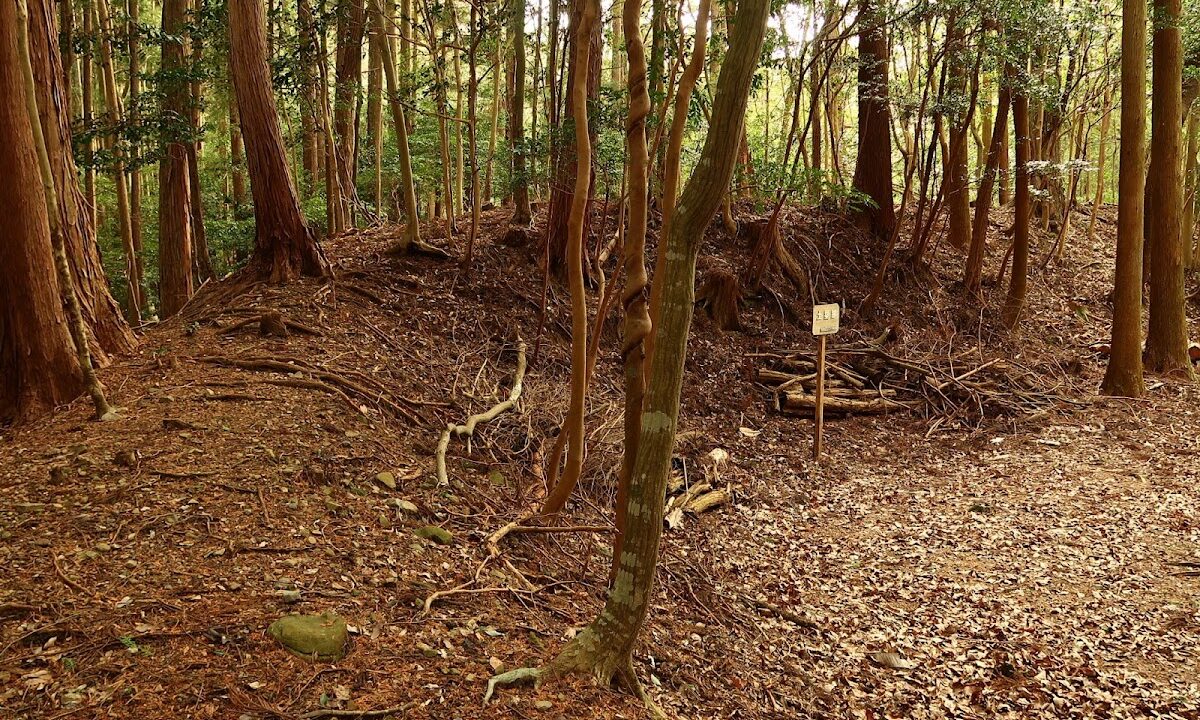
Clear traces of earthworks have been confirmed at the Kashihara Castle site. Earthworks are defensive structures built by piling up earth, serving to prevent enemy intrusion and maintain visibility from within the castle.
The height and shape of the remaining earthworks suggest that this castle was used and maintained for a certain period. The construction of these earthworks required a large workforce, providing evidence of the economic power and mobilization capabilities of the power that controlled this region.
Structure of the Entrance (Koguchi)
The entrance (koguchi) is the main entrance to a castle, the area requiring the strongest defenses. At the Kashihara Castle ruins, the remains of a koguchi have been confirmed, and its structure reveals castle-building techniques from the late Sengoku period.
The placement and shape of the koguchi were designed to make enemy intrusion difficult, reflecting a design philosophy focused on defense. The existence of such remains indicates that Kashihara Castle was not merely a watchtower, but a military facility designed for actual combat.
Confirmation of the Cut Slope
A cut slope (kirigishi) is a defensive structure created by artificially cutting and steepening a slope. A cut slope has been confirmed at the Kashihara Castle ruins, indicating that the natural terrain was modified to enhance defensive capabilities.
The presence of the cliff face is important evidence that this castle was built systematically. In mountain castles of the Sengoku period, efficient defensive systems were constructed by making maximum use of the terrain and making artificial modifications as needed.
Relationship with Tsushima Shrine: Current Status and Preservation of the Castle Site
The Kashihara Castle site is currently located on the hillside behind Tsushima Shrine. Tsushima Shrine is a shrine with a long history, serving as a center of local faith. Examples of castle sites and shrines being adjacent are seen throughout Japan, and it is not uncommon for shrines and temples to be built on or around the site of a castle after it has been abandoned.
Due to the presence of Tsushima Shrine, part of the castle site has been protected as shrine grounds. This has consequently contributed to the preservation of the remains. However, it is possible that some remains have been altered due to the development of the shrine and the construction of the approach road.
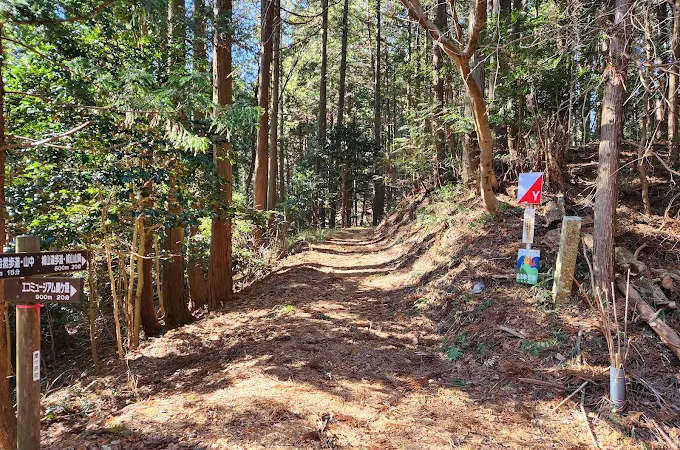
Currently, the castle site is accessible to visitors of Tsushima Shrine and castle enthusiasts, and is being utilized as a local historical resource.
Nearby Historical Sites and Related Castles
Kamiishizu Local History Museum
When visiting the Kashihara Castle ruins, a visit to the Kamiishizu Local History Museum is also recommended. This museum features exhibits on the history and culture of the Kamiishizu region, and houses materials related to the castles of the area, including Kashihara Castle.
At the museum, you can learn about the historical background of the region, including the state of the Kamiishizu area during the Sengoku period and its connection to the Battle of Sekigahara. Gaining background knowledge at the museum before visiting the Kashihara Castle ruins will deepen your understanding at the site.
Shirogahira Castle
Shirogahira Castle, like Kashihara Castle, is a castle ruin considered a candidate site for Tara Castle. It is located in the same Kamiishizu region, a few kilometers away from Kashihara Castle. Comparing the two castles provides clues to understanding the castle network and defense system of the region.
Nishitakagi Family Residence
The Nishitakagi Family Residence was the site of the residence of the Takagi clan, a hatamoto (direct retainer of the shogun) during the Edo period. While it dates from a different era than the castles of the Sengoku period, it is an important historical site that tells the history of the same Kamiishizu region. The Takagi clan ruled this area after the Battle of Sekigahara and played a significant role in local history.
Connection to the Battle of Sekigahara
The Kamiishizu region is also connected to the Battle of Sekigahara in 1600. In particular, the place where Shimazu Toyohisa is said to have died is located within Kamiishizu town, and this area became part of the battlefield during the Battle of Sekigahara.
It is unclear whether Kashihara Castle was used during the Battle of Sekigahara, but given its geographical proximity, it is possible that it was involved in some way.
Access Information: How to Get to Kashihara Castle Ruins
Basic Information
Address: 891 Kamitara, Kamiishizu-cho, Ogaki City, Gifu Prefecture 503-1623 (Tsushima Shrine)
Opening Hours: Open for viewing (however, it is recommended to follow the shrine’s visiting hours)
Admission Fee: Free
Access by Public Transportation
If using public transportation, the nearest station is Mino-Tsuya Station on the Yoro Railway, but it is quite a distance from the station to the castle ruins. You will need to take a bus or taxi from the station.
The Ogaki City Community Bus operates in the Kamiishizu area, but the number of buses is limited, so it is recommended to check the timetable in advance. After getting off at the “Kamitara” bus stop, walk to Tsushima Shrine.
Access by Car
Access by car is the most convenient. From the Meishin Expressway “Sekigahara IC” or “Ogaki IC,” take National Route 365 towards Kamiishizu. It’s about a 30-minute drive from Sekigahara Interchange and about a 40-minute drive from Ogaki Interchange.
Tsushima Shrine has a parking area for visitors, but it’s not very large, so please be considerate of others.
Points to Note When Visiting
Since the castle ruins are located in a forest, please note the following points when visiting:
- Clothing: Comfortable walking shoes and long-sleeved shirts and long pants are recommended (to prevent insect bites)
- Season: Spring to autumn is suitable for visiting, but insect repellent spray is essential in summer.
- Weather: Be careful as the ground can be slippery during and after rain.
- Equipment: Flashlight, drinking water, map or smartphone with GPS functionality
- Manners: When passing through private property or shrine grounds, please be respectful during your visit.
Highlights of Kashihara Castle and Advice for Castle Enthusiasts
Points to Observe the Remains
The highlights when visiting Kashihara Castle ruins are undoubtedly the well-preserved remains such as earthworks, gates, and cliffs. These are valuable resources that allow you to directly observe the castle construction techniques of the Sengoku period.
Particularly noteworthy is the layout, which skillfully utilizes the terrain. By observing the terrain on-site and considering how natural undulations were utilized for defense, you can experience the design philosophy of castles during the Sengoku period.
Recommended Photography Spots
Taking photos from the grounds of Tsushima Shrine towards the castle ruins creates a composition that clearly shows the relationship between the shrine and the castle. The view from the castle ruins is also an excellent photo spot, allowing you to appreciate that the castle was built in a location with a great view.
When photographing the remains, it’s a good idea to be mindful of angles that reveal the characteristics of the defensive structures, such as the cross-section of the earthworks and the angle of the cliffs.
Comparison with Other Mino Castles
Gifu Prefecture has many famous castles, including Gifu Castle, Ogaki Castle, Iwamura Castle, Gujo Hachiman Castle, and Naegi Castle. Kashihara Castle differs from these large-scale castles in that it is valuable as a typical example of a small to medium-sized mountain castle in a rural area.
Understanding the history of castles in Mino Province requires not only large castles, but also rural castles like Kashihara Castle, which played an important role. Visiting and comparing multiple castles reveals the realities of the castle network and regional control during the Sengoku period.
Expectations for Future Investigations and Preservation
The Kashihara Castle ruins were only officially confirmed in 2020, and further investigation and research are expected. Excavations could clarify the castle’s period of use and characteristics based on unearthed artifacts.
Many mysteries remain unsolved, including its relationship with Tara Castle, the veracity of the legend of Akechi Mitsuhide’s birthplace, and its connection to Hideyoshi’s siege of Nagashima. Solving these mysteries will bring new insights to the study of Sengoku history in Mino Province.
Preservation activities by local residents and the government are also crucial. It is necessary to pass on the Kashihara Castle ruins to future generations while balancing the appropriate protection of the remains with their utilization as a historical resource.
Summary: Kashihara Castle Tells the Story of Sengoku Mino History
Kashihara Castle (Gifu Prefecture), a mountain castle from the latter half of the Sengoku period, is a valuable historical site that conveys the history of western Mino Province. Officially confirmed by a survey conducted in 2020, this castle boasts well-preserved remains such as earthworks, gates, and steep slopes, allowing for direct observation of the castle-building techniques of the time.
This castle site holds many historical interests, including its connection to Toyotomi Hideyoshi’s siege of Nagashima (recorded in the Eiroku era), the residence of Sado (one of the Miwa Three), its potential as a candidate site for Tara Castle, and the legend of it being the birthplace of Akechi Mitsuhide.
Located on the hillside behind Tsushima Shrine in Kamiishizu-cho, Ogaki City, Gifu Prefecture, it is easily accessible by car. It’s a recommended destination not only for castle enthusiasts but also for history buffs and hiking lovers. Nearby are the Kamiishizu Local History Museum and historical sites related to the Battle of Sekigahara, and visiting them together will allow you to experience the rich history of this region.
Further research is expected to clarify the historical position of Kashihara Castle. As a hidden historical heritage of Gifu Prefecture, why not pay it a visit?