Jogahira Castle (Ogaki City, Gifu Prefecture) Complete Guide | Exploring the Mystery of Tara Castle and the Theory of Akechi Mitsuhide’s Birthplace
What is Jogahira Castle?
Jogahira Castle is a Sengoku period mountain castle located in Kamiishizu-cho, Ogaki City, Gifu Prefecture. Historical records regarding its detailed construction period and lord were scarce, and for a long time, its details remained unknown. However, following an investigation conducted in February 2019, it was officially registered as a castle site in Gifu Prefecture.
Built on a mountaintop approximately 300 meters above sea level, this castle site is located at a strategic point in western Mino Province, and based on the state of the remains, it is believed to have been used in the latter half of the Sengoku period. Of particular note is that it is considered a strong candidate for the location of “Tara Castle,” which is mentioned in historical records but whose exact location was unknown. Furthermore, it is known as one of the many legends about the birthplace of Akechi Mitsuhide, and in recent years, it has attracted attention as a castle site that stirs historical romance.
Currently, the castle ruins retain well-preserved structures such as earthworks and gates, and an information board has been installed. It can be said that this castle site holds an important position in the study of medieval castles in the Tokai region.
History and Background of Shirogahira Castle
Mystery of Construction Period and Lord
There are no definitive historical records regarding the construction period of Shirogahira Castle, and the details are unknown. However, based on the form of the remains and the characteristics of the layout, it is estimated to have been used in the latter half of the Sengoku period, probably in the latter half of the 16th century. This period coincides with the turbulent time when Mino Province transitioned from the rule of the Saito clan to that of Oda Nobunaga.
While there are no clear records regarding the castle lord, several possibilities have been suggested based on local traditions and the surrounding historical context. The most noteworthy is a connection to Akechi Mitsuhide. The Akechi clan was a family that served the Toki clan of Mino Province and may have held power in this region.
Connection to Tara Castle
The main reason why Shirogahira Castle is attracting the attention of historians is its connection to “Tara Castle.” While Tara Castle’s name appears in historical records from the Sengoku period, its specific location remained unknown for many years, making it a legendary castle.
A survey conducted in 2019 revealed that the location, scale of the remains, and surrounding topography of Shirogahira Castle match the characteristics of Tara Castle described in historical records, making it a strong candidate site. Tara Castle is believed to have functioned as an important base in western Mino Province, and if Shirogahira Castle is confirmed to be Tara Castle, it would be a discovery that would rewrite the history of the Sengoku period in this region.
Theory of Akechi Mitsuhide’s Birthplace
The area around Shirogahira Castle is considered one of the candidate sites for Akechi Mitsuhide’s birthplace. There are several theories regarding Akechi Mitsuhide’s birthplace within Gifu Prefecture alone, with legends remaining in various locations, such as Akechi Castle in Kani City and Akechi Town in Ena City.
In the area around Kamiishizu-cho, Ogaki City, where Shirogahira Castle is located, place names and legends related to the Akechi clan remain, suggesting the possibility that a family of Mitsuhide had a residence in this area. However, since there are no definitive historical documents, this should be understood as merely one of the legends.
Possibility as a Camp Fortress or Attached Fortress
On the other hand, experts have pointed out the possibility that Shirogahira Castle was not a permanent residence, but rather built as a camp fortress or attached fortress. A camp fortress is a military base built temporarily during battle, functioning as a front-line base when attacking a specific castle.
The layout of Shirogahira Castle is relatively simple, and the lack of living space suggests that it may have been a facility intended for short-term military use. In this case, it is possible that it was built during Oda Nobunaga’s conquest of Mino Province or during the subsequent process of regional control.
Structure
Characteristics of the Layout
The layout of Shirogahira Castle exhibits the typical form of a mountain castle, centered around the mountaintop. The castle features multiple enclosures arranged around the main citadel, creating a defensive structure that skillfully utilizes the natural terrain.
Remains confirmed through investigation reveal that castle construction techniques from the latter half of the Sengoku period were employed. The overall size of the castle is medium, suggesting that it was more of a regional control base or military forward base than a large-scale residence.
Major Remains
Earthworks
The best-preserved remains at Shirogahira Castle are the earthworks. Earthworks that functioned as a defensive line can be seen, mainly around the main citadel. While the height varies depending on the location, the best-preserved sections retain a height of over 1 meter.
Detailed observation of the earthworks reveals traces of rammed earth construction techniques, indicating that they were built systematically. This suggests that they were not merely temporary defensive structures, but were built with the intention of being used for a certain period of time.
Entrances (Koguchi)
Multiple entrances (Koguchi) to the castle have also been identified. The western gate, in particular, is relatively well-preserved and can be observed to have a staggered gate configuration. This was a design intended to prevent a direct enemy advance and is a technique widely seen in castles of the Sengoku period.
Earthworks are positioned around the gate, enhancing its defensive capabilities. This structure suggests that Shirogahira Castle was not merely a lookout post, but a military facility designed for actual combat.
Arrangement of Enclosures
Multiple enclosures are arranged in stages around the main enclosure. Enclosures are flat areas within the castle, used for garrisoning soldiers and storing supplies. At Shirogahira Castle, the second and third enclosures are positioned around the main enclosure, suggesting a hierarchical defensive system.
Although the size of each enclosure is not particularly large, its efficient arrangement allows for defense even with limited personnel. This also suggests its character as a fortified camp or forward base.
Utilization of Location and Topography
The mountain on which Shirogahira Castle was built is strategically located overlooking the surrounding area. A common characteristic of mountain castles in the Tokai region is the use of natural, steep slopes as defensive lines, minimizing the need for artificial construction.
The northern and eastern sides, in particular, have steep terrain, making them natural strongholds difficult for attackers to approach. On the other hand, the western side has a relatively gentle slope, so artificial defenses such as the aforementioned gates and earthworks were emphasized there.
Highlights of Shirogahira Castle
Well-Preserved Earthworks
The biggest highlight when visiting Shirogahira Castle is the well-preserved earthworks. While many medieval castles have lost their remains due to years of weathering and development, the earthworks of Shirogahira Castle have relatively well retained their original appearance.
By actually seeing the rise of the earthworks, you can experience the castle-building techniques and defensive ingenuity of the Sengoku period. The earthworks around the main enclosure are particularly clear and will be interesting to observe even for those who aren’t castle enthusiasts.
Structure of the Gate
The gate remaining on the west side is a valuable relic for learning about the defensive techniques of medieval castles. By observing the staggered structure and the arrangement of the surrounding earthworks, you can understand the wisdom of the Sengoku period warlords in preventing enemy incursions.
Standing near the gate, you can imagine the castle’s defensive system from the perspectives of both attackers and defenders, experiencing a sense of historical presence.
Views and Location
From the mountaintop, you can see the surrounding terrain, giving you a real sense of the castle’s strategic location. On a clear day, you can see the Mino Plain and the surrounding mountains, helping you understand how important this location was as a surveillance point during the Sengoku period.
Information Boards and Maintenance
After the survey in 2019, information boards were installed at the castle site, making it easier for visitors to understand the historical background and details of the remains. The information board provides an overview of the castle, the location of the remains, and its connection to Tara Castle, making it easy for first-time visitors to enjoy the castle ruins.
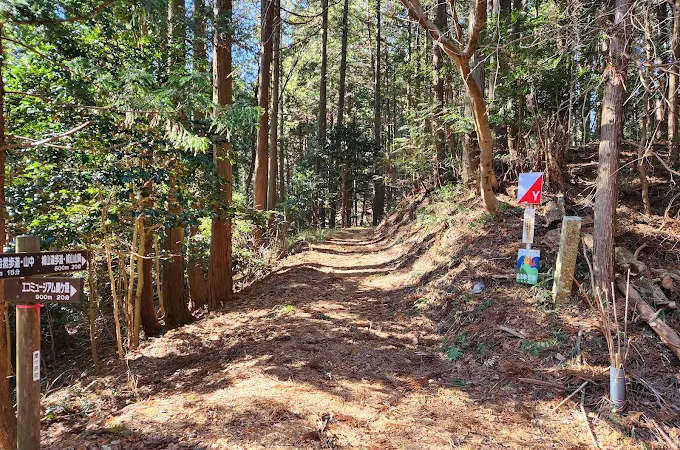
The climbing path is partially maintained, allowing for a relatively safe ascent to the main enclosure. However, as it is a mountain castle, appropriate equipment and preparation are necessary for a visit.
Access and Visiting Information
Location
Shirogahira Castle is located in Kamiishizu-cho, Ogaki City, Gifu Prefecture. For specific addresses and detailed location information, it is recommended to check the latest information before visiting.
Transportation Access
By Car
Access by car is the most convenient. It takes approximately 30 minutes via local roads from the Sekigahara or Yoro Interchanges on the Meishin Expressway. Parking space near the castle ruins may be limited, so please be careful not to park on the street.
By Public Transportation
Access by public transportation is difficult, and the distance from the nearest station is considerable. Therefore, it is recommended to consider using a taxi or rental car.
Precautions for Visiting the Castle
Shirogahira Castle is a mountain castle, and although the climbing path is well-maintained, preparations similar to those for a general hike are necessary. Please note the following:
- Clothing: Wear comfortable clothing that you don’t mind getting dirty. Long sleeves and long pants are recommended.
- Footwear: Wear non-slip shoes such as trekking shoes or athletic shoes.
- Equipment: Carry drinking water, a towel, insect repellent, and first-aid supplies.
- Season: In summer, the undergrowth may be thick, and in winter, be careful of snow and ice. Spring and autumn are the best times to visit.
- Weather: It is recommended to avoid visiting during or immediately after rain, as the ground can be slippery.
Estimated Time Required for Visiting
Allow approximately 1 to 1.5 hours for the round trip from the entrance to the main enclosure and observation of the remains. If you wish to observe the remains in detail, it is recommended to allow about 2 hours.
Nearby Historical Spots
Ogaki Castle
Located about 40 minutes by car from Jogahira Castle, Ogaki Castle is a historically important castle that served as a base for the Western Army in the Battle of Sekigahara. Currently, a reconstructed keep stands, and the interior houses a museum. Visiting both Jogahira Castle and Ogaki Castle will allow you to gain a deeper understanding of Mino Province’s castle culture.
Sekigahara Battlefield
The site of the Battle of Sekigahara, known as the largest battle in Japanese history, is about 20 minutes by car from Jogahira Castle. The encampment sites of various warlords and a museum have been preserved, making it a must-see spot for anyone interested in the history of the Sengoku period.
Nangū Taisha Shrine
Nangū Taisha Shrine, known as the Ichinomiya (first-ranked shrine) of Mino Province, is a shrine that has attracted worshippers since ancient times. It is relatively close to Jogahira Castle and worth visiting as part of a historical walk.
Yōrō Falls
Yōrō Falls, a representative scenic spot of Gifu Prefecture, is also about 30 minutes by car from Jogahira Castle. You can create a travel itinerary that combines historical exploration and nature appreciation.
Shirogahira Castle and the Castle Culture of Mino Province
Strategic Importance of Mino Province
Mino Province was a strategically important region during the Sengoku period (Warring States period), so much so that it was said, “He who controls Mino controls the world.” It was a crucial transportation hub where the Tokaido and Nakasendo roads intersected, and controlling Mino was essential for Sengoku daimyo aiming to advance to Kyoto.
The western part of Mino, where Shirogahira Castle is located, is close to the border with Omi Province (present-day Shiga Prefecture) and was a militarily important area. The construction of a castle in this location was rational from the perspective of regional control and defense.
The Role of Mountain Castles in the Sengoku Period
Unlike the castles with keeps that modern people imagine, mountain castles in the Sengoku period were primarily built for military purposes. It was common practice to live in residences at the foot of the mountain during peacetime and to fortify the mountain castle during wartime.
Shirogahira Castle is considered a typical example of a mountain castle from the Sengoku period. It likely functioned more as an emergency refuge or a base for military operations than as a permanent residential facility.
Comparison with other mountain castles in Gifu Prefecture
Numerous mountain castles exist in Gifu Prefecture. Compared to famous castles such as Gifu Castle (Inabayama Castle), Iwamura Castle, and Naegi Castle, Shirogahira Castle, while smaller in scale, boasts remarkably well-preserved remains.
While large-scale castles often lose their original form due to later alterations and development, smaller mountain castles like Shirogahira Castle often retain their original appearance. Therefore, they are valuable resources for studying Sengoku period castle construction techniques.
Current Status of Surveys and Research
Survey in 2019
The survey conducted in February 2019 marked a significant turning point in clarifying the historical value of Shirogahira Castle. This investigation revealed detailed measurements of the remains, structural analysis of earthworks and gates, and their relationship to the surrounding topography.
As a result of the investigation, it was discovered that Shirogahira Castle was not merely a small fort, but a planned military facility, leading to its official registration as a castle site in Gifu Prefecture.
Future Research Issues
Many mysteries remain regarding Shirogahira Castle. The main issues expected to be addressed in future research are as follows:
- Identification of Construction Period: More accurate determination of the construction period is expected through dating of the remains and archaeological excavations in the surrounding area.
- Identification of Lord: Scrutiny of historical documents and research into its relationship with surrounding castle sites may lead to the identification of the lord and users.
- Relationship with Tara Castle: Further historical research and archaeological verification are needed to determine the possibility that Shirogahira Castle is Tara Castle.
- Connection to Akechi Mitsuhide: Research into the Akechi clan’s connection through genealogical studies and local history investigations is ongoing.
Local Preservation Activities
As the historical value of Shirogahira Castle is recognized, local preservation activities are becoming more active. The installation of information boards and the maintenance of the castle’s access route are part of these efforts. Further preservation and utilization of the remains are expected in the future.
Message to Castle Fans
Unlike famous tourist castles, Shirogahira Castle is a valuable historical site that retains the simple appearance of a mountain castle. While there are no reconstructed keeps or flashy displays, it offers the charm of directly experiencing the raw remains of the Sengoku period.
For castle fans, visiting such a little-known mountain castle will be a joyful experience, discovering new aspects of history. From the rise of the earthworks, the structure of the gate, to the arrangement of the baileys, you can feel the spirit of the Sengoku period in each and every remains.
Furthermore, the mysteries surrounding Shirogahira Castle, such as its connection to Tara Castle and the theory that it was the birthplace of Akechi Mitsuhide, are major attractions that stir up historical romance. Because there are no definitive answers, there is the enjoyment of letting your own interpretations and imaginations run wild.
Summary
Shirogahira Castle is a Sengoku period mountain castle located in Ogaki City, Gifu Prefecture. Its historical value was re-evaluated following a survey in 2019. Although many details remain unknown, it has attracted the interest of history enthusiasts as a candidate site for the legendary Tara Castle and as one of the legends of Akechi Mitsuhide’s birthplace.
The remains, such as earthworks and gates, are well-preserved, making it a valuable historical site where you can directly observe Sengoku period castle construction techniques. While of medium size, its character as a planned military facility is clear, indicating its strategic location in western Mino Province.
Visiting requires preparation specific to mountain castles, but the feeling of standing on the site of history is exceptional. Visiting this castle in conjunction with other castles in Gifu Prefecture and the Sekigahara battlefield will allow you to gain a deeper understanding of Mino Province during the Sengoku period.
Further research is expected to unravel more of the mysteries surrounding Shirogahira Castle. It is certainly a historical site worth paying attention to for history buffs and castle enthusiasts.