
Karasawayama Castle Complete Guide | History, Highlights, and Access Information for Kanto’s Best Mountain Castle
What is Karasawayama Castle? | Overview and Basic Information
Karasawayama Castle is a Sengoku period mountain castle built across Fuji-cho and Tochimoto-cho in Sano City, Tochigi Prefecture. The main keep was located on the summit of Mt. Karasawayama, at an altitude of 242 meters, with an elevation difference of approximately 180 meters from the Negoya district at the foot of the mountain. Known as “Kanto’s Best Mountain Castle,” it is one of the Seven Famous Castles of Kanto, along with Kawagoe Castle, Oshi Castle, and Maebashi Castle.
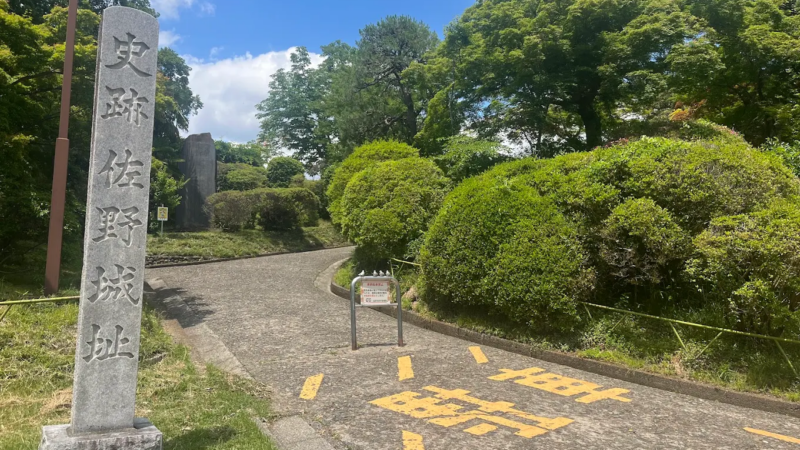
It is also known as Tochimoto Castle, Negoya Castle, and Ushiga Castle, and in 2017 it was selected as one of the Continued Top 100 Japanese Castles (No. 114). The castle ruins are designated as a national historic site, and Karasawayama Shrine currently stands on the site of the main keep.
Basic Data on Karasawayama Castle
- Location: Fuji-cho and Tochimoto-cho, Sano City, Tochigi Prefecture
- Castle Structure: Mountain Castle
- Elevation: 242 meters (Main Enclosure)
- Construction Period: Late Heian Period to Kamakura Period (Estimated)
- Builder: Sano Clan (Fujiwara Hidesato Lineage)
- Main Lords: Successive Heads of the Sano Clan
- Year of Abandonment: Keicho 7 (1602)
- Cultural Property Designation: National Historic Site
- Selection: Continued Top 100 Japanese Castles (No. 114)
History and Background of Karasawayama Castle
Heian to Kamakura Periods | The Establishment of the Sano Clan and the Construction of the Castle
There are various theories regarding the construction period of Karasawayama Castle, but it is believed that the Fujiwara-Ashikaga clan of Shimotsuke Province ruled “Sano-sho,” and as they expanded their power as the Sano clan during the Kamakura period, they built the mountain castle amidst the turbulent times of warring states.
The Sano clan was a prestigious family descended from Fujiwara no Hidesato, and they controlled the southern part of Shimotsuke Province from the late Heian period. By building a castle on Karasawayama, a strategically important location, they secured a strategic base overlooking the Kanto Plain.
Sengoku Period | Caught Between the Uesugi and Hojo Clan
During the Sengoku period, Karasawayama Castle was geographically situated between the two major powers, the Hojo clan of Sagami and the Uesugi clan of Echigo, and frequently became a battlefield. In particular, during the Eiroku era (1558-1570), Sano Masatsuna, as the castle lord, skillfully conducted diplomacy between the two forces.
Sengoku Period | Caught Between the Uesugi and Hojo Clan
During the Sengoku period, Karasawayama Castle, geographically situated between the Hojo clan of Sagami and the Uesugi clan of Echigo, frequently became a battlefield. #### The Battle of Karasawayama Castle
Around 1560, the Later Hojo clan and the Uesugi clan fiercely fought over Karasawayama Castle. Uesugi Kenshin campaigned in the Kanto region more than 10 times, and each time the area around Karasawayama Castle became a battlefield. However, Karasawayama Castle, a formidable mountain castle, did not fall easily, establishing its reputation as “the best mountain castle in Kanto.”
Sano Masatsuna strived to maintain independence while showing a willingness to submit to either the Uesugi or Hojo clans depending on the situation. It is believed that the numerous battles fought during this period led to the development of the robust defensive facilities seen today.
Toyotomi Regime | Renovations by Sano Fusatsuna
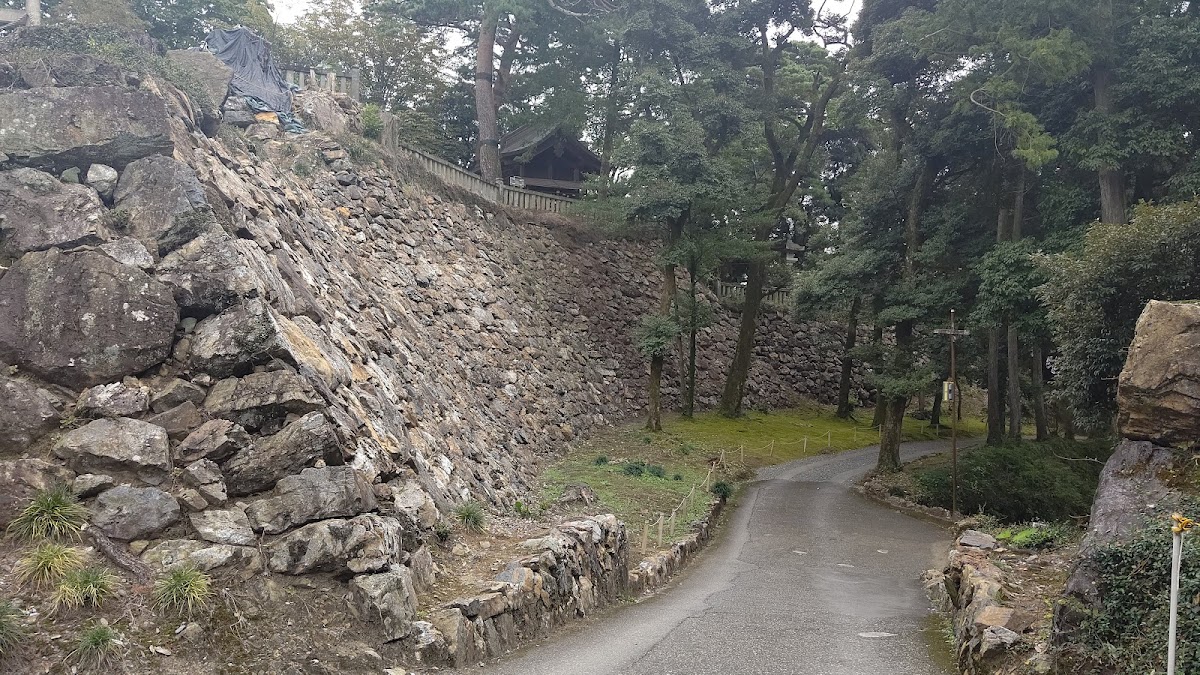
During Toyotomi Hideyoshi’s Odawara campaign in 1590, Sano Fusatsuna (Tentokuji Ryohaku) distinguished himself by serving Hideyoshi. At this time, he defeated the Onuki clan, who were occupying Karasawayama Castle, and recaptured the castle. Fusatsuna was granted a fief of 39,000 koku and became the lord of the castle, undertaking a major renovation. The high stone walls that remain today are believed to have been constructed during this renovation period by Fusatsuna, and are the most distinctive feature of Karasawayama Castle. The presence of these high stone walls, rare among ancient castles in the Kanto region, attests to the large-scale renovations of this period.
Edo Period | Abandonment of the Castle and Founding of Karasawayama Shrine
In the Battle of Sekigahara in 1600, Sano Nobuyoshi (Fusatsuna’s son) sided with Tokugawa Ieyasu, and his former territory of 35,000 koku was secured, establishing the Sano Domain. However, when Sano Castle was built at the foot of the mountain in 1602, Karasawayama Castle, which had existed since the Heian period, came to an end.
Later, in 1883, Karasawayama Shrine was founded on the site of the main keep, enshrining Fujiwara no Hidesato as its deity. Today, the castle ruins and shrine are integrated into a historical space that welcomes many visitors.
Layout and Structure of Karasawayama Castle
Location and Defensive System as a Mountain Castle
Karasawayama Castle is a vast mountain castle spread across the Karasawayama area. Centered around the main keep at the summit, multiple baileys are arranged in a stepped fashion, characterized by a layout that skillfully utilizes ridges and valleys. The Negoya district at the foot of the mountain was the residential area for the lord and his retainers, and together with the mountain castle, it formed a defensive system.
Arrangement of Major Baileys
The arrangement of baileys at Karasawayama Castle exhibits characteristics of the transitional period from medieval mountain castles to early modern castles. The main keep is located at the highest point, with major baileys such as the second and third baileys surrounding it. Furthermore, numerous smaller baileys are spread out on the outer edges, creating a structure that progressively prevents enemy incursions.
The main keep is the site where the Karasawayama Shrine building now stands, a large, flattened space. From here, you can enjoy a panoramic view of the Kanto Plain, truly appreciating its strategic importance.
The western group of baileys is particularly heavily fortified, featuring complex entrances and numerous turns. These are products of advanced castle-building techniques reflecting the practical experience gained during the Sengoku period.
Earthworks and Moats
Earthworks (earthen ramparts) are built throughout the castle grounds. These served to prevent enemy intrusion and clearly define the boundaries of the baileys. Earthworks several meters high were constructed around the main baileys, and their imposing presence can still be seen today.
Moats employ various forms depending on the terrain, including trenches cutting across ridges and horizontal moats surrounding baileys. In particular, a series of trenches were positioned towards the main approach, forming a strong defensive line to hinder enemy advances.
Highlights of Karasawayama Castle
One of the Kanto Region’s Most Remarkable Stone Walls
The greatest highlight of Karasawayama Castle is its high stone walls, which are rare among ancient castles in the Kanto region. These walls, believed to have been built during renovations by Sano Fusatsuna in the Tensho era, exceed 8 meters in height in some sections, demonstrating a level of construction comparable to that of early modern castles.
The stone walls around the main keep are particularly magnificent, employing the skillful technique of stacking natural stones in a nozura-zumi (rough stone masonry) style. Even after more than 400 years, their sturdiness remains undiminished. Visitors can observe the beauty of the curves in the stone walls and the san-gi-zumi (a type of masonry) at the corners, showcasing the pinnacle of castle construction techniques up close.
Main Keep Site and Karasawayama Shrine
The main keep site is home to the Karasawayama Shrine, founded in 1883 (Meiji 16). This shrine, dedicated to Fujiwara Hidesato, has long been a place of worship for the ancestors of the Sano clan, attracting local faith.
Behind the shrine building, the earthen ramparts of the main keep remain, and from the shrine grounds, you can enjoy a panoramic view of the Kanto Plain. On a clear day, you can even see the Tokyo Skytree, giving you a real sense of why this location was a strategic stronghold.
Complex Entrances and Defensive Structures
The castle has multiple entrances (gateways), each designed to make enemy intrusion difficult. Practical defensive considerations are evident throughout, such as bends that prevent direct entry, narrow passages, and structures that allow attacks from both sides.
As you ascend the main path, you can experience these defensive structures in sequence. With each step from one enclosure to another, you will realize the difficulty of besieging this castle.
Well Remains and Living Structures
For Karasawayama Castle, a mountain castle, securing water was a matter of life and death. Several well remains within the castle grounds, suggesting preparations for a siege. The well near the main keep, in particular, is deep and is said to have supplied water without drying up.
Furthermore, within the castle grounds, there are scattered remains that evoke the daily lives of the castle lord and samurai, such as building foundations and excavation sites of everyday objects.
Views and Natural Environment
Mt. Karasawayama is designated as a prefectural natural park, allowing visitors to enjoy the rich natural environment in conjunction with exploring the castle ruins. Visitors are greeted by seasonal scenery, including cherry blossoms in spring, fresh greenery in early summer, and autumn leaves.
The view from the summit is exceptional, offering panoramic views of Sano city and the Kanto Plain. On clear days, it’s a spectacular spot where you can even see Mt. Fuji and Mt. Tsukuba in the distance.
Cultural Value of Karasawayama Castle
Significance of National Historic Site Designation
The Karasawayama Castle ruins are designated as a national historic site, officially recognizing their historical and academic value. As a valuable historical site illustrating the development process of mountain castles during the transition from the medieval to the early modern period, preservation and utilization efforts are underway.
Selected as one of the Continued Top 100 Japanese Castles
In 2017, it was selected as one of the Continued Top 100 Japanese Castles (number 114). This is a list of famous castles selected by the Japan Castle Association, and it is a result of the evaluation of Karasawayama Castle’s historical importance and excellent state of preservation. It is one of the must-visit castles for castle enthusiasts.
Positioned as one of the Seven Famous Castles of the Kanto Region
Along with Kawagoe Castle, Oshi Castle, Maebashi Castle, Kanayama Castle, and Utsunomiya Castle, Karasawayama Castle is counted among the Seven Famous Castles of the Kanto Region and is widely recognized as a representative castle of the Kanto region. In particular, its high level of perfection as a mountain castle has a unique charm that sets it apart from other flatland castles and hilltop castles.
Visitor Guide | Access and Visiting Information
Access Methods
By Public Transportation
- From JR Ryomo Line/Tobu Sano Line “Sano Station”
- Approximately 15 minutes by taxi
- Bus service is also available (limited number of services)
- Approximately 40 minutes on foot to the base of the mountain, then approximately 30 minutes on the hiking trail to the summit
By Car
- Approximately 20 minutes from Tohoku Expressway “Sano Fujioka IC”
- Approximately 15 minutes from Kita-Kanto Expressway “Sano Tanuma IC”
- A paved road leads almost to the summit, and a parking lot is available
- Free parking is available near the rest house (approximately 50 cars)
Ascent Routes
There are several routes to climb Karasawayama Castle, but the main ones are as follows:
Road Route (Beginner-Friendly)
A paved road leads almost to the summit, making it recommended for those who are not confident in their physical fitness or have limited time. The main keep can be reached in about 10 minutes on foot from the parking lot.
Hiking Trail Route (For Castle Enthusiasts)
The route climbing from the Negoya area at the foot of the mountain is a full-fledged course where you can experience the castle’s defensive structures in order. The required time is approximately 40-50 minutes. We recommend climbing slowly, observing the baileys, moats, and stone walls along the way.
Notes for Visitors
- Required Time: A minimum of 1 hour for the round trip from the parking lot to the main keep; allow 2-3 hours for a thorough visit.
- Attire: Comfortable walking shoes and clothing are essential. Trekking shoes are recommended for the hiking trail route.
- Season: Spring and autumn are ideal. In summer, take precautions against insects; in winter, be careful of snow and ice.
- Drinks: Vending machines are limited, so bring your own drinks.
- Restrooms: Located near the parking lot and in the rest house.
Visiting Hours and Fees
- Visiting Hours: Open all day (following the visiting hours of Karasawayama Shrine)
- Admission Fee: Free
- Closed Days: None (however, be careful during bad weather)
Nearby Facilities
Karasawayama Rest House
The rest house near the parking lot sells light meals and drinks and provides a rest area. It’s convenient to use before or after exploring the castle ruins.
Sano City Local History Museum
The local history museum in Sano city center has exhibits on Karasawayama Castle and the Sano clan. Visiting it in conjunction with your castle ruins visit will give you a deeper understanding.
Seasons and Photo Spots at Karasawayama Castle
Spring | Cherry Blossoms and Stone Walls in Full Bloom
From late March to early April, cherry blossoms bloom profusely around the castle ruins. Photographs of cherry blossoms against the backdrop of the stone walls are a unique composition only found at Karasawayama Castle. The combination of the stone walls and cherry blossoms around the main keep is a particularly excellent photo spot.
Summer | Fresh Greenery and Views
Enveloped in the fresh greenery of early summer, Karasawayama Castle displays a vibrant and lively appearance. The view from the main keep offers a refreshing vista of the lush Kanto Plain. However, this is also a time when insects are abundant, so precautions are essential.
Autumn | Famous for Autumn Foliage
From late October to mid-November is the peak season for autumn foliage. The vibrant colors of the leaves adorning the stone walls and earthworks are magnificent, attracting many photography enthusiasts. The combination of autumn leaves and stone walls illuminated by the evening light is particularly enchanting.
Winter | The Dignified Beauty of the Stone Walls
In winter, Karasawayama Castle has fewer visitors, allowing for a peaceful and enjoyable experience of the castle ruins. The fallen leaves provide a clear view of the entire stone wall, making it the perfect season for observing its structure. The snow-covered stone wall is also beautiful, and with luck, you can capture stunning snowscapes in your photographs.
Karasawayama Castle and the Genealogy of the Sano Clan
The Establishment of the Fujiwara Hidesato-Line Sano Clan
The Sano clan is a prestigious family descended from Fujiwara Hidesato, a military commander of the Heian period. Hidesato is known for the legend of “Tawara Tōta,” and was granted Shimotsuke Province for his achievements in suppressing the rebellion of Taira no Masakado. His descendants established Sano-shō as their base and adopted the name Sano.
The Sano Clan in the Sengoku Period
During the Sengoku period, the Sano clan, caught between the two major powers, the Uesugi and Hojo clans, maintained their independence through skillful diplomacy. In particular, during the time of Sano Masatsuna, they successfully defended their territory while balancing the two opposing forces.
Transition to a Modern Daimyo
Under the Toyotomi regime, Sano Fusatsuna was recognized as a daimyo, and the Sano Domain continued to exist during the Edo period. However, in 1633, the Sano clan was dispossessed of their domain, and the Sano Domain was subsequently ruled by other daimyo families.
Points to Enjoy Karasawayama Castle
Recommendation for Prior Study
Learning about the basic history and structure of Karasawayama Castle before visiting will deepen your understanding on site. In particular, be sure to grasp important points such as its relationship with Uesugi Kenshin and the Hojo clan, and the renovations carried out by Sano Fusatsuna.
Utilizing Guided Tours
Participating in guided tours organized by the Sano City Tourism Association and others allows for efficient sightseeing while listening to expert explanations. You can learn about details of the remains that you might not normally notice, and historical episodes.
Continued Top 100 Japanese Castles Stamp
At Karasawayama Castle, which has been selected as one of the Continued Top 100 Japanese Castles, you can participate in a stamp rally. The stamps are located at the Karasawayama Rest House and make for a memorable souvenir. ### Combining with Nearby Castle Ruins
Southern Tochigi Prefecture is dotted with other famous castles, such as Kanayama Castle Ruins (Ota City, Gunma Prefecture). Visiting these castles in conjunction with Karasawayama Castle will allow you to gain a deeper understanding of the mountain castle culture of the Kanto region.
Summary | The Charm of Karasawayama Castle
Karasawayama Castle is a magnificent castle that combines historical value and scenic beauty, truly deserving of the title “Kanto’s finest mountain castle.” For approximately 500 years, from the Heian period to the early Edo period, it functioned as a key stronghold in southern Shimotsuke Province, and during the Sengoku period, it was the stage for battles against Uesugi Kenshin and the Hojo clan.
The high stone walls, rare among ancient castles in the Kanto region, the complex layout, and the magnificent view from the mountaintop continue to captivate visitors. Its value as a National Historic Site and one of the Continued Top 100 Japanese Castles can be truly appreciated by visiting the site.
Karasawayama Castle is recommended not only for history buffs and castle enthusiasts, but also for those who enjoy hiking and nature walks. Please do visit this castle ruin, which displays different expressions in each of the four seasons. This historical heritage site, a source of pride for Sano City, Tochigi Prefecture, will surely leave a deep impression on your heart.
--765x450.png)