Kanzaki Castle (Kanzaki Town, Chiba Prefecture) Complete Guide | The Charm of a Medieval Castle Seen Through its Three Castles (East, Central, and West)
Kanzaki Castle, located in Kanzaki Town, Katori District, Chiba Prefecture, is a valuable historical heritage site as a medieval castle of Shimosa Province. Composed of three castles—the East Castle, the Central Castle, and the West Castle—this castle served as the base of the Kanzaki clan from the 13th century to the Sengoku period. This article provides a detailed explanation of the history, structure, current state of Kanzaki Castle, and the charm of Kanzaki Town.
What is Kanzaki Castle? | A Medieval Castle Group Composed of Three Castles
Kanzaki Castle is a medieval hill castle located in the Namiki district of Kanzaki Town, Katori District, Chiba Prefecture. Its most distinctive feature is that it is composed of three independent castles—the East Castle, the Central Castle, and the West Castle—connected together.
Basic Information on Kanzaki Castle
Location: Higashinojo, Nakanojo, Nishinojo, Namiki, Kanzaki-machi, Katori-gun, Chiba Prefecture
Castle Classification: Hill Castle
Elevation: Approximately 30 meters
Relative Height: Approximately 25 meters
Construction Period: Around the 13th century (estimated)
Lord: Kanzaki clan
Remains: Earthworks, baileys, moats, cliffs
Cultural Property Designation: None (No designation as a town-designated historical site, etc.)
Kanzaki Castle was built on the south bank of the Tone River, on the edge of a plateau, and is thought to have functioned as an important base for monitoring and managing water transport on the Tone River. Even today, remains such as earthworks and moats are well-preserved, making it a valuable historical site for understanding the structure of medieval castles.
History of Kanzaki Castle | The Kanzaki Clan and the Medieval Period of Shimosa Province
Background of the Castle’s Construction and the Kanzaki Clan
The exact construction date of Kanzaki Castle is uncertain due to a lack of clear historical records, but it is believed that the eastern castle was first built around the 13th century. Subsequently, as the clan’s power expanded, the central and western castles were built in succession, developing into a complex of three interconnected castles.
The Kanzaki clan, who are said to have been the lords of the castle, controlled this area, a key point on the Tone River waterway, as local lords of Shimosa Province. While historical records regarding the Kanzaki clan’s detailed lineage and activities are limited, it is presumed that they controlled this region while maintaining relationships with the Chiba clan and other powerful samurai groups in Shimosa Province.
Kanzaki Castle During the Sengoku Period
During the Sengoku period (Warring States period), Shimosa Province became a region where multiple forces, including the Chiba, Oda, and Satake clans, vied for power. It is believed that Kanzaki Castle strengthened its defensive capabilities amidst the turmoil of this period. The structure of the three castles in a row can be interpreted as both the result of gradual expansion and a reflection of the need for strengthened defenses during the Sengoku period.
In the latter half of the 16th century, the Hojo clan’s influence extended to Shimosa Province, and it is presumed that this region also came under their influence. After Toyotomi Hideyoshi’s siege of Odawara in 1590, Kanzaki Castle is thought to have been abandoned with Tokugawa Ieyasu’s entry into the Kanto region.
Kanzaki from the Edo Period Onward
During the Edo period, Kanzaki prospered as a hub for water transport on the Tone River. While the area around the castle ruins was used for farmland and settlements, and its function as a fortress was lost, remnants such as earthworks and moats remained as part of the topography.
Particularly from the Edo period to the Meiji era, Kanzaki Town developed a brewing industry using abundant agricultural products such as rice and soybeans as raw materials for sake, miso, and soy sauce, becoming known as a “village of fermentation.” As a river port transporting goods to Edo via the Tone River, many breweries lined the streets, creating a bustling atmosphere.
Higashi-no-Shiro (Eastern Castle) | A Fortress Protecting the Northeastern Edge of Kanzaki Castle
Structure and Characteristics of Higashi-no-Shiro
Higashi-no-Shiro is the northeasternmost of the three castles of Kanzaki Castle and is thought to be the first castle built. Currently, an Inari Shrine is enshrined in the main enclosure, and it also functions as a place of worship for the local community.
Main Remains:
- Main Enclosure (Honmaru): Now the grounds of the Inari Shrine
- Earthworks: Remains surrounding the main enclosure
- Moat: Partially visible
- Cut Slope: Clearly visible on the edge of the enclosure
The main enclosure of Higashi-no-Shiro is a relatively large flat area, surrounded by earthworks. Traces of moats remain on the north and east sides, creating a structure that combines natural defensive lines utilizing the edge of the plateau with artificial defensive facilities.
Inari Shrine and Local Beliefs
The Inari Shrine enshrined in the main enclosure of Higashi-no-Shiro is a place of worship for the local residents. It is a common phenomenon at castle ruins throughout Japan for the former main enclosure to be repurposed as a sacred site within the grounds of a Shinto shrine after the castle has been abandoned.
The approach to the Inari Shrine may have utilized the former castle access route, making it an interesting example of castle ruins and a place of worship integrated together.
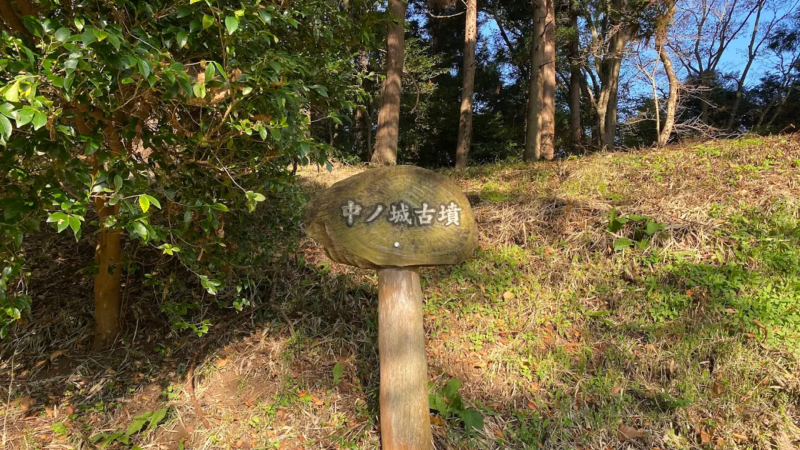
Nakano-shiro | A castle located in the center of the three castles
Structure and Role of Nakano-shiro
Nakano-shiro is located between the East Castle and the West Castle and is thought to have played a central role in connecting the three castles. It is believed to have been built after the East Castle and formed the core of the overall defense system of Kanzaki Castle.
Main Remains:
- Enclosures: Multiple flat areas have been identified
- Earthworks: Earthworks demarcating each enclosure remain
- Moats: Moats separating the enclosures can be seen
- Entrances: Topographical features suggesting entrances remain
Nakano-shiro has a more complex structure than the East Castle, with multiple enclosures arranged in stages. This suggests that the castle was built later and that its defensive functions were strengthened.
Layout of Enclosures and Defensive Structure
The layout of the enclosures in Nakano-shiro (Middle Castle) skillfully utilizes the topography of the plateau. Multiple enclosures are arranged concentrically or in a chain-like fashion around the main enclosure, creating a structure that progressively prevents enemy incursions.
Moats and steep slopes are provided between the enclosures, demonstrating a multi-layered defensive system where even if one enclosure is breached, the next can provide defense. This is a common feature of castles from the Sengoku period (Warring States period), suggesting that Nakano-shiro may have been renovated during this time.
Nishino-shiro (Western Castle) | The Last Fortress Guarding the Western Edge of Kanzaki Castle
Structure and Characteristics of Nishino-shiro (Western Castle)
Nishino-shiro (Western Castle) is the westernmost of the three castles of Kanzaki Castle and is considered to be the last to be built. Built as an expansion from Higashino-shiro (Eastern Castle) and Nakano-shiro (Middle Castle), it was responsible for the western defense of the entire Kanzaki Castle complex.
Main Remains:
- Enclosures: Multiple clearly defined flat areas remain.
- Earthworks: Well-preserved earthworks can be seen.
- Moats: Deep moats remain in some areas.
- Steep cliffs: Steep cliffs form a defensive line.
The West Castle is relatively well-preserved among the three castles, with clearly visible remains such as earthworks and moats. This is thought to be because the West Castle was the most recently constructed and experienced relatively little development in later periods.
Coordination and Overall Structure of the Three Castles
The East Castle, Central Castle, and West Castle, while each functioning as an independent fortress, functioned as a single castle complex. The three castles are lined up east to west on a plateau, separated from each other by moats and steep cliffs, but presumably connected internally by communication routes.
This type of interconnected enclosure structure is based on the concept of “depth defense,” which involves defending against enemy attacks in stages. Even if one castle fell, the next castle could defend against the attack, and the castles could also support each other.
The three-castle structure of Kanzaki Castle is a very interesting example for understanding the development process of medieval castles and the defensive thinking of the Sengoku period.
Remains and Highlights of Kanzaki Castle
Structure and Techniques of Earthworks
The earthworks remaining at Kanzaki Castle are valuable remains for understanding the construction techniques of medieval castles. The earthworks were built surrounding the enclosures, preventing enemy intrusion and ensuring visibility from within the enclosures.
Many of the earthworks at Kanzaki Castle are about 2-3 meters high, with a base width of 4-5 meters. The earthworks were constructed using soil excavated on-site, and traces of the rammed earth technique (a technique of compacting soil in layers) can be seen in some places.
Defensive Functions of Moats and Cut Slopes
Kanzaki Castle’s moats consist of two types: trenches separating the baileys and moats encircling the castle’s perimeter. While the moats are currently about 3-5 meters deep, it is presumed they were even deeper at the time of construction.
Cut slopes were created by artificially carving the edge of the plateau, creating steep inclines that made climbing difficult for enemies. Some of the cut slopes at Kanzaki Castle reach heights of over 10 meters, making them effective defensive structures that utilize the natural terrain.
Layout and Space Utilization of Baileys
Kanzaki Castle’s baileys are arranged around the main bailey (honmaru), with the second and third baileys also located there. The main bailey likely housed the lord’s residence and important facilities, while the second bailey and below probably contained the residences of retainers, barracks, and warehouses.
The area of the baileys is approximately 2,000-3,000 square meters for the main bailey, and the total area exceeds 10,000 square meters. This castle is of a standard size for a medieval local lord’s fortress and reflects the power of the Kanzaki clan.
Access and Visiting Information for Kanzaki Castle
Access Methods
Public Transportation:
- Approximately 20-30 minutes on foot from JR Narita Line “Shimosa-Kanzaki Station”
- Town loop bus available from the station (check operating days and times)
By Car:
- Approximately 15 minutes from Higashi-Kanto Expressway “Daiei IC”
- Approximately 10 minutes from Ken-O Expressway “Kanzaki IC”
- Parking: No dedicated parking (avoid street parking and use nearby public parking lots)
Notes for Visitors
Kanzaki Castle ruins are not a particularly developed tourist facility, and some areas are private land or farmland. Please note the following points when visiting.
- Avoid trespassing on private property.
- Be considerate and avoid interfering with agricultural work.
- Do not damage the ruins or litter.
- Observe proper etiquette when visiting the Inari Shrine at Higashi-no-shiro (East Castle).
- Wear comfortable shoes as some areas have uneven ground.
- In summer, vegetation can be overgrown, making the ruins difficult to see.
About Castle Stamps
Kanzaki Castle issues separate castle stamps for Higashi-no-shiro (East Castle), Naka-no-shiro (Middle Castle), and Nishi-no-shiro (West Castle). These are popular among castle enthusiasts as part of the “Castle Stamp Pilgrimage” to visit castles in Chiba Prefecture.
For information on how to obtain and where to get the castle stamps, we recommend contacting the Kanzaki Town Hall or the Kanzaki Town Tourism Association. Collecting all three castle stamps will allow you to gain a deeper understanding of Kanzaki Castle as a whole.
History and Culture of Kanzaki Town
Kanzaki Town as a “Village of Fermentation”
Kanzaki Town is the least populated town in Chiba Prefecture (population approximately 5,600), but it possesses a unique charm as a “Village of Fermentation.” The brewing industry, which has continued since the Edo period, producing sake, miso, and soy sauce, flourished thanks to the Tone River’s water transport and abundant agricultural products.
Even today, several breweries continue to operate in the town, and their historical buildings and brewing techniques have been designated as “Modern Industrial Heritage.” When visiting Kanzaki Castle, be sure to experience the culture of fermented foods.
Water Transport on the Tone River and the Prosperity of Kanzaki
Kanzaki Town is located on the south bank of the Tone River and prospered as an important river port during the Edo period. Rice, soybeans, and brewed products were transported to Edo using the Tone River’s water transport, and Kanzaki thrived as a logistics hub.
Even in the medieval period when Kanzaki Castle was built, the Tone River was an important transportation route, and it is believed that one of the reasons the Kanzaki clan ruled this area was to control this key waterway.
Nanjamonja Village
Kanzaki Town is also known as “Nanjamonja Village.” “Nanjamonja” is another name for the Chionanthus retusus, a rare tree that blooms with white flowers around May. There are several large Chionanthus retusus trees in Kanzaki Town, and many tourists visit during the blooming season.
The area around the Kanzaki Castle ruins also retains a rich natural environment, allowing visitors to enjoy the scenery of each season.
Tourist Spots Around Kanzaki Castle
Kanzaki Shrine
Kanzaki Shrine is an ancient shrine located in the center of Kanzaki Town and is said to be the origin of the place name Kanzaki. The shrine grounds contain giant trees hundreds of years old, creating a historical atmosphere. It is a must-visit spot when visiting Kanzaki Castle.
Kanzaki Town Nanjamonja Park
This park features a giant Chionanthus retusus (Nanjamonja) tree. During its blooming season in May, the tree is covered in white flowers, creating a fantastical landscape. The park also has playground equipment, making it enjoyable for families.
Kanzaki Fermentation Village Sake Brewery Festival
Held annually around March, the “Kanzaki Fermentation Village Sake Brewery Festival” is an event where visitors can experience Kanzaki Town’s brewing culture. Brewery tours, tastings, and sales of fermented foods are offered, attracting many tourists.
Tone River Cycling Road
A cycling road runs along the Tone River, allowing visitors to enjoy the scenic views by bicycle. Enjoying a leisurely bike ride while experiencing Kanzaki Town’s nature and history is highly recommended.
The Position of Kanzaki Castle in the Medieval Castles of Shimosa Province
Distribution of Castles in Shimosa Province
Shimosa Province (present-day northern Chiba Prefecture to southwestern Ibaraki Prefecture) was a region where many castles were built during the medieval period. Powerful samurai groups, centered around the Chiba clan, vied for power, each building castles to secure their territories.
Kanzaki Castle, located in an important position along the Tone River within Shimosa Province, functioned as a base for water transport management and regional control. The surrounding area includes castle groups in Katori City and Narita City, and comparing them clarifies the unique characteristics of Kanzaki Castle.
Comparison with Medieval Castles in Chiba Prefecture
While numerous medieval castles remain in Chiba Prefecture, the structure of three interconnected castles like Kanzaki Castle is relatively rare. Many castles are built as single structures or as a main castle with multiple subsidiary castles; examples of interconnected castles of equal size, like Kanzaki Castle, are limited.
This structure is thought to reflect the process of the Kanzaki clan’s power expansion and demonstrate the need for strengthened defenses during the Sengoku period.
The Value of Kanzaki Castle in Castle Research
Although Kanzaki Castle is not designated as a cultural property, it is an important historical site for understanding the development process of medieval castles. The differences in the construction periods and structural changes of the three castles demonstrate the development of castle construction technology from the medieval to the Sengoku period, making it an interesting subject of study for castle researchers.
Furthermore, the relatively well-preserved remains of earthworks, moats, and cliffs also enhance the value of Kanzaki Castle. Further detailed surveys and archaeological excavations could potentially yield even more insights.
Preservation and Utilization of Kanzaki Castle
Current Situation and Challenges
Currently, the Kanzaki Castle site is not designated as a historical site or undergoes any special maintenance. Parts of it are used as farmland and forest. While the remains are relatively well-preserved, some areas are difficult to access due to overgrown vegetation.
Future challenges include the following:
- Re-evaluation of its value as a historical site and consideration of designation as a cultural property
- Preservation and appropriate management of the remains
- Development of viewing paths and ensuring safety
- Installation of explanatory signs and information boards
- Promotion of understanding and cooperation among local residents
Utilization for regional revitalization
Kanzaki Castle has the potential to be utilized for regional revitalization as a historical resource of Kanzaki Town. Issuing castle stamps is the first step, and is expected to attract castle enthusiasts and history lovers to the town.
Furthermore, by developing a comprehensive historical sightseeing route that combines fermentation culture and the history of water transport on the Tone River, it is possible to promote the charm of Kanzaki Town from multiple perspectives. A sightseeing plan that combines castle tours, sake brewery tours, and viewing of the Nanjamonja tree would provide visitors with a fulfilling experience.
Utilization as an educational resource
Kanzaki Castle can also be utilized as an educational resource for learning about local history. Through local history lessons at elementary and junior high schools and the holding of castle tours, opportunities can be provided for children to learn about local history.
Furthermore, it is important to widely disseminate the academic value of Kanzaki Castle and deepen understanding of its preservation by holding tours and symposiums for castle researchers and history enthusiasts.
Summary | The Charm and Future Prospects of Kanzaki Castle
Kanzaki Castle is a valuable medieval castle remaining in Kanzaki Town, Katori District, Chiba Prefecture. Its unique structure, composed of three castles—the East Castle, the Central Castle, and the West Castle—demonstrates the development process of castles from the medieval period to the Sengoku period, and holds significant value in castle research.
Kanzaki Castle, believed to have been built by the Kanzaki clan around the 13th century, functioned as a strategic point for managing water transport on the Tone River, and developed during the Sengoku period while strengthening its defensive capabilities. Even today, remains such as earthworks, moats, and cliffs are well-preserved, allowing visitors to experience the structure of a medieval castle firsthand.
Kanzaki Town is the least populated town in Chiba Prefecture, but it has cultivated its own unique culture as a “village of fermentation.” Visiting Kanzaki Castle offers more than just a tour of the castle; it provides an opportunity to gain a comprehensive understanding of the Tone River’s water transport, brewing culture, and the region’s history.
We hope that Kanzaki Castle will be properly preserved and utilized as a historical resource, further promoting the charm of Kanzaki Town. For castle enthusiasts, history buffs, and anyone interested in the region’s nature and culture, Kanzaki Castle and Kanzaki Town are well worth a visit.
Kanzaki Castle, a testament to the medieval period of Shimosa Province, offers a tranquil atmosphere where you can feel the presence of the samurai who once ruled this land. Why not pay a visit sometime?