Complete Guide to Kamahara Castle (Gunma Prefecture): A Thorough Explanation of the History and Remains of a Mountain Castle Associated with the Sanada Clan
Basic Information on Kamahara Castle
Kamahara Castle is a mountain castle dating from the medieval to early modern period, located in Kamahara, Tsumagoi Village, Agatsuma District, Gunma Prefecture. Built on a plateau approximately 880 meters above sea level, this castle was a strong defensive structure that utilized the cliffs facing the Agatsuma River as a natural stronghold.
Location and Geographical Characteristics
Location: 756-1, Kamahara, Tsumagoi Village, Agatsuma District, Gunma Prefecture, and other locations
Kamahara Castle is located approximately 1.2 kilometers west of the Tsumagoi Local History Museum, and its remains can still be seen today. The castle’s location is strategically extremely important, and its design maximizes the use of the natural stronghold surrounded by the cliffs of the Agatsuma River. Due to its geographical advantage, Kamahara Castle played a crucial role in the battles against the surrounding Iwagutsu Castle and Haneo Castle.
Common Name/Alternate Name
Kamahara Castle does not have a specific alternative name and is known as “Kamahara Castle” or “Kamahara Castle Ruins.” Locally, it is sometimes simply called “Castle Ruins.”
History of Kamahara Castle
Construction and Origin of the Kamahara Clan
There are various theories regarding the construction date of Kamahara Castle, but the most widely accepted tradition is that it was built by the Kamahara clan in 1397 (Oei 4). However, it has also been suggested that some kind of defensive structure may have already existed during the Nanboku-cho period.
The Kamahara clan was a branch of the Shigeno Minamoto clan, descended from Prince Sadayasu, the fourth son of Emperor Seiwa. They were a branch of the Unno clan, a powerful family in Shinano Province, and were related to the Sanada and Unno clans. This blood relationship formed the basis for the close relationship between the Kamahara and Sanada clans during the later Sengoku period.
The Kamahara clan established their power as development lords in the Tsumagoi region from the Nanboku-cho period, and it is believed that they developed Kamahara Castle into a full-fledged fortress during the Oei era. The Kamahara clan served as the lords of the castle for generations, using it as a base for controlling the surrounding area.
Sengoku Period: Connection with Takeda Shingen
During the Sengoku period, Kamahara Castle, due to its geographical importance as a border area between Kozuke Province (Gunma Prefecture) and Shinano Province (Nagano Prefecture), became the stage for fierce battles.
During the Eiroku era (1558-1570), when Takeda Shingen of Kai Province intensified his invasion of Kozuke Province, the Kamahara clan came under the control of the Takeda clan. During this period, the Kamahara clan acted as vassals of Takeda Shingen, becoming an important base for Takeda forces in the Agatsuma region.
Kamahara Castle also played a crucial role in battles against Sanada Yukitaka (Yukitsuna) and Saito Norihiro, who were based at Iwagutsu Castle. The “Kazawa Chronicle” records the fierce battles fought between Iwagutsu Castle and Haneo Castle, confirming that Kamahara Castle was a strategically important military location in the region.
The Kamahara clan fought in various battles under the command of Takeda Shingen, and their use of the same six-coin (six-mon coin) family crest as the Sanada family demonstrates the deep connection between the two families.
After the Fall of the Takeda Clan and Subjugation to the Sanada Clan
In 1582, when Takeda Katsuyori was defeated by the Oda-Tokugawa allied forces and the Takeda clan fell, the Kamahara clan came under the control of Sanada Masayuki. The Sanada clan confirmed the territory of the Kamahara clan, who were of the same lineage, and continued to recognize Kamahara Castle as their residence.
During this period, the Kamahara clan is believed to have served as important vassals of the Sanada clan, participating in the defense of Ueda Castle and Numata Castle, as well as the Battle of Sekigahara and the Siege of Osaka. The relationship between the Sanada and Kamahara clans was bound by a strong bond of kinship that went beyond a simple master-vassal relationship.
Edo Period: One Castle Per Province Decree and Abandonment
In 1615, when the Tokugawa Shogunate issued the One Castle Per Province Decree, Kamahara Castle was abandoned. At this point, its history as a castle, spanning approximately 218 years, came to an end.
After its abandonment, the Kamahara clan served the Sanada clan of the Numata Domain and assumed the important position of gatekeeper at the Osasa checkpoint. The Kamahara family continued to hold this position as gatekeepers for generations until the Meiji Restoration, protecting this strategic location in the region. This fact demonstrates the deep trust the Kamahara clan enjoyed from the Sanada clan throughout the Edo period.
Remains of Kamahara Castle
Details of Existing Remains
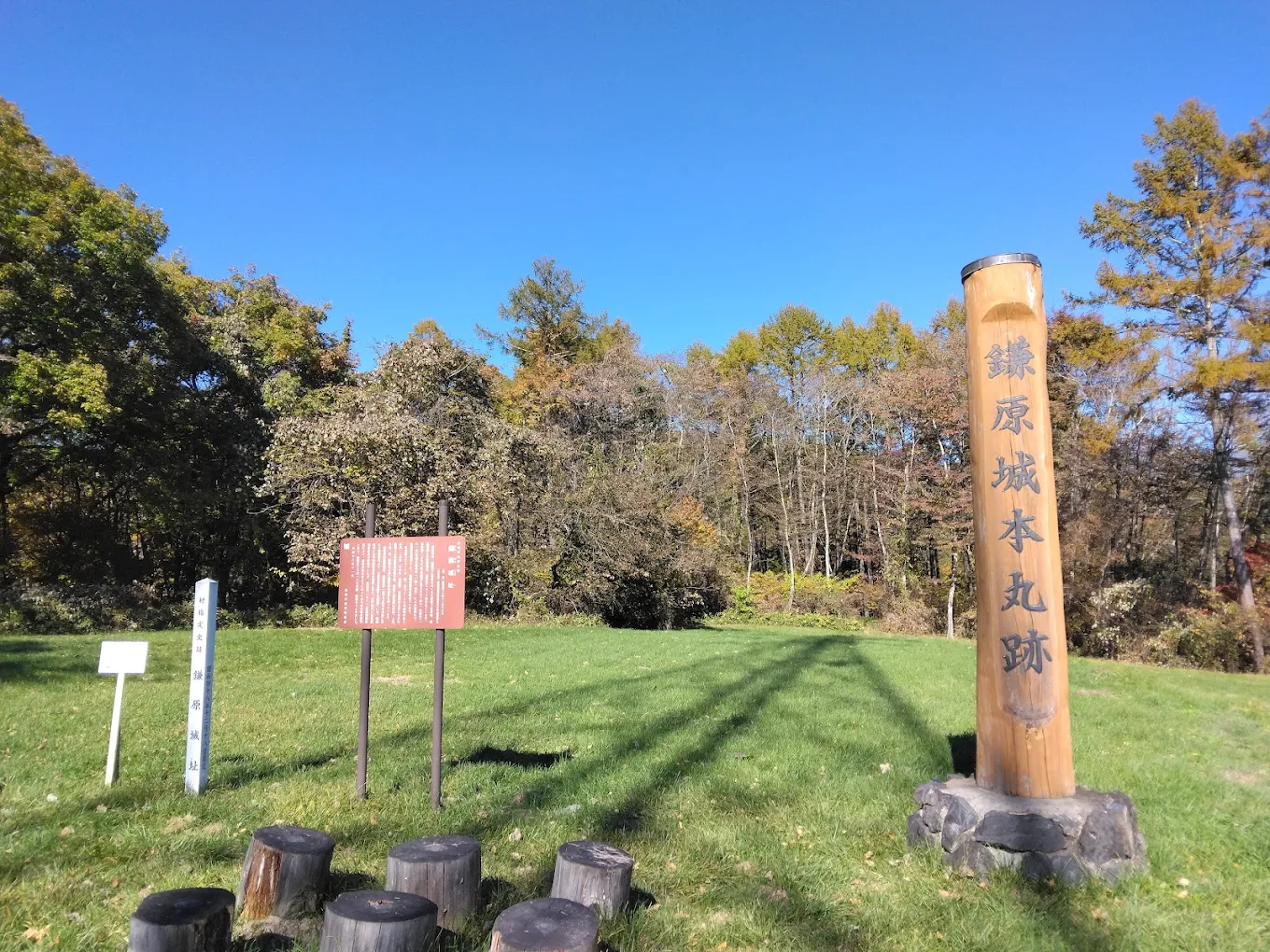
At the Kamahara Castle site, important remains exhibiting the characteristics of a medieval mountain castle can still be seen. The main remains are as follows:
Kuruwa (Enclosures): The central part of the castle consists of multiple enclosures, including the main keep. Each enclosure is cleverly positioned to utilize the terrain and maximize defensive capabilities. In enclosures with flat areas, archaeological excavations have confirmed the presence of building remains and traces of daily life.
Moat: Moats, which divide the ridge, are important defensive structures that prevent enemy intrusion. Multiple moats have been identified at Kamahara Castle, demonstrating the high level of defensive technology unique to mountain castles.
San-no-maru Oteguchi (Main Entrance): A stone monument still stands at the Oteguchi, the main entrance to the castle, evoking the castle’s structure in its heyday.
Earthworks: Traces of earthworks remain around the enclosures, indicating the formation of a defensive line.
Pits and Ditches: Archaeological excavations have confirmed numerous pits, believed to be postholes for buildings, and ditches, thought to be storage pits. These are valuable remains that reveal the realities of daily life and military activities within the castle.
Ditches: Multiple ditches, intended for drainage and partitioning, have been identified, revealing a functional layout plan within the castle grounds.
Excavated Artifacts
The excavation has yielded a diverse array of artifacts dating from the medieval to early modern periods.
Inner-Handled Pottery: Medieval cooking pottery, an important artifact illustrating daily life at Kamahara Castle.
Pottery and Porcelain: Pottery from the Seto-Mino ware region and porcelain from China have been unearthed, indicating the trade relations and living standards of the castle lord at the time.
Whetstone: A whetstone used for sharpening weapons such as swords, confirming the castle’s character as a samurai residence.
Pebbles: Numerous pebbles used for throwing and building materials have been identified.
These artifacts are stored and displayed at the Tsumagoi Local History Museum, providing a concrete understanding of Kamahara Castle’s history.
Preservation of the Ruins
Kamahara Castle ruins are designated as a village historical site, and the ruins are preserved in relatively good condition. However, there are sections of the path leading to the main keep entrance that lack electric fences, so caution is advised regarding encounters with wild animals (especially monkeys and deer).
The area surrounding the castle ruins maintains a rich natural environment, and while vegetation grows from spring to autumn, winter is the best time for detailed observation of the ruins. Visitors are encouraged to follow the designated viewing paths to avoid damaging the ruins.
Kamahara Castle and Surrounding Castles
Relationship with Iwagutsu Castle
Iwagutsu Castle was an important base for the Sanada clan, located approximately 15 kilometers northeast of Kamahara Castle. During the Sengoku period, when Sanada Yukitaka attacked Iwagutsu Castle on the orders of Takeda Shingen, Kamahara Castle functioned as an important subsidiary castle. The two castles had a mutually complementary relationship in controlling the Agatsuma region and cooperated in the defense of the area.
The Battle for Haneo Castle
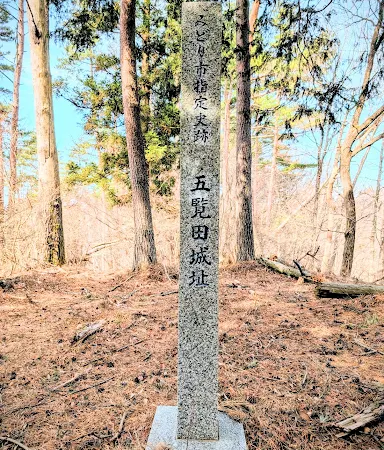
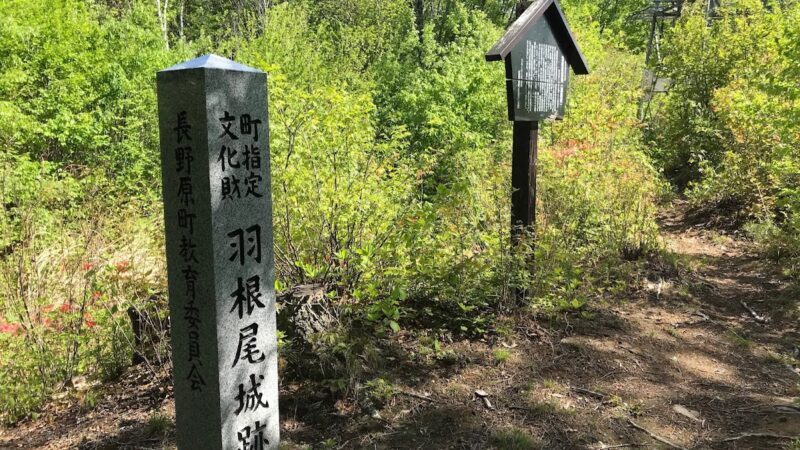
Haneo Castle was located near Kamahara Castle and was the residence of the Haneo clan. In the late medieval period, territorial disputes arose between the Kamahara and Haneo clans, leading to battles fought at both castles. This regional conflict ended with the invasion of Takeda Shingen, and both clans were incorporated under Takeda rule.
Geographical Relationship with Komoro Castle
Komoro Castle in Shinano Province is located approximately 40 kilometers southwest of Kamahara Castle. During the Takeda era, Kamahara Castle served as a forward base for military operations from Komoro Castle to Kozuke Province. Both castles were considered important strategic points on the Takeda clan’s invasion route of Kozuke Province.
Access and Visiting Information
Access by Car
Joshinetsu Expressway: Approximately 45 minutes from Usui-Karuizawa IC, or approximately 20 minutes from Tsumagoi-Kogen IC.
Via National Route 144/146: From Karuizawa, head north on National Route 146 to the Kamahara area of Tsumagoi Village.
Parking: Parking is available at the Tsumagoi Local History Museum. Approximately 20 minutes on foot from the museum to the castle ruins (via a field path).
Access by Public Transportation
JR Agatsuma Line: Get off at Manza-Kazawaguchi Station, then approximately 15 minutes by taxi.
Route Bus: Tsumagoi Village operates a bus service, but the number of buses is limited, so advance confirmation is necessary.
Points to Note During Your Visit
Estimated Time Required: Visiting the castle ruins takes an average of 30-40 minutes. If you plan to carefully observe the ruins, allow about an hour.
Clothing and Equipment: As it is a mountain castle, comfortable walking shoes and clothing are essential. Bring insect repellent in summer and warm clothing in winter.
Safety Precautions: Since wild animals may be present, avoid going alone and visit in groups whenever possible. Carrying a bear bell is also recommended.
Information Acquisition: Pamphlets are available at the entrance of the Tsumagoi Local History Museum. Visiting the museum beforehand will deepen your understanding.
Spot Information Around Kamahara Castle
Tsumagoi Local History Museum
This facility exhibits the history of Kamahara Castle and excavated artifacts. It also features exhibits on the history of the Kamahara clan, their relationship with the Sanada clan, and the Tenmei eruption of Mount Asama, allowing you to comprehensively learn about the region’s history. Please check opening hours and closing days in advance.
Kamahara Kannon-do Hall
This Kannon-do hall tells the history of Kamahara Village, which was buried by the great eruption of Mount Asama in 1783. While not directly related to Kamahara Castle, it is an important historical site for understanding the history of the Kamahara area.
Mount Asama
This active volcano, visible from the Kamahara Castle ruins, is a symbolic landmark of Tsumagoi Village. While climbing is restricted depending on volcanic activity, the surrounding scenery is magnificent.
Sanada Road
Kamahara Castle is located along the Sanada Road and is part of a tourist route visiting historical sites associated with the Sanada clan. You can trace the historical path from Ueda Castle to Iwagutsu Castle and Numata Castle.
Osasa Barrier Station Ruins
The ruins of the Osasa Barrier Station, where the Kamahara clan served as barrier guards after the castle’s abandonment, are also nearby. It is an important historical site for understanding the activities of the Kamahara clan during the Edo period.
Cultural Property Designation Status of Kamahara Castle
Kamahara Castle ruins are designated as a historical site of Tsumagoi Village and are registered in the Comprehensive Survey of Cultural Properties. Recorded as site number 136923, it is a castle site dating from the medieval to early modern period.
The main period divisions are “Medieval (details unclear)” and “Early Modern (details unclear),” and the site type is classified as “Castle Site.” This designation ensures the preservation and appropriate management of the remains.
Current Status and Challenges of Kamahara Castle Research
Research Progress
Research on Kamahara Castle is progressing from both archaeological investigations and documentary historical studies. Excavations have gradually revealed the castle’s structure, period of use, and living conditions.
From military chronicles such as the “Kazawa-ki,” and historical materials such as the Sanada and Takeda family documents, the activities of the Kamahara clan and the historical role of the castle are being clarified.
Future Challenges
Many aspects of Kamahara Castle remain unclear, including determining the exact construction date, the changes in its structure over time, and the detailed genealogy of the Kamahara clan. Further archaeological excavations and historical research are expected to uncover more historical facts.
Significance of Visiting Kamahara Castle
Kamahara Castle is an indispensable historical site for understanding the activities of the Takeda and Sanada clans in Kōzuke Province during the Sengoku period. Through the history of the Kamahara clan, a branch of the Shigeno Minamoto clan, we can learn how local powerful families survived the turmoil of the Sengoku period.
Standing on-site, one can truly appreciate the defensive capabilities of the mountain castle and the high level of construction technology that utilized the natural terrain. Furthermore, its deep connection with the Sanada clan places an important position in historical explorations along the Sanada Road.
The view of Tsumagoi from the 880-meter-high plateau evokes the landscapes seen by Sengoku warlords, evoking a sense of historical romance. Visiting the castle ruins is not merely sightseeing; it will be a valuable experience that allows you to feel the history of Japan’s medieval period firsthand.
Summary
Kamahara Castle was a mountain castle that functioned as the residence of the Kamahara clan of the Shigeno Minamoto lineage for approximately 218 years, from 1397 to 1615. It played a crucial role in the historical flow of events, including Takeda Shingen’s invasion of Kozuke Province, its kinship with the Sanada clan, and its eventual abandonment due to the “One Castle Per Province” decree.
Even today, the remains of the castle, such as the baileys, moats, and earthworks, are well-preserved, conveying the appearance of a medieval mountain castle. Visiting it in conjunction with the Tsumagoi Local History Museum will allow you to gain a deeper understanding of the history of the Kamahara clan and Kamahara Castle.
As a castle associated with the Sanada clan and an indispensable historical site for understanding the Sengoku period history of the Agatsuma region, Kamahara Castle is a place of great value for history enthusiasts. Why not reflect on the history of the Sengoku period amidst the rich natural scenery of Tsumagoi Village?