Complete Guide to Haneo Castle (Gunma Prefecture) | Thorough Explanation of History, Remains, and Access Information
What is Haneo Castle?
Haneo Castle is a mountain castle located in Haneo, Naganohara-machi, Agatsuma-gun, Gunma Prefecture. Built on a mountain approximately 750m above sea level on the west bank of the Agatsuma River, it exhibits a typical Sengoku period mountain castle form, with a group of baileys arranged on a ridge extending southwest. Known as the base of the Haneo clan, a branch of the Shinano Unno clan, it is a historically important castle that later came under the control of the Takeda and Sanada clans.
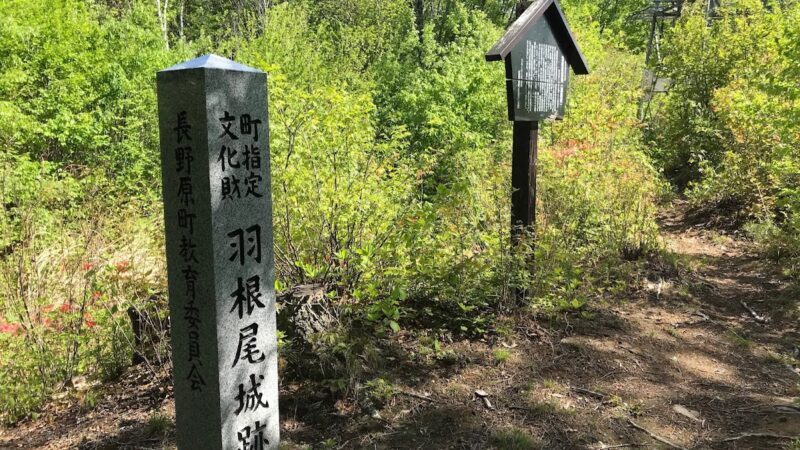
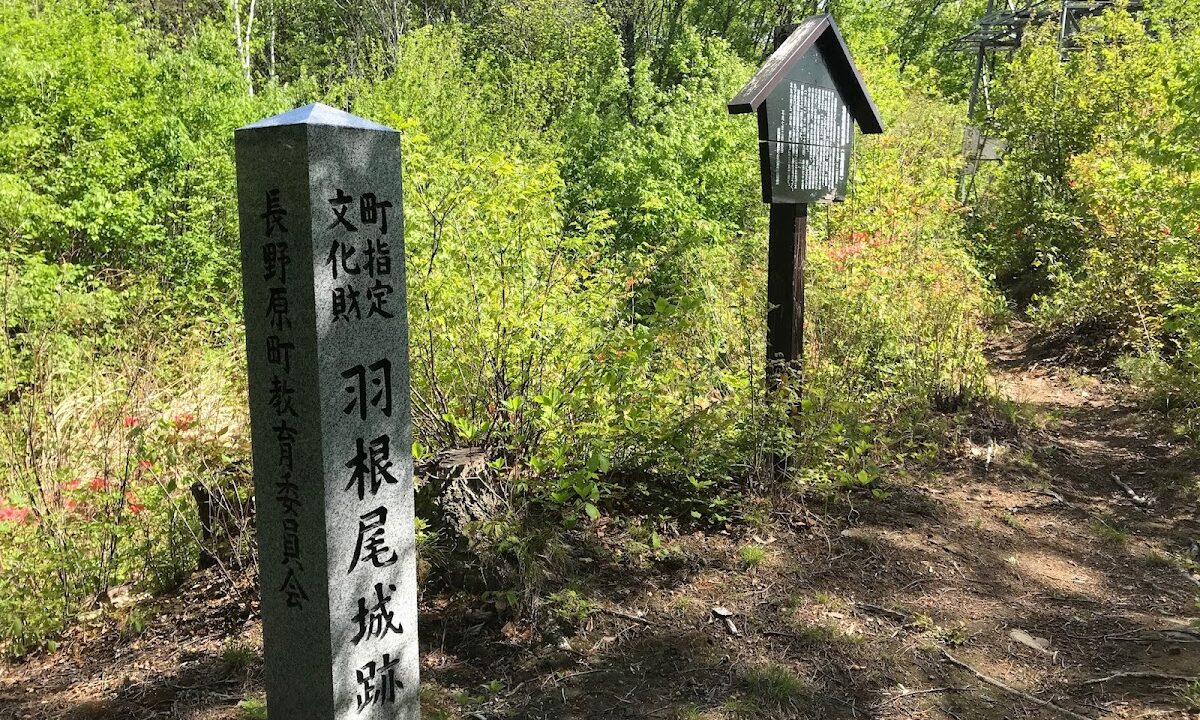
Currently protected as a Naganohara-machi designated historical site (designated September 21, 1974), the remains such as earthworks and moats are well-preserved. While a radio relay tower has been constructed in the main bailey, it remains a valuable historical site for understanding the basic structure of the castle.
Basic Information on Haneo Castle
Location and Geographical Characteristics
Location: Haneo, Naganohara-machi, Agatsuma-gun, Gunma Prefecture
Haneo Castle is located on a mountaintop west of the Agatsuma River, behind the Haneo settlement. This strategic location controlled a key transportation hub in the Agatsuma region, making it an important base for monitoring roads leading to Kusatsu and Tsumagoi. The Agatsuma River flowed north of the castle, serving as a natural moat.
Castle Size and Structure
Common Name/Alternate Name: None in particular
Castle Type: Mountain Castle
Construction Period: Late Muromachi period to early Sengoku period (estimated)
Builder: Hao Yukizen Nyudo (legend)
Main Lords: Hao clan, Sanada clan
Year of Abandonment: Late Tensho era (estimated)
The castle has a multi-bailey layout built on a ridge extending to the southwest, with multiple baileys arranged around the main bailey. While a small to medium-sized mountain castle, it is a practical fortress equipped with strong defensive structures.
History of Haneo Castle
Establishment of the Hao Clan and Construction of the Castle
The Hao clan was a branch of the Shinano Unno clan and is considered a descendant of the Shigeno clan. The Shigeno clan was a powerful clan in Shinano Province, branching into the Unno, Mochizuki, and Nezu clans, from which many further branches arose. The Hao clan was one such family, having expanded into the Agatsuma region and settled there.
Haneo Castle is said to have been built by Hao Yukizen Nyudo. In the early Sengoku period, the Hao clan established their power as a local lord, controlling a wide area of the Agatsuma region, including Kusatsu, Tsumagoi, and Kamahara. Hao Castle served as their base and played a central role in governing their territory.
The Battle of Naganohara and the Hao Clan’s Activities
The most important event in the history of the Hao clan was the Battle of Naganohara in 1563. During this period, the Saito clan, based at Iwagutsu Castle, and the Takeda clan, expanding their power from Shinano, were in conflict in the Agatsuma region.
The brothers Hao Nagato-no-kami Yukimitsu and Noto-no-kami Teruyuki initially sided with the Saito clan of Iwagutsu Castle and succeeded in capturing Naganohara Castle. However, the Takeda clan’s counterattack was swift, and Naganohara Castle was quickly recaptured. Due to this sudden shift in the battle situation, the Haneo clan chose to surrender to Sanada Yukitaka, a vassal of the Takeda clan.
Under Sanada Control
After surrendering to Sanada Yukitaka, Haneo Castle came under the control of the Sanada clan. The Sanada clan played a leading role in Takeda Shingen’s conquest of the Agatsuma region, and by adding the Haneo clan to their ranks, they strengthened their control over the area.
The Haneo clan continued to use Haneo Castle as their base under the Sanada clan’s authority, but it is believed to have been abandoned in the late Tensho era after the fall of the Takeda clan. As the Sanada clan developed Ueda Castle as their main base, the smaller mountain castles in the Agatsuma region gradually lost their role.
From the Edo Period Onward
After its abandonment, the site of Haneo Castle continued to be remembered by local people as “Shiroyama” (Castle Mountain). At Sosenji Temple, the family temple of the Haneo clan, the tomb of Haneo Nagato-no-kami still remains, preserving the region’s history.
In 1974, it was designated a Naganohara Town Historic Site and protected as an important cultural property of the region. Currently, it is known as a historical site visited by castle researchers and enthusiasts.
Remains of Haneo Castle
Main Enclosure (Honmaru)
The main enclosure is located at the highest point of the castle, and a radio relay tower is currently constructed there. The main enclosure has a long, narrow shape running north-south and has a relatively large, flat surface. Traces of earthworks can be seen around it, indicating that defensive structures once surrounded it.
From the main enclosure, one can see the Haneo settlement, the Agatsuma River, and the surrounding mountains, demonstrating its excellent location as a surveillance base. A stone monument stands at the main enclosure, indicating that it is a castle site.
Lower Enclosure
A lower enclosure (koshikuruwa) is located southeast of the main enclosure (honkuruwa), forming a two-tiered structure together with the main enclosure. This lower enclosure served as a defensive structure for the main enclosure, playing a role in preventing enemy incursions. The flat surface of the lower enclosure is also relatively well-preserved.
Moat
The moat is the most clearly preserved defensive structure of the castle. Digged to cut across the ridge, the moat was an important defensive line to prevent enemy incursions. It still retains its depth and width today, demonstrating the high level of civil engineering technology of the Sengoku period.
The moat is located along the path leading to the main enclosure, and visitors will inevitably pass through it. By actually walking at the bottom of the moat, you can experience the castle’s defensive strength.
Earthworks
Earthworks were built around the main enclosure and other enclosures. Some parts still remain today, and you can see the raised earthen mounds along the edges of the enclosures. The earthen ramparts served not only as defensive walls but also as boundaries, clearly defining the extent of the baileys.
Baileys
Besides the main bailey and lower baileys, it is believed that several smaller baileys were located along the ridge. These are thought to have been used as troop encampments and storage areas for supplies. Currently, traces remain as undulations in the terrain.
Access Route and Stairs
Currently, a well-maintained path leads to the castle ruins from the foot of the mountain. Stairs have been installed in some sections, making it relatively easy to reach the main bailey. While this access route does not necessarily coincide with the original main approach, it allows for an understanding of the castle’s layout as you ascend.
Access and Visiting Information for Haneo Castle
Access by Public Transportation
From JR Agatsuma Line “Haneo Station”:
- Approximately 15-20 minute walk to the castle entrance
- Proceed along the mountain path east of the station
- Follow the signs to reach the castle ruins
Haneo Station is an unmanned station, but it is only a few stops from Naganohara-Kusatsuguchi Station, a major station on the Agatsuma Line, making access relatively easy.
Access by Car
From the Kan-Etsu Expressway “Shibukawa-Ikaho IC”:
- Approximately 50km, about 1 hour, via National Route 353 and National Route 145
- Head towards the Haneo area of Naganohara Town
Parking:
- You can use the parking lot of Nishi-Agatsuma Welfare Hospital (please be considerate of hospital users when visiting)
- There is parking space near the Haneo Community Center
- There is a forest road leading to the mountaintop from the road next to Sozenji Temple, and it is possible to reach the castle by car (please be careful as the road is narrow)
Points to Note When Visiting
- Clothing: As it is a mountain castle, comfortable shoes and clothing that allows for easy movement are essential. The ground can be particularly slippery after rain.
- Season: Spring to autumn is the best time to visit. Snowfall in winter may make it difficult to reach the castle.
- Estimated Time Required: It takes approximately 10-15 minutes to walk from the entrance to the main enclosure. Allow about one hour round trip, including sightseeing.
- Facilities: There are no toilets or rest facilities, so please prepare accordingly.
- Manners: As this is a town-designated historical site, please be careful not to damage the remains or leave any trash.
Recommended Sightseeing Route
- Park at the Haneo Community Center or Nishi-Agatsuma Welfare Hospital parking lot.
- Visit Sosenji Temple and see the grave of Haneo Nagato-no-kami.
- Follow the signs to the castle path.
- Check the moat along the way.
- Reach the main enclosure (near the radio relay tower) and enjoy the monument and view.
- Check the remains such as the lower enclosure and earthworks.
- Descend via the same route.
Related Historical Sites in the Surrounding Area
Iwagutsu Castle
Located approximately 10km northeast of Haneo Castle, Iwagutsu Castle is the largest mountain castle in the Agatsuma region. Known as the residence of the Saito clan, it later became an important base for the Sanada clan. As the base of the Saito clan, who were enemies of the Haneo clan in the Battle of Naganohara, it is an essential historical site for understanding the history of Haneo Castle. It has been selected as one of the Continued Top 100 Japanese Castles, and visitors can see authentic mountain castle remains.
Kamahara Castle
This was the castle of the Kamahara clan, a local lord of the Agatsuma region, similar to the Hao clan. Located northwest of Haneo Castle, it was situated in Kamahara, Tsumagoi Village. Along with Kamahara Village, which was buried by the massive eruption of Mount Asama in 1783, the castle ruins were also affected by the volcanic disaster.
Naganohara Castle
This castle was the site of the Battle of Naganohara in 1563. Although captured by the Hao clan, it was quickly recaptured by the Takeda clan. While few remains today, it is an important historical site closely related to the history of Haneo Castle.
Sosenji Temple
This is the family temple of the Hao clan and houses the grave of Hao Nagato-no-kami Yukimitsu. It’s a must-visit when visiting Haneo Castle. The temple is located within the Haneo settlement and serves as the starting point for the path leading to the castle ruins.
Highlights of Haneo Castle
Historical Value
Haneo Castle is an important historical site that shows the history of the Unno clan, who expanded from Shinano Province to Kozuke Province. Furthermore, as a castle that tells the story of important historical developments of the Sengoku period, such as Takeda Shingen’s conquest of the Agatsuma region and the rise of the Sanada clan, it possesses high historical value.
Preservation of Remains
Although there have been some alterations, such as the construction of a radio relay tower, the basic remains such as moats and earthworks are well preserved. The moats, in particular, have been well-preserved in depth and shape, allowing visitors to learn about castle construction techniques of the Sengoku period.
Views
The views from the main enclosure are magnificent, offering a panoramic view of the Agatsuma River, the Haneo settlement, and the surrounding mountains. From this view, one can truly appreciate that the castle was a strategic base for monitoring important transportation points.
Accessibility
As a mountain castle, it is relatively easy to access, and the climbing time is short, making it an accessible castle site even for beginners. It’s close to a JR Agatsuma Line station, making it easily accessible by public transport.
Haneo Castle and the Sanada Clan
When discussing the history of Haneo Castle, its relationship with the Sanada clan is indispensable. Sanada Yukitaka (Yukitsuna) was tasked by Takeda Shingen with conquering the Agatsuma region, and in the process, he forced the Haneo clan to surrender.
By incorporating the Haneo clan into their ranks, the Sanada clan established their control over the Agatsuma region. The Haneo clan’s regional influence and geographical knowledge of Kusatsu and Tsumagoi became valuable assets for the Sanada clan. This relationship became one of the foundations for the Sanada clan’s later independence as a daimyo with Ueda Castle as its base.
Even during the time of Sanada Masayuki, Yukitaka’s son, and his grandson, Sanada Nobushige (Yukimura), the Agatsuma region functioned as an important hinterland for the Sanada clan. Although small in scale, Haneo Castle is an important historical site that tells the story of the Sanada clan’s expansion of power.
Current Status and Challenges of Haneo Castle Research
While the basic history and layout of Haneo Castle are known, detailed archaeological excavations have not been conducted. The following are future challenges:
Determining the Construction Date
Currently, the construction date is only an estimate based on tradition. Archaeological investigations are needed to determine a more accurate construction date.
Detailed Layout Survey
Detailed surveys are needed for the enclosures other than the main enclosure and the lower enclosures. Further research is also needed regarding the location and structure of the residential area.
Genealogy Research of the Haneo Clan
Many aspects of the detailed genealogy of the Haneo clan and their relationship with the Unno clan remain unclear. Excavation and analysis of historical documents are future challenges.
Preservation and Utilization
While protected as a town-designated historical site, more proactive preservation, maintenance, and utilization are desired. Improving information boards and developing viewing paths would make the site more accessible to many visitors.
Summary
Haneo Castle is an important mountain castle that tells the story of the Sengoku period history of the Agatsuma region in Gunma Prefecture. Built as the residence of the Haneo clan, a branch of the Shinano Unno clan, its history, which saw it fall under the control of the Sanada clan after the Battle of Naganohara in 1563, reflects the major trends of the Sengoku period, such as Takeda Shingen’s conquest of Shinano and Kozuke and the rise of the Sanada clan.
The remaining structures, such as moats and earthworks, are valuable cultural assets that convey the castle’s construction techniques of the Sengoku period. The view from the mountaintop at an altitude of 750m is magnificent, giving a real sense of the castle’s strategic importance as a key transportation hub.
Access is relatively easy, making it a mountain castle that even beginners can easily visit. When visiting the Agatsuma region, be sure to visit the ruins of Haneo Castle and experience the history and remains of the Sengoku period. Visiting it along with nearby Iwagutsu Castle and other historical sites related to the Sanada clan will allow you to understand the history of the Agatsuma region during the Sengoku period even more deeply.
Although Haneo Castle is not large in scale, it is an important historical site indispensable to understanding the history of the region. I hope that it will continue to be properly preserved and serve as a witness to history for many people to hear.