Kajita Castle (Gifu Prefecture): A Thorough Explanation of the History and Highlights of the Unconquered Castle
Overview of Kajita Castle
Kajita Castle is a mountain castle built in Kamo District, Mino Province (present-day Kajita, Tomika-cho, Kamo District, Gifu Prefecture) during the Sengoku period. Its original name was Kyakuteki-jo (meaning “enemy-defeating castle”), a name given because it never fell and repelled all enemies. It is also known as Kajita-yama Castle.
The mountain itself has been called by various names such as Kajita-yama, Kojō-yama, and Shirahana-yama, but currently the entire mountain is called Nashiwari-yama. Built on a mountaintop approximately 270 meters above sea level, it is a full-fledged mountain castle of high historical value, having played a crucial role in Oda Nobunaga’s conquest of Mino Province.
Basic Information
Location: Kajita, Tomika-cho, Kamo-gun, Gifu Prefecture
Common Name/Alternate Name: Kyakuteki-jo (Enemy Castle), Kajita-yama Castle
Former Province: Mino Province
Classification/Structure: Mountain Castle
Keep Structure: None (As it is a mountain castle, there is no keep)
Builder: Sato Tadayoshi (Legend)
Year of Construction: Before the Eiroku era (Details unknown)
Main Lords: Sato clan, Saito Toshiharu, Mori Nagayoshi
Remains: Enclosures, stone walls, earthworks, moats, vertical moats, gates, cliffs
Designated Cultural Property: Not designated as a historical site (However, preservation efforts are underway as an important historical heritage of the region)
History of Kajita Castle
The Castle’s Construction and the Era of the Sato Clan
There are various theories regarding the construction period of Kajita Castle, but it is generally believed to have been built by Sato Tadayoshi and his son Tadayasu, vassals of the Mino Saito clan. The Sato clan initially served the Saito clan, who were the deputy governors of Mino Province. Kajita Castle, along with Seki Castle and Dodō Castle, is considered one of the Three Castles of Central Mino and functioned as an important base in eastern Mino.
During the Sengoku period, Saito Dosan became the ruler of Mino Province through gekokujo (overthrowing one’s superior), and was subsequently succeeded by his son, Saito Yoshitatsu, and then by Tatsuoki. The Sato clan of Kajita Castle were also under the control of the Saito clan, but their position became drastically unstable when Oda Nobunaga’s invasion of Mino intensified.
Oda Nobunaga’s Conquest of Mino and Kajita Castle
In 1565 (Eiroku 8), Oda Nobunaga of Owari Province intensified his conquest of Mino Province. At this time, Sato Kii-no-kami, the lord of Kajita Castle, secretly colluded with Oda Nobunaga and decided to side with him. This meant securing an important bridgehead for the Oda forces in eastern Mino Province.
Enraged by Sato’s defection, the Saito clan built a new castle, Dodō Castle, near Kajita Castle and attacked it. However, Oda Nobunaga himself rushed to the scene as reinforcements and succeeded in capturing Dodō Castle. In this Battle of Dodō, the Saito forces suffered a defeat, and Oda Nobunaga’s conquest of Mino Province advanced significantly.
Although Sato Tadayoshi is said to have been killed in this battle, Kajita Castle did not fall and was seized by the Oda forces. It is believed that this battle is the origin of its later nickname, “Kyakuteki-jō” (meaning “enemy castle”).
The Era of Lord Saito Toshiharu
After conquering Mino Province, Oda Nobunaga recognized the importance of Kajita Castle and appointed Saito Toshiharu, the youngest son of Saito Dosan, as its lord. Saito Toshiharu was appointed to govern Kajita Castle by Nobunaga’s command, but this was not merely a reward for service; it was a crucial task of governing and defending eastern Mino.
During the Tensho era, Kajita Castle continued to function as a base in the central Mino region under the Oda regime. Located at a strategic point along the Kiso River, Kajita Castle was also an important defensive stronghold against invasions from the eastern Mino region.
After the Honnoji Incident and Integration by Mori Nagayoshi
Following the death of Oda Nobunaga in the Honnoji Incident of 1582, the situation changed dramatically throughout the country. In the eastern Mino region, Mori Nagayoshi rapidly expanded his power, and Kajita Castle came under the control of the Mori clan.
Mori Nagayoshi unified the surrounding area, including Kajita Castle, and advanced his own domain administration. However, because the Mori clan prioritized other bases, it is believed that Kajita Castle was abandoned shortly thereafter. With the end of the Sengoku period, Kajita Castle also ceased to serve its purpose.
Topography and Structure
Location and Topographical Characteristics
Kajita Castle was built on a ridge extending southeast from the summit of Nashiwariyama (Kajitayama, Kojōyama), which is approximately 270 meters above sea level. Its location overlooking the plains along the Kiso River gave it extremely important military strategic advantages.
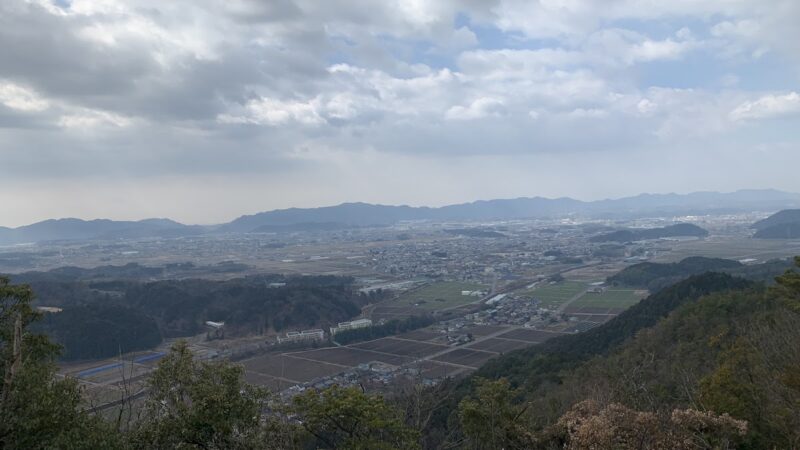
From the summit, on clear days, it was possible to see as far as the buildings in front of Nagoya Station, suggesting that wide-area surveillance was possible even at that time. Its location, which allowed for early detection of invasions from the Owari region, made it an ideal defensive base for eastern Mino Province.
Castle Structure and Layout
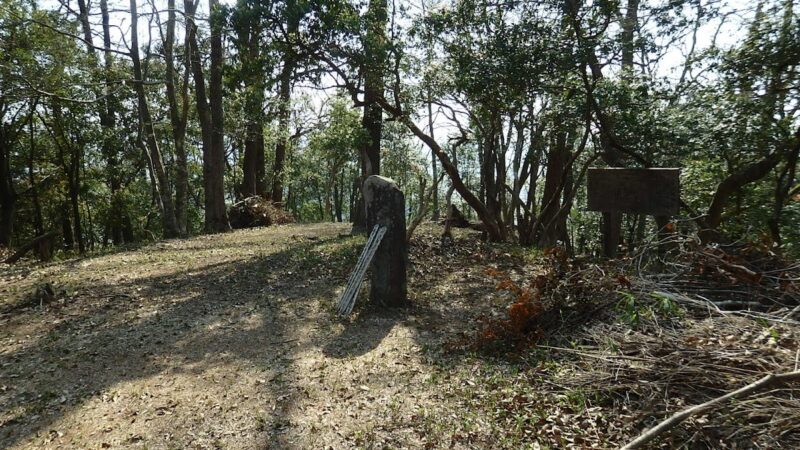
Kajita Castle is a full-fledged mountain castle with multiple baileys, from the first bailey to the fourth bailey. Centered around the main bailey, the baileys were arranged in stages along the ridge, creating a strong defensive system.
The following are some of the main remains that have been identified:
- Kuruwa (enclosures): Multiple flat areas are arranged in a stepped pattern, each functioning as an independent defensive unit.
- Stone walls: Parts of the stone walls remain, providing valuable evidence of the castle-building techniques of the time.
- Earthworks: Some sections of the earthworks surrounding the enclosures are well-preserved.
- Moats: Multiple trenches cutting across the ridges were constructed to prevent enemy intrusion.
- Vertical moats: Numerous vertical moats dug into the slopes have been identified to prevent attacks from the flanks.
- Koguchi (gateways): The entrances to the enclosures are cleverly positioned, enhancing defensive capabilities.
- Cut slopes: Steep, artificial cut slopes are found throughout, making climbing difficult.
These remains represent a typical structure of a mountain castle from the Sengoku period, demonstrating the high level of castle-building technology. The arrangement of the vertical moats, in particular, is ingenious and demonstrates their crucial role in mountain castle sieges. ### Characteristics of the Defensive Mechanism
The reason Kajita Castle was called a “fortress that repelled the enemy” and never fell lies in its superior defensive mechanism. The layout, which made maximum use of the terrain, was designed to impose significant difficulties on attackers.
By utilizing the ridgeline, the arrangement of baileys limited the attackers’ routes, allowing the defenders to effectively defend even with a small force. Furthermore, trenches and vertical moats hindered advances along the ridgeline and made detours via slopes difficult.
The entrance gates were not simple entry points, but rather designed to be vulnerable to attacks from the flanks (flanking fire), demonstrating a design advantageous to the defenders throughout.
Subsidiary Castles and Surrounding Fortresses
Kajita Castle did not exist in isolation; it is believed to have had several subsidiary castles in the surrounding area. These subsidiary castles formed a defensive network for Kajita Castle, creating a wide-area defensive system.
The Three Castles of Chuno
Kajita Castle, along with Seki Castle and Dōdō Castle, was known as one of the Three Castles of Chuno. These castles cooperated with each other to defend eastern Mino Province.
- Seki Castle: Located in Seki City, it was an important strategic point in the Chuno region.
- Dōdō Castle: Built by the Saitō clan to attack Kajita Castle, it was captured by Oda Nobunaga.
These castles were geographically close and within easy reach of each other, allowing for mutual support. It is believed that a system was in place to expect reinforcements from surrounding castles when Kajita Castle was under attack.
Present-day Kajita Castle
Visiting and Sightseeing
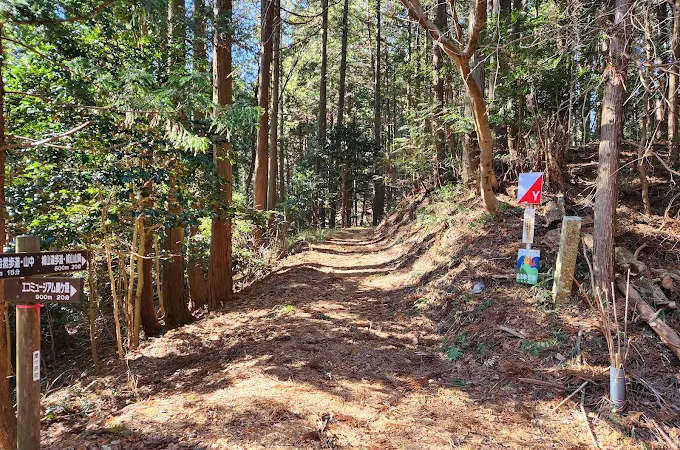
Currently, a hiking trail via Kiyomizu-dera Temple is maintained to the Kajita Castle ruins, making it relatively easy to reach the site. Kiyomizu-dera Temple is said to have been founded by the same person as Kiyomizu-dera Temple in Kyoto and is a temple of high historical value.
The trail from the trailhead to the main citadel at the summit is well-maintained, taking approximately 30 to 40 minutes one way. Along the way, you can observe remnants such as vertical moats and trenches up close, giving you a real sense of the structure of a Sengoku period mountain castle.
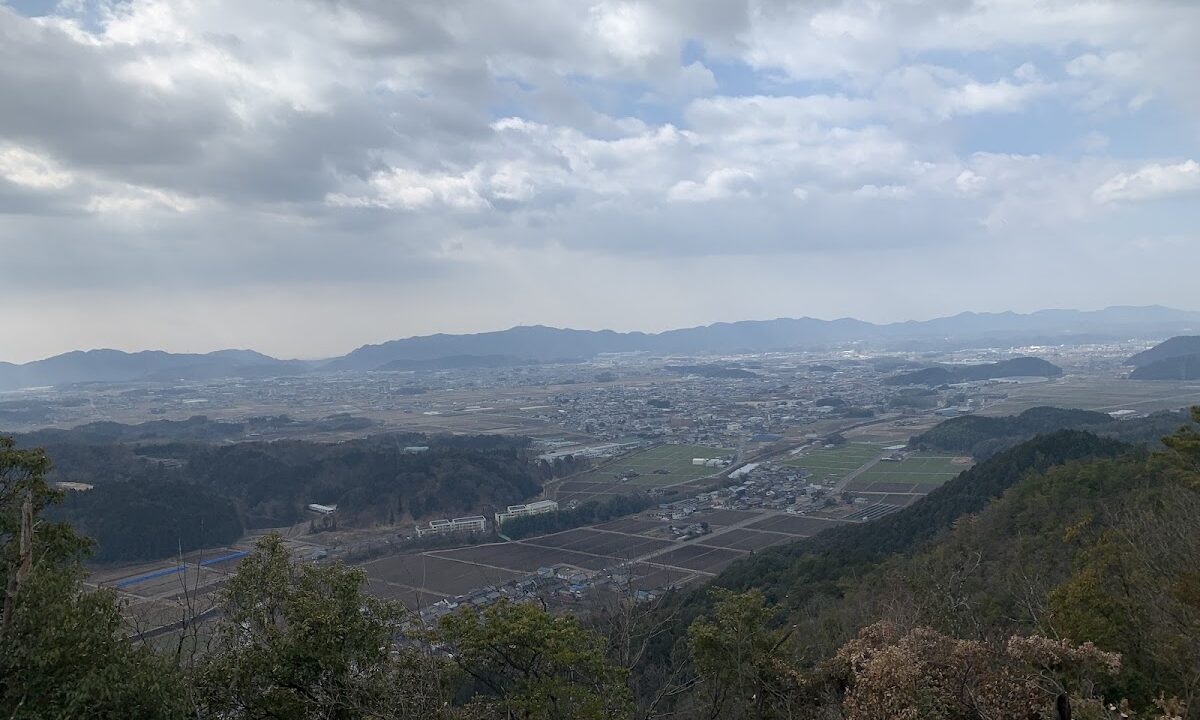
The view from the summit is magnificent, offering a panoramic view of the Nobi Plain. If the weather is good, you can even see as far as Nagoya, allowing you to relive the view seen by the castle lords of that time.
Preservation Status and Maintenance
Although Kajita Castle Ruins are not designated as a historical site, preservation activities are being carried out by the local Tomika town and history enthusiasts. Regular maintenance, such as grass cutting, is performed, and the remains are in relatively good condition.
In recent years, events such as the “Walk-Walk Competition” have been held, and the site has become a beloved local historical heritage. These events include a course that passes through Kiyomizu-dera Temple with Kajita Castle Ruins as the destination, and include historical explanations of events such as the Battle of Dodō.
At the castle’s vertical moats, demonstrations of “castle siege battles” are held, offering visitors the opportunity to experience the battles of a mountain castle during the Sengoku period.
Castle Stamps
Kajita Castle sells several types of castle stamps, which are popular among castle enthusiasts and history buffs. The stamps incorporate the history and features of Kajita Castle into their designs, and many people collect them as a memento of their visit.
Information on where to buy and how to obtain them can be found at the Tomika Town tourist information center and related facilities. Limited editions are sometimes issued, making them must-have items for collectors.
Nearby Attractions
Kiyomizu-dera Temple
Located at the entrance to Kajita Castle, Kiyomizu-dera Temple is an ancient temple said to have been founded by the same monk, Enchin Shonin, who founded Kyoto’s Kiyomizu-dera Temple. Historical buildings such as the main hall and temple gate remain, making it well worth visiting in conjunction with Kajita Castle.
From the temple grounds, you can enjoy views of the Mino Mountains, and in a tranquil atmosphere, you can reflect on history.
Tomika Town Local History Museum
Tomika Town has a local history museum, which displays materials and excavated artifacts related to Kajita Castle. Visiting before visiting the castle ruins will provide a deeper understanding.
There are also exhibits on the region’s history and culture, offering useful information for understanding the historical context in which Kajita Castle existed.
Surrounding Castles
Many other castle ruins are scattered around Kajita Castle:
- Dōdō Castle Ruins: A castle built to attack Kajita Castle, and captured by Oda Nobunaga.
- Seki Castle Ruins: One of the three castles of Chūno, located in Seki City.
- Kukuri Castle Ruins: A mountain castle in Kani City, with strong ties to the Mori clan.
Visiting these castles will help you understand the Sengoku period castle network in eastern Mino.
Historical Significance of Kajita Castle
Role in Oda Nobunaga’s Conquest of Mino
Kajita Castle played an extremely important role in Oda Nobunaga’s conquest of Mino Province. When Sato Kii-no-kami defected to the Oda side, Nobunaga gained a firm base in eastern Mino.
This secured an invasion route from Owari to Mino, paving the way for the subsequent capture of Inabayama Castle (Gifu Castle). Without Kajita Castle, Nobunaga’s conquest of Mino may have been even more difficult.
The Legend of the “Enemy-Repelling Castle”
The fact that Kajita Castle never fell, giving rise to its nickname “Enemy-Repelling Castle,” demonstrates both the castle’s high defensive strength and the appropriateness of the castle lords’ strategic judgments.
Precisely because it was a castle that could not be captured by force, the Saito clan was forced to build Dodō Castle to counter it. This reputation for impregnability was maintained throughout the Sengoku period, becoming a symbol of the castle’s prestige.
Position in Local History
Kajita Castle holds a significant place in the history of Mino Province, particularly the central Mino region. It was a strategic stronghold at the forefront of the conflict between the Saito and Oda clans, influencing its outcome.
Even during the chaotic period following the Honnoji Incident, it was incorporated into the formation of Mori Nagayoshi’s territory, demonstrating its constant involvement in turning points in history. Its history can be said to reflect the very history of Mino during the Sengoku period.
Kajita Castle occupies an important position in the history of Mino Province, particularly the central Mino region. ## Access and Visit Information
Transportation Access
Public Transportation:
- Approximately 15 minutes by taxi or bus from JR Takayama Line “Mino-Ota Station”
- Access by car to the vicinity of Kiyomizu-dera Temple, then walk to the castle.
Car:
- Approximately 10 minutes from Tokai-Kanjo Expressway “Tomika-Seki IC”
- Parking available near Kiyomizu-dera Temple
Precautions When Visiting the Castle
- As it is a mountain castle, comfortable shoes and clothing are essential.
- Insect repellent is recommended in summer.
- Bring drinking water.
- Be careful as the ground can be slippery in rainy weather and winter.
- Visiting in a group is safer than visiting alone.
Estimated Visit Time
- Visiting Kiyomizu-dera Temple: 20-30 minutes
- Visiting the Castle (round trip): 60-80 minutes
- Visiting the Castle Ruins: 30-60 minutes
- Total: Approximately 2-3 hours
We recommend planning with ample time.
Summary
Kajita Castle is a Sengoku period mountain castle located in Tomika-cho, Gifu Prefecture. As its nickname, “The Castle That Repelled the Enemy,” suggests, it was a formidable fortress that never fell. It played a crucial role in Oda Nobunaga’s conquest of Mino Province and served as a base for Sengoku warlords such as the Sato clan, Saito Toshiharu, and Mori Nagayoshi.
Even today, the remains of the castle, including the baileys, stone walls, moats, and vertical trenches, are well-preserved, making it a valuable historical site for learning about the structure of Sengoku period mountain castles. A hiking trail from Kiyomizu-dera Temple is well-maintained, making it easily accessible for history enthusiasts and castle fans.
The view from the 270-meter-high summit is magnificent, offering a panoramic view of the Nobi Plain. While gazing at this scenery, one can reflect on Oda Nobunaga’s conquest of Mino and the Battle of Dodo.
Although not designated as a historical site, preservation efforts continue as an important regional historical heritage, and its value is expected to be passed down to future generations. When touring castles in Gifu Prefecture, be sure to visit Kajita Castle and experience the atmosphere of the Sengoku period.