
Iwatomi Castle (Sakura City, Chiba Prefecture) Complete Guide | Thorough Explanation of History, Remains, and Access Information
Located in Iwatomi-cho, Sakura City, Chiba Prefecture, Iwatomi Castle is a medieval castle that played an important role as a strategic point in Shimosa Province from the Muromachi period to the Sengoku period. Also known as Yatomi Castle, this castle, originally built by the Hara clan and later known as the residence of Hojo Ujikatsu, still retains well-preserved remains such as earthworks and dry moats.
This article comprehensively explains the detailed history of Iwatomi Castle, its castle structure, the highlights of the existing remains, and access information for visitors, providing useful information for castle enthusiasts and history fans.
Basic Information on Iwatomi Castle
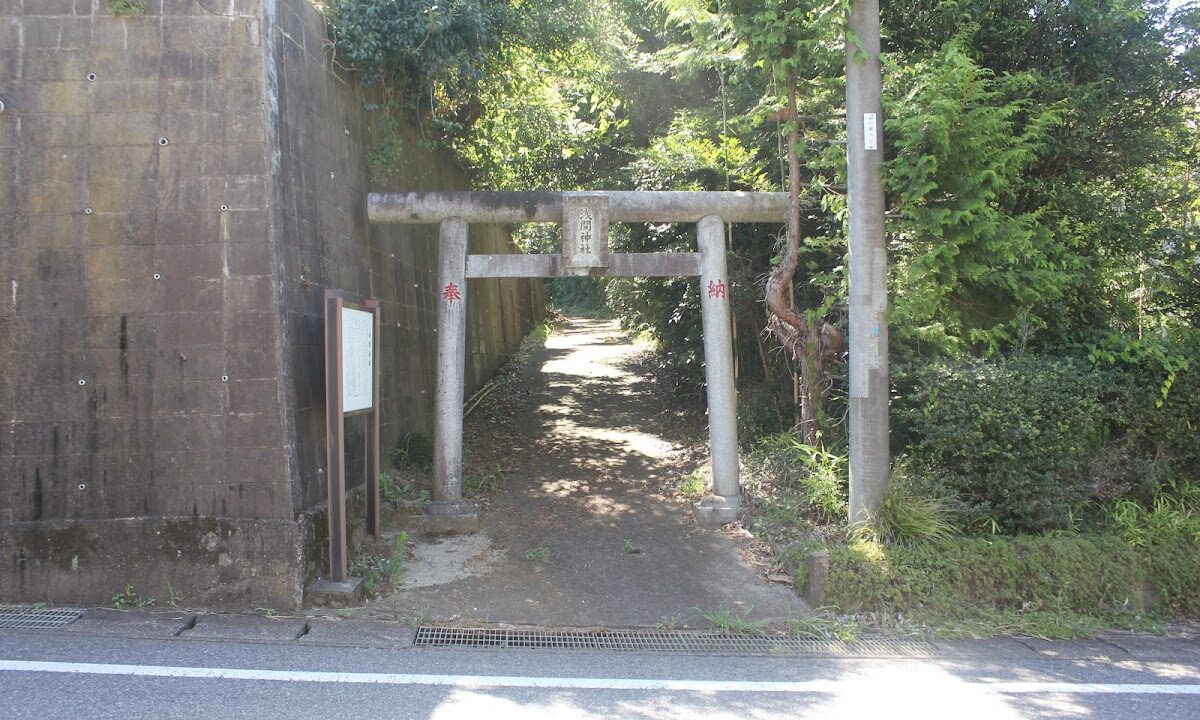
Iwatomi Castle is a hilltop castle located in Iwatomi-cho, Sakura City, Chiba Prefecture. Currently, Asama Shrine is located on the main part of the castle site.
- Location: Iwatomi-cho, Sakura City, Chiba Prefecture
- Alternate Name: Yatomi Castle
- Castle Structure: Hilltop Castle
- Builder: Hara Kagehiro
- Year of Construction: Bunmei 4 (1472)
- Main Lords: Hara Kagehiro, Hara Taneyuki, Hojo Ujikatsu
- Year of Abandonment: Keicho 18 (1613)
- Remains: Earthworks, dry moats, baileys
- Designated Cultural Property: None
History of Iwatomi Castle
Construction and Rule by the Hara Clan
The area where Iwatomi Castle was built was historically ruled by the Shirai clan, a branch of the Chiba clan. However, after the Kyotoku Rebellion which began in Kyotoku 3 (1455), the power dynamics in this region changed dramatically.
In Bunmei 4 (1472), Hara Kagehiro built Iwatomi Castle in this area. The Hara clan was a branch of the Chiba clan and expanded their power as a powerful local lord in this region. Kagehiro’s son, Hara Taneyuki, also served as lord of the castle, and the Hara clan solidified their control over northern Shimosa Province from this castle for generations.
The Hara clan was also known as the Yatomi Hara clan and was a family that wielded influence in the surrounding area, centered around Iwatomi Castle. Throughout the Sengoku period, the Hara clan was deeply involved in the political situation of the region, cooperating and clashing with the Chiba clan and other local lords of Shimosa Province.
The Fall of the Chiba Clan and the Fate of the Hara Clan
At the end of the Sengoku period, the Chiba clan, which ruled Shimosa Province, came under the influence of the Later Hojo clan, based in Odawara. In 1590, during the Odawara Campaign (Siege of Odawara) led by Toyotomi Hideyoshi, the Chiba clan fought on the Hojo side but were defeated, resulting in the extinction of the main Chiba family.
It is believed that the Hara clan also acted on the Hojo side during this battle. As a result of the Odawara Campaign, the Hara clan lost their territory, and Iwatomi Castle was temporarily without a lord. During this period, Iwatomi Castle was in a transitional phase before its fate under the Toyotomi regime was decided.
The Entry of Hojo Ujikatsu and the Early Edo Period
After the Odawara Campaign, when Tokugawa Ieyasu entered the Kanto region, a new lord was appointed to Iwatomi Castle. That lord was Hojo Ujikatsu.
Hojo Ujikatsu was a member of the Odawara Hojo clan and the son of Hojo Ujishige, the lord of Tamanawa Castle (Kamakura City, Kanagawa Prefecture). During the Siege of Odawara, Ujikatsu pledged allegiance to Tokugawa Ieyasu early on, and his territory was secured. Following Tokugawa Ieyasu’s entry into the Kanto region, Ujikatsu entered Iwatomi Castle and governed the area.
Ujikatsu’s entry into Iwatomi Castle is noteworthy as an example of how former Hojo clan members were treated under the Tokugawa regime. Ujikatsu faithfully served as a Tokugawa retainer, governing the surrounding region from Iwatomi Castle.
The Road to Abandonment
In 1613 (Keicho 18), when Hojo Ujikatsu died, his adopted son, Hojo Ujishige, succeeded him. However, in the same year, Ujishige was transferred to the Tomita Domain in Shimotsuke Province (Tochigi Prefecture). Following this transfer, Iwatomi Castle was abandoned.
After its abandonment, Iwatomi Castle lost its function as a fortress and was gradually used as farmland and residential area. However, the main enclosure was preserved as the grounds of Asama Shrine, so important remains such as earthworks and dry moats have survived to the present day.
Throughout the Edo period, the Iwatomi area came under the control of the Sakura Domain and developed as an agricultural region while retaining traces of its castle town past.
Structure and Layout of Iwatomi Castle
Location and Topography of the Castle
Iwatomi Castle is a flatland castle built on a plateau approximately 30 meters above sea level. This plateau is slightly higher than the surrounding area, making it a highly defensible location that skillfully utilizes the natural terrain.
Valleys called “yatsu” developed around the castle, and these served as natural moats. This type of topography is unique to the Shimosa Plateau and provided ideal conditions for the location of a medieval castle.
Layout of the Main Enclosure and Baileys
The main enclosure (shukaku), the central part of Iwatomi Castle, is located where the current Asama Shrine stands. The main enclosure was roughly square in shape and surrounded by earthen ramparts.
Several baileys (kuruwa) were arranged around the main enclosure. These baileys were arranged in a stepped pattern, creating a structure that prevented enemy incursions in stages. Each bailey was demarcated by earthen ramparts and dry moats, and is thought to have functioned as an independent defensive unit.
The castle’s layout exhibits a typical structure of a medieval castle, with defensive facilities arranged in concentric circles around the main enclosure. This structure is presumed to have been gradually developed from the time of the Hara clan to the time of Hojo Ujikatsu.
Characteristics of the Earthen Ramparts
The most prominent remains of Iwatomi Castle are the earthen ramparts. The earthen ramparts surrounding the main enclosure still remain today, reaching a height of approximately 2-3 meters, allowing us to appreciate the scale of the castle at that time.
The earthen ramparts were constructed using the rammed earth method, with the soil compacted to increase their strength. The top of the ramparts is flat, suggesting that fences or walls were once installed there. Furthermore, a dry moat was dug outside the ramparts, creating a defensive system combining the ramparts and moats.
The shape and structure of the ramparts are valuable historical documents illustrating the development of castle construction technology during the Sengoku period. In particular, during the time of Hojo Ujikatsu, it is possible that the castle construction techniques of the Later Hojo clan were introduced, making it an important historical site for studying the history of castles in the Kanto region.
Arrangement of Dry Moats
Multiple dry moats have been identified at Iwatomi Castle. These dry moats demarcated different enclosures and served as important defensive structures to prevent enemy intrusion.
The dry moat surrounding the main enclosure is estimated to be approximately 5-8 meters wide and 3-4 meters deep. The bottom of the dry moat is not flat, but has a V-shaped or U-shaped cross-section, a design intended to hinder the movement of enemy soldiers.
Some of the dry moats are still clearly visible today and are one of the highlights when exploring the castle ruins. Around the dry moats, you can observe the ingenuity of the defensive lines that utilized the elevation differences of the terrain.
Entrances and Exits
The koguchi (entrances to the castle) are thought to have been located on the south and east sides of the main enclosure. These entrances were not simple openings; they incorporated features to enhance defense, such as curved earthworks and square-shaped spaces.
In particular, the southern entrance, presumed to be the main gate (Oteguchi), likely had a complex structure, suggesting a design that effectively prevented enemy intrusion.
Existing Remains and Highlights
Main Enclosure Remains within the Asama Shrine Grounds
The Asama Shrine is located in the center of the Iwatomi Castle ruins, and the shrine grounds best preserve the remains of the main enclosure. Upon passing through the shrine’s torii gate, you can immediately see the rise of the earthworks.
Walking through the shrine grounds, the presence of the surrounding earthworks becomes clearly apparent, allowing you to truly appreciate the scale of the former castle. The area where the Asama Shrine building stands is believed to be the center of the main enclosure, where the lord’s residence is thought to have been located.
The shrine grounds are well-maintained, allowing for safe observation of the remains. Walking along the top of the earthworks, in particular, allows you to experience the castle’s defensive lines.
Observation Points for Earthworks and Dry Moats
To the east and north of Asama Shrine, well-preserved earthworks and dry moats remain. These are the most important highlights of Iwatomi Castle and a must-see for castle enthusiasts.
The earthworks are high, and looking out from the top allows you to relive the view of the castle’s soldiers at the time. Furthermore, the dry moats remaining outside the earthworks clearly show their depth and width, providing valuable information for understanding the defensive system of a medieval castle.
Visiting after rain is especially recommended, as the topography of the dry moats is more clearly visible.
Topography of the Surrounding Area and Traces of the Castle Town
The area surrounding the Iwatomi Castle ruins retains traces of the former castle town in its topography and road layout. Looking around from the castle ruins, the elevation differences of the plateau and the valley topography are clearly visible, allowing one to appreciate the cleverness of the castle’s location.
In the settlements surrounding the castle ruins, some areas show remnants of the medieval period in the layout of houses and roads. The name of Iwatomi Town itself conveys the presence of the former castle and its lord.
When exploring the castle ruins, paying attention not only to the central part of the castle but also to the topography of the surrounding area and the layout of the settlements will allow for a deeper understanding of Iwatomi Castle’s history.
Seasonal Scenery
Iwatomi Castle ruins offer beautiful scenery throughout the four seasons. In spring, you can enjoy cherry blossoms and fresh greenery; in summer, deep green; in autumn, vibrant autumn leaves; and in winter, the shape of the remains after the leaves have fallen can be clearly observed.
Especially in winter, when the vegetation withers, the shape of the earthworks and dry moats is most easily observed. For those who want to investigate the castle’s structure in detail, a winter visit is recommended.
Access Information
Access by Public Transportation
When accessing Iwatomi Castle Ruins by public transportation, the nearest station is Monoi Station on the JR Sobu Main Line.
[Route from JR Monoi Station]
- Get off at JR Monoi Station on the JR Sobu Main Line
- Approximately 20-25 minutes on foot from the station (approximately 1.5 km)
- Exit the station and head north, taking the prefectural road towards Iwatomi Town.
Monoi Station is a local train stop only, so you will need to take a local train from Chiba Station or Sakura Station. While the castle ruins are within walking distance from the station, it is a bit of a distance, so it is recommended to allow ample time for your visit.
【Access by Bus】
While Sakura City Community Buses and regular bus routes may operate, the number of services is limited, so it is recommended to check the Sakura City official website or transportation information in advance.
Access by Car
When accessing by car, using the Higashi-Kanto Expressway or National Route 51 is convenient.
【Main Route】
- Approximately 10 minutes from Sakura IC on the Higashi-Kanto Expressway
- From National Route 51, take the prefectural road to Iwatomi-cho
- For car navigation, search for “Asama Shrine, Iwatomi-cho, Sakura City” or the address “Iwatomi-cho, Sakura City, Chiba Prefecture”
【Parking Information】
Asama Shrine has a small parking space for visitors, but the number of spaces is limited. If the parking lot is full, you will need to park in a nearby street parking space (a place that does not obstruct traffic) or park a short distance away and access on foot.
When visiting, please be considerate of the lives of local residents and, if parking on the street, be careful not to obstruct traffic.
Nearby Tourist Attractions
When visiting Iwatomi Castle Ruins, we recommend also visiting other historical sites in Sakura City.
[Sakura Castle Ruins Park]
This is a representative castle ruin of Sakura City, the site of the residence of the Sakura Domain during the Edo period. Located about 15 minutes by car from Iwatomi Castle, it has been developed into a vast park. The earthworks and dry moats are well-preserved, and the National Museum of Japanese History is adjacent.
[Samurai Residences]
Samurai residences from the Sakura castle town are preserved and open to the public, allowing visitors to learn about the life of samurai during the Edo period.
[Sakura Juntendo Memorial Museum]
This is the historical site of Juntendo, founded by Sato Taizen, a Dutch studies physician of the late Edo period, where you can learn about the history of Japanese medicine.
Cultural Value of Iwatomi Castle
Importance in Medieval Castle Research
Iwatomi Castle is one of the medieval castle sites remaining in Chiba Prefecture with relatively well-preserved remains. Basic castle elements such as earthworks and dry moats are clearly preserved, making it a valuable resource for studying Sengoku period castle construction techniques and defensive systems.
In particular, its history, from being the castle of the Hara clan, a local lord, to becoming the residence of Hojo Ujikatsu, a member of the Later Hojo clan, is a prime example of the political changes from the late Sengoku period to the early Edo period.
Significance in Local History
Iwatomi Castle is an important historical site for understanding the history of Sakura City and the Shimosa region. The Hara clan’s rule centered around this castle, their relationship with the Chiba clan, and Hojo Ujikatsu’s rule under the Tokugawa shogunate all constitute important pages in local history.
The current place names and origins of Iwatomi Town are deeply intertwined with the existence of this castle, and it is positioned as a historical heritage site that forms the identity of the region.
Challenges of Preservation and Utilization
While the portion of the Iwatomi Castle site protected as part of the Asama Shrine grounds is relatively well preserved, some of the surrounding remains have been lost due to development and agricultural conversion.
How to preserve and utilize the Iwatomi Castle site as a regional historical heritage site will be one of the challenges for Sakura City’s cultural property administration. Further efforts are expected, such as the installation of information boards, maintenance of the remains, and provision of information to local residents and visitors.
Precautions When Visiting
Manners and Safety
The Iwatomi Castle site is within the grounds of Asama Shrine and is adjacent to the living area of local residents. Please pay attention to the following points when visiting:
- Respect for the Shrine: Asama Shrine is still a place of worship. Please observe proper worship etiquette and view the site quietly.
- Treading on Private Property: There is a lot of private property around the castle ruins. Please do not enter without permission.
- Protection of Remains: Please observe carefully so as not to damage the earthworks or dry moats.
- Take Your Trash Home: Please take all your trash home and cooperate in environmental conservation.
- Ensure Safety: When observing the earthworks and dry moats, please watch your step, especially during and after rain, as they can be slippery.
Regarding Photography
Photography at the castle ruins is generally permitted, but please be considerate of the shrine’s main hall and the privacy of local residents. Regarding drone use, please be considerate of surrounding residents and comply with aviation laws before using a drone.
Estimated Visiting Time
For a thorough visit to Iwatomi Castle Ruins, allow approximately 1 to 1.5 hours. While a visit to the main enclosure area can be completed in about 30 minutes, it’s recommended to allow around two hours to explore the surrounding terrain and remnants of the castle town.
Summary
Iwatomi Castle in Sakura City, Chiba Prefecture, is a valuable castle ruin that conveys the history from the Muromachi period to the early Edo period. From its construction by Hara Kagehiro, through the rule of the Hara clan, and its time as the residence of Hojo Ujikatsu, this castle played an important role in the history of Shimosa Province for approximately 140 years before its abandonment.
The remaining earthworks and dry moats are valuable remnants that demonstrate the construction techniques and defensive systems of the time, making it a historical site worth visiting for castle enthusiasts and history buffs. In the tranquil grounds of Asama Shrine, you can feel the spirit of the Sengoku period while enjoying the charm of a medieval castle.
When visiting Sakura City, why not visit Iwatomi Castle ruins along with Sakura Castle ruins and experience the rich history and culture of this region?


