Complete Guide to Isaku Castle (Hioki City, Kagoshima Prefecture) | A Thorough Explanation of the History and Highlights of the Birthplace of the Shimazu Clan
What is Isaku Castle?
Isaku Castle is a medieval mountain castle located in Nakahara, Fukiage-cho, Hioki City, Kagoshima Prefecture. It is designated as a Kagoshima Prefecture Historic Site and is known as one of the largest castle ruins in southern Kyushu.
This castle was the residence of Shimazu Tadayoshi (Nisshinsai), the restorer of the Shimazu clan that dominated Kyushu during the Sengoku period. It also holds historical significance as the birthplace of his grandsons, the “Four Shimazu Brothers”: Shimazu Yoshihisa, Yoshihiro, Toshihisa, and Iehisa.
Built on a Shirasu plateau at an altitude of approximately 72 meters, Isaku Castle boasts a vast castle area spanning approximately 1500 meters east-west and 750 meters north-south, surrounded by steep slopes, making it a natural stronghold. The Isaku River flowed to the south, serving as a natural moat.
History of Isaku Castle
Establishment and Early History of the Isaku Shimazu Clan
The history of Isaku Castle dates back to the late Kamakura period. The Isaku Shimazu clan is said to have begun in 1281 when Shimazu Hisanaga, the second son of Shimazu Hisatsune (the third head of the Shimazu clan), was appointed as the jitō (land steward) of Isaku Manor.
Initially, this castle was called “Nakayama Castle.” During the Nanboku-chō period, it functioned as a base for the Isaku clan, a branch of the Shimazu clan, and became an important base for the expansion of the Shimazu family’s power in Satsuma Province.
The Era of Shimazu Tadayoshi (Nisshin-sai)
Isaku Castle came to prominence during the era of Shimazu Tadayoshi, the tenth head of the Isaku Shimazu family. Tadayoshi, also known as “Nisshin-sai” or “Nisshin-kō,” is revered as the “restorer of the Shimazu clan.” Tadayoshi, while the head of the Isaku Shimazu clan, was adopted into the Sagami Shimazu family and achieved the unification of the Shimazu clan, which had been divided since the Kamakura period. Using Isaku Castle as his base, he embarked on the unification of southern Kyushu, establishing the foundation of the Shimazu clan as a Sengoku daimyo (warring states lord).
Tadayoshi’s son, Shimazu Takahisa, succeeded to the main family and became the head of the Shimazu clan, solidifying their position as a Sengoku daimyo. Takahisa’s four sons—Yoshihisa, Yoshihiro, Toshihisa, and Iehisa—the four Shimazu brothers, were all born at Isaku Castle and would later play a key role in unifying Kyushu.
The Role and Transformation of Isaku Castle
The Isaku Shimazu clan used this castle as their residence for approximately 250 years. Until Shimazu Takahisa moved to Ijuin, Isaku Castle remained an important base for the Shimazu clan.
During the Edo period, many castles were abandoned due to the “One Castle Per Province” decree of 1615. However, Isaku Castle held special significance as the base of the Shimazu clan during the Sengoku period, and received special treatment, with samurai from Kagoshima Castle town taking turns serving as “guards” day and night. This demonstrates how important a sacred place Isaku Castle was to the Shimazu family.
Structure and Layout of Isaku Castle
Overall Composition
Isaku Castle is a complex castle composed of multiple baileys (kuruma). The following are known as the main baileys:
- Kamemaru Castle (Honmaru)
- Yamano Castle
- Kurano Castle
- Higashi Castle
- Nishi Castle
These baileys, connected in a chain, formed a vast castle area.
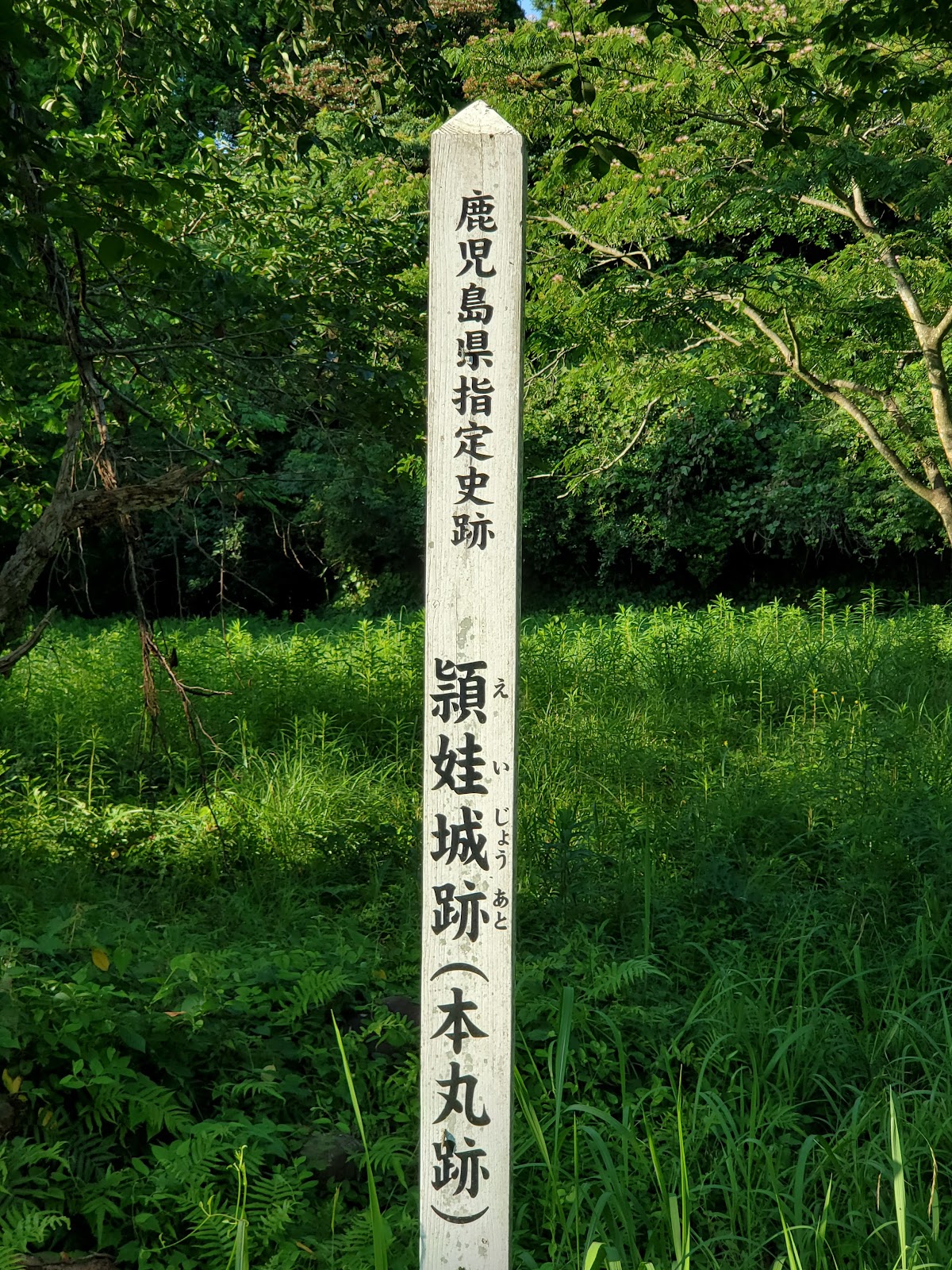
Kamemaru Castle Ruins (Honmaru)
Kamemaru Castle is the Honmaru, the core of Isaku Castle, and the most important section within the castle. A stone monument commemorating the births of the four Shimazu brothers—Yoshihisa, Yoshihiro, Toshihisa, and Iehisa—stands here, conveying the history of the Shimazu clan to visitors.
The remains of earthworks and baileys are well-preserved at the site of the main keep, providing valuable historical information for understanding the structure of medieval mountain castles.
Yamanojo Castle Ruins
Yamanojo Castle was one of the main baileys of Isaku Castle, strategically located for defense. Traces of earthworks and dry moats can still be seen today, revealing the skillful design of the castle’s layout at the time.
Kuranojo Castle Ruins
Kuranojo Castle, as its name suggests, is a bailey thought to have been used for storing supplies. It is presumed to have been an important section responsible for the castle’s economic and logistical functions.
Higashinojo Castle and Nishinojo Castle
Higashinojo Castle and Nishinojo Castle functioned as outer baileys protecting the main keep. The coordinated operation of these baileys demonstrates the multi-layered defensive system they created.
Remains of Isaku Castle
Existing Remains
The following remains still exist at Isaku Castle:
- Earthworks: Earthworks that demarcated each enclosure remain in good condition.
- Dry Moats: Traces of dry moats that served as defensive structures separating enclosures.
- Enclosures: Multiple flat areas have been identified, indicating the castle’s structure at the time.
- Cut Slopes: Steep slopes created by excavating the Shirasu plateau.
These remains exhibit typical characteristics of medieval Satsuma mountain castles and hold significant archaeological value.
Tahōji Temple Ruins
Near Isaku Castle, the ruins of Tahōji Temple also remain. Tahōji Temple was a temple closely associated with the Isaku Shimazu clan and is thought to have functioned in conjunction with the castle. The temple ruins provide insight into the layout of religious facilities at the time.
Highlights of Isaku Castle
Monument Commemorating the Birth of the Shimazu Four Brothers
At the site of Kamemaru Castle, there is a monument commemorating the birth of the four Shimazu brothers: Yoshihisa, Yoshihiro, Toshihisa, and Iehisa. These four brothers later played a key role in unifying Kyushu, and Yoshihiro, in particular, is known as a fearsome general, feared as “Oni Shimazu” (Demon Shimazu), during the Korean campaigns and the Battle of Sekigahara.
This monument is an important historical landmark that conveys the fact that these representative warlords of Kyushu during the Sengoku period were born in this area.
Information Boards and Explanations
Information boards are installed throughout the castle site, providing detailed explanations about the castle’s history and structure. Even first-time visitors can understand the overall picture of Isaku Castle by referring to these boards.
Views
Located on a plateau approximately 72 meters above sea level, Isaku Castle offers panoramic views of the surrounding landscape. The Isaku River flows to the south, allowing visitors to appreciate the natural moat-like terrain.
From the west side of the castle, one can overlook the plains of Fukiage, demonstrating the strategic importance of this location.
Photo Spots at Isaku Castle
Here are some recommended photo spots when visiting Isaku Castle:
- Stone Monument at Kamemaru Castle Ruins: The stone monument commemorating the birth of the four Shimazu brothers is a classic spot for commemorative photos.
- Earthwork Remains: The well-preserved earthworks are an excellent subject for conveying the atmosphere of a medieval mountain castle.
- View from the Enclosure: The view from the plateau allows you to imagine the scenery seen by the castle lords of the time.
- Information Board and Remains: Taking a photo of the information board and remains together makes for a valuable record.
Access and Visiting Information
Location
Address: Nakahara, Fukiage-cho, Hioki City, Kagoshima Prefecture
Transportation Access
Access by Car:
- Approximately 40 minutes south from Kagoshima City on National Route 270
- Approximately 20 minutes from the Minami-Kyushu Expressway “Ijuin IC”
Public Transportation:
- Approximately 30 minutes by bus or taxi from JR Kagoshima Main Line “Ijuin Station”
Parking
There is a parking lot at the Isaku Castle ruins. It is free to use, but space is limited, so early arrival is recommended, especially on holidays.
Visiting Hours and Fees
- Visiting Hours: No specific restrictions (daytime visits are recommended)
- Admission Fee: Free
- Estimated Time Required: Approximately 1.5 to 2 hours for a thorough visit
Precautions for Visiting
- As it is a mountain castle, comfortable walking shoes are recommended.
- Insect repellent is useful during the summer months.
- Bring drinking water with you.
- Be careful as the ground can be slippery during and after rain.
Nearby Tourist Attractions
Nisshin-ko Iroha Poem Memorial
Memorials commemorating the “Iroha Poem,” said to have been composed by Shimazu Tadayoshi (Nisshin-sai), are scattered throughout Hioki City. Visiting Isaku Castle in conjunction with this location will allow you to gain a deeper understanding of Lord Nisshin’s footsteps.
Fukiagehama Beach
Fukiagehama Beach, one of Japan’s three largest sand dunes, is about a 15-minute drive from Isaku Castle. You can enjoy the beautiful coastline.
Historical Sites Related to Myoenji Pilgrimage
Historical sites related to the “Myoenji Pilgrimage,” which honors Shimazu Yoshihiro, are scattered throughout the area. This is especially recommended for those interested in the history of the Shimazu clan.
Historical Significance of Isaku Castle and the Shimazu Clan
The Starting Point of Shimazu Clan Unification
Isaku Castle was the starting point for unifying the divided Shimazu clan and establishing the Shimazu clan as a Sengoku daimyo (warring states lord). The political and military activities conducted by Shimazu Tadayoshi from this castle formed the foundation for the subsequent development of the Shimazu clan.
The Origin of the Shimazu Four Brothers
The fact that the Shimazu four brothers, who played a key role in unifying Kyushu, were born in this castle further enhances the historical value of Isaku Castle. In particular, the second son, Shimazu Yoshihiro, is a renowned general known for his exploits in the Korean campaigns and the “Shimazu retreat” at the Battle of Sekigahara, leaving his mark on Japanese Sengoku period history.
A Sacred Site in the Satsuma Domain
Even into the Edo period, the Shimazu family continued to treat Isaku Castle as a special place. The special treatment, including the placement of a “guard” even after the “One Castle Per Province” decree, indicates that this castle was not merely a military facility, but a sacred site symbolizing the identity of the Shimazu family.
Preservation and Utilization of Isaku Castle
Cultural Property Designation
Isaku Castle is protected as a Kagoshima Prefecture designated historical site, and efforts are being made to preserve its remains. Appropriate management and utilization are being carried out, primarily by the Hioki City Board of Education.
Engagement with the Local Community
In the local city of Hioki, efforts are being made to utilize Isaku Castle as a local historical heritage site for educational and tourism purposes. Regular tours and history lectures are sometimes held.
Future Challenges
To further utilize Isaku Castle, the following challenges exist:
- More detailed investigation and research of the remains
- Improvement of facilities for visitors
- Strengthening information dissemination
- Collaboration with surrounding historical resources
By addressing these challenges, the historical value of Isaku Castle can be conveyed to a wider audience.
Summary
Isaku Castle is an important historical site indispensable to understanding the history of the Shimazu clan, a leading daimyo family of Kyushu during the Sengoku period. It was the residence of Shimazu Tadayoshi, the restorer of the Shimazu clan, and the birthplace of the four Shimazu brothers, giving it special significance in the history of Satsuma.
The vast castle grounds, spanning approximately 1500 meters east-west and 750 meters north-south, retain well-preserved remains such as earthworks and baileys, making them valuable historical resources for understanding the structure of medieval mountain castles. When visiting Kagoshima Prefecture, be sure to visit Isaku Castle and trace the footsteps of the Shimazu clan, who played a significant role in Kyushu during the Sengoku period. Standing atop the Shirasu plateau and gazing at the view that Shimazu Tadayoshi and the four Shimazu brothers must have seen will deepen your understanding of history.
Isaku Castle is a tourist spot that can be enjoyed not only by history buffs but also by families, as it is free to visit and has ample parking. Why not enjoy a leisurely stroll through the castle ruins while experiencing the rich nature and history of Hioki City?