Complete Guide to Izaki Castle Ruins | Thorough Explanation of History, Remains, Castle Stamps, and Access Information
Izaki Castle is a Sengoku period mountain castle located in Izaki, Fukuchiyama City, Kyoto Prefecture. Situated across the Yura River from Fukuchiyama Castle, it is known as a historical fortress that served as the stage for Akechi Mitsuhide’s conquest of Tanba Province. Currently, it is maintained as Shiroyama Park within Sandanike Park, and the remains such as earthworks and moats are well-preserved, conveying the appearance of a Sengoku period mountain castle.
This article comprehensively covers everything you need to know before visiting the castle ruins, including the history of Izaki Castle, its structural features, highlights, castle stamp information, and access methods.
History of Izaki Castle
Construction and the Rule of the Shiomi Clan
Izaki Castle is believed to have been built during the Tenbun era (1532-1555) by Shiomi Chikuzen-no-kami Toshikatsu. According to the *Tanba-shi* and the *Shiomi Family Tree*, Shiomi Toshikatsu was the third son of Shiomi Daizen-no-taifu Yorikatsu, lord of Yokoyama Castle. He built his castle in Inozaki to establish his own power base in the region.
The location, situated on a hill 64.9 meters above sea level (approximately 40 meters relative height) overlooking the Yura River, held strategic importance as it controlled a key waterway. Overlooking the Fukuchiyama Basin, it is believed to have functioned as a symbolic base for the Shiomi clan’s influence in the Tanba region.
After Shiomi Toshikatsu, his son, Shiomi Harima-no-kami Ietoshi, succeeded him as lord of the castle. The Shiomi clan, as local lords of Tanba, maintained a certain level of power in the region, but it is presumed that in the late Sengoku period, they survived through their relationships with powerful local clans of Tanba such as the Hatano and Akai clans.
Akechi Mitsuhide’s Conquest of Tanba and the Fall of Inozaki Castle
The fate of Inozaki Castle changed dramatically with Akechi Mitsuhide’s conquest of Tanba during the Tensho era. Acting on orders from Oda Nobunaga, Akechi Mitsuhide began his full-scale conquest of Tanba in 1575 (Tensho 3).
The conquest of Tanba proved extremely difficult, encountering strong resistance from Hatano Hideharu’s Yagami Castle and Akai Naomasa (Akuemon)’s Kuroi Castle. However, Akai Naomasa died of illness in 1578 (Tensho 6), and Yagami Castle fell the following year, 1579 (Tensho 7), indicating that Mitsuhide’s offensive was gradually gaining results.
It is believed that Shiomi Ietoshi of Inozaki Castle, seeing the situation in Tanba, judged that resistance was futile. According to the “Comprehensive Survey of Japanese Castles,” in 1579, before the invasion of Akechi’s army, Shiomi Ietoshi is said to have set fire to the castle himself and died in battle.
This dramatic end demonstrated his pride as a Sengoku period warlord, but it also marked the end of Inozaki Castle’s history. Mitsuhide subsequently built a new castle in Fukuchiyama, which became his base for controlling Tanba Province.
From Abandonment to the Present
Inozaki Castle was abandoned after Shiomi Ietoshi’s death and was never used as a castle again. Throughout the Edo period, the castle site was left as a forest, but fortunately, this resulted in the excellent preservation of the remains.
In modern times, this area has been developed as part of Sandanike Park and is now a place of recreation for citizens known as “Shiroyama Park.” Care was taken during the park’s development to avoid damaging the historical remains, and it is preserved as a valuable historical site where one can experience the appearance of a Sengoku period mountain castle.
Layout and Structure of Inozaki Castle
Basic Structure of the Castle
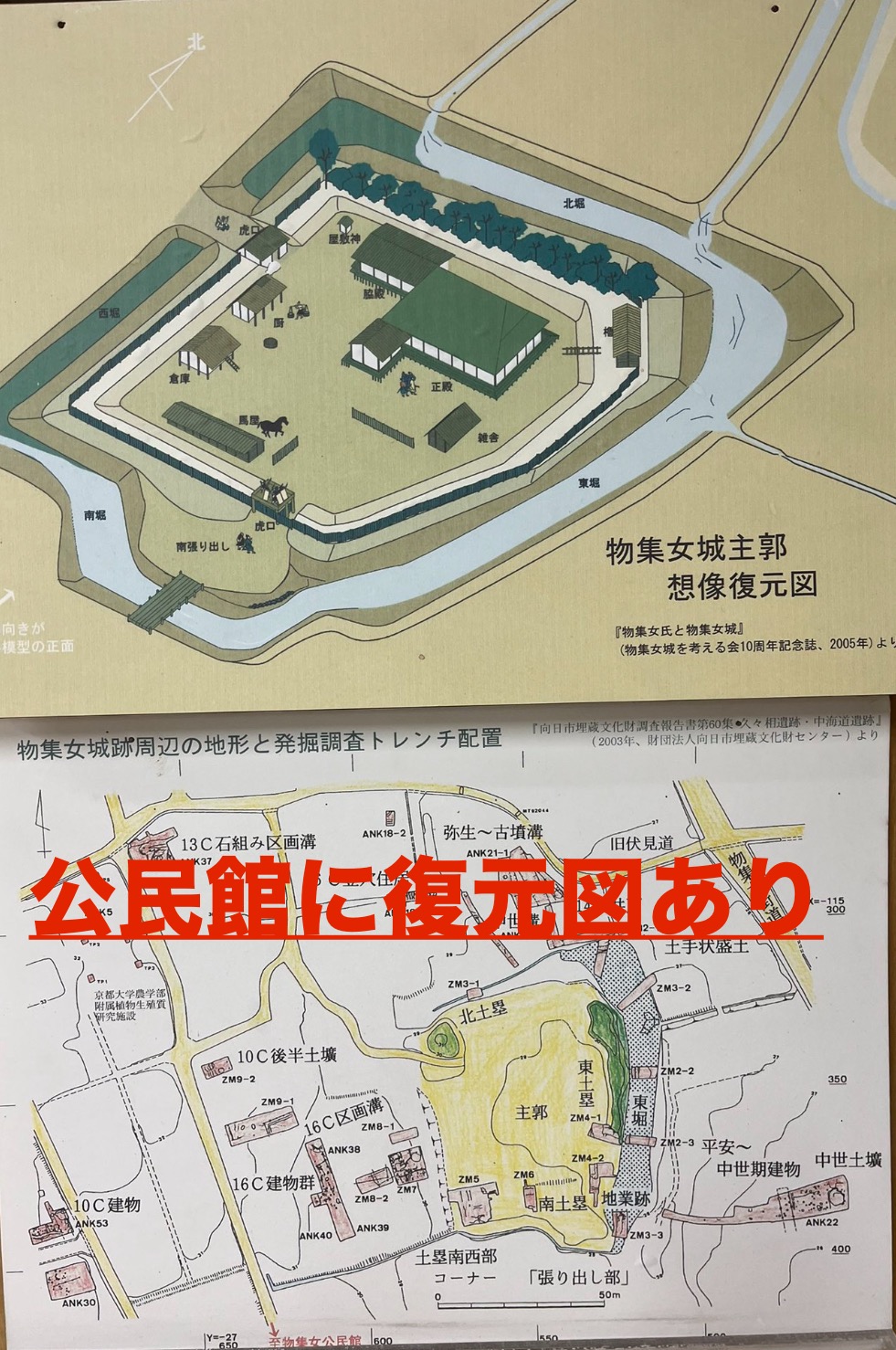
Inozaki Castle is a typical mid-Sengoku period mountain castle, strongly retaining the characteristics of mountain castles from the Tenbun to Eiroku periods (1532-1570). It has a basic structure of leveling the hilltop to create a large main enclosure (honmaru), surrounded by a moat and earthen ramparts.
Although the castle area is relatively compact, the layout makes maximum use of the limited terrain, exhibiting characteristics of a transitional period from medieval mountain castles to early modern castles. No stone walls were used; it is a typical earthen castle constructed solely through civil engineering.
Characteristics of the Main Enclosure (Honmaru)
The main enclosure, the heart of the castle, is located almost in the center of the hilltop. A relatively large leveled area is secured, suggesting that the lord’s residence or other important buildings were constructed there. Even today, the flat surface is clearly visible, allowing us to imagine its appearance in the past.
From the main enclosure, you can enjoy a panoramic view of Fukuchiyama city, the flow of the Yura River, and the direction of Fukuchiyama Castle on the opposite bank. This excellent view likely played an important role in military surveillance.
Earthworks and Moats
The greatest highlight of Inozaki Castle is its well-preserved earthworks and moats. The moats surrounding the main enclosure functioned as a defensive structure to prevent enemy intrusion. They are still clearly visible today, and their depth and width suggest the high level of defense at the time.
The earthworks were built inside the moats, and combined with the moats, they enhanced the defensive effect. Some of the earthworks remain as high as they were, allowing you to appreciate the castle-building techniques of the Sengoku period. These remains have been largely untouched by later alterations, so they retain much of their original appearance.
Arrangement of Enclosures
Several enclosures (kuruma) are arranged around the main enclosure. The remains of the baileys, created by leveling the slopes, are still clearly visible in the topography, allowing us to understand the multi-layered defensive structure.
These baileys are thought to have served to progressively hinder access to the main enclosure, and were also used as troop garrisons and storage areas for supplies. Although small in scale, it possesses the necessary functions of a mountain castle from the Sengoku period.
Entrance and Passages
The location of the entrance to the castle, the “koguchi,” can also be estimated from the topography. The passage to the main enclosure is cleverly designed to be disadvantageous to attackers, revealing a design philosophy that prioritized defense.
While the current walking paths were constructed in later periods, some may utilize the original passages, allowing visitors to imagine the movement patterns of the time as they explore the castle grounds.
Highlights of Inozaki Castle Ruins
Development as Shiroyama Park
The Inozaki Castle Ruins are developed as “Shiroyama Park” as part of Sandanike Park. Walking paths and information boards are provided, making it easy for first-time visitors to explore. The site has been carefully maintained to avoid damaging the remains, and important structures such as earthworks and moats have been preserved as they were. Regular maintenance, including grass cutting, ensures that the remains are easily observed.
Points for Observing the Remains
When visiting the castle ruins, paying attention to the following points will help you understand Inozaki Castle more deeply.
Observation of the Horizontal Moat
The horizontal moat surrounding the main enclosure is the most clearly preserved structure. There are places where you can walk along the bottom of the moat, allowing you to experience its depth and width. The shape and curves of the moat can reveal the intentions of the castle builder.
Height and Shape of Earthworks
The earthworks remaining inside the horizontal moat vary in height depending on the location. They tend to be built higher in areas where defense was particularly important. Walking on top of the earthworks allows you to experience the perspectives of lookouts and defenders.
Terrain Differences in Enclosures
The enclosures built on slopes remain clearly as terraces. Observing these elevation changes helps to understand the castle’s three-dimensional structure.
View from the Main Enclosure
From the main enclosure at the summit, you can enjoy a panoramic view of Fukuchiyama city. On a clear day, you can see the Yura River and the surrounding mountains, giving you a real sense of the castle’s strategic value.
Charm as a Cherry Blossom Spot
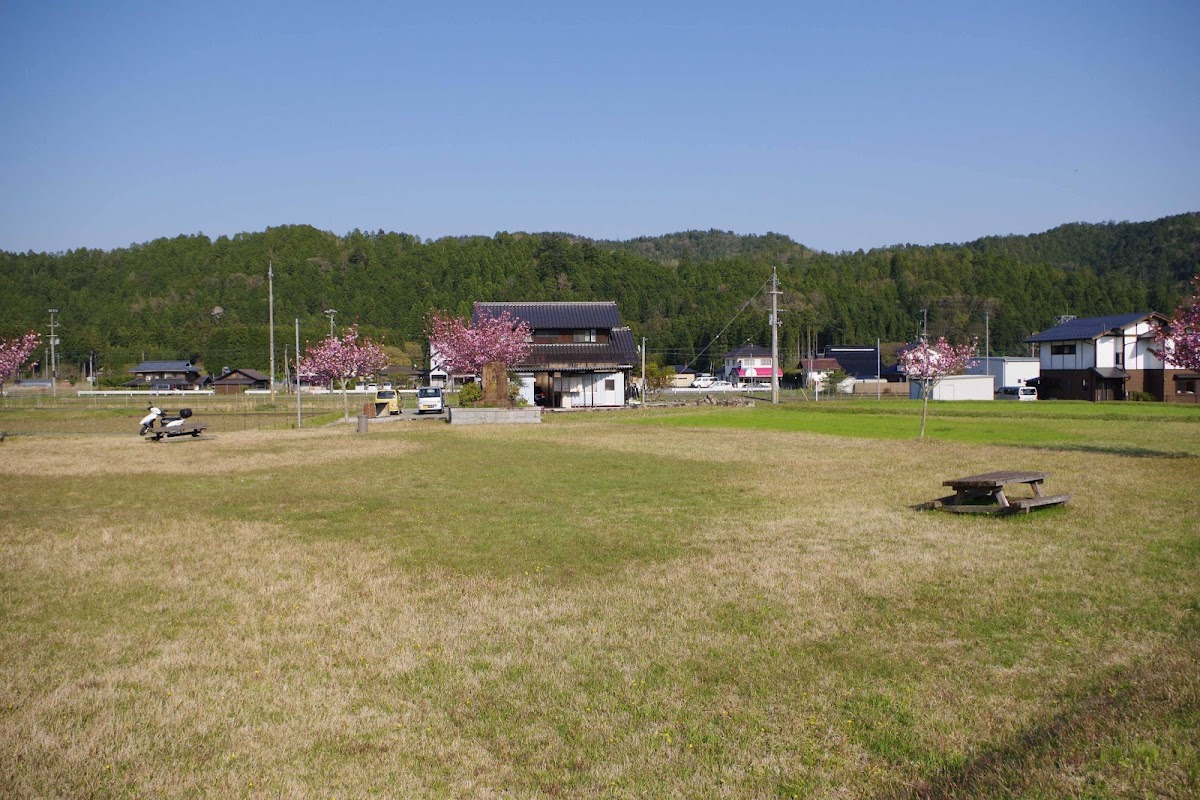
Shiroyama Park is also known as a cherry blossom viewing spot, and in spring it is bustling with many visitors. The cherry blossoms blooming on the castle ruins create a unique landscape where historical atmosphere and natural beauty harmonize.
During cherry blossom season, the contrast between the ruins such as earthworks and moats and the cherry blossoms is beautiful, making it ideal for photography. It is a valuable spot where you can enjoy historical walking and cherry blossom viewing at the same time.
Connection with Sandanike Park
Sandanike Park, where the Inozaki Castle ruins are located, is a vast comprehensive park with a zoo, botanical garden, and local history museum. You can enjoy these facilities in conjunction with exploring the castle ruins.
In particular, the Fukuchiyama City Local History Museum features exhibits on local history and Akechi Mitsuhide, allowing visitors to learn more about the historical background of Inozaki Castle.
About the Castle Stamp
How to Obtain the Castle Stamp
The Inozaki Castle stamp is a popular souvenir for visitors to the castle ruins. The stamp is sold inside the Fukuchiyama Castle keep and at the Fukuchiyama Tourist Information Center.
The stamp features the name of Inozaki Castle and the Shiomi clan’s family crest, making it a valuable item for collectors. Visiting both Fukuchiyama Castle and Inozaki Castle to collect both stamps is highly recommended.
Important Points Regarding Obtaining the Castle Stamp
Since the castle stamp is not sold at the castle ruins themselves, it’s important to check where to obtain it beforehand. It’s a good idea to check the opening hours and closing days of the Fukuchiyama Castle keep before visiting.
As part of the “Forest of Kyoto” castle stamp pilgrimage, the Inozaki Castle stamp is also included. Visiting it along with the surrounding castle ruins allows for a deeper experience of the Sengoku period history of the Tanba region.
Access and Visiting Information
Location and Basic Information
Location: Inozaki, Fukuchiyama City, Kyoto Prefecture
Alternate Names: Kenmotsuyama Castle, Inozaki Castle Mountain
Castle Structure: Mountain Castle (Hilltop Castle)
Year of Construction: Tenbun Era (1532-1555)
Builder: Shiomi Chikuzen-no-kami Toshikatsu
Elevation: 64.9 meters (Relative height approximately 40 meters)
Remains: Earthworks, moats, baileys
Designation: City Historic Site (Confirmation required)
Access by Car
If using the Maizuru-Wakasa Expressway, it is approximately 10 minutes from Fukuchiyama IC. Sandanike Park has several parking lots, and it’s convenient to use the one closest to Shiroyama Park. However, there are only a few small parking spaces (2-3 cars) right next to the castle ruins, so during busy times, you’ll need to use the park’s general parking lot.
Setting “Sandanike Park” or “Fukuchiyama City Zoo” as your destination on your car navigation system will make it easier to find.
Access by Public Transportation
The nearest station is Fukuchiyama Station on the JR San’in Main Line/Fukuchiyama Line. From the station, you can take a local bus or taxi.
Take the Kyoto Kotsu Bus and get off at the “Sandanike” bus stop; it’s about a 5-minute walk from there. Since bus service is limited, it’s recommended to check the timetable in advance.
If you take a taxi, it will take about 10 minutes from Fukuchiyama Station.
Access on Foot
If walking from Fukuchiyama Station, the distance is about 3 kilometers, taking about 40 minutes. If the weather is nice, walking along the Yura River via Fukuchiyama Castle is also a scenic route. While walking paths are maintained within the castle ruins, the terrain is somewhat uneven due to it being a mountain castle. We recommend wearing comfortable shoes.
Visiting Hours and Required Time
Shiroyama Park is always open and free to visit. There is no entrance fee.
A thorough visit to the castle ruins takes approximately 30 minutes to 1 hour. Including photography and breaks, allow 1 to 1.5 hours.
If visiting other facilities in Sandanike Park, we recommend allocating about half a day.
Points to Note When Visiting
- Clothing: As it is a mountain castle, comfortable shoes and clothing are recommended.
- Season: Insect repellent is necessary in summer, and warm clothing is necessary in winter.
- Weather: The ground can be slippery in rainy weather, so caution is advised.
- Restrooms: There are restrooms in Sandanike Park, but there are few around the castle ruins, so it’s best to use the facilities beforehand.
- Drinks: Especially in summer, it’s recommended to bring drinks to stay hydrated.
Nearby Attractions
Fukuchiyama Castle
If you visit Inozaki Castle, be sure to also visit Fukuchiyama Castle. It’s a modern castle built by Akechi Mitsuhide, and a reconstructed keep currently stands there. Located across the Yura River from Inozaki Castle ruins, you can truly appreciate the relationship between the two castles.
Inside the Fukuchiyama Castle keep, there are exhibits on Akechi Mitsuhide and the history of Fukuchiyama, allowing you to gain a deeper understanding of the historical background of Inozaki Castle.
Goryo Shrine
Located very close to Fukuchiyama Castle, Goryo Shrine is known as a shrine dedicated to Akechi Mitsuhide. It was built by local people to commemorate Mitsuhide’s benevolent rule during his time governing Tanba. As a place associated with Mitsuhide, this is a must-see spot for history buffs.
Fukuchiyama City Local History Museum
The local history museum, located within Sandanike Park, features exhibits on the history and culture of Fukuchiyama. It also houses materials related to Inozaki Castle and Akechi Mitsuhide’s conquest of Tanba, providing a deeper understanding when visited before or after a visit to the castle ruins.
Other Castle Ruins in Tanba
Around Fukuchiyama, there are several castle ruins related to Akechi Mitsuhide’s conquest of Tanba, including Yokoyama Castle, Yagami Castle, and Kuroi Castle. If you have time, a “Tanba Castle Tour” visiting these castle ruins is highly recommended.
Highlights of Inozaki Castle
Well-Preserved Sengoku Period Remains
The greatest appeal of Inozaki Castle is the well-preserved remains of this Sengoku period mountain castle. The earthworks and moats remain clearly visible, and with almost no later alterations, it is a valuable historical site that makes it easy to imagine its appearance at the time of its construction.
The “earthen castle,” lacking stone walls, possesses a simple beauty distinct from modern castles, allowing visitors to directly experience the castle-building techniques of the Sengoku period.
History of Akechi Mitsuhide and the Conquest of Tanba
Inozaki Castle is deeply connected to the important event in Sengoku history: Akechi Mitsuhide’s conquest of Tanba. The tragic end of Shiomi Ietoshi evokes a sense of historical romance, conveying the life of a Sengoku warlord.
Its location relative to Fukuchiyama Castle makes it an important historical site for understanding Mitsuhide’s strategies and the structure of his rule over Tanba.
Well-maintained Visiting Environment
The castle is appropriately maintained as Shiroyama Park, providing a safe and easy environment for even beginners to visit. Guide signs and walking paths allow visitors to easily explore the main remains without getting lost.
As it is part of the large Sandanike Park, it is easily accessible for families, allowing them to combine exploring the castle ruins with relaxing in the park.
Excellent Views
The view from the main enclosure is magnificent, offering a panoramic view of Fukuchiyama city and the Yura River. This view allows visitors to appreciate the strategic value of the castle and provides a refreshing experience.
Especially during cherry blossom season and autumn foliage season, you can enjoy a spectacular view where historical scenery and natural beauty harmonize.
Accessibility
Its convenient location, close to Fukuchiyama city center, is also a major attraction. You can visit both Fukuchiyama Castle and Inozaki Castle in half a day, making for an efficient castle tour.
Parking is available, making it easily accessible by car. It’s also within day-trip distance from Kyoto and Osaka, making it easily accessible.
Summary
Inozaki Castle Ruins is a valuable historical site that preserves the appearance of a mountain castle from the Sengoku period in excellent condition. As the site of the historical event of Akechi Mitsuhide’s conquest of Tanba, it has high historical value, and you can learn about the castle construction techniques of the time from the remains such as earthworks and moats.
Developed as Shiroyama Park within Sandanike Park, it offers an easy-to-visit environment, making it a recommended spot not only for castle enthusiasts but also for general visitors interested in history and families. Visiting Inozaki Castle Ruins in conjunction with Fukuchiyama Castle will give you a comprehensive understanding of Akechi Mitsuhide’s rule over Tanba Province.
A castle stamp is available, making it a valuable souvenir. It’s also known as a cherry blossom viewing spot, so a visit in spring is especially recommended. When you visit Fukuchiyama, be sure to stop by Inozaki Castle Ruins and experience the historical romance and natural beauty of the Sengoku period.
It’s easily accessible from Fukuchiyama city center, and there’s ample parking, making it a convenient visit. Wearing comfortable shoes and allowing plenty of time will allow you to carefully observe the ruins and fully appreciate the charm of this Sengoku period mountain castle.