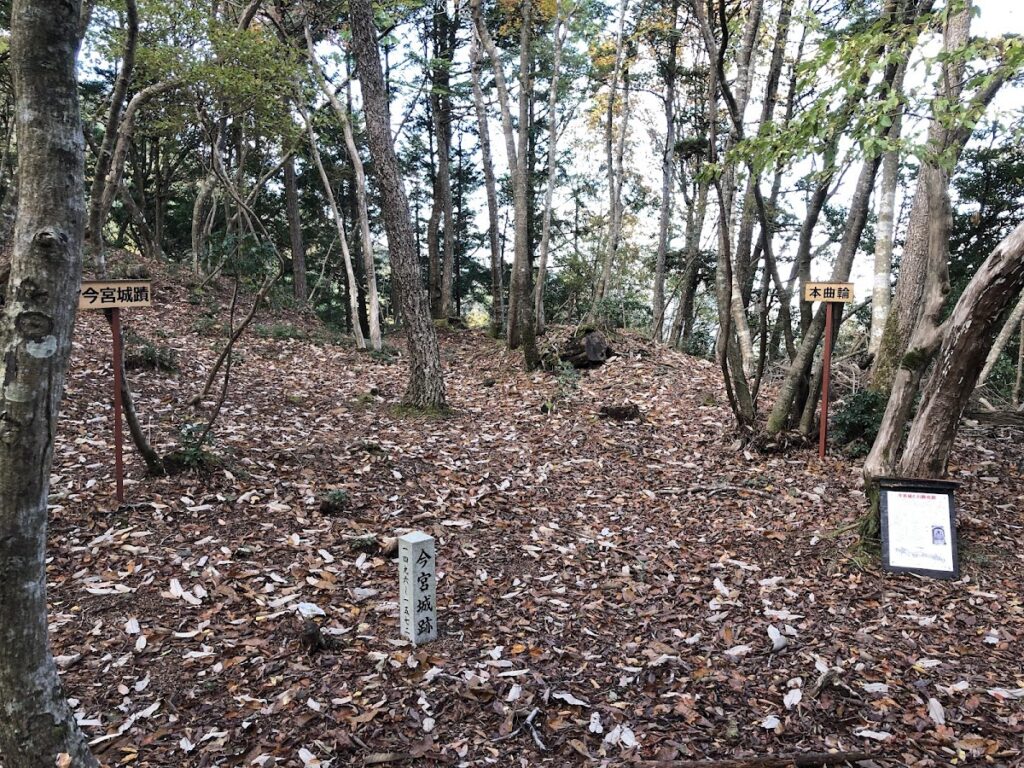
Imamiya Castle (Kyoto Prefecture) Complete Guide: A Thorough Explanation of the Tamba Mountain Castle Ruins and History
Imamiya Castle, located in Takano-Imamiya, Miyama-cho, Nantan City, Kyoto Prefecture, is an important mountain castle ruin that tells the story of the medieval history of the Tamba region. Built on a mountaintop at an altitude of 425m (relative height approximately 215m), this castle retains well-preserved defensive structures such as earthworks, baileys, and moats, making it a valuable historical site for studying the structure of mountain castles during the Sengoku period. This article provides a thorough explanation of Imamiya Castle, from its historical background to the details of its ruins and access methods, for castle enthusiasts and history fans.
Basic Information on Imamiya Castle
Imamiya Castle is a medieval mountain castle located in the Takano-Imamiya area of Miyama-cho, Nantan City, Kyoto Prefecture. Miyama-cho is located almost in the center of Kyoto Prefecture, belonging to the former Tamba Province, and is a naturally rich area spreading across the mountainous region of the Yura River system.
Castle Overview
- Location: Takano Imamiya, Miyama-cho, Nantan City, Kyoto Prefecture
- Castle Structure: Mountain Castle
- Elevation: 425m
- Relative Height: Approximately 215m
- Construction Period: Sengoku period (estimated)
- Main Remains: Earthworks, baileys, moats, vertical moats
- Designated Cultural Property: Not designated
Imamiya Castle possesses the characteristics of a typical medieval mountain castle, featuring a defensive layout that utilizes the steep terrain. Centered around the main bailey at the mountaintop, multiple baileys are arranged in a stepped pattern, and moats are provided along the ridge.
History of Imamiya Castle
Sengoku Period in Tanba Province
Tanba Province, where Imamiya Castle was built, was located on an important transportation route connecting Kyoto with the San’in and Sanyo regions during the Sengoku period. Therefore, it was a region where many Sengoku daimyo vied for supremacy.
During the Sengoku period (Warring States period), the Tanba region was divided among various local lords, including the Hatano, Naito, and Akai clans. It is believed that Imamiya Castle was also built by one of these local powers, but historical records are scarce regarding the exact builder and construction date, so details remain unclear.
Akechi Mitsuhide’s Conquest of Tanba
During the Tensho era (1573-1592), Akechi Mitsuhide, acting on orders from Oda Nobunaga, began his conquest of Tanba. Mitsuhide launched a full-scale invasion of Tanba in 1575 and pacified the region in 1579.
It is presumed that during this conquest of Tanba, many mountain castles, including Imamiya Castle, were either battlegrounds or strategically abandoned. Several medieval mountain castles are scattered around the Miyama-cho area, and it is thought that these castles cooperated with each other to provide regional defense.
From the Early Modern Period Onward
With the arrival of the Edo period, Imamiya Castle, as a mountain castle, was abandoned and lost its military function. Since then, the castle site has become a forest, and the remains have been relatively well preserved to this day.
Layout and Remains of Imamiya Castle
Main Enclosure (Honmaru)
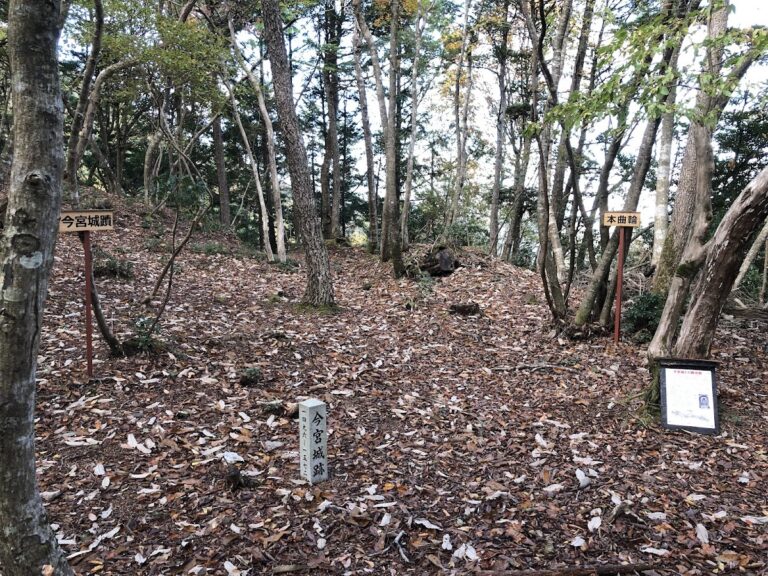
The main enclosure (Honmaru), the center of Imamiya Castle, is located on the mountaintop at an altitude of 425m. A relatively flat, leveled area has been formed, and it is presumed that the lord’s residence and command post were located there. Earthen ramparts surround the main enclosure, enhancing its defensive capabilities.
From the main enclosure, one can overlook the surrounding mountains and valleys, making it an excellent location for monitoring enemy movements. On clear days, the view can extend as far as the city of Kyoto.
Enclosures (Kuruwa)
Several enclosures (Kuruwa) are arranged in a stepped pattern around the main enclosure. These enclosures are thought to have been used as garrisons for soldiers and storage areas for supplies. Each enclosure has been carefully leveled, suggesting that considerable effort was invested in its construction.
The elevation difference between the enclosures is about 2-3 meters, and this itself functioned as a defensive structure. For attackers, it was necessary to conquer each enclosure before reaching the main enclosure, making it a structure advantageous to the defenders.
Earthworks
One of the distinctive remains of Imamiya Castle is the well-preserved earthworks. Earthworks 1-2 meters high surround the main enclosure and major enclosures. These earthworks were constructed by piling up earth, and it is presumed that fences or walls were built on top of them.
The earthworks not only functioned as defensive walls but also played a role in clearly defining the divisions within the castle. Furthermore, the area behind the earthworks was likely used as a passageway for the movement of soldiers and the transport of supplies.
Moats and Vertical Moats
Multiple moats, a defensive structure characteristic of mountain castles, can be seen along the ridge. A moat cut across a ridge is a crucial defensive line designed to prevent enemy intrusion. The moats at Imamiya Castle are approximately 3-5 meters deep, demonstrating the advanced civil engineering techniques of the time.
Furthermore, vertical moats (tatebori) were constructed on the slopes. These moats, dug vertically along the slope, effectively hindered enemy lateral movement and limited attack routes. The vertical moats at Imamiya Castle skillfully utilize the natural terrain of the slope.
Access Routes
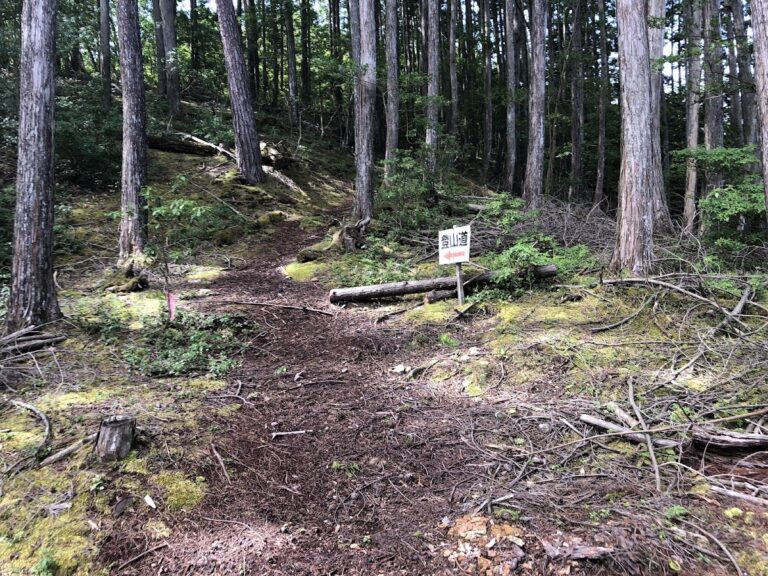
Currently, several access routes to Imamiya Castle have been identified, all of which are steep mountain paths. While the exact location of the main entrance (Ote-michi) is unclear, it is possible that a relatively gentle ridge was used.
Along the access routes, small enclosures and flat areas believed to be watchtowers are scattered, indicating a system for early detection of approaching enemies.
Highlights of Imamiya Castle
Well-Preserved Earthworks and Enclosures
The greatest highlight of Imamiya Castle is the relatively well-preserved remains of its earthworks and enclosures. Because there have been few later alterations, it’s easy to imagine the castle’s appearance at the time of its construction, making it a valuable resource for understanding the structure of medieval mountain castles.
The earthworks around the main enclosure, in particular, remain clearly visible, making it a must-see for castle enthusiasts. Observing the height and width of the earthworks, as well as the arrangement of the enclosures, offers the pleasure of deciphering the intentions and defensive strategies of the castle’s builder.
Views
The views from the mountaintop at an altitude of 425m are another of Imamiya Castle’s attractions. You can enjoy a panoramic view of the mountains and valleys of Miyama Town, reliving the scenery from which the castle lord once surveyed his territory.
The autumn foliage season and winter snowscapes are especially beautiful, offering breathtaking views that make you forget the effort of climbing to the castle. However, due to the growth of trees, the view may be limited depending on the season and location.
The Joys of Mountain Castle Climbing
Imamiya Castle is approximately 215 meters above sea level, requiring considerable physical fitness and equipment to reach the summit. However, the sense of accomplishment upon reaching the top is exceptional. Mountain castle climbing is an attractive activity that allows you to enjoy historical exploration and trekking simultaneously.
The climbing route is an unpaved natural trail, so appropriate clothing for mountain walking, such as trekking shoes, long sleeves, and long pants, is essential. It is also recommended to bring drinking water, a map, and a compass (or GPS device).
Access to Imamiya Castle
Public Transportation
Access to Imamiya Castle by public transportation is difficult. The nearest train stations are Hiyoshi Station or Wachi Station on the JR San’in Main Line, but the distance from there to Imamiya Castle is considerable, and the number of bus services is limited.
If using public transportation, the following routes are possible:
- From JR Kyoto Station, take the San’in Main Line to Hiyoshi Station or Wachi Station (approximately 1 hour 30 minutes).
- From the station, take a Nantan City bus or taxi towards Miyama-cho.
- Get off at Takano-Imamiya area and walk to the castle entrance.
However, since bus service is very infrequent, it is necessary to check the timetable in advance and plan carefully.
By Car
Accessing Imamiya Castle by car is the most practical option. From Kyoto city, head north on National Route 162 (Shuzan Kaido) towards Miyama-cho. The journey takes approximately 1 hour 30 minutes to 2 hours.
Access from Major Cities:
- From Kyoto City: Approximately 70km via National Route 162, 1 hour 30 minutes to 2 hours
- From Osaka City: Approximately 2 hours 30 minutes via Meishin Expressway and Kyoto Jukan Expressway
- From Fukuchiyama Area: Approximately 1 hour via National Route 9 and Prefectural Roads
Find a parking space near the Takano-Imamiya area and proceed on foot to the castle entrance. However, there is no designated parking area, so please be considerate of local residents.
Castle Entrance and Climbing Time
The castle entrance is near the Takano-Imamiya settlement, but there may not be clear signs or markers. Utilize a topographic map or GPS device and follow the ridgeline to the summit.
The round trip climbing time is approximately 2-3 hours. The trail has some steep sections, so those who are not confident in their physical fitness should not push themselves and plan accordingly.
Precautions When Visiting Imamiya Castle
Safety Measures
Imamiya Castle is an unmaintained mountain castle ruin, so thorough preparation and caution are necessary when visiting.
Equipment to Bring:
- Trekking shoes (with non-slip soles)
- Long-sleeved shirt and long pants (to prevent insect bites and injuries)
- Hat and gloves
- Drinking water (1 liter or more recommended)
- Snacks (chocolate, candy, etc.)
- Topographic map, compass, GPS device
- Mobile phone (however, there is a possibility of being out of range)
- First-aid kit
- Bear bell (for wildlife deterrence)
Important Notes:
- Avoid solo visits; it is recommended to visit in groups.
- Refrain from climbing the castle on days with bad weather or when bad weather is expected.
- Extra caution is needed during winter due to the risk of snow and ice.
- Thorough time management is necessary to descend before sunset.
Manners and Consideration
The area around Imamiya Castle may include private land and forests. Please consider the following points when visiting.
- Greet and show consideration to local residents.
- Always take your trash with you.
- Do not damage plants or historical remains.
- Use of fire is strictly prohibited.
- Do not disturb others by shouting or making other noises.
Nearby Attractions
Miyama Thatched Village
When visiting Imamiya Castle, be sure to also stop by Miyama Town’s “Thatched Village.” This settlement, designated as a National Important Traditional Buildings Preservation District, is known for its beautiful scenery with many remaining thatched-roof houses.
A rural landscape reminiscent of Japan’s original scenery unfolds, offering beautiful scenery throughout the seasons. The fresh greenery of spring, the autumn foliage, and the snowy winter landscape are particularly spectacular.
Other Mountain Castles in Miyama Town
Besides Imamiya Castle, several other medieval mountain castle ruins are scattered around Miyama Town. If you have the time and energy, visiting these castle ruins as well will give you a deeper understanding of the medieval history of the Tanba region.
Nature along the Yura River
The Yura River, which flows through Miyama Town, is known for its clear waters and offers activities such as ayu (sweetfish) fishing and canoeing. After exploring the castle ruins, relaxing along the river is highly recommended.
Differences between Imamiya Castle and Imamiya Shrine
While the name “Imamiya” may lead to confusion with Imamiya Shrine in Kita Ward, Kyoto City, Imamiya Castle and Imamiya Shrine are completely different locations and facilities.
Imamiya Shrine:
- Location: Murasakino Imamiya-cho, Kita-ku, Kyoto City, Kyoto Prefecture
- Nature: Shrine (former prefectural shrine)
- Alternate name: “Tama no Koshi Shrine”
- Origin: A shrine associated with Keishoin (Otama), the mother of Tokugawa Tsunayoshi, the 5th shogun
- Access: Immediately after alighting at the “Imamiya Shrine-mae” bus stop
Imamiya Castle:
- Location: Takano Imamiya, Miyama-cho, Nantan City, Kyoto Prefecture
- Nature: Remains of a medieval mountain castle
- Features: Defensive structures such as earthworks, baileys, and moats
- Access: Drive to the Takano Imamiya area, then hike uphill
Imamiya Shrine is an easily accessible tourist spot in Kyoto City, but Imamiya Castle is a historical site requiring a full-fledged mountain climb. Please be fully aware of this difference when planning your visit.
Research and Study of Imamiya Castle
Currently, a full-scale academic investigation of Imamiya Castle has not yet been sufficiently conducted. The main sources of information are survey records by local historians and castle researchers.
Creation of Castle Layout Maps
Creating castle layout maps is crucial in castle research. A castle layout map is a plan view showing the structure and placement of defensive facilities, and is an indispensable resource for understanding the castle’s characteristics and construction techniques.
While several researchers have independently created layout maps for Imamiya Castle, a detailed drawing based on official surveys has not yet been produced. Further comprehensive investigations by local governments and research institutions are anticipated.
Future Preservation and Utilization
Medieval mountain castle remains like Imamiya Castle are valuable cultural heritage sites that tell the story of Japanese history. However, many mountain castles are buried in forests, and their existence is largely unknown.
The following initiatives are desired for the future:
- Conducting academic research: Clarifying the remains through accurate surveying and archaeological excavations
- Designation as a cultural property: Designation as a municipal or prefectural cultural property
- Development of access routes: Developing minimum necessary hiking trails for safe visits
- Installation of information boards: Installing explanatory boards on the historical background and remains
- Utilization as a regional resource: Utilizing it as a tourism or educational resource
The significance of visiting Imamiya Castle
Imamiya Castle does not have the glamour of famous tourist destinations. However, that is precisely why it possesses a value that cannot be found elsewhere.
Imagination for history
Visiting the remains of an undeveloped mountain castle is an act of tracing history on foot. By climbing steep mountain paths and witnessing earthworks and moats firsthand, you can feel the lives and hardships of people during the Sengoku period.
Standing in the main enclosure and looking around, you can truly feel that a castle once stood here, people lived here, and battles sometimes took place here. Such imagination is the true joy of learning history.
Oneness with Nature
Climbing a mountain castle is not only a historical exploration but also an encounter with nature. Walking through the rich natural surroundings of Miyama Town, you can refresh both mind and body while feeling the changing seasons.
A Sense of Accomplishment and Fulfillment
The sense of accomplishment upon reaching the castle ruins at the summit after climbing a mountain with a relative elevation of 215m is exceptional. This experience brings confidence and a sense of fulfillment, spurring the desire to explore other mountain castles.
Summary
Imamiya Castle (Miyama Town, Nantan City, Kyoto Prefecture) is a valuable mountain castle site that conveys the medieval history of the Tanba region. Built on a mountaintop at an altitude of 425m and a relative elevation of 215m, this castle retains well-preserved defensive structures such as earthworks, baileys, and moats, making it an important historical site for understanding the structure of mountain castles during the Sengoku period.
Access is not easy, and proper preparation for a serious mountain castle climb is necessary, but in return, you will experience a sense of historical romance and accomplishment that only those who visit can truly appreciate. This hidden gem of a castle is a must-visit for castle enthusiasts, history buffs, and mountain hikers.
Enjoying the beautiful nature and historical heritage of Miyama Town while contemplating a medieval mountain castle—it will be a luxurious escape from the hustle and bustle of modern life. With sufficient preparation and safety precautions, please attempt to explore Imamiya Castle.
Final Checklist for Your Visit:
- Check the weather (choose a sunny day)
- Check your equipment (shoes, clothing, water, etc.)
- Prepare a map and GPS device
- Plan your time (descend before sunset)
- Confirm emergency contact information
- Be considerate of locals and observe proper etiquette
Imamiya Castle quietly awaits your visit. Embark on a journey to trace the traces of history.