Ibi Castle (Gifu Prefecture) Complete Guide: The 200-Year Residence of the Toki Clan and the History of Saito Dosan’s Fall
What is Ibi Castle?
Ibi Castle is a medieval mountain castle located in Miwa, Ibigawa-cho, Ibi-gun, Gifu Prefecture. A formidable mountain castle with its main keep situated on the summit of Jōdaiyama Mountain, at an altitude of 220 meters and a relative height of approximately 180 meters, it functioned as an important base for protecting the western part of Mino Province.
Built in 1343 (Kōkoku 4th year/Kōei 2nd year) during the Nanboku-chō period by a branch of the Toki clan, it served as the residence of the Ibi clan for approximately 200 years. However, in 1547 (Tenbun 16th year), it fell to an attack by Saito Dosan, the ruler of Mino Province. Currently, it is maintained as Jōdaiyama Park, preserving valuable remains of a medieval mountain castle within Gifu Prefecture.
History of Ibi Castle
Construction of the Castle and the Establishment of the Ibi Clan
There are multiple records regarding the construction of Ibi Castle. According to the “Toki Ruidaiki,” Toki Yoriyasu built the castle in 1343 (Kōkoku 4), but the “Shinsen Mino Shi” states that it was built by Yoriyasu’s younger brother, Toki Yorio.
The most widely accepted theory is that Toki Yorio, the son of Toki Yorikiyo, built Ibi Castle and subsequently adopted the name “Ibi Clan.” Yorio was entrusted with the Ibi region by his brother Yoriyasu and established his power base at Ibi Castle as the ruler of the area.
The Ibi Clan, as a branch of the Toki clan, the shugo (military governor) of Mino Province, expanded its power centered on Ibi County and used Ibi Castle as its residence for approximately 200 years. During this period, the Ibi clan played an important role as a powerful local lord in western Mino Province, supporting the Toki main family.
Fall of Ibi Castle by Saito Dosan
The fate of Ibi Castle changed dramatically in 1547. Saito Dosan, who had seized the position of lord of Mino Province, expelled Toki Yorinori from the province and then launched an attack on the Ibi clan, who were related to the Toki clan.
Dosan’s attack was fierce, and Ibi Castle fell after a fierce battle. This fall marked the end of the Ibi clan’s rule, which had lasted for approximately 200 years. After the castle’s fall, the Horiike clan, vassals of the Ibi clan, became the castle lords and resided there for a time.
Oda Nobunaga’s Invasion of Mino and the Abandonment of the Castle
Later, during the Eiroku era (1558-1570), Oda Nobunaga intensified his invasion of Mino Province. Ibi Castle fell again to an attack by Inaba Yoshimichi (Inaba Ittetsu), a retainer of Nobunaga.
It is believed that Ibi Castle was abandoned around this time. With the end of the Sengoku period, Ibi Castle’s role as a mountain castle ended, and it subsequently faded into history.
Structure and Layout of Ibi Castle
Location and Topography
Ibi Castle is a typical mountain castle built on the summit of Jōdaiyama Mountain. At an altitude of 220 meters, with a relative height of approximately 180 meters from the base, it boasts a highly defensible structure that takes advantage of the steep terrain.
Mount Jōdai is located on the west bank of the Ibi River, making it a strategically important location for monitoring the transportation routes from western Mino Province to Ōmi and Echizen Provinces. Due to this location, Ibi Castle played a crucial role as the western defense of Mino Province.
Enclosures and Remains
Even today, several enclosures (kuruwa), including the main keep (honmaru), can be seen on the mountaintop. The main keep is located at the highest point of the mountaintop, surrounded by terraced enclosures believed to be the second and third baileys.
The arrangement of the enclosures is skillfully designed to follow the terrain, preserving many characteristics of a medieval mountain castle. Traces of earthworks can also be seen between each enclosure, offering a glimpse into the defensive structures of the time.
Moats and Vertical Ditches
A notable defensive feature of Ibi Castle is its multiple moats and vertical ditches. The moats were constructed to cut off the ridge, playing a vital role in preventing enemy incursions.
Vertical moats are moats dug vertically along the slope, effectively preventing enemy soldiers from climbing the incline. These remains are still relatively well-preserved today, making them valuable resources for studying the defensive techniques of medieval mountain castles.
Well Remains
Securing water was a matter of life and death for mountain castles. Well remains at Ibi Castle indicate that it functioned as a water source during sieges. The presence of a well at the mountaintop suggests that Ibi Castle was designed to withstand prolonged sieges.
Highlights of Ibi Castle
View from the Main Enclosure
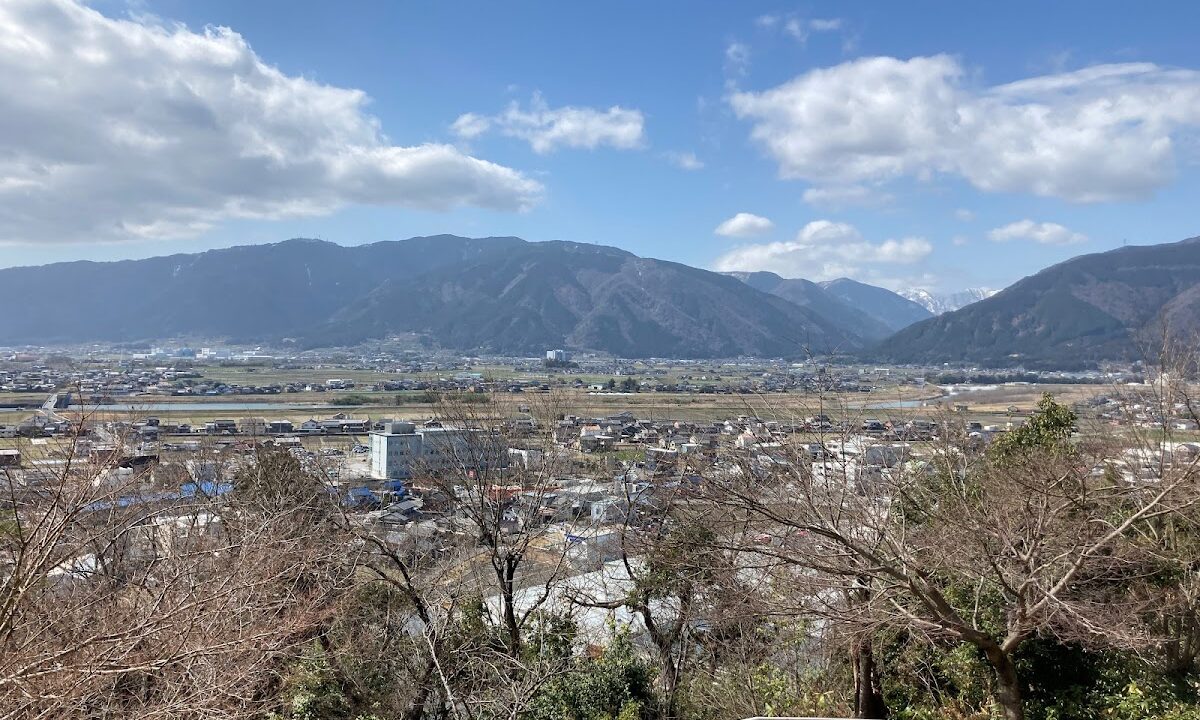
The greatest highlight of Ibi Castle is the view from the main enclosure. From the mountaintop at an altitude of 220 meters, you can see the flow of the Ibi River, the townscape of Ibigawa, and on clear days, even the distant Ibuki mountain range.
This view is the very same landscape that the castle lords once saw, and it’s a place where you can truly appreciate the importance of Ibi Castle as a strategic point protecting western Mino Province.
Well-Preserved Ruins
Ibi Castle is currently maintained as Shirodaiyama Park, but excessive development has not taken place, and the remains of this medieval mountain castle are well-preserved.
In particular, the moats, vertical trenches, and the layout of the baileys are clearly visible, making it a fascinating site for castle enthusiasts and history buffs. In recent years, improvements have been made, and information boards have been installed, making it easier for first-time visitors to understand the ruins.
Miwa Shrine
At the foot of Shirodaiyama Mountain lies Miwa Shrine. This shrine has a deep connection to Ibi Castle and is believed to have been revered as the tutelary deity of the Ibi clan. When climbing to the castle, it is recommended to first pay your respects at Miwa Shrine.
There is parking space around the shrine, making it an ideal starting point for your climb.
Development of Shirodaiyama Park
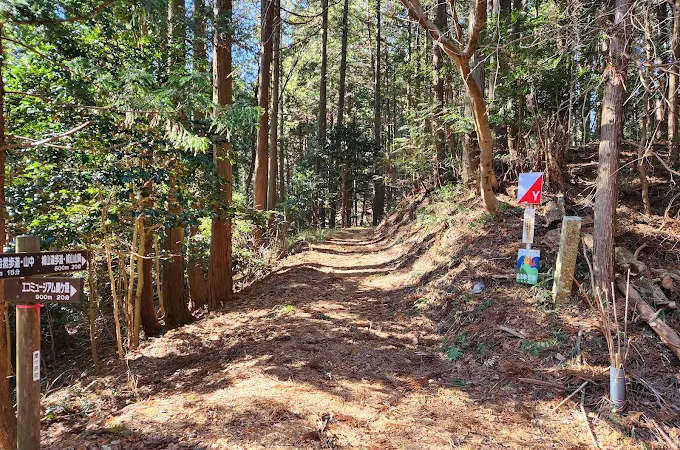
Currently, the Ibi Castle ruins are being developed as Shirodaiyama Park by Ibigawa Town. Hiking trails have been maintained, making it relatively safe to climb the castle grounds. However, due to the steep slopes characteristic of mountain castles, appropriate hiking attire and footwear are recommended.
Information boards and explanatory signs are installed throughout the park, allowing visitors to learn about the history and structure of Ibi Castle while strolling through the grounds.
Access Information
Location
Address: Miwa, Ibigawa-cho, Ibi-gun, Gifu Prefecture (Shirodaiyama Park)
Access by Car
- Approximately 30 minutes from the Meishin Expressway “Ogaki IC”
- Approximately 20 minutes from the Tokai-Kanjo Expressway “Ono-Kobe IC”
- From National Route 417, head towards the center of Ibigawa-cho and aim for Miwa Shrine.
Parking: Several parking spaces available around Miwa Shrine (free)
Access by Public Transportation
- Get off at Yoro Railway “Ibi Station,” then walk approximately 20 minutes to Miwa Shrine.
- Taxis are also available from Ibi Station (approximately 5 minutes)
Time to Visit
It takes approximately 30-40 minutes on foot from Miwa Shrine to the main keep ruins. Since the path is uphill, it is recommended to allow ample time for your visit.
Points to Note When Visiting
Clothing and Equipment
Ibi Castle is a full-fledged mountain castle, so the following equipment is recommended:
- Hiking boots or trekking shoes: Shoes with non-slip soles are safer.
- Comfortable clothing: Long sleeves and long pants are preferable (to prevent insect bites and injuries).
- Drinking water: There are no vending machines at the summit.
- Hat and sunscreen: Especially necessary in summer.
- Rain gear: The weather in this mountainous area can change quickly.
Best Season for Visiting
Ibi Castle can be visited throughout the year, but each season has its own characteristics:
- Spring (March-May): Beautiful fresh greenery, mild weather, ideal for climbing the castle.
- Summer (June-August): Dense greenery, many insects. Early morning visits are recommended.
- Autumn (September-November): Beautiful autumn foliage, excellent views. Best Season for Visiting the Castle
- Winter (December to February): Be aware of snow and ice. Clear skies offer excellent views.
Estimated Visit Time
- Round Trip Time to the Castle: Approximately 1 hour to 1 hour 30 minutes
- Time for Viewing the Ruins: 30 minutes to 1 hour
- Total: Approximately 2 hours to 2 hours 30 minutes
If you want to observe the ruins slowly and enjoy taking photos, it’s best to allow around 3 hours.
Nearby Tourist Attractions
Ibi Jinya Ruins
After the fall of Ibi Castle, the Ibi Jinya (fortified residence) was located at the foot of the mountain during the Edo period. While very few remains today, it’s an important site for understanding the history of Ibigawa Town. Visiting it along with Ibi Castle will help you understand the flow of history in this region.
Tanigumi-san Kegonji Temple
A representative tourist attraction of Ibigawa Town, known as the 33rd temple of the Saigoku Thirty-Three Kannon Pilgrimage. Located about 15 minutes by car from Ibi Castle, it’s ideal for a visit as an extension of a historical walk.
Ibigawa Historical and Folk Museum
A museum where you can learn about the history and culture of Ibigawa Town. It also exhibits materials related to Ibi Castle, allowing for a deeper understanding of its history by visiting before or after your visit.
Yokozoji Temple
An ancient temple also known as the “Shosoin of Mino,” it houses numerous important cultural properties. A spot where you can experience the rich history and culture of Ibigawa Town.
Ibi Castle and the Sengoku Period History of Mino
The Toki Clan and Mino Province
The history of the Toki clan, the shugo (military governor) of Mino Province, is indispensable when discussing Ibi Castle. The Toki clan was a prestigious family that served as the governor of Mino Province from the Kamakura period, and at its peak, it boasted power spanning three provinces: Mino, Owari, and Ise.
The Ibi clan, as a branch of the Toki clan, was responsible for defending western Mino Province and was an important branch family supporting the main Toki family. Ibi Castle served as their base and continued to function for approximately 200 years.
Saito Dosan’s Unification of Mino
Saito Dosan (Toshimasa) was a symbolic figure of gekokujo (overthrowing one’s superiors), rising from an oil merchant to eventually seize the position of lord of Mino Province. After expelling Toki Yorinori, Dosan successively conquered local lords allied with the Toki clan, proceeding with the unification of Mino Province.
The fall of Ibi Castle was part of Dosan’s unification of Mino Province. With the capture of Ibi Castle in 1547, western Mino Province also came under Dosan’s control, solidifying his dominance over the province.
Oda Nobunaga and the Conquest of Mino
After Dosan’s death, Mino Province was inherited by his son, Saito Yoshitatsu, and then by his grandson, Saito Tatsuoki, but their power gradually declined. Oda Nobunaga of Owari Province seized this opportunity.
In 1567, Nobunaga captured Inabayama Castle (later Gifu Castle), gaining control of Mino Province. During this process, Ibi Castle was also captured by Inaba Yoshimichi (Ittetsu) and ultimately abandoned. The fate of Ibi Castle can be said to embody the very history of the Sengoku period in Mino Province.
Cultural Value of Ibi Castle
A Typical Example of a Medieval Mountain Castle
Ibi Castle retains many characteristics of a medieval mountain castle from the Nanboku-cho period to the Sengoku period. The remains, such as baileys, moats, and vertical trenches, are well-preserved, making it a valuable resource for the study of medieval castles.
In particular, the layout, which skillfully utilizes the terrain, and the arrangement of defensive facilities provide important clues to understanding the castle-building techniques of the time.
Regional Historical Heritage
Ibi Castle is a representative historical heritage of Ibigawa Town and is the core of the region’s identity. Currently, it is maintained as Shirodaiyama Park and functions as a place of relaxation for local residents.
Ibigawa Town positions Ibi Castle as a regional tourist resource, striving to balance preservation and utilization through the installation of information boards and the maintenance of hiking trails.
Future Preservation and Utilization
Medieval mountain castles like Ibi Castle are relatively rare throughout Japan, having largely escaped the wave of development and remaining in good condition. However, without proper preservation and management, there is a risk of the remains being lost due to weathering and overgrown vegetation.
Ibigawa Town is working with experts to preserve and utilize Ibi Castle, making it a valuable destination for history enthusiasts and castle fans.
Points to Enjoy Ibi Castle
Recommended Prior Study
Learning about the history of related figures such as the Toki clan, Saito Dosan, and Oda Nobunaga before visiting Ibi Castle will deepen your understanding at the site. In particular, an overview of the Sengoku period history of Mino Province will clarify the historical position of Ibi Castle.
How to Observe the Remains
The remains of mountain castles can sometimes be difficult to distinguish from the natural terrain at first glance. Paying attention to the following points will make it easier to find the remains:
- Flat surface: Remains of a bailey. A place that is clearly flatter than the surrounding area.
- Step: Remains of a cliff. Artificially carved steep slopes
- Ditch-like depressions: Traces of moats and vertical trenches
- Earth mounds: Traces of earthworks
Photography Tips
When taking photos at Ibi Castle, pay attention to the following points to take good pictures:
- View photos: The view from the main keep is beautiful in the morning when the light is behind you.
- Remains photos: Moats and vertical trenches look more three-dimensional when photographed from an angle.
- Seasonal scenery: The fresh greenery in spring and the autumn foliage are especially beautiful.
Summary
Ibi Castle (Ibigawa-cho, Ibi-gun, Gifu Prefecture) is a medieval mountain castle built in 1343 during the Nanboku-cho period by the Toki clan, and functioned as the residence of the Ibi clan for approximately 200 years. Built on Mt. Jōdai, at an elevation of 220 meters and a relative height of approximately 180 meters, this castle served as an important base in western Mino Province, supporting the power of the Toki clan.
In 1547, it fell to an attack by Saitō Dōsan. Afterward, the Horiike clan, vassals of the Ibi clan, became the castle lords. However, during Oda Nobunaga’s invasion of Mino, it fell again to Inaba Yoshimichi (Ittetsu) and was abandoned.
Currently, the site is maintained as Jōdaiyama Park, and the remains of the castle, including the baileys, moats, vertical trenches, and well ruins, are well-preserved. The view from the main keep is magnificent, making it a valuable spot to fully experience the atmosphere of a medieval mountain castle.
Located in Miwa, Ibigawa Town, it is easily accessible by car, and the climb from Miwa Shrine takes approximately 30-40 minutes. Hiking boots and comfortable clothing are recommended, and spring and autumn are particularly suitable seasons for visiting.
Ibi Castle, where you can truly experience the Sengoku period history of Mino Province, is a must-see mountain castle for history buffs and castle enthusiasts. Visiting it along with other nearby tourist spots such as the Ibi Jinya Ruins and Tanigumi-san Kegonji Temple will allow you to gain a deeper understanding of the rich history and culture of Ibigawa Town.