Hyogo Castle (Hyogo Prefecture) Complete Guide: A Coastal Castle Built by Ikeda Tsuneoki and its Remaining Structures
What is Hyogo Castle?: A Historic Castle Built on the Coast of Settsu Province
Hyogo Castle (Hyogo-jo) is a Japanese castle located in the vicinity of Nakanoshima, Hyogo Ward, Kobe City, Hyogo Prefecture, formerly Hyogo-tsu, Hachibe District, Settsu Province. From the Sengoku period to modern times, it played a crucial role as a central facility of the port city of Hyogo-tsu.
Built in 1580 by Ikeda Tsuneoki under the orders of Oda Nobunaga, this flatland castle took on various roles throughout history. Under the Toyotomi regime, it served as a diplomatic base; during the Edo period, it was the Hyogo Jinya (fortified residence) of the Amagasaki Domain; and after the Meiji Restoration, it housed the Hyogo Prefectural Office, always serving as the political and administrative center of the region.
Although most of the castle grounds have been lost due to urbanization, archaeological excavations have confirmed the remains of stone walls and moats, and a portion of the site has been developed into a historical park. While Hyogo Castle lacks the grandeur of Himeji Castle or Akashi Castle, it quietly conveys its history as a valuable historical site that tells the story of Japan’s transition from the early modern to the modern era.
History of Hyogo Castle: From Construction to Abandonment and the Present
Construction during the Tensho Period: Built by Ikeda Tsuneoki
The history of Hyogo Castle begins in 1580. After the Ishiyama War against Honganji Temple, Oda Nobunaga ordered his subordinate Ikeda Tsuneoki to build Hyogo Castle with the aim of strengthening his control over Settsu Province and gaining control of Hyogo-tsu, an important port.
Ikeda Tsuneoki was the lord of Ikeda Castle in Settsu Province and a warrior known as Oda Nobunaga’s foster brother. Hyogo-tsu was a port town that flourished from ancient times as a key point for Seto Inland Sea transportation, and was an extremely important base both economically and militarily. Tsuneoki built a flatland castle on this site, making it the administrative center of Hyogo-tsu.
It is believed that the original Hyogo Castle had the typical structure of a flatland castle, with a main keep, second bailey, and third bailey. Because it was located in low-lying land near the sea, seawater was drawn into the moat, and the design also considered the convenience of water transport.
Role under the Toyotomi Regime: A Center for Receiving Korean Envoys
Ikeda Tsuneoki was killed in the Battle of Komaki-Nagakute in 1584, and after that, Hyogo Castle became a direct territory of Toyotomi Hideyoshi. Under the Toyotomi regime, Hyogo Castle not only served as a military base but also took on an important function as a diplomatic facility.
Of particular note is its role as a center for receiving Korean envoys. After Toyotomi Hideyoshi’s invasion of Korea, Hyogo-tsu became an important port of call when Korean envoys visited Japan throughout the Edo period. Hyogo Castle was developed as a facility to welcome these diplomatic delegations, becoming a place of international exchange.
During this period, the castle’s fortifications were also improved, and records indicate the existence of a keep. However, historical sources are limited regarding whether a keep was actually constructed, and opinions among researchers are divided.
Edo Period: Function as Hyogo Jinya
In the Edo period, Hyogo Castle came under the control of the Amagasaki Domain and became known as “Hyogo Jinya.” From 1637 onward, the lords of the Amagasaki Domain successively governed Hyogo-tsu, and a domain magistrate was permanently stationed at Hyogo Jinya.
For the Edo Shogunate, Hyogo-tsu was a strategically important location for monitoring the daimyo of western Japan and managing the Seto Inland Sea shipping routes. Hyogo Jinya possessed a wide range of administrative functions, including port management, commercial control, and maintaining public order, and functioned as the central hub of the prosperous Hyogo-tsu.
In 1769, a large-scale renovation was carried out, strengthening its function as a Jinya (fortified residence). During this period, the Hyogo Jinya (Hyogo encampment) increasingly took on the character of an administrative and economic center rather than a purely military facility.
The Meiji Restoration and the Establishment of the Hyogo Prefectural Office
With the Meiji Restoration, Hyogo Castle once again reappeared on the historical stage. In 1868 (Meiji 1), the new government established the Hyogo Prefectural Office on the site of Hyogo Castle. This was deeply related to Hyogo becoming a hub for international trade as an open port.
When Hyogo Port opened on December 7, 1868 (January 1, 1868 in the Gregorian calendar), a foreign settlement was established, and Kobe rapidly transformed into a modern city. The former Hyogo Castle, where the Hyogo Prefectural Office was located, took on a new role as the center of this modernization.
However, in 1875 (Meiji 8), the prefectural office moved to Kitano-cho in Kobe, and the role of the Hyogo Castle site as an administrative center came to an end. Subsequently, the castle structures were gradually demolished, and urbanization progressed.
Hyogo Castle’s Castle Structure: Characteristics and Layout as a Flatland Castle
Basic Layout and Structure
Hyogo Castle was a typical flatland castle, built on a plain near the coast. It is believed that the castle had a stepped layout with the main keep (Honmaru) at its center, surrounded by the second and third baileys (Ninmaru and Sannomaru).
The Honmaru was the core of the castle, housing the residences of the feudal lord and magistrates. It was surrounded by stone walls and a moat, providing defensive capabilities. The second and third baileys housed the residences of retainers and warehouses, creating a structure integrated with the castle town.
The castle was relatively compact, with an estimated total area of approximately 10 hectares. While small compared to large castles like Himeji Castle, it possessed sufficient functionality for a flatland castle.
Structure of Stone Walls and Moats
Archaeological excavations have confirmed the use of stone walls at Hyogo Castle. The stone walls utilize techniques ranging from rough-hewn masonry to fitted masonry, exhibiting the technical characteristics of the castle’s construction period.
The moat was constructed as a water moat, taking advantage of its proximity to the sea by drawing in seawater. This likely served not only a defensive function but also as a waterway for transporting supplies. The moat is estimated to have been around 10 meters wide and 2-3 meters deep.
The height of the stone walls varied depending on the location, but around the main keep, they are believed to have been approximately 3-5 meters high. Currently, parts of the stone walls confirmed through archaeological excavations have been preserved and restored, allowing us to imagine their original appearance.
Regarding the Existence of a Keep
Whether or not a keep existed at Hyogo Castle is one of the intriguing topics in castle research. While some documents mention a keep, definitive evidence is limited.
It has been suggested that some kind of turret or keep-like structure may have existed during the Toyotomi period, but it is believed that a keep did not exist during the Edo period when it served as a fortified residence. Archaeological excavations have not confirmed any remains that can be clearly identified as a keep base.
However, it is highly probable that multiple turrets of two stories or more existed in the main enclosure, functioning as symbolic structures of the castle.
Arrangement of Castle Gates and Entrances
Hyogo Castle had multiple castle gates. The main entrance was the Otemon (main gate), which served as an important passage connecting the town of Hyogo-tsu with the castle grounds.
The entrances (koguchi) are presumed to have had a masugata (square-shaped) structure designed with defense in mind. This was a standard castle construction technique to prevent enemy intrusion, indicating that Hyogo Castle incorporated the castle-building techniques of the time.
The location of the castle gates is closely related to the town layout of Hyogo-tsu, suggesting that the castle and castle town were planned as a single integrated entity.
Remains and Current Status of Hyogo Castle: Excavation and Restoration Projects
Existing Remains and Monuments
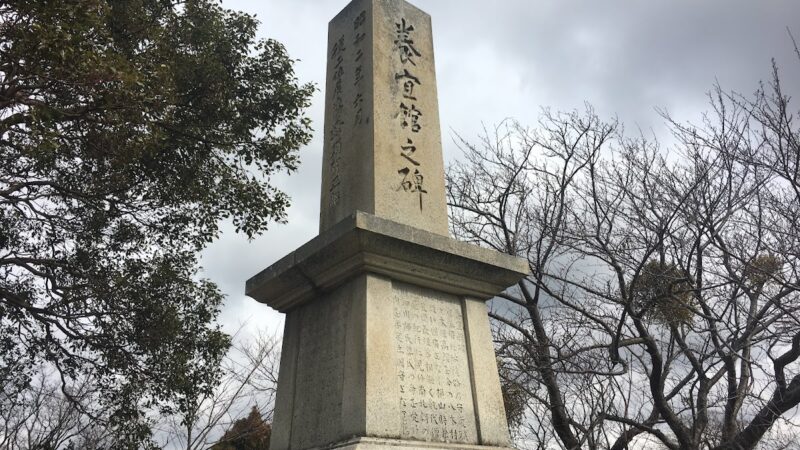
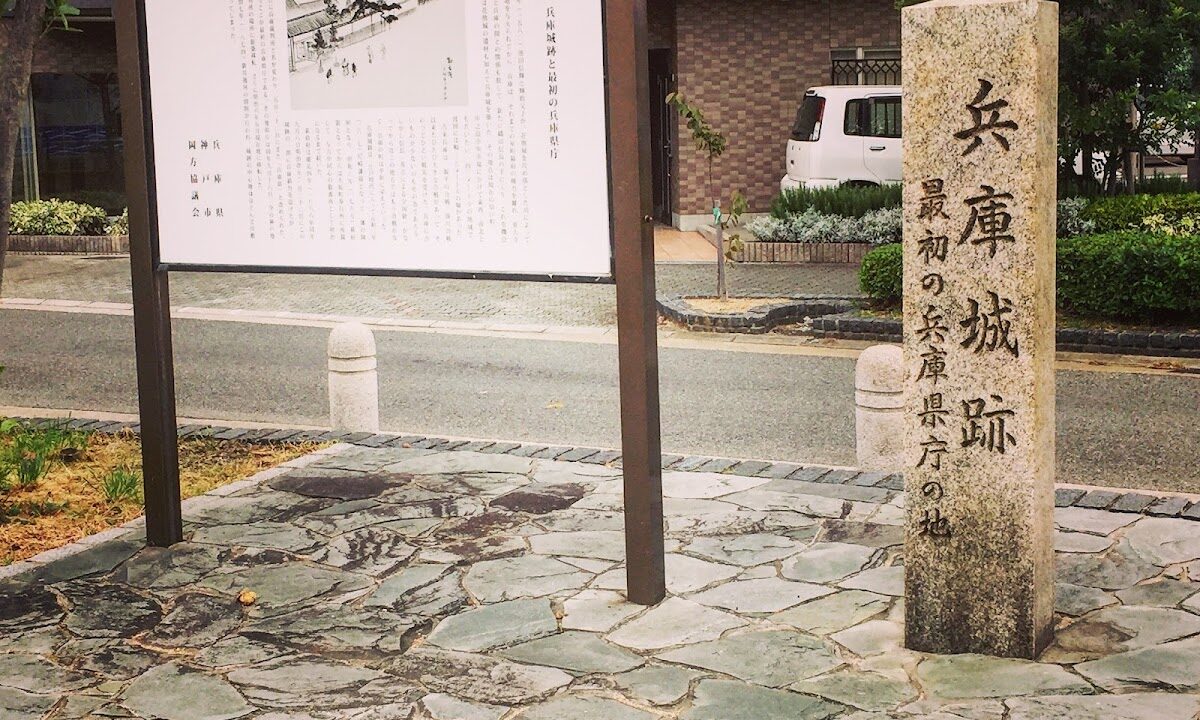
Currently, the castle structures of Hyogo Castle have been completely lost, but several remains and monuments remain. The most prominent is the monument marking the castle site.
In the vicinity of Nakanoshima in Hyogo Ward, a stone monument marking the “Hyogo Castle Ruins” stands, indicating that this area was once a castle. The monument, erected during the Showa era, serves as an important historical landmark for the region.
Furthermore, surrounding place names such as “Honmachi” and “Nakanoshima” still retain names derived from the castle and castle town, providing clues to estimating the former castle’s extent.
Results of Archaeological Excavations
Multiple archaeological excavations have been conducted at the Hyogo Castle ruins. These investigations have confirmed the foundations of stone walls, moat remains, and building foundations, gradually revealing the castle’s structure.
A particularly important discovery is the remains of stone walls around the main keep. These walls are believed to have been constructed between the Tensho and Edo periods, providing valuable evidence of the evolution of castle construction techniques.
Artifacts such as ceramics and roof tiles have also been unearthed from the moat remains, offering clues to the lifestyle and use of the castle at the time. These artifacts attest to the prosperity of Hyogo-tsu as a commercial city.
The results of the excavation have been compiled into a report and made available to researchers and history enthusiasts. Further investigations may be conducted in conjunction with development, and new discoveries are anticipated.
Historical Site Development and Historical Park
Kobe City is developing a portion of the Hyogo Castle ruins into a historical park. Within the park, parts of the stone walls confirmed during the excavation are preserved and displayed, and explanatory signs have been installed.
Although the developed park is small, it serves as a place of relaxation for local residents and is also used as a place for historical learning. The explanatory signs provide detailed explanations of the castle’s history and structure, conveying the history of Hyogo Castle to visitors.
Further development plans are being considered, and there is a possibility that more remains will be preserved and made public. Efforts continue to pass on the value of the Hyogo Castle ruins as a regional historical heritage to future generations.
Hyogo-tsu and the Castle Town: Prosperity as a Port City
Historical Importance of Hyogo-tsu
Understanding Hyogo-tsu is essential to understanding Hyogo Castle. From the Heian period, Hyogo-tsu was known as an important port on the Seto Inland Sea route and was also called “Owada-no-tomari.” It is also famous for the port development carried out by Taira no Kiyomori.
From the medieval to the early modern period, Hyogo-tsu prospered as a logistics hub for western Japan. Various goods such as rice, salt, timber, and seafood were gathered and distributed, and it became a commercial city where many merchants were active.
Hyogo Castle functioned as the center of management and control for this prosperous port city, and the castle and port worked together to support the development of the region.
Structure and Town Planning of the Castle Town
The castle town of Hyogo Castle was systematically developed around the castle grounds. Samurai residences, merchant districts, and temple/shrine areas were clearly separated, forming an efficient urban structure.
The merchant district was lined with shops and artisans, and vibrant commercial activity unfolded. Especially near the port, shipping agents and money changers were concentrated, making it a center of shipping and finance.
The castle town’s roads were laid out in a grid pattern, and remnants of this can still be seen in the current town layout of Hyogo Ward. While the historical townscape has changed significantly due to modernization, traces of the past can still be seen in place names and road layouts.
Korean Envoys and International Exchange
Throughout the Edo period, Hyogo Port was an important port where Korean envoys called. The envoys numbered several hundred people, and their reception was a major event for the region.
Hyogo Castle (Jinya) hosted ceremonies to welcome high-ranking officials of the envoys, becoming a venue for cultural exchange. Through these exchanges, Korean culture and scholarship were brought to Japan, contributing to the cultural development of the region.
The arrival of the Korean envoys symbolized the international character of Hyogo-tsu, demonstrating that the castle was not merely a military facility but also a center of diplomacy and culture.
Hyogo Castle and Surrounding Historical Sites: Exploring Kobe’s History
Hyogo Daibutsu and Kiyomori Mound
Many historical sites are scattered around the ruins of Hyogo Castle. Particularly famous is the Hyogo Daibutsu at Nofuku-ji Temple. This 18-meter-tall Buddha is considered one of Japan’s three great Buddhas and was erected during the Meiji era.
Kiyomori Mound is a historical site dedicated to Taira no Kiyomori, commemorating his achievements in developing Hyogo-tsu during the Heian period. It is a site that shows this area was an important port city even before Hyogo Castle was built.
Wadamisaki Battery and Historical Sites from the End of the Edo Period
Located southwest of Hyogo Castle, the Wadamisaki Battery, built during the end of the Edo period, still exists at Wadamisaki. This is a Western-style fort built according to the design of Katsu Kaishu, serving as a defensive facility for Hyogo before its opening to the world.
The Wada Misaki Battery is designated a national historical site and is a valuable historical relic that conveys the military technology of the late Edo period. Visiting it together with Hyogo Castle allows for a systematic understanding of Hyogo’s military history from the Sengoku period to the end of the Edo period.
Kobe Port and Modernization Heritage
Hyogo-tsu developed into Kobe Port after the Meiji Restoration, becoming one of Japan’s leading international trading ports. Buildings from the time of the port’s opening, such as the former foreign settlement and the Kobe Customs House, still remain, conveying the history of modernization.
By exploring the area around Kobe Port from the Hyogo Castle ruins, you can experience the transformation of the port city from ancient times to the present day. It is a fascinating historical walking course that allows you to feel the continuity of history.
Access and Visiting Information for Hyogo Castle
Transportation Access
Public transportation is the most convenient way to access the Hyogo Castle ruins.
Access by Train:
- Get off at Hyogo Station on the JR Kobe Line, approximately 10 minutes on foot.
- Get off at Chuo-Ichiba-mae Station on the Kobe Municipal Subway Kaigan Line, approximately 5 minutes on foot.
- Get off at Daikai Station on the Kobe Rapid Railway, approximately 8 minutes on foot.
Access by Bus:
- Get off at Nakanoshima bus stop on the Kobe City Bus, approximately 3 minutes on foot.
Access by Car:
- Approximately 5 minutes from Yanagihara IC on the Hanshin Expressway Route 3 Kobe Line.
- There is no dedicated parking lot, so please use nearby coin parking.
Points to Note During Your Visit
You are free to visit the Hyogo Castle Ruins. The historical park is open 24 hours a day, so you can visit anytime.
Main Highlights:
- Stone monument of the Hyogo Castle Ruins (around Nakanoshima)
- Stone wall remains confirmed by archaeological excavations (partially preserved and displayed)
- Explanation of the castle’s history via explanatory panels
- Historical townscape of the surrounding area
The estimated visit time is approximately 30 minutes. If you plan to visit other historical sites in the area, it’s a good idea to allocate about half a day.
Nearby Facilities and Tourist Information
There are facilities suitable for learning about history and taking a break around the Hyogo Castle ruins.
Hyogo Ward Office: Located near the castle ruins, it sometimes displays materials related to the history of Hyogo.
Kobe City Museum: A facility where you can learn about the history of Kobe in general, and sometimes exhibits related to Hyogo Castle.
Restaurants and Rest Facilities: There are many restaurants around Hyogo Station, making it convenient for meals after your visit. You can enjoy local seafood dishes and Kobe cuisine.
Points to Note During Your Visit
- The castle ruins are used as a residential area and park, so please be considerate of the surrounding residents.
- To protect the remains, please do not enter restricted areas.
- Photography is permitted, but please avoid trespassing on private property.
- The sun is strong in summer, so we recommend bringing a hat or parasol.
- The ground can be slippery in rainy weather, so please be careful.
Historical Significance and Future Challenges of Hyogo Castle
Position in the History of Japanese Castles
Hyogo Castle occupies a unique position in the history of Japanese castles. It is a rare example of a castle that survived while changing its role over time, from a military base in the Sengoku period to an administrative facility in the Edo period, and then to a prefectural office in the Meiji period.
While many castles ended their history in the Edo period, Hyogo Castle continued to function as an administrative institution of a modern nation. In this respect, it can be said to be an important historical site that shows the transition period from castles to modern architecture.
Furthermore, its role as a core facility of a port city and a center of economic and diplomatic activity is also noteworthy. As a castle that prioritized urban management functions over military functions, it is a fine example of the peaceful Edo period castle design.
Current Status of Preservation and Utilization
The preservation status of Hyogo Castle ruins is not entirely satisfactory. Many remains have been lost due to urbanization, making it difficult to grasp the overall structure of the castle.
However, in recent years, development projects utilizing the results of archaeological excavations have been underway, and the value of the castle ruins is gradually being re-recognized. Interest in history among local residents is also increasing, and momentum for preservation activities is growing.
In terms of education, it is being used as teaching material for local history lessons in local elementary and junior high schools, aiming to pass on history to the next generation.
Future Prospects and Challenges
The following points are among the future challenges for Hyogo Castle ruins:
Further Archaeological Excavations: With urban redevelopment, it is necessary to conduct continuous archaeological excavations to clarify the overall structure of the castle.
Expansion of Historic Site Designation: Currently, preservation is limited to partial areas. A broader historical site designation is desirable to achieve comprehensive preservation.
Enhancement of Development Projects: Further preservation and exhibition of excavated remains, installation of restoration models, and virtual reconstructions utilizing digital technology are needed to clearly convey the castle’s appearance to visitors.
Utilization as a Tourism Resource: As part of Kobe tourism, the development of historical walking courses including the Hyogo Castle ruins and the enhancement of guided tours are expected.
Collaboration with the Community: It is crucial to establish a system where local residents, researchers, and the government cooperate to promote the preservation and utilization of the castle ruins.
Summary: Hyogo Castle Tells the History of Kobe
Although Hyogo Castle no longer possesses a magnificent keep or grand stone walls, it is a valuable historical site that quietly tells the story of Japanese history from the Sengoku period to the modern era. Beginning with its construction by Ikeda Tsuneoki, Hyogo Castle served as a diplomatic base under the Toyotomi regime, the Hyogo Jinya (fortified residence) during the Edo period, and the Hyogo Prefectural Office during the Meiji era. Throughout its history, it transformed and continuously functioned as the center of the region.
Although now buried within the urban landscape, archaeological excavations are gradually revealing its former form. Visiting the Hyogo Castle ruins offers a valuable opportunity to understand the origins of Kobe and experience its history as a port city.
While not a major tourist attraction like Himeji Castle or Takeda Castle, Hyogo Castle, as a historical heritage rooted in the region, deserves to be carefully preserved and utilized in the future. When visiting Kobe, we encourage you to visit the Hyogo Castle ruins and feel the weight of history etched into this land.