Tama Castle (Togane City, Chiba Prefecture): A Complete Guide to its History and Highlights | A Thorough Explanation of a Castle on the Border of the Sengoku Period
Located in Tama, Togane City, Chiba Prefecture, Tama Castle is a valuable historical site that still retains well-preserved remains such as earthworks and dry moats, typical of a mountain castle from the Sengoku period. Designated as a cultural property by Togane City, this castle site plays an important role in understanding the Sengoku history of the Boso Peninsula. This article provides a detailed explanation of Tama Castle, from its historical background to its specific remains and access methods, for castle enthusiasts and history buffs.
History and Construction Background of Tama Castle
Construction by Sakai Sadataka
Tama Castle is believed to have been built in Eisho 6 (1509) by Sakai Sadataka. The Sakai clan was a powerful Sengoku daimyo (feudal lord) in the Boso Peninsula, and initially their base was Toke Castle (Midori Ward, Chiba City). One theory suggests that Sakai Sadataka moved from Toke Castle to Tama Castle, and then further south to Tokigane Castle (Togane Castle), located about 2 kilometers away.
However, there is currently no reliable historical evidence to support this relocation theory. Rather, recent castle research, judging from the layout (design and arrangement) of Tama Castle, suggests that it likely functioned as the easternmost “border castle” within the territory of the Togane Sakai clan around the mid-16th century.
Function as a Border Castle
A “border castle” refers to a frontline defensive stronghold located on the border of a territory, preventing invasions by hostile forces. Tama Castle was located at the eastern edge of the Togane Sakai clan’s territory and is presumed to have played an important military role in the tense relations with surrounding forces.
The castle was relatively small in scale, suggesting its primary purpose was mobile defense, intelligence gathering, and territorial surveillance, rather than prolonged siege warfare. Castles of this type were built in large numbers on the Boso Peninsula during the Sengoku period (Warring States period).
Fall and Abandonment in 1590
Tama Castle is believed to have been abandoned in 1590, during Toyotomi Hideyoshi’s siege of Odawara, along with the fall of Togane Castle. In that year, the Toyotomi regime, advancing towards national unification, conquered the Hojo clan in the Kanto region, and numerous castles on the Boso Peninsula surrendered or fell one after another.
The Togane Sakai clan, being subordinate to the Hojo clan, lost their territory due to the Toyotomi invasion, and Tama Castle’s historical purpose came to an end. Thereafter, Tama Castle was not used as a military facility, and its remains were preserved in relatively good condition to the present day.
Structure and Layout of Tama Castle
Arrangement of Main and Secondary Enclosures
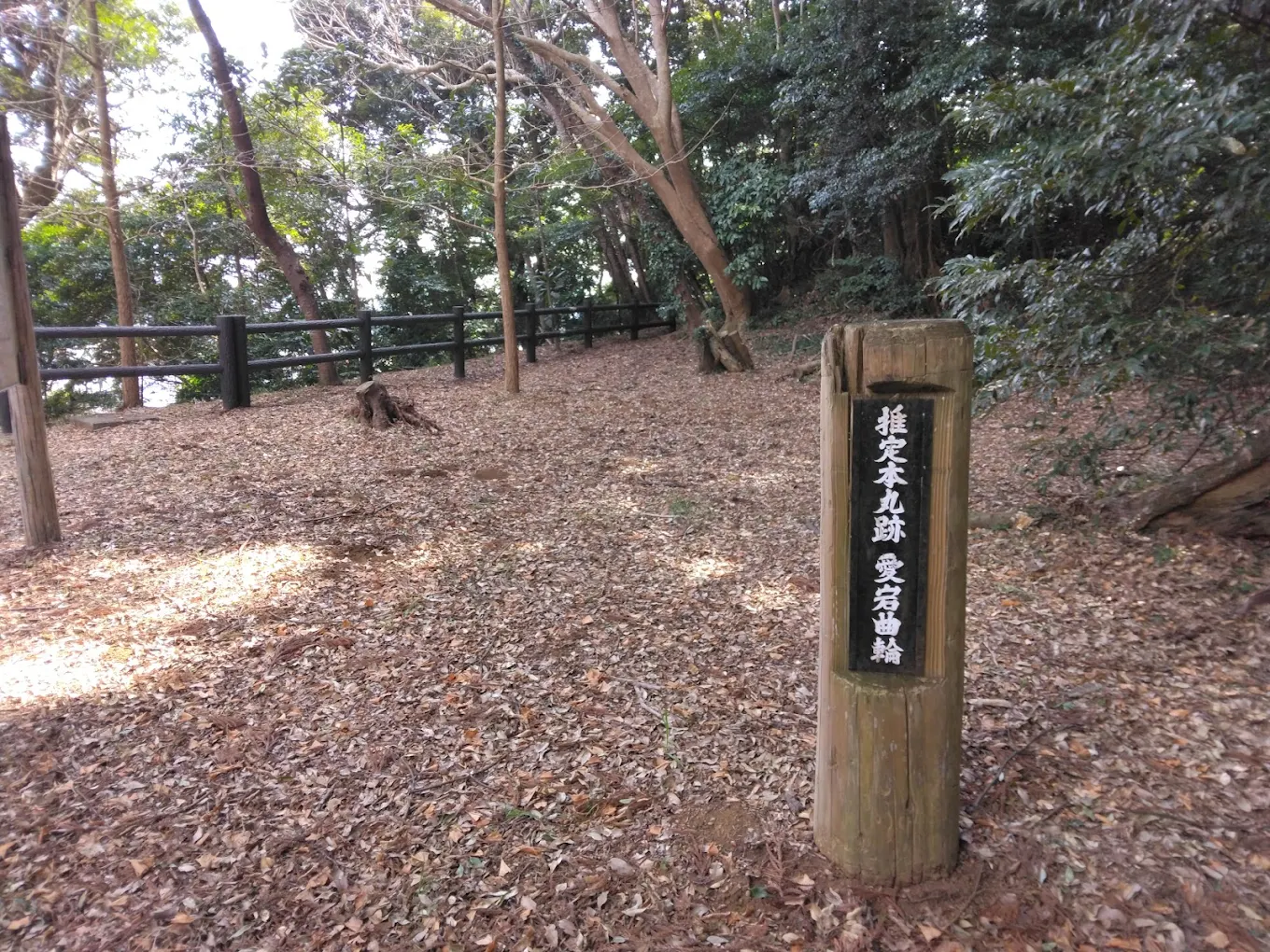
Tama Castle is a flatland castle built on a plateau, with a structure centered around the main enclosure (honmaru) and secondary enclosure (ninomaru), surrounded by multiple smaller enclosures (koshikuruwa). The plateau located behind the current Tama Shrine is the central part of the castle, and its layout cleverly utilizes this terrain.
The main enclosure is located at the highest elevation and is thought to have housed the lord’s residence and command post. The secondary enclosures surround it, enhancing its defensive capabilities and functioning as a garrison for soldiers and a storage area for supplies.
Defensive Structures: Earthworks and Dry Moats
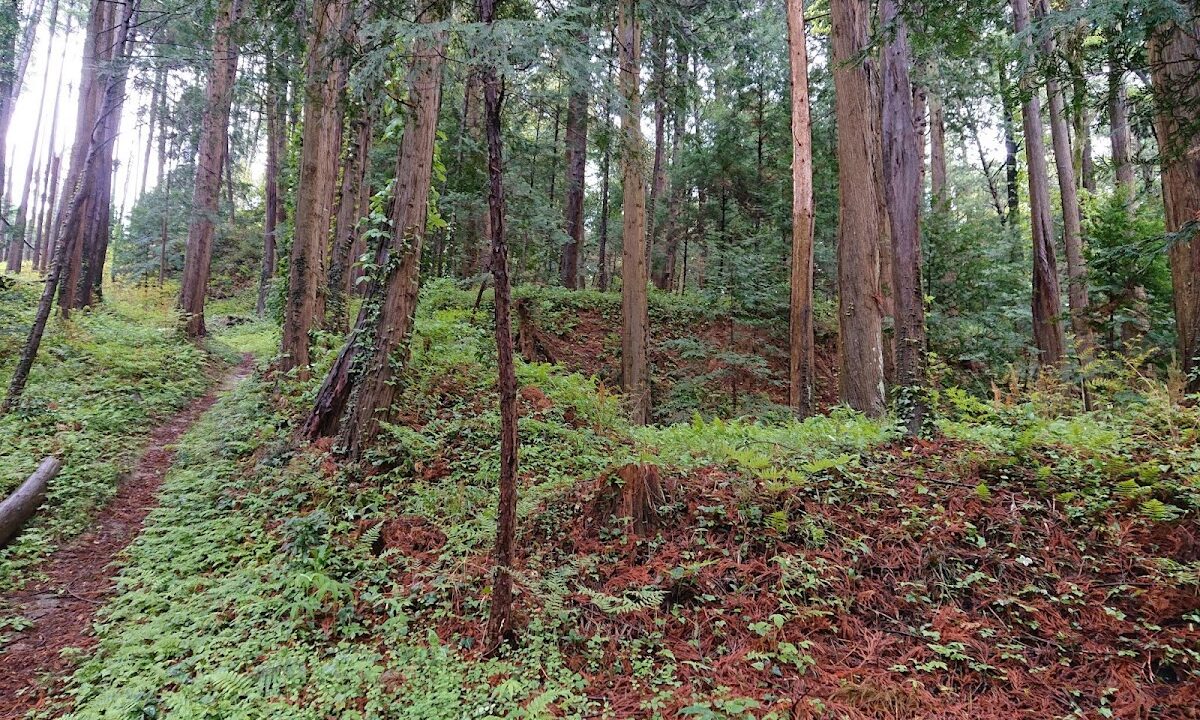
The greatest highlight of Tama Castle is its well-preserved earthworks and dry moats. Earthworks are earthen walls built by piling up earth around the enclosures, preventing enemy intrusion and also serving as a platform for firing and throwing stones from within the castle.
Dry moats are moats that do not hold water and are important defensive structures that separate enclosures or the outside from the castle. At Tama Castle, dry moats separating the main enclosure from the secondary enclosure, and dry moats surrounding the outer perimeter of the castle grounds, can be seen. Some of these moats are several meters deep, demonstrating the advanced castle-building techniques of the time.
Moats and Vertical Moats
Moats that divide the plateau are also important defensive structures at Tama Castle. By digging vertically along the ridge, moats served to block enemy routes and make it difficult for them to approach the castle.
Vertical moats dug along the slopes have also been confirmed. Vertical moats were designed to restrict the movement of enemies climbing the slopes and make lateral movement difficult, thereby enhancing the castle’s defensive capabilities. The vertical moats at Tama Castle are one of the defensive techniques typically seen in castles of the Sengoku period and are valuable remains for understanding the castle-building philosophy of that time.
Arrangement of the Lower Enclosures
Around the main enclosure and secondary enclosure, multiple lower enclosures are arranged in a stepped pattern. These lower enclosures are small, flat areas located at a lower level than the main enclosures, and were used for troop deployment, observation posts, and auxiliary defensive positions.
The lower enclosures of Tama Castle are skillfully arranged to follow the terrain, indicating the construction of a multi-layered defensive system capable of responding to attacks from all directions.
Highlights and Remains of Tama Castle
Approach from Tama Shrine
The most common way to visit the remains of Tama Castle is to start from Tama Shrine. Tama Shrine is a shrine revered in the region as the “General Guardian Shrine of Togane, Kazusa Province,” and serves as an access point to the castle ruins.
A path leads from the shrine grounds to the plateau behind it, which is the entrance to the castle ruins. You can enter the castle area from around the main shrine building, making it relatively easy to view the remains.
Gangan Slope and the Path to the Castle
Around Tama Castle, the place name “Gangan Slope” remains. Such place names are valuable cultural heritage, conveying the former routes to the castle and legends associated with it.
The path to the castle also hints at the location of the original castle gate, providing clues to understanding the castle’s layout. However, some areas are now overgrown, so caution is needed when visiting.
Experiencing the Earthworks and Dry Moats
The greatest appeal of visiting Tama Castle is the opportunity to actually walk on the earthworks and experience the depth of the dry moats. The earthworks around the main enclosure remain about 2-3 meters high, and standing on them offers a panoramic view of the castle grounds.
The dry moats are clearly visible between the enclosures, and descending to the bottom allows you to appreciate their depth and width. The moat separating the main and secondary enclosures is a particularly important structure for understanding its function as a defensive facility.
Elevation Relative and View
The main enclosure of Tama Castle is located on a plateau with a relative elevation of approximately 20-30 meters compared to the surrounding plains. Relative elevation refers to the difference in height between the highest point of the castle and the base, and is one indicator of the castle’s defensive strength.
From the main enclosure, one can overlook the surrounding terrain, helping to understand why the former lord chose this location as a “border castle.” The view to the east is unobstructed, indicating a suitable location for monitoring enemy movements.
Access and Visiting Information for Tama Castle
Location and Map
Location: Miyanoshita, Tama, Togane City, Chiba Prefecture
Designation: Togane City Designated Cultural Property
The Tama Castle ruins are located behind Tama Shrine (2126 Tama, Togane City, Chiba Prefecture). Setting “Tama Shrine” as your destination in your car navigation system or smartphone map app is convenient.
Access by Public Transportation
- Approximately 4 kilometers from JR Togane Line Togane Station
- Approximately 10 minutes by taxi from Togane Station
- Bus service is limited, so it is necessary to check the timetable in advance.
Access by public transportation is somewhat inconvenient, so using a rental car or taxi is recommended.
Access by Car and Parking
- Approximately 10 minutes from Chiba Togane Expressway Togane IC
- Approximately 20 minutes from Ken-O Expressway Mobara Kita IC
Tama Shrine has a parking lot for visitors, with space for several cars. However, it may get crowded during shrine festivals and other events, so please be aware of this.
Notes for Visitors
- Clothing: As the castle ruins are located in a forest, long sleeves, long pants, and comfortable walking shoes are recommended.
- Season: In summer, vegetation grows thickly, making it difficult to see the remains. Spring and autumn are the best times to visit.
- Insect repellent: Don’t forget to take precautions against mosquitoes, ticks, and other insects.
- Safety: Be careful of your footing, as some parts of the earthworks and moat edges are prone to collapse.
- Manners: When passing through private property or shrine grounds, please observe proper etiquette during your visit.
Estimated Visit Time
A visit to Tama Castle, including a visit to Tama Shrine, should take approximately 40-60 minutes. If you want to carefully observe the remains, it’s best to allow about 1.5 hours.
Nearby Related Historical Sites and Tourist Spots
Togane Castle (Togane Castle)
Located approximately 2 kilometers south of Tama Castle, Togane Castle was the base of the Sakai clan. It is larger in scale than Tama Castle and has a more complex layout. Visiting both Tama Castle and Togane Castle will give you a deeper understanding of the Sakai clan’s castle strategy.
Toke Castle
Located in Midori Ward, Chiba City, Toke Castle is believed to have been the Sakai clan’s base before they built Tama Castle. Currently, it is maintained as Toke Castle Ruins Park, where visitors can see the remains such as earthworks and dry moats. Visiting both Toke Castle and Tama Castle allows you to trace the history of the Sakai clan’s expansion.
Tama Shrine
Tama Shrine, which serves as the entrance to the castle ruins, has long been revered as the guardian shrine of Togane in Kazusa Province. The shrine grounds feature a magnificent building, allowing visitors to experience the region’s history and culture. We recommend visiting before or after your castle ruins tour.
Other Castle Ruins in Togane City
Besides Tama Castle, Togane City has numerous other medieval castle ruins, including Oomameya Castle, Yui Castle, and Horinouchi Castle. Visiting these ruins provides insight into the realities of regional control on the Boso Peninsula during the Sengoku period.
Historical Significance and Evaluation of Tama Castle
Value in the Study of Castles in the Boso Peninsula during the Sengoku Period
Tama Castle holds an important position in castle research as a typical example of a small to medium-sized mountain castle in the Boso Peninsula during the Sengoku period. Unlike large-scale early modern castles, its well-preserved remains reveal the characteristics of a castle built by a local lord for practical defensive purposes.
In particular, its function as a “border castle” is a valuable example for understanding domain management and military strategies during the Sengoku period.
Preservation Status of the Remains
Even more than 400 years after its abandonment, the remains of Tama Castle, including earthworks, dry moats, and trenches, remain in relatively good condition. This is due to the lack of large-scale land alteration after the castle’s abandonment and the high level of preservation awareness among local residents.
The designation as a cultural property by Togane City has also greatly contributed to the preservation of the remains. Continued appropriate preservation and management will ensure that this valuable historical heritage can be passed on to future generations.
Place in Local History
Tama Castle is an indispensable historical site when discussing the history of Togane City. It provides concrete evidence of the role the Togane region played within the political and military situation of the Boso Peninsula during the Sengoku period.
Tama Castle is also used as important teaching material in local school education and local history research, contributing to the formation of regional identity.
Recommended Points When Visiting Tama Castle
Photography Tips
To document the remains of Tama Castle, we recommend taking photos at the following points:
- Main Enclosure Earthwork: From an angle that conveys its height and width
- Dry Moat Bottom: From a composition that conveys its depth
- Cross-section of the Moat: To show how it divides the plateau
- Distant View from Tama Shrine: To capture the overall topography of the castle ruins
Viewing Points for Castle Enthusiasts
Those familiar with castles can gain a deeper understanding by paying attention to the following points:
- Construction techniques of the earthworks (e.g., traces of rammed earth)
- Relationship between the placement of the moats and the ridge lines
- Terrace differences in the lower enclosures and the composition of the defensive lines
- Estimated location of the castle gate
- Relationship with the surrounding topography
Advice for Beginners
If this is your first time visiting a castle ruin, keep the following points in mind to enjoy your visit:
- First, check the overall topography at Tama Shrine.
- Walk along the top of the earthworks to experience the height.
- Descend to the bottom of the dry moat to feel its depth.
- Look around from the main enclosure to check the open view.
- Read any information boards or explanatory signs carefully.
Summary: The Charm of Tama Castle and the Significance of Visiting It
Tama Castle, located in Togane City, Chiba Prefecture, is a valuable historical site that conveys the history of the Boso Peninsula as a border castle during the Sengoku period. From its construction in 1509 (Eisho 6) to its abandonment in 1590 (Tensho 18), it functioned as the front line of defense for the Togane Sakai clan’s territory for approximately 80 years.
The well-preserved remains, such as earthworks, dry moats, and trenches, concretely demonstrate the castle-building techniques and military thinking of the Sengoku period, making it a highly worthwhile place to visit for castle enthusiasts and history buffs.
Tama Castle is relatively easy to access from Tama Shrine, and the visit only takes about an hour, making it a worthwhile stop on any castle tour of the Boso Peninsula. Visiting it along with the nearby Togane Castle and Toke Castle will give you a deeper understanding of the realities of regional governance in the Boso Peninsula during the Sengoku period.
Standing on the very ground where history unfolded and reflecting on the lives of those who came before us—that’s the greatest appeal of visiting castle ruins. Experience a time trip back to the Sengoku period at Tama Castle.