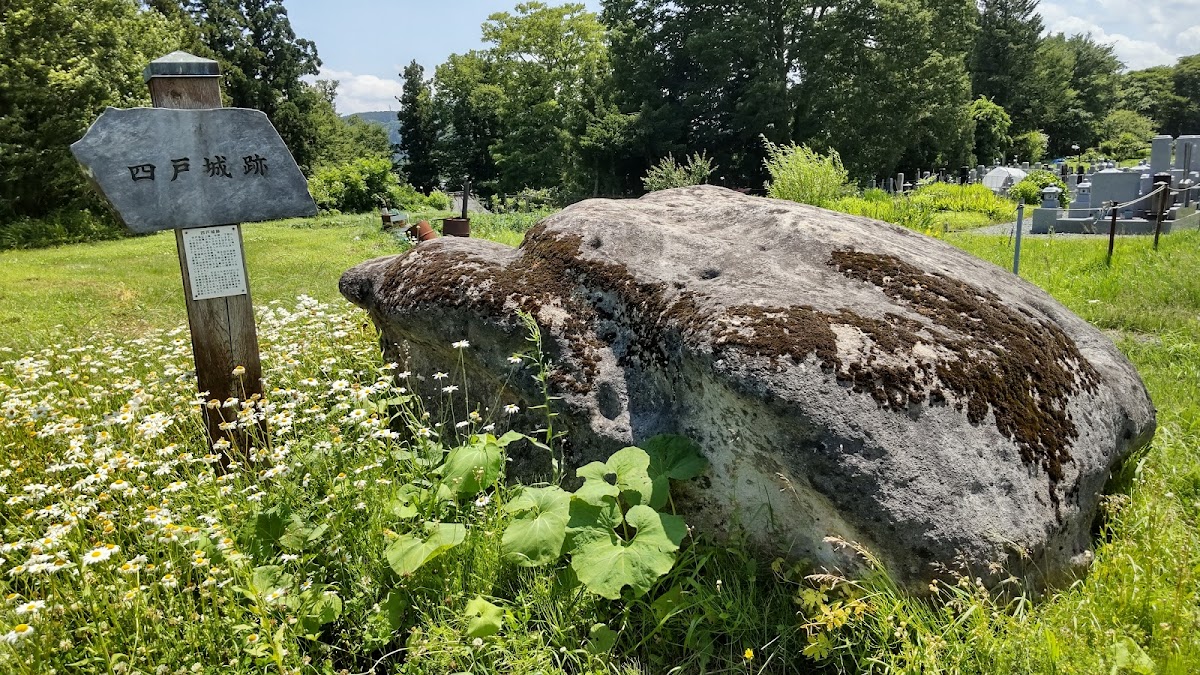
A Complete Guide to the History and Highlights of Shinohe Castle (Ninohe City, Iwate Prefecture) | Including an Explanation of its Relationship with Kindaichi Castle
Shinohe Castle (Shinohe-jo) is a medieval castle located in the Kindaichi district of Ninohe City, Iwate Prefecture. Also known as “Kindaichi Castle,” this castle was built on a river terrace on the left bank of the Mabuchi River and has a unique layout consisting of three enclosures: the Upper Enclosure, the Middle Enclosure, and the Lower Enclosure. This article provides a detailed explanation of Shinohe Castle, from its historical background to the details of its remains and its relationship with surrounding castles.
Basic Information on Shinohe Castle
Location: Kindaichi Nakamachi, Ninohe City, Iwate Prefecture
Former Province: Mutsu Province
Castle Classification: Flatland Castle (on a river terrace)
Alternate Name: Kindaichi Castle
Year of Construction: Details unknown (estimated to be the medieval period)
Builder: Said to be the Shinohe clan
Main Lords: Shinohe clan, Kirien clan, Kindaichi clan
Year of Abandonment: Estimated to be during the Tensho era
Remains: Enclosures, dry moats
Access: Approximately 20 minutes on foot from Kindaichi Onsen Station on the Iwate Galaxy Railway
Shinohe Castle is a flatland castle that skillfully utilizes the natural topography of the Mabuchi River. It features a highly defensible layout that takes advantage of the river terrace terrain. Although residential development is progressing, some traces of dry moats and enclosures remain.
History of Shinohe Castle
The Shinohe Clan and the Castle’s Origins
The history of Shinohe Castle is closely intertwined with the Shinohe clan, who ruled this area. The Shinohe clan is considered a branch of the Nanbu clan. When the Nanbu clan, who ruled Nukanobu District, divided their territory into “Ichinohe,” “Ninohe,” and “Sannohe” (numbered districts), the Shinohe clan governed the Shinohe region.
Nukanobu District was a vast area spanning from eastern Aomori Prefecture to northern Iwate Prefecture. To efficiently govern this region, the Nanbu clan placed family members and influential vassals throughout. The Shinohe clan held a particularly important position among them, and it is believed they played a role in controlling the strategic point in the Mabuchi River basin.
Establishment of the Three-Enclosure Structure
The most distinctive feature of Shinohe Castle is its structure, consisting of three interconnected enclosures: the Upper Enclosure, the Middle Enclosure, and the Lower Enclosure. According to tradition, different clans resided in each enclosure.
- Kamikan: The residence of the Shinohe clan (approximately 100 meters east-west x 250 meters north-south, the largest).
- Nakakan: The residence of the Kirimaru clan.
- Shimodate: The residence of the Kindaichi clan.
These three enclosures came to be collectively called “Kindaichi Castle,” but sometimes the largest enclosure, Kamikan, is simply called “Shinohe Castle.” This form of residence by multiple clans within the same castle grounds is characteristic of medieval castles, where families with blood ties or lord-vassal relationships cooperated in defense.
Shinohe Castle in the Sengoku Period
During the Sengoku period, this region was under the influence of the Nanbu clan, but it underwent significant changes during the Tensho era (1573-1593). In particular, the Kunohe Masazane Rebellion of 1591 was a crucial event in the history of castles in this region.
Masazane Kunohe, a member of the Nanbu clan, rebelled against the clan head, Nobunao Nanbu, and resisted Toyotomi Hideyoshi’s pacification of Oshu. While there are no clear records of the role of Shinohe Castle in this rebellion, its location just 4.7 kilometers from Kunohe Castle suggests it undoubtedly had some influence.
After the suppression of Masazane Kunohe’s rebellion, the region came under the stable control of the Nanbu clan, and Shinohe Castle is believed to have lost its strategic importance and been abandoned.
Layout and Remains of Shinohe Castle
Structure of Kamikan (Shinohe Clan Residence)
Kamikan was the largest of the three enclosures, with a long, narrow shape measuring approximately 100 meters east-west and 250 meters north-south. This long north-south layout made maximum use of the river terrace topography along the Mabuchi River.
Kamikan consisted of multiple enclosures centered around the main enclosure, surrounded by dry moats. Although the area is now largely residential, the topography and remnants of some dry moats allow us to infer the original layout of the castle.
Arrangement of the Nakadate and Shimodate
The Nakadate and Shimodate were located around the Kamidate (upper) enclosure. While each had its own independent defensive function, they formed a single castle system as a whole. Each enclosure was clearly separated by dry moats, suggesting that each clan had its own living space while cooperating in defense during times of conflict.
Characteristics of the Dry Moats
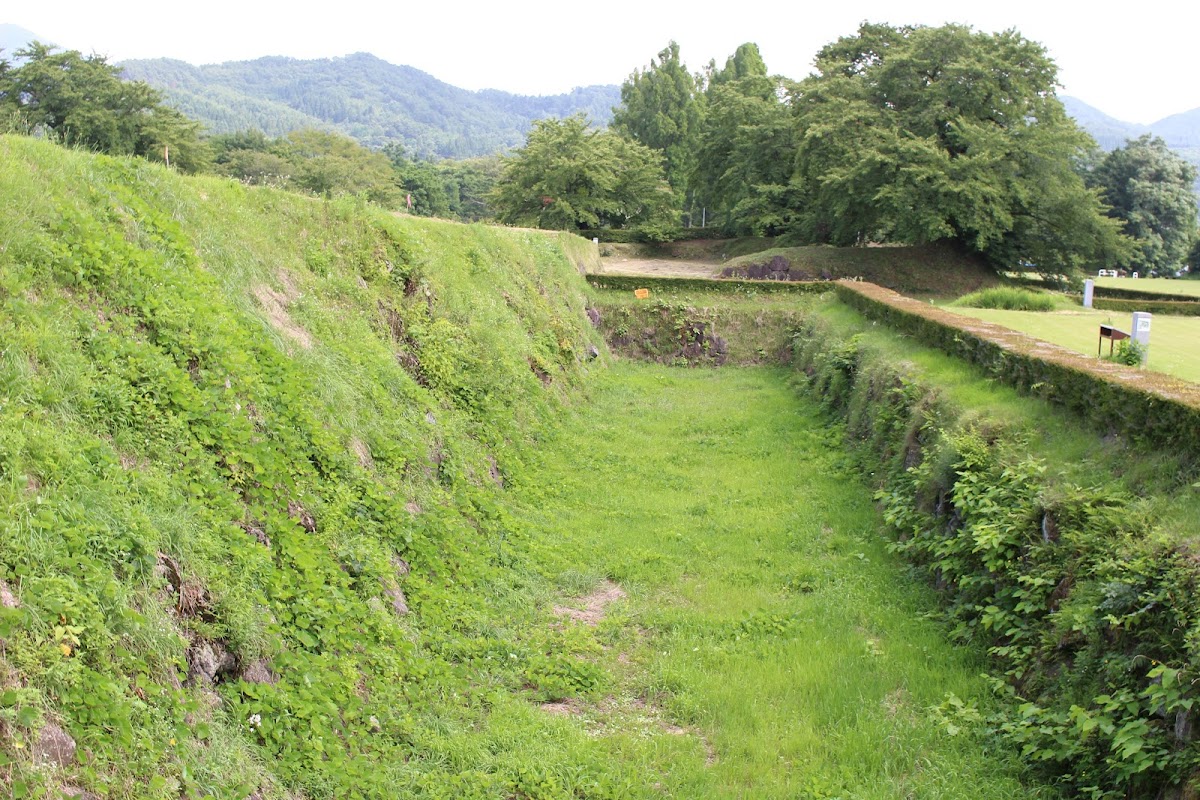
The most important defensive feature of Shinohe Castle was the dry moats. These moats, separating each enclosure, not only prevented enemy intrusion but also clearly defined the territories of each clan. Even today, some remnants of the dry moats can be seen, allowing us to imagine their scale at the time.
The combination of the natural moat of the Mabuchi River and the artificial dry moats, which achieved a high level of defense despite being a flatland castle, is a distinctive feature of Shinohe Castle’s layout.
Relationship with Kindaichi Castle
Shinohe Castle and Kindaichi Castle are alternative names for the same castle complex, but there is a historical background to the distinction in their usage.
Changes in Names
Initially, the castle was called “Shinohe Castle,” centering on the largest section, the upper enclosure. However, as time passed, “Kindaichi Castle” came to be used as a name encompassing all three enclosures. This is related to the fact that the area became widely known as “Kindaichi.”
There are various theories about the origin of the place name Kindaichi, but the most likely theory is that the Kindaichi clan resided in the lower enclosure, and the name of this family became established as the place name.
Use of Names in Modern Times
Currently, in castle research and tourist information, the notation “Shinohe Castle (alternative name: Kindaichi Castle)” or “Kindaichi Castle (alternative name: Shinohe Castle)” is common. Specialized books such as the “Comprehensive Survey of Japanese Castles” list both names to clearly indicate that they are the same castle complex.
Relationship with Surrounding Castles
Understanding the relationship with surrounding castles is important for understanding Shinohe Castle.
Kunohe Castle (Distance: Approx. 4.7km)
Kunohe Castle is the largest castle in the region, located approximately 4.7 kilometers northwest of Shinohe Castle. It holds historical significance as the site of the Kunohe Masazane Rebellion and is currently designated a national historic site. Shinohe Castle and Kunohe Castle are thought to have been important bases in the Nanbu clan’s control of Nukabe, and to have been interconnected.
Ichinohe Castle (Distance: Approx. 5.7km)
Ichinohe Castle is located approximately 5.7 kilometers south of Shinohe Castle and was the residence of the Ichinohe clan. The placement of castles corresponding to the numerically represented regional divisions from Ichinohe to Shinohe is an interesting example demonstrating the Nanbu clan’s planned territorial control.
Sannohe Castle
Sannohe Castle is located in Sannohe Town, Aomori Prefecture, and functioned as the main castle of the Nanbu clan. Shinohe Castle is believed to have played a role in the Nanbu clan’s castle network, centered around Sannohe Castle, and to have served the defense of the Mabuchi River basin and monitored transportation routes.
Access and Visiting Information for Shinohe Castle
Transportation Access
By Train
Get off at Kindaichi Onsen Station on the Iwate Galaxy Railway, and walk for about 20 minutes. Head northwest from the station and aim for the terrace along the Mabuchi River.
By Car
Approximately 15 minutes from Ichinohe IC on the Tohoku Expressway. Head north on National Route 4 towards Kindaichi Onsen. However, since the castle site has been developed into residential land, there is no dedicated parking lot.
Notes for Visitors
Currently, most of the Shinohe Castle site has been developed into residential land and is not clearly maintained as a castle ruins park. Please note the following points when visiting:
- Consideration for Private Property: Many parts are on private property, so please do not trespass.
- Confirmation of Remains: While some parts of the dry moat and the undulations of the terrain offer glimpses into the past, clearly identifiable remains are limited.
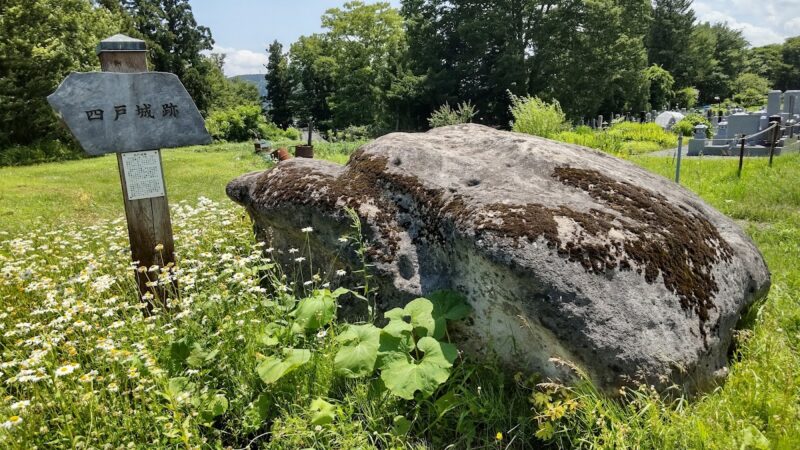
- Castle Site Markers: Markers indicating the castle site have been installed in some areas, allowing you to explore the site using them as guides.
Nearby Tourist Attractions
Kindaichi Onsen: Located very close to the Shinohe Castle ruins is Kindaichi Onsen, one of Iwate Prefecture’s leading hot spring resorts. Relaxing in the hot springs after visiting the castle ruins is highly recommended.
Kunohe Castle Ruins: Designated a National Historic Site, the Kunohe Castle Ruins are approximately 4.7 kilometers from Shinohe Castle. Visiting both together provides a deeper understanding of medieval castles in this region. The Kunohe Castle Ruins are well-maintained, and the remains of the main keep, second keep, and Ishizawa Manor can be clearly identified.
Ninohe City Buried Cultural Properties Center
This facility exhibits the history and archaeological materials of Ninohe City, and provides information about castles in the region, including Shinohe Castle.
Current Status and Challenges of Shinohe Castle Research
Limitations of Documentary Sources
Documentary sources concerning Shinohe Castle are extremely limited, leaving many points unknown, such as the year of construction, detailed changes in castle lords, and the circumstances of its abandonment. Even in specialized books such as “The Complete Guide to Japanese Castles” and “Report on the Distribution Survey of Medieval Castle Sites in Iwate Prefecture,” much of the information is based on tradition, and there is little information that can be confirmed as reliable historical fact.
The Need for Archaeological Investigation
To clarify the actual state of Shinohe Castle, a full-scale archaeological excavation is necessary, but large-scale investigations are difficult due to ongoing residential development. However, there is a possibility of obtaining new insights through partial investigations and non-destructive investigations such as ground-penetrating radar surveys.
Position in Local History
Shinohe Castle is an important example illustrating the relationship between numerical place names (such as Ichinohe, Ninohe, Sannohe, and Shinohe) and castle layouts within the Nanbu clan’s rule of Nukabe. Further research is expected to shed light on the reality of planned territorial rule during the medieval period.
References and Information Sources
To learn more about Shinohe Castle, the following books and materials are helpful:
- *Comprehensive Survey of Japanese Castles, Volume 2: Aomori, Iwate, and Akita* (Shin Jinbutsu Oraisha)
- *Iwate Prefecture Medieval Castle Site Distribution Survey Report* (Iwate Prefectural Board of Education)
- *Collection of Survey Reports on Medieval Japanese Castles by Prefecture* (Toyo Shorin)
- *Ninohe City History*, Ninohe City History Compilation Committee
These documents contain basic information about Shinohe Castle, its relationship to surrounding castles, and its position in local history.
Summary: The Historical Value of Shinohe Castle
Shinohe Castle (Kindaichi Castle), despite its limited remaining structures, holds historical value as one of the important castles in the Nanbu clan’s rule over Nukabe.
Its three-enclosure structure—Upper Enclosure, Middle Enclosure, and Lower Enclosure—demonstrates the characteristics of a medieval castle where multiple clans cooperated in defense, making it a valuable site that conveys the presence of powerful local clans such as the Shinohe, Kirien, and Kindaichi clans.
Furthermore, examining its relationship with surrounding castles such as Kunohe Castle, Ichinohe Castle, and Sannohe Castle provides clues to understanding the realities of territorial rule in the Tohoku region from the medieval to the early modern period.
Although urbanization has progressed and it is difficult to imagine its former appearance, its convenient location within walking distance of Kindaichi Onsen Station makes it a historical site that many castle enthusiasts should continue to visit, especially as part of a historical walk combined with hot spring sightseeing.
Understanding the history and remains of Shinohe Castle is essential for comprehending the medieval history of northern Iwate Prefecture, and further research and investigation are anticipated.