
Kageishi Castle (Tottori City, Tottori Prefecture): A Complete Guide to its History and Highlights | A Mountain Castle Ruins from the Nanboku-cho to Sengoku Periods
Kageishi Castle, located in Mochigase-cho, Tottori City, Tottori Prefecture, is a mountain castle that functioned as an important base in Inaba Province from the Nanboku-cho period to the Sengoku period. Also known as “Isobe Castle,” this castle is known for its defensive structure that cleverly utilizes cliffs and for its role as a front-line base during Hashiba Hideyoshi’s siege of Tottori Castle. This article comprehensively explains everything you need to know before visiting Kageishi Castle, including its history, structure, highlights, and access methods.
Basic Information on Kageishi Castle
Location: Mochigase-cho, Tottori City, Tottori Prefecture
Castle Classification: Mountain Castle
Construction Period: Before Kōkoku 1 (1340)
Builder: Mochigase Clan
Main Lords: Mochigase Clan, Isobe Toyonao
Elevation: Approximately 325m (Relative Height Approximately 240m)
Designated Cultural Property: Tottori City Designated Historic Site
Remains: Stone walls, baileys, gate, moat, vertical moat
Kageishi Castle is located approximately 15km south of Tottori Castle and west of Wakasa Onigajo Castle. It played an important role as a strategic point in Inaba Province. Currently, it is protected as a Tottori City Designated Historic Site and is valued as a valuable remains that well preserves the characteristics of a medieval mountain castle.
History of Kageishi Castle
Nanboku-cho Period: Construction and the Rule of the Mochigase Clan
Kageishi Castle is said to have been built before the first year of Kōkoku (1340) by the Mochigase clan, a local lord. The Mochigase clan was a powerful local lord in Inaba Province, and they built their power base in Mochigase.
During the turbulent period of the Nanboku-cho era, Kageishi Castle functioned as an important military base. According to the records of the Taiheiki, in the fifth year of Enbun (1360), Kageishi Castle was attacked and fell to the forces of Akamatsu Yosada, the shugo daimyo of Harima Province. This battle was a symbolic event of the situation in Inaba Province during the Nanboku-cho conflict.
Sengoku Period: Under the Rule of the Yamana Clan
From the Muromachi period to the Sengoku period, Inaba Province came under the influence of the Yamana clan. Kageishi Castle also came under the control of the Yamana clan and functioned as one of the Yamana clan’s bases in Inaba Province. The Yamana clan was a powerful shugo daimyo (provincial governor) with extensive influence in the San’in region, including Inaba, Hoki, and Tajima provinces. Kageishi Castle is believed to have played a key role in the defense network centered around Tottori Castle.
Tensho Era: Hashiba Hideyoshi’s Siege of Tottori Castle and Kageishi Castle
The most important turning point in the history of Kageishi Castle occurred in 1580 (Tensho 8). As Hashiba Hideyoshi (later Toyotomi Hideyoshi), acting on orders from Oda Nobunaga, advanced his conquest of the Chugoku region, Kageishi Castle fell into the hands of Hideyoshi’s army.
Hideyoshi utilized Kageishi Castle as a forward base for the siege of Tottori Castle and appointed his retainer, Isobe Toyonori, as its lord. Isobe Toyonori was a highly trusted general of Hideyoshi and played a crucial role in cutting off the supply lines from Kageishi Castle to Tottori Castle, thereby strengthening the siege network.
During the famous siege of Tottori Castle in 1581, known as the “starvation siege,” Kageishi Castle functioned as a crucial strategic base. Hideyoshi completely cut off food supplies to Tottori Castle, employing a thorough siege strategy that starved the castle’s inhabitants. Kageishi Castle played a vital role in securing the southern flank of this siege.
From the Early Modern Period Onward: The End of the Castle’s Role
After Tottori Castle fell and Inaba Province came under Hideyoshi’s control, the military importance of Kageishi Castle declined. In the Edo period, Kageishi Castle was abandoned and lost its function as a castle. Over the long years, the castle ruins reverted to nature, but remnants such as stone walls and baileys remain, preserving them to this day.
Structure of Kageishi Castle
Design of a Mountain Castle Utilizing the Topography
The most distinctive feature of Kageishi Castle lies in its defensive structure, which skillfully utilizes the natural terrain. The castle was built on a mountaintop approximately 325 meters above sea level, incorporating sheer cliffs extending for tens of meters as natural fortifications. This topographical advantage provided a strong defensive capability that made enemy attacks difficult.
As is typical of mountain castles, multiple baileys (flat sections) were arranged along the ridge, each separated by trenches and vertical moats. This created a multi-layered defensive system where even if one bailey was breached, resistance could be maintained at the next line of defense.
Main Enclosure
The main enclosure (honmaru), the heart of Keiseki Castle, is located at the highest point of the mountaintop. The honmaru has a relatively large, flat area, and it is presumed to have housed the lord’s residence and command post. Traces of stone walls remain around the honmaru, indicating that it had a relatively well-maintained structure for a medieval mountain castle.
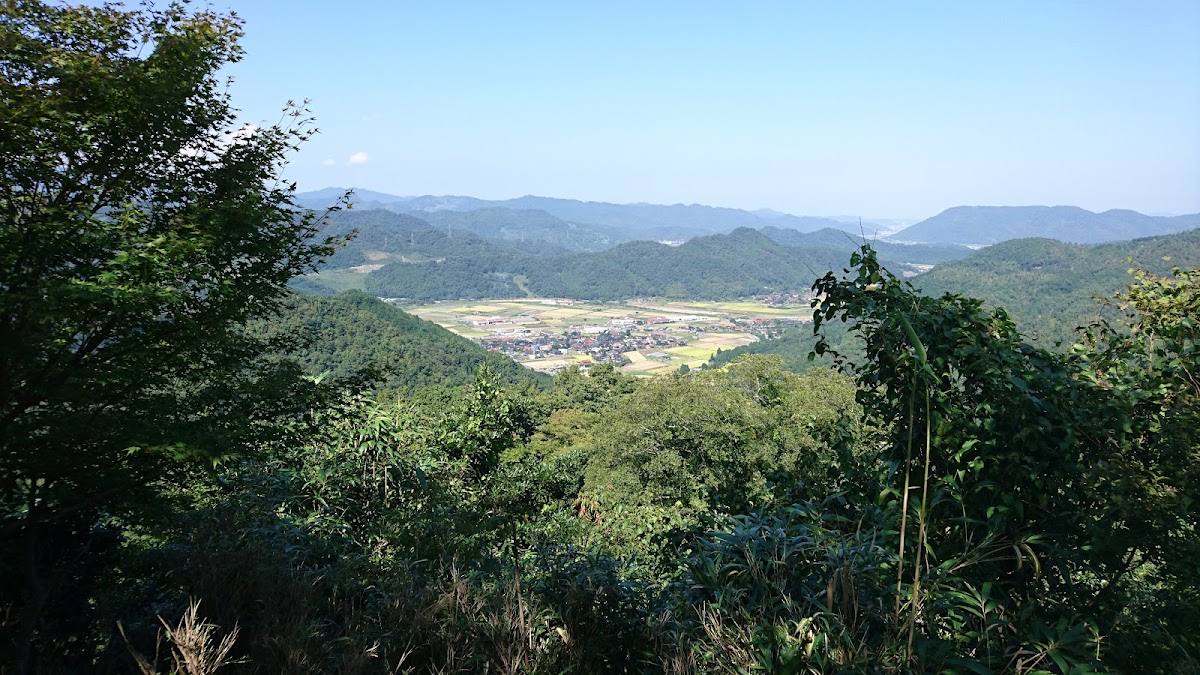
From the honmaru, one can enjoy a panoramic view of the town of Mochigase and the Chiyogawa River, making it an ideal location for monitoring the surrounding area. Furthermore, the view towards Tottori Castle was unobstructed, suggesting it also functioned as a communication hub.
Second and Third Baileys
Below the main bailey are the second and third baileys. These baileys served to defend the main bailey and are presumed to have been used as troop encampments and storage areas for supplies.
There is a clear difference in elevation between the second and third baileys, separated by stone walls and earthworks. Even today, the outlines of these baileys can be seen, providing important clues to understanding the structure of the mountain castle.
Entrances and Defensive Structures
Kageishi Castle had multiple entrances (gateways). Because entrances are often weak points in a castle, they were particularly heavily fortified. Features such as stone-walled entrances and “staggered entrances” (where the passageway curves to prevent direct movement) can be seen.
Furthermore, multiple trenches cutting across the ridgeline were constructed, functioning as important defensive structures to prevent enemy incursions. Vertical trenches branching off from these trenches descended the slopes, serving to defend against attacks from the flanks.
Stone Walls and Earthworks
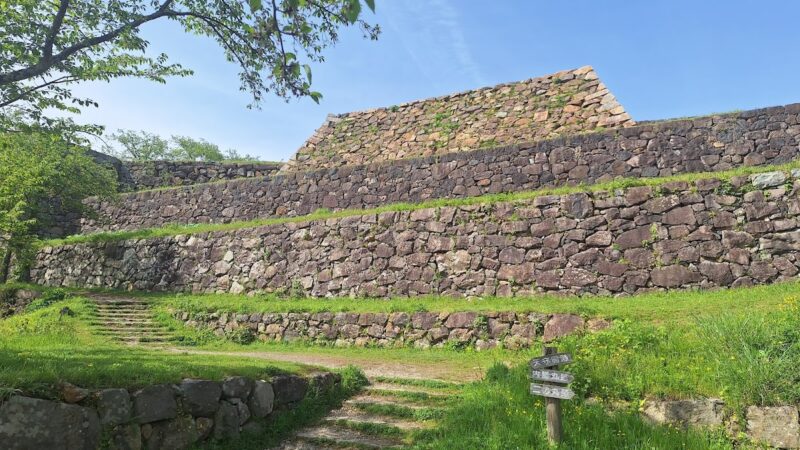
Unusually for a medieval mountain castle, Kageishi Castle utilizes stone walls. These walls were constructed using the nozurazumi technique (a method of stacking natural stones as they are), making them valuable relics demonstrating the castle-building techniques of the Sengoku period.
It has been suggested that some of the stone walls may have been renovated by Isobe Toyonori during the Tensho era, when the castle came under the control of Hashiba Hideyoshi. Since Hideyoshi utilized a group of stonemasons from Omi Province skilled in stonework, it is possible that this technology was also introduced to Kageishi Castle.
Earthworks also remain in various parts of the castle, reinforcing the edges of the baileys and functioning as defensive walls. The combination of earthworks and stone walls is one of Kageishi Castle’s technical characteristics.
Highlights of Keiseki Castle
Natural Fortress on a Cliff
The first thing that overwhelms visitors to Keiseki Castle is the sheer cliff face, stretching for tens of meters. This cliff extends from the north to the east side of the castle, functioning as a natural fortress wall. Standing there, you can truly appreciate how difficult this terrain was to conquer.
From the top of the cliff, you can enjoy a panoramic view of the town of Mochigase, the Chiyogawa River, and the surrounding mountains, making it an attractive scenic spot. The beautiful natural scenery is especially enjoyable during the autumn foliage season and the fresh green season.
Remains of Stone Walls
The stone walls remaining within the castle grounds are one of the important highlights of Keiseki Castle. While some parts of the rough-hewn stone walls have collapsed over the long years, many sections retain their original form, making them valuable resources for learning about medieval mountain castle construction techniques.
The stone walls around the main keep, in particular, are relatively well-preserved, allowing visitors to observe the stone stacking methods and corner treatments. This is a must-see for stone wall enthusiasts. ### Moats and Vertical Moats
The moats cutting across the ridge are important remains for understanding the defensive system of Kageishi Castle. The moats, several meters deep, remain clearly visible, allowing for a visual understanding of their role as obstacles to hinder enemy advances.
Multiple vertical moats extending from the moats down the slope can also be observed, allowing you to experience the defensive structure unique to mountain castles. These remains serve as valuable teaching materials that convey the wisdom and technology of medieval castle architecture to the present day.
Layout of Enclosures
You can actually walk around and confirm the arrangement of multiple enclosures, such as the main enclosure, second enclosure, and third enclosure, in a stepped pattern. By observing the size and arrangement of each enclosure, you can imagine the scale and function of the castle.
The clear elevation differences and divisions between enclosures indicate that Kageishi Castle was a systematically designed castle. For castle enthusiasts, there is the enjoyment of walking while mentally reconstructing the castle’s layout (the blueprint).
Access Route and Ascent
Overview of the Ascent Route
The most common route to Kageishi Castle is a mountain trail starting from the town of Mochigase. The climb from the trailhead to the main keep takes approximately 30-40 minutes. While the path is well-maintained, it includes steep slopes and rocky areas typical of mountain castles, so wearing non-slip shoes such as trekking boots is recommended.
The ascent route follows the ridgeline, allowing you to observe historical remains such as vertical moats and trenches along the way. Since signposts are limited, it’s advisable to check maps and other materials beforehand.
Access by Car
From Tottori City Center: Head south on National Route 53 towards Mochigase Town (approximately 30 minutes)
Parking: Public parking is available in Mochigase Town (there is no dedicated parking for the castle ruins, so please use the public parking facilities in the town)
Access by Public Transportation
From JR Tottori Station: Transfer to the Wakasa Railway and get off at Mochigase Station (approximately 30 minutes)
From Mochigase Station to the Trailhead: Approximately 15-20 minutes on foot
Public transportation is limited, so we recommend checking the timetable in advance.
Points to Note When Visiting
- Attire: Comfortable clothing and non-slip shoes are essential.
- Items to Bring: Drinking water, towel, insect repellent (summer)
- Season: Spring to autumn is suitable for visiting, but be aware of the heat in summer and snow in winter.
- Time Required: Allow approximately 1 hour 30 minutes to 2 hours for climbing and sightseeing.
- Safety Measures: Avoid visiting alone; climbing in a group is recommended.
Kageishi Castle and Surrounding Castles
Relationship with Tottori Castle
Kageishi Castle is located approximately 15 km south of Tottori Castle and formed part of the defense network centered around Tottori Castle. During Hashiba Hideyoshi’s siege of Tottori Castle in the Tensho era, Kageishi Castle functioned as an important base in the siege network, and the two castles were closely related.
Tottori Castle is a nationally designated historical site, and its remains, such as stone walls and turrets, are well-preserved. When visiting Kageishi Castle, visiting Tottori Castle at the same time will allow you to gain a deeper understanding of the castle history of Inaba Province.
Location in relation to Wakasa Onigajo Castle
To the east of Kageishi Castle lies Wakasa Onigajo Castle (a nationally designated historical site). Wakasa Onigajo Castle was an important stronghold in eastern Inaba Province and was under the control of the Yamana clan. It is believed that Kageishi Castle and Wakasa Onigajo Castle functioned as strategic fortresses protecting the east and west of Inaba Province.
Wakasa Onigajo Castle is known as a mountain castle with remarkably well-preserved stone walls and has been selected as one of the Continued Top 100 Japanese Castles. Those who enjoy visiting castles can fully appreciate the mountain castle culture of Inaba Province by visiting both Kageishi Castle and Wakasa Onigajo Castle.
Inaba Province’s Castle Network
Kageishi Castle was part of a network of castles scattered throughout Inaba Province, including Tottori Castle, Wakasa Onigajo Castle, Fuse Tenjin-yama Castle, and Kawara Castle. These castles communicated with each other, establishing a system of cooperative defense against enemy invasions.
The castles of Inaba Province strongly reflect the unique mountain castle culture of the San’in region, and Kageishi Castle occupies an important position as a typical example.
Cultural Value of Kageishi Castle
Protection as a Tottori City Designated Historic Site
Kageishi Castle is protected as a Tottori City designated historic site and is recognized as an important historical heritage of the region. Under the city’s preservation and management plan, the protection and utilization of the remains are progressing.
While measures such as regular mowing and maintenance of dangerous areas are taken to ensure the safety of visitors, the level of maintenance is limited compared to nationally designated historic sites. Therefore, it also has the charm of allowing visitors to enjoy a more natural mountain castle atmosphere.
Importance in Medieval Mountain Castle Research
Kageishi Castle is an important site that shows the changes in mountain castles from the Nanboku-cho period to the Sengoku period. From the initial construction by the Mochigase clan, through the era of the Yamana clan, to the renovations by Hashiba Hideyoshi, traces of multiple periods may be layered within the castle.
Future excavations and research are expected to yield new insights into the medieval history of Inaba Province and the development of mountain castle construction techniques.
Local Historical Education Resource
Kageishi Castle is also utilized as a site for local school education and lifelong learning. Local elementary and junior high school students visit the castle ruins as part of their local history studies, and history enthusiast groups organize guided tours.
For local residents, Kageishi Castle is a source of local pride and a source of historical identity.
The Appeal of Visiting Kageishi Castle
Experiencing Historical Romance
The greatest appeal of visiting Kageishi Castle is the opportunity to experience firsthand the historical romance from the Nanboku-cho period to the Sengoku period. As a castle involved in important events in Japanese history—the battles with the Akamatsu clan, the rule of the Yamana clan, and Hashiba Hideyoshi’s siege of Tottori Castle—it sparks the imagination.
Standing before the stone walls and baileys, imagining the samurai who once fought here makes history feel much closer.
A Fusion of Nature and History
Kageishi Castle is located in a mountainous area rich in nature, offering beautiful scenery throughout the seasons. It displays different expressions with each season: fresh greenery in spring, deep green in summer, vibrant autumn leaves, and snowscapes in winter.
The landscape, where historical remains and nature harmonize, is perfect for refreshing yourself away from the hustle and bustle of the city. It’s a luxurious spot where you can enjoy hiking and historical exploration at the same time.
A Hidden Gem Castle Spot
Compared to Tottori Castle and Wakasa Onigajo Castle, Kageishi Castle is less well-known and a hidden gem with fewer visitors. Therefore, it’s an ideal environment for castle enthusiasts who want to quietly explore the castle ruins and carefully observe the remains.
For those who want to avoid crowds and immerse themselves in history at their own pace, Kageishi Castle is an excellent choice.
Summary: The Historical Significance and Future Prospects of Kageishi Castle
Kageishi Castle is a valuable medieval mountain castle ruin located in Mochigase-cho, Tottori City, Tottori Prefecture. From its construction by the Mochigase clan during the Nanboku-cho period, to its rule by the Yamana clan during the Sengoku period, and its role as a strategic base during Hashiba Hideyoshi’s siege of Tottori Castle, it is an indispensable part of the history of Inaba Province.
The defensive structure utilizing the cliffs, the remains of stone walls and baileys, and the beautiful surrounding natural environment offer visitors a sense of historical romance and tranquility. Protected as a Tottori City designated historical site, Kageishi Castle will continue to be preserved as an important historical heritage of the region.
When visiting Tottori Prefecture, along with the famous Tottori Castle and Wakasa Onigajo Castle, be sure to visit this hidden gem, Kageishi Castle. In the quiet mountains, you can feel the breath of history where medieval samurai once roamed.

-.png)