Katsuyama Castle (Ketaka-cho, Tottori City): A Complete Guide to its History and Highlights | From its Layout to the Kannon Pilgrimage
Located in Katsumi, Ketaka-cho, Tottori City, Tottori Prefecture, Katsuyama Castle is a medieval mountain castle built during the Kōkoku era (1340-1347). With its main keep situated on a 74m-high mountaintop, and featuring a multi-bailey layout with a second bailey to the north and a third bailey to the south, this castle functioned as an important military base in Inaba Province under the control of the Yamana clan. Currently, it is maintained as Katsuyama Castle Ruins Park, where remnants such as trenches and moats can be seen, and it is also a popular route for the Saigoku Kannon Pilgrimage (temples 13-32).
History and Construction Background of Katsuyama Castle
Construction during the Kōkoku Era and Shudo Bungo-no-kami
Katsuyama Castle was built during the Kōkoku era (1340-1347), a turbulent period of the Nanboku-chō era, by Shudo Bungo-no-kami, a retainer of the Yamana clan. This period marked the beginning of the Nanboku-chō era, following the collapse of Emperor Go-Daigo’s Kenmu Restoration and the conflict between the Southern and Northern Courts. The Yamana clan, a powerful general on the Northern Court’s side, was expanding its influence in Inaba Province, and Katsuyama Castle was positioned as an important base for maintaining their control.
Shudo Bungo-no-kami, as a senior retainer of the Yamana clan, is believed to have been entrusted with governing the Ketaka district. The castle was built on a relatively low mountain (74m above sea level) to control a strategically important transportation point near the Sea of Japan, as well as to monitor and control the surrounding area.
The Yamana Clan and Their Rule of Inaba Province
The Yamana clan was a powerful shugo daimyo (provincial governor) that built a vast power base in the San’in region, including Inaba, Hoki, and Tajima provinces, from the Nanboku-cho period to the Muromachi period. At its peak, they controlled many of the shugo positions throughout Japan, earning them the title of “Lord of One-Sixth.” Katsuyama Castle served as a key part of the Yamana clan’s network of control in Inaba Province, acting as a military and administrative center for the region.
The castle’s lord, the Shudo clan, held an important position within the Yamana clan’s retainers, and it is presumed that they governed Ketsuyama District from their base. The castle’s strategic location allowed for monitoring the trade routes along the Sea of Japan coast, suggesting it may have also served as a crucial point for maritime traffic.
Changes After the Sengoku Period
From the late Muromachi period to the Sengoku period, the Yamana clan’s power gradually declined. In Inaba Province, Sengoku daimyo such as the Amago and Mori clans expanded their influence, drastically changing the regional power structure. While there are no clear records of when Katsuyama Castle was abandoned, it is believed that its military function was lost sometime between the late Sengoku period and the early modern period.
In the Edo period, under the stable rule of the Ikeda clan of the Tottori domain, Inaba Province came under stable governance, and Katsuyama Castle, as a mountain castle, ended its historical role. However, its remains remained in the memory of the region for a long time and have been preserved to this day.
Layout and Remains of Katsuyama Castle
Arrangement of the Main Enclosure, Second Enclosure, and Third Enclosure
Katsuyama Castle’s layout employs a linear structure with the main enclosure (Honmaru) located on the mountaintop at an altitude of 74m, followed by the second enclosure (Ninokuruwa) to the north and the third enclosure (Sanokuruwa) to the south. This arrangement is typical of medieval mountain castles, skillfully utilizing the mountain’s terrain to enhance its defensive capabilities.
The main enclosure (Honmaru) is the core of the castle and is presumed to have housed the lord’s residence and command post. Even today, a relatively flat, leveled area remains at the site of the main keep, and traces indicating the existence of buildings can be seen. From the main keep, one can overlook the surrounding plains and the Sea of Japan, indicating its excellent location for surveillance.
The second enclosure (Ninokuruwa) was located north of the main keep and functioned as a secondary enclosure defending the main keep. The third enclosure (Sanokuruwa) was located to the south and is thought to have been responsible for the castle’s frontal defense. These three enclosures were separated by moats and earthworks, forming independent defensive units.
Defensive System of Vertical Moats and Dry Ditches
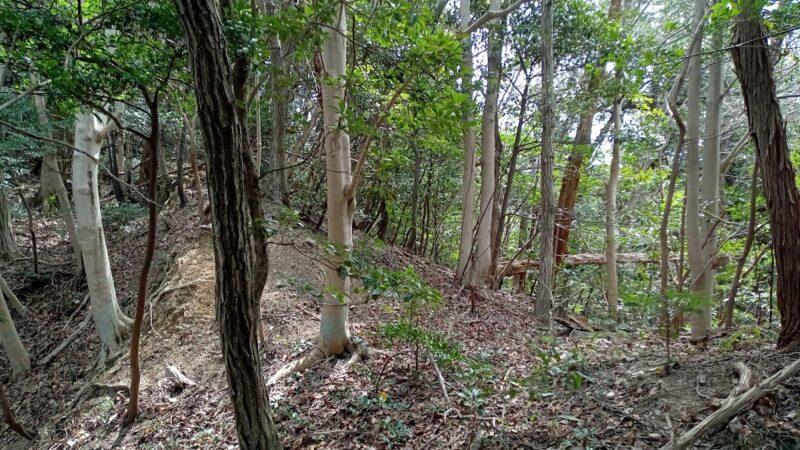
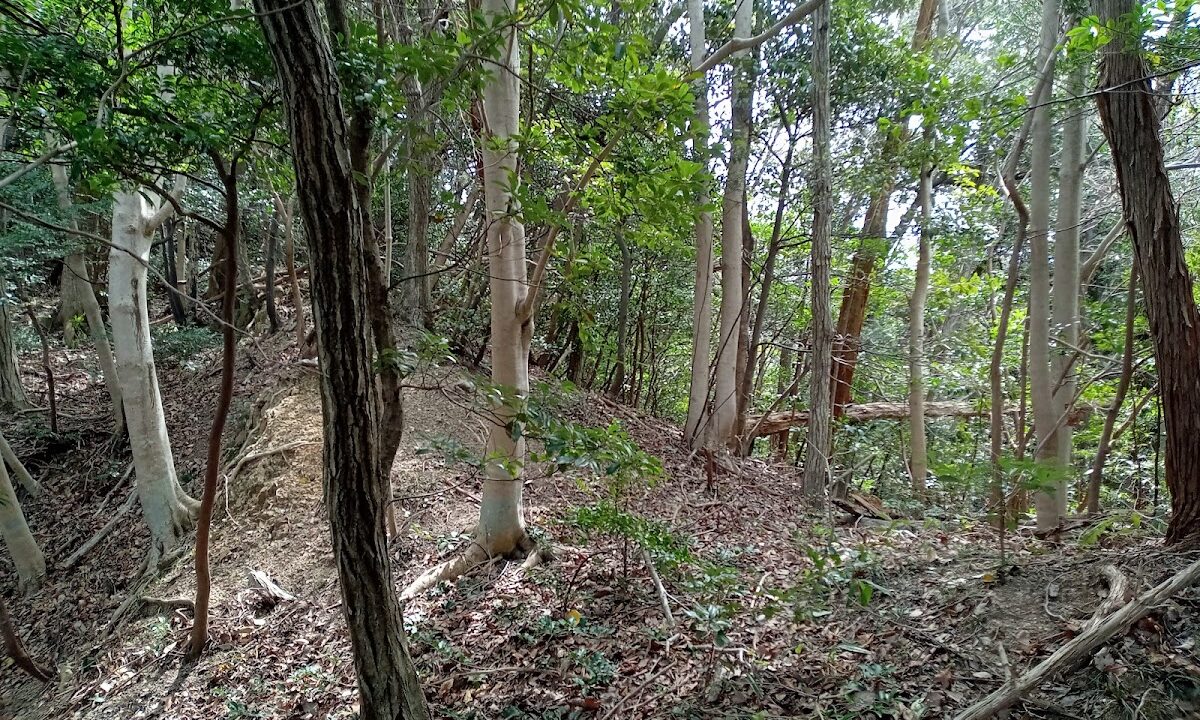
The greatest highlight of Katsuyama Castle is the well-preserved vertical moats and dry ditches. Vertical moats are moats dug vertically along slopes, effectively preventing lateral movement of the enemy and dividing the besieging army. Multiple vertical moats can be identified at Katsuyama Castle, with particularly clear remains on the western slope.
A moat cut across a ridge served to demarcate the baileys and prevent enemies from invading along the ridge. At Katsuyama Castle, moats were constructed between the main bailey and the second bailey, and between the main bailey and the third bailey, and their depth and width can still be appreciated today.
These fortified moats and moats were ingenious methods for effectively defending the castle with limited personnel, and are important remains demonstrating the high level of defensive technology of medieval mountain castles. Even now, as a park, these remains are well-preserved and are a valuable site for castle enthusiasts.
Structure of Earthworks and Cut Slopes
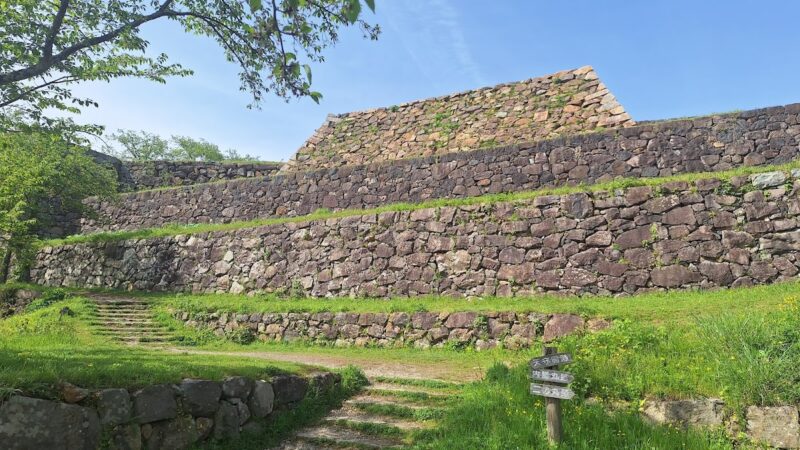
Katsuyama Castle also retains defensive structures such as earthworks and cut slopes. Earthworks are defensive walls built by piling up earth around the baileys, preventing enemy intrusion and also serving as a foundation for fences and walls. Traces of earthworks can be seen around the main bailey and the second bailey, allowing us to imagine the defensive system of the time.
A “kirigishi” is an artificial cliff created by cutting the edge of a bailey at a near-vertical angle, effectively making it difficult for enemies to climb. At Katsuyama Castle, kirigishi were constructed around each bailey, and combined with the natural terrain, they achieved a high level of defense.
By actually walking and examining these remains, you can experience firsthand the defensive principles behind the design of medieval castles.
Development and Current Status of Katsuyama Castle Ruins Park
History of Park Development and Details
Katsuyama Castle Ruins are preserved as a historical asset of the region and have been developed as Katsuyama Castle Ruins Park. In developing the park, a balance was considered between preserving the remains and ensuring the safety and convenience of visitors. Walking paths have been created without damaging the main remains.
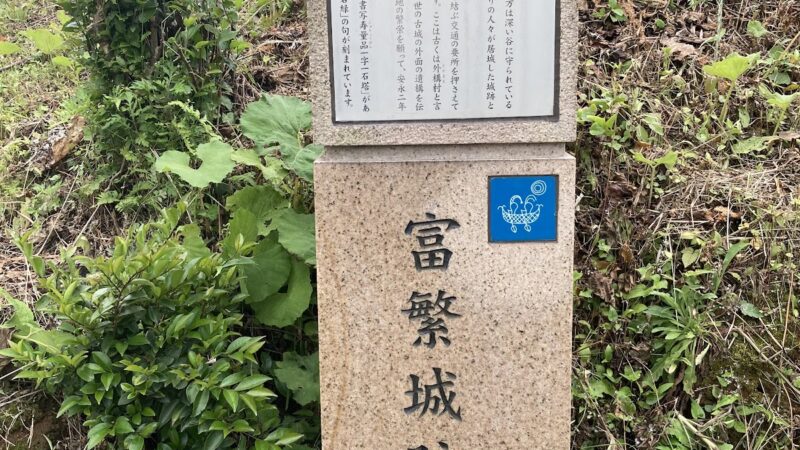
Information boards and explanatory signs are installed within the park, allowing visitors to learn about the castle’s history and structure. Furthermore, signs are placed at the main baileys and moats, making it possible for first-time visitors to locate the remains while exploring.
A parking lot is conveniently located near the park entrance, making it easily accessible by car. From the parking lot to the main keep, it’s about a 10-15 minute walk along a mountain trail. The path is relatively gentle, making it manageable even for those without much physical stamina.
Integration with the Saigoku Kannon Pilgrimage
A distinctive feature of Katsuyama Castle Ruins Park is the presence of a pilgrimage route (numbers 13-32) for the Saigoku Kannon Pilgrimage. Kannon statues are strategically placed along the castle ruins’ walking paths, allowing visitors to enjoy both castle sightseeing and a pilgrimage simultaneously.
This Kannon pilgrimage reflects the local religious culture, creating a unique space where historical castle ruins and religious pilgrimage merge. Each Kannon statue is marked with a number and its history, allowing pilgrims to visit them in order while exploring the castle ruins.
As a park beloved not only by castle enthusiasts but also by pilgrims and local residents, Katsuyama Castle Ruins is a cultural heritage site with diverse values.
Notes and Etiquette for Visitors
There are several points to keep in mind when visiting Katsuyama Castle Ruins Park. First, as it is a mountain castle, appropriate clothing and shoes for hiking are necessary. Particular caution is needed during rainy weather and winter, as the ground can be slippery.
Also, to protect the ruins, please refrain from entering earthworks or moats without permission, and avoid damaging the ruins. Photography is permitted, but please be considerate of other visitors and pilgrims.
In summer, be sure to bring insect repellent, and in winter, take precautions against the cold. Bringing drinks and snacks will allow you to enjoy your visit at a leisurely pace.
Access and Surrounding Sightseeing Information
How to Access Katsuyama Castle
The most convenient way to access Katsuyama Castle Ruins Park is by car. From central Tottori City, head west on National Route 9 towards Ketaka-cho. The journey takes approximately 30 minutes and covers a distance of about 20 km.
If using public transportation, the nearest station is Hamamura Station on the JR San’in Main Line. From Hamamura Station, it’s about a 30-40 minute walk (approximately 3 km). A taxi ride takes about 10 minutes.
Parking is available near the park entrance and is free of charge. However, parking is limited, so early arrival is recommended, especially during peak tourist season and weekends.
Nearby Tourist Attractions
There are several tourist attractions around Katsuyama Castle. The closest is Hamamura Onsen, about a 10-minute drive from the castle. Hamamura Onsen has long been known as a hot spring resort, offering high-quality hot springs and seafood from the Sea of Japan. Relaxing in the hot springs after visiting the castle is highly recommended.
Also, towards Tottori city center is the site of Tottori Castle. Tottori Castle is a famous castle selected as one of Japan’s 100 Famous Castles and is known for its siege by Hashiba Hideyoshi. A combined castle tour of Katsuyama Castle and Tottori Castle is a popular route.
The area around Ketaka-cho boasts a beautiful coastline along the Sea of Japan, perfect for driving and swimming. It’s a particularly popular tourist destination during the summer months.
Nearby Accommodations and Hotel Information
For those seeking accommodation near Katsuyama Castle, the inns and hotels in Hamamura Onsen are convenient. These hot spring inns offer cuisine featuring fresh seafood from the Sea of Japan and are ideal bases for sightseeing. Many facilities now offer Wi-Fi in all rooms, and you can choose from accommodations with modern amenities.
Tottori City’s city center has numerous business and city hotels, offering a wider range of choices. It’s also possible to plan a trip to Katsuyama Castle and Tottori Castle from Tottori City. Hotels in the city center offer convenient transportation and plenty of restaurants and convenience stores.
Depending on your budget and travel style, you can choose between a stay at a hot spring inn or a more convenient hotel.
Highlights and Photo Opportunities at Katsuyama Castle
View from the Main Keep
One of the biggest highlights of Katsuyama Castle is the view from the main keep. Although its elevation of 74 meters is not particularly high, the surrounding plains offer exceptionally open views. On clear days, you can enjoy panoramic views of the blue Sea of Japan and the rural landscape of the Ketaka Plain, making it an excellent photo spot.
Especially at sunset, you can enjoy the romantic atmosphere as you watch the sun sink into the Sea of Japan. It’s also a popular spot for landscape photography enthusiasts.
A statue of Kannon (Goddess of Mercy) is also located at the site of the main keep, creating a unique landscape where historical atmosphere and natural beauty harmonize.
Photographing the Moats and Fortified Moats
For castle enthusiasts, the remains of moats and fortified moats are the most important subjects for photography. The moat between the main keep and the second bailey, in particular, is deep and retains a clear shape, making it valuable information for understanding the defensive structure of a medieval mountain castle.
The fortified moats are prominently preserved on the western slope, and you can see that multiple fortified moats were dug in parallel. These remains change significantly depending on the angle and lighting, so visiting at different times of day will allow you to enjoy different perspectives.
When photographing the ruins, it’s effective to include people in the shot to convey a sense of scale, or to utilize the contrast with surrounding trees.
A Landscape of Fusion between Kannon Statues and Castle Ruins
A unique highlight of Katsuyama Castle Ruins Park is the landscape where Kannon statues and castle ruins are fused together. The Kannon statues placed along the walking paths add a religious solemnity to the historical atmosphere of the castle ruins, creating a unique landscape not seen at other castle sites.
In particular, the Kannon statues around the main keep offer a photogenic composition with the Sea of Japan and the plains in the background. Including pilgrims on a pilgrimage to the Kannon temples in the photograph will convey the diverse uses of the castle ruins in modern times.
Katsuyama Castle and Other Castles in Inaba Province
Comparison with Tottori Castle
As representative castles of Inaba Province, comparing Katsuyama Castle with Tottori Castle reveals many interesting points. Tottori Castle is a large mountain castle built on Mount Hisamatsu (263m above sea level) and functioned as the central fortress of Inaba Province from the Sengoku period to the Edo period. On the other hand, Katsuyama Castle is a medieval mountain castle built on a relatively low mountain (74m above sea level), smaller in scale, and more strongly characterized as a regional base.
Tottori Castle is nationally known for its role in the siege by Hashiba Hideyoshi and as the residence of the Ikeda clan, but Katsuyama Castle has a more locally-rooted history, playing an important role in local history. Visiting both castles allows you to experience the transformation of castles from the medieval to the early modern period.
Inaba Province’s Mountain Castle Network
Katsuyama Castle was part of the Yamana clan’s castle network in Inaba Province. Numerous other mountain castles were built within Inaba Province, and these interconnected supported regional control.
Major castles in the region included Tottori Castle, Iwai Castle in Iwami Town, and Shizu Castle in Yazu Town, each strategically located at key points in their respective regions. Katsuyama Castle is thought to have played a role in monitoring the trade routes along the Sea of Japan coast, working in conjunction with inland castles to form a comprehensive defense system for the entire Inaba Province.
Visiting these castles provides a multifaceted understanding of the regional governance structure and military strategies of the medieval period.
Practical Advice for Visiting Katsuyama Castle
Best Time to Visit and Required Time
The best time to visit Katsuyama Castle Ruins Park is spring (April-May) and autumn (October-November). The weather is mild during these times, and the fresh greenery and autumn leaves are beautiful, making for a pleasant stroll. In particular, cherry blossoms bloom in spring, and the autumn leaves are at their peak, further enhancing the scenery of the castle ruins.
During summer (June-August), the heat and insects are numerous, so insect repellent, a hat, and drinking water are essential. During the winter months (December to February), there is a possibility of snow and ice, so please check the weather before visiting and prepare appropriate equipment.
The estimated time required for a visit, including the round trip from the parking lot to the main keep and viewing the ruins, is approximately 1-2 hours. If you plan to carefully visit the Kannon pilgrimage sites or enjoy taking photographs, it is advisable to allocate more time.
Equipment and Preparations to Bring
We recommend preparing the following equipment when visiting Katsuyama Castle.
Essential Equipment:
- Comfortable walking shoes (trekking shoes or athletic shoes)
- Drinking water
- Towel
- Rain gear (folding umbrella or raincoat)
Recommended Equipment:
- Camera (for photographing ruins and scenery)
- Binoculars (for checking distant views)
- Map or guidebook
- Insect repellent (summer)
- Hat and sunscreen (summer)
- Warm clothing (winter)
- Snacks or energy supplements
Since the castle ruins involve walking on mountain paths, comfortable clothing is essential. For those who want to examine the details of the ruins, gathering information beforehand from castle-related books or websites will allow for a deeper understanding.
Photography Tips
Here are some tips for taking effective photos at Katsuyama Castle.
Photographing Ruins: Photographing moats and trenches from an angle makes it easier to convey their depth and shape. Including people in the photo can also convey a sense of scale.
Photographing the Landscape: Using a wide-angle lens, you can capture a vast landscape from the main keep. At sunset, combining the silhouette of the setting sun over the Sea of Japan with the view creates a striking photograph.
Photographing the Kannon Statue: Including nature or historical remains in the background of the Kannon statue expresses the unique atmosphere of the castle ruins. Shooting with the light behind you will capture even the finest details of the statue.
Expressing the Seasons: Incorporating seasonal features such as cherry blossoms in spring, fresh greenery in summer, autumn leaves in fall, and snowscapes in winter conveys the changing appearance of the castle ruins throughout the year.
Historical Value and Future Preservation of Katsuyama Castle
Academic Value as a Medieval Mountain Castle
Katsuyama Castle holds significant academic value as a typical example of a medieval mountain castle from the Nanboku-cho period to the Muromachi period. Defensive remains such as trenches and moats are well-preserved, making it a valuable resource for studying medieval castle construction techniques and defensive philosophies.
In particular, the castle’s multi-bailey layout and defensive system, which skillfully utilizes the natural terrain, demonstrate medieval ingenuity in achieving effective defense with limited personnel and resources, making it an important subject of study for castle researchers.
Furthermore, Katsuyama Castle is indispensable for understanding the Yamana clan’s rule and the regional history of Inaba Province. In medieval local history, where documentary sources are limited, physical evidence such as castle ruins provides crucial clues to unraveling history.
Significance as a Regional Cultural Heritage Site
Katsuyama Castle is also an important cultural heritage site that forms the regional identity of Ketaka Town. For local residents, the castle ruins are evidence of the history in which their ancestors lived and a symbol of regional pride.
Its integration with the Saigoku Kannon Pilgrimage creates a unique cultural space where historical heritage and religious culture are unified, and it is a good example of how regional faith and history have been passed down to the present day. Cultural heritage sites with such multi-layered value play an important role in regional history education and tourism promotion.
Challenges for Future Preservation and Utilization
There are several challenges to the future preservation and utilization of the Katsuyama Castle ruins. First, there is the preservation and management of the remains. Due to natural weathering and vegetation erosion, the remains will gradually deteriorate. Regular maintenance such as mowing, tree management, and preventing soil erosion are necessary.
Second, there is the need to improve information provision for visitors. While information boards and explanatory signs are currently in place, introducing more detailed historical information, explanations of the remains, and guide systems utilizing digital technology would deepen visitors’ understanding.
Furthermore, utilization as a tourist resource is important. Developing sightseeing routes that combine Katsuyama Castle with other famous castles such as Tottori Castle, and holding events for castle enthusiasts, are expected to help more people understand the value of Katsuyama Castle.
The cooperation of local residents, government officials, researchers, and tourism stakeholders in passing on the Katsuyama Castle ruins to future generations is both a major challenge and an opportunity for the future.
Summary: Experience the Charm of Katsuyama Castle
Katsuyama Castle, located in Ketaka-cho, Tottori City, Tottori Prefecture, is a medieval mountain castle built during the Kōkoku era, possessing valuable historical significance. The castle’s layout, centered around the main keep situated on a 74-meter-high mountaintop, and its well-preserved remains such as trenches and moats, showcase medieval castle-building techniques.
Now developed as Katsuyama Castle Ruins Park, the castle site is more than just a historical relic; it also functions as part of the Saigoku Kannon Pilgrimage route, creating a unique cultural space where history and faith intertwine. The view from the main keep is magnificent, offering panoramic views of the Sea of Japan and the Ketaka Plain.
Access is convenient, approximately 30 minutes by car from central Tottori City, and nearby attractions include Hamamura Onsen and Tottori Castle. The main keep is only about a 10-15 minute walk from the parking lot, making it a relatively easy mountain castle to visit.
Katsuyama Castle is a place that can be enjoyed by a diverse range of visitors, including castle enthusiasts, history buffs, nature lovers, and those interested in pilgrimage. We encourage you to visit and experience the charm of this castle, where medieval history, natural beauty, and local culture harmoniously blend. With its cherry blossoms in spring, lush greenery in summer, vibrant autumn leaves, and tranquil winter solitude, Katsuyama Castle displays different expressions throughout the seasons, inviting you to a journey into the romance of history.