Gozenhara Castle (Tochigi Prefecture): A Complete Guide to its History and Highlights | A Thorough Explanation of the Shioya Clan’s Castle Ruins
What is Gozenhara Castle?
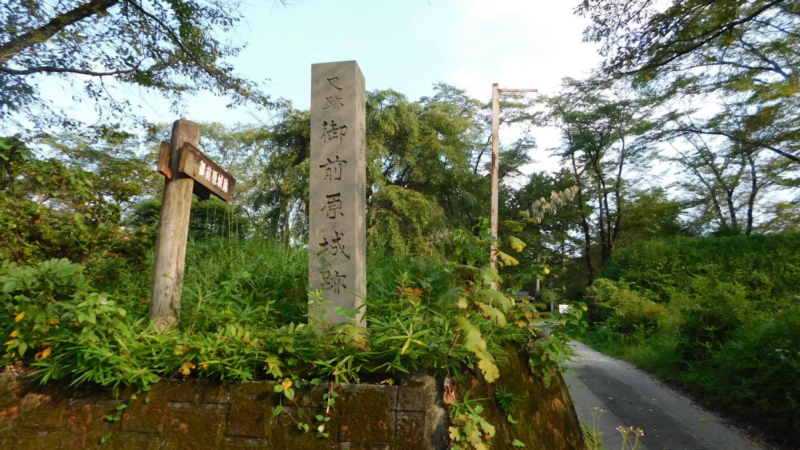
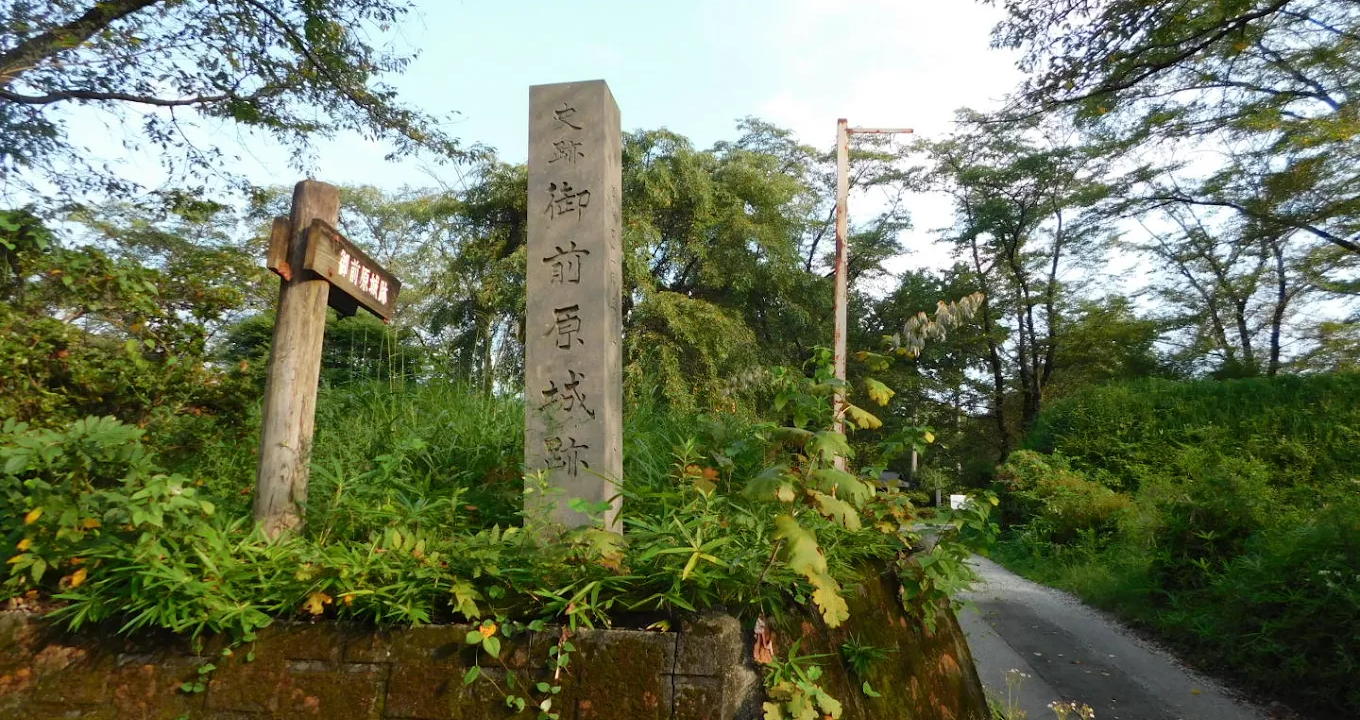
Gozenhara Castle (Gozenhara-jo) is a medieval hilltop castle located in Hayakawa-cho, Yaita City, Tochigi Prefecture. Also known as Shioya Castle, Shioya Old Castle, and Nakamura Castle, it functioned as an important base for the Shioya clan, who ruled the Shioya region. Currently, it is protected as a Tochigi Prefecture designated historical site, and the remains, centered around the main keep, have been developed into Gozenhara Park, a popular spot for locals.
Gozenhara Castle was located at a crucial transportation hub connecting the Nasu region and Utsunomiya, playing an important role as the political and military center of the Shioya region during the medieval period. The castle ruins are now located within the grounds of the Sharp Tochigi factory, preserving valuable medieval castle remains despite being in an industrial area.
Construction Date and History
There are several theories regarding the construction date of Gozenbara Castle, and debate continues among researchers. The main theories are as follows:
Jisho-Juei Period Theory (1177-1185)
According to the oldest tradition, it was built during the Jisho-Juei period (late Heian period to early Kamakura period) by Horie Saemon-no-jo Yorizumi (later Shioya Yorizumi). This period coincided with the Genpei War, a time when eastern warrior groups were expanding their power. Horie Yorizumi is said to have been a grandson of Minamoto no Yoshiie, and is believed to have settled in this area and become the ancestor of the Shioya clan.
Showa 4th Year Theory (1315)
On the other hand, a more reliable record suggests that it was built in Showa 4th year (1315) by Shioya Yoriyasu. This period coincided with the late Kamakura period, a time when the Shioya clan was consolidating their power under the control of the Utsunomiya clan. The theory that the castle was built in Shōwa 4 (1317) is highly consistent with historical documents, and many researchers currently support this theory.
Background of the Castle’s Construction
The strategic importance of the Shioya region is the background to the construction of Gozenbara Castle. This region is located along the road from Nasu to Utsunomiya and was a key transportation hub in northern Kanto. The Shioya clan, as a branch of the Utsunomiya clan, was entrusted with governing this region, and it is believed that they built Gozenbara Castle as their base.
It is said that it was initially called “Nakamura Castle,” and later the name “Gozenbara Castle” became established. There are various theories about the origin of the place name “Gozenbara,” but the most likely theory is that it derives from “Gozen,” which refers to the location of the lord’s residence.
History of the Shioya Clan and Gozenbara Castle
Origin of the Shioya Clan
The Shioya clan was a medieval samurai group based in Shioya County, Shimotsuke Province. Regarding its origins, there is a tradition that Horie Yorizumi, a grandson of Minamoto no Yoshiie, settled in Shioya County and adopted the name Shioya. However, there is little reliable historical evidence to support this, and many aspects of the actual lineage remain unclear.
The Shioya clan developed as a branch of the Utsunomiya clan, and as the Utsunomiya clan’s power expanded, they became a powerful local lord in the Shioya region. They frequently adopted sons from the Utsunomiya clan, and the relationship between the two clans was close.
Shioya Tomonari and Gozenbara Castle
One of the important figures in the history of the Shioya clan is Shioya Tomonari. Tomonari was adopted into the Shioya clan from the Utsunomiya clan and became the head of the Shioya clan. According to tradition, Tomonari also initially resided in Gozenbara Castle.
During Tomonari’s time, the Shioya clan expanded its power and later built Kawasaki Castle (Kitsuregawa Castle), moving its base there. As a result, Gozenbara Castle came to serve as a branch castle of the Shioya clan.
About Shioya Yoriyasu
Shioya Yoriyasu, whose name appears in the castle construction records of 1315 (Showa 4), was an important figure in the development of the Shioya clan. Yoriyasu’s era was a transitional period from the late Kamakura period to the Nanboku-cho period, a time of great upheaval in samurai society.
By constructing Gozenbara Castle, Yoriyasu strengthened the Shioya clan’s control over the Shioya region. The castle’s structure also reflects the characteristics of castle construction techniques from this period. After Yoriyasu, the Shioya clan maintained their power by using this area as their base for generations.
Successive Lords and Changes in the Castle
From the Kamakura Period to the Nanboku-cho Period
Gozenbara Castle functioned as an important base for the Shioya clan since its construction. From the late Kamakura period to the Nanboku-cho period, the Shioya clan, along with the Utsunomiya clan, acted on the side of the Northern Court and maintained control of this region. It is believed that Gozenbara Castle played a role as a military base during this period.
From the Muromachi Period to the Sengoku Period
During the Muromachi period, the Shioya clan’s main base moved to Kawasaki Castle, but Omaehara Castle continued to play an important role as a subsidiary castle. During the Sengoku period, the Shioya clan fought for survival amidst the complex power dynamics of the Kanto region.
Omaehara Castle, as a subsidiary castle of Kawasaki Castle, formed part of the Shioya clan’s network of territorial control. The castle lord was a member of the Shioya clan or a senior retainer, and it functioned as a regional administrative center.
Early Edo Period and Abandonment
During the Edo period, the Shioya clan lost power amidst the chaos following Toyotomi Hideyoshi’s siege of Odawara, and was eventually dispossessed of their domain. Omaehara Castle was officially abandoned on September 19, 1644 (Shoho 1).
After its abandonment, the castle site was used for farmland and residential areas, gradually losing its appearance as a castle. However, the main keep area remained relatively well-preserved and was passed down to future generations.
Structure and Layout of Gozenbara Castle
Castle Location and Topography
Gozenbara Castle is classified as a hill castle, but in reality, its location is closer to that of a flatland castle. It was built on a river terrace of the Hokigawa River, slightly higher than the surrounding plains. This slight elevation enhanced its defensive capabilities.
The area surrounding the castle is at the edge of the Nasunogahara alluvial fan, a land blessed with abundant water resources. It is believed that a settlement formed below the castle, taking advantage of this geographical advantage.
Structure of the Honmaru (Main Enclosure)
The remaining Honmaru site is roughly square in shape, surrounded on all four sides by earthen ramparts. These ramparts are approximately 2-3 meters high and 5-6 meters wide, typical defensive structures of medieval castles.
The Honmaru measures approximately 60 meters east-west and 55 meters north-south, with an area of approximately 33,985 square meters. This area was spacious enough to accommodate the lord’s residence and important facilities.
Moat Arrangement
A dry moat surrounded the main enclosure. This moat was located outside the earthworks and served as an important defensive structure to prevent enemy intrusion. Traces of the dry moat can still be seen in some areas today.
The dry moat is estimated to have been approximately 5-8 meters wide and 2-3 meters deep. While this is a standard size for medieval castle construction, it provided sufficient defensive capabilities for a castle on flat ground.
Entrance/Exit
The entrance/exit to the main enclosure, the koguchi (gateway), can still be seen as a surviving structure. The koguchi was not a simple opening; the earthworks were curved to enhance its defensive capabilities. This is a typical medieval castle technique designed to prevent direct enemy advances and give the defenders an advantage.
The arrangement of the earthworks around the koguchi suggests the possibility of a masugata-koguchi (square-shaped gateway) structure. This may be a trace of modifications influenced by Sengoku period castle construction techniques.
About the Second and Third Baileys
It is believed that in addition to the main bailey (Honmaru), the Omaehara Castle had outer fortifications such as the second and third baileys (Ninmaru and Sannomaru). However, these baileys have been lost due to modern development, and only the main bailey remains today.
From archaeological excavations and research on old maps, it is estimated that multiple baileys were arranged around the main bailey. These baileys are thought to have housed the residences of retainers, warehouses, and stables.
Highlights of the Remains
Earthworks
The most prominent remains of Omaehara Castle are the earthworks surrounding the main bailey. These earthworks, encircling the castle on all four sides, are typical defensive structures of medieval castles and are relatively well-preserved. Climbing the earthworks allows one to understand the castle’s structure and the surrounding topography.
Observing the cross-section of the earthworks reveals the meticulous construction techniques of the rammed earth method. This technique, which strengthens the earth by compacting it in layers, demonstrates the high level of civil engineering technology in the medieval period.
Remains of the Dry Moat
The dry moat that surrounded the outside of the main enclosure has been partially filled in or altered, but traces of it can still be seen. The topography of the dry moat remains relatively clear, especially on the north and east sides, making it an important remains for understanding the castle’s defensive structure.
Walking along the bottom of the dry moat, combined with the height of the earthworks, allows you to truly appreciate its function as a defensive structure.
Remains of the Tiger’s Moat
The remains of the tiger’s mouth (entrance) are one of the highlights of Gozenbara Castle. The tiger’s mouth, built as an opening in the earthworks, is not a simple gate, but a structure that enhances defensiveness by skillfully arranging the earthworks.
Observing the area around the tiger’s mouth, you can discern the defensive ingenuity that utilized the curves and elevation differences of the earthworks. This is a valuable teaching material for learning about medieval castle construction techniques.
Measles Jizo
At the site of the main enclosure, there is a rare stone structure called the “Measles Jizo.” This Jizo statue became an object of folk belief, as it was believed that drinking the powder scraped from it would lessen the severity of measles. Over many years, its surface was continuously scraped, resulting in its unique shape.
While this Jizo statue is not directly related to the history of Gozenbara Castle, it is an interesting cultural artifact that demonstrates how the castle ruins were cherished by the local people even after the castle’s abandonment.
Possibility of Garden Remains
Recent research suggests the possibility of garden remains within the main enclosure. Stone structures and pond-like remains discovered during excavations may have been part of a garden attached to the lord’s residence.
This is important evidence that Gozenbara Castle functioned not merely as a military facility, but also as a living space for the lord.
Gozenbara Castle Today
Development as Gozenbara Park
Currently, the main enclosure of Gozenbara Castle has been developed as “Gozenbara Park,” a place of relaxation for citizens. Walking paths have been established within the park, allowing visitors to stroll and view remains such as earthworks and dry moats.
In spring, the area is renowned for its cherry blossoms, making it a famous spot for viewing them. The combination of the castle ruins and cherry blossoms creates a beautiful landscape where history and nature harmonize.
Tochigi Prefecture Designated Historic Site
The Gozenbara Castle Ruins were designated a Tochigi Prefecture Historic Site in 1966. This designation granted legal protection to the valuable remains of a medieval castle.
The designated area is approximately 33,985 square meters, with the main keep (honmaru) being the primary focus of preservation. Appropriate preservation and management are carried out as a prefectural cultural property.
Surrounding Development and Preservation
The area surrounding the Gozenbara Castle Ruins underwent development as an industrial zone after the period of rapid economic growth. Currently, the castle ruins are located within the grounds of the Sharp Tochigi factory, and the baileys and outer facilities other than the main keep have been lost.
Due to surrounding development following the opening of the National Route 4 Yaita Bypass, the remains other than the main keep and gate were lost, but the main keep, which was a prefectural designated cultural property, was preserved. This is an important example for considering the balance between development and cultural property preservation.
Sale of Castle Stamps
Sale of castle stamps for the Gozenbara Castle ruins began on March 25, 2023. Castle stamps are popular among castle enthusiasts and play a role in increasing interest in Gozenbara Castle.
The castle stamps describe the history and features of Gozenbara Castle, serving as a memento of the visit and an opportunity to learn about the castle’s history. They can be purchased at designated locations within Yaita City.
Access and Visiting Information
Gozenbara Castle ruins are approximately a 20-minute walk or a 5-minute drive from JR Yaita Station. It is also easily accessible from National Route 4.
As it is maintained as a park, it is generally possible to visit freely. However, since it is adjacent to a factory site, consideration for surrounding facilities is necessary when visiting.
There is some parking space near the park, but parking for large vehicles is difficult. There are no specific restrictions on visiting hours, but visiting during daylight hours is recommended.
Relationship between the Shioya Clan and Kawasaki Castle
Relocation of the Main Base to Kawasaki Castle
The Shioya clan later moved their main base to Kawasaki Castle (present-day Kitsuregawa, Sakura City, Tochigi Prefecture). Kawasaki Castle was larger in scale than Omaehara Castle and located in a more defensible position. This relocation meant that Omaehara Castle took on the role of a subsidiary castle.
There are various theories regarding the timing of the relocation, but it is generally believed to have occurred between the Nanboku-cho period and the early Muromachi period. It is presumed that as the Shioya clan’s power expanded, Kawasaki Castle, with its more central location, was chosen to govern a larger territory.
Function as a Subsidiary Castle
Even after Kawasaki Castle became the main castle, Omaehara Castle played an important role in the Shioya clan’s rule of their territory. It is thought to have functioned as a base to control the northern part of the Shioya region and as part of the defense line of Kawasaki Castle.
Members of the Shioya clan and important retainers were stationed at the subsidiary castle, responsible for the governance and defense of the region. Omaehara Castle and Kawasaki Castle worked in conjunction with each other, forming a castle network that supported the Shioya clan’s rule over their territory.
Other Castles of the Shioya Clan
Besides Omaehara Castle and Kawasaki Castle, the Shioya clan built several other castles within their territory. These castles worked in conjunction with each other, forming a military and administrative network that supported the Shioya clan’s rule over their territory.
Major castles include Sakuyama Castle and Arai Castle, each functioning as a regional base. The arrangement of these castles reveals the Shioya clan’s strategy for managing their territory.
The Social Reform Uprising and Omaehara Castle
Social Unrest in the Late Edo Period
During the late Edo period, popular uprisings known as “social reform uprisings” occurred throughout Japan. Social unrest also rose in the Shioya region, leading to popular disturbances. It is believed that the area around the Omaehara Castle ruins was affected by these disturbances during this period.
Impact on the Local Community
Even during the late Edo period, approximately 200 years after the abandonment of Omaehara Castle, the castle ruins were recognized by the people as a historical site in the region. During the uprisings of the Edo period, the area around the castle ruins may have been used as a meeting place or refuge.
Such events demonstrate that Omaehara Castle was not merely a historical site, but a place deeply connected to the local community.
Archaeological Excavations and Research Findings
Past Investigations
Multiple archaeological excavations have been conducted at the Omaehara Castle site. These investigations have yielded valuable information about the castle’s structure, changes over time, and the period of its use.
The investigations have uncovered remains such as post holes, ditches, earthworks, moats, and gates, revealing the castle’s specific structure. Furthermore, fragments of pottery and porcelain unearthed provide insights into the period of the castle’s use and the lifestyle of its inhabitants.
Discovery of Garden Remains
Recent investigations have uncovered remains believed to be those of a garden within the main enclosure. The stone structures and pond-like remains are highly likely to have been part of a garden attached to the lord’s residence.
This discovery is important evidence that Gozenbara Castle was not merely a military facility, but also possessed cultural aspects. It is a valuable resource for understanding the lifestyle and culture of medieval castles.
Excavated Artifacts
The excavation unearthed medieval ceramics, pottery, iron artifacts, and stone artifacts. These artifacts provide clues to the life and activities within the castle.
In particular, some of the ceramics include high-quality items transported from distant locations, indicating the lord’s economic power and trade relationships. Furthermore, fragments of weapons and armor confirm the castle’s military character.
Future Research Topics
Many aspects of Gozenbara Castle remain unexplained. Determining the construction date, the castle’s transformation process, and its use after abandonment are just some of the many research topics that are expected to be addressed in the future.
In particular, the structure of the lost outer fortifications needs to be reconstructed through analysis of old maps and historical documents, as well as topographical surveys of the surrounding area. Comparative research with other castles of the Shioya clan is also important.
Gozenbara Castle and the Medieval Shioya Region
Regional Political Situation
The medieval Shioya region belonged to the sphere of influence of the Utsunomiya clan. The Shioya clan, as a branch of the Utsunomiya clan, was entrusted with governing this region. Gozenbara Castle was built and functioned within this political context.
The relationship between the Utsunomiya and Shioya clans was one of master-vassal, but also one of close blood ties through adoption and other means. This relationship played a crucial role in maintaining the power of both clans.
Economy and Transportation
The Shioya region was located along the road connecting the Nasu region and Utsunomiya, making it a vital transportation hub. Gozenbara Castle, situated to control this road, is thought to have functioned as a management center for transportation and logistics.
It is presumed that a market was held in the castle town, and commercial activities took place there. The castle lord gained economic benefits by managing transportation and commerce, which formed the basis for maintaining the castle and its military power.
Religion and Culture
Medieval castles were not merely military facilities, but also centers of local religion and culture. It is believed that there were temples and shrines related to the faith of the castle lord and his retainers at Gozenbara Castle.
Temples and shrines were built within the castle grounds and in the castle town, becoming objects of worship for the castle lord, his retainers, and the people of the territory. These religious facilities also functioned as spiritual centers for the local community.
Points to Note When Visiting Gozenbara Castle
Tips for Visiting
When visiting the Gozenbara Castle ruins, it is recommended to first check the castle’s overview on the park’s information board. After that, climbing the earthworks to get an overview of the castle’s structure and then viewing the remains such as the dry moats and gates in order will make it easier to understand the overall structure of the castle.
When walking on the earthworks, be careful of your footing. Also, to protect the remains, please be careful not to damage the earthworks or dry moats.
Photo Spots
Recommended photo spots at the Gozenbara Castle ruins include the view of the dry moat from atop the earthworks, the remains of the castle gate, and the combination of cherry blossoms and earthworks in spring. For photographing the entire castle site, an overhead view from outside the park is also effective.
Nearby Attractions
When visiting the Gozenbara Castle ruins, we recommend also visiting other historical spots in Yaita City. At the Yaita City Local History Museum, you can see materials related to Gozenbara Castle and the Shioya clan.
Also, if you have time, the Kawasaki Castle ruins (Kitsuregawa, Sakura City), which was the main castle of the Shioya clan, are worth visiting. Comparing the two castles will give you a deeper understanding of the Shioya clan’s castle strategy.
Best Season
The best seasons to visit the Gozenbara Castle ruins are spring (late March to early April) when the cherry blossoms are in bloom, and early summer (May to June) when the fresh greenery is beautiful. While the autumn foliage season is also charming, the spring scenery is particularly magnificent, as it is known as a famous cherry blossom viewing spot.
Historical Significance of Gozenbara Castle
Position in Medieval Castle History
Gozenbara Castle holds significant value as a typical example of a medieval castle in the Kanto region. Built on a hilltop location close to flatland, its structure, primarily consisting of earthworks and dry moats, clearly demonstrates the characteristics of castle construction technology during this period.
In particular, the structure of surrounding the square main enclosure with earthworks and dry moats is a common feature of castles from the early to mid-medieval period, making it important material for castle history research.
Importance in Regional History
Gozenbara Castle is an indispensable site for understanding the medieval history of the Shioya region. As the base of the Shioya clan, it played a central role in the region’s politics, military, and economy, and is a valuable cultural asset that concretely illustrates the region’s history.
The preservation and utilization of the castle ruins are of great importance in maintaining the region’s historical identity and passing it on to future generations.
Value as a Cultural Property
The Omaehara Castle Ruins, protected as a Tochigi Prefecture designated historical site, are a valuable cultural property that preserves the remains of a medieval castle in excellent condition even in modern times of development. As an example of preservation within an industrial area, it holds significant importance in considering the ideal approach to cultural property protection.
Summary
Omaehara Castle is a medieval hilltop castle located in Yaita City, Tochigi Prefecture, and served as an important base for the Shioya clan. While there are various theories regarding its construction date, the most widely accepted theory is that it was built in 1315 by Shioya Yoriyasu.
The castle has a typical medieval castle structure, with a square main enclosure surrounded by earthworks and a dry moat, and also features defensive facilities such as gatehouses. After the Shioya clan moved their base to Kawasaki Castle, it functioned as a subsidiary castle and was abandoned in 1644.
Currently, the main keep area has been developed into Gozenbara Park and is protected as a Tochigi Prefecture designated historical site. Visitors can see remnants such as earthworks, dry moats, and gatehouses, learning about the structure of medieval castles. It is also a popular cherry blossom viewing spot in spring, making it a charming historical site where history and nature harmonize.
Gozenbara Castle Ruins are a valuable cultural asset that conveys the history of the Shioya region during the medieval period. It is a place where one can learn about the region’s history and reflect on the lives of those who lived there. It is a historical site worth visiting not only for castle enthusiasts but for anyone interested in history.
--765x450.png)