Hisakawa Castle (Fukushima Prefecture) Complete Guide: A Mountain Castle in Southern Aizu that Defended Date Masamune
About Hisakawa Castle
Hisakawa Castle is a mountain castle located in Kojōyama, Aoyagi, Minamiaizu-machi, Minamiaizu-gun, Fukushima Prefecture. It dates from the Sengoku period to the early Edo period. Built in 1589 (Tenshō 17), it is known as a fortress constructed to resist Date Masamune’s invasion of Southern Aizu.
Currently, the Hisakawa Castle ruins are a designated historical site of Fukushima Prefecture. Due to the extremely good state of preservation of the remains and the relatively clear dates of its construction and abandonment, it is valued as a valuable historical heritage site as a mountain castle from the early Sengoku and early modern periods. Built on a north-south extending hill west of the Inagawa River, it boasts a relative height difference of approximately 70 meters from the base, and measures 110 meters east-west and 430 meters north-south.
History of Hisakawa Castle
Background of Construction and 1589
The year 1589, when Hisakawa Castle was built, was a major turning point in the history of the Aizu region. In June of that year, Date Masamune defeated the Ashina clan, a powerful daimyo of Aizu, in the Battle of Suriagehara, bringing the Aizu region under the control of the Date clan.
At that time, Kawarada Moritsugu, a powerful local lord of southern Aizu, faced this change in circumstances. The Kawarada clan was a branch of the Oyama clan of Shimotsuke Province, a descendant of Fujiwara no Hidesato, and was a prominent family originating from Kawarada-go, Tsuga-gun, Shimotsuke Province. Kawarada Moritsugu, who had served the Ashina clan, refused to submit to Date Masamune and is said to have hastily constructed Hisakawa Castle to protect the independence of southern Aizu.
Confrontation with Date Masamune’s Army
Immediately after the construction of Hisakawa Castle, as expected, Date Masamune’s forces invaded southern Aizu. However, Kawarada Moritsugu, utilizing the castle’s strong defenses, successfully repelled the Date army’s offensive. This successful defense demonstrated the superior location and layout of Hisakawa Castle.
Located at a strategic point along the Inagawa River, and skillfully utilizing the natural terrain, Hisakawa Castle was truly a formidable fortress worthy of being called a “natural fortress.”
History Leading to the Castle’s Demolition
Subsequently, following Toyotomi Hideyoshi’s Odawara campaign and the pacification of Oshu in 1590, Aizu became the territory of Gamo Ujisato. Kawarada Moritsugu pledged allegiance to the Gamo clan, and Hisakawa Castle ceased to serve its purpose.
It is believed that the castle was already abandoned in the early Edo period, and although it was used for only a short period of a few years after its construction, its historical significance is extremely great. The clear dates of its construction and abandonment make it a valuable case study in castle research.
Structure of Hisakawa Castle
Overall Layout
Hisakawa Castle is a mountain castle with a series of enclosures, utilizing a long, narrow hill running north-south. Over a distance of approximately 430 meters from north to south, the northern outer bailey, northern enclosure, third bailey, second bailey, and main bailey are arranged from north to south, with each enclosure clearly demarcated by dry moats and earthworks.
Masugata koguchi (square-shaped gate) is provided at the foot of the northern and southern sides of the castle, effectively preventing enemy intrusion. The eastern side faces a steep slope along the Inagawa River, and the western side also has a steep terrain, characterized by a defensive design that makes maximum use of the natural terrain.
Main Bailey
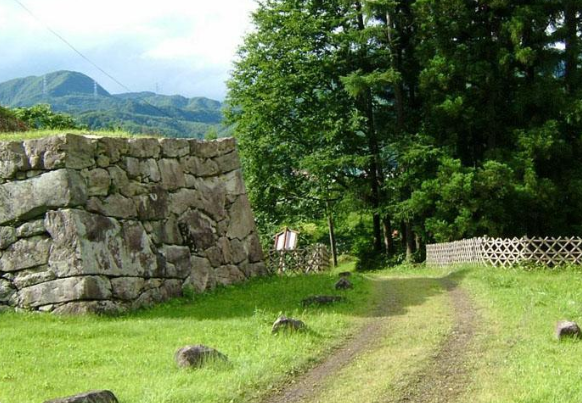
The main bailey is located in the center of the castle and is the most important enclosure. The castle is surrounded by earthen ramparts 2-3 meters high, and the ramparts on the west and south sides are particularly well-preserved, conveying the appearance of the castle at the time of its construction.
The main enclosure (Honmaru) measures approximately 30 meters east-west and 40 meters north-south, and is presumed to have housed the lord’s residence and command post. The dry moat surrounding the main enclosure is deep, and part of it descends the slope as a vertical moat, indicating its high defensive strength.
Second and Third Enclosures
The second enclosure (Ninmaru) is located north of the main enclosure, separated by a deep dry moat. This dry moat is approximately 5 meters wide and 3 meters deep, forming a clear boundary. The second enclosure is thought to have functioned as an important enclosure second only to the main enclosure, serving as a reserve position during battles and a troop encampment.
The third enclosure (Sanmaru) is located further north, separated from the second enclosure by another dry moat. The third enclosure leads to the northern enclosure, serving as a key point for the castle’s northern defense.
North Enclosure and North Outpost
The North Enclosure and North Outpost were located at the northernmost point of the castle and served as important defensive strongholds against enemy incursions from the north. A masugata koguchi (square-shaped gate) was situated at the foot of the North Outpost, serving as the main entrance to the castle from the north.
The masugata koguchi is a defensive structure designed to lure enemies into a narrow space for attack. The masugata at Hisakawa Castle remains in relatively good condition, making it a valuable historical site for learning about castle construction techniques of the Sengoku period.
Dry Moats and Vertical Moats
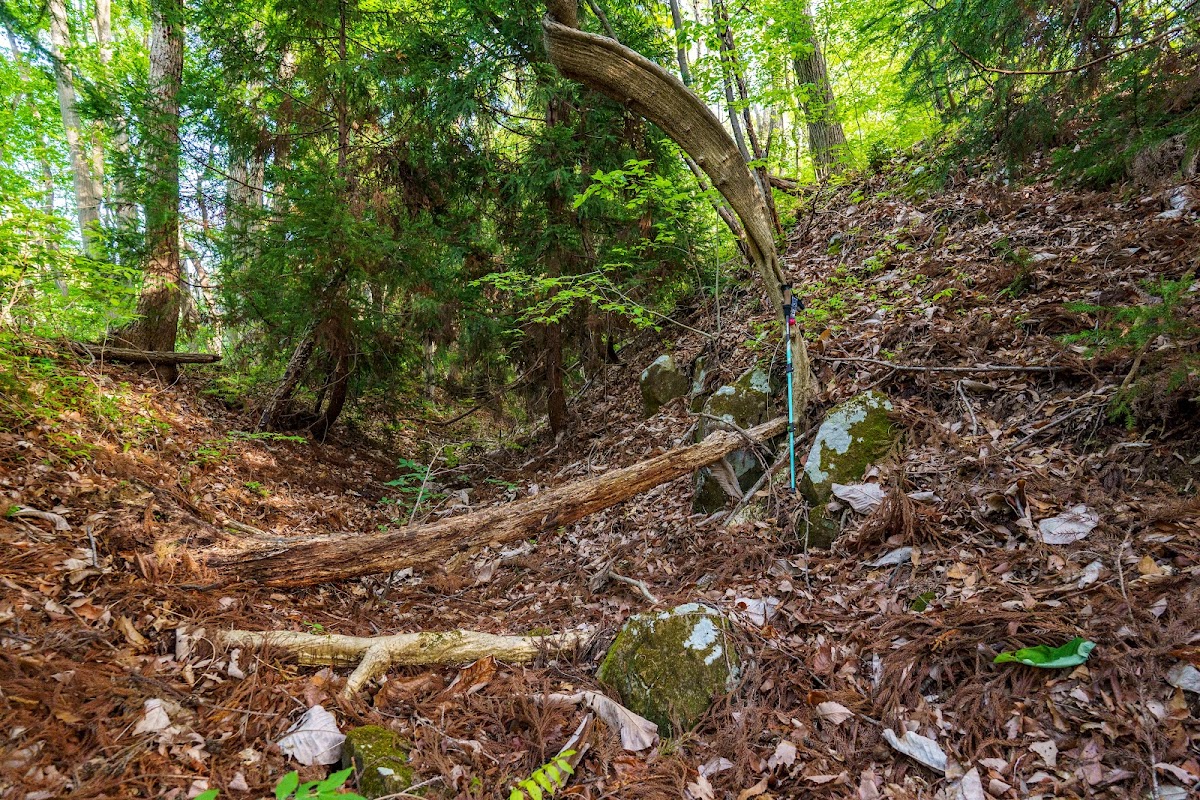
One of the greatest highlights of Hisakawa Castle is the system of dry moats separating each enclosure and vertical moats descending the slopes. The dry moats around the main keep are particularly deep and clearly defined, with some sections serving as vertical moats that descend the slopes, forming a defensive line that made lateral movement difficult.
These vertical moats were effective in preventing flanking attacks and making it difficult for enemies to approach the castle. The dry moats and vertical trenches, still clearly visible today, demonstrate advanced castle construction techniques that seem unlikely given the short timeframe in which the castle was built.
Earthworks
Earthworks surrounded each enclosure, and the earthworks of the main keep, in particular, are impressive, reaching 2-3 meters in height. It is presumed that fences were erected on top of the earthworks, further enhancing their defensive capabilities.
Earthworks not only protected against enemy arrows and firearms but also had a visually intimidating effect, making them an important element in demonstrating the castle’s grandeur. The earthworks of Hisakawa Castle remain remarkably well-preserved even after more than 400 years, attesting to the high level of castle construction technology of the time.
Kawarada Moritsugu and the Kawarada Clan
Origins of the Kawarada Clan
The Kawarada clan originated in Kawarada-go, Tsuga-gun, Shimotsuke Province (present-day Tochigi Prefecture), as a branch of the prestigious Oyama clan, a family of the Fujiwara Hokke Hidesato lineage. During the Sengoku period, they held power in southern Aizu and served as important retainers of the Ashina clan. Kawarada Moritsugu, as the head of the Kawarada clan at the time, held a position of unity among the powerful local families of southern Aizu. Even after the Ashina clan’s defeat by Date Masamune, Moritsugu’s stance of maintaining independence demonstrated regional pride and self-reliance.
Kawarada Moritsugu’s Decision
In 1589, after the Ashina clan’s downfall at the Battle of Suriagehara, many local families in the Aizu region chose to pledge allegiance to Date Masamune. However, Kawarada Moritsugu refused to submit to the Date clan and chose his own path.
This decision was a manifestation of his strong will to protect the regional independence of southern Aizu. The castle he hastily constructed for this purpose, Hisakawa Castle, successfully repelling the Date army’s invasion, demonstrates Moritsugu’s military talent and the castle’s high defensive capabilities.
The Later Life of the Kawarada Clan
After the pacification of Oshu in 1590, Kawarada Moritsugu pledged allegiance to Gamo Ujisato, the new lord of Aizu. While detailed historical records of the Kawarada clan’s subsequent activities are scarce, it is believed they maintained a certain degree of influence within the Minami-Aizu region.
Although Hisakawa Castle was abandoned, the name of the Kawarada clan is deeply etched in the region’s history and remains an important historical presence in Minami-Aizu Town.
Highlights of Hisakawa Castle
Well-Preserved Remains
The greatest appeal of Hisakawa Castle is the extremely well-preserved remains, dating back over 400 years. Major remains such as the earthworks of the main keep, the dry moats separating each enclosure, the vertical moats descending the slopes, and the masugata koguchi (square-shaped gate) remain almost completely intact.
Fortunately located in a mountainous area untouched by development, the castle has maintained a state that evokes its original appearance. For castle enthusiasts, this is an excellent learning resource for studying the structure of mountain castles from the Sengoku period.
Earthworks and Dry Moats Around the Main Enclosure
The earthworks and dry moats around the main enclosure are particularly impressive. The earthworks surrounding the main enclosure are 2-3 meters high, and their scale and state of preservation are astonishing. Standing inside the earthworks, you can experience the perspective of the castle’s soldiers at the time.
The dry moats surrounding the main enclosure are deep and clearly defined, with some sections descending the slope as vertical moats. This defensive system, from the dry moats to the vertical moats, is breathtaking and can be considered the greatest highlight of Hisakawa Castle.
Masugata Koguchi (Square Enclosure)
The masugata koguchi (square enclosure) at the foot of the castle on the north and south sides are also must-sees. The northern masugata koguchi, in particular, is well-preserved, allowing you to appreciate the Sengoku period defensive techniques of luring the enemy into a narrow space for attack.
By observing the structure of the masugata, you can understand how strictly entry and exit to the castle were controlled. ### Well-maintained Walking Paths
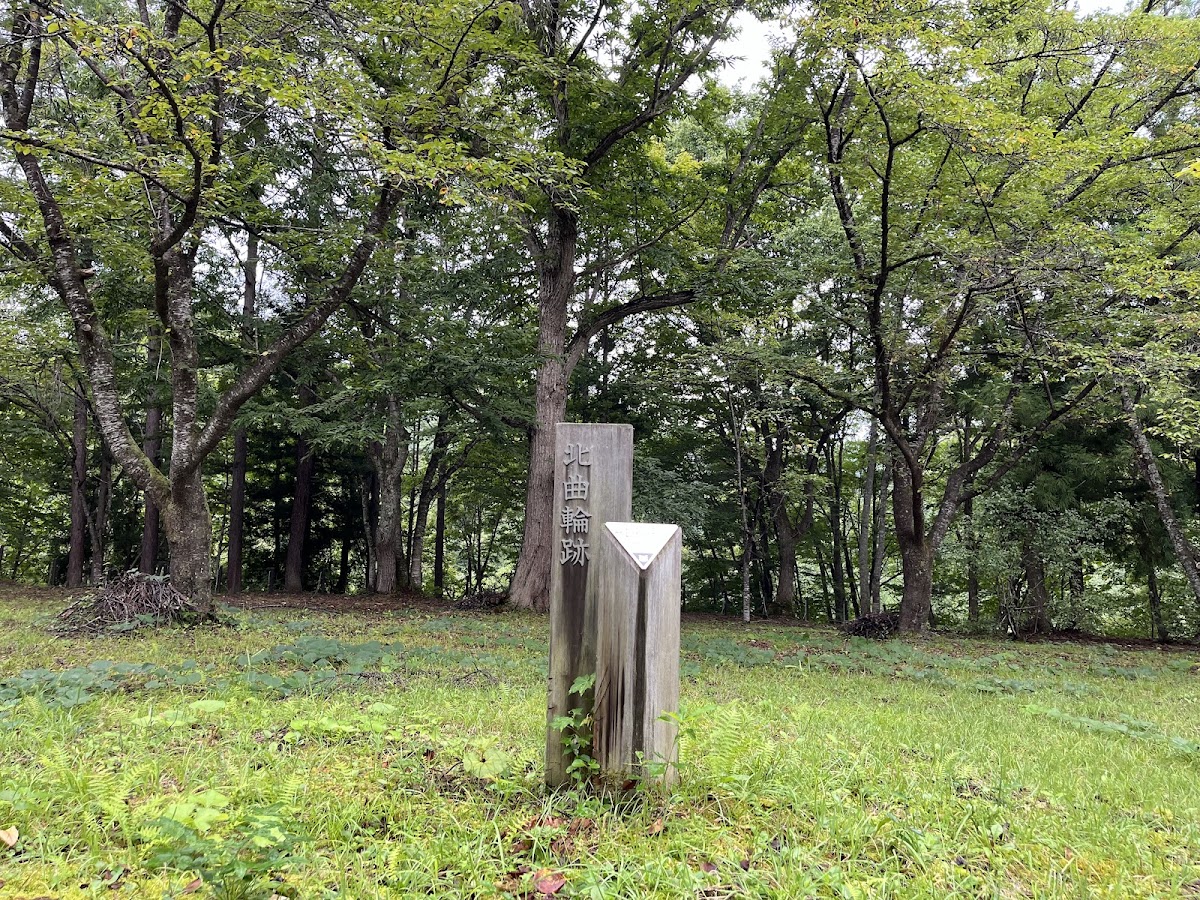
Hisakawa Castle Ruins are a Fukushima Prefecture historical site, with walking paths connecting each enclosure. Signposts are placed at key locations, making it easy for first-time visitors to navigate without getting lost.
While the walking paths are relatively easy to walk, as it is a mountain castle, comfortable clothing and shoes are recommended.
Views
From the main enclosure and each enclosure, you can see the flow of the Inagawa River and the mountains of Minami-Aizu. During the Sengoku period, Kawarada Moritsugu likely gazed upon this view while keeping a watchful eye on the movements of the Date army.
The autumn foliage season is particularly beautiful, allowing you to enjoy both historical exploration and nature appreciation simultaneously.
Photo Spots at Hisakawa Castle
Main Enclosure Earthworks
The earthworks of the main enclosure are a representative photo spot at Hisakawa Castle. The earthworks on the west and south sides are particularly high, allowing for impressive photographs. The graceful curves of the earthworks and the trees growing on top evoke a sense of historical significance.
Cross-section of the dry moat
The dry moat between the main keep and the second bailey is an excellent photo spot due to its depth and clarity. The height of the earthen embankment, viewed from the bottom of the moat, is overwhelming, creating a composition that truly conveys the high level of defense during the Sengoku period.
Vertical moat
The vertical moat descending the slope is a symbolic relic of Hisakawa Castle’s defensive system. Photographing from the top of the vertical moat downwards highlights its length and depth. Morning or evening photography, where the interplay of light emphasizes shadows, is recommended.
Masugata Koguchi (square-shaped gate)
The Masugata Koguchi on the north side is a valuable spot for photographing a defensive structure from the Sengoku period. Because the structure of the Masugata remains clearly visible, it’s possible to take photographs that convey the high level of castle construction technology.
Access Information
Access by Train and Bus
Nearest Station: Aizu Railway Aizu Line, “Aizu-Tajima Station”
It’s approximately a 50-minute drive from Aizu-Tajima Station. Public transportation is limited, so renting a car is recommended.
Access by Car
From Tokyo:
- Approximately 2 hours and 30 minutes via National Route 400 from the Tohoku Expressway “Nishinasuno-Shiobara IC”
From Fukushima/Koriyama:
- Approximately 50 minutes via National Route 289 and Prefectural Road to Aizu-Tajima
Parking: There are several parking spaces near the castle ruins entrance.
Estimated Time Required for Visit
If you want to thoroughly explore the entire castle ruins, allow approximately 1 hour and 30 minutes to 2 hours. This involves walking along the promenades, visiting each enclosure, and observing the remains.
Points to Note When Visiting
- As this is a mountain castle, comfortable clothing and non-slip shoes are recommended.
- Insect repellent is necessary in summer, and snow is a concern in winter.
- While there are information boards, reviewing a map of the castle layout beforehand will enhance your understanding.
- Facilities such as toilets and vending machines are limited, so please prepare accordingly.
Nearby Tourist Attractions
Maezawa Village
Located about 15 minutes by car from Hisakawa Castle, Maezawa Village is a beautiful mountain village designated as an Important Preservation District for Groups of Traditional Buildings. The landscape of thatched-roof houses evokes a sense of Japan’s original scenery.
The Great Ginkgo Tree of Furumachi
The Great Ginkgo Tree in Furumachi, Minamiaizu Town, is a giant tree estimated to be over 800 years old and designated as a natural monument of Fukushima Prefecture. In autumn, it displays magnificent yellow foliage, attracting many tourists.
Aizu Tajima Gion Festival
Held every July, the Aizu Tajima Gion Festival is considered one of Japan’s three major Gion Festivals and is a traditional event with a history of over 800 years. Combined with a visit to Hisakawa Castle, you can experience the culture of Minami-Aizu.
Historical Significance of Hisakawa Castle
Castle Construction Techniques of the Late Sengoku Period
Hisakawa Castle, built in 1589 (Tensho 17), at the end of the Sengoku period, is a valuable example of the latest castle construction techniques of the time. Despite being built in a short period, it is equipped with complete defensive facilities such as dry moats, vertical moats, earthworks, and masugata koguchi (square-shaped gate), representing the pinnacle of Sengoku period castle construction technology.
Importance in Local History
Hisakawa Castle is a witness to the history of how the remote region of Minami-Aizu tried to maintain its uniqueness while being tossed about by central political changes. The decision of Kawarada Moritsugu and the construction of Hisakawa Castle are recounted to this day as an event symbolizing the region’s independence and pride.
Value as a Historic Site
Due to the extremely good state of preservation of the remains, the clear dates of construction and abandonment, and the evident historical background, Hisakawa Castle is an extremely valuable historical site for the study of mountain castles from the Sengoku and early modern periods.
Its designation as a Fukushima Prefecture Historic Site is a result of the recognition of these academic values, and appropriate preservation and utilization are expected in the future.
Summary
Hisakawa Castle is a mountain castle built in 1589 by Kawarada Moritsugu in preparation for an invasion by Date Masamune, and is located in Minamiaizu Town, Fukushima Prefecture. Although it was abandoned after a short period of use, the remains are extremely well-preserved, and it is a valuable historical site that conveys the castle-building techniques of the Sengoku period, including the earthworks of the main keep, dry moats, vertical moats, and masugata koguchi (square-shaped gate).
Built on a hill along the Inagawa River, Hisakawa Castle is a natural fortress that successfully defended against attacks by the Date army, symbolizing the region’s history and pride. Designated as a Fukushima Prefecture historical site, and complete with walking trails, it’s a recommended historical site not only for castle enthusiasts but for anyone interested in history.
Why not visit the Hisakawa Castle ruins, surrounded by the rich nature of Minami-Aizu, and experience the spirit of the Sengoku period?