Hiramatsu Castle (Aira City, Kagoshima Prefecture) Complete Guide | History and Highlights of the Residence Built by Shimazu Yoshihiro
What is Hiramatsu Castle?
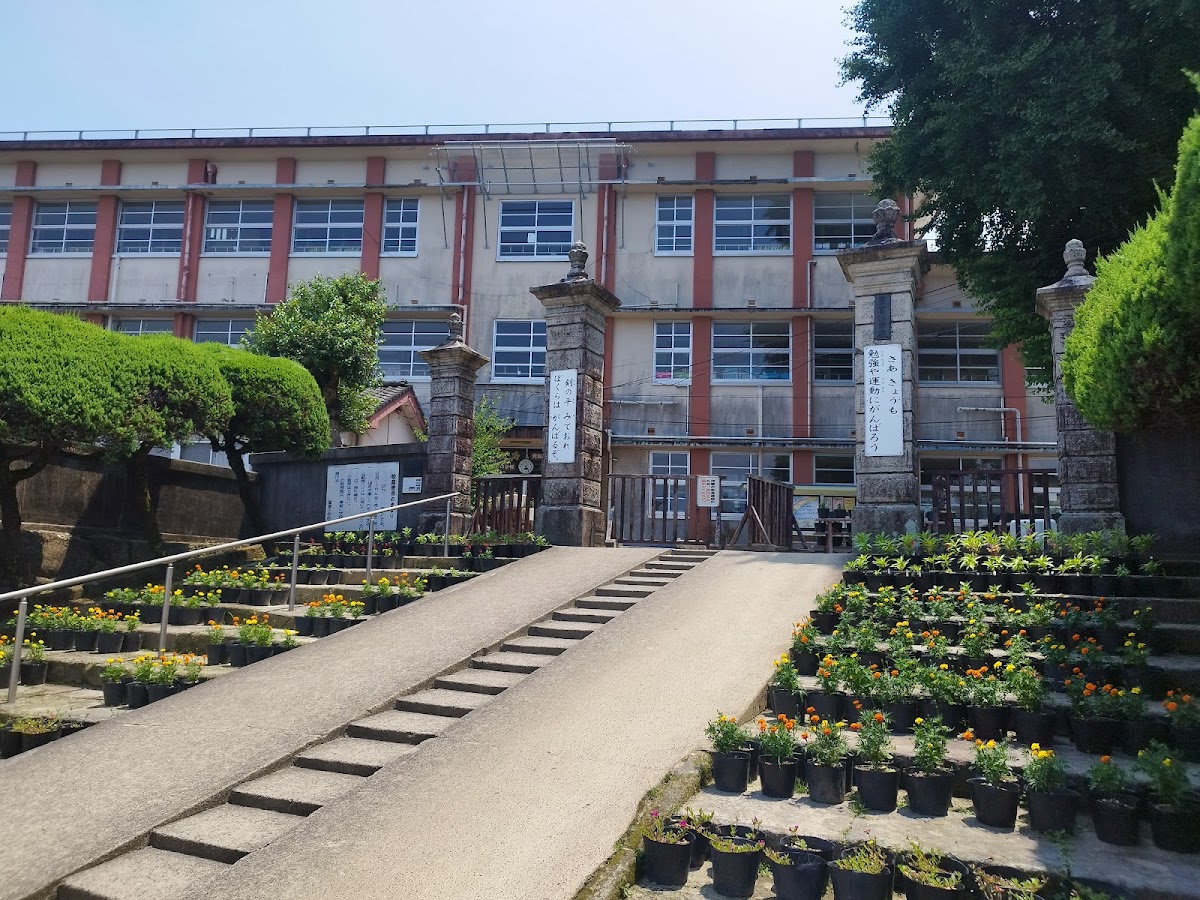
Hiramatsu Castle was a castle from the Sengoku period located in Shigetomi, Aira City, Kagoshima Prefecture. Currently, the site is occupied by Shigetomi Elementary School, making it difficult to directly see its former appearance. However, it is known as an important historical site where Shimazu Yoshihiro, one of the most renowned generals of the Sengoku period, spent his youth.
Strictly speaking, Hiramatsu Castle was not a mountain castle, but rather a residence-style castle built at the foot of a mountain. This location arose from the need to balance the daily lives of the warlords of the time with the function of a military base. It was built in a scenic location overlooking Kinko Bay, in what is now the city of Aira.
Location and Current Status
Location: Hiramatsu, Aira City, Kagoshima Prefecture (Shigetomi area)
Current Status: Shigetomi Elementary School grounds
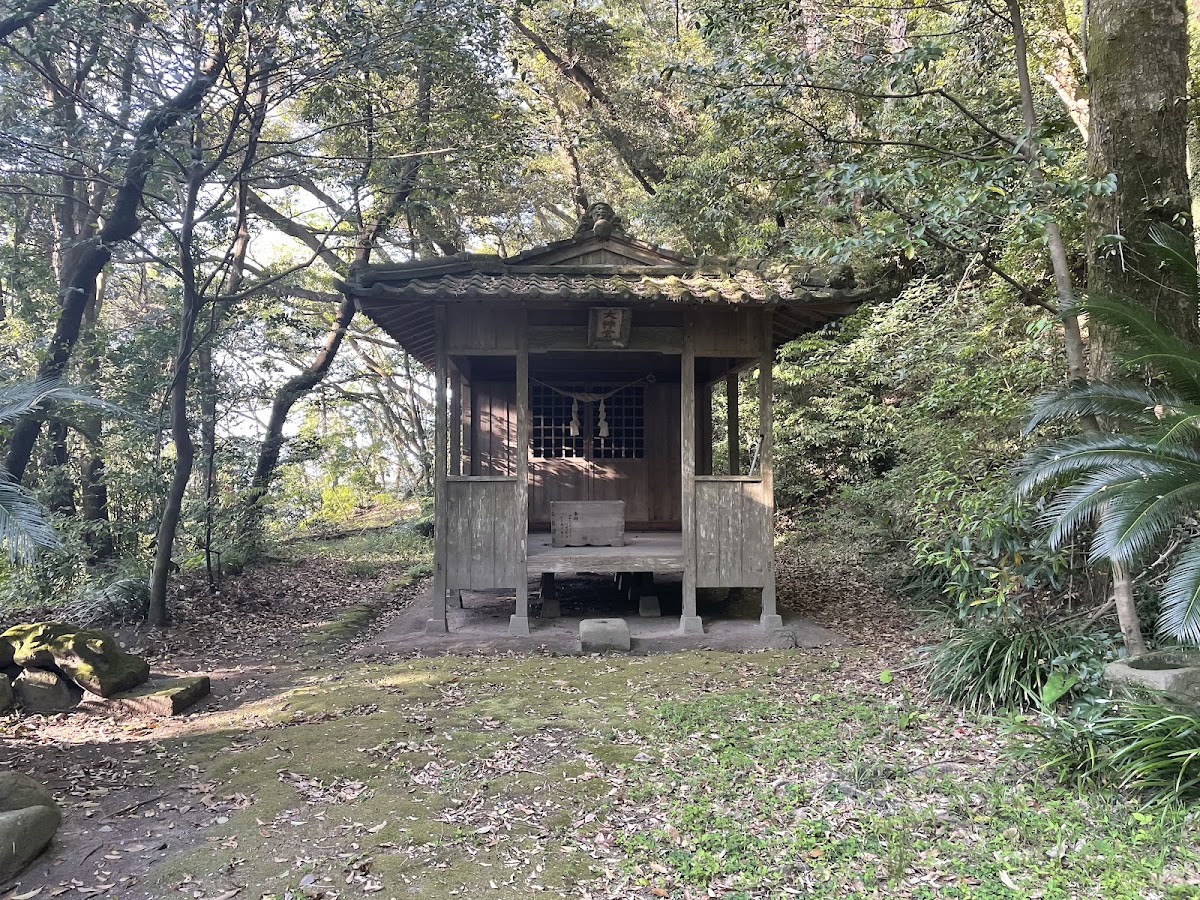
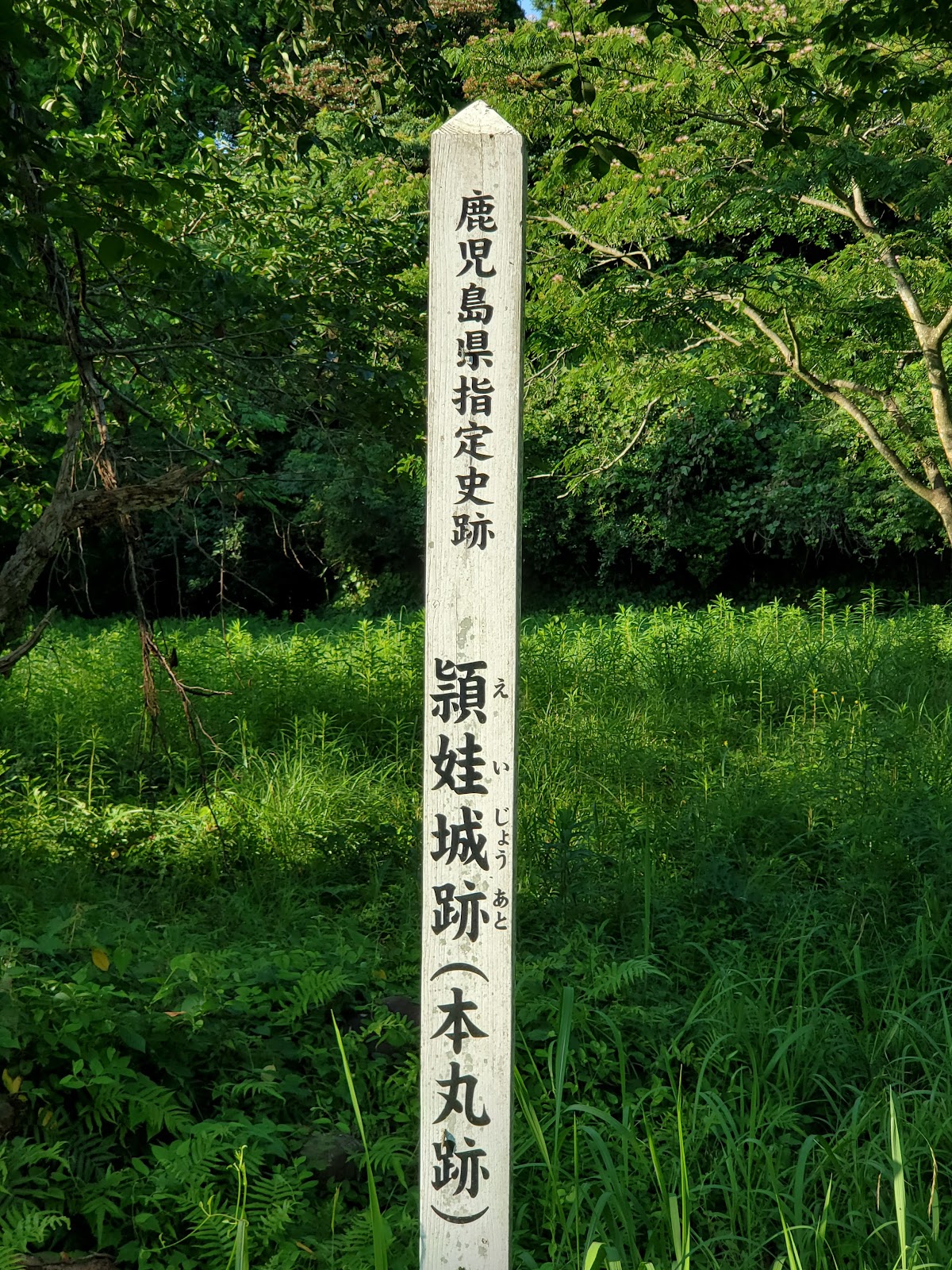
Remains: Almost completely gone (reports indicate some remaining stonework that may be from the stone walls)
Designation: None in particular
History of Hiramatsu Castle
Background of Construction: The Battle of Iwakenjo Castle
Indispensable to understanding the history of Hiramatsu Castle is the “Battle of Iwakenjo Castle (Iwaken Battle)” which took place in 1554. This battle was an important one fought between the Shimazu clan and the allied forces of the Gamo and Kedoin clans.
At that time, the Gamo clan was based in Gamo village and resided in a strong mountain castle called Iwakenjo Castle. This castle was a formidable fortress built on a mountaintop approximately 400 meters above sea level, and its capture was not easy. However, after a fierce battle, the Shimazu clan finally captured Iwakenzushi Castle, defeating the Gamo and Kedaoin forces.
Construction by Shimazu Yoshihiro
After capturing Iwakenzushi Castle, the Shimazu clan appointed the young Shimazu Yoshihiro (around 20 years old at the time) as the castle lord to solidify their control over the region. However, Iwakenzushi Castle was located on a mountaintop, making it extremely inconvenient for daily life. The path to the summit was steep and unsuitable for transporting supplies or conducting daily administrative affairs.
Therefore, Yoshihiro decided to build a residence in Shigetomi, at the foot of Iwakenzushi Mountain. This marked the beginning of Hiramatsu Castle. This is believed to have occurred in 1554.
Hiramatsu Castle was a typical “foot of the mountain” residence, functioning as a peaceful residence while having Iwakenzushi Castle as a military base behind it. This structure can be considered the prototype of the “Tojo system” unique to the Satsuma and Osumi regions, a defensive system combining a mountain castle with a residence at the foot of the mountain.
Shimazu Yoshihiro’s Reign at Hiramatsu Castle
Shimazu Yoshihiro governed this region from his base at Hiramatsu Castle. His tenure there is believed to have lasted approximately 10 years, from 1554 to 1564.
During this period, Yoshihiro, as a young warrior, gained experience and began his path to becoming the renowned general feared as “Oni Shimazu” (Demon Shimazu). These 10 years at Hiramatsu Castle can be considered a crucial period of training for Yoshihiro, during which he learned how to manage his domain.
In 1564, Yoshihiro moved to Iino Castle (present-day Ebino City, Miyazaki Prefecture), leaving Hiramatsu Castle. Iino Castle was an important base for the front lines towards Hyuga, and Yoshihiro’s move demonstrated the expansion of the Shimazu clan’s power.
The Aftermath of Hiramatsu Castle: Becoming a Base for the Echizen Shimazu Family
Even after Yoshihiro moved to Iino Castle, Hiramatsu Castle continued to exist as a base for Shigetomi-go. Particularly important is that from the Keicho era (1596-1615) onward, this area became part of the territory of the “Echizen Shimazu family.”
The Echizen Shimazu family was a branch of the Shimazu clan and ruled Shigetomi-go. The area around Hiramatsu Castle was developed as “Shigetomi-fumoto” and became a residential area for samurai. Under the Satsuma Domain’s outer castle system, it continued to function as a base for local administration.
During the Genbun era (1736-1741), Shimazu Tadaki ruled Shigetomi-go, and the Echizen Shimazu family’s rule continued until the end of the Edo period. During this period, the area around the Hiramatsu Castle ruins developed into the center of Shigetomi-fumoto, lined with samurai residences.
From the Meiji Era to the Present
After the Meiji Restoration, with the abolition of the feudal domains and the establishment of prefectures, the samurai society was dismantled, and Shigetomi-fumoto, including the Hiramatsu Castle ruins, underwent a major transformation. Samurai residences were gradually demolished, and the area transformed into a modern townscape.
Currently, the Hiramatsu Castle ruins are the site of Aira City Shigetomi Elementary School, and almost no remains of the castle exist. However, there are reports that traces of the Shigetomi-fumoto era, such as the straight road layout and faint remnants of stone walls, can still be seen in the surrounding area.
Structure and Characteristics of Hiramatsu Castle
Hiramatsu Castle as a Residence
Hiramatsu Castle was a typical “residence” style castle. Unlike early modern castles with high stone walls and keeps, it served as both a living space for samurai and a place for conducting government affairs.
While many details of its structure remain unclear due to a lack of records, based on typical Sengoku period residences, it is believed to have had the following characteristics:
- Main Hall: The lord’s living quarters and the building where administrative affairs were conducted.
- Moat and Earthworks: Defensive structures surrounding the castle.
- Gate: A structure controlling the entrance and exit.
- Retainer’s Residences: Residential areas for samurai positioned around the castle.
Characteristics of the Location
The location of Hiramatsu Castle held significant strategic importance:
- Relationship with Iwakenzushi Castle: With Iwakenzushi Castle located in the mountains behind, it could be defended in times of emergency.
- Strong Transportation Hub: Shigetomi was situated on an ancient transportation route, advantageous for information gathering.
- Proximity to Kinko Bay: Good access to maritime transport.
- Flat Land: A terrain suitable for daily life and administrative affairs.
This location represents the ideal form of Satsuma’s outer castle system, balancing military and administrative functions.
Relationship with Shigetomi Fumoto
Hiramatsu Castle later became the core of “Shigetomi Fumoto.” Fumoto was a system unique to the Satsuma Domain, referring to the residential areas of samurai groups stationed in the provinces.
Shigetomi Fumoto was a grid-like layout of samurai residences, centered around the Hiramatsu Castle ruins. This layout supported the “unity of soldiers and farmers” system, where those engaged in agriculture and local governance during peacetime functioned as a military force during times of conflict.
Highlights and Visitor Guide to Hiramatsu Castle
What You Can See on Site
Unfortunately, no clear castle remains can be seen at the current Hiramatsu Castle site (Shigetomi Elementary School). However, with a historical understanding, you can pay attention to the following points:
Around Shigetomi Elementary School
The school grounds are presumed to have been the central part of Hiramatsu Castle. By viewing the grounds from near the school gate, you can imagine the scale of the residence in its heyday. (Unauthorized entry onto school grounds is strictly prohibited.)
Surrounding Topography
The road layout in the Shigetomi area shows remnants of the Fumoto era. The relatively straight roads and plots are remnants of a planned samurai residential area.
View towards Iwakenji Castle
Looking up at the mountains behind Hiramatsu Castle, you can see the direction where Iwakenji Castle once stood. You can really appreciate the relationship between the mountain castle and the residence at the foot of the mountain.
Related Historical Sites in the Surrounding Area
When visiting Hiramatsu Castle, we recommend also visiting the related historical sites in the surrounding area:
Iwakenji Castle Ruins
A mountain castle that was the predecessor of Hiramatsu Castle. There is a hiking trail, and the view from the summit is magnificent. However, as it is a full-fledged mountain castle, hiking equipment and physical fitness are necessary.
Gamo Castle Ruins (Gamo Fumoto)
The base of the Gamo clan, designated as an Important Preservation District for Groups of Traditional Buildings. The samurai residences are well-preserved, providing clues to what Shigetomi Fumoto looked like.
Kajiki Manor Ruins
One of the important bases of the Shimazu clan. This is another historical site related to the Shimazu clan within Aira City, and is worth visiting.
Aira City Historical and Folk Museum
A facility where you can learn about the general history of Aira City. There may be exhibits and materials related to Hiramatsu Castle and Shigetomi Fumoto.
Aira City Digital Museum
Aira City has opened a digital museum, which also contains information about the Hiramatsu Castle ruins. Preparing by reviewing the website before visiting the site will lead to a deeper understanding.
Access Information
Access by Public Transportation
By JR
- Get off at Shigetomi Station on the JR Nippo Main Line, approximately 15 minutes on foot.
- Head towards Shigetomi Elementary School from Shigetomi Station.
By Bus
- Take a local bus from Kagoshima City towards Shigetomi.
- Get off at the “Shigetomi” bus stop, approximately 10 minutes on foot.
Access by Car
From Kagoshima City
- Head north on National Route 10 towards Aira/Kajiki.
- Follow the signs near the Shigetomi intersection.
- Travel time: Approximately 30 minutes from Kagoshima-Chuo Station.
Using the Kyushu Expressway
- Exit at “Aira IC” or “Kajiki IC”.
- Proceed to the Shigetomi area via National Route 10.
- Travel time: Approximately 10-15 minutes from each IC.
Parking
There is no public parking at Shigetomi Elementary School. When visiting, please use nearby public or paid parking lots. Avoid parking on the street around the school.
Points to Note When Visiting
- Respect for School Grounds: Shigetomi Elementary School is an active educational facility. Unauthorized entry onto the grounds is strictly prohibited.
- Visiting Time: Avoid visiting during school hours and limit your visit to the exterior only.
- Photography: Please respect the privacy of the children and refrain from taking photographs that include school facilities or children.
- Respect for Local Residents: As this is a residential area, please be careful not to cause noise or obstruct traffic.
Shimazu Yoshihiro and Hiramatsu Castle
Yoshihiro in His Youth
During his time at Hiramatsu Castle, Shimazu Yoshihiro was a young warrior in his twenties or early thirties. The famous general who would later be feared as “Oni Shimazu” (Demon Shimazu) and renowned for his breakthrough at the Battle of Sekigahara was, at this time, undergoing training to learn how to manage his domain.
Yoshihiro was born in 1535, and was 19 years old when he was ordered to serve at Hiramatsu Castle in 1554. It is believed that he learned the fundamentals of military command under his father, Shimazu Takahisa, and developed practical governing abilities during his ten years at Hiramatsu Castle.
Yoshihiro’s Activities During His Time at Hiramatsu Castle
Based at Hiramatsu Castle, Yoshihiro is presumed to have engaged in the following activities:
- Establishing Regional Control: Stabilizing the region gained in the Battle of Iwakenzaki Castle
- Leading the Retainers: Organizing the samurai of Shigetomi-go
- Military Training: Maintaining and strengthening military power in preparation for emergencies
- Developing the Economic Foundation: Securing income from the territory and promoting economic development
These experiences formed the foundation for Yoshihiro’s later reputation as a great general.
Transfer to Iino Castle and its Aftermath
In 1564 (Eiroku 7), Yoshihiro moved to Iino Castle. Iino Castle was a frontline castle near the border with Hyuga Province (present-day Miyazaki Prefecture), and a more important military base. This transfer signified that Yoshihiro’s abilities were recognized and he was entrusted with more important duties.
At Iino Castle, in 1567 (Eiroku 10), he achieved a great victory at the Battle of Kizakihara, defeating Ito Yoshisuke’s large army with a smaller force, and Yoshihiro’s reputation soared. It can be said that the foundation of this victory lay in the governing abilities and military experience he cultivated during his time at Hiramatsu Castle.
Learning about Satsuma’s Castle Culture from Hiramatsu Castle
The Outer Castle System and the Foothills
Hiramatsu Castle is an important example for understanding the “outer castle system” unique to the Satsuma Domain. The outer castle system was a system in which samurai were stationed throughout the domain, engaged in agriculture during peacetime, and mobilized as military force in times of emergency. In various locations, samurai residences called “fumoto” (foothills) were developed, with the lord’s residence located at the center. Hiramatsu Castle and the later Shigetomi Fumoto are prime examples of this system.
Combination of Mountain Castle and Residence
A key feature of Hiramatsu Castle is its combination with the mountain castle Iwakenjo Castle behind it, achieving both defensive capabilities and habitability.
- Peacetime: Daily life and government affairs at Hiramatsu Castle (residence)
- Emergency: Defense by taking refuge in Iwakenjo Castle (mountain castle)
This dual structure demonstrates the practical defensive thinking of the Sengoku period. Similar structures can be seen in various locations throughout the Satsuma and Osumi regions, and are characteristic of the regional castle culture.
Stone Wall Culture
Satsuma castles are also known for their stone wall technology. While the extent of Hiramatsu Castle’s stone walls is unknown, stone walls were used at the later Shigetomi Fumoto.
Satsuma’s stonemasonry techniques were highly regarded, and stonemasons from Satsuma were mobilized for the repair of Edo Castle and Osaka Castle. It has been suggested that the small amount of stone remaining around Hiramatsu Castle may be part of the original stone walls.
Historical Significance of Hiramatsu Castle
The Growing Place of Shimazu Yoshihiro
The greatest historical significance of Hiramatsu Castle lies in the fact that it was the place where Shimazu Yoshihiro, considered one of the strongest warlords of the Sengoku period, gained experience in governance in his youth.
Yoshihiro later achieved numerous military successes, including:
- A great victory at the Battle of Kizakihara
- Military merit in the Korean campaigns
- Achieving a breakthrough through enemy lines at the Battle of Sekigahara
- Being feared as “Oni Shimazu” (Demon Shimazu) during the Keicho War
It can be said that the foundation for these successes was formed during his time at Hiramatsu Castle.
Importance in Local History
Hiramatsu Castle and Shigetomi Fumoto were central to the history of Aira City. The Shigetomi area flourished throughout the Edo period as part of the Echizen Shimazu family’s territory, becoming the political, economic, and cultural center of the region.
The current development of the Shigetomi area in Aira City is built upon this historical foundation.
The Satsuma Domain’s Governing System
Shigetomi-Fumoto, which developed from Hiramatsu Castle, is important for understanding the Satsuma Domain’s governing system as a successful example of its outer castle system. This system allowed the Satsuma Domain to achieve both efficient local governance and a powerful military force.
Tourist Information and Recommended Ways to Enjoy the Area
Historical Walking Tour Courses
Half-Day Course
- Arrive at Shigetomi Station
- Exterior View of Hiramatsu Castle Ruins (Shigetomi Elementary School) (30 minutes)
- Stroll through the townscape of Shigetomi district (1 hour)
- Visit Aira City Historical and Folk Museum (1 hour)
- Return to Shigetomi Station
Full-Day Course
- Morning: Climb to Iwaken Castle Ruins (3-4 hours, hiking equipment required)
- Lunch: Local cuisine in Aira City
- Afternoon: Stroll through Hiramatsu Castle Ruins and Shigetomi district (2 hours)
- Visit Gamou Fumoto (1 hour, travel by car)
Local Gourmet Information
Aira City is a region rich in food within Kagoshima Prefecture:
- Kurobuta Pork Dishes: Dishes using Kagoshima’s famous Kurobuta pork
- Jidori Chicken Dishes: Local cuisine using Satsuma Jidori chicken
- Seafood: Fresh seafood caught in Kinko Bay
- Satsuma-age: Kagoshima’s representative processed fish product
Accommodation
There are various accommodations in Aira City and the neighboring city of Kagoshima:
- Business Hotels: Aira City, Kajiki area
- Hot Spring Ryokans: Nearby Kirishima Onsenkyo, etc.
- Resort Hotels: Hotels in Kagoshima City with views of Sakurajima
Best Season
Spring (March-May)
The weather is mild and ideal for strolling. The cherry blossom season is especially beautiful.
Autumn (October-November)
Cool and suitable for climbing Iwakenjo Castle. You can also enjoy the autumn foliage.
Summer/Winter Precautions
Summer is hot and humid, so be careful of heatstroke. Winter is relatively mild, but warm clothing is necessary when climbing the mountain castle.
Summary: Hiramatsu Castle Tells the Story of Sengoku Satsuma’s History
Although Hiramatsu Castle is now a castle site with very few remains, its historical value is extremely high. It played a crucial role as the place where Shimazu Yoshihiro, one of the strongest warlords of the Sengoku period, spent his youth and learned the fundamentals of domain management, and as the core of Shigetomi Fumoto, embodying the unique outer castle system of the Satsuma domain.
When visiting the site, while respecting its current use as the grounds of Shigetomi Elementary School, imagining its former appearance will allow you to reflect on the history of Satsuma during the Sengoku period. Visiting nearby sites such as Iwakenjo Castle ruins and Gamo Fumoto will allow you to understand the region’s history more deeply.
The history of Hiramatsu Castle is a fascinating story where the process of a young warrior growing into a great general intersects with the unique samurai culture of the Satsuma region.