Hirai Kanayama Castle (Gunma Prefecture) Complete Guide | History and Highlights of the Kanto Kanrei Uesugi Clan’s Fortified Castle
What is Hirai Kanayama Castle?
Hirai Kanayama Castle is a medieval mountain castle located in Shimo-Hino, Fujioka City, Gunma Prefecture. Built on the summit of Mt. Kanayama, approximately 331 meters above sea level, this castle functioned as a fortified outpost (tsumejiro) for Hirai Castle, the residence of the Kanto Kanrei Yamauchi Uesugi clan. A fortified outpost is a stronghold used to defend a castle during an attack, and Hirai Kanayama Castle played a crucial role as the final defensive base of Hirai Castle’s defense system.
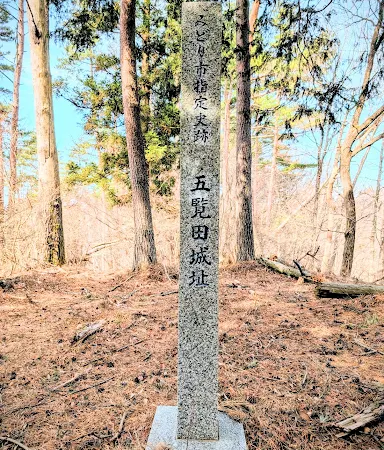
To distinguish it from the Kanayama Castle of the Nitta clan in Ota City, also in Gunma Prefecture, it is called “Hirai Kanayama Castle” or “Hirai Tsumejiro.” Currently, it is protected as a Gunma Prefecture designated historical site, and is a valuable historical site with well-preserved remains of a medieval mountain castle.
History and Background
Background and Circumstances of Castle Construction
There are various theories regarding the construction date of Hirai Kanayama Castle, but the most widely accepted theory is that it was built in 1438 (Eikyo 10) by Nagao Tadafusa, a retainer of Uesugi Norizane, the Kanto Kanrei (governor of the Kanto region), under his orders. This period was immediately before the Eikyo Rebellion (1438-1439), a time of heightened political tension in the Kanto region.
A more reliable record suggests that Hirai Kanayama Castle was constructed during a large-scale renovation of Hirai Castle by Uesugi Akisada, the Kanto Kanrei, with the aim of strengthening its defensive capabilities. From the late 15th to the early 16th century, conflicts with the Koga Kubo and the Later Hojo clan intensified in the Kanto region, and the Yamanouchi Uesugi clan was compelled to strengthen the defenses of their base, Hirai Castle.
As a Base of the Yamanouchi-Uesugi Clan
From the Muromachi period to the Sengoku period, the Yamanouchi-Uesugi clan, who held the position of Kanto Kanrei (governor of the Kanto region), governed the Kanto region from their base at Hirai Castle. Because Hirai Castle was a flatland castle located in a plain, its defense in wartime was limited. Therefore, Hirai-Kanayama Castle was built on the mountain behind it, serving as an emergency refuge and a final defensive base.
The Kanto Kanrei Uesugi clan gradually lost power due to conflicts with the Kamakura Shogun and the Koga Shogun, as well as the rise of the emerging Later Hojo clan. Hirai Castle and its auxiliary castle, Hirai-Kanayama Castle, can be said to have been key bases where the Yamanouchi-Uesugi clan struggled to maintain their influence in the Kanto region.
Fall and Abandonment
In 1552 (Tenbun 21), Kanto Kanrei Uesugi Norimasa was attacked by the Later Hojo clan of Odawara and was forced to abandon Hirai Castle. Norimasa fled to Echigo to seek refuge with Nagao Kagetora (later Uesugi Kenshin), and it is believed that Hirai Castle and Hirai Kanayama Castle fell at this time.
Afterward, it is said that the castle was completely abandoned around 1560. Uesugi Kenshin inherited the position of Kanto Kanrei (governor of the Kanto region) and fought against the Hojo clan in several campaigns in the Kanto region, but Hirai Castle and Hirai Kanayama Castle were never used again. From then on, Hirai Kanayama Castle disappeared from the historical stage, and its remains continued to exist in the forest.
Structure
Layout and Arrangement
Hirai Kanayama Castle is a typical mountain castle built using multiple ridges, centered around the summit of Mt. Kanayama, which is approximately 331 meters above sea level. The main enclosure (honmaru) is located at the summit, and ridges extend from there in the east, north, and west directions, with defensive facilities positioned on each ridge.
The castle’s basic structure is a linear layout with multiple enclosures arranged in a stepped fashion along the ridge, centered around the main enclosure. This arrangement created a multi-layered defensive system to stop enemy incursions at each stage. While medium-sized for a mountain castle, it possessed sufficient size and defensive capabilities to function as a fortified outpost.
Main Enclosure (Honmaru)
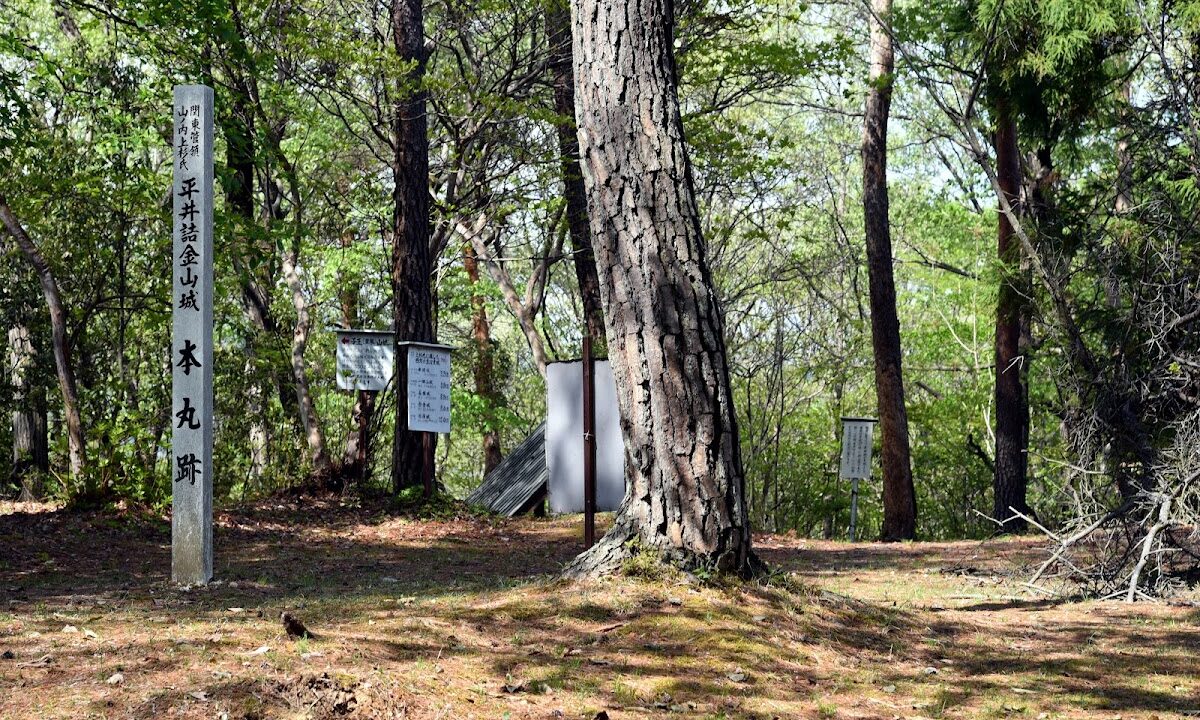
Located at the mountaintop, the main enclosure is the core of Hirai Kanayama Castle. A relatively flat space is provided, suggesting it served as the central facility for the lord and his retainers during a siege. Traces of earthworks remain around the main enclosure, indicating defensive features.
From the main enclosure, one could overlook the surrounding terrain, monitoring the plains where Hirai Castle is located and the ridgelines in various directions that could serve as enemy incursions. It is an ideal location for a command post functioning as a fortified outpost.
Lookout Post on the East Ridge
At the end of the ridge extending eastward from the main enclosure, there is an enclosure called a lookout post. This observation post is believed to have been a facility for monitoring enemy movements from the east. Its location at the tip of the ridge allowed for a wide-ranging view, playing a vital role in early warning.
The ridge leading to the observation post features trenches and elevation changes, demonstrating a design intended to hinder enemy intrusion. This indicates that it functioned not merely as a lookout post but also as a defensive stronghold.
Well Enclosure and Tower Gate Remains on the North Ridge
On the ridge extending north from the main enclosure, important remains such as a well enclosure and a tower gate remain. As its name suggests, the well enclosure is believed to have contained a well, playing a vital role in securing a water source during sieges. Securing water was a top priority for mountain castles, and the existence of the well enclosure is evidence that Hirai Kanayama Castle was built with actual combat in mind.
The tower gate remains are presumed to have been an important checkpoint on the defensive line of the north ridge. The gate was designed with towers on both sides, allowing for attacks on passing enemies from above. Even today, the gate’s foundation stones and topographical traces can confirm its location.
Moats and Vertical Moats
The core of Hirai Kanayama Castle’s defensive system was the moats (horikiri) dug throughout the castle. Moats are dry moats dug to cut across ridges, serving to physically prevent enemy intrusion. Multiple moats were constructed along the main ridges, forming a multi-layered defensive line.
Furthermore, vertical dry moats (tatebori) can be seen on the slopes. These vertical moats restricted the movement of enemies climbing the slopes and guided them along specific routes. These traces of civil engineering can still be clearly observed today, providing valuable information for understanding medieval mountain castle construction techniques.
Use of Stone Walls
Evidence of the use of stone walls has been confirmed in some areas of Hirai Kanayama Castle. In medieval mountain castles, defenses were generally based on earthen ramparts and wooden fences, but stone walls were used in crucial areas to enhance their defensive capabilities. However, it is believed that the stone walls were not the highly processed stone walls of early modern castles, but rather the rough-hewn stone technique of stacking natural stones.
The use of stone walls indicates that Hirai Kanayama Castle was not merely a temporary fortress, but was developed as a permanent defensive facility. It can be said to be a relic symbolizing the power and wealth of the Yamanouchi Uesugi clan, who held the high position of Kanto Kanrei (governor of the Kanto region).
Relationship with Hirai Castle
Overview of Hirai Castle
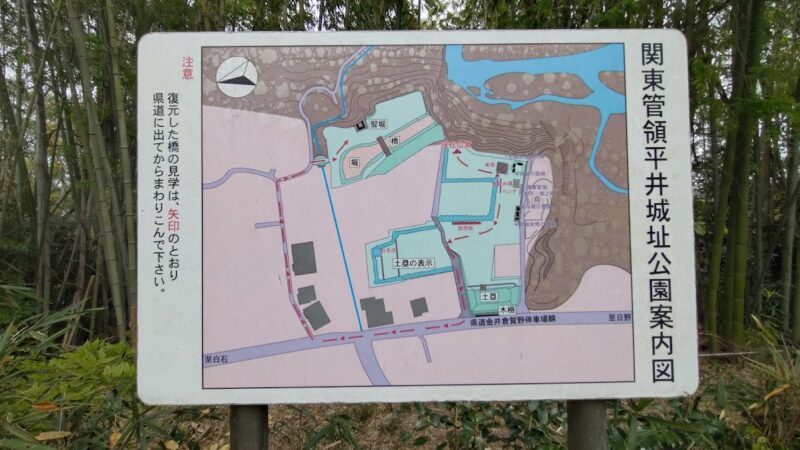
Hirai Castle was a flatland castle located in the plains approximately 1 kilometer northeast of Hirai Kanayama Castle. Built on a river terrace between the Ayukawa and Kaburagawa rivers, it enjoyed convenient water transport. From the Muromachi period to the Sengoku period, it functioned as the residence of the Yamanouchi Uesugi clan, the Kanto Kanrei, and was one of the political and military centers of the Kanto region.
Hirai Castle had well-equipped facilities for peacetime administration and residence, but its nature as a flatland castle meant it had limitations in terms of defense. Although surrounded by moats and earthworks, it would have been difficult to withstand a large-scale siege for an extended period.
Function as a Fortified Outpost
Hirai Kanayama Castle was built as a final defensive base in case Hirai Castle was attacked. It is believed that if fighting at Hirai Castle became unfavorable, the lord, retainers, and soldiers would retreat to Hirai Kanayama Castle, utilizing the terrain of the mountain castle to wage a siege.
The distance between Hirai Castle and Hirai Kanayama Castle was approximately 1 kilometer, allowing for relatively quick movement in emergencies. Furthermore, its mountainous location made it easier to defend with a small force, allowing for waiting for reinforcements. This combination of flatland and mountain castle defenses is a typical example of castle layout during the Sengoku period.
Integrated Defense System
Hirai Castle and Hirai Kanayama Castle did not exist independently, but functioned as an integrated defense system. Hirai Castle served as the political and economic center, while Hirai Kanayama Castle was the final military defense base, each fulfilling a specific role.
In peacetime, political affairs were conducted at Hirai Castle, and the surrounding region was governed there. On the other hand, Hirai Kanayama Castle had fewer permanent troops, and it is believed that its facilities were maintained in preparation for emergencies. In wartime, the garrisons of Hirai Castle and Hirai Kanayama Castle would have coordinated, likely planning a phased defense.
This combined defense system of multiple castles demonstrates the development of castle strategy during the Sengoku period and enhances the historical value of Hirai Kanayama Castle.
Highlights and Visitor Guide
Entrance and Parking
The starting point for climbing to Hirai Kanayama Castle is across from Hino Elementary School, along Prefectural Road 175. A large signpost here reads “Hirai-tsume Castle Ruins Trailhead,” making it easy to find even for first-time visitors.
A spacious parking lot is available at the trailhead and is free to use. There are approximately 10 parking spaces, so parking should not be a problem except during peak hours. There are no restrooms at the trailhead, so it is recommended to use the facilities beforehand.
Trail and Time Required
From the trailhead to the main enclosure, it takes about 20 to 30 minutes using the well-maintained hiking trail. The path is relatively well-maintained, making it manageable even for beginner hikers. However, since it is a mountain trail, it is recommended to wear comfortable shoes such as athletic shoes or trekking shoes.
The trail mainly follows the ridgeline, allowing you to observe ruins such as moats and baileys along the way. Signposts and markers are placed at appropriate intervals, so you shouldn’t have to worry about getting lost.
Main Highlights
Here are some ruins that you should definitely pay attention to when visiting Hirai-Kanayama Castle. Main Enclosure (Summit)
From the main enclosure at the summit, you can enjoy a panoramic view of the surrounding landscape. On a clear day, you can see the plains where Hirai Castle once stood, and the distant mountains of Joshu. The arrangement of the earthworks and flat areas around the main enclosure gives you a real sense of the castle’s scale at the time.
Moat System
The moats built along each ridge are one of the greatest highlights of Hirai Kanayama Castle. The moat just before the main enclosure, in particular, is deep and wide, giving a powerful sense of its defensive capabilities. Standing at the bottom of the moat and looking up, you can truly appreciate the difficulty of attacking it.
Well Enclosure
The well enclosure on the northern ridge played a crucial role in securing a water source during sieges. Even today, a depression remains, allowing you to see traces of the well. This is a valuable historical site for understanding how important water security was in mountain castles.
Observation Post
From the observation post at the tip of the eastern ridge, there is an unobstructed view to the east. It’s a place where you can truly appreciate its purpose as a facility for monitoring enemy movements.
Notes for Visitors
When visiting Hirai Kanayama Castle, please note the following:
- Clothing: Comfortable clothing and walking shoes are essential as you will be walking on mountain paths. Particular caution is needed after rain, as the paths can be slippery.
- Season: Spring to autumn is the best time to visit. In summer, there are many insects, so carrying insect repellent is recommended. In winter, there is a possibility of snow and ice, so please check the conditions beforehand.
- Time: Plan your trip with ample time to descend before sunset. There is no lighting on the mountain.
- Water: Especially in summer, please carry plenty of water.
- Litter: Please take all your trash with you to help preserve the historical site.
Nearby Attractions
When visiting Hirai Kanayama Castle, you can gain a deeper understanding of the history by also visiting the surrounding historical sites.
Hirai Castle Ruins
Located approximately 1 kilometer northeast of Hirai Kanayama Castle, the Hirai Castle Ruins were the base of the Yamanouchi Uesugi clan. While the area is now largely residential, traces of earthworks and moats remain. Visiting both Hirai Kanayama Castle and Hirai Castle will allow you to appreciate the relationship between the outpost and the main castle.
Fujioka History Museum
The Fujioka History Museum, located in Fujioka City, exhibits materials related to Hirai Castle and Hirai Kanayama Castle. A visit before your castle visit will allow you to explore the castle ruins with a deeper understanding.
Nanakoshiyama Tumulus
This is a representative tumulus of Fujioka City, located approximately 15 minutes by car from Hirai Kanayama Castle. You can experience the region’s history from ancient times to the Middle Ages.
Transportation Access
Access by Public Transportation
By Train
The nearest station is Gunma-Fujioka Station on the JR Takasaki Line. The distance from the station to the entrance of Hirai Kanayama Castle is approximately 5 kilometers, which takes over an hour on foot.
Taking a taxi from the station is convenient; the journey takes about 10 minutes and costs around 1,500 yen. Alternatively, you can use a rental bicycle. There are rental bicycle facilities near Gunma-Fujioka Station, and the castle can be reached in about 20 minutes by bicycle.
By Bus
While there is a city loop bus from Gunma-Fujioka Station, there are no routes that go directly to the castle entrance. It takes about 20 minutes on foot from the nearest bus stop, making public transportation access somewhat inconvenient.
Access by Car
By Expressway
The nearest interchanges are Fujioka IC or Yoshii IC on the Joshinetsu Expressway.
- From Fujioka IC: Approximately 15 minutes (approximately 8 kilometers)
- From Yoshii IC: Approximately 20 minutes (approximately 10 kilometers)
From either IC, you can access the castle entrance via National Route 254 or a prefectural road. If using a car navigation system, searching for “Hirai Kanayama Castle” or “Shimo-Hino, Fujioka City” is recommended.
If using general roads:
Take Prefectural Road 175 from National Route 254 and proceed using Hino Elementary School as a landmark. As mentioned above, there is a large signpost at the castle entrance, so you are unlikely to miss it.
Parking Information
There is a free parking lot at the castle entrance. It can accommodate approximately 10 cars and is usually not crowded, but it may be full during cherry blossom season or events. The castle entrance is about a 1-minute walk from the parking lot.
Cultural Value of Hirai Kanayama Castle
Gunma Prefecture Designated Historic Site
Hirai Kanayama Castle is protected as a designated historic site of Gunma Prefecture. This designation signifies the recognition of the historical and academic value of the castle ruins. The remains of this medieval mountain castle are well-preserved, making it a valuable resource for studying the castle construction techniques and defensive philosophies of the time.
As a prefectural designated historic site, any changes to the castle ruins require notification, protecting it from development. Furthermore, regular surveys and maintenance are conducted, and efforts continue to preserve the remains for future generations.
Significance in Medieval Castle Research
Hirai Kanayama Castle occupies an important position in the research of medieval castles. It is considered to have particularly high academic value in the following respects:
A Typical Example of a Fortified Castle
The combination of Hirai Castle (a flatland castle) and Hirai Kanayama Castle (a mountain castle) is a typical example of castle layout during the Sengoku period (Warring States period). The dual castle system, which was used differently in peacetime and wartime, is an important example for understanding the defense strategies of the time.
Castle of the Kanto Kanrei Uesugi Clan
As a castle of the Kanto Kanrei, one of the most powerful figures in the Kanto region during the Muromachi and Sengoku periods, it has research value from both political and military history perspectives. The rise and fall of the Uesugi clan and the changes in the political situation of the Kanto region can be understood through the castle.
Preservation of the Remains
Because it has not been developed, the remains such as moats, baileys, and earthworks are well-preserved. Further archaeological excavations could yield even more information, and future research is anticipated.
Significance of Visiting Hirai Kanayama Castle
Visiting Hirai Kanayama Castle is not simply about seeing castle ruins, but a valuable opportunity to experience the history of the Kanto region during the Sengoku period. This place has witnessed historical turning points such as the rise and fall of the Kanto Kanrei Yamauchi Uesugi clan, the rise of the Later Hojo clan, and Uesugi Kenshin’s invasion of Kanto.
Standing on the mountaintop and gazing at the surrounding scenery, you can truly appreciate why a castle was built here and what its strategic value was. Observing the remains such as moats and baileys allows you to understand the castle-building techniques and defensive ingenuity of the time.
Although Hirai Kanayama Castle is now a quiet mountain forest, it was once a crucial military base that determined the fate of the Kanto region. Exploring the site while feeling the weight of its history will deepen your understanding of Japanese medieval history.
Summary
Hirai Kanayama Castle (Gunma Prefecture) is a mountain castle built by the Yamanouchi Uesugi clan, the Kanto Kanrei (governor of the Kanto region), as an outpost for Hirai Castle. It is an indispensable historical site when discussing the history of the Kanto region during the Sengoku period. Centered around the main enclosure built on a mountaintop at an altitude of 331 meters, the remains of moats, baileys, and well baileys are well-preserved, allowing you to learn about the structure of a medieval mountain castle.
Hirai Kanayama Castle fell in 1552 when Uesugi Norimasa fled to Echigo Province after being pursued by the Later Hojo clan. Although it was subsequently abandoned, its remains are still protected as a Gunma Prefecture designated historical site. Its integrated defense system with Hirai Castle is a typical example of Sengoku period castle layout and holds high academic value.
Access is approximately 10-15 minutes by taxi or car from Gunma-Fujioka Station on the JR Takasaki Line, or 20-30 minutes on foot from the entrance to the main enclosure. Well-maintained hiking trails make it a safe and accessible historical site even for beginners.
This castle site is highly recommended for anyone interested in the history of the Kanto region during the Sengoku period, or those who wish to see the remains of a mountain castle firsthand. Why not explore Hirai Kanayama Castle and experience the history of the Kanto Kanrei Uesugi clan and the castle culture of the Sengoku period?