Complete Guide to the History and Highlights of Hatsuzawa Castle | The Full Picture of the Mountain Castle that Functioned as an Outpost of Hachioji Castle
What is Hatsuzawa Castle? | A Mountain Castle Designated as a Tokyo Metropolitan Historic Site
Hatsuzawa Castle is a medieval mountain castle located on the summit of Mt. Hatsuzawa in Hatsuzawa-cho, Hachioji City, Tokyo. Also known as Kunugida Castle or Kojoji Castle, it is protected as a Tokyo Metropolitan Historic Site.
Built on the summit of Mt. Hatsuzawa at an altitude of approximately 230 meters, this castle is located about 800 meters south-southwest of Takao Station on the JR Chuo Line and Keio Takao Line, and can be seen from the windows of Keio Line trains. The relative height from the foot of the mountain is approximately 100 meters, possessing typical mountain castle location characteristics.
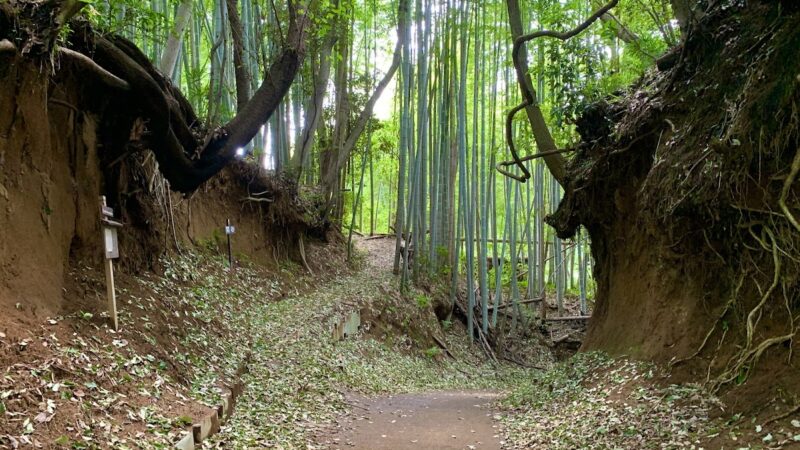
Even today, the remains of the main enclosure, several other enclosures, moats, and earthen bridges are well-preserved, making it a valuable historical site for learning about the structure of medieval mountain castles.
History of Hatsuzawa Castle | From Construction to Abandonment
Various Theories Regarding the Construction Period and Builder
Due to limited historical sources, there are several theories regarding the construction period and builder of Hatsuzawa Castle.
The theory that it was built by the Kunugida clan is considered the most likely. According to the “Shinpen Musashi Fudoki-ko,” compiled during the Edo period, it is believed to have been built as a residence by the Kunugida clan, a branch of the Yokoyama clan, one of the seven Musashi clans that ruled this area during the Kamakura period. The Kunugida clan was a powerful family within the Yokoyama clan and held influence in the Tama region.
On the other hand, there is also the theory that it was built by the Nagai clan. One theory suggests that the castle was built by the Nagai clan (Ooe clan), who are said to be descendants of Ooe Hiromoto, the lord of Katakura Castle. The Nagai clan was a powerful local family during the Muromachi period and is believed to have built several castles.
While the Muromachi period is the generally accepted date for its construction, some suggest it may date back to the Kamakura period. In any case, further research is needed to determine the details.
Hatsuzawa Castle in the Sengoku Period
During the Sengoku period, Hatsuzawa Castle came to play a crucial role in the struggle for supremacy in the Kanto region.
From the late 15th to the 16th century, this region is thought to have been under the control of the Ogigayatsu Uesugi clan. The Ogigayatsu Uesugi clan was a branch of the Kanto Kanrei Uesugi clan and held power in southern Musashi Province. Hatsuzawa Castle may have functioned as one of the Ogigayatsu Uesugi clan’s branch castles.
In the late 16th century, the Later Hojo clan (Odawara Hojo clan) expanded its power into Musashi Province. When Hojo Ujiteru built Hachioji Castle, Hatsuzawa Castle was given an important position as an outpost (branch castle) of Hachioji Castle. It is believed to have played a crucial role in the defense system, serving as a key point protecting the south of Hachioji Castle.
Fall and Abandonment in 1590
The fate of Hatsuzawa Castle was sealed during Toyotomi Hideyoshi’s Odawara campaign in 1590.
When Toyotomi’s large army invaded the Kanto region, Hachioji Castle was besieged by the forces of Maeda Toshiie, Uesugi Kagekatsu, and others. On June 23rd, Hachioji Castle fell after fierce fighting. It is believed that Hatsuzawa Castle, as an outpost of Hachioji Castle, shared the same fate and fell as well.
After the fall of Hachioji Castle, the Hojo clan was destroyed, and Tokugawa Ieyasu entered the Kanto region. During this period, many medieval mountain castles lost their military value and were abandoned. Hatsuzawa Castle was abandoned at this time and has since lost its function as a castle, remaining so to this day.
Structure and Size of Hatsuzawa Castle | Characteristics of a Mountain Castle
Main Enclosure and Layout
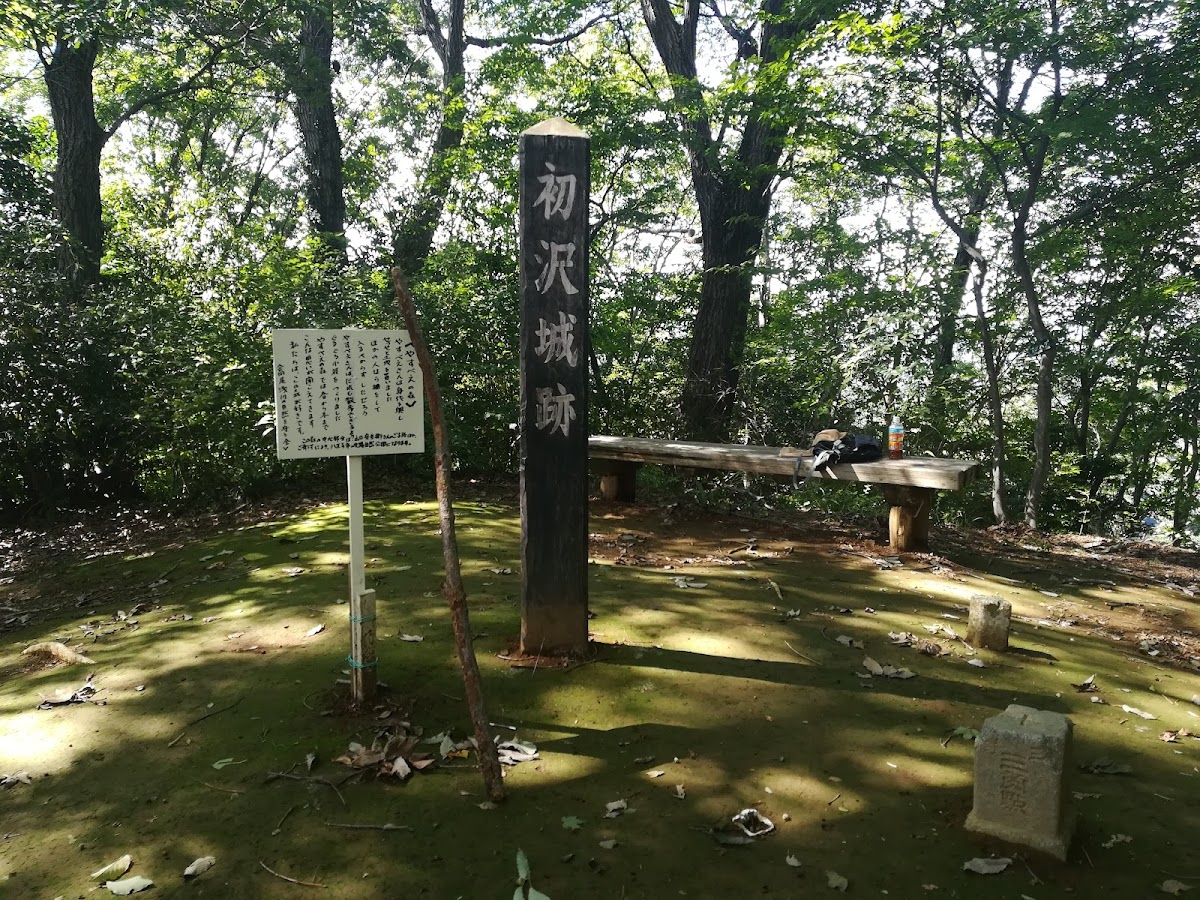
The heart of Hatsuzawa Castle is the main enclosure located on the summit of Hatsuzawa Mountain (approximately 230 meters above sea level). A triangulation point is installed in the main enclosure, and a stone monument marking the “Hatsuzawa Castle Ruins” now stands there.
The main enclosure utilizes the topography of the mountaintop, and traces of an earthen embankment surrounding it can be seen. While relatively compact, the main enclosure is of standard size for a mountain castle.
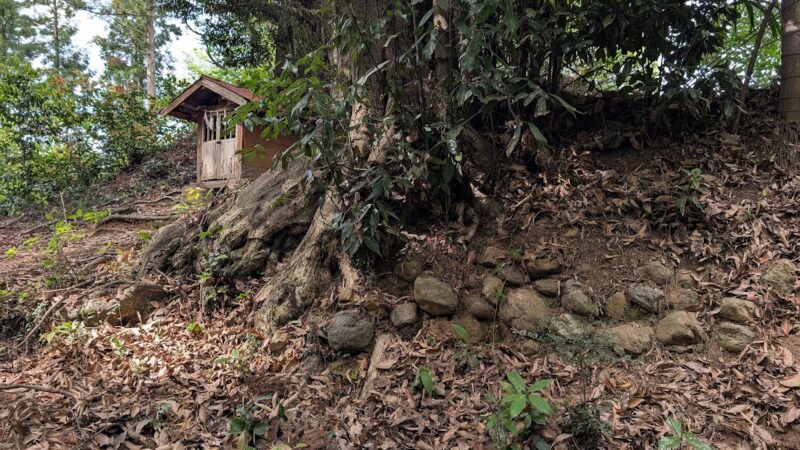
Several enclosures are arranged around the main enclosure. These enclosures are arranged in a stepped pattern, enhancing their defensive capabilities. Each enclosure has been leveled, suggesting it was used for buildings or the garrison of soldiers.
Defensive Facilities | Moats and Earthen Bridges
Notable defensive facilities of Hatsuzawa Castle are the moats and earthen bridges. A moat (horikiri) is a dry moat dug to cut across a ridge, and is an important defensive structure to prevent enemy invasion. Several moats have been identified at Hatsuzawa Castle, and the moat located on the approach to the main enclosure is particularly deep and clearly preserved.
Earthen bridges (dobashi) were constructed as passages to cross moats, and were designed to be destroyed during defense to completely block enemy entry. The earthen bridges at Hatsuzawa Castle are relatively well-preserved, making them valuable remains for understanding the defensive techniques of medieval mountain castles.
Utilization of Location and Topography
Hatsuzawa Castle was built on the east side of the Hatsuzawa River, on the top of a hill. This location had the following strategic significance:
- View overlooking the plains around Takao Station: From the mountaintop, a wide view of the surrounding plains was possible, allowing for early detection of enemy movements.
- Defense utilizing natural terrain: The steep slopes acted as a natural barrier, making sieges difficult.
- Cooperation with Hachioji Castle: Located south of Hachioji Castle, it served as an outpost, enabling information transmission and the establishment of a defensive line.
Current Status of Hatsuzawa Castle Ruins | Preservation of Remains
Development as a Tokyo Metropolitan Government Designated Historic Site
Hatsuzawa Castle Ruins are protected as a Tokyo Metropolitan Government designated historic site and have undergone certain maintenance. The access route is well-maintained and also used as a hiking course, making it relatively easy to visit.
An explanatory sign is installed in the main enclosure, allowing visitors to learn about the history and structure of Hatsuzawa Castle. A triangulation point and a stone monument marking the castle ruins have also been erected, creating an atmosphere befitting a historical site.
Highlights of the Remains
The main highlights of Hatsuzawa Castle Ruins that can be visited today are as follows:
Main Enclosure Ruins: Located on the mountaintop, it allows visitors to experience the central part of the castle. Traces of the surrounding earthworks can also be seen.
Group of Enclosures: Multiple enclosures remain, arranged around the main enclosure. The leveled flat areas are clearly visible, allowing for an understanding of the medieval layout. Moat: Several deep and clearly defined moats remain, making them the most impressive remnants of the mountain castle’s defensive structures.
Earthen Bridge: The earthen bridges crossing the moats are well-preserved, allowing visitors to experience the castle’s construction techniques of the time.
Attractions as a Hiking Course
Hatsuzawa Castle Ruins are a popular spot for enjoying both historical exploration and hiking. At a manageable height of approximately 100 meters, it’s easily accessible even for beginners.
The path to the summit winds through a lush forest, offering beautiful scenery throughout the seasons. The fresh greenery of spring and the vibrant autumn foliage are particularly ideal for walks and hikes.
Attractions Around Hatsuzawa Castle
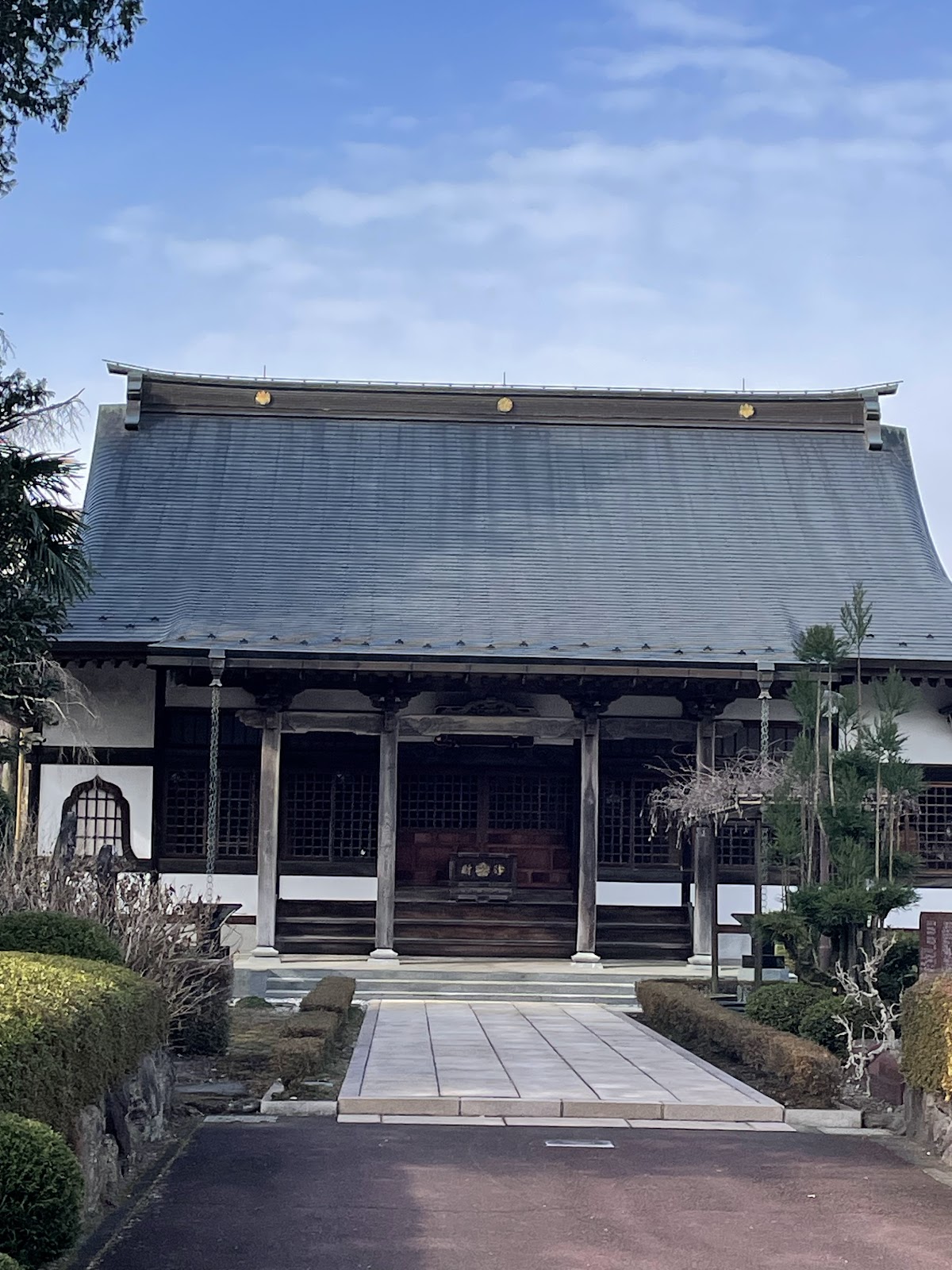
Takao Mikoromo Church
The landmark for accessing Hatsuzawa Castle is the Takao Mikoromo Church. Its distinctive shape, resembling a large yellow cylinder, makes it easily recognizable from a distance.
This cathedral houses what is said to be the largest statue of Sugawara no Michizane in Japan, and is known for its unusual shape. It’s a must-visit spot when visiting Hatsuzawa Castle.
Connection to Hachioji Castle
Since Hatsuzawa Castle functioned as an outpost of Hachioji Castle, visiting both is also recommended. Hachioji Castle ruins are designated a national historic site, and you can see the remains of a larger mountain castle.
Visiting both castles will give you a deeper understanding of the Hojo clan’s network of branch castles and defensive system during the Sengoku period.
Surrounding Medieval Castles
In addition to Hatsuzawa Castle, numerous medieval castles remain around Hachioji City.
- Katakura Castle: A castle believed to be the base of the Nagai clan, with connections to Hatsuzawa Castle suggested.
- Kajiwara Castle: Another mountain castle within Hachioji City, also with medieval remains.
- Yuki Castle: A prominent mountain castle in the Minami-Tama region.
- Josenji Castle: A small castle with a distinctive layout.
Visiting these castle ruins will provide a more comprehensive understanding of the medieval history of the Tama region.
How to Access Hatsuzawa Castle
Access by Train
Nearest Station: JR Chuo Line/Keio Takao Line “Takao Station”
Hatsuzawa Castle ruins are approximately a 15-20 minute walk from Takao Station. Exit the station and head south-southwest towards Takao Mikoromo Church. The mountain southwest of the church is the site of Hatsuzawa Castle.
Enter the hiking trail from around the church and head towards the summit. The path is well-maintained, but hiking boots or comfortable walking shoes are recommended.
Access by Car and Parking
If visiting by car, the nearest interchanges are the Chuo Expressway “Hachioji IC” or the Ken-O Expressway “Takaosan IC”.
Parking: There is no dedicated parking lot for Hatsuzawa Castle ruins. It is recommended to use coin-operated parking lots around Takao Station or public transportation. While there may be parking spaces for visitors at Takao Mikoromo Church, it is advisable to refrain from using them if you are only visiting the castle ruins.
Points to Note When Visiting
- Clothing: As it is a mountain castle, comfortable walking shoes and clothing are essential.
- Season: Insect repellent is necessary in summer, and warm clothing in winter.
- Drinking Water: There are no vending machines on the mountain, so please bring your own.
- Weather: The ground can be slippery in rainy weather, so caution is advised.
- Estimated Time Required: Allow approximately 1-2 hours for the ascent, visit, and descent.
Historical Value and Future Challenges of Hatsuzawa Castle
Research Value
Hatsuzawa Castle is an important historical site for studying the medieval history of the Tama region. Its academic value is particularly recognized in the following respects:
- Research on the Musashi Seven Clans: The tradition that Hachioji Castle was the residence of the Kunugida clan of the Yokoyama clan provides a clue to understanding the power distribution of the Musashi Seven Clans.
- Hojo Clan’s Branch Castle Network: Hachioji Castle’s function as an outpost is important for understanding the defense strategy of the Later Hojo clan during the Sengoku period.
- Research on Mountain Castle Structure: The well-preserved moats and earthen bridges are valuable resources for studying the construction techniques of medieval mountain castles.
Efforts for Preservation and Utilization
While Hatsuzawa Castle ruins are protected as a Tokyo Metropolitan Government designated historical site, there are still challenges ahead.
In terms of preservation, continuous management is necessary to prevent damage to the remains due to natural disasters and deterioration over time. In particular, landslides caused by heavy rains could alter the shape of moats and baileys.
In terms of utilization, efforts are needed to make more people aware of the historical value of Hatsuzawa Castle. This could include improving explanatory signs, conducting guided tours, and releasing digitally restored CG images.
Engagement with the Local Community
Hatsuzawa Castle Ruins are cherished by residents as a local historical heritage site. Their use as a hiking trail and a place for learning about local history contributes to the formation of local identity.
It is important to continue passing on Hatsuzawa Castle Ruins to future generations while balancing academic research, preservation and management, and regional revitalization.
Summary | Rediscovering the Charm of Hatsuzawa Castle
Hatsuzawa Castle is a medieval mountain castle located in Hatsuzawa-cho, Hachioji City, Tokyo. While there are various theories regarding its construction, including theories that it was built by the Kunugida or Nagai clans, it is a castle ruin with a history of playing an important role as an outpost of Hachioji Castle.
Built on the summit of Mt. Hatsuzawa, at an altitude of approximately 230 meters, this castle retains well-preserved remains of a medieval mountain castle, including the main enclosure, baileys, moats, and earthen bridges, and is protected as a designated historical site by the Tokyo Metropolitan Government. From the Muromachi period to the Sengoku period, Hatsuzawa Castle underwent various transformations, serving under the Kunugida clan (part of the Yokoyama clan of the Musashi Seven Clans), the Ogigayatsu Uesugi clan, and later as a branch castle of the Hojo clan. It fell along with Hachioji Castle during Toyotomi Hideyoshi’s siege of Odawara in 1590 and was subsequently abandoned.
Currently, the site is maintained as a hiking trail, easily accessible from Takao Station (approximately 15-20 minutes on foot), making it a spot where visitors can enjoy both historical exploration and nature walks. Visiting the nearby Takao Mikoromo Church and Hachioji Castle ruins in conjunction with Hatsuzawa Castle offers a deeper understanding of the medieval history of the Tama region.
While further research is needed to determine the exact builder and construction period, this is precisely what makes the castle ruins so intriguing and romantic. Relatively close to central Tokyo and easily accessible, Hatsuzawa Castle ruins are a must-see historical site for anyone interested in medieval mountain castles.