Harada Castle (Toyonaka City, Osaka Prefecture) – A Thorough Explanation of History, Remains, and Highlights
Overview of Harada Castle
Harada Castle was a Japanese castle (hilltop castle, hill castle) located near Sone-Nishimachi and Harada-Motomachi in Toyonaka City, Osaka Prefecture. It is a designated historical site of Toyonaka City, and some of its remains are still preserved. Harada Castle was the residence of the Harada clan, a local powerful family active mainly in Harada Village, and functioned as a small-scale “castle residence.”
Basic Information
Location: 4-4-15 Sone-Nishimachi, Toyonaka City, Osaka Prefecture (Main Enclosure)
Former Province: Settsu Province
Classification/Structure: Hilltop Castle
Builder: Harada Clan
Year of Construction: Kamakura Period (Estimated)
Common Name/Alternate Name: Harada Castle North
Keep Structure: None (Castle Style)
Designated Cultural Property: Toyonaka City Designated Historic Site (Designated September 1, 1987)
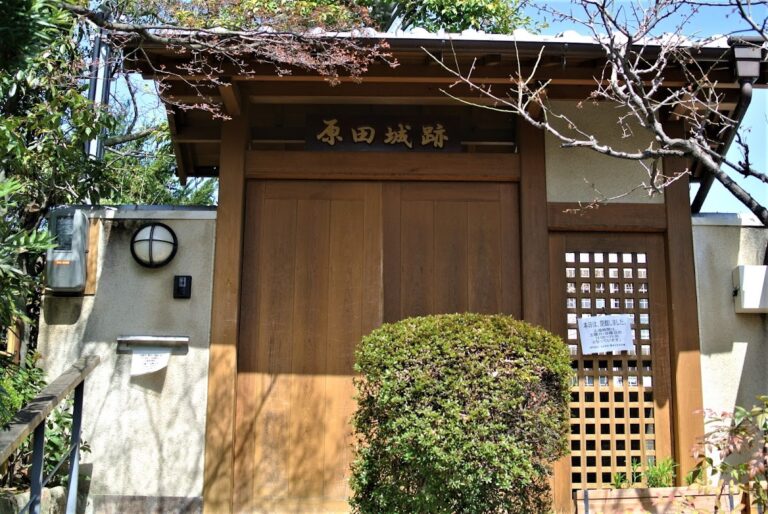
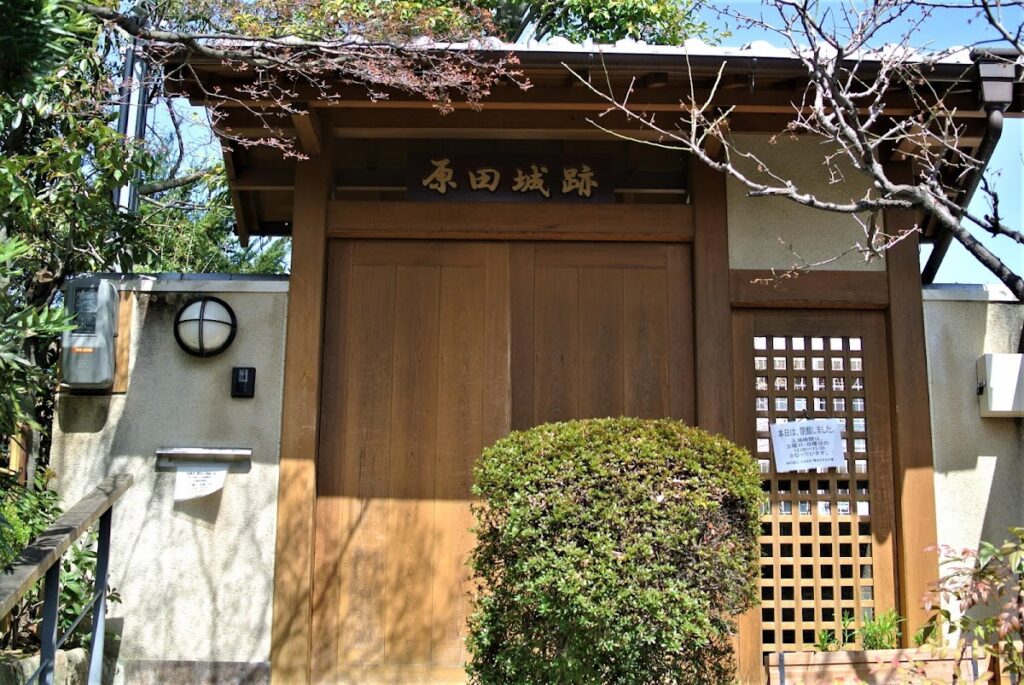
Harada Castle was a multi-enclosure castle consisting of two enclosures: the North Castle and the South Castle. Currently, part of its remains are preserved on the grounds of the former Hamuro Family Residence and are open to the public on Saturdays and Sundays from 12:00 to 16:00.
History of Harada Castle
Kamakura Period to Muromachi Period
The Harada clan appears in history as one of the retainers of Tadain, who ruled the Nose area during the Kamakura period. The Harada clan, believed to be descended from the Tada Minamoto clan, established their power base in Harada Village, Toshima District, Settsu Province (present-day Harada area of Toyonaka City).
While there are no clear records regarding the construction date of Harada Castle, it is estimated to have been built during the late Kamakura period to the Nanboku-cho period, when the Harada clan rose to prominence as local powerful families. At that time, many local lords and powerful families built castles in Settsu Province, and several castles existed within the Toyonaka City area, including Toneyama Castle, Katsube Castle, Nishiichiba Castle, Imazaike Castle, and Hozumi Fort.
The Turmoil of the Sengoku Period
Harada Castle first appears on the historical stage during the Sengoku period (Warring States period). Records show that in 1541, Harada Castle was attacked by Kizawa Nagamasa, a retainer of the Kanrei (deputy shogun) Hosokawa Harumoto. During this period, Settsu Province was embroiled in fierce warfare due to internal conflicts within the Hosokawa clan and the rise of the Miyoshi clan.
From the Tenbun era to the Tensho era, Harada Castle is believed to have functioned as one of the strategic strongholds in Settsu Province. While there are various theories regarding the affiliation of the Harada clan at that time, it is presumed that they maintained a certain degree of independence as a powerful local lord while maintaining relationships with the ruling powers of the time.
The Azuchi-Toyotomi Period and the Castle’s Demise
During the Tensho era (1573-1592), Settsu Province came under the control of Oda Nobunaga and later Toyotomi Hideyoshi. Nakagawa Kiyohide expanded his power in this region. Known as the lord of Ibaraki Castle in Settsu Province, Nakagawa Kiyohide was a warrior who played an important role under the Toyotomi regime.
There are no clear records of when Harada Castle was abandoned, but it is believed to have been demolished along with many smaller castles during Toyotomi Hideyoshi’s castle reorganization (consolidation and abolition of castles) from the end of the Tensho era to the Bunroku era. During this period, a new system of governance centered around Osaka Castle was established in Settsu Province, rendering smaller, local castles and fortifications unnecessary.
Castle Structure and Remains
Two-Enclosure Structure: North and South Castles
Harada Castle was a castle complex consisting of two enclosures: the North Castle (main enclosure) and the South Castle. Excavation surveys and topographical analysis have revealed the following structure:
North Castle (Main Enclosure)
- Approximately 80 meters north-south and 60 meters east-west
- A rectangular enclosure surrounded by earthworks
- The current site of the former Hamuro family residence corresponds to part of this main enclosure
- Well-preserved remains of earthworks are found on the west and north sides
South Castle
- A secondary enclosure located south of the North Castle
- The exact size is unknown, but it is slightly smaller than the North Castle
- Almost no remains remain today
It is presumed that there were moats and cliffs between the two enclosures, but most have been lost due to residential development.
Existing Earthworks
The most important remains of Harada Castle are the earthworks remaining on the west and north sides of the North Castle (main enclosure). These earthworks, approximately 2-3 meters high and 4-5 meters wide, are valuable historical remains representing typical defensive structures of medieval castles.
The garden of the former Hamuro family residence skillfully utilizes these earthworks, presenting a landscape that beautifully blends early Showa-era landscaping techniques with medieval castle remains. Trees are planted on top of the earthworks, functioning as borrowed scenery for the garden, while the slopes of the earthworks are covered with moss and shrubs, forming a beautiful green wall.
Results of Archaeological Excavations
The following results have been obtained from archaeological excavations conducted by the Toyonaka City Board of Education:
- Cross-sectional investigation of the earthworks confirmed construction using the rammed earth method.
- Medieval artifacts (earthenware, roof tiles, etc.) were unearthed.
- A depression believed to be the remains of a moat was detected.
- A group of post holes, possibly indicating building remains, was identified.
These investigation results indicate that Harada Castle was not merely the residence of a local lord, but a fortress with a certain degree of defensive function.
Former Hamuro Residence and Harada Castle Ruins
Coexistence with Showa Modernist Architecture
The former Hamuro Residence is a building constructed in 1937 (Showa 12) by the Hamuro family on land that was part of the main enclosure of Harada Castle ruins. Designated as a National Registered Tangible Cultural Property, this building strongly retains the characteristics of early Showa modernist architecture.
The building’s design incorporates the then-popular Japanese-Western eclectic style, skillfully blending a Western-style exterior with a Japanese-style interior. What is particularly noteworthy is that, during construction, the earthworks of Harada Castle were not destroyed, but rather utilized as an important element of the garden.
Harmony of Garden and Earthworks
The garden of the former Hamuro family residence is designed to skillfully incorporate the earthworks of Harada Castle. The three-dimensional garden composition utilizing the elevation differences of the earthworks, the contrast between the green of the earthworks and the white walls of the building, and the arrangement of garden paths that utilize the curves of the earthworks, all demonstrate a remarkable harmony between the medieval castle ruins and the beauty of a Showa-era garden.
Currently, this garden is open to the public free of charge on Saturdays and Sundays from 12:00 to 16:00, allowing visitors to enjoy both the medieval castle ruins and the Showa-era modernist architecture simultaneously.
Harada Village and Seiganji Temple
History of Harada Village
Harada Village was a village belonging to Toyoshima District, Settsu Province, from the medieval to the early modern period. The Harada clan used this village as their base and expanded their influence into the surrounding area. The village’s name is said to have either originated from the Harada family’s surname, or conversely, from the village’s name.
Harada Village was located along the road connecting Kyoto and western Japan, and developed as a transportation hub. It is presumed that a market was held there during the medieval period, and commercial activity flourished.
Relationship with Seiganji Temple
The Harada area has a temple called Seiganji, which is said to have had a deep connection with the Harada family. Seiganji is a Jodo sect temple, and it has been suggested that it may have been the Harada family’s ancestral temple.
According to temple records, the temple survived the turbulent Sengoku period and continued to function as a center of local faith even after the abandonment of Harada Castle. While there are no direct historical documents related to the Harada family remaining at the current Seiganji Temple, local oral traditions contain content that suggests a relationship between the Harada family and the temple.
Access to Harada Castle Ruins
Access by Public Transportation
Train
- Get off at Sone Station on the Hankyu Takarazuka Line, approximately 5 minutes on foot.
- Take a Hankyu bus from Momoyamadai Station on the Osaka Metro Midosuji Line, get off at the Harada bus stop, approximately 3 minutes on foot.
Sone Station is easily accessible, approximately 15 minutes by express train from Osaka Umeda Station. The route from the station to Harada Castle Ruins (former Hamuro Family Residence) is a flat path through a residential area, with well-maintained signage.
Access by Car
Nearest Interchange
- Approximately 10 minutes from Toyonaka IC on the Meishin Expressway
- Approximately 8 minutes from Toyonaka Minami Exit on the Hanshin Expressway Route 11 Ikeda Line
Parking
There is no dedicated parking at the former Hamuro Family Residence. We recommend using nearby coin-operated parking lots or accessing the site by public transportation.
Visitor Information
Opening Hours: Saturdays and Sundays, 12:00 PM – 4:00 PM
Closed: Mondays – Fridays, New Year’s Holidays
Admission Fee: Free
Location: 4-4-15 Sone-Nishimachi, Toyonaka City, Osaka Prefecture
Inquiries: Toyonaka City Board of Education, Social Education Division
When visiting, please be considerate of nearby residents as the facility is located in a residential area. Also, please follow the instructions of the administrator regarding photography inside the building.
Nearby Historical Sites and Tourist Spots
Sakurazuka Tumulus Cluster
Located approximately 2 kilometers northeast of Harada Castle Ruins, the Sakurazuka Tumulus Cluster is a group of burial mounds constructed from the middle to late Kofun period. The Oishizuka Tumulus, Koishizuka Tumulus, and Oshishizuka Tumulus still exist, making it an important historical site for understanding the history of ancient Toshima County.
Shimakumayama Kiln Site
The Shimakumayama Kiln Site, a Toyonaka City designated historical site, is the remains of a Sue ware kiln that operated from the Heian period to the Kamakura period. It is a valuable historical site for understanding the local industry before the construction of Harada Castle.
Hattori Ryokuchi Park
Located approximately 3 kilometers west of the Harada Castle site, Hattori Ryokuchi Park is a vast urban park covering approximately 126 hectares. It features facilities such as the Japan Folk House Museum and the Urban Greening Botanical Garden, making it ideal for family sightseeing.
Historical Significance of Harada Castle
Position in the History of Castles in Settsu Province
Harada Castle holds an important position as a typical example of a medieval castle in Settsu Province. As a castle of a local lord without large stone walls or a keep, it is a valuable historical site that reveals the reality of regional governance at the time.
Many castles were built in Settsu Province during the Sengoku period, but most were lost due to renovations into early modern castles or abandonment. Castle ruins that retain a certain degree of their medieval appearance, like Harada Castle, are valuable, and the continued existence of remains such as earthworks is of significant importance for castle research.
Contribution to Local History Research
Research on the Harada Castle ruins has greatly contributed to elucidating the medieval history of the Toyonaka City area. Artifacts unearthed through excavation provide clues to the lifestyle and trade relations of the time, playing a crucial role as archaeological evidence in local history research where written historical sources are scarce.
Furthermore, the existence and activities of the Harada clan, a local powerful family, are indispensable elements for understanding the structure of local communities in medieval Settsu Province. Through research on Harada Castle, the relationship between central power and local powerful families, and the realities of local autonomy and governance, are gradually becoming clearer.
Model Example of Cultural Property Protection
The preservation and utilization of the Harada Castle ruins at the former Hamuro family residence is highly regarded as an excellent example of cultural property protection. By preserving and opening to the public cultural assets from different eras—medieval castle ruins and Showa-era modernist architecture—this project contributes to raising the historical awareness of local residents.
This kind of integrated preservation and utilization of cultural assets is a valuable initiative that other municipalities can learn from, as it demonstrates how to pass on historical heritage to future generations within limited urban spaces.
References and Materials
The following documents and materials are helpful for research on Harada Castle.
Main References
- Toyonaka City History Compilation Committee, “Toyonaka City History”
- Toyonaka City Board of Education, “Toyonaka City Cultural Property Survey Report”
- Osaka Prefectural Board of Education, “Medieval Castles and Residences of Osaka Prefecture”
- “Comprehensive Survey of Japanese Castles,” Volume 12 (Osaka and Hyogo)
Archaeological Survey Reports
- Toyonaka City Board of Education, “Harada Castle Site Excavation Survey Report”
- Toyonaka City Cultural Property Survey Association, “Summary of Archaeological Excavation Surveys in Toyonaka City”
Related Historical Materials
- “Hosokawa Ryokeki” (Description of the attack on Harada Castle in the Tenbun era)
- “Settsu-shi” (Edo period geographical record, includes a description of Harada Village)
- Various ancient documents (fragmentary records related to the Harada clan)
These documents are available for viewing at Toyonaka City Library, Osaka Prefectural Library, etc. Furthermore, the Toyonaka City Board of Education is continuously collecting and organizing materials related to Harada Castle.
Summary
Harada Castle is a valuable medieval castle ruin remaining in Toyonaka City, Osaka Prefecture. It functioned as the residence of the local powerful Harada clan from the Kamakura period to the Sengoku period, playing an important role in the regional history of Settsu Province. Currently, the earthworks of the northern castle are preserved on the grounds of the former Hamuro family residence, creating a unique landscape where medieval castle remains and Showa-era modernist architecture harmonize.
Conveniently located just a 5-minute walk from Hankyu Sone Station, Harada Castle ruins, nestled in a quiet residential area, offer a glimpse into history and are a must-visit spot for anyone interested in Osaka’s history. During public openings on Saturdays and Sundays, volunteer guides provide explanations, allowing visitors to learn more about the history of Harada Castle.