Hagoromoishi Castle (Tohaku District, Tottori Prefecture) Complete Guide | History, Structure, and Access Information
What is Hagoromoishi Castle?
Hagoromoishi Castle (Ueshijo) is a medieval mountain castle located in Yurihama Town, Tohaku District, Tottori Prefecture. It is the largest Sengoku period (Warring States period) castle ruin in the prefecture. Built on the summit of Mt. Hagoromoishi (372 meters above sea level), the castle is located south of Lake Togo and functioned as a strategic stronghold in eastern Hoki Province, overlooking the San’in Road and Lake Togo.
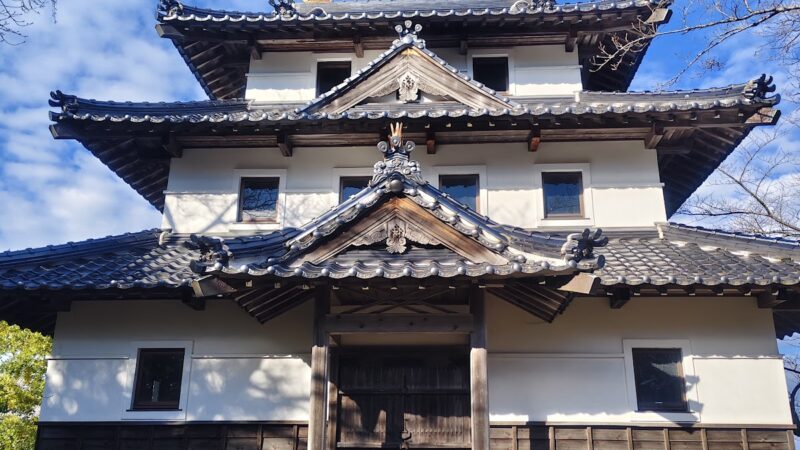
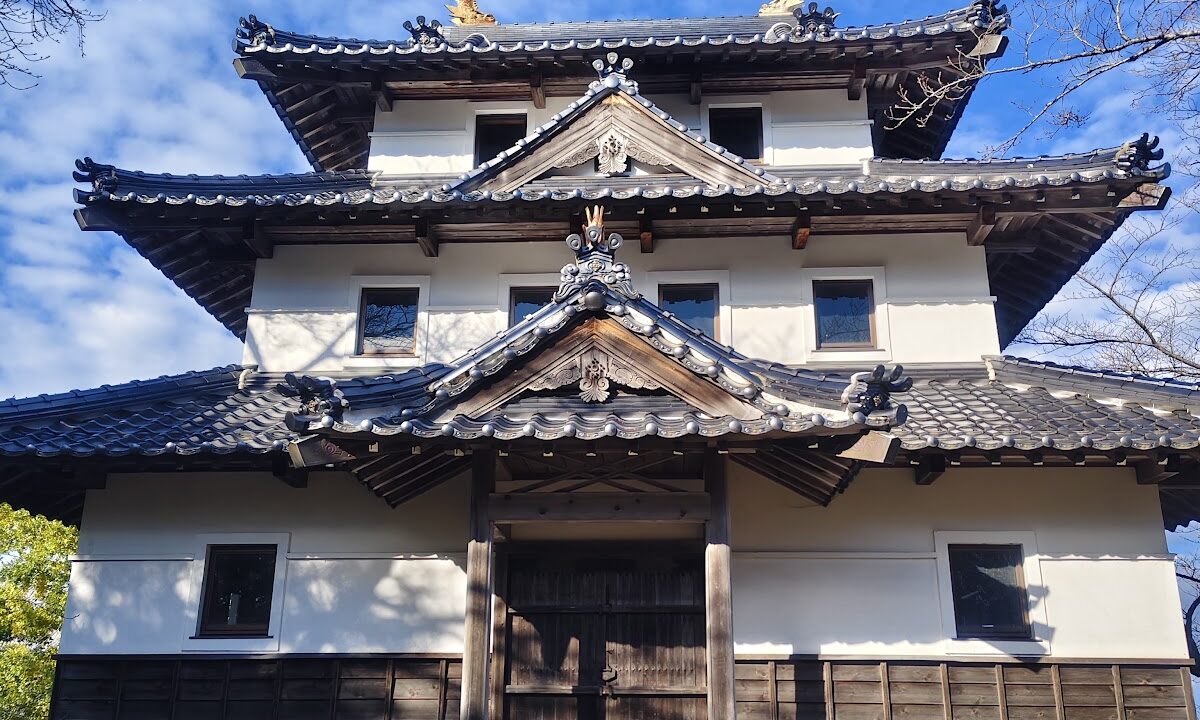
Currently, it is protected as a nationally designated historical site and a Tottori Prefecture designated historical site, and is maintained as part of the Misasa-Togo Lake Prefectural Natural Park. A replica keep stands on the site of the main keep, and the “Hagoromoishi Castle Lord Nanjo Succession Monument” is installed, allowing visitors to imagine its former glory.
The name Hagoromoishi Castle is said to originate from a legend that a celestial maiden hung her robe on it, and it holds an important position as part of the region’s cultural identity.
History of Hagoromoishi Castle
Construction and the Rise of the Nanjo Clan
Hagoromoishi Castle is said to have been built in 1366 (Jōji 5). The first lord of the castle was Nanjo Sadamune, known as the second son of En’ya Takasada, the governor of Izumo Province during the Nanboku-chō period. Nanjo Sadamune, a descendant of the renowned En’ya Takasada (known as En’ya Hangan), built this mountain castle in Hani-go, Kawamura-gun, Hōki Province (present-day Yurihama Town), marking the beginning of the Nanjo clan’s rule over eastern Hōki.
The Nanjo clan used Hagoromoishi Castle as their base and ruled the area for approximately 230 years. From the medieval period to the Sengoku period, Hagoromoishi Castle developed into a political and military center in eastern Hōki.
Battles During the Sengoku Period
From the Eiroku to the Tensho era (1558-1592), Hagoromoishi Castle became the stage for fierce battles. During this period, powerful daimyo such as the Amago, Ouchi, Mori, and Oda clans repeatedly fought over control of Hoki Province, vying for Hagoromoishi Castle.
The Nanjo clan initially belonged to the Amago clan, but as the Amago clan declined, they pledged allegiance to the Mori clan, thus protecting the castle and territory while adapting to changing times. In this process, Hagoromoishi Castle repeatedly fell and was recaptured, and its fortifications were strengthened each time.
During the Sengoku period, Hagoromoishi Castle was not merely the residence of a local powerful family, but functioned as a crucial point in the balance of power in the Chugoku region. Hagoromoishi Mountain, where the castle is located, boasts an excellent location, controlling the San’indo, a major transportation route, and monitoring the Togo Pond, a vital water transport point. Its strategic value was extremely high.
The Battle of Sekigahara and the Abandonment of the Castle
In the Battle of Sekigahara in 1600, the Nanjo clan sided with the Western Army. However, due to the Western Army’s defeat, the Nanjo clan was punished with the confiscation of their territory. Hagoromoishi Castle was burned down by the Tokugawa forces, bringing an end to the Nanjo clan’s rule and the history of Hagoromoishi Castle, which had lasted for approximately 230 years.
After its abandonment, Hagoromoishi Castle was never rebuilt, and its remains gradually returned to nature. However, its state of preservation is excellent, and it still strongly retains the characteristics of a Sengoku period mountain castle.
Structure of Hagoromoishi Castle
Overall Structure and Scale
Hagoromoishi Castle is known as the largest mountain castle in Tottori Prefecture. The entire Hagoromoishi Mountain, at an altitude of 372 meters, was the castle grounds, and it has the typical structure of a Sengoku period mountain castle, with numerous baileys (kuruma) arranged in a stepped pattern around the main keep at the summit.
The castle grounds are vast, and a series of defensive lines have been constructed, including a belt-shaped enclosure surrounding the main keep. These enclosures are arranged based on a meticulous defensive plan to prevent enemy incursions in stages, demonstrating the high level of castle-building technology during the Sengoku period.
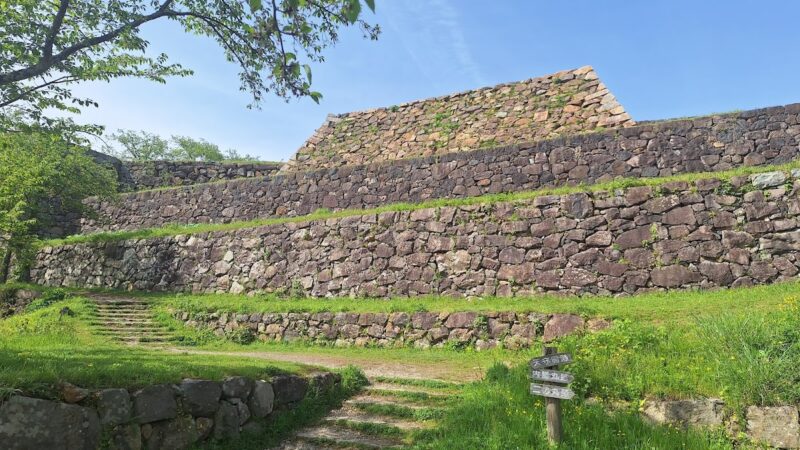
The remaining stone walls are valuable historical documents that show the level of technology at the time. Stone walls built using the nozurazumi method (plain stacking of natural stones) can be seen in places, exhibiting characteristics of a transitional period from medieval mountain castles to early modern castles.
Main Keep and Belt-Shaped Enclosure
The main keep is located at the summit of Hagoromoishi Mountain and forms the core of the castle. Currently, a replica keep stands here, offering panoramic views of Lake Togo and the Sea of Japan. On clear days, it’s a spectacular viewpoint where you can even see Mount Daisen and the Sea of Japan.
The belt-shaped enclosure surrounds the main keep. A belt-shaped enclosure (obi-kuruma) is a long, narrow enclosure surrounding the main enclosure (okuriku). It served to prevent direct attacks on the main keep (honmaru) and also functioned as a space for garrison troops. The belt-shaped enclosures of Hagoromoishi Castle are relatively well-preserved and are important remains for understanding the castle’s layout (design) at the time.
There is a difference in elevation between the main keep (honmaru) and the belt-shaped enclosure, a design intended to enhance defense. This elevation difference is called a “kirigishi” (a cut slope) and served to make it difficult for the enemy to climb.
Forts and Outposts
The defensive system of Hagoromoishi Castle consisted not only of the area around the main keep, but also of forts and outposts positioned on the surrounding mountains. These forts and outposts played a role in detecting approaching the main castle early and slowing down enemy advances.
The forts were positioned on high ground around Mount Hagoromoishi, forming a wide-area defensive network through mutual communication. It is believed that information was transmitted via signal fires and messengers, maintaining coordination with the main castle. The outposts were defensive strongholds positioned further forward, limiting enemy invasion routes and preventing direct attacks on the main castle. These outposts functioned as observation posts in peacetime and served as forward bases in times of conflict.
Jūmanji Castle
Jūmanji Castle is known as one of the subsidiary castles of Hagoromoishi Castle. This castle played a part in Hagoromoishi Castle’s defense system, functioning as a defensive stronghold against invasions from specific directions.
The name, Jūmanji, suggests a connection to a temple, leading to the suggestion that it may have been a medieval castle complex combining religious and military facilities. In the medieval period, it was not uncommon for temples to possess castle-like functions, and it is believed that such facilities existed around Hagoromoishi Castle.
Characteristics of the Castle Layout
The layout of Hagoromoishi Castle strongly retains characteristics of mountain castles from the Sengoku period. Key features include the following:
Skillful Utilization of Terrain: The castle maximizes the use of the steep terrain of Hagoromoishi Mountain, reinforcing natural defenses with artificial structures. The arrangement of baileys utilizing ridges and valleys demonstrates ingenuity in creating maximum defensive effect with minimal effort.
Multi-Layered Defensive Structure: Multiple defensive lines are established around the main keep, forcing the enemy to overcome several obstacles before reaching it.
Water Supply: Regarding water supply, a major weakness of mountain castles, the remains of what appears to be a well have been confirmed within the castle grounds, indicating a design capable of withstanding sieges.
Excellent View: The view from the main keep was militarily important, offering the advantage of early detection of enemy movements. Its location, overlooking Lake Togo and the San’in Road, was also excellent for information gathering.
Cultural Property Designation of Hagoromoishi Castle
Due to its historical value and excellent state of preservation, the Hagoromoishi Castle ruins have received multiple cultural property designations.
First, it is designated as a Tottori Prefecture Historic Site, and is protected at the prefectural level. Furthermore, in 2008, it was designated a National Historic Site, recognizing it as a nationally important cultural property.
Becoming a National Historic Site has enabled more thorough protection and planned development, and continuous investigation and preservation work on the remains has been carried out since the Reiwa era. Hagoromoishi Castle was the center of the Tottori Prefectural government’s rule over eastern Hoki Province from the Sengoku period to the Azuchi-Momoyama period. Not only is its state of preservation excellent, but the abundance of related materials is considered first-class among medieval castles in the prefecture.
Its value as a cultural property lies not only in the state of preservation of the remains, but also in the wealth of historical documents and illustrations related to the Nanjo clan. These materials provide detailed information about the castle’s history and the social conditions of the time, making it an extremely important historical site from an academic perspective.
Highlights of Hagoromoishi Castle
Replica Keep and View
The replica keep built on the site of the main keep is a symbolic presence at Hagoromoishi Castle. While there are no records of a real keep existing at the original Hagoromoishi Castle, this replica serves as a landmark and observation deck for the castle ruins.
The view from the replica keep is breathtaking, offering a panoramic view of the beautiful Togo Pond below, the Sea of Japan in the distance, and on clear days, even the majestic Mt. Daisen. This view truly demonstrates why Hagoromoishi Castle was chosen as a strategically important location.
Stone Wall Remains
The stone walls remaining throughout the castle grounds are valuable relics that convey the castle-building techniques of the time. These walls, constructed using natural stones known as “nozurazumi,” are characteristic of mountain castles from the Sengoku period, possessing a simple yet powerful strength that differs from the more refined stonework techniques of later periods.
The stone walls, especially around the main keep, are relatively well-preserved, allowing visitors to observe the height and structure of the walls at the time. The moss-covered walls evoke a sense of history and are a popular spot for photography.
Enclosures
The numerous enclosures arranged from the mountaintop to the foot of the mountain give a real sense of the scale of Hagoromoishi Castle. These enclosures are arranged in a stepped pattern, like terraced fields, and each functioned as an independent defensive section.
By observing the movement paths between the enclosures and the placement of the entrances (koguchi), one can understand the castle’s movement patterns and defensive strategies of the time. Checking these remains while walking along the castle path is one of the great pleasures of exploring Hagoromoishi Castle.
Harmony with Nature
Hagoromoishi Castle ruins are located within the Misasa-Togo Lake Prefectural Natural Park, allowing visitors to enjoy historical remains in a rich natural environment. Cherry blossoms in spring, fresh greenery in early summer, and autumn leaves in fall—the castle ruins are adorned with the beauty of nature throughout the seasons.
Along the path to the castle, you can see a variety of vegetation, and hiking while listening to the chirping of wild birds is a luxurious experience that allows you to enjoy both historical exploration and nature walks at the same time.
Access and Visiting Information
Location
Hagoromoishi Castle Ruins are located in Hagoromoishi, Yurihama-cho, Tohaku-gun, Tottori Prefecture. The castle ruins are on Mt. Hagoromoishi (elevation 372 meters) in the upper reaches of the Hagoromoishi River.
Transportation Access
Using Public Transportation:
The nearest station is Matsuzaki Station on the JR San’in Main Line. It’s about a 10-minute drive from the station to the castle ruins. Taking a taxi or renting a car from the station is convenient. Access by public transportation alone is difficult, so it is recommended to secure transportation in advance.
Using a Car:
It’s about 15-20 minutes from the Tomari-Togo IC or Hawaii IC on the San’in Expressway. If you head south along the Hagoromoishi River, you will find a signpost, and there is a parking lot at the entrance to the hiking trail. Parking is free, but space is limited, so be aware of potential crowds.
About Visiting the Castle
From the parking lot to the main keep, you will hike up a mountain trail. The time required varies from person to person, but it usually takes about 30-40 minutes. The trail is well-maintained, but there are steep slopes typical of mountain castles, so we recommend wearing comfortable shoes and clothing.
Signposts are installed along the trail, so you can reach the main keep without getting lost. Along the way, you can enjoy exploring and understanding the castle’s structure by observing the remains of each enclosure.
Visiting Hours and Fees
Hagoromoishi Castle Ruins are an outdoor historical site, and visits are generally free. There is no entrance fee, and it is open year-round. However, please avoid visiting at night or in bad weather, as it is dangerous.
Allow 2-3 hours for your visit, including the ascent and descent. If you wish to carefully observe the remains, we recommend allocating more time.
Important Notes
- As this is a mountain castle, comfortable walking shoes and clothing are essential.
- Please prepare drinking water in advance (there are no vending machines around the castle ruins).
- Insect repellent spray is useful during the summer.
- Be careful as the ground can be slippery during and after rain.
- Cell phone reception may be unstable in some areas.
- Please take all your trash with you.
- Damaging historical sites is strictly prohibited.
Nearby Tourist Attractions
Togo Pond
Togo Pond, which can be viewed from Hagoromoishi Castle, is a representative tourist spot in Yurihama Town. It is a brackish lake with a circumference of approximately 12 kilometers and is also known as a clam producing area. Hot spring facilities and restaurants are scattered along the lakeshore, making it ideal to stop by before or after visiting Hagoromoishi Castle.
Hawaii Onsen and Togo Onsen
There are two hot spring resorts on the shores of Togo Pond: Hawaii Onsen and Togo Onsen. Perfect for relaxing after a tiring stroll around Hagoromoishi Castle, this area boasts excellent day-trip hot spring facilities. Soaking in a hot spring while overlooking the lake is a truly special experience.
Chinese Garden: Enchoen
Located in Yurihama Town, this authentic Chinese garden was built as a symbol of friendship between Tottori Prefecture and Hebei Province in China. In stark contrast to Hagoromoishi Castle, it’s a tourist spot overflowing with exotic charm.
Misasa Onsen
Located about 20 minutes by car from Hagoromoishi Castle, Misasa Onsen is known as one of the world’s leading radon hot springs. Enjoy a stroll through the historic hot spring town.
Research and Development of Hagoromoishi Castle
Hagoromoishi Castle ruins have been designated a national historic site, leading to continuous academic research and development. Multiple archaeological excavations have been conducted from the Heisei to the Reiwa era, deepening our understanding of the castle’s structure and history.
The investigations have yielded new insights, including the discovery of previously unknown baileys and stone walls. Furthermore, analysis of excavated artifacts has revealed detailed information about life within the castle and the period of its use.
Maintenance projects are being systematically implemented, including ensuring the safety of the access routes, installing information boards, and protecting the remains. The goal is to create an environment where visitors can safely view the site while taking care not to diminish its historical value.
Yurihama Town positions the Hagoromoishi Castle ruins as an important local tourist resource and is focusing on public awareness activities, such as creating brochures and conducting guided tours.
Hagoromoishi Castle and the Nanjo Clan’s Documents
The abundance of historical materials related to the Nanjo clan enhances the historical value of Hagoromoishi Castle. Ancient documents, maps, and genealogies remain in various locations, allowing for a detailed tracing of the castle’s changes and the Nanjo clan’s activities.
Particularly important are the letters exchanged with the Mori and Oda clans. These documents shed light on the political maneuvering of the Sengoku period and the realities of the battles surrounding Hagoromoishi Castle. This provides insight into the struggles and strategies of the Nanjo clan as they attempted to survive amidst the balance of power among the daimyo.
Furthermore, descriptions of Hagoromoishi Castle can be found in local histories compiled during the Edo period, offering clues to the state of the castle ruins after its abandonment and how it was remembered in the region.
These historical materials are preserved and exhibited at the Tottori Prefectural Museum and the Yurihama Town Local History Museum, and are used to deepen understanding of Hagoromoishi Castle.
The Legend and Culture of Hagoromoishi Castle
The legend of the celestial maiden, which gave Hagoromoishi Castle its name, is a deeply rooted cultural element in the region. The legend of the celestial maiden hanging her robe is not merely a folktale, but a part of the region’s identity.
According to the legend, a celestial maiden descended upon Hagoromoishi Mountain and hung her beautiful robe on a stone, which is why the mountain came to be called “Hagoromoishi” (celestial maiden stone). This legend is thought to have existed before the castle was built, suggesting that the mountain was considered sacred from ancient times.
The Nanjo clan’s construction of a castle on this mountain may have stemmed not only from military reasons, but also from cultural and religious backgrounds. For medieval samurai, building a castle in a sacred location was crucial for gaining the support of their people.
Even today, the legend of Hagoromo is passed down in local festivals and events, making Hagoromoishi Castle more than just a historical site; it’s a core element of local culture.
The Significance of Visiting Hagoromoishi Castle
Visiting the ruins of Hagoromoishi Castle is more than simply viewing an old castle site. It’s an experience that allows you to reflect on the lives of the people who lived through the turbulent Sengoku period and feel the weight of history.
As you climb to the 372-meter-high summit, you can truly appreciate the hardships the people of that time endured to build and maintain a castle on this rugged mountain. The view from the main keep will intuitively reveal the strategic value of this location and why it was chosen.
Hagoromoishi Castle is an indispensable historical site for understanding the Sengoku period history of Tottori Prefecture and a crucial element in shaping the historical identity of the Eastern Hoki region. Its well-preserved remains and abundant historical materials make it an excellent resource for learning about the realities of mountain castles during the Sengoku period.
It’s a place worth visiting for a variety of purposes, from history enthusiasts to hikers, photographers, or simply those who want to admire the beautiful scenery.
Summary
Hagoromoishi Castle, located in Yurihama-cho, Tohaku-gun, Tottori Prefecture, was the largest mountain castle in the prefecture and the center of Eastern Hoki, ruled by the Nanjo clan for approximately 230 years. Since its construction in 1366, it served as the stage for battles between the Amago, Mori, and Oda clans during the Sengoku period, and was abandoned in 1600 after the Battle of Sekigahara.
The castle ruins, built on Mt. Hagoromoishi at an altitude of 372 meters, are now protected as a nationally designated historical site. They retain many of the characteristics of a Sengoku period mountain castle, including the main keep, outer baileys, stone walls, and numerous baileys. From the main keep site, you can enjoy a panoramic view of Lake Togo and the Sea of Japan, truly appreciating its strategic value.
Access is approximately 10 minutes by car from JR Matsuzaki Station, followed by a 30-40 minute walk from the parking lot at the trailhead to the main keep. Admission is free and open year-round, but comfortable hiking gear is recommended.
Hagoromoishi Castle Ruins is a fascinating historical site offering diverse ways to enjoy yourself, including historical exploration, nature walks, and scenic views. It’s a place you should definitely visit when you’re in Tottori Prefecture.