Complete Guide to Funami Castle Ruins Museum | Breathtaking Views of Toyama Bay and the Kurobe River Alluvial Fan from the Castle Tower in Nyuzen Town
Located on the summit of Mt. Funami in Nyuzen Town, Shimoshinkawa District, Toyama Prefecture, the Funami Castle Ruins Museum is a popular tourist spot that utilizes the remains of a mountain castle from the late medieval period. It attracts many tourists from both within and outside the prefecture. From the three-story building, designed in the style of a castle tower, visitors can enjoy panoramic views of the scattered villages on the Kurobe River alluvial fan and the magnificent scenery of Toyama Bay. The golden-hued rice fields at sunset are particularly breathtaking.
This article comprehensively covers everything you need to know when visiting Nyuzen Town, including the historical background of the Funami Castle Ruins Museum, detailed facility information, access methods, and nearby tourist attractions.
Funami Castle Ruins Museum | A Representative Historical Tourist Facility in Nyuzen Town
The Funami Castle Ruins Museum is a museum with a castle tower-like exterior, located on the summit of Funami-maeyama (252m above sea level), also known as Funami-Kitsunedaira. Opened on November 10, 1991, this facility was built and donated by the late Ryuzo Miyazaki (Shimizu City, Shizuoka Prefecture) and is cherished by the local community as a valuable cultural asset and tourist resource of Nyuzen Town.
A Modern Castle Tower Design
The design of the Funami Castle Ruins Museum is not a historical reconstruction, but rather a modern construction incorporating tourist elements. The three-story building, with its beautiful contrast of white walls and black tiles, has a striking presence even from afar and functions as a landmark of Nyuzen Town.
The museum displays local historical and folk materials, allowing visitors to learn about the culture and history of Nyuzen Town. From the top floor of the castle tower, a 360-degree panoramic view unfolds, offering breathtaking scenery that stretches from the Tateyama mountain range to the Noto Peninsula on clear days.
Natural Environment Designated as Toyama Forest Bathing Forest
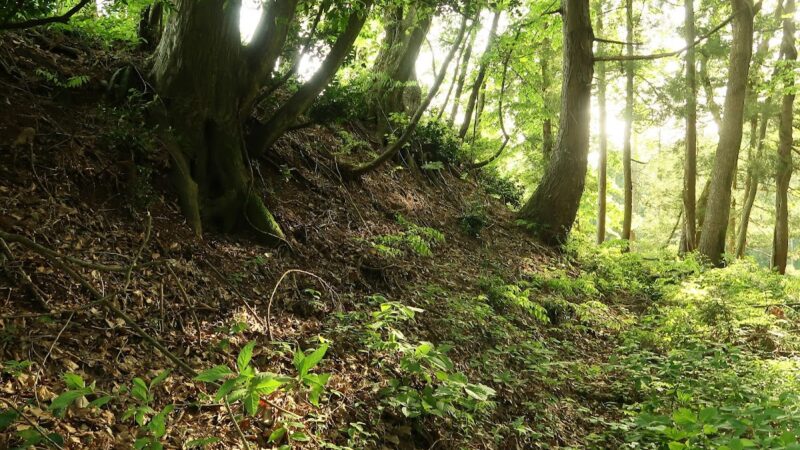
The area surrounding Funami Castle Ruins Museum is designated as “Toyama Forest Bathing Forest,” blessed with a rich natural environment. Walking trails are maintained, allowing visitors to enjoy seasonal plants and approach the mountaintop while experiencing forest bathing. The fresh greenery in spring and the vibrant autumn foliage make it a popular spot for nature lovers.
History of Funami Castle | The Legend of the Castle and Fall of Hida-no-kami Goro Sakon-no-jo
A mountain castle from the late medieval period once stood on the site where Funami Castle Ruins Museum now stands. According to local legend, this castle was the residence of Hida-no-kami Goro Sakon-no-jo.
Battles with the Uesugi Forces during the Koji Era
During the Koji era (1555-1558), Funami Castle was embroiled in fierce battles with the Uesugi forces. According to legend, the Uesugi forces used a tactic of blocking the water supply to the Kuzuhaya water source, the castle’s water source, to capture it. With its water supply cut off, Funami Castle finally fell, and it is said that the castle lord, Hida-no-kami Goro Sakon-no-jo, threw himself into the water.
That location is “Hida-ga-fuchi,” near Hakanoki Nature Park, and the name remains today as a reminder of this tragic history.
Connection to Nakao-san Jusan-ji Temple
Nakao-san Jusan-ji Temple, located in Nyuzen Town, is a Shingon Buddhist temple whose principal image is a standing statue of Batō Kannon Bodhisattva, along with three other Buddhist statues designated as important cultural properties of Toyama Prefecture. These principal images are believed to be from the late Heian period and are said to have been the guardian deities of Funami Castle lord Hida-no-kami Goro Sakon-no-jo. This historical connection indicates that Funami Castle was not merely a military facility, but also a center of local faith.
Spectacular Views from Funami Castle Ruins Museum | Panoramic Views of the Kurobe River Alluvial Fan and Toyama Bay
The greatest attraction of Funami Castle Ruins Museum is the magnificent view from the castle tower. The view from an altitude of 252 meters offers a valuable vantage point to see the geographical features of Nyuzen Town.
Scattered Villages on the Kurobe River Alluvial Fan
From the castle tower, the vast alluvial fan formed by the Kurobe River stretches out below. This plain features a settlement style unique to Toyama Prefecture called “scattered villages.” Scattered villages are settlements where houses are scattered, and each house is characterized by being surrounded by a grove of trees (kainyo).
Viewed from above, the beautiful pattern of houses surrounded by green groves scattered across the rural landscape emerges, and it is highly regarded as a typical example of the Japanese rural landscape.
Spectacular Views of Toyama Bay
To the north lies Toyama Bay, known as “the most beautiful bay in the world.” On a clear day, the contrast between the deep blue sea and the sky is stunning, and the silhouette of the Noto Peninsula can be seen in the distance. Toyama Bay is characterized by its deep waters and a topography where the depth increases sharply from the coastline, and this unique marine environment nurtures abundant marine resources.
Golden Rice Fields
Particularly popular at Funami Castle Ruins Museum is the sunset view, which can be seen every year from late April to early May. During this time, the setting sun reflects off the water-filled rice paddies, creating a scene where the scattered rice fields spread across the alluvial fan and Toyama Bay in the distance glow golden.
This “water mirror” phenomenon is a precious sight that can only be seen for a short period before rice planting, and it is a popular season for photography enthusiasts. The sight of the setting sun reflecting off the rice paddies is truly breathtaking.
Funami Castle Ruins Museum: Facility Information and Access
This section summarizes essential information for visiting the Funami Castle Ruins Museum.
Facility Basic Information
- Location: Irizen, Nyuzen-machi, Shimonikawa-gun, Toyama Prefecture
- Opening Date: November 10, 1991
- Structure: Three-story castle-style building
- Elevation: 252m (Funami-maeyama mountaintop)
- Surrounding Environment: Designated area for Toyama Forest Bathing
The facility displays local historical and folk materials, allowing visitors to learn about the cultural background of Nyuzen-machi. Each floor has an exhibition space, and the top floor is an observation deck.
Access Methods
Access by Car
- Approximately 15 minutes from the Hokuriku Expressway “Nyuzen Smart IC”
- Approximately 20 minutes by car from the central part of Nyuzen Town
- Parking available (free)
Access by Public Transportation
- Approximately 20 minutes by taxi from Ainokaze Toyama Railway “Nyuzen Station”
- Community buses operating within Nyuzen Town are also available (operation varies depending on the season and day of the week, so please check beforehand)
The approach road to the summit is paved, but there are many curves, so driving requires caution. Especially in winter, there is a possibility of snow, so it is recommended to check road conditions in advance.
Geography and Characteristics of Nyuzen Town | A Rich Land Nurtured by the Kurobe River
Nyuzen Town, where the Funami Castle Ruins Museum is located, is a town in the eastern part of Toyama Prefecture, belonging to Shimoshinkawa District. It faces the Sea of Japan (Toyama Bay) to the north, borders Kurobe City to the south, and Asahi Town to the east.
Formation of the Kurobe River Alluvial Fan
A defining feature of Nyuzen Town’s topography is the vast alluvial fan formed by the Kurobe River. The Kurobe River originates from Mt. Washiba in the Northern Alps, flowing through steep gorges before emerging onto the plains. The sediment carried during this process has accumulated, forming a beautiful fan-shaped plain.
This alluvial fan has excellent drainage, making it suitable for agriculture, including rice cultivation. It is also blessed with abundant groundwater, serving as a vital water source supporting agriculture and daily life in Nyuzen Town.
Sugisawa Cedar | National Natural Monument
A particularly noteworthy natural treasure of Nyuzen Town is the “Sugisawa Cedar” located in the Sugisawa area. This is a valuable natural forest designated as a national natural monument, and its cluster of cedar trees growing naturally in a spring-fed area holds high academic value.
The Sugisawa cedar has a unique ecology different from ordinary cedars, exhibiting a special form adapted to wetland environments. This natural environment can be considered one of the blessings bestowed by the abundant groundwater of the Kurobe River alluvial fan.
Nyuzen Town Tourist Spots | Facilities to Visit Along with Funami Castle Ruins Museum
Nyuzen Town has many attractive tourist spots besides Funami Castle Ruins Museum.
Nyuzen Deep Sea Water Park
This facility allows you to learn about deep sea water, which is drawn from off the coast of Nyuzen in Toyama Bay. Deep sea water is clean seawater drawn from depths of 300 meters or more, and possesses excellent mineral balance.
The park features scientific explanations and exhibits on deep sea water, as well as introductions to products that actually utilize deep sea water and hands-on experience corners. Nyuzen Town is undertaking advanced initiatives in the use of deep sea water, and you can learn about their achievements here.
Flower Road
Along the national highway running through Nyuzen Town, there is a “Flower Road” planted with seasonal flowers. In spring, tulips bloom, and in summer, sunflowers. Seasonal flowers adorn the roads, delighting tourists enjoying drives.
Especially during the spring tulip season, the vibrant colors of the flowers bloom all at once, making it a popular floral landscape representative of Toyama Prefecture.
Hakanoki Nature Park
This nature park is located near Hida-ga-fuchi, which appears in the legend of the fall of Funami Castle. Visitors can enjoy strolling through the rich natural environment, and by visiting the Funami Castle Ruins Museum in conjunction with the park, they can gain a deeper understanding of Nyuzen Town’s history.
History and Culture of Nyuzen Town | Regional Development and Tradition
Nyuzen Town has a long history, with archaeological sites dating back to the Jomon period having been discovered. The abundant water and fertile land provided by the Kurobe River have supported people’s lives since ancient times.
Transition from the Medieval to the Early Modern Period
During the late medieval period, when Funami Castle existed, this region was part of Etchu Province and was caught up in the turmoil of the Sengoku period. Various forces, including the Uesugi, Takeda, and Oda clans, fought over this land, and mountain castles like Funami Castle played an important role in the process.
During the Edo period, the area came under the control of the Kaga Domain, enjoying a relatively stable era. Agricultural technology developed during this time, and the Kurobe River alluvial fan was developed.
Modernization and Town Development
From the Meiji era onward, Nyuzen Town developed along the wave of modernization. The opening of the railway improved transportation and revitalized the distribution of agricultural products. Furthermore, industries utilizing the abundant water resources developed, forming the foundation of present-day Nyuzen Town.
Nyuzen Town’s Facilities and Infrastructure | Creating a Livable Community
Nyuzen Town not only offers tourism but also has various facilities and infrastructure to support the lives of its residents.
Public Facilities
Centered around the town hall, public facilities such as libraries, community centers, and gymnasiums are available to support residents’ cultural and sports activities. Furthermore, medical and welfare facilities are well-developed, creating a safe and secure living environment.
Educational Facilities
The town has several elementary and junior high schools, providing an educational environment that is considerate of families with children. Emphasis is also placed on local history and culture education, and cultural facilities such as the Funami Castle Ruins Museum are utilized as educational resources.
Transportation Infrastructure
Nyuzen Station on the Ainokaze Toyama Railway serves as the town’s gateway, offering good access to Toyama City and Kanazawa City. A smart interchange on the Hokuriku Expressway is also available, making car access convenient. Community buses and taxis are available for getting around within the town.
Economy and Industry of Nyuzen Town | Integration of Agriculture and Tourism
Nyuzen Town’s economy is based on traditional agriculture, while also focusing on tourism and the development of new industries.
Agriculture | The Blessings of the Kurobe River Alluvial Fan
Agriculture is the main industry in Nyuzen Town, with rice cultivation being particularly thriving. Rice grown in the abundant water and fertile soil of the Kurobe River alluvial fan is highly regarded for its quality. Vegetables and fruit trees are also cultivated and sold as local specialties.
In recent years, agriculture utilizing deep-sea water has also attracted attention and is expected to be a new form of agriculture.
Tourism | Utilization of Local Resources
With the development of tourist facilities such as the Funami Castle Ruins Museum, tourism has become an important industry in the town. Tourism promotion is being advanced by utilizing the unique local resources of Nyuzen Town, such as the scenery of the Kurobe River alluvial fan, the marine resources of Toyama Bay, and the rich natural environment.
Deep-Sea Water Related Industries
A distinctive industry in Nyuzen Town is the deep-sea water related industries. Products such as drinking water, cosmetics, and food are being developed using deep-sea water drawn from off the coast of Nyuzen in Toyama Bay, and these are growing as new local brands.
Seasons and Annual Events in Nyuzen Town | Seasonal Attractions
Nyuzen Town is a region where you can enjoy the beauty of nature in each of the four seasons and events that are tailored to them.
Spring | The Season of Water Reflections and Flowers
From late April to early May, the view of the water reflection from Funami Castle Ruins Museum is at its most beautiful. The sight of the setting sun reflecting on the rice paddies before planting is a special view that can only be seen at this time of year. Also, the tulips along Flower Road are in full bloom, and the entire town is adorned with flowers.
Summer | Forest Bathing in Lush Greenery
Summer is a pleasant season for forest bathing around Funami Castle Ruins Museum. You can enjoy a stroll while feeling the cool breeze in the rich nature designated as the Toyama Forest Bathing Forest. You can also enjoy swimming in Toyama Bay, so you can enjoy leisure activities in both the mountains and the sea.
Autumn | The Season of Autumn Leaves and Harvest
Autumn is a beautiful season for autumn leaves around Funami Castle Ruins Museum. The contrast between the colorful trees and the golden rice fields of the Kurobe River alluvial fan is magnificent. It’s also the harvest season for new rice, making it the most abundant time of year for local agricultural products.
Winter | Snowscapes and the Tateyama Mountain Range
Winter is the season when the snow-covered Tateyama Mountain Range looks its most beautiful. On a clear day, you can enjoy a magnificent view of the snow-covered Tateyama Mountain Range from the Funami Castle Ruins Museum. The scenery viewed in the crisp winter air has a different charm than in other seasons.
How to Enjoy Your Visit to the Funami Castle Ruins Museum | For a More Fulfilling Experience
Here are some tips for a more fulfilling experience when visiting the Funami Castle Ruins Museum.
Optimal Visiting Time
To enjoy the most beautiful view from the Funami Castle Ruins Museum, we recommend visiting at sunset. Especially during the water reflection season from late April to early May, visiting about an hour before sunset allows you to fully appreciate the beauty of the ever-changing light and colors.
Furthermore, in the early morning, you can enjoy the fantastic scenery of Toyama Bay illuminated by the rising sun and the alluvial fan shrouded in morning mist.
Photography Tips
Funami Castle Ruins Museum is a popular spot for photography enthusiasts. When photographing the view from the castle tower, a wide-angle lens will make it easier to capture the vast landscape. A tripod is useful when shooting at dusk.
Also, the Funami Castle Ruins Museum building itself is a beautiful subject that harmonizes with the surrounding nature. Enjoy taking photos from various angles.
Enjoying a Stroll Around the Area
The area around Funami Castle Ruins Museum is designated as the Toyama Forest Bathing Forest, and walking trails are well-maintained. If you have time, we recommend taking a leisurely stroll while enjoying the forest bathing. You can enjoy interacting with nature while observing the plants and wild birds of each season.
Regional Development and Future Prospects of Nyuzen Town
Nyuzen Town is working towards a new era while cherishing its local history and culture.
Tourism Promotion Initiatives
Efforts are being made to develop tourist facilities, including the Funami Castle Ruins Museum, and to disseminate information. The charms of Nyuzen Town are being widely promoted through tourism information websites such as “Nyuzen Mania.” Furthermore, efforts are underway to enhance experiential tourism and develop wider regional tourism routes in cooperation with surrounding areas.
Industrial Promotion Utilizing Deep-Sea Water
Industrial promotion utilizing Nyuzen deep-sea water is being promoted, including the development of new products using Nyuzen deep-sea water and its application in the health and beauty sectors. These initiatives are contributing to the creation of a new brand image for Nyuzen Town.
Sustainable Community Development
To pass on the rich natural environment to future generations, efforts are being made to conserve the environment and promote sustainable agriculture. Efforts are continuing to revitalize the region while protecting the beautiful landscape of the Kurobe River alluvial fan.
Summary | Experiencing the Charms of Nyuzen Town at the Funami Castle Ruins Museum
The Funami Castle Ruins Museum is not merely a tourist facility; it is a special place where the history, culture, and nature of Nyuzen Town are condensed. From the castle-like building constructed on the site of a medieval mountain castle, visitors can enjoy a panoramic view of the vast Kurobe River alluvial fan and the beauty of Toyama Bay, leaving them deeply impressed.
This site, which flourished as the residence of Hida-no-kami Goro Sakon-no-jo and fell during the turmoil of the Sengoku period, is now a peaceful tourist spot enjoyed by many. Enjoying the spectacular scenery while reflecting on history amidst the rich natural environment designated as a Toyama Forest Bathing Forest is a special experience well worth visiting.
When visiting Nyuzen Town, be sure to stop by Funami Castle Ruins Museum and experience the magnificent view unfolding from the castle tower. The fertile land nurtured by the Kurobe River, the lives of the people, and the bounty of Toyama Bay—all can be seen at once from Funami Castle Ruins Museum, a must-see spot that encapsulates the charm of Nyuzen Town, Toyama Prefecture.