Chinen Gusuku (Okinawa Prefecture) Complete Guide: A Historic Castle Site with Two Enclosures, Kuugusuku and Miigusuku
Chinen Gusuku is an important castle site from the Ryukyu Kingdom era, located in the Chinen district of Nanjo City, Okinawa Prefecture. It is believed to have been built between the late 12th and 13th centuries and was designated a National Historic Site on May 15, 1972. It is a gusuku (castle) with two enclosures, the Old Castle (Kugusuku) and the New Castle (Miigusuku), and is known as a valuable historical site that conveys the history and culture of Ryukyu to the present day.
What is Chinen Gusuku?: A Famous Castle Praised in the Oldest Collection of Ryukyuan Poetry
Chinen Gusuku is a historically important gusuku, mentioned in the oldest collection of Okinawan poetry, “Omoro Sōshi.” It is said to have been the residence of successive Chinen Aji (local lords) and played an important role in the history of the Ryukyu Kingdom.
The gusuku (castle) is built on the western hillside of the Chinen settlement and is characterized by its defensive structure that skillfully utilizes the natural terrain. The two interconnected enclosures, running east and west, each possess different historical contexts and construction techniques, making them valuable resources for understanding the evolution of Ryukyu castle architecture.
History as the Residence of the Chinen Anji
The Chinen Anji were powerful lords who ruled the Chinen region even before the establishment of the Ryukyu Kingdom. While detailed traditions concerning the Anji are limited, it is believed that they ruled this land for generations and functioned as the political, economic, and cultural center of the region. The gusuku offers a panoramic view of the Pacific Ocean, occupying a strategically important position for monitoring maritime traffic and defense.
Kuugusuku (Ancient Castle): The Oldest Castle Built by the Tenson Clan
Kugusuku (Ancient Castle) is the oldest part of Chinen Gusuku, located on the highest rocky hill on the eastern side. It is said to have been built by the Tenshin clan (also known as Amamikiyo), who appear in Ryukyuan mythology.
Ancient Technology Shown by the Nozura-zumi Stone Walls
The most distinctive feature of Kugusuku is its Nozura-zumi (rough-stone masonry) stone walls, where stones are stacked in their natural shapes. This construction technique symbolizes the early Gusuku period, when processing technology was underdeveloped. Nozura-zumi, which involves stacking natural stones without processing them, required advanced skills in judging and combining the shapes of the stones.
While the Nozura-zumi walls may appear crude at first glance, they are actually a structure that is resistant to earthquakes and typhoons. The gaps between the stones distribute pressure, increasing their durability against natural disasters.
The Tenshin Clan Legend and Ryukyuan Mythology
The Tenshin clan frequently appears in Ryukyuan history books and is considered the first royal lineage of Ryukyu. In Ryukyuan creation myths, Amamikiyo is said to have descended from heaven and created the Ryukyu Islands, and Chinen Gusuku is deeply connected to this myth. While Kugusuku is estimated to have been built around the 13th century, its mythological background has given it special significance as a sacred site for the local residents.
Miigusuku (Shinjo): Cut Stone Masonry Techniques from the Era of King Sho Shin
Miigusuku (Shinjo) is a fortified enclosure located west of Kugusuku, built in a more recent period. It is said to have been built by Uchima Ufuya, who is believed to be the half-brother of King Sho Shin of the Second Sho Dynasty.
Advanced Cut Stone Masonry Techniques
The stone walls of Miigusuku are constructed using cut stone masonry, where stones cut to a uniform shape are stacked. This technique is an advanced castle-building technique that developed in the Ryukyu Kingdom from the 15th to the 16th centuries, and is distinctly different from the rough-hewn stone masonry of Kugusuku.
Cut stone masonry, by processing and stacking stones in a regular pattern, allowed for the creation of stronger and more beautiful castle walls. The smooth finish of the stone surfaces also offered a defensive advantage, making it difficult for enemies to climb. The stone walls of Miigusuku are important remains that demonstrate the pinnacle of castle-building technology during the Ryukyu Kingdom’s golden age.
Structure of the Main and Back Gates
Miigusuku has two gates: a main gate and a back gate. The main gate is located on the south side and serves as the primary approach from the Chinen settlement. The back gate is on the north side and is thought to have functioned as an escape route in emergencies and a route for transporting supplies.
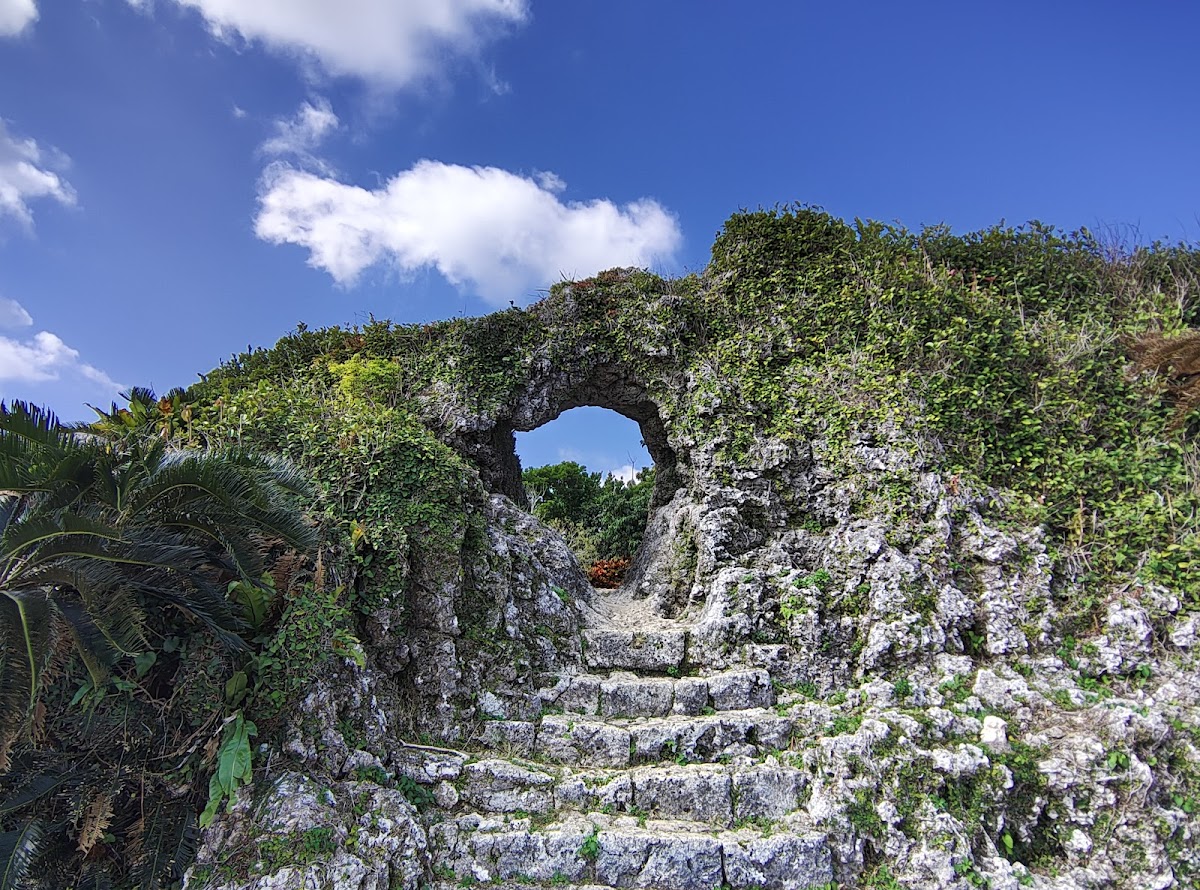
The structure of the gates consists of arched stonework, exhibiting a unique Ryukyuan architectural style. Particularly strong stone walls are placed around the gates, demonstrating various measures taken to prevent intrusion into the castle.
Structure and Defensive System of the Connected-Enclosure Gusuku
Chinen Gusuku is a connected-enclosure gusuku (castle) consisting of two enclosures, Ku-gusuku and Mi-gusuku, running east to west. This arrangement balances defensive rationality with effective use of the terrain.
Defensive Arrangement Utilizing the Terrain
Ku-gusuku on the east side is located at the highest point and served as a lookout post. From here, it offered a wide view of the Pacific Ocean and surrounding areas, allowing for early detection of approaching enemies.
Mi-gusuku on the west side has a larger, flatter area and is presumed to have housed living spaces and administrative facilities. Because the two enclosures are continuous, the structure allows for continued defense even if one is under attack.
Wall Arrangement and Movement Routes
The walls surrounding the entire gusuku are constructed in combination with natural bedrock, forming an efficient defensive line. The height of the walls varies depending on the location, but reaches over 3 meters at their highest points.
The layout of the castle grounds is designed to gradually lead visitors to higher ground after entering through the main gate, a clever design intended to guide intruders into unfavorable terrain.
Role as a Sacred Site on the Agari-umai Pilgrimage
Chinen Gusuku is not merely a military facility, but also an important sacred site in Ryukyuan beliefs. As one of the worship sites on the traditional Ryukyuan pilgrimage route known as “Agaari-umai,” it continues to attract many worshippers.
Ufakaru and the Worship Site
Within the castle grounds is a worship site called “Ufakaru,” which serves as the center of local faith. Ufakaru means “large rock,” representing a unique Ryukyuan form of worship where natural rock formations are worshipped as deities.
The Agari-umai is a pilgrimage route that has continued since the Ryukyu Kingdom era, visiting sacred sites that the king himself is said to have visited. Chinen Gusuku, along with the nearby Seifa Utaki, is positioned as an important worship site on the Agari-umai. ### Fusion of Faith and History
In Ryukyuan belief, gusuku (castles) were not merely castles, but sacred places where gods resided. Chinen Gusuku also functioned as a complex space combining military and religious functions. This duality is a characteristic aspect of Ryukyuan culture.
Value as a National Historic Site and Preservation Activities
Chinen Gusuku was designated a national historic site on May 15, 1972. This coincided with Okinawa’s return to Japan and was a symbolic event recognizing the importance of protecting Okinawa’s cultural heritage.
Excavation and Research Results
Previous excavations have yielded artifacts such as ceramic fragments, roof tiles, and iron products from Chinen Gusuku. In particular, the Chinese ceramics provide evidence of the Ryukyu Kingdom’s important role in East Asian maritime trade.
Many artifacts dating from the 13th to 15th centuries have been unearthed, revealing that the gusuku was most actively used during this period. Furthermore, foundation stones and postholes of buildings have been discovered, providing clues to reconstructing the original layout of the structures.
Current Status of Restoration Work
Currently, restoration work is underway at Chinen Gusuku. The Nanjo City Board of Education’s Cultural Affairs Division is leading the project, carrying out the repair of stone walls and the maintenance of the remains. Based on the results of the archaeological excavation, the restoration aims to recreate the castle’s original appearance as closely as possible.
During the construction process, the collapsed stone walls are being reconstructed, and trees are being cut down to protect the remains. Upon completion, it is expected to become a valuable historical space where visitors can gain a clearer understanding of the castle’s appearance at the time of its construction.
Access and Visiting Guide to Chinen Gusuku
Chinen Gusuku is located in the Chinen district of Nanjo City, making it easily accessible as part of a sightseeing route in southern Okinawa Island.
Access by Car
It is approximately 40 minutes by car from Naha Airport and approximately 30 minutes from downtown Naha. Head east on National Route 331 towards the Chinen Peninsula. There is a parking lot near the castle grounds, and it is free to use.
If using a car navigation system, you can reach your destination by searching for “Chinen Castle Ruins” or “Chinen Gusuku.” It’s a few minutes’ walk from the parking lot to the castle entrance.
Access by Public Transportation
From Naha Bus Terminal, take Toyo Bus No. 38 (Shikiya Line) or No. 39 (Hyakuna Line) and get off at the “Chinen” bus stop. It’s about a 15-minute walk from the bus stop to the castle. Since bus service is limited, it’s recommended to check the timetable in advance.
Visiting Hours and Fees
Chinen Gusuku is always open, and admission is free. A visit takes approximately 30 to 40 minutes, but if you want to observe thoroughly, allow about an hour.
Since you will be walking on stone steps and uneven terrain, it is recommended to wear comfortable shoes. Also, during sunny periods, bringing a hat, sunscreen, and drinking water will make your visit more comfortable.
Photography Tips
Chinen Gusuku is a popular photography spot. The view from Kuugusuku is particularly magnificent, offering a panoramic view of the blue Pacific Ocean and the lush green Chinen Peninsula.
The cut-stone walls of Miigusuku change their appearance depending on the light, allowing for different photographic impressions in the morning and afternoon. The arched stonework near the main gate is also a photo spot showcasing the characteristics of Ryukyuan architecture.
Combining Nearby Tourist Spots with Other Routes
Nearby Chinen Gusuku are numerous tourist spots where you can experience Ryukyuan history and culture.
Seifa Utaki
Located about a 5-minute drive from Chinen Gusuku, Seifa Utaki is a UNESCO World Heritage Site and the most sacred site of the Ryukyu Kingdom. It is the most important place of worship on the Higashi-mawari pilgrimage, and visiting it along with Chinen Gusuku will allow for a deeper understanding of Ryukyuan religious culture.
Kudaka Island
Kudaka Island, located about 15 minutes by high-speed ferry from Azama Port on the Chinen Peninsula, is a sacred site known as the “Island of the Gods.” It is considered the setting for the Ryukyu creation myth, and traditional rituals are still preserved there. Combining a visit to Kudaka Island with a tour of Chinen Gusuku (castle) allows you to enjoy a journey tracing the origins of Ryukyu culture.
Tamagusuku Gusuku
Another gusuku (castle) located in Nanjo City, about 10 minutes by car from Chinen Gusuku. This gusuku is also connected to the legend of the Tenson clan, and visiting it in comparison to Chinen Gusuku allows you to understand the diversity of Ryukyu gusuku culture.
Itokazu Gusuku
Itokazu Gusuku, located in Tamagusuku, Nanjo City, is about 15 minutes by car from Chinen Gusuku. Its well-preserved stone walls make it worth visiting as part of a gusuku tour.
Highlights and Notes on Chinen Gusuku
This section summarizes key points to pay attention to when visiting Chinen Gusuku.
Comparison of Rough Stone and Cut Stone Masonry
By comparing the rough stone masonry of Kuugusuku and the cut stone masonry of Miigusuku, you can visually understand the development of Ryukyu castle construction techniques. The coexistence of different eras’ techniques within the same gusuku is rare and one of the greatest highlights of Chinen Gusuku.
Stone Arch of the Main Gate
The main gate of Miigusuku is a beautiful castle gate with an arch structure unique to Ryukyu. The precise technique of joining cut stones demonstrates the high skill of the stonemasons of the time.
View from Kuugusuku
From Kuugusuku, the highest point, you can enjoy a spectacular view of the Pacific Ocean and the Chinen Peninsula. On a clear day, you can see as far as Kudaka Island and distant islands, allowing you to relive the scenery seen by the Anji (lords) of the past.
Sites of Worship and Traces of Faith
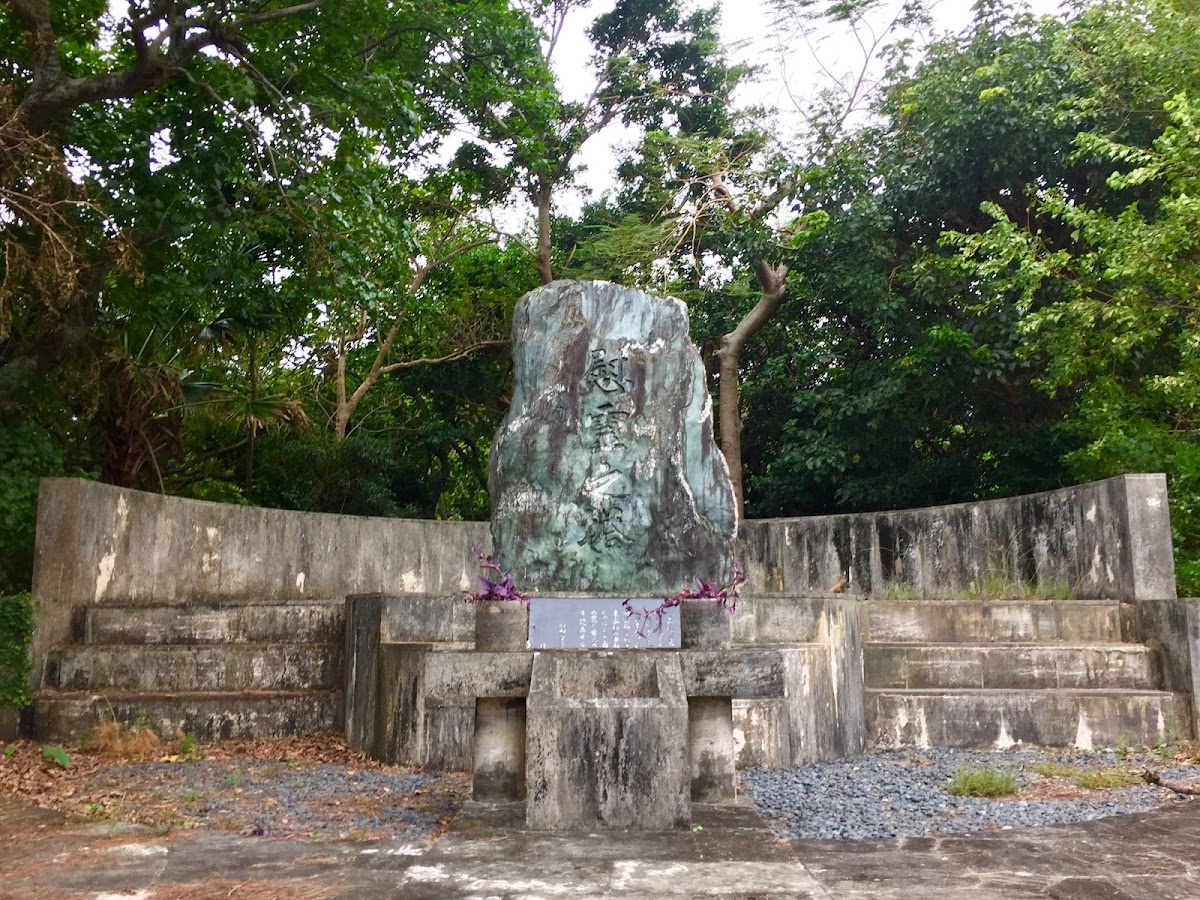
Within the gusuku (castle), there are several sites of worship, which are still carefully preserved by the local people. The offerings placed in front of the stone walls and the traces of prayer demonstrate that the gusuku is not merely a ruin, but a living place of faith.
Significance of Chinen Gusuku as a Cultural Property
Chinen Gusuku is a cultural property that provides much important information for studying the history of Ryukyu.
A Site Revealing the Social Structure of the Gusuku Period
The Gusuku period, from the 12th to the 15th centuries, was a transitional period in which Ryukyu transitioned from a state of division by multiple local lords to a unified kingdom. Chinen Gusuku is a valuable resource for understanding the power and life of local lords during this period.
The scale and structure of the gusuku suggest that the Chinen lord held considerable power. Furthermore, the excavated Chinese ceramics suggest the possibility that Chinen was involved in maritime trade.
A Living Textbook Showing the Evolution of Castle Construction Techniques
It is extremely rare to be able to observe the development of castle construction techniques, from rough stone masonry to cut stone masonry, within a single castle. Chinen Gusuku holds value as a “living textbook” for studying the history of castle construction techniques in Ryukyu.
For researchers of architectural history and archaeology, Chinen Gusuku remains an important research subject. It is expected that further facts will be revealed through future excavations and research.
Chinen Gusuku and the ‘Omoro Sōshi’
The ‘Omoro Sōshi,’ the oldest collection of Okinawan songs, contains descriptions of Chinen Gusuku. The ‘Omoro Sōshi’ is a collection of ancient Ryukyuan songs compiled between the 16th and 17th centuries, and is a valuable document for understanding the history and culture of Ryukyu.
The fact that Chinen Gusuku is sung about in the ‘Omoro’ (ancient songs) indicates that this castle held an important position within the Ryukyu Kingdom. The lyrics include praise for the authority of Chinen Anji and the strength of the castle, allowing us to feel the reverence that people at the time held for this castle.
Visitor Ratings and Reviews
Visitors to Chinen Gusuku have shared a variety of impressions. According to data from Kojodan (a castle-storage website), the average rating is ★★★☆☆ (3.20), with 184 visitors to date.
Many visitors have given positive feedback, such as “You can clearly see the difference between rough-hewn and cut-stone masonry,” “The view is wonderful,” and “The quiet and peaceful atmosphere is nice.” However, some have also requested improvements, such as “There are few information signs” and “Access is somewhat inconvenient.”
The average visit time is about 35 minutes, but those interested in history or who want to enjoy taking photos are advised to allow more time.
Cultural Property Protection Efforts in Nanjo City
The Cultural Affairs Division of the Nanjo City Board of Education is actively working to protect and utilize cultural properties in the city, including Chinen Gusuku.
In addition to regular patrols and cleaning activities, restoration work and research are continuously carried out. Furthermore, conservation activities in collaboration with local residents are promoted, with local people participating in cleaning and guiding tours of the gusuku (castle).
Nanjo City is also focusing on promoting tourism using cultural properties, and tours of gusuku and historical sites within the city, including Chinen Gusuku, are being planned. This initiative, which balances cultural property protection with regional development, is attracting attention as a model case for other municipalities.
Precautions when visiting Chinen Gusuku
To ensure a safe and comfortable visit to Chinen Gusuku, please note the following points.
Clothing and Equipment
- Wear comfortable walking shoes (sneakers or hiking boots).
- Avoid heels or sandals due to stone steps and uneven terrain.
- Bring a hat and sunscreen during sunny periods.
- Insect repellent spray is recommended for a more comfortable experience.
Safety Precautions
- Do not climb on the stone walls or enter restricted areas.
- Be careful as the stone steps can become slippery during and after rain.
- Remember to stay hydrated during the summer to prevent heatstroke.
Manners and Consideration
- Behave quietly and respectfully at sacred sites.
- Always take your trash with you.
- Do not take natural objects such as plants or stones.
- Avoid shouting or making noise, and be considerate of other visitors.
Summary: The Charm and Future Prospects of Chinen Gusuku
Chinen Gusuku is a valuable historical site where you can experience the history and culture of the Ryukyu Kingdom. The Chinen Gusuku, a castle complex featuring two coexisting fortifications—the Kuugusuku built with rough-hewn stonework and the Miugusuku built with cut stone—serves as a living example of the development of Ryukyuan castle-building techniques.
Protected as a nationally designated historical site, Chinen Gusuku remains a sacred place of worship for the Higashi-mawari pilgrimage, a special place where past and present intersect. Once the restoration work is complete, it will develop into a tourist spot where even more people can experience Ryukyuan history.
When visiting Nanjo City, be sure to visit Chinen Gusuku and experience the depth of the history and culture of the Ryukyu Kingdom. Visiting it along with other nearby sacred sites such as Seifa Utaki and Kudaka Island will provide a valuable opportunity to touch upon the essence of Ryukyuan spiritual culture.
Chinen Gusuku, which flourished as the residence of the Chinen Anji and is a sacred place linked to the legends of the Tenson clan, has stone walls that speak to us of Ryukyuan history across hundreds of years.