Complete Guide to Akizuki Castle Ruins | The History of the Kuroda Family and the Stunning Seasonal Scenery of Fukuoka’s “Little Kyoto”
Located in the mountainous region of Asakura City, Fukuoka Prefecture, Akizuki Castle Ruins are the remains of the castle of the Akizuki Domain, which flourished as a branch domain of the Kuroda family during the Edo period. Known as “Chikuzen’s Little Kyoto,” this area retains historical remains such as stone walls and the Kuromon Gate, and attracts many tourists as a famous spot for cherry blossoms and autumn leaves. This article comprehensively introduces information you should know before visiting, from the history of Akizuki Castle to its highlights and access methods.
History of Akizuki Castle | The Establishment of the Kuroda Family and the Akizuki Domain
The Birth of the Akizuki Domain and Kuroda Nagahiro
The history of Akizuki Castle begins in 1623. According to the will of Kuroda Nagamasa, the lord of the Fukuoka Domain, 50,000 koku was granted to his third son, Kuroda Nagahiro, establishing the Akizuki Domain. The following year, in 1624 (Kanei 1), Nagahiro entered the Akizuki area and built a fortified castle in the style of a jinya (fortified residence). This is Akizuki Castle.
Kuroda Nagahiro was born the third son of Kuroda Nagamasa, who ruled the Fukuoka Domain, and he followed a different path from his brothers. Given the land of Akizuki in his father’s will, Nagahiro laid the foundation for a new domain in this mountain basin.
From the Akizuki Clan to the Kuroda Clan | Historical Background of the Land
The site where Akizuki Castle was built was originally the residence of the Akizuki clan. The Akizuki clan was a powerful family that ruled this area from the Kamakura period to the Sengoku period, and they used the nearby Koshoyama Castle as a fortified stronghold. In 1587 (Tensho 15), following Toyotomi Hideyoshi’s conquest of Kyushu, the Akizuki clan was transferred to Takanabe in Hyuga Province, and this area subsequently became part of the Kuroda clan’s territory.
Records show that Kuroda Naoyuki, the younger brother of Kuroda Josui (Takayoshi) and a Christian, temporarily resided in this area. Thus, Akizuki had a history as an important base even before Kuroda Nagahiro established the Akizuki Domain.
Jinya-style Castle Structure
Akizuki Castle was constructed in the “jinya style.” A jinya is not a formal castle, but rather a residence for a daimyo with a domain of 10,000 koku or more. Although the Akizuki Domain was a daimyo with 50,000 koku, due to the influence of the Edo period’s “One Castle Per Province” decree, it was built as a jinya rather than a full-fledged castle with a keep.
The castle grounds were divided into two main sections. The Omote-Goten (front palace) functioned as the administrative office for the domain, while the Oku-Goten (inner palace) was the living quarters for the lord and his family. Currently, Akizuki Junior High School stands on the site of the Omote-Goten, allowing us to imagine its former appearance.
The Meiji Restoration and the Abolition of the Castle
The Akizuki Domain ruled over a 50,000 koku (unit of rice production) territory for generations, and the Kuroda family served as lords until the Meiji Restoration. In 1873 (Meiji 6), the castle was abolished under the castle abolition decree, and many of its buildings were demolished. However, some structures, such as the Kuromon (Black Gate) and Nagayamon (Long Gate House), were relocated or preserved, and their original appearance remains to this day.
Highlights of Akizuki Castle Ruins
Kuromon | Symbol of Akizuki
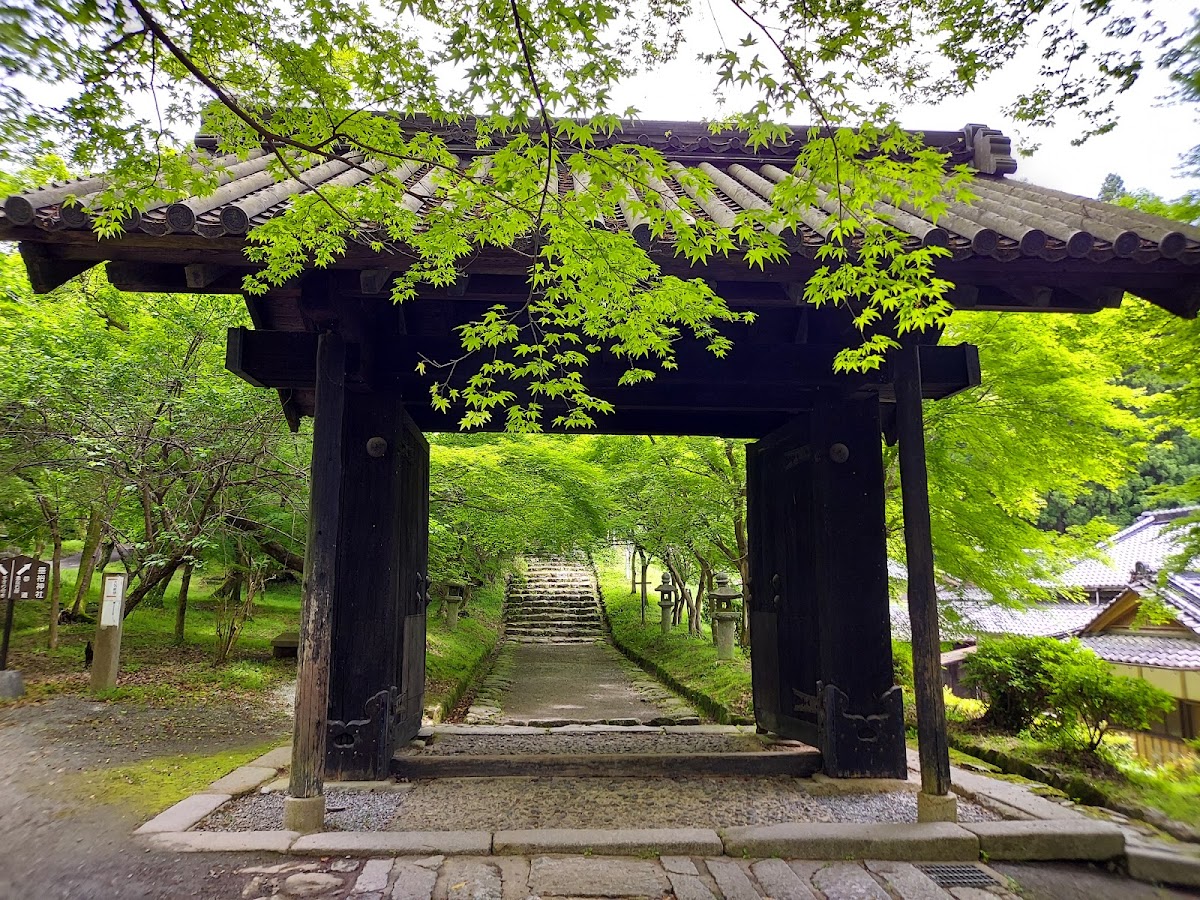
The first thing you see when visiting the Akizuki Castle ruins is the majestic Kuromon (Black Gate). This gate was not originally used as the main gate of Akizuki Castle, but is said to have been relocated from Fukuoka Castle (Fukuoka City). The imposing, black-painted gate is a beloved symbol of the Akizuki Castle ruins and is designated as a Fukuoka Prefecture Tangible Cultural Property.
The area around the Kuromon is particularly known as a cherry blossom viewing spot, with cherry blossoms blooming profusely in spring, almost covering the gate. In autumn, the leaves turn a beautiful color, and the contrast between the Kuromon Gate and the autumn foliage captivates visitors. The stone steps in front of the Kuromon Gate are an excellent photo spot, and many tourists can be seen with their cameras.
Nagayamon Gate | Traces of a Samurai Residence
The Nagayamon Gate, which exists alongside the Kuromon Gate, is also designated as a Fukuoka Prefecture Designated Tangible Cultural Property. A Nagayamon Gate is a type of gate with long buildings (residences for retainers or warehouses) on both sides, indicating the status of a samurai residence. The Nagayamon Gate of Akizuki Castle is a valuable structure that conveys the atmosphere of samurai society at that time.
The Nagayamon Gate is located in a different place from the Kuromon Gate and harmonizes with the landscape of the castle town. It is still well-preserved today, allowing visitors to appreciate the high level of architectural technology of the Edo period.
Stone Walls and Moat | Beauty of Castle Remains
At the Akizuki Castle ruins, some of the stone walls and moat from the time of construction still remain. The stone walls are built using the nozurazumi technique, stacking natural stones, giving them a simple yet robust appearance. The moss-covered walls, weathered by time, exude a sense of historical weight.
The moat still holds water in some sections, allowing us to imagine its role as a defensive structure for the castle. The landscape created by the stone walls and moat harmonizes with the changing seasons, revealing a different face each time you visit.
Suiyo Shrine | A Shrine Dedicated to the Founder of the Domain
Beyond the Kuromon gate lies Suiyo Shrine. This shrine was built to enshrine Kuroda Nagahiro, the first lord of the Akizuki Domain. The shrine grounds are enveloped in a tranquil atmosphere, a place where one can feel respect for the founder of the domain and the history of Akizuki.
The area around Suiyo Shrine is also a famous spot for cherry blossoms and autumn leaves, and the grounds are especially vibrant with colors during the autumn foliage season. The path leading to the shrine is an excellent route for deepening the enjoyment of a historical stroll. ### Akizuki Junior High School and the Site of the Former Palace
The current site of Akizuki Junior High School is the former location of the Former Palace of Akizuki Castle. It was the center of the domain’s administration and the place where samurai carried out their daily duties. While entry into the school grounds is prohibited, viewing it from the outside allows one to imagine the scale of the former castle.
The construction of a modern educational facility on this historical site symbolizes the continuation of Akizuki’s history.
Little Kyoto of Chikuzen | Akizuki’s Castle Town
Preservation of the Castle Town Landscape
Akizuki is called “Little Kyoto of Chikuzen” because the landscape of its castle town, which has continued since the Edo period, is still carefully preserved. The townscape, formed around Akizuki Castle, retains traces of samurai residences and merchant houses, and the narrow alleys and cobblestone streets convey the atmosphere of that time.
Walking through the castle town, you’ll find scattered white-walled storehouses and old houses with lattice doors, giving you the feeling of stepping back in time. Thanks to the efforts of local residents in preserving the landscape, the historical townscape is maintained even today.
Sugino-baba Street | A Tree-lined Path of Cherry Blossoms and Autumn Leaves
Sugino-baba Street, leading to the Akizuki Castle ruins, is a beautiful street lined with cherry trees for approximately 500 meters. In spring, about 200 cherry trees bloom, forming a tunnel of blossoms. In autumn, the autumn leaves color the street, captivating visitors.
This street was once a place where samurai trained in horsemanship, hence the name “baba” (horse training ground). Currently, it’s a popular walking path for tourists, where you can enjoy the beauty of nature throughout the seasons.
Samurai Residences and Townhouses
Several samurai residences still exist in the castle town of Akizuki, and some are open to the public. By visiting the nagaya-mon (long gatehouse) and gardens characteristic of samurai residences, you can learn about the lifestyle of samurai during the Edo period.
Furthermore, there are cafes and souvenir shops housed in renovated townhouses, offering a modern way to enjoy the historical buildings. This effort to breathe new life into old buildings further enhances the charm of Akizuki.
Seasonal Charms | Famous Cherry Blossom and Autumn Foliage Spots
Spring Cherry Blossom Season
Akizuki Castle Ruins are known as one of the most famous cherry blossom viewing spots in Fukuoka Prefecture. From late March to early April, approximately 200 cherry trees bloom around the Kuro-mon (black gate) and Suginobaba-dori (Suginobaba Street). The cherry blossoms in front of the Kuro-mon are particularly breathtaking, with the contrast between the black gate and the pale pink blossoms creating a spectacular view.
During the cherry blossom season, many tourists visit, and the area is bustling with people enjoying the blossoms. Sometimes, the trees are illuminated at night, allowing visitors to enjoy the magical sight of cherry blossoms after dark.
Autumn Foliage Season
From mid- to late November, Akizuki Castle Ruins welcomes many visitors as a famous spot for viewing autumn leaves. Maple and other trees turn vibrant colors, adorning the Kuromon Gate and stone walls. The autumn foliage around the Kuromon Gate is particularly magnificent, with trees dyed in red and yellow enhancing the historical structure.
The grounds of Suiyu Shrine are also known as a beautiful spot for viewing autumn leaves, allowing visitors to enjoy the autumn colors in a tranquil atmosphere. As with cherry blossom season, many tourists visit during the autumn foliage season, so visiting on weekdays or early in the morning is recommended.
Akizuki in Summer and Winter
Summer and winter, when the crowds are less intense than in spring and autumn, also offer unique charms to Akizuki Castle Ruins. Summer brings beautiful fresh greenery, and the cool mountain climate provides a pleasant stroll. Winter, with fewer tourists, is a season to quietly reflect on history.
When it snows, Akizuki Castle Ruins presents a beauty reminiscent of an ink painting. The Kuromon Gate and stone walls, covered in white snow, create a fantastical landscape unlike their usual appearance.
Nearby Tourist Attractions
Koshoyama Castle Ruins
Behind Akizuki Castle, on Mount Koshoyama (859m), lie the ruins of Koshoyama Castle, once the Akizuki clan’s stronghold. A hiking trail leads to the summit, allowing visitors to enjoy a hike while viewing the remains of a medieval mountain castle. From the summit, you can enjoy a panoramic view of Akizuki town and the Chikugo Plain, a spectacular sight on a clear day.
Akizuki Museum
For those who want to learn more about Akizuki’s history and culture, a visit to the Akizuki Museum is recommended. It displays historical materials and works of art from the Akizuki domain, and you can see valuable historical materials related to the Kuroda family and the Akizuki clan. A visit before or after exploring the castle town will deepen your understanding.
Meganebashi Bridge
The Meganebashi Bridge, spanning the Notorigawa River flowing through Akizuki Castle town, is a stone arch bridge built during the Edo period. The bridge’s name comes from the way its two arches are reflected in the water, resembling a pair of glasses. The area surrounding the bridge also boasts a picturesque landscape, making it a popular photo spot.
Asakura’s Triple Waterwheel
Located about 20 minutes by car from Akizuki, the Asakura Triple Waterwheel is a traditional agricultural waterwheel dating back to the Edo period. Known as the oldest working group of waterwheels in Japan, it operates annually from mid-June to mid-October. It’s a worthwhile spot to visit in conjunction with Akizuki sightseeing.
Access and Basic Information
Access by Car
Akizuki Castle Ruins are easily accessible by car. It’s approximately 70 minutes from central Fukuoka City and about 20 minutes from the Amagi Interchange on the Oita Expressway. There are several parking lots around Akizuki Castle Ruins, and temporary parking lots are also opened during peak tourist seasons.
During cherry blossom and autumn foliage seasons, surrounding roads can become congested, so consider visiting early in the morning or using public transportation.
Access by Public Transportation
If using public transportation, the nearest stations are Amagi Station on the Nishitetsu Amagi Line or Amagi Station on the Amagi Railway. From the station, take the Amagi Sightseeing Bus “Akizuki Line” and get off at the “Kyodokan-mae” bus stop. Akizuki Castle Ruins are approximately a 5-minute walk from there.
Since bus service is limited, it is recommended to check the timetable in advance. Additional buses may be added during peak tourist season.
Basic Information
- Location: Akizuki Nocho, Asakura City, Fukuoka Prefecture
- Visiting Hours: Open all day (Tuiyu Shrine follows visiting hours)
- Admission Fee: Free
- Parking: Paid parking available (approx. 400 yen for regular cars, subject to change during peak season)
- Inquiries: Asakura Tourism Association (TEL: 0946-24-6758)
Estimated Visiting Time
To explore Akizuki Castle Ruins and the surrounding castle town, allow approximately 2-3 hours. If you plan to take your time taking photos or relaxing at a cafe, it is recommended to allocate about half a day.
Points to Note When Visiting Akizuki Castle Ruins
Crowds During Peak Season
The area around Akizuki Castle Ruins becomes extremely crowded during cherry blossom and autumn foliage seasons. Parking lots are often full, and surrounding roads become congested. If possible, visiting on a weekday or during the early morning or evening hours will allow you to enjoy sightseeing at a more relaxed pace.
Wear comfortable clothing
Exploring Akizuki Castle ruins and the surrounding castle town involves walking on cobblestone streets and slopes. We recommend wearing comfortable shoes and clothing. Also, during the summer months, the sun is strong, so sun protection such as a hat and sunscreen is necessary.
Consideration for cultural property preservation
The Kuro-mon gate, Nagaya-mon gate, and stone walls are valuable cultural properties. When visiting, please be careful not to touch or climb on the structures. Also, please be sure to take your trash with you and help preserve the beautiful scenery.
Akizuki’s food and souvenirs
Akizuki’s local cuisine
Akizuki’s castle town is dotted with traditional Japanese confectionery shops and restaurants. In particular, “Kuzumochi” and “Kuzukiri” are known as Akizuki specialties, characterized by their beautiful translucent appearance and refined taste. There are also restaurants serving local cuisine using local ingredients, allowing you to enjoy the food culture along with sightseeing.
Choosing Souvenirs
For a memento of your visit to Akizuki, we recommend purchasing local specialties as souvenirs. Besides kudzu products, you can find local sake, yuzu-based processed goods, and traditional crafts. Enjoying shopping in the charming shops of this castle town is one of the highlights of visiting Akizuki.
Summary | Akizuki Castle Ruins: Where History and Nature Harmonize
Akizuki Castle Ruins is an important historical site in Fukuoka Prefecture, the former residence of Kuroda Nagahiro, the 50,000-koku Akizuki Domain. Remains such as the Kuromon Gate, Nagayamon Gate, and stone walls still exist, conveying the atmosphere of the Edo period. The beautiful castle town scenery, often called “Little Kyoto of Chikuzen,” and its charm as a spot for cherry blossoms and autumn leaves continue to fascinate visitors.
Its easy accessibility, approximately 70 minutes from Fukuoka City, is also a major draw, making it ideal for day trips. Akizuki Castle Ruins offers a variety of ways to enjoy yourself, from historical walks and nature appreciation to gourmet food. Please visit this place, which displays different expressions in each of the four seasons. Combining your visit with a trip to the ruins of Koshoyama Castle and other nearby tourist spots will make for an even more fulfilling trip.
The beautiful scenery of Akizuki, where history and nature harmonize, offers visitors deep inspiration and tranquility. Bringing a camera and taking your time to stroll around will allow you to fully appreciate the charm of this place.