Moriyama Castle (Chiba Prefecture) Complete Guide – A Largest Medieval Castle in Northern Chiba Prefecture, Flourished as the Base of the Higashi Clan
What is Moriyama Castle?
Moriyama Castle is a medieval mountain castle located in Oka-Iida, Katori City, Chiba Prefecture. Although currently located inland due to the Tone River diversion project, it was once a strategically important waterway built on a plateau facing the vast inland sea known as the Katori Sea. It has several other names, including Higashino Castle, Iida Castle, Tachibana Castle, Koji Castle, Naka Castle, and Nakano Castle, reflecting the castle’s large scale and complex structure.
A Medieval Castle Boasting One of the Largest Scales in Northern Chiba Prefecture
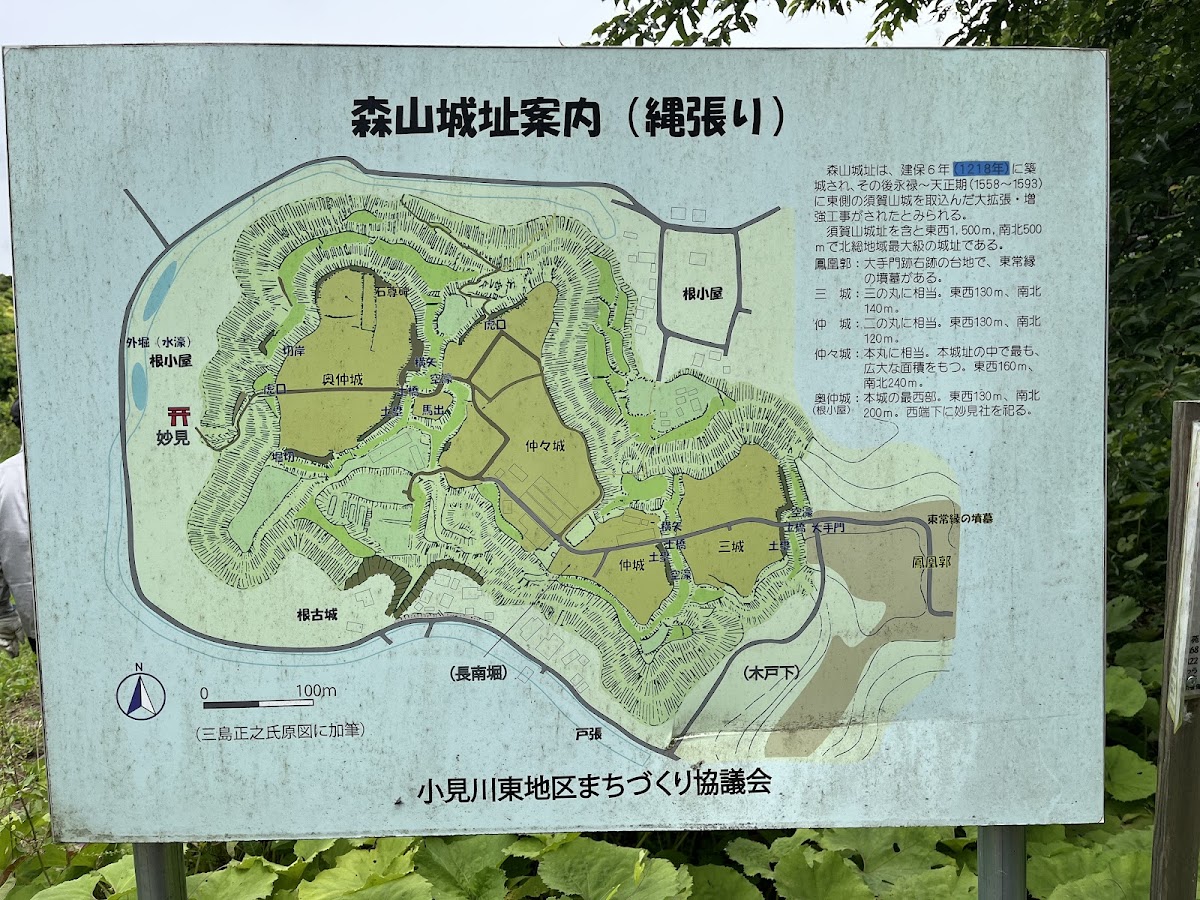
The most striking feature of Moriyama Castle is its overwhelming scale. Including the adjacent Sugayama Castle, the castle grounds span approximately 1500 meters east-west and 500 meters north-south. This is the largest castle ruin in Katori County and is highly valued for its historical significance as a representative medieval castle in the Hokuso region.
Located on a plateau approximately 50 meters above sea level, its layout cleverly utilizes the natural fortifications of the low-lying rice paddies to the west and south. This topographical advantage is one of the factors that made Moriyama Castle an impregnable fortress.
History of Moriyama Castle
Kamakura Period: Establishment as the Headquarters of the To Clan
Moriyama Castle is said to have been built in Kenpo 6 (1218). The builder was To Taneyori, the sixth son of Chiba Tsunetane. Chiba Tsunetane was a powerful retainer who supported Minamoto no Yoritomo’s uprising, and for his achievements, he obtained vast territories, mainly in Shimosa Province. His sixth son, Taneyori, became the ancestor of the To clan, and established Moriyama Castle as their base, laying the foundation for the prosperity of the To clan.
Initially, Higashi Taneyori resided at Sugayama Castle, but it is believed that he later built and moved to the more defensible Moriyama Castle. From then on, the Higashi clan expanded their power, using this area as their base for generations. Moriyama Castle served as the Higashi clan’s residence for three generations: Taneyori, Shigetane, and Taneyuki.
The Jōkyū War and a Turning Point for the Higashi Clan
In 1221 (Jōkyū 3), the Jōkyū War broke out when Emperor Go-Toba raised an army against the Kamakura Shogunate. Higashi Taneyuki distinguished himself on the Shogunate’s side in this war and was rewarded with Yamada Manor in Mino Province. Since Taneyuki moved to Mino, it is believed that Moriyama Castle subsequently became the territory of the Kaijō clan, who were descendants of the Higashi clan.
From this point onward, historical records regarding Moriyama Castle’s activities during the medieval period are scarce, and many aspects remain unclear. However, judging from the scale and structure of the castle remains, it undoubtedly continued to function as an important base afterward.
Sengoku Period: Major Renovation by Chiba Tanetomi
With the arrival of the Sengoku period (Warring States period), Moriyama Castle reappeared on the historical stage. The castle lord during this period is known to be Chiba Tanetomi (also known as Kaijo Tanetomi). Although a member of the Chiba clan, Tanetomi served as the lord of Moriyama Castle as an adopted son of the Kaijo clan, a branch of the Higashi clan.
Chiba Tanetomi carried out large-scale renovations to Moriyama Castle, transforming it into a modern castle adapted to the military technology of the Sengoku period. Many of the defensive facilities, such as the complex layout, large dry moats, and barbicans visible today, are thought to have been constructed during this period. The structure, with the main enclosure, second enclosure, and third enclosure stretching approximately 600 meters from west to east, represents the pinnacle of Sengoku period castle construction technology.
Abandonment of Moriyama Castle After the Siege of Odawara
In 1590, when Toyotomi Hideyoshi launched the Siege of Odawara, the Sengoku daimyo of the Kanto region faced a major turning point. The Chiba clan, who had been loyal to the Hojo clan, had their territories confiscated, and it is believed that Moriyama Castle was abandoned around this time.
After Tokugawa Ieyasu entered the Kanto region, the area was incorporated under a new system of rule, and Moriyama Castle disappeared from the stage of history. However, its magnificent remains have been preserved in good condition to this day, making it a valuable resource for the study of Sengoku period castles.
Structure and Layout of Moriyama Castle
Basic Structure of a Concentric Castle
Moriyama Castle is classified as a concentric mountain castle. The main part is arranged in a straight line from west to east, with the main enclosure (Okunakajo), second enclosure (Nakanajo), and third enclosure (Nakajo) aligned, extending approximately 600 meters in length. This arrangement makes maximum use of the plateau’s topography, and each enclosure is separated by deep dry moats.
Characteristics of the Main Enclosure (Okunaka Castle)
Located at the westernmost point, the main enclosure is the most important section of the castle, serving as its central hub. Surrounded by high earthen ramparts and deep dry moats, it boasts a highly defensible structure. The interior of the main enclosure is relatively flat, suggesting the presence of residences and important facilities.
The main enclosure measures approximately 150 meters east-west and 100 meters north-south, a standard size for medieval castles in the northern Chiba region, but its defensive features are exceptional.
The Existence of an L-Shaped Barbican
One of the notable remains of Moriyama Castle is the L-shaped barbican located between the main enclosure and the second enclosure. A barbican is a defensive structure built in front of the castle gate, serving to prevent enemy intrusion while facilitating friendly attacks.
The complex L-shape represents a more advanced defensive function and is an important relic demonstrating the evolution of castle construction techniques in the late Sengoku period. The existence of this barbican is thought to have been added during a major renovation by Chiba Tanetomi.
System of Dry Moats and Earthen Embankments
The key to Moriyama Castle’s defense lies in its system of dry moats and earthen embankments that demarcate each enclosure. The depth of the dry moats varies depending on the location, but in their deepest parts, they reach over 10 meters. They are also wide, designed to effectively prevent enemy intrusion.
The earthen embankments were constructed using the excavated soil from the dry moats and are approximately 3 to 5 meters high. It is presumed that fences or walls were erected on top of the embankments, functioning as defensive positions against bows and arrows and firearms.
Relationship with Sugayama Castle
Sugayama Castle, adjacent to Moriyama Castle to the east, is said to have been built by the Higashi clan. The two castles are thought to have formed an integrated defensive system, together creating a vast castle area spanning 1500 meters from east to west.
Sugayama Castle may have been built earlier than Moriyama Castle, and there is a theory that it was the first residence of Higashi Taneyori. The relationship between Moriyama Castle and Sugayama Castle provides crucial clues to understanding the process of the Higashi clan’s power expansion.
Location and Geographical Importance of Moriyama Castle
Katori Sea and a Key Point for Water Transport
In medieval Shimōsa Province, the location of Moriyama Castle was extremely strategic. Before the Tone River diversion project, a vast inland sea called “Katori Sea” stretched across this region. Moriyama Castle was situated on a plateau facing Katori Sea or the rivers and marshes connected to it, making it an ideal location for controlling water transport.
Katori Sea was a vital waterway connecting the Pacific Ocean and the inland areas, indispensable for the transport of goods and military movements. By using Moriyama Castle as a base, the Higashi clan was able to control water transport and gain significant economic and military advantages.
Border Area with Hitachi Province
Moriyama Castle was located near the border between Shimōsa Province and Hitachi Province, making it a key point for transportation between the two provinces. This geographical location indicates that Moriyama Castle was not merely the residence of a local powerful family, but functioned as a regional political and military center.
The Higashi clan, as a branch of the Chiba clan, was based in Shimosa Province, but it is believed they also had their sights set on expanding their influence towards Hitachi Province. The location of Moriyama Castle can be said to reflect this strategic intention.
Environmental Changes Due to the Tone River Diversion Project
The Tone River diversion project, carried out in the early Edo period, significantly altered the geographical environment of this region. The course of the Tone River was changed, and the Katori Sea gradually shrank and became land. As a result, Moriyama Castle became an inland castle site, losing its former character as a water transport hub.
However, ironically, this environmental change also contributed to the preservation of the castle ruins. The remains of Moriyama Castle, left behind by the wave of development, have been preserved in relatively good condition to this day.
The Azuma and Chiba Clans
Chiba Tsunetane and his sixth son, Taneyori
Azuma Taneyori, the ancestor of the Azuma clan, was born as the sixth son of Chiba Tsunetane. Chiba Tsunetane was a samurai who was active from the late Heian period to the early Kamakura period, and played an important role in Minamoto no Yoritomo’s uprising. He is known for supporting Yoritomo after his defeat at the Battle of Ishibashiyama and for gathering troops in Shimosa Province to help him enter Kamakura.
For his achievements, Chiba Tsunetane was granted vast territories, mainly in Shimosa Province, and the Chiba clan became one of the leading gokenin (vassals) in the Kanto region. Tsunetane’s six sons each established independent lineages, expanding the power of the Chiba clan.
The Genealogy and Development of the Azuma Clan
The Azuma clan, descended from Azuma Taneyori, built its power base in the eastern part of Shimosa Province. The surname “Azuma” is thought to originate from the fact that they acquired territory to the east of the Chiba clan’s base.
The Higashi clan served as a powerful branch of the Chiba clan for generations, playing an important role as retainers of the Kamakura Shogunate. Their activities during the Jōkyū War led to the acquisition of territory in Mino Province, demonstrating their nationwide influence.
Relationship with the Kaijō Clan
The Kaijō clan, who became lords of Moriyama Castle during the Sengoku period, were also descendants of the Higashi clan. The Kaijō clan was based in Kaijō District, Shimōsa Province (present-day Asahi City, Chiba Prefecture), and developed as a branch family of the Higashi clan.
The fact that Chiba Tanetomi was adopted into the Kaijō clan and entered Moriyama Castle indicates a close relationship between the main Chiba clan and the Higashi-lineage Kaijō clan. During this period, the Chiba clan had solidified their control over Shimōsa Province from Hon-Sakura Castle, and Moriyama Castle is thought to have been positioned as an important branch castle within the Chiba clan’s sphere of influence.
Highlights of Moriyama Castle
The Impressive Power of the Dry Moats
The most striking feature of Moriyama Castle is the massive dry moats that separate each enclosure. These moats, over 10 meters deep and around 20 meters wide, allow modern visitors to truly appreciate the advanced castle-building techniques of the Sengoku period.
The dry moat separating the main enclosure and the second enclosure is particularly large in scale, and looking up from its bottom to the top of the earthworks reveals the high level of its defensive capabilities at the time. Vertical moat-like structures can also be seen on the walls of the dry moats, demonstrating ingenuity in drainage and defensive reinforcement.
Well-Preserved Earthworks
The earthworks of Moriyama Castle remain in relatively good condition even more than 400 years after the castle’s abandonment. The earthworks around the main enclosure, in particular, maintain a height of 3-4 meters, evoking their original appearance.
Walking along the top of the earthworks allows visitors to experience the scale and structure of the castle. Furthermore, the surrounding terrain can be viewed from the top of the earthworks, helping to understand why the castle was built in this location.
Remains of the L-shaped Barbican
The L-shaped barbican, located between the main enclosure and the second enclosure, is one of the most distinctive remains of Moriyama Castle. Its complex shape is rare nationwide, making it a valuable resource for studying castle construction techniques of the Sengoku period.
At the site, the shape of the barbican can be discerned from the topography. It’s a must-see point for anyone interested in castles.
Vast Group of Enclosures
The vast group of enclosures, extending from the main enclosure to the second and third enclosures, speaks to the scale of Moriyama Castle. Each enclosure is sufficiently large, designed to accommodate many soldiers and supplies.
While some areas within the enclosures are now woodlands and farmland, the flat terrain remains, allowing one to imagine its former appearance.
Integrated Landscape with Sugayama Castle
When visiting Moriyama Castle, we recommend visiting the adjacent Sugayama Castle as well. Viewing both castles together allows you to understand the full scope of the magnificent castle system built by the Higashi clan.
Access
Using Public Transportation
The nearest station to Moriyama Castle is Sasagawa Station on the JR Narita Line. It’s approximately a 40-50 minute walk from Sasagawa Station to the Moriyama Castle ruins. Exit the station and head northeast, following the prefectural road towards the Okaida area.
Sasagawa Station is a small station where only local trains stop, but it is accessible from Narita Station and Choshi Station. Since the number of trains is limited, we recommend checking the timetable in advance.
Using a Car
Access by car is the most convenient. From the Daiei Interchange or Sawara-Katori Interchange on the Higashi-Kanto Expressway, it takes approximately 20-30 minutes via National Route 356 and prefectural roads.
While there is no dedicated parking area around the castle ruins, parking is possible in available spaces along the roadside. However, please be careful not to block private property or farm roads.
Car Navigation Settings
The address can be searched using “Okaiida, Katori City, Chiba Prefecture,” but since there are no specific landmarks, it is recommended to check the location on a map beforehand. Signposts to the castle ruins are limited, so it is advisable to use GPS or a smartphone map app.
Points to Note During Visits
Condition of the Remains
Moriyama Castle Ruins are not designated as a national historic site and are preserved through the goodwill of local residents. Please observe proper etiquette when visiting, and refrain from damaging the remains or littering.
Consideration for Private Property
Some parts of the castle ruins are on private property. Please do not enter areas marked as “No Entry” and be careful not to interfere with farm work.
Clothing and Equipment
Many parts of the castle ruins are forests and bushes, and some areas have uneven terrain. We recommend wearing comfortable clothing and non-slip shoes (such as trekking shoes) when visiting. Insect repellent is necessary in summer, and warm clothing is required in winter.
Estimated Visiting Time
If you plan to thoroughly explore Moriyama Castle, allow approximately 2-3 hours. If you also plan to visit Sugayama Castle, you will need an additional 1-2 hours.
Related Historical Sites in the Surrounding Area
Hon-Sakura Castle
Known as the base of the Chiba clan, Hon-Sakura Castle is located approximately 30 kilometers southwest of Moriyama Castle. Designated a national historic site, it is an essential castle ruin for understanding the history of the Chiba clan. Visiting both Moriyama Castle and Hon-Sakura Castle will help you understand the sphere of influence of the Chiba clan and their family.
Katori Shrine
Katori Shrine, known as the Ichinomiya (first-ranked shrine) of Shimosa Province, is located approximately 10 kilometers southeast of Moriyama Castle. From ancient times to the Middle Ages, it played an important role as the center of faith in this region. It is believed that the Higashi clan also revered Katori Shrine, making it a historically significant site with strong ties to the area.
Omigawa Castle
Located north of Moriyama Castle, along the Tone River, Omigawa Castle is another important castle in medieval Shimosa Province. It functioned as a base for controlling water transport, sharing similar geographical advantages with Moriyama Castle.
Castle Stamps and Souvenirs
Moriyama Castle’s castle stamps are available at castle stamp specialty shops in Chiba Prefecture, such as “Junkodo.” The stamps describe the history and features of Moriyama Castle and are popular as souvenirs of visits.
It is recommended to check the latest information online beforehand regarding how to obtain and purchase castle stamps. Please note that they are not sold on-site.
Research on Moriyama Castle and Future Challenges
The Need for Archaeological Investigation
Due to its large scale and the excellent state of preservation of its remains, Moriyama Castle is a castle site of high academic value. However, very little full-scale archaeological excavation has been conducted, leaving many questions unanswered regarding the castle’s detailed structure and history.
Future planned archaeological investigations could yield many new insights, including determining the castle’s construction date, understanding renovations in different periods, and elucidating aspects of daily life based on excavated artifacts.
Scarcity of Historical Materials
Documentary materials concerning Moriyama Castle are extremely limited. In particular, only a few records remain regarding the medieval period, making it difficult to reconstruct the castle’s history in detail.
Future discoveries of related historical documents and comparative studies with historical materials from surrounding areas are expected to shed more light on the history of Moriyama Castle.
Balancing Preservation and Utilization
Currently, the Moriyama Castle ruins are not under any special protective measures. While the remains are preserved through the cooperation of local residents, the introduction of some kind of public protection system is desirable for long-term preservation.
On the other hand, there are concerns that excessive restrictions, such as designation as a historical site, could diminish the atmosphere of being easily accessible to visitors. The challenge going forward is to establish an appropriate management system while balancing preservation and utilization.
Summary
Moriyama Castle is one of the largest medieval castles remaining in northern Chiba Prefecture, located in Katori City. Built in the early Kamakura period by Higashi Taneyori, the sixth son of Chiba Tsunetane, it flourished as the base of the Higashi clan for generations. During the Sengoku period, Chiba Tanetomi carried out large-scale renovations, developing it into a modern castle with advanced defensive capabilities.
The castle ruins offer many points of interest, including a vast area of 1500 meters east-west and 500 meters north-south, a huge dry moat over 10 meters deep, and an L-shaped outwork. Before the diversion of the Tone River, it was a key point for water transport facing the Katori Sea and a strategic base located on the border with Hitachi Province.
Currently, the remains are preserved in relatively good condition, making it a valuable historical site for learning about Sengoku period castle construction techniques. While access is somewhat inconvenient, it is a place that those interested in medieval castles should definitely visit.
Through the history and remains of Moriyama Castle, you can experience the prosperity of the Chiba clan and the regional history of Shimosa Province during the medieval period. Further research is expected to reveal even more historical facts.