Naruto Castle (Chiba Prefecture) Complete Guide | Thorough Explanation of History, Remains, and Access
Naruto Castle (Naruto-jo) is a medieval mountain castle located in Naruto, Sanmu City, Chiba Prefecture. Also known as “Naruto Castle,” it was built on the summit of Mount Atago, approximately 45 meters above sea level. It is believed to have been built by the Into clan, vassals of the Chiba clan, and remains in remarkably good condition, making it one of the most valuable castle ruins in Chiba Prefecture.
This article comprehensively explains the detailed history of Naruto Castle, the changes in its builders and lords, the highlights of the remains visible on-site, and access methods—all useful information for castle enthusiasts and history buffs.
Basic Information on Naruto Castle
Location: Naruto, Sanmu City, Chiba Prefecture
Alternate Name: Naruto Castle
Castle Structure: Mountain Castle
Elevation: Approximately 45 meters
Construction Period: Late Kamakura period to early Muromachi period (various theories exist)
Builder: Into Shiro Moritsune (Nango Moritsune)
Main Lords: Into clan, Chiba clan, Ishikawa clan
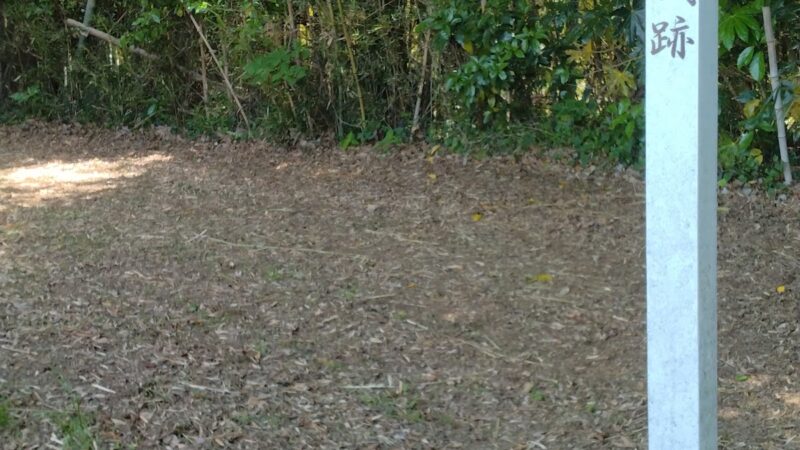
Current Status: Developed as Naruto Castle Ruins Park, remains in good condition
Naruto Castle is currently developed as “Naruto Castle Ruins Park,” serving as a place of relaxation for local residents. From the mountaintop, one can enjoy a panoramic view of Kujukuri Beach, and a monument inscribed with the poet Saito Nobuo’s poem “Autumn in the Village” has been erected.
Various Theories Regarding the Construction Period of Naruto Castle
There are several theories regarding the construction period of Naruto Castle, and debate continues among historians.
Kamakura Period Construction Theory (Antei Era)
According to one theory, the castle was built during the Antei era (1227-1229) of the Kamakura period by Into Moritsune (Into Shiro Moritsune, Nango Moritsune) when he ruled Nango in Musha, Kazusa Province. This period coincides with the stable period of the Kamakura Shogunate and the time when local powerful families established bases in various locations.
Muromachi Period Construction Theory (Oei Era)
The most widely supported theory is that the castle was built during the Oei era (1394-1427) of the Muromachi period by Into Shiro Moritsune, a vassal of the Chiba clan. This period coincides with the time when the Chiba clan was expanding its power in the Shimosa and Kazusa regions, and it is thought that Naruto Castle was built as a base in their territory.
Sengoku Period Renovation Theory
Even if the castle was built during the Kamakura period, many of the remains that can be confirmed today are thought to have been renovated during the Sengoku period. The renovations carried out by Chiba Katsutane are particularly extensive, and it is highly likely that the basic layout of the castle was established during the Sengoku period.
History of Naruto Castle and Changes in Lords
The Era of the Into Clan
Into Shiro Moritsune (Nango Moritsune), considered the first lord of Naruto Castle, was a powerful vassal of the Chiba clan. The Into clan was based in Musha County (present-day Sanbu region) and contributed to the expansion of the Chiba clan’s power.
The Into clan ruled this area for generations, maintaining their power with Naruto Castle as their residence. The castle was not merely a military base, but also functioned as a center of regional control and a management center for surrounding agricultural production and distribution.
Renovations by the Chiba Clan and the Entry of Chiba Tanetsada
It is said that during the Sengoku period, Chiba Katsutane extensively renovated Naruto Castle. Chiba Katsutane, as the head of the Chiba clan, sought to expand his power and improved castles throughout the region.
After the renovations, Katsutane’s son, Chiba Tanetsada, is said to have entered Naruto Castle and adopted the name “Naruto Hachiro.” This strengthened Naruto Castle’s character as a directly controlled castle of the Chiba clan, increasing its military importance.
The Ishikawa Clan and the Turmoil of the Sengoku Period
Records indicate that Ishikawa Yasumichi became the lord of the castle during the late Sengoku period. During this time, the power struggle between the Hojo and Satomi clans intensified in the Boso region, and it is believed that Naruto Castle was caught up in this turmoil.
Abandoned Castle and the Present Day
After Toyotomi Hideyoshi’s siege of Odawara (1590), many medieval castles were abandoned following Tokugawa Ieyasu’s entry into the Kanto region. It is presumed that Naruto Castle was also abandoned around this time.
Afterward, the castle ruins were left neglected for a long time, but for over 400 years, they have remained relatively well-preserved without suffering major destruction. Currently, they are preserved and utilized as a valuable historical heritage site of the region.
Naruto Castle’s Layout and Structure
Naruto Castle has the structure of a typical medieval mountain castle, composed of multiple enclosures (kuruwa).
Honmaru (Main Enclosure)
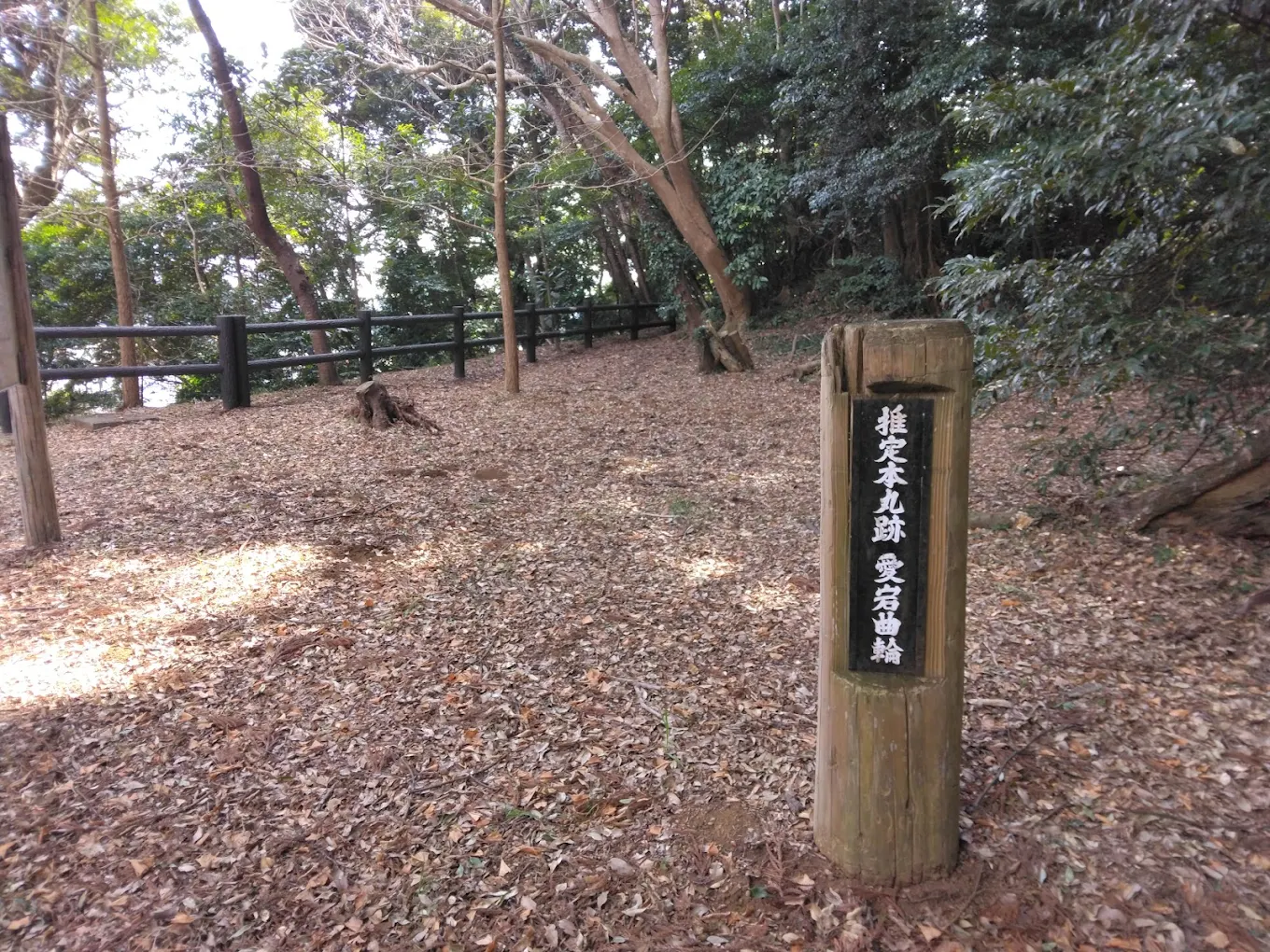
Located at the mountaintop, the Honmaru is the most important enclosure and the center of the castle. Even today, the surrounding earthworks remain in good condition, allowing us to confirm the defensive structure of the time. From the Honmaru, one can see a panoramic view of the Kujukuri Plain, indicating its role as a military surveillance point.
The Honmaru is estimated to be approximately 30 meters square, and it is thought that the lord’s residence and important facilities were located there.
Ninokuruwa (Second Enclosure)
Located south of the Honmaru, the Ninokuruwa played an important role in defending the Honmaru. A particularly well-preserved dry moat remains on the south side of the Ninokuruwa, making it one of the highlights of Naruto Castle.
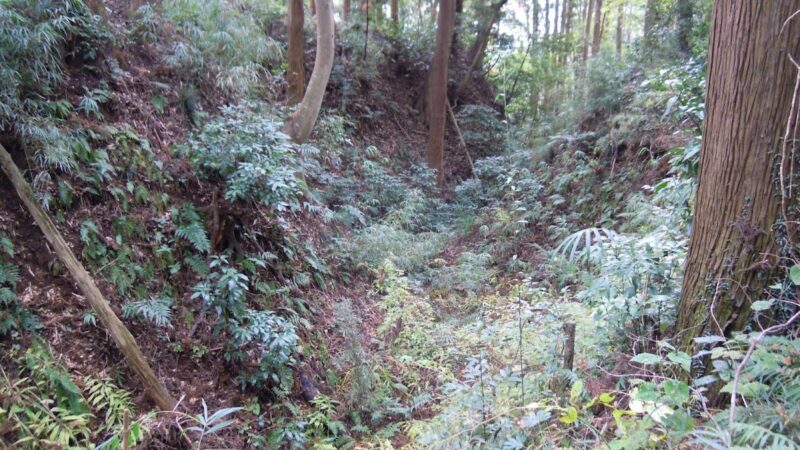
This dry moat is approximately 5-8 meters wide and 3-4 meters deep, demonstrating the advanced civil engineering techniques of the time.
Other Enclosures
Besides the main enclosure and the second enclosure, it is believed that several other enclosures were arranged in a stepped pattern. These enclosures served two purposes: to provide multiple layers of defense and to secure living space.
Dry Moats and Earthworks
The most distinctive feature of Naruto Castle is its well-preserved dry moats and earthworks. In particular, the dry moats around the main enclosure and on the south side of the second enclosure retain much of their original appearance and are considered among the best-preserved medieval castles in Chiba Prefecture.
Earthworks remain in various places, approximately 2-3 meters high, clearly indicating the castle’s defensive line. These remains, after archaeological excavations and restoration work, are still preserved and can be observed today.
Highlights of Naruto Castle Ruins Park
Currently, the Naruto Castle ruins have been developed into “Naruto Castle Ruins Park,” a spot where visitors can enjoy both historical walks and nature appreciation.
Observing the Ruins
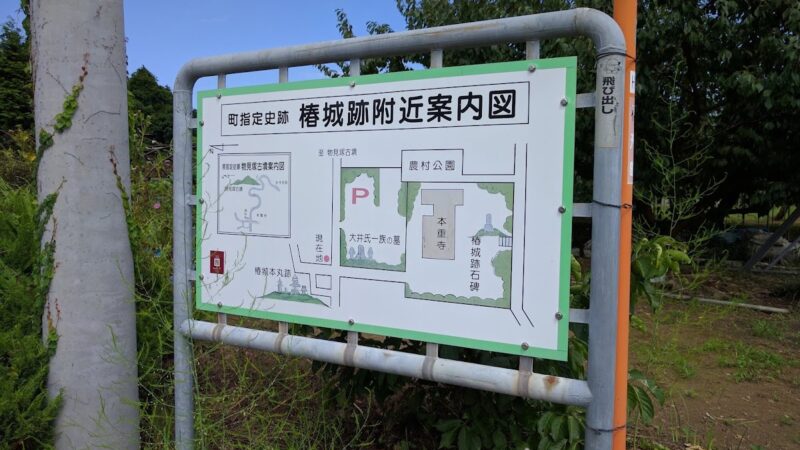
Walking paths are maintained within the park, allowing visitors to observe the ruins, such as earthworks and dry moats, up close. Information boards are also installed, allowing visitors to learn about the castle’s structure and historical background while strolling.
For castle enthusiasts, this is a valuable place to experience the defensive system of the time by actually walking along the bottom of the dry moats and viewing the layout from atop the earthworks.
View from the Summit
From the summit plaza, where the main keep remains, you can enjoy a panoramic view of Kujukuri Beach. On a clear day, you can see all the way to the horizon of the Pacific Ocean, giving you a real sense of why the castle was built in this location.
During the Sengoku period, this view was important for military surveillance, but today it offers visitors a magnificent view.
Monument to the Poem “Autumn in the Village”
At the summit stands a monument to the poem “Autumn in the Village” by the poet Saito Nobuo. Saito Nobuo was a poet with ties to Naruto, and this monument has become a cultural symbol of the region.
This space, where castle ruins and literature blend seamlessly, offers not only historical but also cultural appeal.
Nature in Every Season
The park is rich in nature, allowing visitors to enjoy the changing seasons: cherry blossoms in spring, lush greenery in summer, vibrant autumn leaves, and the rustic beauty of winter. The charm of Naruto Castle Ruins Park lies in its ability to combine historical exploration with nature appreciation.
How to Access Naruto Castle
Access by Train
Nearest Station: JR Sobu Main Line “Naruto Station”
Distance from Station: Approximately 15 minutes on foot
Naruto Station is a stop for the limited express “Shiosai,” making it convenient to access from Tokyo. The path from the station to the castle ruins is flat, making it easily accessible on foot.
The route from the station to the castle ruins is relatively easy to follow, with guide signs along the way. Locals are usually happy to provide directions.
Access by Car
Expressway: Approximately 10 minutes from the Naruto Interchange on the Higashi-Kanto Expressway.
Access by car is convenient; you can reach the site quickly using local roads from the Naruto Interchange.
Parking Information
Naruto Castle Ruins Park has a dedicated parking lot. It is free to use and has space for several standard-sized cars. However, it may get crowded on weekends and during peak seasons, so consider using public transportation.
Nearby Tourist Attractions
When visiting Naruto Castle Ruins, it is recommended to also visit nearby tourist attractions.
Namikiri Fudoin Temple: A representative temple of the Naruto region, it houses buildings of high historical value.
Kujukuri Beach: One of Japan’s longest sandy beaches, known as a mecca for swimming and surfing.
Sammu City Historical and Folk Museum: A facility where you can learn about the history and culture of the region, exhibiting materials related to Naruto Castle.
Historical Value and Significance of Preservation of Naruto Castle
Position within Chiba Prefecture
While numerous medieval castle ruins exist in Chiba Prefecture, Naruto Castle stands out for its remarkably well-preserved remains. The fact that its dry moats and earthworks have remained largely intact for over 400 years without major destruction is a valuable example in the study of castle history in Chiba Prefecture.
Contribution to Medieval Castle Research
The remains of Naruto Castle are important resources for studying the structure and construction techniques of medieval castles. In particular, its academic value is highly regarded as a clue to understanding the castle network within the Chiba clan’s sphere of influence and the realities of castle renovations during the Sengoku period.
Role as a Regional Historical Heritage Site
As an important historical heritage site in Sanmu City, Naruto Castle contributes to the formation of the region’s identity. Local elementary and junior high schools sometimes visit Naruto Castle as part of their local history studies, making it a valuable site for regional history education.
Points to Note When Visiting Naruto Castle
Clothing and Equipment
Since Naruto Castle is a mountain castle, comfortable walking shoes and clothing are recommended. Particular caution is needed after rain, as the ground can become slippery.
In summer, bringing insect repellent, a hat, and drinking water will make your visit more comfortable. In winter, don’t forget to take precautions against the cold.
Visitor Etiquette
Naruto Castle is a valuable historical site. Please observe proper etiquette when visiting, and avoid damaging the remains or leaving litter.
Climbing or digging in the earthworks or dry moats is strictly prohibited as it will lead to the destruction of the remains.
Best Time to Visit
Naruto Castle is accessible year-round, but the following times are especially recommended:
Spring (March-May): During the cherry blossom season, the castle ruins are adorned with flowers, offering a beautiful landscape. The weather is mild, making it ideal for a stroll.
Autumn (October-November): During the autumn foliage season, the trees around the castle ruins change color, allowing you to enjoy the harmony of history and nature.
Winter (December-February): The air is clear and the views are excellent. This is the season when the view of Kujukuri Beach is particularly beautiful.
Due to the high temperatures and numerous insects in summer, early morning or evening visits are recommended.
Relationship between Naruto Castle and the Chiba Clan
Understanding Naruto Castle requires an understanding of its relationship with the Chiba clan. The Chiba clan was a powerful samurai group that ruled the Shimosa and Kazusa regions from the late Heian period to the Sengoku period.
Chiba Clan’s Territory
The Chiba clan, based around Chiba City, expanded its influence throughout the Boso Peninsula. Naruto Castle was located in the eastern part of their territory and played an important role as a base for controlling the Kujukuri region.
Deployment of Vassals
The Chiba clan, in order to efficiently govern their vast territory, deployed powerful vassals throughout the region. The Into clan was one of the most prominent vassals, responsible for regional administration from their base at Naruto Castle.
This system of vassal deployment is an important example for understanding the medieval feudal system.
About the Into Clan
Let’s take a closer look at the Into clan, who are considered the builders of Naruto Castle.
Origins of the Into Clan
The Into clan, as a branch or powerful vassal of the Chiba clan, were based in Musha District (present-day Sanmu City area). The name “Into” is thought to originate from an old place name in this region.
Into Moritsune (Into Shiro Moritsune)
Into Moritsune, considered the builder of Naruto Castle, also went by the name Nango Moritsune. “Nango” was the name of this region at the time, indicating that Moritsune ruled this area.
Moritsune served the Chiba clan and acted as the person in charge of regional military and administrative affairs. The construction of Naruto Castle is thought to have been a strategic decision to strengthen regional control.
The Later Life of the Into Clan
The Into clan survived until the Sengoku period, but disappeared from the historical stage with the decline of the Chiba clan. However, their legacy lives on in the form of Naruto Castle.
Naruto Castle and the Boso Peninsula in the Sengoku Period
The Boso Peninsula during the Sengoku period became a battleground for the conflict between the two major powers, the Hojo clan and the Satomi clan. Naruto Castle is believed to have been caught up in this turmoil.
The Conflict Between the Hojo and Satomi Clans
The Hojo clan, based in Odawara, sought to expand their power throughout the Kanto region, including into the Boso Peninsula. Meanwhile, the Satomi clan, based in Awa Province (present-day southern Boso), also aimed to expand their power, leading to fierce conflict between the two.
The Chiba Clan’s Activities
Initially, the Chiba clan maintained its independent power, but gradually came under the influence of the Hojo clan. Naruto Castle may have also functioned as part of the Hojo clan’s control over the Boso Peninsula.
The Siege of Odawara and the Castle’s Abandonment
When the Hojo clan was destroyed in Toyotomi Hideyoshi’s Siege of Odawara in 1590, many castles under their control were abandoned. It is presumed that Naruto Castle ceased its role as a military base around this time.
Archaeological Excavations and Research on Naruto Castle
Multiple archaeological excavations have been conducted at Naruto Castle in the past, deepening our understanding of the castle’s structure and history.
Main Research Findings
The following results have been obtained from the archaeological excavations:
- Details of the structure of the dry moats and earthworks have been revealed.
- The period of use of the castle has been estimated from the excavated pottery fragments.
- The building layout has been inferred from the discovery of building foundations and post holes.
- The changes in the castle’s layout have been revealed.
Future Research Topics
However, many points remain unresolved.
- Identifying the exact date of construction
- Detailed changes in the castle’s lords
- The exact date and circumstances of the castle’s abandonment
- The existence and size of the castle town
Further research is expected on these issues.
History and Culture of the Naruto Region
When visiting Naruto Castle, knowing the history and culture of the surrounding area will lead to a deeper understanding and enjoyment.
Origin of the Place Name Naruto
There are several theories about the origin of the place name “Naruto,” but the most likely theory is that it is a corruption of “Naruto.” It is also said that the name was given because the area is close to the sea and the sound of waves can be heard.
History of the Kujukuri Region
Naruto, as part of the Kujukuri region, has long been a thriving area for fishing and agriculture. Sardine fishing, in particular, flourished during the Edo period, supporting the local economy.
Naruto in the Modern Era
From the Meiji era onward, Naruto developed as the center of Sanbu County. In 2006, it merged with surrounding towns and villages to become Sanbu City, which it remains today.
Summary
Naruto Castle (Sanbu City, Chiba Prefecture) is a medieval mountain castle built by the Into clan, vassals of the Chiba clan. It is a valuable historical site with well-preserved remains. There are theories regarding its construction period, with some dating it to the Kamakura period and others to the Muromachi period, making it a historically intriguing mystery.
Currently, it is maintained as Naruto Castle Ruins Park, where visitors can observe the remains such as dry moats and earthworks up close. The mountaintop offers a spectacular panoramic view of Kujukuri Beach. Its convenient access, just a 15-minute walk from JR Naruto Station, is also a major attraction.
This spot is recommended not only for castle enthusiasts, but also for those interested in history and those who enjoy nature walks. Please visit Naruto Castle, where you can experience the medieval history of Chiba Prefecture. The remains that have survived for over 400 years will quietly tell you about the lives of the people who lived there.