Hinokuma Castle (Hita City, Oita Prefecture): A Complete Guide to its History and Highlights | A Hilltop Castle Protecting the Toyotomi Domain
Located in the heart of Hita City, Oita Prefecture, Hinokuma Castle is a hilltop castle built as a key point for the Toyotomi regime’s control of Kyushu. Built on a strategic point where the Mikuma River and its tributaries converge, this castle once boasted a five-story keep and functioned as the political and economic center of the Hita Basin. Currently, it is maintained as Kameyama Park, and valuable remains such as the stone-walled masugata koguchi (square-shaped gate) are preserved.
Location and Geographical Characteristics of Hinokuma Castle
Natural Fortress Formed by the Mikuma River
Hinokuma Castle is located in Kameyama-cho, Hita City, Oita Prefecture (formerly Takeda Village, Hita District, Bungo Province), and was built on a hill with an elevation of 112.3 meters and a relative height of approximately 30 meters. Located on a delta-shaped hill at the confluence of the Mikuma River (upper reaches of the Chikugo River) and its tributary, the Shote River (Komata River), which flow through the Hita Basin, it boasts a robust defensive structure utilizing the river as a natural moat.
The Importance of Hita as a Transportation Hub in Kyushu
Hita has long been known as a strategic point in the westernmost part of Bungo Province, and was a vital hub for land transportation in Kyushu. Controlling this area, where transportation routes to surrounding provinces such as Buzen, Chikuzen, Hizen, and Higo converged, held extremely important strategic significance for the governance of Kyushu as a whole. Toyotomi Hideyoshi’s decision to make this area a directly controlled territory (kurairi-chi) after the conquest of Kyushu was due to his recognition of this geographical importance.
History of Higuma Castle
Construction History and Toyotomi Regime’s Control of Kyushu
Construction of Higuma Castle took place between 1592 and 1594. After conquering Kyushu in 1587, Toyotomi Hideyoshi dispossessed the Otomo clan, who ruled Bungo Province, in 1593, dividing the province into territories of smaller daimyo and directly controlled territories. The Hita region became a direct territory of the Toyotomi regime, and Miyagi Toyomori was appointed as its deputy in 1592 (Bunroku 1).
Miyagi Toyomori relocated Shinkoji Temple, a Soto Zen temple whose grounds encompassed the entire Higuma Mountain area, to the foot of the mountain and began construction of a full-fledged castle. Simultaneously, he developed the castle town, relocating merchant houses and markets from Tajima Village (near present-day Ohara Hachimangu Shrine in Hita City) to Takeda Village (near present-day Kumamachi in Hita City), thus creating a planned castle town.
Large-Scale Renovation by Mori Takamasa
In 1595 (Bunroku 4), Mori Takamasa succeeded Miyagi Toyomori as the lord of Hita. The following year, 1596 (Keicho 1), Mori Takamasa carried out a large-scale renovation of Higuma Castle. According to the “Toyonishi-ki,” a historical record of Hita County compiled during the Edo period, this renovation included the construction of a “five-story keep” and a “three-story turret (moon-viewing turret).”
Castles with five-story keeps are rare even in Kyushu, illustrating the importance of Higuma Castle at the time. This magnificent keep is thought to have been a symbol of the Hita Basin, a structure that could be looked up to from the surrounding areas.
Changes After the Edo Period
After the Battle of Sekigahara, Hita became a direct territory of the Tokugawa Shogunate (tenryo), and Higuma Castle began to function as a magistrate’s office. However, in the early Edo period, its military function as a castle gradually declined. Hita also had another castle, Nagayama Castle (Tsukikuma Castle), creating a unique situation in the early 17th century where two modern castles coexisted in the Hita region.
Later, Higuma Castle was abandoned, and its buildings were lost, but the castle ruins were maintained as a place of local worship, and Higuma Shrine was built on the mountaintop.
Layout and Structure of Higuma Castle
Arrangement of the Main Enclosure and Baileys
Higuma Castle is composed of three large baileys (kuruwa). Higuma Shrine is currently located in the main enclosure on the mountaintop, and this is thought to have been the central part of the castle. From the main enclosure, one could see a panoramic view of the Hita Basin, and it was an ideal location for monitoring the flow of the Mikuma River and the surrounding roads.
The baileys were arranged according to the terrain, and it is presumed that defensive facilities were built on each level. Taking advantage of its location surrounded by rivers, the design philosophy of using the natural river as a defensive line instead of a moat is evident.
Main Gate Ruins and Stone-Walled Masugata Koguchi
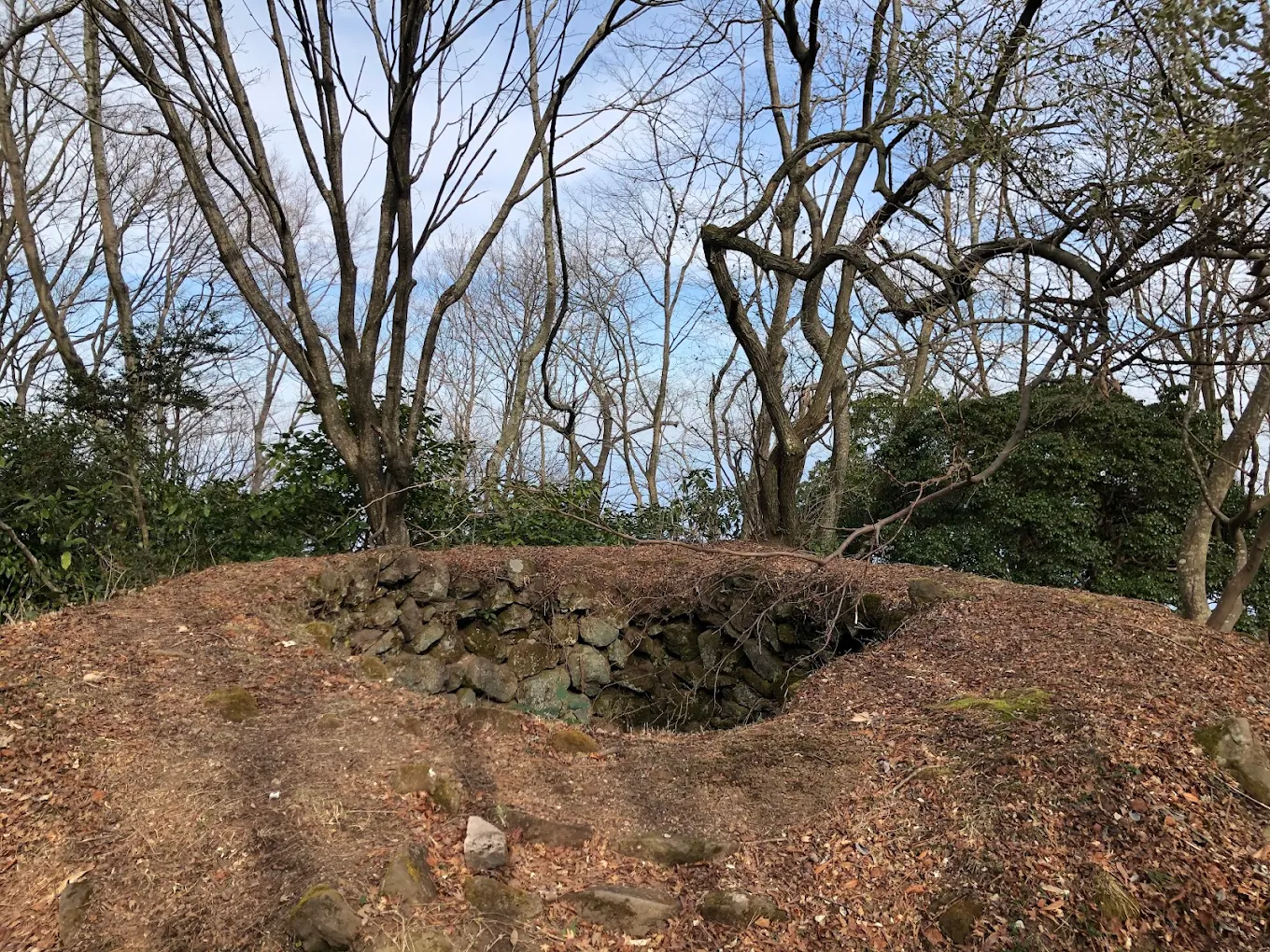
The most important remains at Higuma Castle are the Masugata Koguchi (square-shaped entrance) at the site of the main gate, located at the southwestern foot of the hill. The structure involves climbing stone steps and turning right to enter, a clever design intended to prevent enemy intrusion. A Masugata Koguchi is a square-shaped space surrounded by stone walls, a defensive structure designed to temporarily trap and attack intruders.
These stone walls clearly demonstrate the characteristics of early modern castles and are valuable remains that convey the level of stonework technology of the Azuchi-Momoyama period. The construction method and selection of stones reveal the high level of castle-building technology of the time.
Arrangement of the Keep and Turrets
According to the “Toyonishi-ki” (a historical record), Higuma Castle had a five-story keep and a three-story Tsukimi-yagura (moon-viewing turret). The exact location of the keep is unclear, but it is thought to have been built in the main enclosure or the second enclosure. The Tsukimi-yagura, judging from its name, may have also served the function of enjoying the view. The five-story castle tower was a massive structure even for its time, and it must have boasted an imposing presence that overwhelmed the townscape of Hita. Unfortunately, the structure no longer exists, but its former appearance can be imagined from the layout of the baileys and the surrounding terrain.
Current Status of Higuma Castle Ruins (Kameyama Park)
Park Development Status
The Higuma Castle ruins are now developed as “Kameyama Park,” a place of relaxation for citizens. Walking paths are maintained within the park, allowing for easy access to Higuma Shrine at the mountaintop. In spring, cherry blossoms bloom, making it a popular spot for cherry blossom viewing.
There is a parking lot at the foot of the park, and it is also accessible from the Mikuma River embankment. Its distinctive feature is that it maintains the historical value of the castle ruins while also functioning as a modern urban park.
Higuma Shrine and Place of Worship
Higuma Shrine, located at the mountaintop, has long been cherished as the center of local faith. From the shrine, you can enjoy a panoramic view of Hita city, the same scenery that the castle lords once gazed upon. The shrine grounds are located on the site of the main enclosure, offering a glimpse into the atmosphere of the castle’s central area.
Many visitors combine their shrine visit with a stroll through the castle ruins, creating a unique space where history and faith intertwine.
Highlights and Visitor Guide to Higuma Castle
Must-See Historical Remains
The stone wall masugata koguchi (square-shaped gate) of the Otemon (main gate) site is the best-preserved historical structure at Higuma Castle. Climbing the stone steps and experiencing the right-turning structure firsthand allows you to feel the defensive system of the time. Pay attention to the construction and angles of the stone walls.
The view from the main enclosure (Higuma Shrine grounds) is also not to be missed. Located in a position to overlook the entire Hita Basin, you can truly understand why the castle was built in this location. By observing the relationship between the flow of the Mikuma River and the townscape, you can understand the castle’s strategic location.
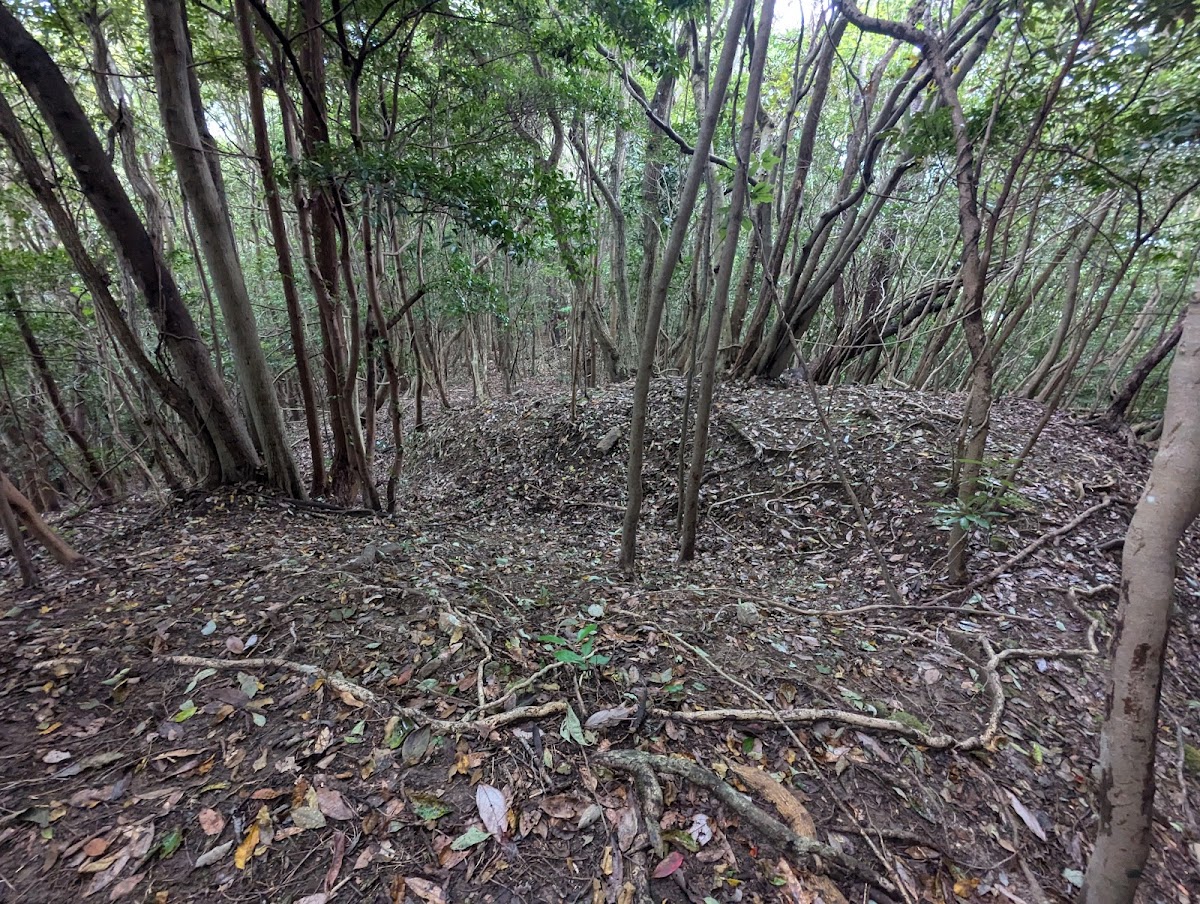
The elevation differences of the enclosures are also points of observation. By observing the arrangement of the three-tiered enclosures as you climb, you can appreciate the ingenuity of the castle’s layout.
Photo Spots
One of the best photo spots at Higuma Castle is the stone wall of the main gate. You can capture the texture of the stone wall, characteristic of early modern castles, and the structure of the square enclosure. The time when the morning light hits the stone wall is especially recommended.
The panoramic view of Hita city from the main enclosure is also an excellent photo spot. You can capture the flow of the Mikuma River, the townscape, and the surrounding mountains in a single photograph. Beautiful scenery can also be expected when photographing at dusk.
The panoramic view of the castle hill across the Mikuma River also makes for an impressive composition. By photographing the entire hill of Higuma Castle ruins from the riverbed or the opposite bank, you can visually express the castle’s location, where the river served as a natural moat.
Access and Visiting Information
Higuma Castle Ruins (Kameyama Park) is approximately a 15-minute walk from JR Hita Station. Parking is available on the Mikuma River riverbed if traveling by car. You can freely stroll through the park, and there are no time restrictions for visiting.
The estimated time needed for a visit is 30 minutes to 1 hour. To carefully observe the stone walls and enjoy the view from the main enclosure, it’s best to allow about 1 hour.
Since it’s a well-maintained park, no special equipment is required, but we recommend wearing comfortable shoes as you will be climbing stone steps.
Relationship between Higuma Castle and Nagayama Castle (Tsukikuma Castle)
Besides Higuma Castle, there is also a modern castle called Nagayama Castle (Tsukikuma Castle) in Hita City. Nagayama Castle is located north of Higuma Castle, across the river from the town center. From the late 16th to the early 17th century, Hita experienced the rare situation of two castles coexisting.
While Higuma Castle functioned as the castle of the local magistrate under the Toyotomi regime, Nagayama Castle was built under different circumstances. The relationship between these two castles reflects the importance of Hita as a transportation hub and the complex political situation from the late Sengoku period to the early Edo period.
Visiting both Higuma Castle and Nagayama Castle together will allow you to gain a deeper understanding of Hita’s castle history. Since the two castle ruins are located on opposite sides of the city, it is possible to visit both in one day.
Cultural Value of Higuma Castle
A Legacy Demonstrating the Toyotomi Regime’s Control of Kyushu
Higuma Castle is an important historical site that concretely demonstrates the Toyotomi regime’s regional governance policies, as it was built after Toyotomi Hideyoshi’s conquest of Kyushu for the purpose of directly governing the territories. Castles that functioned as magistrate’s offices for directly controlled territories are limited nationwide, making Higuma Castle, with its remaining structures, a valuable historical heritage.
Castle Construction Techniques of the Azuchi-Momoyama Period
The stone-walled masugata koguchi (square-shaped gate) is a relic that conveys the level of castle construction techniques of the Azuchi-Momoyama period to the present day. The stonework techniques of this period represent a transitional period from the Sengoku period to early modern castles, and hold significant importance from a technological history perspective. The stonework of Higuma Castle is recognized for its academic value as a typical example.
Position in Local History
Hita flourished as a shogunate territory throughout the Edo period, becoming a cultural city sometimes called “Little Kyoto of Kyushu.” The foundation for this was the formation of a castle town centered around Higuma Castle, and the prototype of the current Hita city center originates from the urban planning at the time of Higuma Castle’s construction. In local history, Higuma Castle occupies an important position as the starting point of early modern Hita.
Nearby Attractions
Historic Townscape of Hita
When visiting the Higuma Castle ruins, be sure to stroll through the townscape of Hita, which developed as a castle town. Mameda-machi retains many Edo-period merchant buildings and has been designated a National Important Preservation District for Groups of Traditional Buildings. The townscape, which retains the atmosphere of a castle town, is also useful for understanding the historical context of Higuma Castle.
Site of Kangien
The site of Kangien, a private school founded by Hirose Tansō in the late Edo period, is also an important historical site in Hita. You can learn about the history of Hita, where culture flourished as a shogunate territory. You can feel the continuity of history, as these cultural facilities developed on the urban foundation built by Higuma Castle.
Landscape of the Mikuma River
The Mikuma River, which functioned as a defensive line for Higuma Castle, remains an important element that characterizes the landscape of Hita today. Walking along the riverside promenade, you can truly appreciate the relationship between the castle and the river. In particular, the hills of the Higuma Castle ruins, viewed from the opposite bank, are an excellent point to visually understand its location as a natural stronghold.
Current Status and Challenges of Higuma Castle Research
Historical materials concerning Higuma Castle mainly consist of local history books such as the “Toyonishi-ki,” and detailed records from the time of its construction are limited. The existence of the five-story keep is based on historical documents, and archaeological confirmation awaits further investigation.
Excavations of the castle site have only been partially conducted, leaving many aspects of the layout and details of the buildings unknown. Further detailed research is expected to shed more light on the true nature of Higuma Castle.
On the other hand, the stone wall remains are well-preserved, and appropriate preservation and management are required. A crucial challenge is to pass on the value of this historical heritage to future generations while maintaining its status as a popular park for citizens.
Summary
Higuma Castle in Hita City, Oita Prefecture, was a flatland castle built as part of Toyotomi Hideyoshi’s conquest of Kyushu, strategically located at a key point with the Mikuma River serving as a natural moat. Through construction by Miyagi Toyomori and large-scale renovations by Mori Takamasa, it developed into a magnificent castle with a five-story keep.
Currently, it is maintained as Kameyama Park, and valuable remains such as the stone-walled masugata koguchi (square-shaped gate) remain. The view from the main enclosure, overlooking the Hita Basin, conveys to the present day the scenery seen by the castle’s former lords.
As a historical site that concretely illustrates the Toyotomi regime’s regional governance policies, and as a relic that conveys the castle-building techniques of the Azuchi-Momoyama period, Higuma Castle holds significant cultural value. It is an indispensable presence for understanding the history of Hita, a strategically important transportation hub, and is a castle site well worth visiting.
When you visit Hita, be sure to stop by the Higuma Castle ruins and reflect on the appearance of this castle that shaped the history of Kyushu.