Tobiyama Castle (Tochigi Prefecture) Complete Guide | Highlights of the National Historic Site and the 300-Year History of the Haga Clan
What is Tobiyama Castle? | A Representative Medieval Castle of Utsunomiya, Tochigi Prefecture
Tobiyama Castle is a medieval hilltop castle located in Takeshita-cho, Utsunomiya City, Tochigi Prefecture, and is an important cultural property designated as a national historic site. Built on a plateau approximately 100 meters above sea level on the left bank of the Kinugawa River, this castle functioned as the residence of the Haga clan (Kiyohara clan), powerful vassals of the Utsunomiya clan, for approximately 300 years, from the late Kamakura period to the late Sengoku period.
Currently, it is maintained as Tobiyama Castle Historic Site Park, and the remains such as earthworks, dry moats, and watchtower bases are well preserved on a vast site of approximately 14 hectares. As a valuable historical site where you can experience the structure of a medieval castle, it is popular not only with history enthusiasts but also with many citizens.
Location and Strategic Importance of Tobiyama Castle
Tobiyama Castle was built on the edge of a plateau overlooking the Kinugawa River, a prime location controlling a key point for both river and land transportation. This location was chosen not merely as a residential area, but to function as a military and political base in the central part of Shimotsuke Province.
From the plateau, one can see a panoramic view of Utsunomiya city, the Nikko Mountains to the north, the Ashio Mountains to the west, and even the distant Chichibu Mountains and Tanzawa Mountains. This excellent view also served as a lookout post for detecting enemy movements early.
History of Tobiyama Castle | The Rise and Fall of the Haga Clan over 300 Years
Construction at the End of the Kamakura Period
Tobiyama Castle is said to have been built by Haga Takatoshi during the Einin era (1293-1299, late 13th century). The Haga clan was a powerful local family, descended from the Kiyohara clan, who were said to be descendants of Emperor Tenmu, and ruled the Haga district for generations.
Haga Takachika, the ancestor of the Haga clan, served Munetsuna, the second head of the Utsunomiya clan, and from then on became an important figure in the Utsunomiya clan’s retainers, alongside the Masuko (Ki) clan, collectively known as the “Kiyohara and Kiyohara clans.” It is said that the Haga clan, who made Tobiyama their castle, changed their surname to “Kiyohara,” their ancestor’s surname, and thereafter played a central role in the Utsunomiya clan’s territorial control and battles as the Kiyohara clan.
Development from the Muromachi to the Sengoku Period
Throughout the Muromachi period, Tobiyama Castle continued to develop as the Haga clan’s base. During this time, the castle’s structure also changed with the times, and its defensive functions were strengthened. Renovations such as the addition of earthworks, expansion of dry moats, and the addition of baileys were carried out to adapt to the tactics of the Sengoku period.
The Haga clan, as senior retainers of the Utsunomiya clan, were deeply involved in the politics and military affairs of Shimotsuke Province. Especially during the Sengoku period, they functioned as a crucial military force supporting the Utsunomiya clan in conflicts with neighboring daimyo such as the Hojo and Satake clans.
Abandonment of the Castle under the Toyotomi Regime
The history of Tobiyama Castle came to an end after Toyotomi Hideyoshi’s siege of Odawara in 1590 (Tensho 18). Following the fall of the Odawara Hojo clan, Toyotomi Hideyoshi implemented the “Utsunomiya Settlement,” a large-scale reorganization of the daimyo’s positions in the Kanto and Oshu regions.
As a result of this settlement, the Utsunomiya clan was dispossessed of their domain, and Gamo Satoari, a retainer of Gamo Ujisato, became the lord of Utsunomiya Castle. At this time, Tobiyama Castle was also abandoned, bringing to an end its approximately 300-year history as the Haga clan’s residence. According to one theory, the castle was officially abandoned in 1597 (Keicho 2) by order of Toyotomi Hideyoshi.
Structure and Layout of Tobiyama Castle | Characteristics of Medieval Castles
A Flatland Castle with Multiple Enclosures
Tobiyama Castle is a flatland castle with multiple enclosures (kuruma). The main enclosure is at the center, surrounded by the second and third enclosures, each separated by earthworks and dry moats. This structure is a typical design of medieval castles, designed to defend against attackers in stages.
The total area of the castle is approximately 14 hectares, a considerable size for a medieval castle. This indicates that the Haga clan was particularly powerful among the retainers of the Utsunomiya clan.
Defense System of Earthworks and Dry Moats
The greatest highlight of Tobiyama Castle is its well-preserved earthworks and dry moats. The earthworks, which surround various parts of the castle, reach several meters in height, demonstrating the advanced castle-building technology of the time.
The dry moats not only separated the baileys but also served as crucial defensive structures to prevent enemy incursions. Some moats were over 5 meters deep, and their bottoms had a V-shaped cross-section known as a “yagenbori” (V-shaped moat). This shape was designed to make it difficult for enemy soldiers descending into the moat to climb back up.
Even today, visitors can experience these earthworks and dry moats firsthand, gaining a real feel for the defensive philosophy of medieval castles. Castle enthusiasts highly praise the “magnificent earthworks and moats,” and the castle is known for its excellent state of preservation among medieval castles in the Kanto region.
Restoration of the Turret Base and Wooden Bridge
When the Tobiyama Castle Historical Park was developed, the turret base and wooden bridge were restored based on the results of archaeological excavations. These restored structures were installed to make it easier to visualize the castle’s appearance at the time, and their educational value is also highly regarded.
The wooden bridge, in particular, was an important structure for moving between baileys across the moats, and could be removed during wartime to enhance defensive capabilities. By actually crossing the restored wooden bridge, you can relive medieval castle life.
Excavation and Archaeological Value of Tobiyama Castle Ruins
Importance as a Complex Site
Tobiyama Castle Ruins are important not only as medieval castle remains, but also as a complex site encompassing remains from the early Heian period (9th century) directly beneath them. Excavations have uncovered pit dwellings and pottery from the Heian period, revealing that this area was inhabited by people since ancient times.
This characteristic as a complex site further enhances the historical value of Tobiyama Castle Ruins. It provides valuable historical materials not only for the study of medieval castles, but also for understanding the changes in local communities from ancient to medieval times.
Designation as a National Historic Site
Due to its historical importance and the excellent state of preservation of its remains, Tobiyama Castle Ruins has been designated a National Historic Site. This designation indicates that Tobiyama Castle is not merely a local castle ruin, but an indispensable cultural asset for understanding Japanese medieval history.
Protected as a nationally designated historical site, it is safeguarded from development and ensures appropriate preservation, maintenance, and utilization. The development of the historical park was also carried out based on this designation and academic evidence.
Highlights of Tobiyama Castle Historical Park
Park Development and Utilization
The Tobiyama Castle ruins were developed as Tobiyama Castle Historical Park in March 2005, transforming it into a place for citizens to learn about history and to relax. Walking paths are maintained within the park, allowing visitors to enjoy strolling around the castle ruins.
However, this park is developed with an emphasis on its character as a castle site, rather than being a typical “park.” There are no playground equipment, and it is designed as a space for learning about and enjoying the castle ruins, rather than a place for children to play.
Main Enclosure (Honmaru) Area
The main enclosure is the central part of the castle and is believed to be the location of the lord’s residence. Currently, it is a flat open space surrounded by earthen ramparts. You can walk along this earthen embankment and overlook the castle grounds.
From the main enclosure, you can see the clear waters of the Kinugawa River below and enjoy a panoramic view of Utsunomiya city. On a clear day, the mountain ranges of the entire Kanto region unfold in a panoramic view, captivating visitors with its magnificent scenery.
Second and Third Enclosures
The second and third enclosures are located around the main enclosure. These enclosures are separated by dry moats and connected by restored wooden bridges. Moving between the enclosures allows you to appreciate the ingenuity of the medieval castle’s layout.
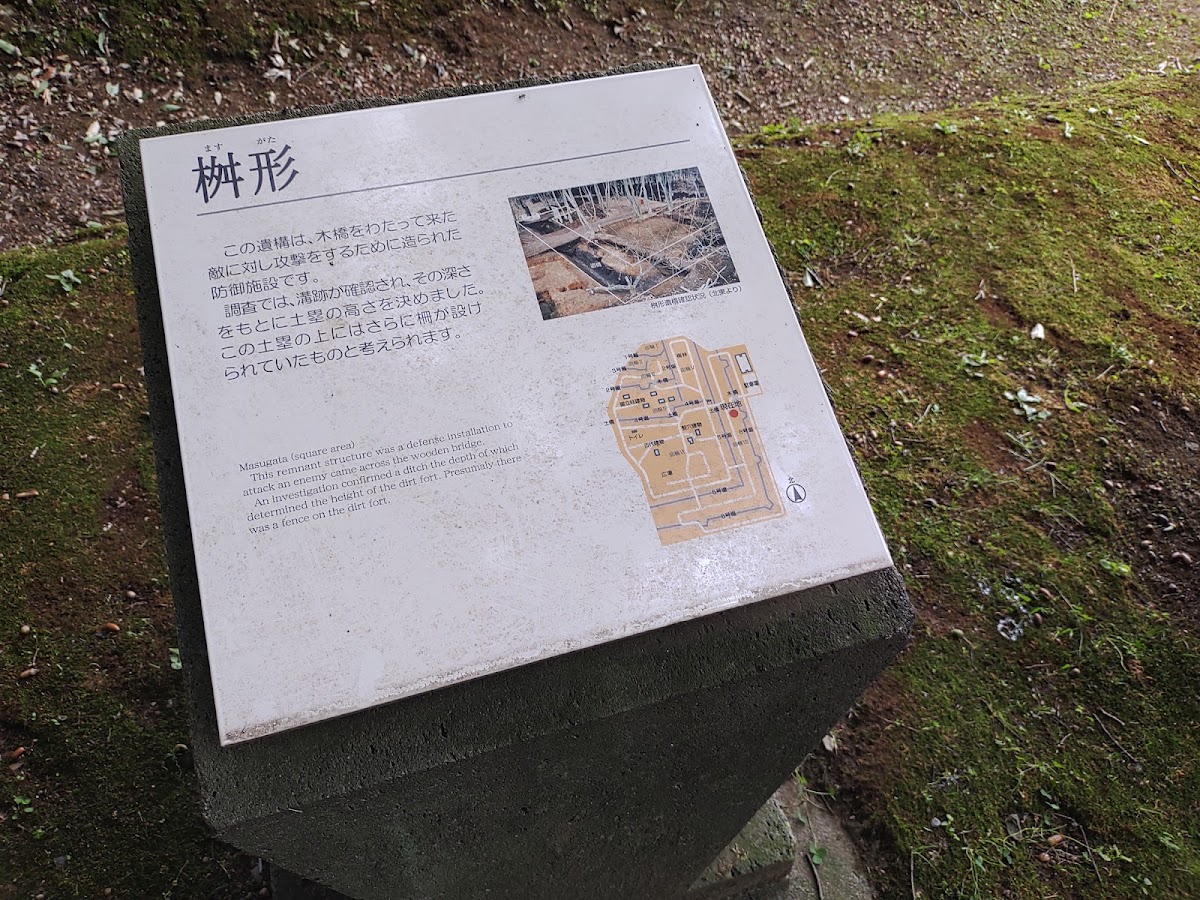
Each enclosure has an explanatory sign where you can learn about its role and structure. The locations of remains discovered during archaeological excavations are also indicated, offering an enjoyable archaeological perspective.
View from the Observation Plaza
The Tobiyama Castle Historical Park features an observation plaza, and the view from here is particularly renowned. From here, you can see mountain ranges throughout the Kanto region, including the Nikko Mountains, Nasu Mountains, Ashio Mountains, Chichibu Mountains, and Tanzawa Mountains, to the north.
If weather conditions are good, you can even see Mount Fuji in the distance. It has been selected as one of the “100 Best Views of Mount Fuji in Kanto” by the Kanto Regional Development Bureau of the Ministry of Land, Infrastructure, Transport and Tourism, and is known as a great spot to view Mount Fuji.
Nature Through the Seasons
Tobiyama Castle Historical Park is not only valuable as a castle ruin, but also a place where you can enjoy nature throughout the seasons. Cherry blossoms bloom in spring, the fresh greenery is beautiful in early summer, and hydrangeas add color during the rainy season. The autumn foliage is magnificent, and in winter, you can enjoy the castle ruins amidst a snowy landscape.
The park is especially popular during hydrangea season. The sight of hydrangeas blooming throughout the park creates a unique landscape where the historical castle ruins and the beauty of nature harmonize.
Tobiyama Historical Experience Center | Learning about the History of Tobiyama Castle
Facility Overview and Exhibits
The Tobiyama Historical Experience Center, located within the Tobiyama Castle Historical Park, is a facility where you can learn about the history of Tobiyama Castle and the Haga clan. Admission is free, and the center displays historical materials related to the castle’s history and artifacts unearthed during archaeological excavations.
The center exhibits a reconstructed model of Tobiyama Castle, a map of its layout, the genealogy of the Haga clan, and materials showing their relationship with the Utsunomiya clan, making it ideal for gaining background knowledge before visiting the castle ruins. Excavated pottery, ceramics, and metal objects are also on display, offering a glimpse into the life of the time.
Historical Experience Programs
As the name suggests, the Tobiyama Historical Experience Center offers a variety of historical experience programs. Popular programs include magatama (comma-shaped bead) making and haniwa (clay figure) making, allowing you to experience culture from ancient to medieval times.
Some of these programs are subject to a fee, but they are enjoyable for both children and adults, making them popular with families. Special experiential events are sometimes held, especially on weekends and during long holidays.
As a Place for Learning and Research
The History Experience Center is also used as a place for school education and lifelong learning. Many elementary and junior high school students from Utsunomiya City visit for social studies field trips, making it an important base for learning about local history.
Furthermore, it is a valuable facility for castle researchers and history enthusiasts to obtain specialized information about Tobiyama Castle. Excavation reports and research papers are sometimes available for viewing, accommodating academic use.
Access and Visiting Information for Tobiyama Castle
Location and Basic Information
Location: 380-1 Takeshita-cho, Utsunomiya City, Tochigi Prefecture
Opening Hours: 9:00 AM – 5:00 PM (Tobiyama Historical Experience Hall)
Closed Days: Mondays (or the following day if Monday is a public holiday), New Year holidays
Admission Fee: Free
Parking: Available (Free)
Access by Public Transportation
From JR Utsunomiya Station, take the Kanto Bus bound for “Kiyoharadai Danchi” and get off at the “Tobiyama Castle Ruins Entrance” bus stop. It’s about a 10-minute walk from there. Since bus services are limited, it’s recommended to check the timetable in advance.
Also, there may be sightseeing buses that tour various tourist spots in Utsunomiya City; it’s a good idea to get information from the Utsunomiya City Tourist Information Center.
Access by Car
Approximately 20 minutes from the Utsunomiya IC on the Tohoku Expressway, and approximately 15 minutes from the Utsunomiya-Kamikawa IC on the Kita-Kanto Expressway. For car navigation systems, searching for “Tobiyama Castle Historical Park” or “Tobiyama Historical Experience Center” is convenient.
Parking is free and has space for approximately 50 regular-sized cars. During peak seasons such as cherry blossom and hydrangea season, early arrival is recommended due to anticipated crowds.
Estimated Visiting Time
To leisurely explore the entire castle ruins, allow approximately 1.5 to 2 hours. Including viewing exhibits and participating in hands-on programs at the Tobiyama Historical Experience Center will require additional time.
While the walking paths are well-maintained, there are sections involving climbing and descending earthworks, so comfortable shoes are recommended. Also, during the summer months, some areas have limited shade, so remember to bring a hat and water.
Nearby Tourist Attractions
Utsunomiya Castle Ruins Park
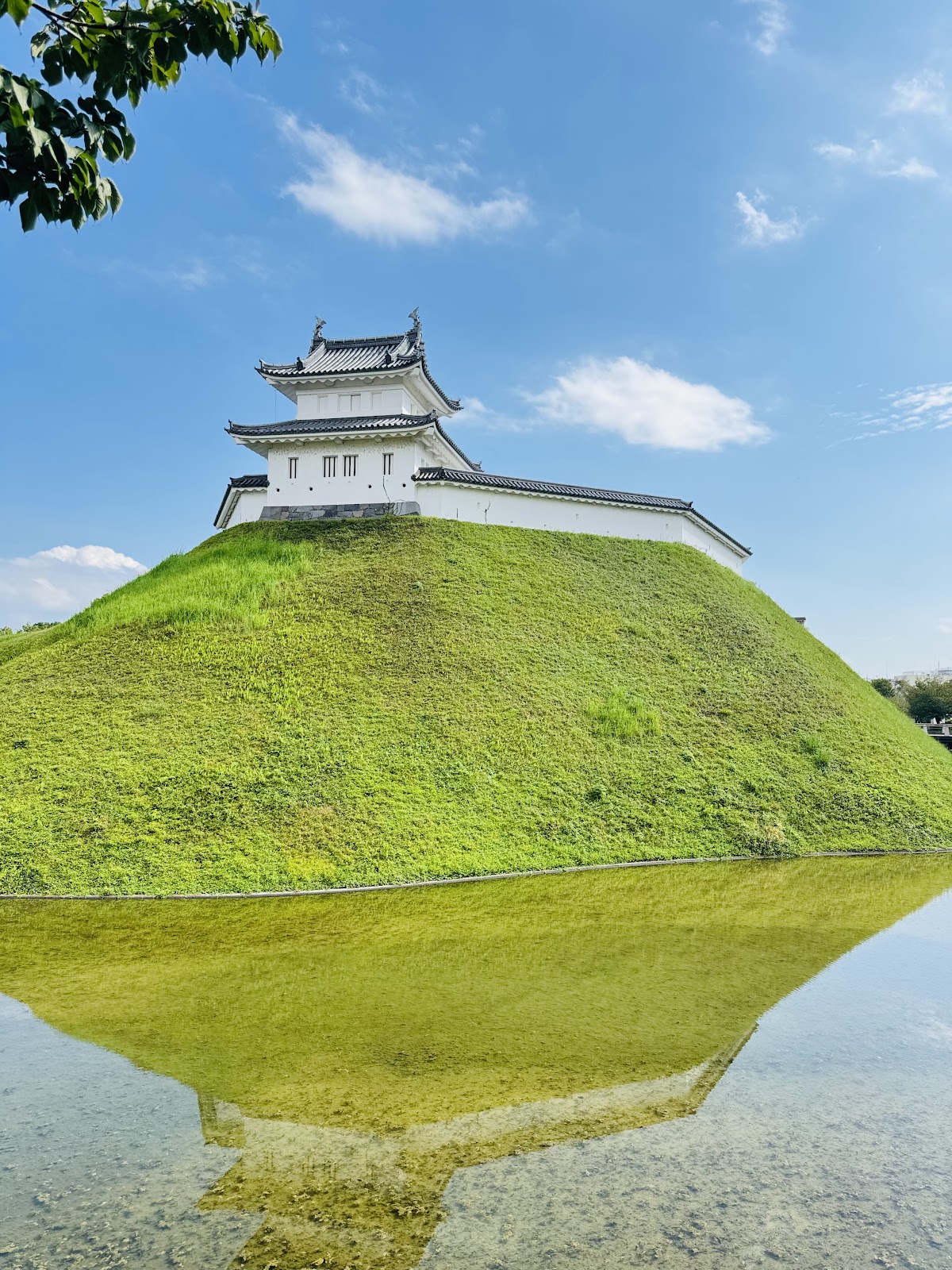
The site of Utsunomiya Castle, the residence of the Utsunomiya clan who were the lords of Tobiyama Castle, has been developed into a castle ruins park. Located in the heart of Utsunomiya City, the earthworks and turrets have been restored, and visiting it along with Tobiyama Castle allows for a deeper understanding of the relationship between the Utsunomiya and Haga clans.
Oya Stone Quarry Site and Oya History Museum
In the western part of Utsunomiya City lies the site of an Oya stone quarry with a unique landscape, now open to the public as the Oya History Museum. The fantastical atmosphere of the underground space is a must-see, making it a popular tourist spot in Utsunomiya.
Historical and Cultural Facilities in Utsunomiya City
Utsunomiya City boasts numerous facilities for learning about history and culture, including the Utsunomiya Archaeological Site Plaza (ancient ruins park), the Utsunomiya Museum of Art, and the Tochigi Prefectural Museum. Visiting these in conjunction with Tobiyama Castle allows for a more multifaceted understanding of Tochigi Prefecture’s history.
Points to Note When Visiting Tobiyama Castle
Highlights for Castle Enthusiasts
For castle enthusiasts, the greatest attraction of Tobiyama Castle is its well-preserved earthworks and dry moats. The cross-section of the Yagenbori moat and the height of the earthworks surrounding the baileys are particularly noteworthy. The reconstructed wooden bridge and turret base also provide valuable clues to imagining the castle’s appearance at the time.
Bringing a castle layout map and comparing it to the actual terrain while walking will allow for a deeper understanding of the castle’s structure. You can obtain a layout map at the Tobiyama Historical Experience Center, so we recommend stopping by before your visit.
Photography Tips
Tobiyama Castle Historical Park is a spot where you can take beautiful photographs of the harmonious blend of seasonal scenery and historical remains. The views from the observation plaza, the combination of earthworks and dry moats, and the reconstructed wooden bridge are particularly popular subjects.
The hydrangea season (June to early July) and the autumn foliage season (November) are especially beautiful, attracting many photography enthusiasts. Furthermore, the way the light shines in during the early morning and twilight hours is also fantastic, so visiting at different times of the day is highly recommended.
How to Enjoy with Family
While Tobiyama Castle Historical Park doesn’t have playground equipment, you can enjoy strolling through its vast grounds and observing nature. Making magatama (comma-shaped beads) and haniwa (clay figures) at the Tobiyama Historical Experience Center is popular with children, allowing them to learn history while having fun.
Bringing a packed lunch and enjoying a meal at the observation plaza is also a good idea. However, please be sure to take your trash with you.
Summary | Historical Value and Modern Significance of Tobiyama Castle
Tobiyama Castle is a medieval castle that flourished for approximately 300 years, from the late Kamakura period to the late Sengoku period, as the residence of the Haga clan (Kiyohara clan). Protected as a nationally designated historical site and developed as Tobiyama Castle Historical Park, it remains a valuable place where you can experience the structure of a medieval castle through its well-preserved earthworks and dry moats.
Tobiyama Castle was the base of the Haga clan, who, as important retainers of the Utsunomiya clan, left a significant mark on the history of Shimotsuke Province. Its history is essential for understanding the medieval history of the Utsunomiya region. Furthermore, its value as a complex site encompassing Heian period remains is high, making it an archaeologically important historical site.
Tobiyama Castle Historical Park is a place for historical learning, as well as a place of relaxation where visitors can enjoy the changing seasons, and is popular with local residents and tourists alike. At the Tobiyama Historical Experience Center, visitors can learn more about the history of Tobiyama Castle through exhibits and hands-on programs.
When visiting Utsunomiya, be sure to visit the Tobiyama Castle ruins and experience the romance of medieval history and the beautiful nature. The well-preserved earthworks and dry moats, the observation plaza with its magnificent views, and the history of the Haga clan continue to fascinate visitors.
--765x450.png)