Complete Guide to Shima Castle (Nantan City, Kyoto Prefecture): Visiting the Kawakatsu Clan’s Residence and Sengoku Period Remains
Shima Castle, located in Shima, Miyama-cho, Nantan City, Kyoto Prefecture, is an important mountain castle indispensable to understanding the Sengoku period history of the Tanba region. Built as the residence of the Kawakatsu clan, this castle sits on the summit of Shiroyama Mountain, approximately 403 meters above sea level, and was a strong fortress utilizing the rugged terrain with a relative height of approximately 200 meters. Even today, the remains of the castle, such as the gate, ridged vertical moats, and baileys, remain clearly visible, conveying the castle-building techniques of the Sengoku period.
History of Shima Castle and the Kawakatsu Clan
Genealogy of the Kawakatsu Clan and Relocation from Imamiya Castle
The Kawakatsu clan, who made Shima Castle their residence, were a prestigious family claiming descent from Hata no Kawakatsu. Initially, the Kawakatsu clan resided at Imamiya Castle, but during the Tenbun era, under Kawakatsu Mitsuteru, they newly constructed Shima Castle and moved their base there. The reasons behind this relocation are believed to be the desire for a more defensible terrain and a strategy for expanding their influence in the Tanba region.
The move from Imamiya Castle to Shima Castle was not merely a change of residence, but signified the strengthening of the Kawakatsu clan’s power base. Shima Castle’s location was militarily advantageous, ideally situated for monitoring and controlling the surrounding area.
Service to the Ashikaga Shogunate and Subordination to Akechi Mitsuhide
The Kawakatsu clan initially served as retainers of the Ashikaga Shogunate. Even during the Sengoku period, when the authority of the Muromachi Shogunate declined, the Kawakatsu clan maintained their relationship with the Shogunate.
However, the tide of the times forced the Kawakatsu clan to make a new choice. When Akechi Mitsuhide, a general under Oda Nobunaga, invaded Tanba, the Kawakatsu clan decided to follow him. The conquest of Tanba was a crucial military operation for Akechi Mitsuhide, and the cooperation of the Kawakatsu clan, a powerful local family, was essential. The Kawakatsu clan served under Mitsuhide and contributed to the pacification of Tanba, securing their position in the new era.
Service to the Toyotomi and Tokugawa Clans and the Edo Period
Even after Akechi Mitsuhide’s downfall following the Honnoji Incident, the Kawakatsu clan survived. They served the Toyotomi clan during the time of Toyotomi Hideyoshi, and after the Battle of Sekigahara, they served the Tokugawa clan, successfully preserving their family name as hatamoto (direct retainers of the shogun) during the Edo period.
This skillful switching of allegiance demonstrates the Kawakatsu clan’s political acumen and is a typical example of a local powerful family that survived the Sengoku period. The Kawakatsu family, who continued as hatamoto throughout the Edo period, likely took pride in the legacy of their ancestors who built Shima Castle.
Structure and Layout of Shima Castle
Overall Castle Layout and Use of Terrain
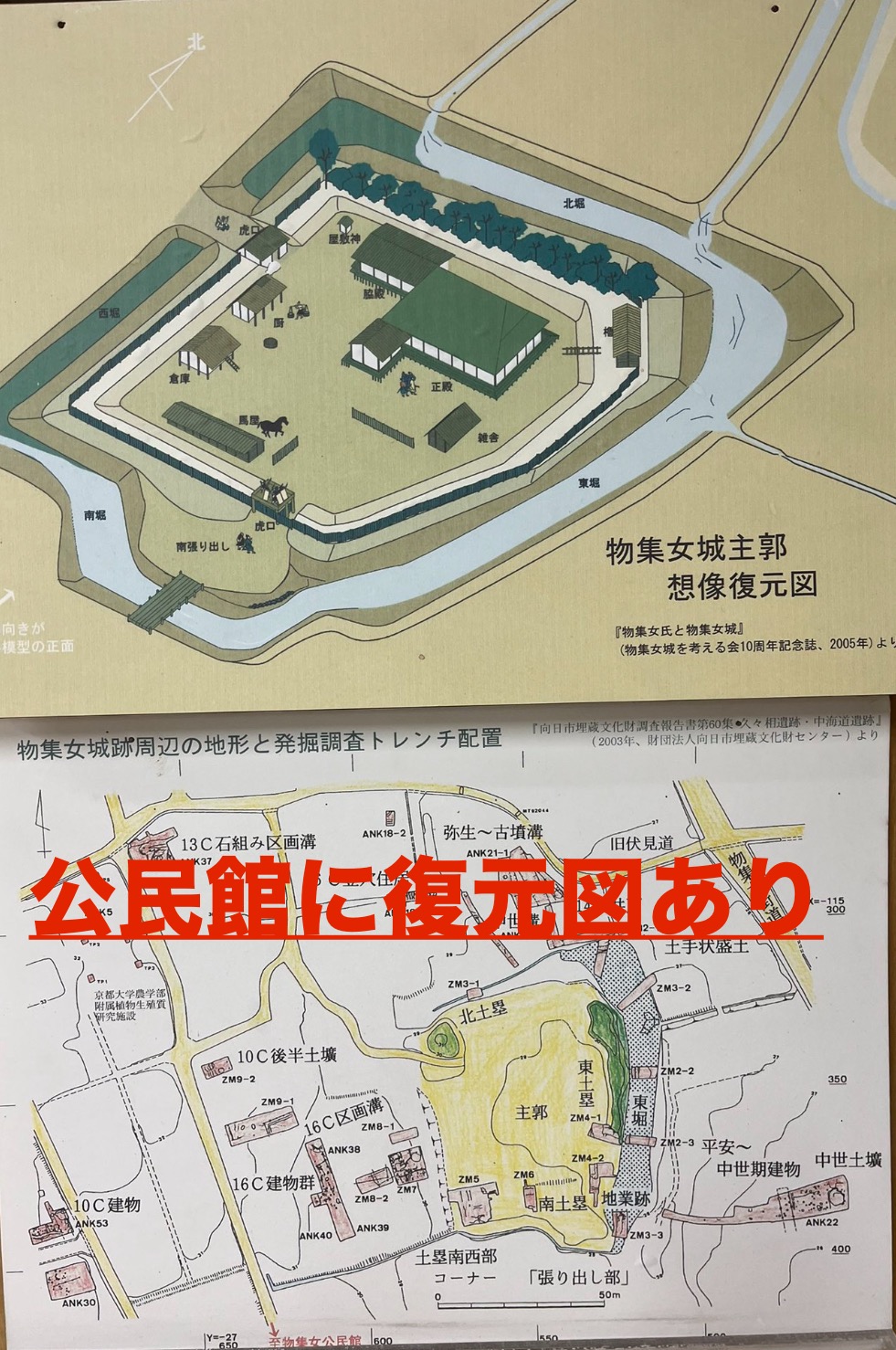
Shima Castle is a mountain castle with its main keep located on the summit of Shiroyama Mountain, approximately 403 meters above sea level, making maximum use of the steep terrain with a relative height of approximately 200 meters. Located east of the current Miyajima Elementary School, Shiroyama (Castle Hill) boasts an excellent vantage point overlooking the surrounding area, providing superior defensive and surveillance capabilities.
The castle’s layout features a central main enclosure (honmaru) at the mountaintop, surrounded by multiple smaller enclosures (kuruma). While the main enclosure and the second enclosure (II) retain characteristics of older mountain castles, the third and fourth enclosures utilize construction techniques from the late Sengoku period, indicating that the castle was expanded and renovated over time.
Features of the Main Enclosure (Honmaru)
The main enclosure, located at the summit of Shiroyama, forms the core of Shima Castle. Currently, an observation deck stands on the site of the honmaru, offering panoramic views of the beautiful Miyama town landscape. While the main enclosure is of standard size for a mountain castle, traces of earthworks and stone walls remain, hinting at its former grandeur.
From the main enclosure, one can overlook the surrounding mountains and valleys, highlighting its strategic importance for detecting enemy movements early.
From the main enclosure, one can see the surrounding mountains and valleys, demonstrating its strategic importance for early detection of enemy movements. ### Structure and Defensive Function of the Koguchi (Gate)
One of the highlights of Shima Castle is its well-preserved koguchi (gate). In mountain castles, the koguchi is the most important defensive structure for preventing enemy intrusion, and Shima Castle’s koguchi is cleverly designed.
A distinctive structure called a koguchi-kuruwa (gate enclosure) can also be seen, which is a relatively rare surviving feature in mountain castles. Earthen ramparts and stone walls are positioned around the koguchi, and a “yokoya-gakari” (flanking fire) structure is visible, allowing for attacks on intruders from the flanks.
Arrangement and Function of the Ridge-Shaped Vertical Moats
The most impressive surviving feature of Shima Castle is the clearly preserved ridge-shaped vertical moats. These are multiple vertical moats dug parallel to each other like ridges on the mountain slope, serving to prevent attacks from the enemy’s flanks and also providing rainwater drainage.
The ridge-shaped vertical moats of Shima Castle are well-preserved and are valuable resources for learning about castle construction techniques of the Sengoku period (Warring States period). This technique developed during the late Sengoku period and is considered one piece of evidence that Shima Castle was renovated during Akechi Mitsuhide’s invasion of Tanba Province.
Defensive Lines Created by Moats and Vertical Ditches
In addition to the ridge-shaped vertical ditches, several other moats and vertical ditches can be found at Shima Castle. Moats are dug to cut across ridges and are important defensive structures that hinder enemy advances. Vertical ditches are dug along slopes and served to restrict enemy lateral movement.
These ditches formed the castle’s defensive line, creating a system that allowed for effective defense even with a small number of defenders.
Remains of Earthworks and Stone Walls
Remains of earthworks can also be found in various places at Shima Castle. Earthworks are defensive walls made by piling up earth, and they served functions such as protection from arrows and firearms, and blocking enemy lines of sight.
Furthermore, stone walls can be found in some areas, indicating that important sections were reinforced with stone. However, the stonework of Shima Castle differs from the more elaborate stone walls of later periods; it is a simple structure made by stacking natural stones.
Shima Castle Highlights (Castle Notes)
View from the Observation Deck
The observation deck, located on the site of the main keep, is one of the biggest highlights when visiting Shima Castle. From here, you can enjoy a 360-degree panoramic view of the beautiful rural landscape dotted with thatched-roof houses in Miyama Town, as well as the surrounding mountains.
Especially during the autumn foliage season and the fresh green season, the beauty of nature spread out below is striking, allowing you to imagine that the castle lords of the Sengoku period also gazed upon this view.
Well-Preserved Remains
The greatest appeal of Shima Castle is the clear preservation of various remains, including gates, ridged vertical moats, trenches, and earthworks. These remains serve as valuable teaching materials for learning about Sengoku period castle construction techniques firsthand.
The ridged trenches, in particular, are highly regarded among castle enthusiasts due to their scale and excellent state of preservation. Few examples of mountain castle defense systems are as clear as those found at Shima Castle.
Coexistence of Old and New Eras
An interesting feature of Shima Castle is the coexistence of older mountain castle characteristics, seen in the main enclosure and the second enclosure, with late Sengoku period technology, seen in the third and fourth enclosures. This indicates that the castle was used over a long period and modified according to the times.
This “layered structure of eras” is also proof that Shima Castle was not merely a temporary fort, but functioned as a full-fledged residence of the Kawakatsu clan.
Access and Visiting Guide
How to Get to Shima Castle
Shima Castle is located in Shima, Miyama-cho, Nantan City, Kyoto Prefecture. Public transportation is limited, so visiting by private car is recommended.
Access by Car:
- From Kyoto city, head north on National Route 162 towards Miyama town.
- Estimated time: Approximately 1 hour 30 minutes from Kyoto city.
- Use Miyajima Elementary School as a landmark and head towards Shiroyama (Castle Mountain) to the east.
Trailhead and Parking
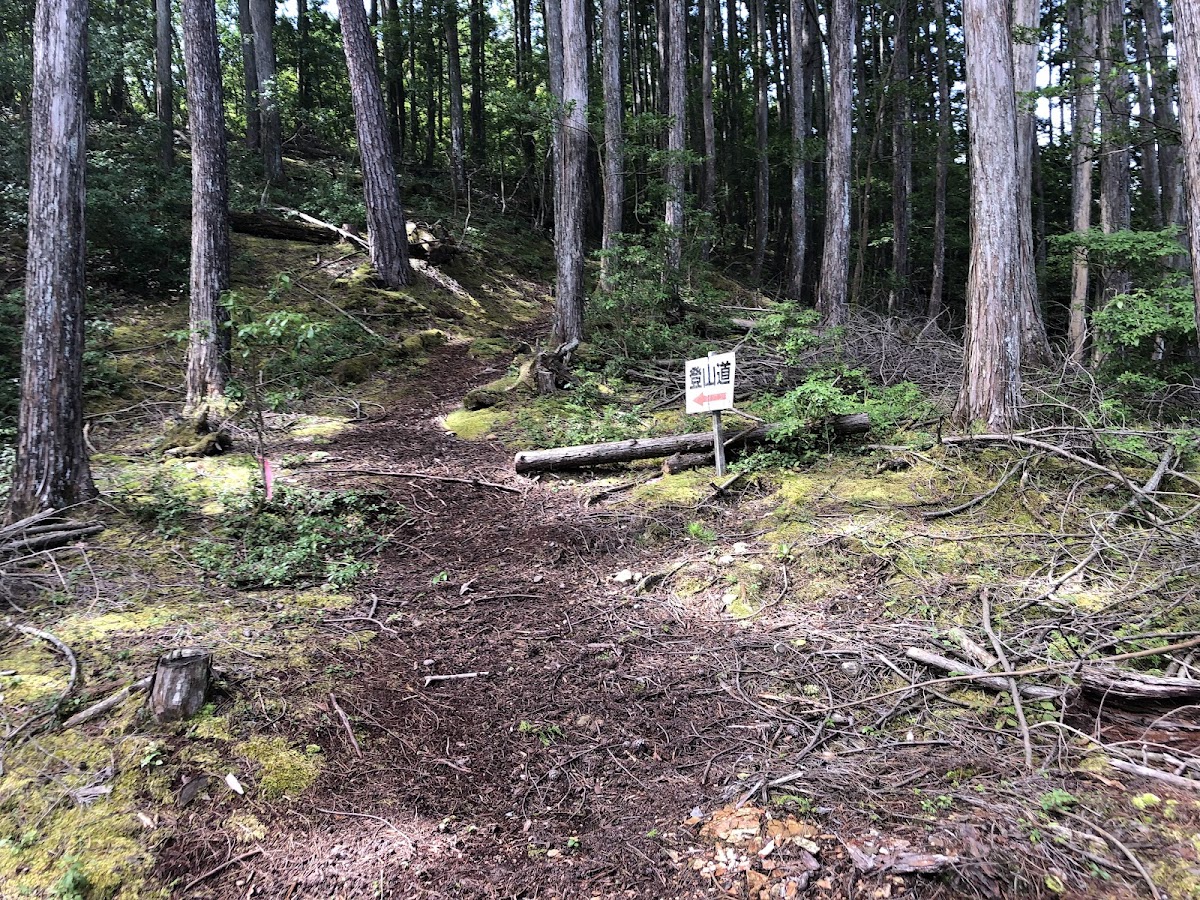
The hiking trail to Shima Castle is mainly maintained from the northern foot of the mountain. Signposts are installed near the trailhead, making it easy for first-time visitors to find their way.
There is parking space near the trailhead on the northern foot of the mountain, accommodating several cars. However, since it is not a properly maintained parking lot, consideration should be given to other visitors and local residents.
Access is also possible from the west side, from the direction of the Miyama Thatched-Roof Museum, but the northern route is more common.
Time and Difficulty of the Ascent
From the trailhead to the main keep, you will climb approximately 200 meters in elevation. The one-way trip takes about 30-40 minutes, so allow 1.5 to 2 hours round trip.
The mountain trail is well-maintained, but there are steep slopes, so appropriate hiking boots and clothing are necessary. Particular caution is needed during rainy weather and winter, as the ground can become slippery.
In terms of physical fitness, this is considered a moderately challenging mountain castle; those who regularly engage in light exercise should be able to climb it without difficulty.
Notes for Visitors
- Season and Time of Day: Visiting during the daytime from spring to autumn is recommended. Snow is possible in winter, and insect repellent is necessary in summer.
- Equipment: Prepare hiking boots, drinking water, a towel, and insect repellent (in summer).
- Manners: Be careful not to damage the ruins, and always take your trash with you.
- Safety: Avoid climbing alone; visiting in a group is safer. Checking cell phone signal strength beforehand is also important.
Nearby Tourist Information
Miyama Thatched Village
If you visit Shimajo Castle, be sure to also visit “Thatched Village,” a symbol of Miyama Town. This village, lined with thatched-roof houses that can be considered a quintessential Japanese landscape, has been designated a National Important Preservation District for Groups of Traditional Buildings.
Located about 15 minutes by car from Shimajo Castle, it offers a unique experience of both a Sengoku period mountain castle and the rural culture of the Edo period and beyond.
Miyama Thatched Museum
Near the western trailhead of Shimajo Castle, the Miyama Thatched Museum features exhibits on local history and culture. Since there’s a possibility of exhibits related to the Kawakatsu clan and Shimajo Castle, it’s recommended to stop by before or after your climb.
Nearby Castles
For castle enthusiasts visiting Shimajo Castle, a tour of nearby mountain castles is also recommended.
- Imamiya Castle: This castle was the residence of the Kawakatsu clan before Shimajo Castle. Visiting it along with Shimajo Castle will provide a deeper understanding of the Kawakatsu clan’s history.
- Yagi Castle: A large mountain castle located in Yagi-cho, Nantan City, and one of the representative castles of the Tanba region.
- Sonobe Castle: Located in Sonobe-cho, Nantan City, it is a flatland castle built during the Edo period.
By visiting these castles, you can systematically learn about the history of castles in the Tanba region.
Shima Castle and the Sengoku Period History of Tanba
Akechi Mitsuhide’s Invasion of Tanba
When discussing the history of Shima Castle, Akechi Mitsuhide’s invasion of Tanba is unavoidable. Mitsuhide, acting on orders from Oda Nobunaga, began his conquest of Tanba in 1575.
Tanba was a difficult region to conquer due to its complex terrain and numerous local forces, but Mitsuhide proceeded cautiously, gaining the support of local powerful families. The Kawakatsu clan’s submission to Mitsuhide is one example of the success of this strategy.
The Kawakatsu Clan After the Pacification of Tanba
When Tanba was pacified in 1579, Akechi Mitsuhide became the ruler of the entire province. The Kawakatsu clan, who had cooperated with Mitsuhide, had their territory secured for their service and continued to operate from Shima Castle.
However, after Mitsuhide’s defeat and death in the Honnō-ji Incident of 1582 and the subsequent Battle of Yamazaki, the Kawakatsu clan had to find a new lord. Their political acumen in surviving this turbulent era should be highly praised.
The Current State and Preservation Efforts of Shima Castle
Preservation Status of the Remains
Shima Castle’s remains are relatively well-preserved, having escaped the wave of development. Major remains such as the ridged moats and gatehouses largely retain their original appearance, making them valuable resources for the study of Sengoku period mountain castles.
Currently, an observation deck has been installed on the site of the main keep. This does not significantly damage the remains; rather, it helps visitors understand the castle’s location and the views it offers.
Local Development and Guidance
Efforts for preservation and utilization by the local community continue, including the maintenance of hiking trails and the installation of information boards. These efforts have made it easier for not only castle enthusiasts but also general tourists to visit Shima Castle.
However, it has not been developed into a large-scale tourist destination, and its quiet atmosphere, allowing visitors to enjoy the mountain castle’s tranquil surroundings, is precisely what makes it so appealing.
Summary: The Value and Charm of Shima Castle
Shima Castle (Shima, Miyama-cho, Nantan City, Kyoto Prefecture) was built as the residence of the Kawakatsu clan and is an important mountain castle that tells the story of the Sengoku period history of Tanba. Built on the summit of Shiroyama Mountain, at an altitude of 403 meters and a relative height of approximately 200 meters, this castle retains a variety of well-preserved remains, including gates, ridged vertical moats, trenches, and earthworks, conveying the castle-building techniques of the Sengoku period.
The history of the Kawakatsu clan, who served the Ashikaga shogunate, followed Akechi Mitsuhide during his invasion of Tanba, and continued to serve the Toyotomi and Tokugawa clans until the Edo period, is fascinating as a typical example of a local powerful family that survived the Sengoku period.
Currently, an observation deck has been installed on the site of the main keep, offering a panoramic view of the beautiful scenery of Miyama town. Its easy accessibility is also appealing, as it can be reached in about 30-40 minutes by climbing a well-maintained hiking trail from the northern foot of the mountain.
Visiting Shima Castle in conjunction with Miyama Kayabuki no Sato (Miyama Thatched Village) and other surrounding mountain castles will allow you to experience the rich history and culture of the Tanba region. Shima Castle is a worthwhile place to visit not only for castle enthusiasts, but also for history buffs and hiking lovers.
Among the mountain castles in Kyoto Prefecture, Shima Castle stands out for its well-preserved remains and clear historical background, and will continue to convey the spirit of the Sengoku period to many people in the future.