A Complete Guide to the History and Highlights of Ayai Castle (Takaishi City, Osaka Prefecture) | Izumi Castle Ruins Remaining at Senshoji Temple
Ayai Castle was a flatland castle located at 2-2 Ayazono, Takaishi City, Osaka Prefecture. It is now the grounds of Senshoji Temple, a Jodo Shinshu Buddhist temple. Built by a local lord of Izumi Province, this castle watched over the history of the region from the Kamakura period to the Sengoku period. This article provides a thorough explanation of Ayai Castle from every angle, including its detailed history, changes in lords, existing remains, and visiting information.
Basic Information on Ayai Castle
Ayai Castle is a flatland castle located in a residential area of Takaishi City, Osaka Prefecture. It is now the grounds of Senshoji Temple, and only a few traces of its former glory remain.
Location: 2-2 Ayazono, Takaishi City, Osaka Prefecture (Senshoji Temple)
Castle Classification: Flatland Castle
Construction Period: Kamakura Period (Various theories exist)
Abandonment Period: Unknown (Estimated to be late Sengoku period)
Main Lords: Ayai clan, Numama clan
Current Status: Within the grounds of Senshoji Temple, some remains of the moat
History of Ayai Castle and Changes in Lords
Construction in the Kamakura Period and the Ayai Clan
There are various theories regarding the construction period of Ayai Castle, but the oldest tradition states that it was built by the Ayai clan during the Kamakura period. The Ayai clan was a local powerful family based in this region of Izumi Province, and the place name Ayai is thought to originate from this family.
During the Kamakura period, Izumi Province was under the control of the Minamoto clan, and samurai were stationed throughout the region. It is presumed that the Ayai clan, as one such samurai group, was responsible for maintaining public order and collecting taxes in this region.
The Turmoil of the Nanboku-chō Period and Allegiance to the Northern Court
During the Nanboku-chō period (Northern and Southern Courts period), Ayai Castle came to play an important role as a military base. During this time, the Ayai clan is believed to have been affiliated with the Ashikaga clan of the Northern Court.
Izumi Province was close to Kawachi Province, the base of Kusunoki Masashige of the Southern Court, and was a region strongly influenced by the Southern Court. The fact that the Ayai clan was active on the Northern Court’s side indicates the complex political situation in the region. Many Southern Court strongholds existed in the surrounding area, suggesting that Ayai Castle may have functioned as a front-line base for the Northern Court.
Rule by the Numama Clan
On the other hand, according to other historical sources, there is a theory that Ayai Castle was built during the Ōnin era (1467-1469) by Numama Jin’nō Nyūdō Kiyonari. According to this theory, the Numama clan were the de facto lords of Ayai Castle.
Regarding the Numama clan, there is a tradition that they descended to Izumi Province during the Nanboku-chō period, following Wada Takaie, a member of the Kusunoki Masashige family. The Kusunoki clan was a central figure on the Southern Court side, but after the unification of the Northern and Southern Courts, their family and retainers scattered throughout the country, settling as local powerful families. The Numama clan may have been one such family.
Combining these two traditions, it’s possible that the castle was originally built by the Ayai clan and later expanded and renovated by the Numama clan. Alternatively, it’s possible that the Ayai and Numama clans were connected through marriage or other means, resulting in a change of castle lord.
Ayai Castle in the Sengoku Period
During the Sengoku period, it is said that Ayai Hyūga-no-kami Hitoyo was the lord of the castle. Izumi Province during this period was the stage for power struggles between Sengoku daimyo such as the Miyoshi clan, Oda Nobunaga, and Toyotomi Hideyoshi.
Considering the size of Ayai Castle, it’s unlikely it was the site of a large-scale battle, but it probably functioned as a regional base. During the late Sengoku period, in the process of Toyotomi Hideyoshi’s unification of Japan, many small castles were abandoned, and it’s presumed that Ayai Castle also ceased its role around this time.
Layout and Structure of Ayai Castle
Characteristics as a Flatland Castle
Ayai Castle is a typical flatland castle, and it’s thought to have had a defensive structure utilizing the surrounding low-lying wetlands. The coastal areas of Izumi Province had seen extensive rice paddy development since ancient times, and the area around Ayai Castle was blessed with abundant water resources.
Unlike mountain castles, flatland castles offer superior everyday habitability, but their defenses rely heavily on moats and earthworks. It’s presumed that Ayai Castle also had moats surrounding it and earthworks to enhance its defensive capabilities.
Castle Area within Senshoji Temple Grounds
The area currently within the grounds of Senshoji Temple is believed to have been the main enclosure of the former Ayai Castle. Judging from the size of the temple, the castle was probably not very large, likely a square-shaped fort with sides of around 100 meters.
The exact date of Senshoji Temple’s construction is unknown, but the pattern of temples being built on the site of abandoned castles is a phenomenon seen throughout Japan. Often, the castle’s defensive structures, such as moats and earthworks, were used as the temple’s boundaries.
Existing Remains and Points of Interest
Eastern Moat Remains
On the eastern side of Senshoji Temple’s grounds, a moat remains, believed to be the remnants of a former moat. While there is debate as to whether this is a castle remains, its location and shape suggest it is likely part of the moat of Ayai Castle.
The moat that remains today may be smaller than its original size, but it is a valuable relic that gives a sense of the atmosphere of a flatland castle moat. It is unknown whether it was a water moat or a dry moat, but considering the surrounding topography and water supply situation, it is likely that it was a water moat.
Castle Site Monument and Information Board
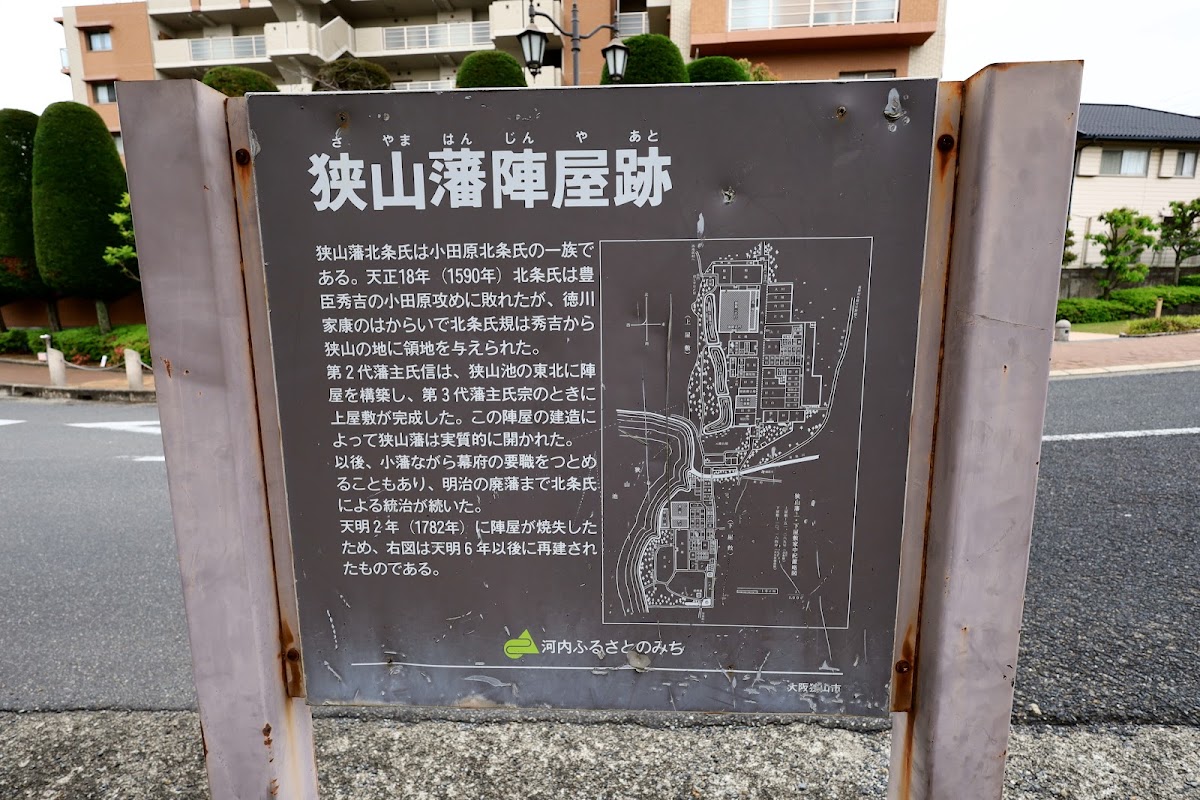
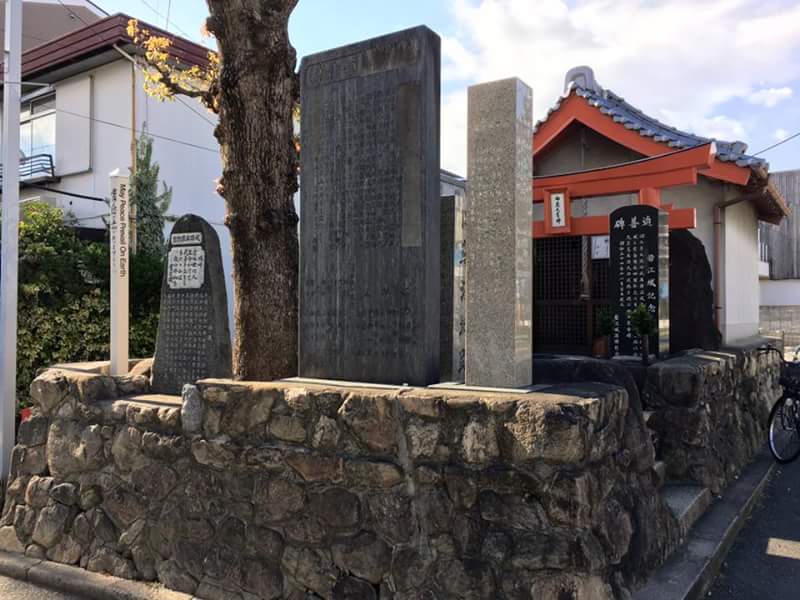
A monument marking the site of Ayai Castle stands beside the main gate of Senshoji Temple. An information board explaining the castle’s history is also installed within the temple grounds, providing visitors with an overview of the castle.
The castle site monument is relatively new, erected to pass on the region’s history to future generations. The information board provides a brief explanation of the castle’s history and its lord, making it easy to understand even for first-time visitors.
Topography of the Temple Grounds
Upon careful observation of the Senshoji Temple grounds, slight differences in elevation and topographical variations can be observed. These may be remnants of earthworks from the castle era, but many have been altered in later periods, and only a limited number can be definitively identified as castle remains.
Regarding the moat in front of the temple, there is disagreement among experts as to whether it is a castle remains. However, considering its location, it is highly likely that it was somehow related to the castle’s defensive structures.
Ayai Castle’s Castle Stamp and Pamphlet
How to Obtain the Castle Stamp
Ayai Castle issues a castle stamp, which can be obtained free of charge at Senshoji Temple. Castle stamps have become popular amidst the recent castle boom, and are important souvenirs for castle enthusiasts visiting castle ruins nationwide.
A unique feature of Senshoji Temple’s castle stamp is that it is distributed free of charge as a service to visitors. While you can obtain one by asking a temple staff member, it is recommended to contact them in advance as they may not always be present.
Pamphlet Contents
A pamphlet about Ayai Castle is also distributed along with the castle stamp. This pamphlet contains information about the castle’s history, changes in its lords, and existing remains, helping to deepen your understanding of the castle.
The pamphlet was created with the cooperation of local historians and researchers, making it a reliable source of information.
Access and Visiting Information
Access by Public Transportation
Nearest Station: Nankai Electric Railway Nankai Main Line “Takaishi Station”
Distance from Station: Approximately 10 minutes on foot
From Takaishi Station, head east and walk through the residential area to Senshoji Temple. It’s close to the station and easily accessible. If you have trouble finding your way, it’s a good idea to ask a local resident for directions.
Access by Car and Parking
Senshoji Temple has a parking lot for visitors. The fact that there is ample parking space despite being in a residential area is a welcome feature for visitors.
Parking: Parking is available within the Senshoji Temple grounds
Parking Fee: Free
However, since parking space is limited, it is recommended to contact the temple in advance if you are visiting in a large vehicle or multiple vehicles.
Visiting Hours and Precautions
Senshoji Temple is an active temple, so please note the following points when visiting.
- Maintain silence within the temple grounds and avoid disturbing other visitors.
- If a memorial service or other ceremony is taking place, refrain from visiting or keep your visit brief.
- Follow the temple’s signage regarding photography; refrain from taking pictures inside the main hall.
- Please take all your trash with you.
The visit takes approximately 20 minutes. Since the remains are limited, 30 minutes should be sufficient even for a thorough examination.
Visiting Surrounding Castles
Castles of Izumi Province
Visiting Ayai Castle will allow you to gain a deeper understanding of the medieval history of the region by also visiting the surrounding castles of Izumi Province.
Iehara Castle: Located in Sakai City, it was one of the important strongholds of Izumi Province. It is located northeast of Ayai Castle.
Kaifukiyama Castle: Located in Kishiwada City, it was an important castle protecting the southern part of Izumi Province. It offers a contrasting mountain castle structure compared to Ayai Castle.
Doi Castle: A flatland castle located in Izumisano City, it was a residence of a local powerful family, similar to Ayai Castle.
Visiting these castles will help you understand the layout of castles in Izumi Province and the differences in use between flatland and mountain castles.
Historical Walks in Takaishi City
Takaishi City, where Ayai Castle is located, has other historical attractions.
- Takaishi Shrine: A shrine with a history dating back to ancient times
- Traces of the Old Highway: An area that retains the atmosphere of a former highway
- Ancient Burial Mounds: Ruins from the Kofun period are scattered throughout the city
Visiting these spots in conjunction with a visit to Ayai Castle will allow you to experience the history of the region from ancient times through the medieval and early modern periods.
Historical Significance of Ayai Castle
Center for Local Control in Izumi Province
Ayai Castle played an important role as a center of control for local powerful families in Izumi Province. In medieval Japan, not only central authorities but also local powerful families effectively governed their regions, and Ayai Castle is a prime example.
Local powerful families such as the Ayai and Numama clans played a wide range of roles, including managing agricultural production, maintaining public order, and paying taxes to the central government. Ayai Castle served as the base for these activities and was also the center of the local community.
The Turmoil of the Northern and Southern Courts and Izumi Province
During the Northern and Southern Courts period, Izumi Province was close to the sphere of influence of the Southern Court’s Kusunoki clan and was constantly in a state of tension. The fact that Ayai Castle functioned as a base for the Northern Court indicates the complex political situation in the region.
From Mount Kongo in Kawachi Province, the base of Kusunoki Masashige, the coastal area of Izumi Province can be seen in its entirety. Ayai Castle, while under the surveillance of the Southern Court, remained on the Northern Court’s side, which gives us a glimpse into the tense situation of the time.
Regional Hubs in the Sengoku Period
With the arrival of the Sengoku period (Warring States period), small flatland castles like Ayai Castle became less frequently the stage for large-scale battles. However, it is believed that they continued to function as centers for maintaining local security and managing agricultural production.
Even as the rule of the Sengoku daimyo (feudal lords) strengthened, local powerful families continued to play an important role in their communities. Ayai Castle may have functioned as such a center of local control until the end of the Sengoku period.
Current Status and Challenges of Ayai Castle Research
Limitations of Historical Sources
Primary sources concerning Ayai Castle are extremely limited, making it difficult to unravel the detailed history of the castle. Basic matters such as the construction date, changes in castle lords, and the time of abandonment are subject to various theories and remain undetermined.
Future discoveries of new historical sources and archaeological investigations are expected to reveal the true nature of Ayai Castle.
Importance of Preserving Remains
Existing remains, such as the moat traces, are valuable clues to understanding the actual state of Ayai Castle. However, because it is located within a residential area, there is always a risk of it being lost due to development.
It is important to properly preserve these remains as a local historical heritage and pass them on to future generations. The installation of the castle site monument and information board, with the cooperation of Senshoji Temple, is part of such efforts.
Contribution to Local History Research
Research on Ayai Castle is of great significance in clarifying the medieval history of Izumi Province, particularly the realities of local powerful families. By accumulating research on small castles like Ayai Castle, not just large-scale castles, the true picture of medieval society becomes clearer.
Continued investigations and research by local historians and researchers will clarify the history of Ayai Castle and deepen our understanding of local history.
Summary: The Significance of Visiting Ayai Castle
Unlike famous castles with large keeps and stone walls, Ayai Castle is a modest castle site with only a small moat and a castle site monument remaining. However, the history of Izumi Province from the medieval period to the Sengoku period is etched there.
Ayai Castle, the residence of a local powerful family, was the heart of the community. Having experienced the turmoil of the Nanboku-cho period and survived the turbulent Sengoku era, understanding its history is crucial to comprehending the regional history of southern Osaka Prefecture.
Standing in the tranquil grounds of Senshoji Temple, one can contemplate the castle that once stood here. Such historical exploration is one of the joys of visiting castles. Its convenient location, within walking distance of Takaishi Station on the Nankai Electric Railway, is another attractive feature.
If you have the opportunity to visit Takaishi City in Osaka Prefecture, be sure to visit the Ayai Castle ruins. The free castle stamp and pamphlet will make a wonderful memento of your visit.