Ao Castle (Iga City, Mie Prefecture) Complete Guide: History, Highlights, and Access Information
Ao Castle, located in Ao, Iga City, Mie Prefecture, is an important medieval castle in the history of Iga Province. Built by the Ao clan, senior retainers of the Kitabatake clan, the provincial governors of Ise Province, it functioned as a strategic point in Iga from the Sengoku period to the early Edo period. This article provides a detailed explanation of Ao Castle, from its historical background to the remaining structures and visiting information.
History of Ao Castle
Construction and Development by the Ao Clan
Ao Castle was built by the Ao clan, senior retainers of the Kitabatake clan, the provincial governors of Ise Province. The Ao clan were powerful vassals serving the Taki Palace (present-day Taki District, Mie Prefecture) and played an important role in the governance of Iga Province.
The Abo area was strategically located at a key transportation hub connecting Iga and Ise, and was also close to the Hatsuse Road (a road connecting Hatsuse in Sakurai City, Nara Prefecture, and Rokken in Matsusaka City, Mie Prefecture), making it a militarily and economically important base. It is believed that the Abo clan established their castle here, serving as a forward base for the Kitabatake clan’s rule over Iga.
Tsutsui Sadatsugu’s Entry into Iga and Abo Castle
A major turning point in the history of Abo Castle occurred in 1585. By order of Toyotomi Hideyoshi, Tsutsui Sadatsugu, lord of Yamato-Koriyama Castle, was ordered to relocate to Iga Province.
Tsutsui Sadatsugu made Iga-Ueno Castle his base, but to strengthen his control over Iga, he stationed his senior retainers in various castles. Kishida Hoki, a senior retainer, became the lord of Abo Castle, and it functioned as an important branch castle in the Tsutsui clan’s rule over Iga. Kishida Hoki was known as a powerful retainer of the Tsutsui clan and served as the lord of Abo Castle, governing the region. During this period, it is presumed that Abo Castle, as an important base within the Tsutsui clan’s Iga domain, underwent some development.
Dispossession of Tsutsui Sadatsugu and Abandonment of the Castle
Tsutsui Sadatsugu was dispossessed of his domain in 1608 (Keicho 13). Although his territory was confirmed after the Battle of Sekigahara, problems with controlling his retainers and failures in managing his territory led to his eventual dispossession by the Tokugawa shogunate.
Following Tsutsui Sadatsugu’s dispossession, Abo Castle was also abandoned. In the Edo period, Iga Province came under the control of the Todo clan, and a governing system centered around Iga Ueno Castle was established, making branch castles like Abo Castle unnecessary.
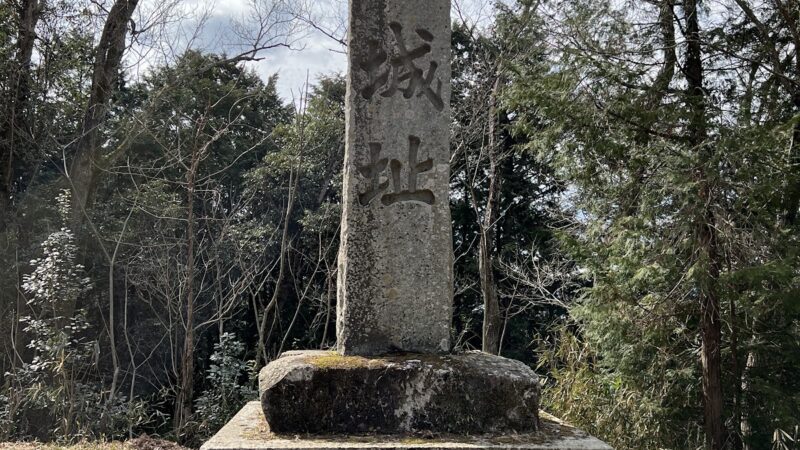
After its abandonment, the structures of Abo Castle gradually disappeared, but remnants such as earthworks and moat remains still exist as part of the topography, allowing us to imagine the scale of the castle in its heyday.
Structure and Layout of Abo Castle
Castle Location and Topography
Abo Castle is a flatland castle built on a relatively flat hill. Its elevation is approximately 200 meters, and it is situated in a location that overlooks the surrounding plains. This location made it easy to monitor enemy movements and was well-suited for defense.
A defensive line utilizing the natural terrain was established around the castle, and it is believed that valleys and rivers were used as natural moats. A common characteristic of medieval castles in the Iga region is the extensive use of earthworks rather than stone walls.
Current Status of Remains
Currently, the following remains are preserved at the Abo Castle site:
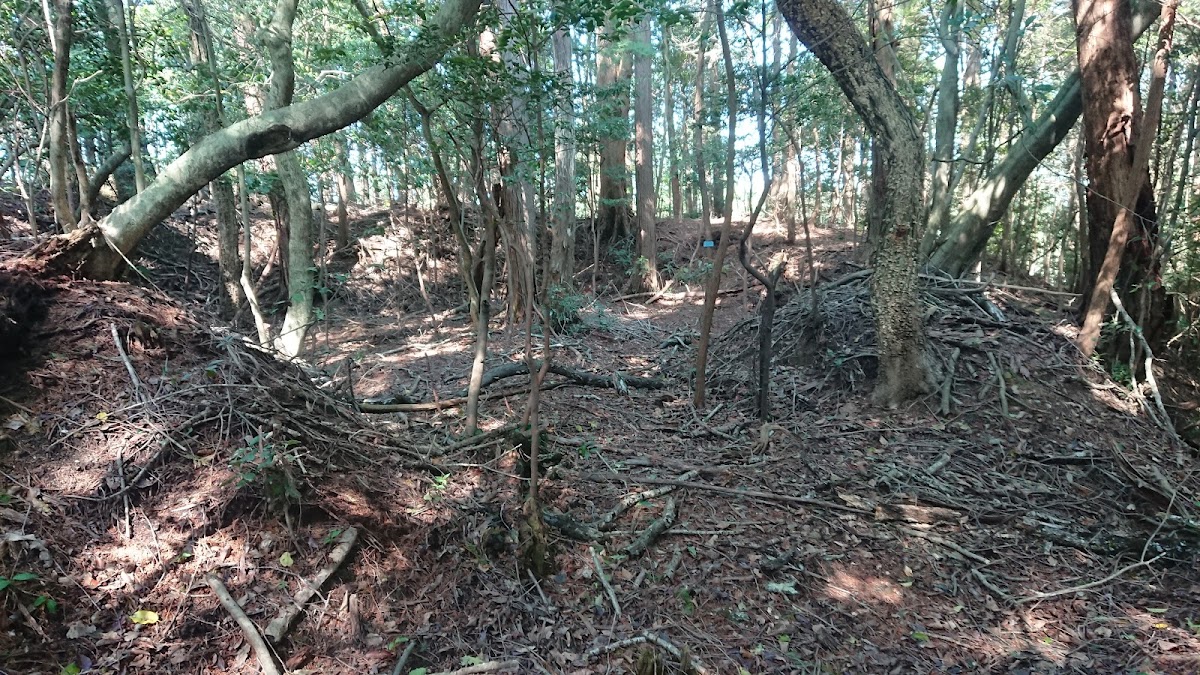
Earthworks: Parts of the earthworks built as defensive structures for the castle still exist. The height varies depending on the location, but they are important remnants that indicate the defensive line of the castle in its heyday. Moat Remains: Traces of a dry moat can be seen in the topography. While not completely preserved, they provide clues to the castle’s outline.
Enclosure Remains: Traces of a flat area believed to be the main enclosure, and the surrounding enclosures, remain as topographical features. This is a valuable place to experience the atmosphere of the castle.
Cut Slopes: Artificially carved slopes (cut slopes) can be seen in some areas, revealing traces of fortification work.
While no prominent remains such as stone walls remain, the earthworks and moat traces allow for an understanding of the structure of a medieval castle.
Highlights of Abo Castle
Experiencing the Atmosphere of the Castle Ruins
Because Abo Castle Ruins have not undergone extensive restoration, you can experience the natural atmosphere of a medieval castle. Following the tree-covered earthworks and gently lingering moat traces, you can imagine the appearance of a castle from the Sengoku period.
While it lacks the flashy features of a magnificent stone wall or a castle tower, castle enthusiasts can enjoy deciphering the defensive philosophies and construction techniques of the time from the modified terrain.
Surrounding Historical Environment
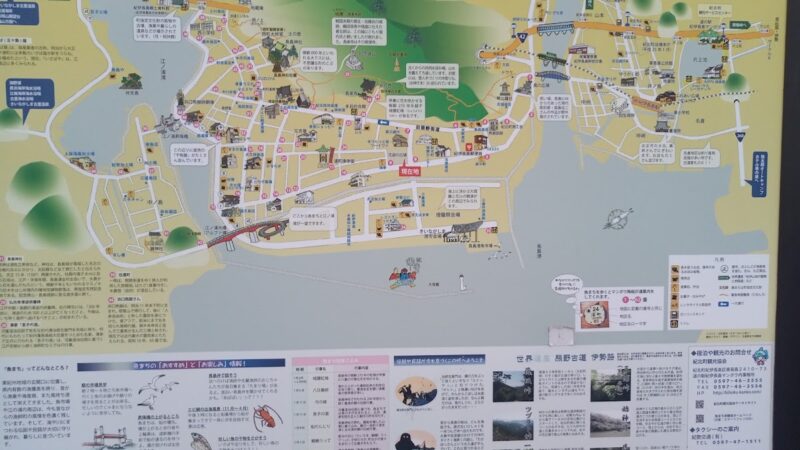
Besides the castle ruins, the Abo district retains other historical sites. The townscape, which retains the atmosphere of the Hatsuse Highway, and the scattered old temples and shrines, allow for a deeper understanding of the region’s history when visited in conjunction with the castle ruins.
You can also experience the development of Abo town since the Edo period by visiting the site. This area, which once flourished as Abo Village and later Abo Town, continues its history as part of present-day Iga City.
Connection to Iga Castles
When visiting Abo Castle, it is recommended to also visit other castles in the Iga region. Many medieval and early modern castles remain in Iga, such as Iga Ueno Castle, Maruyama Castle, and Kashiwabara Castle. Comparing the characteristics of each castle provides a more comprehensive understanding of the region’s history.
In particular, Iga Ueno Castle, the base of Tsutsui Sadatsugu, is an interesting point of comparison as it was developed around the same time as Abo Castle.
Access Information
Access by Train
The most convenient way to access Abo Castle ruins is via the Kintetsu Osaka Line.
- Nearest Station: Kintetsu Osaka Line “Aoyamacho Station”
- Distance from Station: Approximately 20-30 minutes on foot
Aoyamacho Station is close to the former center of Abo Town, and the historical atmosphere of the Abo district remains around the station. While it is possible to access the castle ruins on foot from the station, some parts of the route can be difficult to navigate, so it is recommended to check a map beforehand.
Access by Car
Access by car is also possible.
- From National Route 165, head towards Abo.
- Approximately 20-30 minutes from the center of Iga City.
- Parking: There is no dedicated parking lot, so please use nearby public facilities or on-street parking areas.
If visiting by car, entering “Abo, Iga City, Mie Prefecture” into your car navigation system will guide you to the Abo area. Please check the exact location of the castle ruins using a map app.
Notes for Visitors
- Maintenance Status: The castle ruins have not been developed into a full-fledged tourist destination, so the maintenance of information boards and walking paths is limited.
- Clothing: Comfortable walking shoes and clothing appropriate for the season are recommended. Insect repellent is necessary during the summer months.
- Toilets: There are no toilets around the castle ruins, so please use the facilities at the station or roadside rest area beforehand.
- Weather: The ground can become slippery in rainy weather, so we recommend visiting on a sunny day.
- Time: Please allow 30 minutes to 1 hour for your visit.
Abo District Tourist Information
Abo District Residents’ Self-Government Council
The Abo district is under the jurisdiction of the Aoyama branch office of Iga City, and the Abo District Residents’ Self-Government Council is working to revitalize the area. They also organize local events and activities to preserve history and culture, so you may be able to enjoy interacting with local residents during your visit.
Hatsuse Road and Historic Townscape
The Hatsuse Road, which passes through the Abo district, is a historical road connecting Hatsuse in Sakurai City, Nara Prefecture, and Rokken in Matsusaka City, Mie Prefecture. It was also used as a route for pilgrimages to Ise Shrine, and many travelers passed through it.
Even today, parts of the historic townscape remain along the old highway, and by strolling through it along with the castle ruins, you can experience the atmosphere of travel in the Edo period.
Nearby Attractions
The following tourist spots are also located around the Abo area:
- Iga Ueno Castle: The castle that served as the base of Tsutsui Sadatsugu, and a reconstructed keep now stands (approximately 30 minutes by car)
- Iga-ryu Ninja Museum: A facility where you can learn about the history and culture of Iga ninjas (approximately 30 minutes by car)
- Aoyama Plateau: A scenic spot lined with wind turbines for wind power generation (approximately 20 minutes by car)
- Michi-no-Eki Ayama: Enjoy local specialties and meals (approximately 15 minutes by car)
Significance of Visiting Abo Castle
From the Perspective of Castle Research
Unlike famous castles that have become tourist destinations, Abo Castle is a valuable historical site that retains the simple appearance of a medieval castle. Because it has not undergone major alterations, the topography and structure of the castle at the time of its construction can be observed relatively faithfully.
For those interested in castle research and historical exploration, Abo Castle is an important historical site for understanding the medieval history of Iga Province and is well worth a visit.
Understanding Local History
Knowing the history of Abo Castle leads to understanding the transition period from the medieval to the early modern period in the Iga region. The shifts in power from the rule of the Kitabatake clan to the Tsutsui clan and then to the Todo clan reflect the major currents of Japanese history from the Sengoku period to the Edo period.
The place name Abo is an old place name that has existed since the time of Emperor Shomu, indicating that this region has been an important place since ancient times. By visiting the castle ruins, you can touch upon a part of this long history.
Recommendation for Visiting Iga Castles
Iga Province’s Castle Network
In addition to Abo Castle, many other medieval castles remain in Iga Province. These castles were built by the local people of Iga Province and external forces, and functioned within complex political situations. Major castles in Iga:
- Iga Ueno Castle: A masterpiece of early modern castle architecture by Todo Takatora
- Maruyama Castle: A base for the Iga local lords
- Kashiwabara Castle: A castle associated with Oda Nobunaga’s invasion of Iga
- Hijiyama Castle: One of the strongholds of the Iga local lords
Visiting these castles will allow you to gain a deeper understanding of Iga’s Sengoku period history.
Tips for Efficient Castle Tours
To efficiently tour the castles of the Iga region, keep the following points in mind:
- Prior Information Gathering: Research the location and condition of each castle’s remains beforehand.
- Map Preparation: Prepare a GPS app or a paper map.
- Time Allocation: Plan to visit 2-3 castles per day.
- Seasonal Selection: Spring and autumn, with their pleasant weather, are recommended.
- Local Information: Obtain the latest information at roadside stations and tourist information centers.
Preservation and Future of Abo Castle
Value as a Cultural Property
The Abo Castle ruins are recognized as an important historical heritage site in the region. While large-scale stone walls and buildings no longer remain, the remains such as earthworks and moat traces provide valuable data for the study of medieval castles.
With appropriate preservation and utilization in the future, it has the potential to become even more valuable as a resource for local history education and tourism.
Engagement with the Local Community
For the residents of the Abo district, the Abo Castle ruins symbolize the region’s historical identity. Preserving and utilizing the castle ruins is a crucial issue for passing on the region’s history to future generations.
Visitors are also expected to respect the region’s history and culture and treat the remains with care.
Summary
Abo Castle in Iga City, Mie Prefecture, is a medieval castle with a history spanning from the Abo clan to the Tsutsui clan. While there are no flashy tourist facilities, the remains such as earthworks and moat traces allow one to imagine the castle’s appearance during the Sengoku period.
For those interested in Iga’s history or those who enjoy visiting castles, Abo Castle is a historical site worth visiting. It’s accessible from Aoyamacho Station on the Kintetsu Osaka Line, and combining a visit to the surrounding Hatsuse Kaido and other Iga castles will allow for a more fulfilling historical exploration.
Why not experience a part of Iga’s history at the easily accessible Abo Castle ruins? It’s especially recommended for those interested in the medieval history of the Tokai region.