Takami Castle (Saitama Prefecture) Complete Guide | A Thorough Explanation of the History, Remains, and Access to Yotsuyama Castle
What is Takami Castle?
Takami Castle (Takami-jo) is a medieval mountain castle located in Takami, Ogawa-machi, Hiki-gun, Saitama Prefecture. Also known as Yotsuyama Castle or Yotsuyama Castle, it is built on the summit of Yotsuyama Mountain, at an elevation of 197m and a relative height of approximately 100m. Located approximately 3.5km north of Ogawa-machi Station on the Tobu Tojo Line, it is known as a typical mountain castle situated on an isolated peak in the northernmost part of the Hiki Hills.
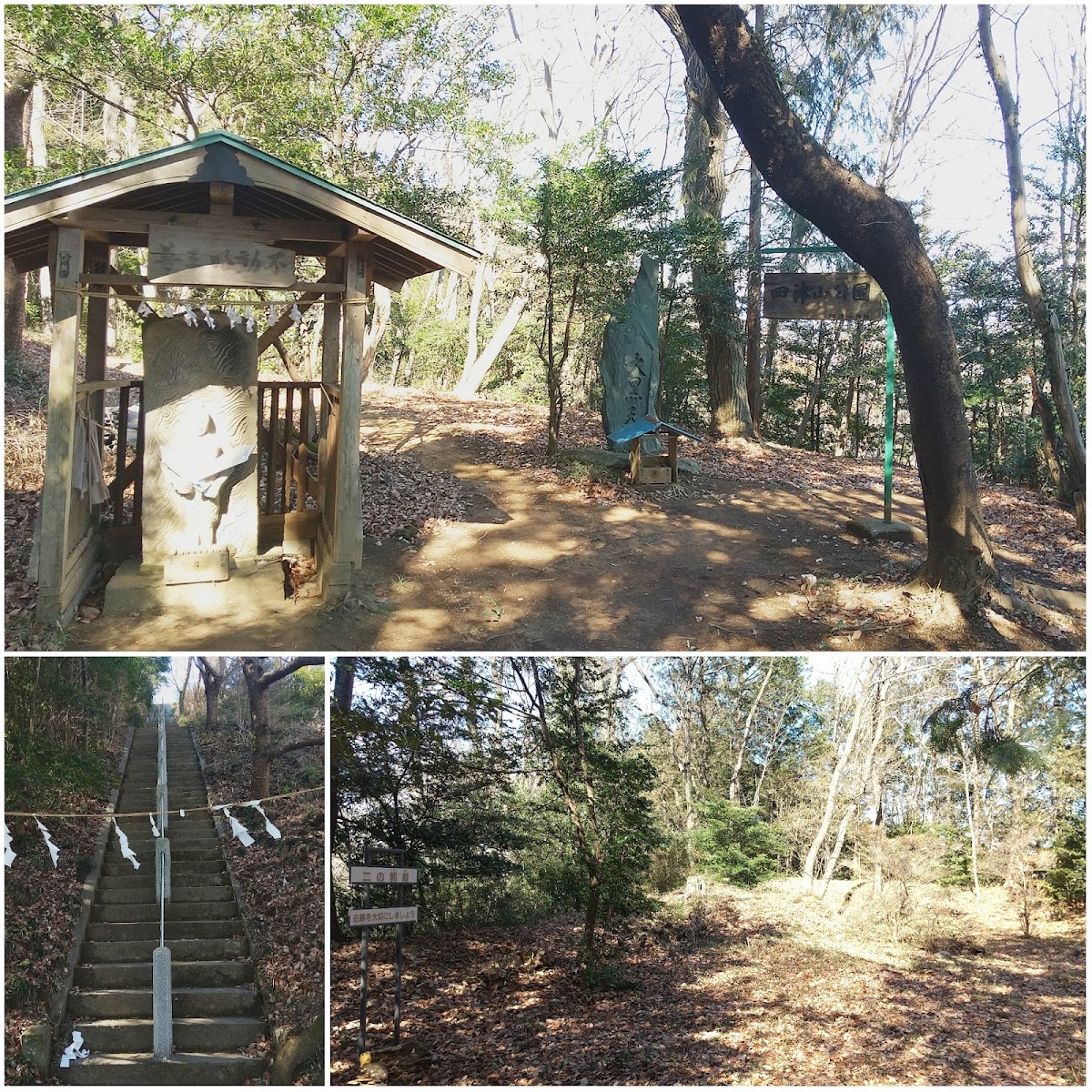
The castle site is designated as a Saitama Prefecture Historic Site, and currently, Yotsuyama Shrine is located in the main enclosure at the summit. Because a path leading up to the castle is maintained as the shrine’s approach, it is relatively easy to visit the castle site. Among the medieval mountain castles in the Kanto region, Takami Castle stands out for its remarkably well-preserved remains, making it a valuable historical site where defensive structures such as baileys, earthworks, and moats can be clearly observed.
History of Takami Castle
Construction and Early History
While there are various theories regarding the construction date of Takami Castle, tradition holds that it was built in Jisho 4 (1180) by Ishii Kurouemon Masatsuna. Ishii Masatsuna is said to have been a retainer of Aoki Ujihisa, the lord of Aoyama Castle.
However, since a letter written by Ota Dokan in Bunmei 12 (1480) mentions “Takami” and “Takami Zaibanshu,” the actual construction period is thought to be the latter half of the 15th century. During this period, Takami Castle is believed to have functioned as a branch castle of Hachigata Castle (Yorii Town), which belonged to the Yamanouchi Uesugi clan.
The Bunmei Era and Changes in Castle Lords
Records indicate that during the Bunmei era (1469-1487), Masuda Shiro Shigetomi was the castle lord. During this period, the conflict between the Ogigayatsu Uesugi and Yamanouchi Uesugi clans intensified in Musashi Province, and Takami Castle was a crucial stronghold located on the front lines between these two forces.
From the castle ruins, one could see the entire Arakawa River basin to the north and the Ichinogawa River basin to the south, functioning as a strategic point for monitoring and controlling the Old Kamakura Road (Upper Route) that ran along the Ichinogawa River. During the Sengoku period, it is believed to have played an important role in controlling transportation routes, situated between Hachigata Castle and Matsuyama Castle (Yoshimi Town).
The Battle of Takamigahara and the Castle’s Role
The most important event in the history of Takami Castle is the Battle of Takamigahara. This battle took place in two separate battles.
The First Battle of Takamigahara took place in 1488 (Chōkyō 2). In this battle, a clash between the Ōgigayatsu Uesugi and Yamanouchi Uesugi clans, Takami Castle is believed to have played a crucial role in protecting the Yamanouchi Uesugi’s rear.
The Second Battle of Takamigahara occurred in 1491 (Entoku 3). During this period, the conflict between the two Uesugi clans was at its most intense, and the area around Takami Castle became a fierce battleground. It is presumed that the castle functioned as a frontline base for the Yamanouchi Uesugi clan, serving as a defensive stronghold to hinder the advance of the Ōgigayatsu Uesugi.
History of the Castle’s Abandonment
While there are no clear records regarding the year Takami Castle was abandoned, it is believed to have ceased its role in the late Sengoku period, coinciding with the expansion of the Hōjō clan’s power. During Toyotomi Hideyoshi’s siege of Odawara in 1590, when Hachigata Castle fell, it is presumed that Takami Castle, a subsidiary castle of Hachigata Castle, also lost its function and was abandoned.
Takami Castle’s Layout and Structure
Overall Layout
Takami Castle is a multi-bailey mountain castle built around the summit of Yotsuyama Mountain. It is believed to have been named “Yotsuyama” (meaning “four peaks”) due to the mountain’s shape, and its layout takes advantage of the distinctive topography, where multiple peaks can be seen even from a distance.
The castle grounds consist of a main bailey (honkuruwa), with multiple baileys arranged in a stepped pattern. Maximizing the advantage of its location with a relative elevation of 100m, it forms a long, narrow castle area running north-south.
Characteristics of the Main Bailey (Honkuruwa)
The main bailey located at the summit is the core of Takami Castle, and currently houses the shrine of Yotsuyama Shrine. The main bailey forms a relatively large, flat area, and it is thought to have been the location of the lord’s residence and command post. The main enclosure is surrounded by remnants of earthworks, confirming its defensive function. Although partially altered by the construction of a shrine, it still retains the basic structure of a medieval mountain castle’s main enclosure.
Moats and Defensive Structures
One of the greatest highlights of Takami Castle is its well-preserved moats. The moats separating the main and secondary enclosures are clearly defined in both depth and width, and their function as defensive structures to prevent enemy intrusion is still evident.
Moats are present in multiple locations, allowing observation of typical mountain castle defensive techniques that cut off the ridgeline. The moat behind the main enclosure is particularly large, suggesting its crucial role in the castle’s defense.
Enclosure Arrangement and Terraced Structure
Several enclosures (kuruma) are arranged around the main enclosure. These enclosures are arranged in a terraced fashion, following the mountain’s terrain, and each functioned as an independent defensive unit.
Each enclosure is clearly demarcated by steep slopes, creating a defensive structure that utilizes the difference in elevation. Traces of the castle’s enclosures can be seen on both sides of the path leading to the shrine, giving a glimpse into the castle’s former scale.
Earthworks and Cut Slopes
Earthworks remain in various places within the castle grounds. These earthworks were built along the edges of the enclosures, enhancing defenses and also providing visibility from within.
Cut slopes (artificially carved steep slopes) are also well-preserved, demonstrating ingenuity in making enemy intrusion difficult. These remains are protected by the prefecture’s designation as a historical site and are maintained in an easily observable condition through appropriate upkeep.
Highlights and Points of Interest at Takami Castle
Yotsuyama Shrine and Approach
The starting point for visiting Takami Castle is the approach to Yotsuyama Shrine. Because it is a well-maintained path for worshipping at the shrine, stairs are provided, making it relatively easy to climb to the summit.
As you ascend the approach to the shrine, you can experience firsthand the elevation changes and steep slopes of the castle’s enclosures, gaining a tangible understanding of its structure. The fact that the shrine maintains the access path is fortunate from the perspective of preserving the castle ruins.
Stunning Views
From the main enclosure at the summit, a 360-degree panoramic view unfolds. You can see the entire Arakawa River basin to the north and the Ichinogawa River basin to the south, and on clear days, you can even see the distant Chichibu Mountains.
This excellent view is precisely why Takami Castle was chosen as a strategic stronghold. Its location, allowing for monitoring of the surrounding terrain and early detection of enemy movements, was ideal for a medieval mountain castle. Views towards Hachigata Castle and Matsuyama Castle are also unobstructed, highlighting its role as a communication hub connecting the two castles.
Preservation of the Remains
Takami Castle is protected as a Saitama Prefecture designated historical site, and the remains are in extremely good condition. Defensive structures such as moats, earthworks, baileys, and steep slopes remain clearly visible, making it a valuable resource for learning about the structure of medieval mountain castles.
Moderate maintenance makes exploring the remains easy, and because excessive alterations have not been made, it is easy to imagine its original appearance. It is a castle site that can be enjoyed by everyone from beginners to advanced mountain castle enthusiasts.
Presence as an Isolated Peak
Yotsuyama is an isolated peak that rises remarkably high from its surroundings, and its shape can be seen from afar. This topographical feature not only makes it easy to grasp the castle’s location but also allows us to imagine the castle’s imposing presence in its heyday.
The sight of Yotsuyama rising from the plains is impressive, and one can sense the psychological intimidating effect this castle had during the Sengoku period.
Access to Takami Castle
Access by Public Transportation
By Train:
- Get off at Ogawamachi Station on the Tobu Tojo Line
- Approximately 3.5km north from the station (approximately 45-60 minutes on foot)
- Approximately 10 minutes by taxi
Since it’s a bit of a distance from the station, we recommend taking a taxi if you’re not confident in your physical stamina. However, the area around Ogawamachi Station is known as a village of washi paper, and you can enjoy strolling through the townscape, so if you have time, visiting on foot is also a good option.
Access by Car
By Car:
- Approximately 15 minutes from the Arashiyama-Ogawa Interchange on the Kan-Etsu Expressway
- Accessible via National Route 254
- There are a few parking spaces near the entrance to the Yotsuyama Shrine approach.
Please note that you will be using the parking lot intended for shrine visitors. Space is limited, so please be aware of potential congestion.
Time Required for Climbing the Castle
- From the entrance of the approach to the main enclosure at the summit: Approximately 15-20 minutes on foot
- Time for exploring the entire castle site: Approximately 30 minutes to 1 hour
- If you want to carefully observe the remains: 1 hour 30 minutes to 2 hours
The stairs are well-maintained, so anyone with average physical fitness can climb the castle without any problems. However, since it is a mountain castle, we recommend wearing comfortable shoes and clothing.
Notes and Manners for Visiting
Clothing and Equipment
- Footwear: Non-slip shoes such as sneakers or hiking boots are recommended
- Clothing: Long sleeves and long pants are preferable (to prevent insect bites and injuries)
- Items to Bring: Drinking water, towel, insect repellent spray in summer
- Seasonal Considerations: In winter, the sun sets early, so visit during daylight hours.
Manners for Visiting
- Yotsuyama Shrine is an active religious facility. Please observe proper etiquette when visiting the site.
- Actions that could lead to the destruction or damage of the ruins are strictly prohibited.
- Please take all your trash with you.
- Please avoid trespassing on private property.
- Photography is permitted, but please be considerate of other visitors.
Best Season
Takami Castle is open year-round, but the best times to visit are:
- Spring (March-May): Beautiful fresh greenery and mild weather.
- Autumn (October-November): Enjoy the autumn foliage and excellent views.
- Winter (December-February): The fallen leaves make it easier to observe the ruins.
Summer (June-August) is less suitable for observing the ruins due to overgrown vegetation and numerous insects, but you can enjoy the atmosphere of a lush, green mountain castle.
Surrounding Castles and Points of Interest
Aoyama Castle
Aoyama Castle, believed to be the residence of Aoki Ujihisa, who was involved in the construction of Takami Castle, is also located within Ogawa Town. Situated approximately 2km south of Takami Castle, visiting both together provides a deeper understanding of the medieval castle network in this region.
Hachigata Castle (Yorii Town)
Hachigata Castle, which served as the main castle of Takami Castle, is a large flatland castle known as an important base for the Hojo clan. It has been designated a National Historic Site and includes a history museum. It is located approximately 10km north of Takami Castle, about a 20-minute drive away.
Matsuyama Castle (Yoshimi Town)
Matsuyama Castle, an important base for the Ogigayatsu Uesugi clan, is located approximately 8km south of Takami Castle. Designated a National Historic Site, it retains well-preserved remains such as earthworks and moats. As a castle that faced Takami Castle, it is worth visiting together.
Koshigoe Castle and Nakajo Castle
Within Ogawa Town, several other medieval castles remain, including Koshigoe Castle and Nakajo Castle. Visiting these sites will provide a more comprehensive understanding of the medieval history of the Hiki region.
Ogawa Town’s Washi Paper Culture
Ogawa Town is known as a traditional washi paper production area, and “Ogawa Washi” is designated as a National Important Intangible Cultural Property. Visiting washi paper making facilities and workshops in conjunction with a castle site visit is highly recommended.
Materials and Research on Takami Castle
Research on Castles in Saitama Prefecture
Regarding medieval castles in Saitama Prefecture, including Takami Castle, basic research reports such as “Medieval Castle Sites in Saitama Prefecture” (Saitama Prefectural Board of Education) have been published. It is also mentioned in Volume 5 of “The Complete Guide to Japanese Castles” (Shin Jinbutsu Oraisha), placing it within the context of research on mountain castles in the Kanto region.
Historical Materials of Ogawa Town
The Ogawa Town Board of Education publishes local historical materials, and the town history also mentions Takami Castle. These can be viewed at the local library and local history museum.
Castle Research Books
Specialized books on mountain castles in the Kanto region include detailed explanations of Takami Castle’s layout and remains. Works by castle researchers such as Sosei Nishimata and Hitoshi Nakai are also helpful.
Castle Stamps and Souvenirs
Currently, the official distribution of Takami Castle’s castle stamp (Gojoin) has not been confirmed, but information may be available at the Ogawa Town Tourism Association or surrounding facilities.
As a memento of your castle visit, we recommend taking photographs and recording the knowledge you gain on site. Purchasing Ogawa Town’s washi (Japanese paper) products as souvenirs is also a good idea.
Historical Significance of Takami Castle
The Conflict Between the Uesugi Clans and Takami Castle
The historical significance of Takami Castle lies above all in its role in a crucial phase of Kanto Sengoku history: the conflict between the Ogigayatsu Uesugi clan and the Yamanouchi Uesugi clan. The rivalry between the two Uesugi clans eventually led to the rise of the Hojo clan, becoming a decisive factor in the Kanto Sengoku period.
The Battle of Takamigahara was a symbolic battle of this conflict, and Takami Castle was located on the front lines. The castle’s existence serves as a valuable witness to the region’s history.
Value as a Strategic Point on Transportation Routes
Located on the upper route of the old Kamakura Road, Takami Castle was a strategic point on military and economic transportation routes. Considering the importance of roads in the medieval period, the magnitude of the castle’s role becomes clear.
Its location midway between the two major strongholds, Hachigata Castle and Matsuyama Castle, and its function in securing communication and supply routes, was strategically extremely important.
A Typical Example of a Medieval Mountain Castle
Takami Castle holds an important position in castle research as a typical example of a medieval mountain castle in the Kanto region. Its location utilizing an isolated peak, its multi-bailey layout, and its defenses using moats and earthworks clearly demonstrate the characteristics of castle construction techniques of this era.
Due to the excellent state of preservation of its remains, it also has high educational value and serves as an important teaching material for learning about mountain castles.
Summary
Takami Castle (Yotsuyama Castle) in Ogawa Town, Saitama Prefecture, is a mountain castle that played a crucial role in the conflict between the two Uesugi families in the Kanto region during the Sengoku period. Since its construction by Ishii Masatsuna, it functioned as a branch castle of Hachigata Castle and as a strategic point controlling the old Kamakura Road.
Currently protected as a Saitama Prefecture designated historical site, it is easily accessible via the approach to Yotsuyama Shrine at the mountaintop. The remains of the main bailey, moats, earthworks, and other baileys are well-preserved, making it a valuable historical site where one can experience the structure of a medieval mountain castle.
The view from the 197-meter-high summit is magnificent, offering panoramic views of the Arakawa River basin to the north and the Ichinogawa River basin to the south. This view speaks volumes about why Takami Castle was chosen as a strategically important location.
For those interested in mountain castles in the Kanto region, those who want to learn about the history of the Sengoku period, or those who simply enjoy hiking in nature, Takami Castle is an attractive destination. Visiting it in conjunction with the washi paper culture of Ogawa Town and other nearby castles will make for a more fulfilling historical exploration.
Standing atop an isolated peak in the Hiki Hills, Takami Castle continues to quietly convey the memories of the Sengoku period.