Himekura Castle (Kochi Prefecture) Complete Guide: The Battles of Sengoku Tosa as Seen from the Front Lines of the Aki Clan
What is Himekura Castle?
Himekura Castle is a Sengoku period mountain castle located in Kishimoto, Kagami-cho, Konan City, Kochi Prefecture. Built on Mt. Tsukimi, 68.8 meters above sea level, overlooking the Pacific Ocean, this castle is known as the residence of the Himekura clan, vassals of the Aki clan. Currently, it is maintained as the “Kochi Prefectural Tsukimiyama Children’s Forest Park,” a valuable historical site where remains such as baileys, earthworks, and moats can be seen.
The most distinctive feature of Himekura Castle lies in its geographical location. Situated midway between Okotoyo Castle, the base of the Chosokabe clan, and Aki Castle, the residence of the Aki clan, it was a battleground where fierce battles took place on the front lines between the two forces. This location is extremely important for understanding the power struggles in Sengoku Tosa.
History of Himekura Castle
The Era of the Aki and Himekura Clans
Himekura Castle functioned as an important branch castle of the Aki clan, who controlled eastern Tosa Province. The castle lords were Himekura Ukyo and Himekura Buzen, warriors of the Himekura clan. As vassals of the Aki clan, they were responsible for the frontline defense against the threat of the Chosokabe clan approaching from the east.
The Aki clan was a powerful Sengoku daimyo, counted among the seven great warlords of Tosa Province, and wielded power primarily in Aki County in eastern Tosa. Himekura Castle was located at the western edge of the Aki clan’s sphere of influence and played a crucial role as a strategic point protecting the border with the Chosokabe clan.
The Fall of Himekura Castle in 1569
The fate of Himekura Castle was sealed by the attack by Chosokabe Motochika in 1569. At that time, Chosokabe Motochika, aiming to unify Tosa Province, was intensifying his military operations to destroy the Aki clan.
Himekura Castle fell after a fierce battle, and the Himekura clan, who ruled the castle, were also destroyed. This battle was a crucial event that served as a prelude to the downfall of the Aki clan. In the expansion of the Chosokabe clan’s power, the capture of Himekura Castle was a strategically important victory that opened the way to the Aki clan’s stronghold.
Kuwana Tango’s Time as Castle Lord
After the fall of Himekura Castle and the complete destruction of the Aki clan, Chosokabe Motochika appointed Kuwana Tango as the castle lord (castle supervisor) of Himekura Castle. Kuwana Tango was a trusted vassal of the Chosokabe clan and was entrusted with governing the newly acquired territory.
However, this period as castle lord did not last long. As Chosokabe Motochika advanced the unification of Tosa, he reorganized his governing system and adopted a policy of consolidating many small castles.
Abandonment of Himekura Castle Around 1580
Around 1580, Himekura Castle was abandoned by order of Chosokabe Motochika. At this time, Motochika had almost completed the unification of Tosa Province and was shifting his focus to the unification of Shikoku. The importance of Himekura Castle as an internal defensive base had decreased, and it is believed that the decision to abandon the castle was made to create a more efficient administrative system.
Even now, more than 440 years after its abandonment, the remains of Himekura Castle are well-preserved, making it a valuable historical site that conveys the appearance of castles in Tosa during the Sengoku period.
Structure and Layout of Himekura Castle
Utilization of Location and Topography
Himekura Castle is a mountain castle built around the summit of Tsukimiyama Mountain, which is 68.8 meters above sea level. The relative height is approximately 60 meters, and the south side faces a sheer cliff overlooking the Pacific Ocean, forming a natural stronghold. Its layout is characterized by its maximum utilization of this topographical advantage.
Tsukimiyama is an isolated hill, highly visible from the surrounding plains, and possessed excellent locational features for a surveillance base. Because it overlooks the Pacific Ocean, it is believed that monitoring maritime traffic was also possible.
Structure of the Main Enclosure (Honmaru)
The main enclosure is located at the highest point of Tsukimiyama and is now a park. Although playground equipment has been installed, the remains of shallow earthworks surround it, giving a glimpse of the castle’s former appearance.
The main enclosure is not particularly large, which indicates that Himekura Castle had a stronger character as a military base than as a residential residence. It is presumed that its main roles were defense during wartime and surveillance during peacetime.
Arrangement of the Enclosures
Several enclosures (kuruma) are arranged around the main enclosure. The enclosures below the main enclosure, in particular, have been less affected by the park development and retain a stronger atmosphere of a mountain castle. These enclosures are arranged in tiers, creating a structure that made enemy intrusion difficult.
The enclosures are separated by steep slopes, demonstrating a defensive structure that utilizes the difference in elevation. This type of terraced layout is a common feature of mountain castles in Tosa, showcasing ingenuity in efficiently utilizing the limited mountaintop area.
Moats and Defensive Structures
A notable defensive feature of Himekura Castle is the moats built along the ridges. Moat remains can be confirmed on the northwest ridge where the shrine stands and on the northeast ridge where the toilets are located.
Moats are important defensive structures designed to prevent enemy incursions along the ridges, and in Himekura Castle, they served to block access to the main enclosure. They remain clearly visible as topographical features, making them a valuable part of the castle’s historical remains.
Well Remains
Well remains are also believed to exist within the castle grounds. Securing a water source was a matter of life and death for mountain castles, and the presence of a well was essential when considering a siege. This is an important historical site demonstrating that Himekura Castle was not merely a watchtower but also equipped with facilities capable of withstanding a siege for a certain period.
Highlights of Himekura Castle
Historical Site Forest Area
Currently, the Himekura Castle ruins are preserved as an area called the “Historical Site Forest” on the southwest side of “Tsukimiyama Children’s Forest Park.” While the entire park is developed as a facility for children, the Historical Site Forest area is a space carefully designed to preserve the castle ruins.
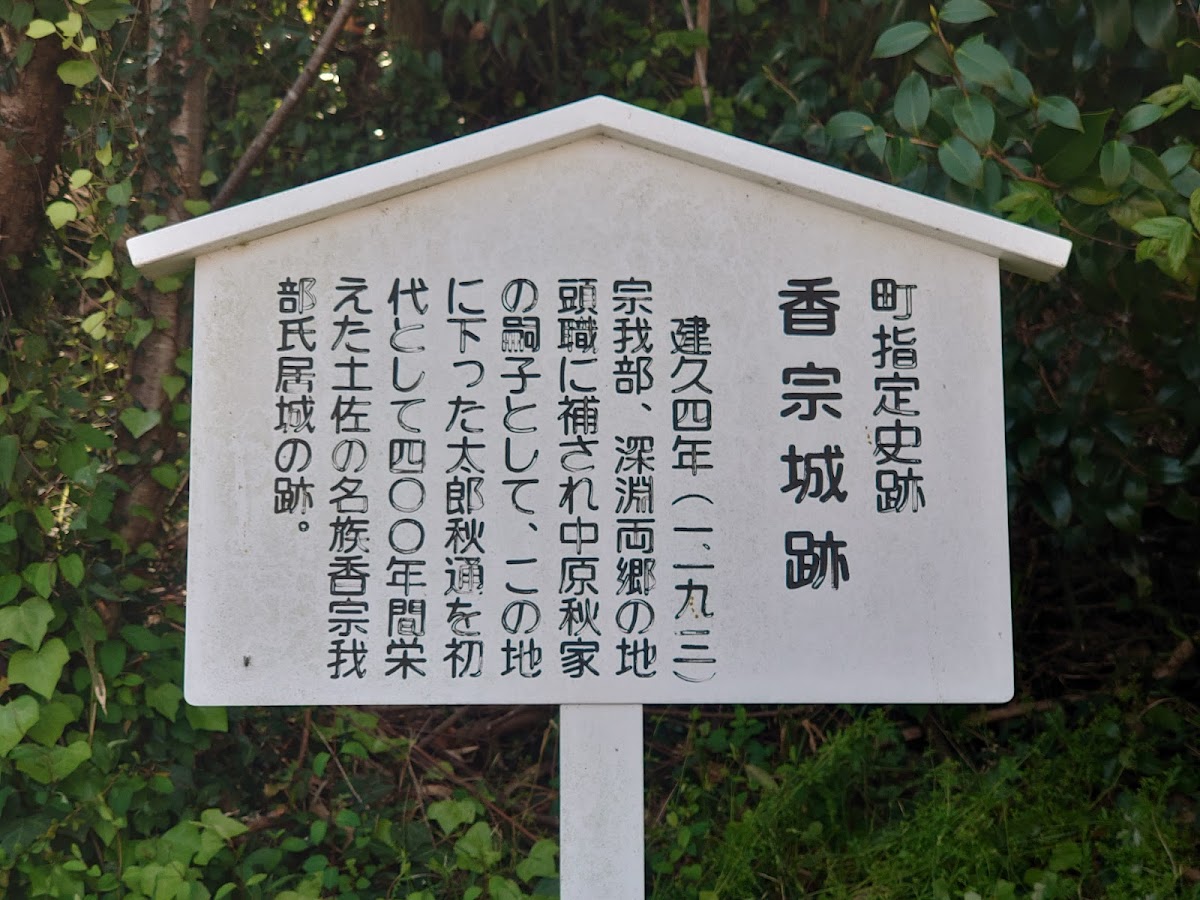
An information board is installed at the entrance to the castle, where you can learn about the history and structure of Himekura Castle. However, some of the information boards show signs of age-related deterioration, so it is recommended to check the latest information before visiting.
Remains of Earthworks and Enclosures
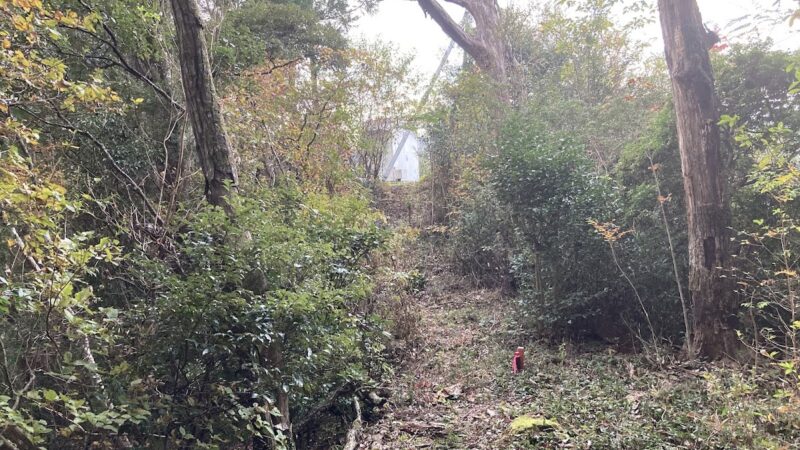
The earthworks remaining around the main enclosure, although low in height, can be clearly identified as artificial structures. While some alterations may have been made due to park development, the basic layout is thought to retain its original form.
The lower bailey of the main enclosure, while sometimes overgrown with weeds in the summer, offers a more natural experience of the mountain castle. The elevation differences of the cliffs and the size of the baileys make it a valuable spot to experience the actual appearance of a Sengoku period mountain castle.
Spectacular View of the Pacific Ocean
One of the major attractions of Himekura Castle is the view of the Pacific Ocean from the main enclosure. The ocean view from an altitude of approximately 69 meters is spectacular, and on clear days, you can see all the way to the horizon.
This view is not only aesthetically pleasing but also important for understanding the castle’s military function. During the Sengoku period, it would have been possible to monitor maritime traffic from this location and detect enemy movements early. The name Tsukimiyama (Moon-Viewing Mountain) is thought to originate from this excellent view.
Actual Moats
The moats remaining on the northwest and northeast ridges are impressive castle remains. For those particularly interested in castles, it’s a valuable opportunity to see the actual shape of the defensive structures. A moat is a geographical feature created by artificially cutting through a ridge. Its size and depth allow us to infer the construction techniques and labor involved at the time. The moat at Himekura Castle is standard for a small to medium-sized mountain castle, but its clear preservation makes it particularly valuable.
Access Information
Location
781-5331 Kishimoto, Kagami-cho, Konan City, Kochi Prefecture
Access by Car
The most convenient way to access Himekura Castle is by car. From Kochi City, head east on National Route 55 towards Kagami-cho, Konan City. The journey takes approximately 40 minutes from central Kochi City.
The hiking trail to Tsukimiyama can be accessed by car. There is a wide area near the Himekura Castle sign where parking is possible. However, since it is not a designated parking area, please be careful not to obstruct other users.
Access by Public Transportation
If using public transportation, the nearest stations are “Noichi Station” or “Yoshikawa Station” on the Tosa Kuroshio Railway Gomen-Nahari Line. However, the castle ruins are quite far from these stations, making walking impractical. You should consider taking a taxi.
Castle Entrance and Path
There are two entrances to the castle as you ascend Tsukimiyama Mountain. The upper entrance leads to the second enclosure (kuruma), providing relatively easy access to the main enclosure. While the path is well-maintained, it is still a mountain trail, so comfortable walking shoes are recommended.
The estimated time required is about 10 minutes on foot from the parking area to the main enclosure. Even those without much physical stamina can relatively easily visit this mountain castle.
Points to Note When Visiting
- In summer, weeds grow profusely, so wearing long sleeves and long pants is recommended.
- Bringing insect repellent will make your visit more comfortable.
- Some of the information boards are deteriorating, so it’s a good idea to gather information beforehand.
- Toilets are located within the park, but it’s recommended to check their availability beforehand.
- Be careful as the ground can become slippery during and after rain.
Nearby Tourist Attractions
Aki Castle Ruins
If you visit Himekura Castle, you should definitely visit Aki Castle Ruins as well. Located in Aki City, this castle was the base of the Aki clan and the residence of the main family of Himekura Castle. Currently, the Aki City Historical and Folk Museum is adjacent to it, where you can learn more about the history of the Aki clan and eastern Tosa.
The distance from Himekura Castle to Aki Castle Ruins is about 30 minutes by car. Visiting both castles will give you a deeper understanding of the Aki clan’s sphere of influence and the realities of their battles with the Chosokabe clan.
Okotoyo Castle Ruins (Kochi Prefectural Museum of History and Folklore)
The Okotoyo Castle Ruins, the base of the Chosokabe clan, are another historical site worth visiting along with Himekura Castle. Located in Nankoku City, these castle ruins are a nationally designated historical site and house the Kochi Prefectural Museum of History and Folklore.
The museum features extensive exhibits on Chosokabe Motochika, allowing visitors to learn about history from the perspective of those who conquered Himekura Castle. It takes approximately 30 minutes by car from Himekura Castle to the Okotoyo Castle Ruins.
The Coastline of Konan City
Konan City, where Himekura Castle is located, boasts a beautiful Pacific coastline. There are numerous sea-related tourist attractions, such as Ya-Shi Park and the Tei Port Movable Bridge. Enjoying the ocean scenery in conjunction with a castle tour is highly recommended.
Historical Significance of Himekura Castle
Position in the Process of Tosa Unification
Himekura Castle is an important historical site for understanding the process of Tosa unification by Chosokabe Motochika. Motochika established his base at Okotoyo Castle and gradually brought the entire Tosa region under his control. The Aki clan offered the fiercest resistance during this process.
The capture of Himekura Castle marked the first step in the invasion of the Aki clan’s sphere of influence, and its fall paved the way for the Aki clan’s downfall. In the grand historical narrative of Tosa’s unification, Himekura Castle represents a crucial turning point.
Characteristics of Tosa Castles during the Sengoku Period
Himekura Castle preserves the typical form of a small to medium-sized mountain castle from Tosa during the Sengoku period. Tosa mountain castles are characterized by their layouts that utilize the steep terrain and their relatively small number of baileys. This stems from Tosa’s mountainous terrain and the fragmentation of power within the region.
A detailed examination of Himekura Castle’s structure allows us to understand the castle-building techniques of the time and the regional characteristics of castles. Furthermore, the fact that the remains have been well-preserved even after the castle’s abandonment is also due to regional factors, such as the lack of large-scale development afterward.
Importance in Local History
In the history of Konan City (formerly Kagami Town), Himekura Castle is an important element in shaping the region’s identity. The fact that the castle ruins are currently preserved as a “Historical Site Forest” and cherished as a local historical heritage demonstrates the high level of interest in history among local residents.
It is also utilized for local history education and as a tourist resource, and is recognized as an indispensable historical site for learning about Tosa during the Sengoku period.
Points for Enjoying Himekura Castle
Recommendation for Prior Study
Before visiting Himekura Castle, having basic knowledge about the relationship between the Aki and Chosokabe clans and the process of unifying Tosa will deepen your understanding at the site. In particular, knowing the situation in Tosa around 1569 will make the meaning of the castle’s location and structure clearer.
Comparison with Other Tosa Castles
If possible, we recommend visiting Himekura Castle in conjunction with other Tosa castle ruins, such as Aki Castle Ruins and Okotoyo Castle Ruins. Comparing multiple castles reveals the unique characteristics of each and the intentions of their builders more clearly.
Photography Tips
Himekura Castle offers the following photography opportunities:
- View of the Pacific Ocean from the main enclosure
- Remains of earthworks (especially around the main enclosure)
- Cross-section of the moat (northwest and northeast ridges)
- Terraces and cliffs of the enclosures
- Information boards in the historical forest and surrounding scenery
Especially on sunny mornings, the Pacific Ocean’s colors are beautiful, making it an excellent time for photography.
Enjoying Himekura Castle in Every Season
Himekura Castle can be visited throughout the year, but each season offers a different charm.
- Spring: Beautiful fresh greenery and mild weather, perfect for a stroll.
- Summer: The blue of the Pacific Ocean is at its most vibrant, but be mindful of overgrown weeds and dress appropriately.
- Autumn: While there are fewer autumn leaves, the weather is pleasant and makes for a comfortable stroll.
- Winter: The air is clear, offering excellent views and making the ruins easier to see.
Contact Information
For detailed information about Himekura Castle and the latest updates, please contact the following:
Konan City Board of Education, Lifelong Learning Division
Phone: 0887-57-7523
Checking opening hours and parking information before your visit will ensure a smoother experience.
Summary
Himekura Castle (Konan City, Kochi Prefecture) is a valuable historical site that tells the story of the battles between the Aki and Chosokabe clans in Tosa during the Sengoku period. This castle, the stage for the historical event of its fall in 1569, played a crucial role in the grand historical unification of Tosa.
Currently developed as “Tsukimiyama Children’s Forest Park,” the site allows visitors to see remnants such as baileys, earthworks, and moats, while also enjoying a spectacular view of the Pacific Ocean. At an elevation of approximately 69 meters and a relative height of about 60 meters, it is typical of a small to medium-sized mountain castle, clearly demonstrating the characteristics of castles in Tosa during the Sengoku period.
Access is convenient by car, about 40 minutes from Kochi City, and only about 10 minutes on foot from the entrance to the main enclosure, making it a relatively easy castle site to visit. Visiting it along with Aki Castle Ruins and Okotoyo Castle Ruins will allow you to gain a deeper understanding of Tosa’s history during the Sengoku period.
This historical site is recommended not only for castle enthusiasts, but also for those interested in history and those who want to visit a place with beautiful scenery. Why not experience the spirit of the Sengoku period at this castle, which was defended by lords such as Himekura Ukyo and Himekura Buzen, conquered by Chosokabe Motochika, and where Kuwana Tango served as castellan?