Katsuyama Castle (Shimonoseki City, Yamaguchi Prefecture): A Thorough Explanation of the Residence of a Senior Retainer of the Ouchi Clan and the Site of Ouchi Yoshinaga’s Demise
What is Katsuyama Castle?
Katsuyama Castle (Katsuyama-jo) is a Sengoku period mountain castle located in Takura, Shimonoseki City, Yamaguchi Prefecture. Also written as Katsuyama Castle, it is known as a multi-bailey mountain castle built on the summit of Mt. Katsuyama, which is 361 meters above sea level. The relative height is approximately 320 meters, and it functioned as an important base for the Ouchi clan in Nagato Province (present-day northwestern Yamaguchi Prefecture).
The castle has a long history, beginning in 1378 (Eiwa 4) when Nagatomi Kazusa-no-suke Tsugumitsu, a retainer of the Ouchi clan, resided there. Subsequently, successive lords such as Sagara Minbu-no-sho, Naito Okimori, Naito Takayo, Nanjo Munekatsu, and Yamada Shigenori resided there. Known particularly as the residence of the Naito clan, this castle played a crucial role in the downfall of the Ouchi clan, as Ouchi Yoshinaga, pursued by Mori Motonari, took refuge here in 1557.
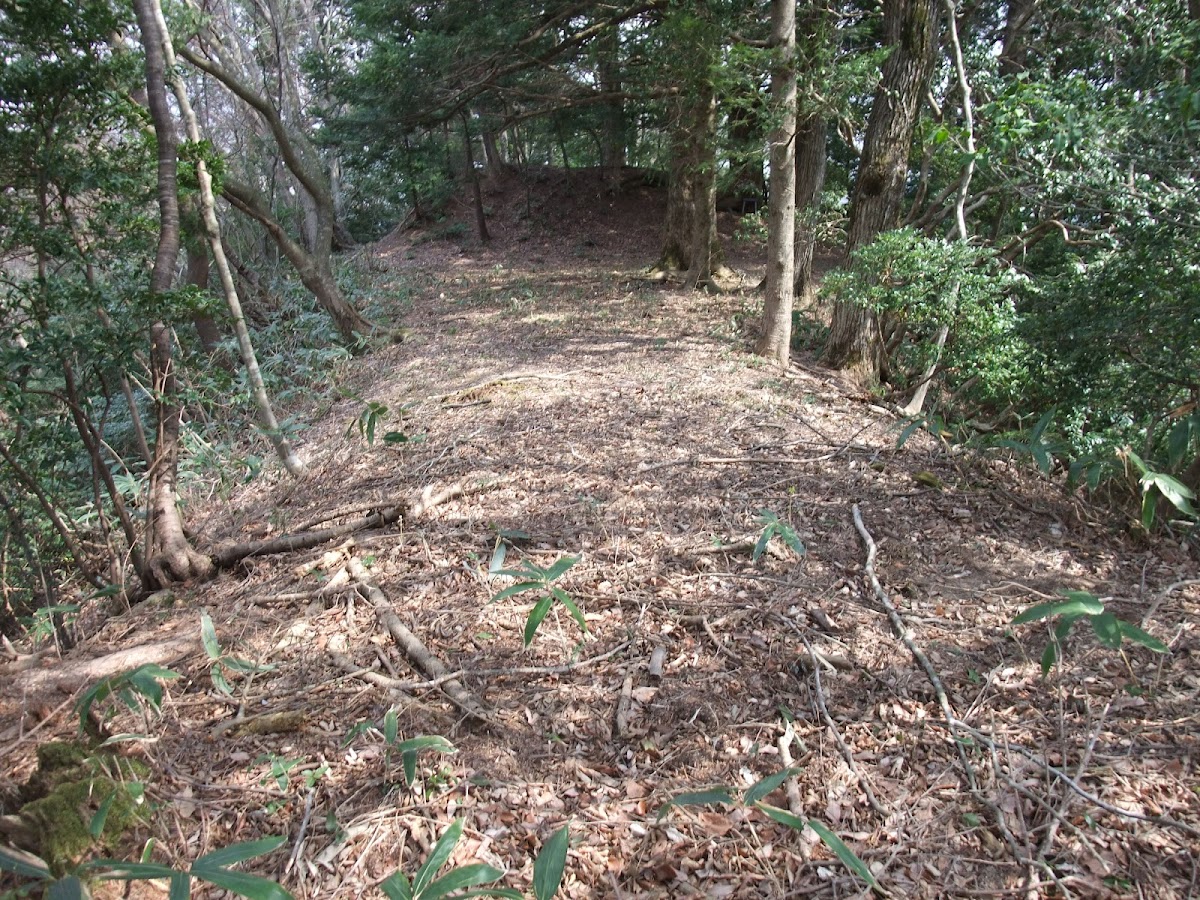
Even today, the remains of earthworks, baileys, moats, vertical trenches, and stone walls are well-preserved on the mountaintop, making it a valuable historical site for understanding the structure of medieval mountain castles. Although not designated as a cultural property, it is a castle site that attracts attention from castle enthusiasts and history buffs.
History of Katsuyama Castle
Katsuyama Castle during the Ouchi Clan Era
The exact construction date of Katsuyama Castle is unknown, but records indicate that Nagatomi Tsugumitsu, a vassal of the Ouchi clan, resided there in 1378. During this period, the Ouchi clan was expanding its power with Suo and Nagato provinces as its base, and Katsuyama Castle played an important role as one of the defensive strongholds in Nagato Province.
The Naito Clan’s Castle Era
During the Sengoku period (Warring States period), Katsuyama Castle became the residence of Naito Okimori, a senior retainer of the Ouchi clan. The Naito clan was one of the powerful vassal groups serving the Ouchi clan, playing a crucial role in supporting the Ouchi clan’s rule in Nagato Province. It is believed that Naito Okimori used Katsuyama Castle as his base to govern the surrounding region and improved the castle.
During the time of Okimori’s grandson, Naito Takayo, Katsuyama Castle became the stage for the historical event of the Ouchi clan’s downfall.
The Siege of Ouchi Yoshinaga and the Fall of the Ouchi Clan
In 1557 (Kōji 3), Katsuyama Castle became a crucial stage for the final chapter of the Ouchi clan’s demise. Ouchi Yoshinaga, attacked by Mōri Motonari, was driven from his castle in Yamaguchi and fled to Katsuyama Castle, where he held out for the fate of the clan. Yoshinaga was the last head of the Ouchi clan, and this siege was their final resistance, a battle that determined the clan’s fate.
However, the siege of Katsuyama Castle could not last long against the overwhelming military power of the Mori clan, and Yoshinaga eventually moved to Kozanji Temple in Shimonoseki, where he committed suicide. This event led to the complete destruction of the Ouchi clan, which had wielded power primarily in Suo and Nagato provinces, and the rise of the Mori clan as the dominant power in the Chugoku region.
After the Mori Clan Era
After the fall of the Ouchi clan, Katsuyama Castle came under the control of the Mori clan. However, as the Mori clan established their base in Hiroshima, the strategic importance of Katsuyama Castle declined. Later, it came under the control of the Chofu Mori family, and during the Edo period, the Katsuyama Palace was built at the foot of the mountain.
In 1864 (Genji 1), the Katsuyama Palace was built by Mori Motochika, the lord of the Chofu domain. This was a new palace built in the depths of a valley surrounded by mountains for defensive reasons, following a retaliatory attack by French warships in 1863 (Bunkyu 3). Katsuyama Goten is located in an area surrounded by medieval castles: Katsuyama Castle to the north, Aoyama Castle to the west, and Shiojiyama Castle to the northeast. Katsuyama Castle served as a rear defense.
Structure and Layout of Katsuyama Castle
Basic Structure
Katsuyama Castle is a multi-bailey mountain castle built on the summit of Mt. Katsuyama, at an elevation of 361 meters. With a relative height of approximately 320 meters, it utilizes the steep terrain from the foot of the mountain to the summit, resulting in a highly defensible structure.
A multi-bailey castle is a castle style in which multiple baileys are arranged linearly around a main bailey, a structure well-suited to ridge terrain. At Katsuyama Castle, multiple baileys are arranged along the ridge from the main bailey at the summit, and each bailey is separated by a moat.
Major Remains
The following remains still exist at Katsuyama Castle:
Baileys (Kuruwa): Multiple baileys are arranged along the ridge, forming a defensive system centered on the main bailey. Each enclosure retains relatively good leveling, allowing for an understanding of the castle’s structure at the time.
Earthworks: Earthworks were built around the enclosures, enhancing their defensive capabilities. These earthworks, constructed by piling up earth, served to prevent enemy intrusion and also obscure the view of the enclosure’s interior from the outside.
Moats: These moats, dug to cut across ridges, were important defensive structures that prevented enemy intrusion. Multiple moats have been identified at Katsuyama Castle, serving to demarcate each enclosure and prevent attacks along the ridges.
Vertical Moats: These moats, dug vertically along slopes, prevented enemies from climbing the slopes. Multiple vertical moats have been identified at Katsuyama Castle, strengthening defenses against attacks from the flanks.
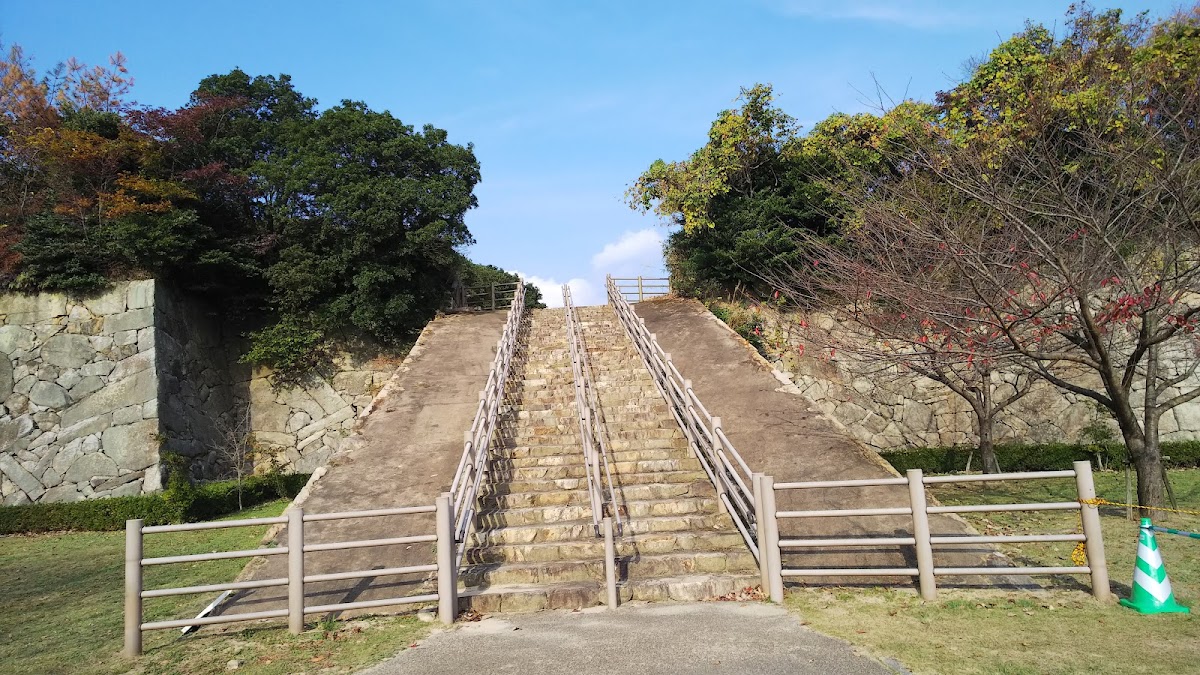
Stone Masonry: Some remains of stone masonry are still present. In medieval mountain castles, complete stone walls are rare; partial stonework is more common, and such stonework can be seen at Katsuyama Castle.
Relationship with Surrounding Castles
Several medieval castles exist around Katsuyama Castle, including Aoyama Castle, Kushizaki Castle, and Shiojiyama Castle. These castles are thought to have cooperated to form a defense network for Nagato Province. In particular, Katsuyama Castle shares a ridge with Aoyama Castle, suggesting the possibility of a unified defensive system.
The Katsuyama Palace, built during the Edo period, is located in a valley surrounded by these medieval castles, indicating an intention to utilize the medieval defense system in the early modern period.
Highlights of Katsuyama Castle
View from the Main Enclosure
From the main enclosure, located on the mountaintop at an altitude of 361 meters, you can enjoy a panoramic view of Shimonoseki city and the surrounding mountains. On a clear day, you can even see the Kanmon Strait and Kyushu, giving a real sense of Katsuyama Castle’s importance as a surveillance base in Nagato Province.
Well-Preserved Remains
Katsuyama Castle is an undeveloped castle site that hasn’t undergone much restoration, but precisely because of this, it retains the atmosphere of a medieval mountain castle. Earthworks, baileys, moats, and vertical trenches are well-preserved, making it a valuable historical site for studying castle structure.
In particular, the moats are clearly visible in multiple locations, demonstrating the high level of defensive technology of the time. Furthermore, some stone masonry remains are also present, providing interesting information about the use of stone in medieval mountain castles.
A Place to Immerse Yourself in Historical Romance
Katsuyama Castle was the site of Ouchi Yoshinaga’s final siege, and the stage for the historical event that led to the downfall of the Ouchi clan. Visiting the castle ruins allows you to reflect on the turbulent history of the Sengoku period. It’s a place that sparks the imagination, making you wonder what thoughts were going through Yoshinaga’s mind as he spent his final moments at this castle before committing suicide at Kozanji Temple.
The Joys of Mountain Castle Climbing
Climbing this mountain castle, with an elevation difference of approximately 320 meters, offers a moderate amount of exercise and is a rewarding course for mountain castle enthusiasts. While some parts of the trail are not well-maintained, this actually enhances the feeling of conquering a medieval mountain castle.
Access to Katsuyama Castle
Location
Takura, Shimonoseki City, Yamaguchi Prefecture
Transportation Access
Access by Car: Approximately 15 minutes by car from Shimonoseki IC on the Chugoku Expressway. There is parking space around the Katsuyama Palace ruins, but it is not a designated parking area, so caution is advised when parking on the street.
Access by Public Transportation: Approximately 10 minutes by taxi from Chofu Station on the JR Sanyo Main Line. Bus services are limited, so using a taxi is convenient if using public transportation.
Climbing Route
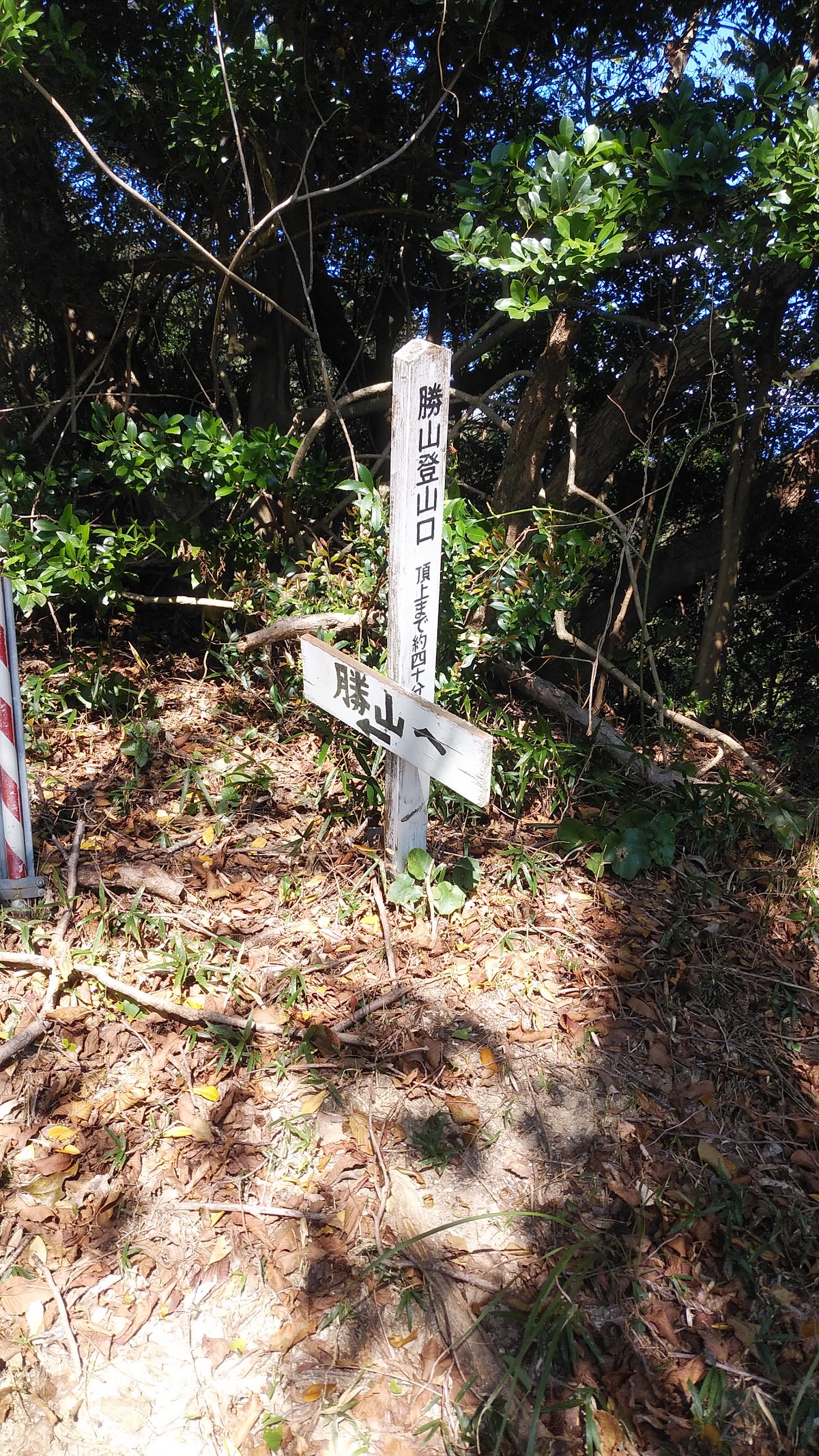
The climbing trail begins near the Katsuyama Palace ruins. Since some parts of the trail are not clearly marked, it is recommended to check the location using a castle layout map beforehand. The climb to the castle should take approximately 30 minutes to an hour each way.
The mountain path has some steep sections, so it is recommended to wear appropriate clothing and shoes for hiking and bring drinking water. Also, avoid climbing alone; it is safer to visit with others or inform family members of your destination beforehand.
Points to Note During Your Visit
Katsuyama Castle is an undeveloped mountain castle and not a well-maintained tourist facility. Please observe the following points during your visit:
- The hiking trail is not clearly marked in some places, so please use a map or GPS app.
- The mountain path is steep and slippery in places, so please wear appropriate equipment such as hiking boots.
- In summer, the vegetation is dense, so please wear long sleeves and long pants and take precautions against insects.
- In winter, the sun sets early, so please allow ample time for your climb.
- Please take all your trash with you.
- Please be careful not to damage the ruins.
Nearby Attractions
Katsuyama Palace Ruins
At the foot of Katsuyama Castle lie the ruins of the Katsuyama Palace, built in 1864 by Mori Motochika, the lord of the Chofu Domain. Built deep in a valley surrounded by mountains on three sides except the south, it is situated in an area surrounded by medieval castles such as Katsuyama Castle, Aoyama Castle, and Shiojiyama Castle. Currently, some of the ruins remain, and an information board has been installed.
Kōzanji Temple
Kōzanji Temple, located in Chōfu, Shimonoseki, is known as the place where Ōuchi Yoshinaga committed suicide. After the siege of Katsuyama Castle, Yoshinaga moved to this temple and met his end there. With its national treasure Buddha hall and beautiful gardens, it’s an ideal base for historical exploration.
Chōfu Castle Town
Chōfu flourished as the castle town of the Chōfu Mōri family, and its old townscape remains to this day. Samurai residences and temples and shrines are scattered throughout, allowing visitors to enjoy a historical atmosphere. Visiting both Katsuyama Castle and Chōfu Castle will provide a deeper understanding of the region’s history.
Aoyama Castle
Located west of Katsuyama Castle, Aoyama Castle is also a medieval mountain castle and is thought to have formed a defensive network in conjunction with Katsuyama Castle. If you have time, it’s worth visiting here as well.
Kushizaki Castle
One of the important strongholds of the Ōuchi clan in Nagato Province, Kushizaki Castle, like Katsuyama Castle, was occupied by Ōuchi clan retainers. Exploring the surrounding castles will provide insight into the defense system of the time.
Points to Note When Visiting Katsuyama Castle
Best Time to Visit
Katsuyama Castle is an undeveloped mountain castle, so the difficulty level varies depending on the time of year.
Spring (March-May): The weather is mild and suitable for climbing the castle. The fresh greenery is beautiful, making for a pleasant mountain castle walk.
Summer (June-August): The vegetation is dense, and the hiking trails can become unclear. Also, there are many insects, so adequate precautions are necessary. Heatstroke should also be avoided.
Autumn (September-November): This is the best time to visit. The weather is stable, and you can enjoy the autumn foliage. The vegetation is not as dense as in summer, making it easier to observe the remains.
Winter (December-February): The vegetation has withered, making the remains easier to observe, but sunset is early, so you need to allow plenty of time. Also, there is a possibility of freezing or snow, so the weather should be carefully monitored.
Estimated Time Required
Please allow the following time for visiting Katsuyama Castle:
- Ascent: 30 minutes to 1 hour one way
- Castle Interior Tour: 30 minutes to 1 hour
- Descent: 30 minutes to 45 minutes
It’s best to allow a total of 2 to 3 hours. If you also plan to visit the nearby Katsuyama Palace Ruins or Kōzanji Temple, it’s recommended to allocate about half a day.
Useful Items to Bring
- Hiking boots or non-slip shoes
- Drinking water
- Towel
- Insect repellent (in summer)
- Map or GPS app
- Camera
- Castle layout map (available online in advance)
- Work gloves (if bushwhacking is necessary)
Evaluation of Katsuyama Castle
Katsuyama Castle has earned a certain level of respect among castle enthusiasts. On the castle information website Kojodan, it has an average rating of ★★★☆☆ (3.00) and has been visited by 28 people (as of the time of data), and is recognized as a mountain castle known to those in the know.
Points of evaluation:
High points:
- Well-preserved remains
- Historical value as the site of Ouchi Yoshinaga’s siege
- Superb view from the mountaintop
- Experience the atmosphere of a medieval mountain castle
Points for improvement:
- Not well-maintained, making the climb difficult
- Few signs and explanatory panels
- Inconvenient access
- Unclear parking area
The lack of maintenance is also an attractive feature, as it preserves the original form of a medieval mountain castle, making it a castle site that offers enjoyable exploration for castle enthusiasts.
Summary
Katsuyama Castle (Katsuyama-jo) is a Sengoku period mountain castle located in Shimonoseki City, Yamaguchi Prefecture, and is known as the residence of the Naito clan, a senior retainer of the Ouchi clan. This mountain castle, built on a mountaintop 361 meters above sea level and approximately 320 meters above sea level, features well-preserved remains of earthworks, baileys, moats, vertical trenches, and stone walls.
It is believed to have originated in 1378 when Nagatomi Tsugumitsu resided there, followed by Naito Okimori and Naito Takayo. In 1557, Ouchi Yoshinaga, pursued by Mori Motonari, took refuge in this castle, making it a historical stage for the final chapter of the Ouchi clan’s downfall.
Currently, as an undeveloped mountain castle, it retains the atmosphere of a medieval mountain castle. While appropriate equipment and preparation are necessary for climbing, it is a historical site well worth visiting for castle enthusiasts and history buffs. Nearby attractions include the Katsuyama Palace ruins, Kozanji Temple, and the Chofu castle town, making it an ideal base for historical exploration.
Why not visit Katsuyama Castle, which tells the story of the rise and fall of the Ouchi clan, and experience the historical romance of the Sengoku period?
Reference Information
- Location: Takura, Shimonoseki City, Yamaguchi Prefecture
- Castle Structure: Mountain castle (renkuai style)
- Elevation: 361 meters
- Relative Height: Approximately 320 meters
- Construction Date: Unknown (there is a theory that it was built in Eiwa 4 (1378))
- Builder: Nagatomi Tsugumitsu (attributed)
- Main Lords: Nagatomi Tsugumitsu, Sagara Minbu-no-sho, Naito Okimori, Naito Takayo, Nanjo Munekatsu, Yamada Shigenori
- Abandonment Date: Unknown
- Remains: Earthworks, baileys, moats, vertical moats, stone walls
- Cultural Property Designation: None
- Alternate Name: Katsuyama Castle
- Visiting Time: 30 minutes to 1 hour (excluding climbing time)
*Please check the latest information before visiting and take safety precautions during your visit.