Katsuyama Goten (Yamaguchi Prefecture): A thorough explanation of the final Edo-period castle of the Chofu Domain, built during the late Edo period.
What is Katsuyama Goten?
Katsuyama Goten is the site of a late Edo period encampment located in Takura, Shimonoseki City, Yamaguchi Prefecture. It was built between 1863 and 1864 by Mori Motochika, the lord of the Chofu Domain. Although called a “Goten” (palace), it was actually a castle with defensive functions, and remnants such as stone walls and baileys remain well-preserved today.
The Chofu Domain, a branch domain of the Choshu Domain, had its domain office at Kushizaki Castle, facing the Kanmon Strait. However, with the rise of the anti-foreign movement at the end of the Edo period, the risk of retaliatory attacks from foreign fleets increased. Therefore, it was decided to build a new encampment at the foot of Mount Katsuyama, inland from the coast, and the Katsuyama Palace was completed in an astonishingly short time of just seven months.
On February 26, 2019, its historical value as a castle built during the late Edo period, the final stage of the modern era, was recognized, and it was designated a national historic site, “Katsuyama Palace Site.”
Historical Background of the Construction of Katsuyama Palace
The Shimonoseki War and the Crisis of the Chofu Domain
In May 1863, the Choshu Domain decided to carry out its expulsion of foreigners and began shelling foreign ships passing through the Kanmon Strait. This action reflected the political situation at the time, when the Sonno Joi (Revere the Emperor, Expel the Barbarians) movement was at its peak.
In June of the same year, in retaliation for the shelling of the American merchant ship Pembroke, the American warship Wyoming shelled Shimonoseki. Furthermore, French warships launched retaliatory attacks, damaging the area around Kushizaki Castle, a base for the Chofu Domain. This Shimonoseki War highlighted the danger of Kushizaki Castle’s proximity to the coast.
The Hasty Decision to Relocate to Katsuyama
To avoid attacks from foreign fleets, Chofu Domain lord Mori Motochika decided to abandon Kushizaki Castle and relocate inland. The chosen relocation site was Katsuyama, a remote valley surrounded by mountains on three sides except the south.
Motochika temporarily resided at Kakuenji Temple while beginning construction of the Katsuyama Palace in 1863. Remarkably, the palace was completed in a remarkably short period of only 5 to 7 months. This rapid construction illustrates the desperate situation the Chofu Domain faced at the time.
Location of the Katsuyama Palace and Surrounding Medieval Castles
The area where the Katsuyama Palace was built was a strategically important location with a concentration of medieval castles. The area is surrounded by medieval castles: Katsuyama Castle to the north, Aoyama Castle to the west, and Shiojiyama Castle to the northeast.
Katsuyama Castle is a mountain castle towering behind Katsuyama Palace and is believed to be associated with the Koto and Ouchi clans, who ruled the Chofu region during the medieval period. It is thought that the topography and defensive wisdom of these medieval castles were utilized in the construction of Katsuyama Palace.
Structure and Characteristics of Katsuyama Palace
Actual State as a Castle
Although Katsuyama Palace bears the name “palace,” it was essentially a fortified residence with the functions of a modern castle. It possesses elements of a castle, such as baileys surrounded by stone walls, utilization of terrain suitable for defense, and the arrangement of multiple baileys.
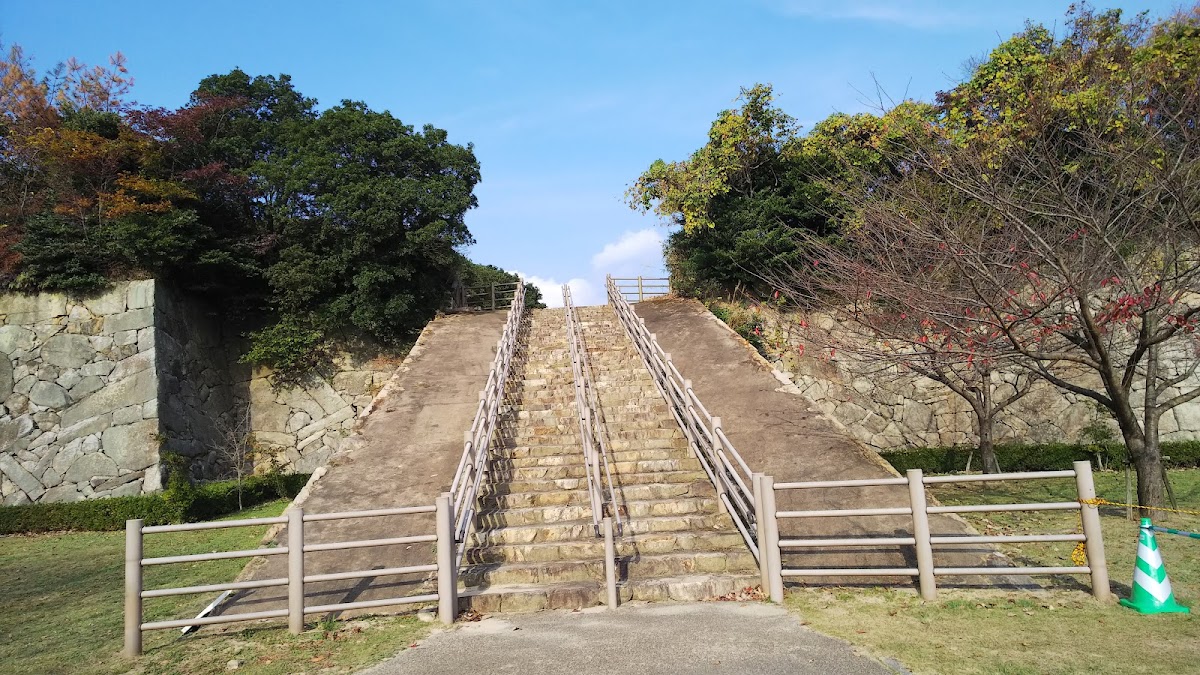
The stone walls that remain today, despite being hastily constructed, are robust, demonstrating the high level of stonemasonry skills of the time. The stonework of the walls exhibits techniques ranging from rough-hewn stonework to fitted stonework, making it a valuable resource for understanding castle construction techniques of the late Edo period.
Scale and Layout of the Palace
Katsuyama Palace is believed to have had over 60 rooms, including the lord’s chamber, the large study, and the lord’s bedroom. It was a size fully equipped to function as the residence of the feudal lord.
The arrangement of the remaining stone pavements and stone walls allows us to infer the layout of the buildings and the structure of the grounds. It is thought that the main buildings were located in the main enclosure surrounded by stone walls, with the residences of retainers and warehouses surrounding them.
Defensive Functions and Utilization of Topography
Katsuyama Palace was built deep in a valley surrounded by mountains on three sides except the south, and its design utilized the natural terrain for defense. This location achieved the initial objective of avoiding naval bombardment from foreign fleets while also providing a structure that was easily defended against land attacks.
The baileys are divided into multiple levels, forming defensive lines that utilize the differences in elevation. This castle can be said to have followed the layout principles of medieval mountain castles while incorporating the techniques of early modern castle construction.
Highlights of Katsuyama Palace (Castle Notes)
Remains of Stone Walls
The greatest highlight of Katsuyama Palace is its well-preserved stone walls. Despite being a hastily constructed encampment, it was built with solid stonework techniques, allowing visitors to experience the castle construction techniques of the late Edo period.
Some sections of the stone walls reach several meters in height, conveying the grandeur of the palace. The stone materials are believed to have been quarried locally, and the technique of skillfully combining natural stones, known as “nozurazumi,” was primarily used.
Stone Pavements and Enclosure Arrangement
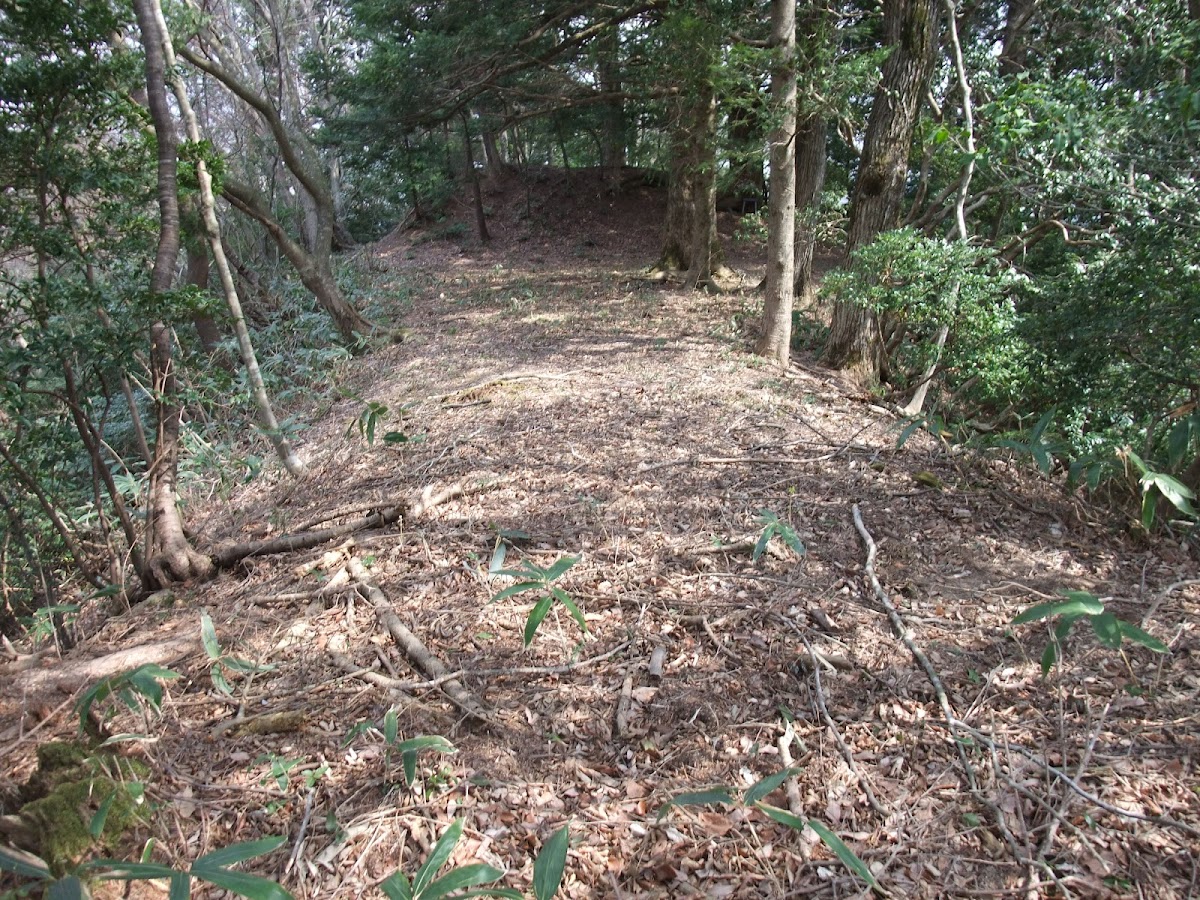
Traces of stone pavement remain inside the palace, providing clues to the location of buildings and the layout of pathways. The enclosures are divided into multiple levels, indicating that they were arranged according to their respective functions.
The main enclosure housed the lord’s residence, with the vassals’ offices and warehouses arranged around it. The site is now a park, allowing visitors to explore and observe the layout of the castle’s baileys.
Value as a Castle of the Final Period of the Early Modern Era
Katsuyama Goten occupies a unique position in the history of Japanese castles, as a castle built during the late Edo period, specifically during the turbulent Bakumatsu era. Generally, the construction of early modern castles was concentrated in the early Edo period, making castles newly built during the Bakumatsu era extremely rare.
Furthermore, it can be said to be a castle symbolizing a turning point in history, as it was built to cope with the new threat of attacks from foreign fleets. Its historical value is highly regarded as a structure that fuses traditional castle-building techniques with the demands of a new era.
Katsuyama Goten After the Abolition of the Han System
The Meiji Restoration and the Fate of the Palace
Just a few years after the completion of Katsuyama Goten, in 1868 (Keio 4), the Meiji Restoration occurred. Then, with the abolition of the Han system in 1871 (Meiji 4), the Chofu Domain was abolished, and Katsuyama Goten’s role came to an end. After the abolition of the feudal domains and establishment of prefectures, the palace buildings were gradually demolished or repurposed for other uses. While the wooden palace buildings no longer exist, the stone structures such as the stone walls and paved paths escaped destruction and remain to this day.
Preservation and Utilization of the Remains
Since the Meiji era, the Katsuyama Palace site has been carefully preserved by local residents. The stone walls and the layout of the baileys remain relatively well-preserved, maintaining a state that allows visitors to imagine its former appearance.
Currently, the Katsuyama Palace site is developed as a park and used as a place to learn about local history. Following its designation as a national historical site, efforts are underway for further preservation and utilization, including the installation of explanatory signs and the maintenance of the remains.
Current Status and Development of the Katsuyama Palace Site
Development as a Park
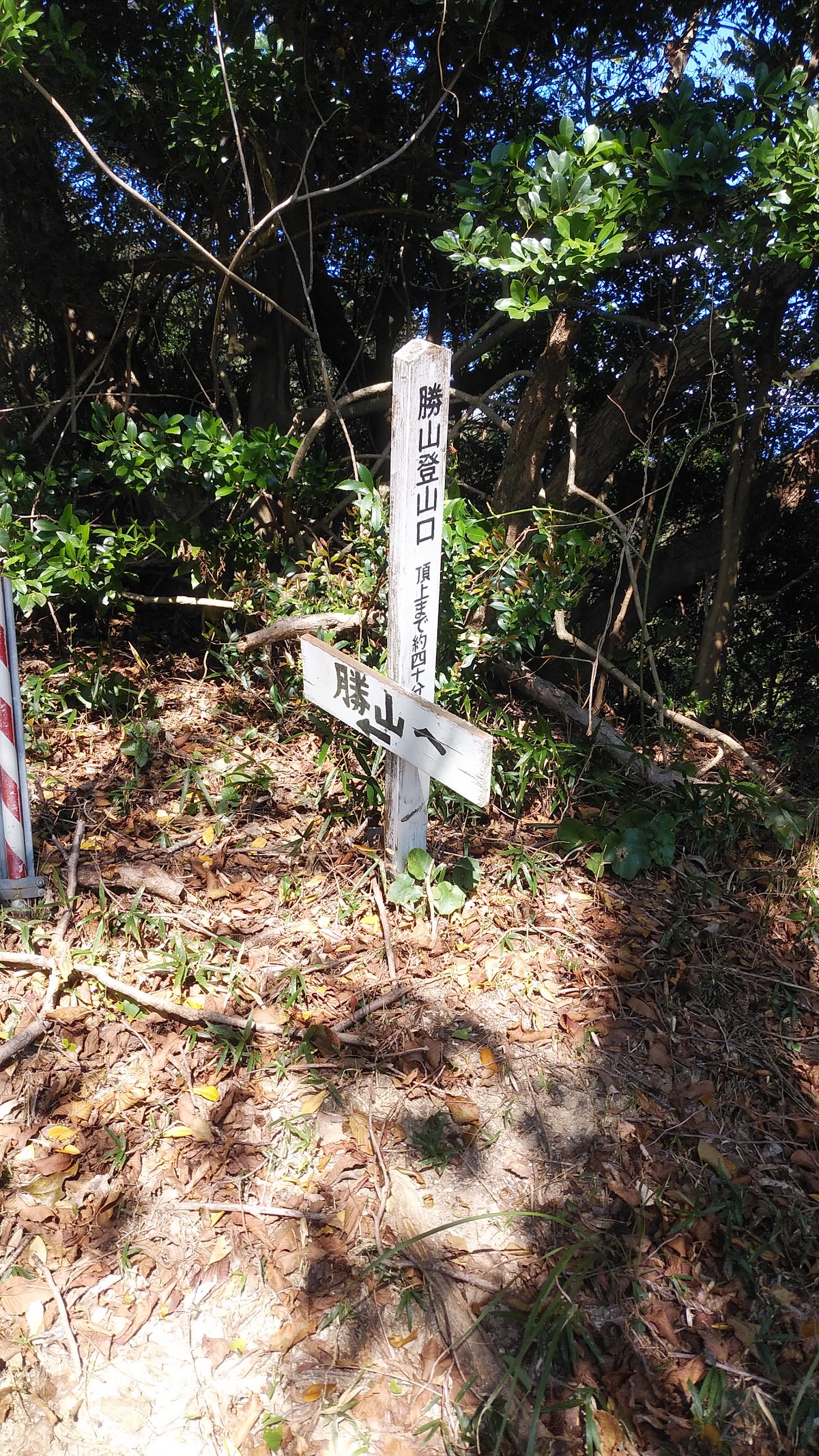
Currently, the Katsuyama Palace site is developed as a historical park and is freely accessible for visitors. As you ascend the slope from Prefectural Road 247 towards Katsuyama, the remains of the palace spread out on the mountainside.
Walking paths are maintained within the park, allowing you to imagine the layout of the palace in its heyday as you explore the stone walls and baileys. However, since it is located on the mountainside, we recommend wearing comfortable shoes when visiting.
Preservation Status of the Remains
The stone walls are generally well-preserved, but some areas show signs of collapse and weathering. Following its designation as a National Historic Site, there is a possibility that full-scale preservation repairs and archaeological excavations will be conducted in the future.
The layout of the stone pavements and baileys remains relatively clear, providing important clues to understanding the scale and structure of the palace. While some parts are obscured by overgrown trees, it is expected that the remains will become even easier to see as development progresses.
Significance of National Historic Site Designation
The designation as a National Historic Site in 2019 signifies that the historical value of the Katsuyama Palace Site has been recognized at the national level. This has made it possible to receive national support for the preservation and utilization of the ruins, enabling the formulation of long-term preservation plans and the implementation of development projects.
As a castle built in the late Edo period, representing the final stage of the modern era, and as a site directly related to the historical event of the Shimonoseki War, the Katsuyama Palace Ruins are positioned as an important historical site for understanding modern Japanese history.
Visitor Guide & Access Information
Location
The Katsuyama Palace Ruins are located in Takura, Shimonoseki City, Yamaguchi Prefecture. It is approximately a 20-minute drive from downtown Shimonoseki.
Access
Access by Car
- Approximately 15 minutes from Shimonoseki IC on the Chugoku Expressway
- Proceed along Prefectural Road 247 towards Katsuyama and follow the signs up the mountain road
- Parking space is limited, so please be careful.
Access by Public Transportation
- Approximately 10 minutes by taxi from Chofu Station on the JR Sanyo Main Line
- If using Sanden Kotsu buses, you will need to walk from the nearest bus stop.
Visiting Information
- Visiting Hours: No specific restrictions (daytime visits are recommended)
- Admission Fee: Free
- Duration of Visit: Approximately 30 minutes to 1 hour
- Notes: As it is located on the mountainside, it is recommended to wear comfortable shoes and clothing.
Nearby Tourist Attractions
Around the Katsuyama Palace Ruins, there are many tourist attractions where you can experience the history of Chofu.
Chofu Mori Residence
This is the residence of the Chofu Mori family, built during the Meiji era. You can visit the beautiful garden and building. Kozanji Temple
A historic temple founded during the Kamakura period, it houses a national treasure, the Buddha Hall. It is also known as the site where Takasugi Shinsaku raised his army.
Chofu Castle Town
An area where you can enjoy the atmosphere of a castle town with surviving samurai residences, perfect for a stroll.
Kushizaki Castle Ruins
The base of the Chofu Domain before the construction of Katsuyama Palace; remnants such as stone walls remain near the coast.
Photography Tips
The Katsuyama Palace ruins are also a suitable spot for photography. For photographing the texture of the stone walls and the layout of the baileys, the morning hours when the light hits the walls are recommended.
Because it is maintained as a park, you can enjoy photographing the ruins combined with nature in all four seasons. Especially during the fresh greenery of spring and the autumn foliage, you can capture a beautiful contrast between the historical ruins and nature.
To Learn More About Katsuyama Palace
Related Historical Figures
Mori Motochika
The 13th lord of the Chofu Domain, who built Katsuyama Palace. His skill in deciding to relocate from Kushizaki Castle to Katsuyama in 1863 and completing the palace in just a few months is highly regarded. He is an important figure who led the domain during the turbulent Bakumatsu period.
Takasugi Shinsaku
A samurai from the Choshu Domain, he had deep ties to the Chofu region, including his uprising at Kozanji Temple. He was also involved in the Shimonoseki War, making him an indispensable figure for understanding the historical context in which Katsuyama Palace was built.
History of the Chofu Domain
The Chofu Domain was a branch domain established after the Battle of Sekigahara, when Hidenari, the son of Mori Terumoto, the lord of the Choshu Domain, was granted 50,000 koku. Throughout the Edo period, it survived as an important branch domain of the Chōshū Domain, and in the late Edo period, it actively participated in the Sonnō Jōi (Revere the Emperor, Expel the Barbarians) movement alongside the main domain.
Although its domain office was located at Kushizaki Castle, it moved to Katsuyama Palace following the Shimonoseki War. Katsuyama Palace remained the center of the Chōfu Domain until the abolition of the feudal domains in 1871 (Meiji 4).
The Shimonoseki War and Katsuyama Palace
The Shimonoseki War (Bakan War) was an armed conflict that took place between the Chōshū Domain and the Western powers from 1863 (Bunkyū 3) to 1864 (Genji 1).
In response to the Chōshū Domain’s bombardment of foreign ships, a combined fleet of four countries—the United States, France, the Netherlands, and Great Britain—launched a retaliatory attack, inflicting heavy damage on the Chōshū Domain. This war revealed the limitations of the expulsion of foreigners, forcing the Chōshū Domain to change its policies.
Katsuyama Goten is a castle built right in the middle of the Shimonoseki War, and can be considered a symbolic relic of the turbulent times of the late Edo period.
Historical Significance of Katsuyama Goten
Position in the History of Early Modern Castles
Most Japanese castles were built from the Sengoku period to the early Edo period. After the Edo Shogunate’s “One Castle Per Province” decree (Genna 1, 1615), the construction of new castles was prohibited in principle.
In this context, Katsuyama Goten, built in Bunkyu 3 (1863) at the end of the Edo period, is an extremely rare example belonging to the final period of early modern castles. Moreover, it holds significant importance as a castle marking a turning point in history, as it was built to cope with the new threat of attacks by foreign fleets.
Importance in the History of the Late Edo Period
The construction of Katsuyama Goten is directly linked to the specific historical event of the Shimonoseki War. The Katsuyama Palace ruins are a valuable historical site, providing physical evidence of the Chofu Domain’s response during Japan’s transitional period from expulsion of foreigners to opening the country and ultimately to the Meiji Restoration.
The fact that Japan, facing foreign military power, still constructed a castle despite recognizing its inability to cope with traditional castle defenses, speaks to the complexity of Japan’s situation at the time.
Value in Local History
The Katsuyama Palace ruins are an indispensable historical site for understanding the history of Shimonoseki City, particularly the Chofu region. Within the history of Chofu, spanning from the medieval to the early modern and modern periods, the Katsuyama Palace is an important place that conveys the memory of the turbulent Bakumatsu period.
The remains, preserved by local people, are also a valuable educational resource for learning about local history and passing it on to future generations.
Summary
Katsuyama Goten (Shimonoseki City, Yamaguchi Prefecture) is the site of a fortified residence built in just seven months between 1863 and 1864 by Mori Motochika, the lord of the Chofu Domain. It was constructed to avoid attacks from foreign fleets during the Shimonoseki War, relocating the castle from the coastal Kushizaki Castle to the foot of Mount Katsuyama inland.
Although called a “palace,” it was actually a full-fledged castle with stone walls and baileys, a large facility with over 60 rooms. The stone walls, paving stones, and layout of the baileys remain well-preserved, and it was designated a National Historic Site in 2019.
As a castle built in the final period of the Edo era, and as a site directly related to the Shimonoseki War, a crucial event of the late Edo period, the Katsuyama Goten site occupies an important position in the history of Japanese castles and the history of the late Edo period.
Currently, it is maintained as a park and is open to the public. When you visit Shimonoseki City, be sure to stop by and reflect on the turbulent period at the end of the Edo period. You will be able to directly feel the weight of history etched into the stone walls.